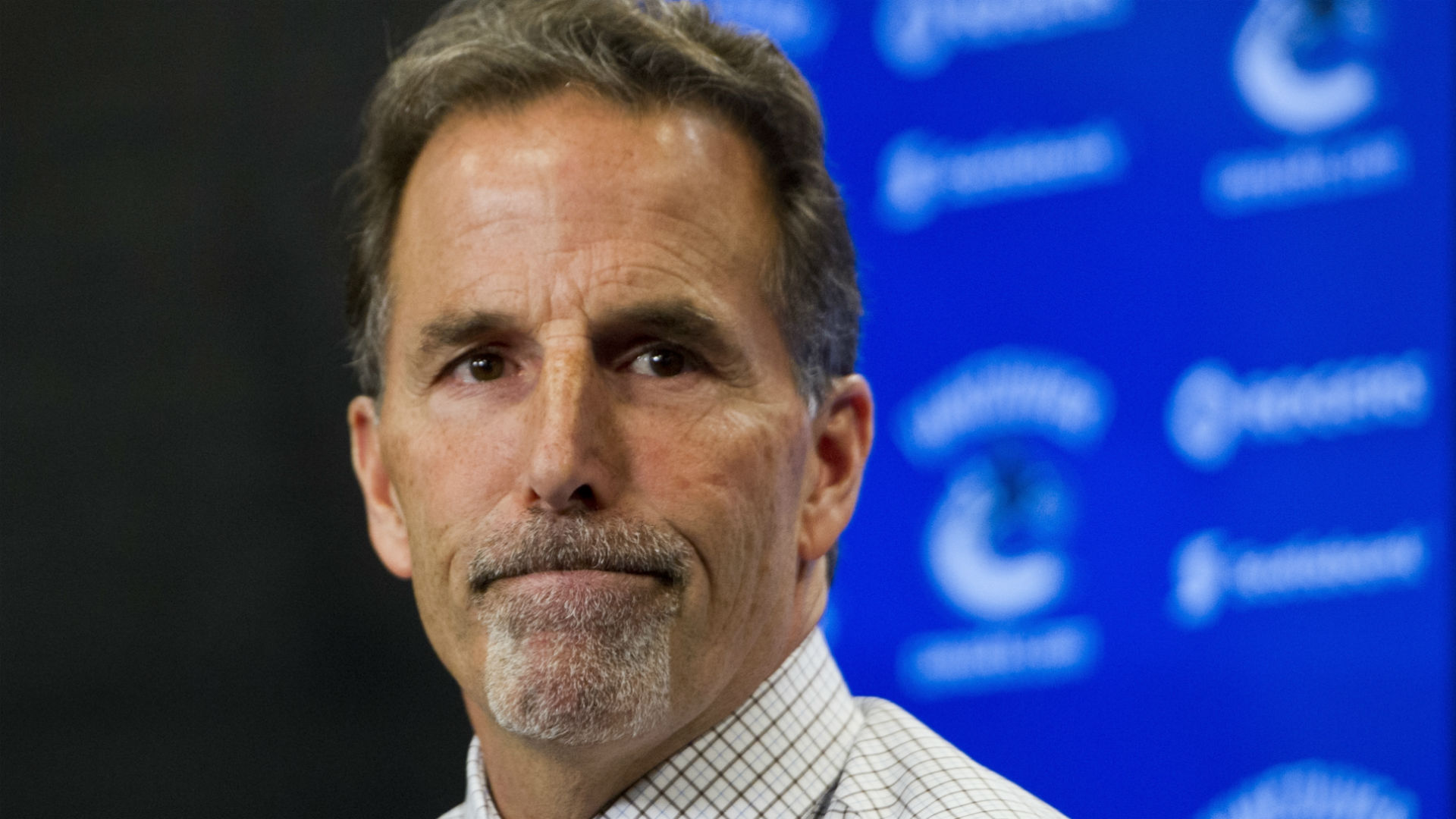
I'm not opposed to the expression of one's views - just last night the Washington Spirit of the pro women's soccer league changed their pregame time schedule to play the anthem before visiting player, Megan Rapinoe, who has knelt in solidarity and protest at past matches, would be on the field. That move makes me uncomfortable, for many of the reasons I'll explain below, but it's certainly within their rights. Tortorella, though, doubled down on his comments the next day with a longer explanation that serves to illustrate the real problem behind this issue.
"I'll tell you right now. Try to understand me. I'm not criticizing anybody for stepping up and putting their thoughts out there about things. I'm the furthest thing away from being anything political. No chance I'm involved in that stuff."
So, here he's saying that his opposition to and potential punishment of a political protest is not, in any way, political. The logic's a bit troubling, but let's say hockey has not always been associated with master logicians. Tortorella went on to explain this further:
"Listen, we're in a great country because we can express ourselves. And I am not against expressing yourselves. That's what's great about our country. We can do that. But when there are men and women that give their lives for their flag, for their anthem, have given their lives, continue to put themselves on the line with our services for our flag, for our anthem, families that have been disrupted, traumatic physical injuries, traumatic mental injuries for these people that give us the opportunity to do the things we want to do, there's no chance an anthem and a flag should come into any type of situation where you're trying to make a point. It is probably the most disrespectful thing you can do as a U.S. citizen is to bring that in. Because that's our symbol. All for [expressing] yourself. That's what's so great. Everybody does. But no chance when it comes to the flag and the anthem. No chance."
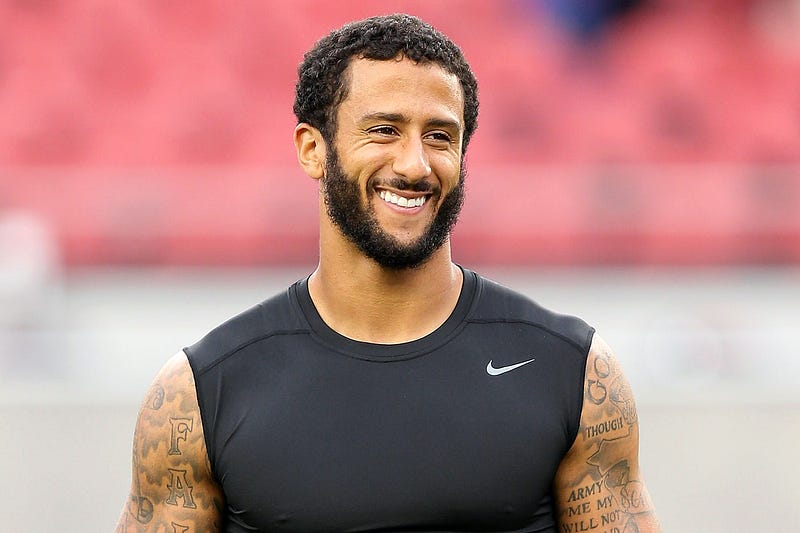
Tortorella's son is on his third overseas deployment as an Army Ranger. The coach speaks from and for a certain culture, prominent in the US, and I have no problem with the expression of his opinion. I do have some issue with how he's attempting to stand outside the conflict with this view. He's said he's not being political because the flag stands for something and should be above protest and political statement.
In essence, Tortorella is trying to control the truth.
In the other post (which I suggest you read before digging into this one), I talked about how perspective and our ability to understand the limitations of our perspective, are essential, not only to understanding Colin Kaepernick and Black Lives Matter, but also just for interaction in a diverse world, regardless of topic. In the end, it's all about who controls the truth.
Tortorella wants to put the flag and the anthem outside the bounds of protest, but that denudes the concept of protest itself. As much as I hate to give him credit for something, Stephen A Smith made a good comment on the radio the other day - protest is something that forces you to take sides. It presents an issue. He compared Kaepernick's protest to the opening of 2016 ESPYs, where basketball stars called for a pretty generic end to violence - one that most people would be hard-pressed to disagree with.
But there's real danger in determining where protest can happen and how. This is what I mean by controlling the truth. Tortorella would have us believe that there is just one definition or understanding of the flag and the national anthem, by implication he's saying there is only one understanding, one way to view the US military. He's connecting these things to a specific view of nationalism that separates the nation from its constituent parts and sets it aside as beyond criticism.
Let me put it differently, with a silly, impossible example. If Congress unanimously passed a bill stating all red-heads should be tortured to death in the public square, the President signed the bill into law, and the Supreme Court unanimously ruled it Constitutional, it would still be widely criticized. I suspect, even in a situation like the impossible one above, though, there would still be a sizable percentage of the US population that would argue, "there's nothing wrong with America, just the people running it."
This is nationalism. It's the holding up of the nation as an ideal. Nebulous categories like freedom or equality get embodied within the nation, thus making criticism of, in this case, the United States, tantamount to criticism of those beloved ideals.
Now, there's nothing wrong with loving one's country, or even associating it with certain ideals - the problem lies in then assuming, believing, and acting as if this perspective is, in fact, universal. This is what Tortorella is doing, saying you can't protest because the very foundation of this protest is untrue.
Kaepernick, Rapinoe, and others wouldn't argue about the higher ideals the US is supposed to represent, just that the nation has failed to live up to those ideals. They're questioning the appropriateness of nationalism in the face of a flawed nation. That is certainly a subject worthy of debate. There are lots of valid points on both sides. While I'm certainly in agreement with Kaepernick and others that systems of accountability in the US are broken, especially when it comes to issues of race, I'm not entirely comfortable with the way this protest is being executed or framed. I don't think I have a "side," necessarily - and I feel a whole lot of people are in the same boat.*
At the same time, I'm very uncomfortable with these kinds of words coming from the coach of Team USA - not because I necessarily disagree with his opinion, but because he's essentially invalidating and insulting the actual and real perspective of fellow US citizens. I'd be far less conflicted if he were just referring to the Columbus Blue Jackets, the pro team he also coaches. Like the Washington Spirit, that's a private organization that can decide for itself how to form and express opinions. This team is representing the whole country, but the coach fails to recognize how to respectfully disagree.
I don't think Tortorella is doing any of this on purpose. He's expressing his opinion and trying to represent himself as best he can. I'd say it's more an issue of self-awareness, of not having the distance to understand the larger picture into which he's been (likely unwillingly) thrust. I don't want to demean or villainize him with anything I've said (or will say); I'm hoping to just use his words as example.
This kind of talk is on the road to fascism. Now, like any good continuum, everything we say is "on the road" to fascism and certain parts of that road are completely safe, so it's really figuring out where we're comfortable standing that's important. Fascism is, essentially, the extension of nationalism to a person. Kim Jon Un might give lip service to communism, but he's really running a Fascist state - that's why his father and grandfather have been deified and why his picture hangs everywhere. He's trying to make himself synonymous with the nation, the same way nationalism makes freedom or equality or the sacrifice of soldiers synonymous with the nation - it makes him far more immune to criticism.
It becomes, "If you oppose me, you oppose the nation," or "If you oppose me, you are not patriotic." It's basically shifting the argument in your favor; if a demagogue is good enough at it, you end up with a Hitler or a Mussolini, who can turn a people's fear of being unpatriotic into complicity in some of the most horrible atrocities of all time.
Now, I say the "road to" fascism because no one is going to be Hitler. Even if Donald Trump (who has no qualms with his place on the road to fascism) were to become President, there's no conceivable scenario where he'd be able to convince a sizeable percentage of the population that he's equivalent to the nation, let along to freedom or equality. He's a minor demagogue on the stage of history, but this campaign is an example of how people might be convinced to support things they'd otherwise oppose when the rhetoric of security or patriotism is invoked.
Protesting during the national anthem is to Trump what Trump is to Hitler. It's small potatoes. I'm not trying to gin up hysteria or anything, just hoping to make us all think a little bit. Controlling the means of protest is a power move. In this case, it comes from lack of perspective; I don't think its malicious or intentional. But the fact that this sort of nationalistic response is so natural and unintentional for so many is worth considering.
In fascism the state can do no wrong, specifically the head of state. We're in no danger of that here - most people hate the head of state, no matter who it is, and the mechanism of government are even worse. I do wonder, though, if we're close to making "the military," or more specifically "the troops," into a type of demagogue. Sometimes it feels that "support the troops" is so ubiquitous, like saying "how's it going" when you pass someone, that no one ever stops to think what it means.
This is how Tortorella defended his position, right? It's what many of these nationalistic debates boil down to: you need to respect (this country, my position, the flag, the anthem, etc) because people fought and died for it. When people we know and love are far away and potentially in danger, we want to justify that unqualified sacrifice as strongly as possible. Everything we're doing has to be good or right or important because people are killing and dying for it.
The reality, though, is that the complexity of war, politics, and international relations means that the issues surrounding soldiers, freedom, and equality just aren't as simple as that narrative that comforts those enduring such sacrifice. You rarely see actual soldiers spouting off these opinions - in fact many have come to Kaepernick's defense, even as they disagree with his opinion - they intensely understand the complexity of what they do. It's usually those people without such experience who try to make things simple, either/or, black and white.
This is where ownership of the truth is so important. And while I used the example of soldiers and families - the same danger is just as present with activists for racial justice. It's just as possible to simplify the racial disparities of police violence to "they're shooting black people for sport," or "race war." Things are just more complicated than we can handle when people we know and love are involved.
We have to be careful to recognize we don't own the truth. Tortorella shouldn't have to be quiet, no matter how offended you are by his words. I do think we have to be aware of how we act upon those convictions. It's a real difficult issue to parse in this specific context, because while the two "sides" are saying very different things, they're both operating from nationalism.
Kaepernick is saying because he believes that the United States stands for justice, freedom, and equality, he's protesting how different the reality is from that ideal. Tortorella is saying that because the United States stands for justice, freedom, and equality, the celebration of those ideals is the wrong place to point out how much or how often the nation diverges from them.
But, as much as it seems like a small thing, there really is a big, important difference between saying, "this is the wrong time/place/way to protest," and saying, "you can't protest in this time/place/way." That comes down to ownership of truth - and truth belongs to no individual or side. As much as don't like how messy it makes things, truth is really something we can only figure out together. We own it collectively or we don't own it at all.
*This also makes for a really awkward decision on the part of other athletes. Perhaps they want to express a similar protest in a different way. They're now choosing between what looks like ignoring the issue or dishonoring the country. It's a no-win for everybody else. That doesn't come from any decision any individual made, but by the way we polarize every issue. This is largely what I was saying in the first post on Kaepernick. We have to do better than right/wrong, black/white stuff. The world is more complex than that and important issue are worth more than the marginalization that comes with it.