So, way back a few months ago, there was an article in Relevant Magazine in response to an interview given by the one and only Marcus Mumford, in which he distances himself from the label "Christian" because of the difficult connotations it brings in today's society. He's a big fan of Jesus, but the idea of labeling himself a "Christian" was a bridge too far.
As one who's said the same thing myself from time to time, it's easy to sympathize. It's also easy to be hurt by those, like the author of the article, who imply if not openly state, that such a claim is disloyal or inappropriate for a follower of Christ.
I find myself agreeing with both statements.
I've been mulling this quandary for quite some time now. It's come back to the forefront of my mind in recent weeks with both Fred Phelps and Mark Driscoll making headlines for difficult statements (again). I wrote about the idea of Christian identity earlier this year, name-checking both gentlemen in the process. There's no need to go back there.
I call myself a "follower of Christ" which is essentially what Mumford says in the interview and what the word "Christian" really means anyway. I'm not sure that's the issue. The issue is about disassociating one's self from God's people (Christians), something that's really not OK to do. If God trusts God's people, as cowardly, heretical, and wart-riddled as we are, it doesn't look so good if I can't trust in the same way.
Still, at some point we have to make a judgment as to who is authentically claiming Christ and who isn't. Without a unified body, that is very difficult to do.
We can claim the historic creeds all we want, but there are plenty of Christians who would affirm them and still say all kinds of troublesome rubbish (or write them off entirely because of the compromising influence of Catholicism*).
Martin Luther made the big break, reacting to overreaches by Church leaders. His "sola scriptura" has been turned into a clarion call for individualism. Really, it gets trotted out to allow any person to claim or deny any religious claim based on their understanding of interpretation.
Of course in Luther's time, most people couldn't read, let alone possess a bible. I'm not sure he ever intended for people to "decided for themselves" or ask "what does this scripture mean to me." He just wanted to make sure you didn't need an advanced degree to ask informed questions or participate in accountability.
Most everyone has moderated their position pretty well since then. Protestants, for the most part, recognize the need for authority, while catholics have developed better accountability and openness. I think everyone has sensed a need for at least some chain of authority from scripture to our ethical/theological proclamations.
We're just not in this alone. That becomes no more apparent than when someone spouts off. We decry their claims and denounce them as part of "our faith." In the end, though, without some authoritative body, we lack credibility. Majority doesn't rule when it comes to right and wrong.
What I see from Marcus Mumford (see, it all came back around eventually) is a real and honorable desire to avoid the pitfalls of the past (and present). "Christian" doesn't mean much to people for whom it's just a label. Only those of us who have our identity partially or entirely wrapped up in Christ, really value the label as significant. Mumford is saying that Christ is about more than a label. That's true.
At the same time, we have to recognize that Christ is also more than willing to absorb our failures and prejudices and sins. He's done it before and it hasn't seemed to phase him at all. We can wear the badge "Christian" proudly because it doesn't end with our worst; it promises our best.
Sometimes we react so defensively when people question what it means to be a Christian because we're stuck in our individualism. Who is to say what's wrong with Fred Phelps? Well, he doesn't represent me! Great, but that doesn't mean anything if you both claim to be Christian.
Whether we like it or not, there is an anchor, a root, a tradition, that binds us together. Not just people of faith or people of Christian faith, but all humanity. We do have the individual right and responsibility to figure out what we believe. It just doesn't end there.
*I was going to say "we can deal with that historical anachronism later," but really, it doesn't deserve dealing with, unless you're part of the Eastern Orthodox tradition.

Or do I?
After that service on the 20th, I got home and saw Twitter was all atwitter with some terrible thing Mark Driscoll said. I was about to join the fray and post a snarky comment, when that pesky conscience reminded me of the sermon I had preached that very morning. I had used the example of John Lewis reconciling with many of the racists who'd tried to kill him, as a means of illustrating that even our Christian brothers and sisters who are dead wrong don't deserve to be disowned. (I told you, the Church is a radical lady.) I just couldn't join the crowd and denounce Driscoll. I needed to think.
Luckily that week was my retreat, so it was another of many ponderings. I realized that I'd always defined "the Church" not as any institution or denomination, but as the people of God who lived faithfully in the way of Christ. I still think that's the correct definition. There's a lot of people who go to services who aren't part of the Church - and I suspect there's plenty of those who are a part of the Church without knowing it.
I've always said I love the Church. I think I mean(t) both the idea of God's faithful people and also those Christians with whom I have relationship. The people among whom I live and worship are far from perfect, but I know them and I'm committed to getting along with them. In those terms, I love the Church.
I can't say, however, I have a lot of love from people like Driscoll, who I believe is wrong in almost everything he says. I think he's been hurt somewhere along the line or his human faults have pushed him in the wrong direction. I think he's often missed the point. He isn't alone, of course, but he tends to be the poster child for such persons - and he doesn't seem to mind it.
However, in the course of my ponderings I realized that there's just no sense to my perspective on this. In choosing to define Church by faithfulness instead of attendance or self-identification, I ended up being the arbiter of who was living faithfully in the way of Christ and who wasn't.
The Church is imperfect. That's not the issue. The issue was how difficult some of those imperfections are to live with. Honestly, I imagine Mark Driscoll could say the same thing about me. I'm far from perfect, but I gladly cling to God's grace in those instances. I suppose I need to extend that same grace to other imperfect brothers and sisters (even the ones who claim to represent absolute truth).
But that doesn't make me feel any better, really. I mean, where do we draw the line? Does every person who claims faith in Jesus Christ get to be part of God's people? I think that's what scripture says, scary as that may be. Who is my brother? Is Mark Driscoll? What about Fred Phelps? Can someone spouting hateful filth, directly counter to the gospel (or my perception of the gospel) really be part of God's people?
Who gets to decide who's faithful?
I hope it's not Mark Driscoll or Fred Phelps - but God help us all if it's me.
Ultimately, though, it isn't about who's out and who's in. That's sort of the point I was making at the beginning of the post and in that sermon that messed me up so badly. We're all in - that's the beauty of grace. It doesn't mean we're all right and it can certainly mean some people are all wrong. I'm not going to sanitize the hurtful, hateful, or haphazard things people say in the name of Christ. When you look at it, we're all getting things wrong.
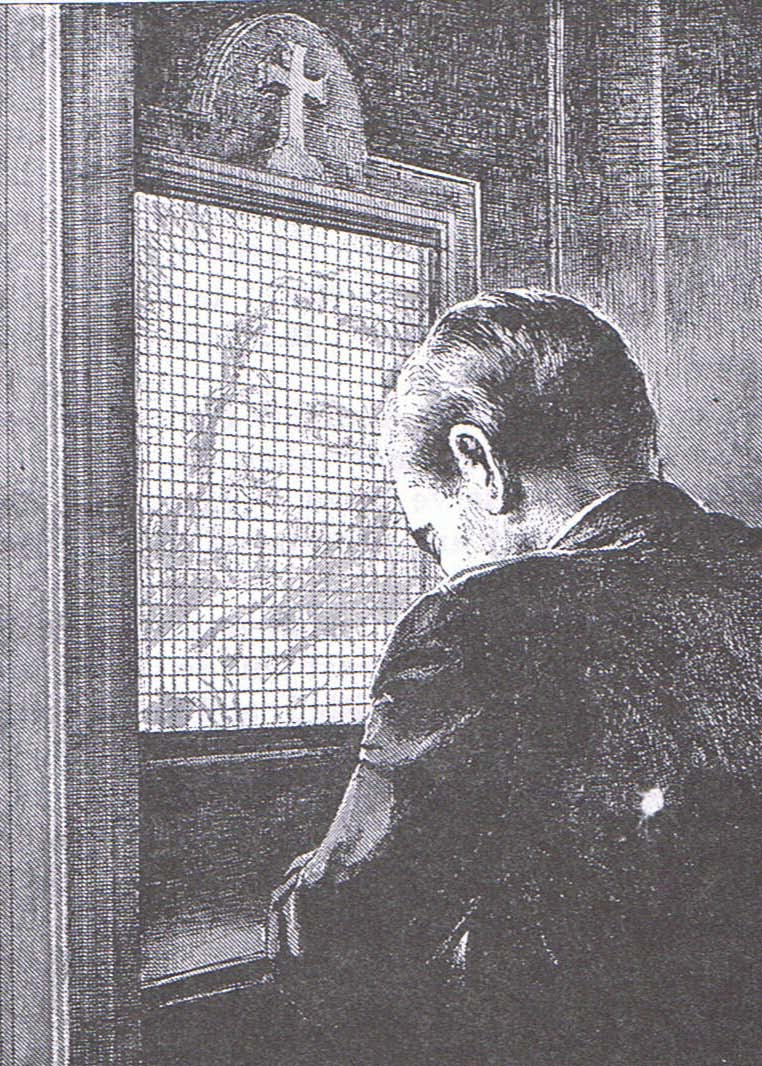
The real point is the way we treat one another. A wonderful old professor of mine explained the original definition of heresy as defined by the early Church - a heretic is someone who refuses to come to the table. A heretic is not someone who is kicked out of the Church, a heretic is someone who refuses to be part of the Church.
If I invalidate the faith claims of another, I am the heretic. I can't pile on Mark Driscoll with everyone else, I don't even know the guy. I can certainly critique and counter his ideas - and I'll continue to do so. But I also imagine there's a few things upon which we can agree. If we ever get the chance to talk, perhaps we'll better understand each other and, in the process, better understand this God whom we serve.
In the end, if we're not going to defend the Church from some of her inadequacies, there's really no reason to defend her from any of them. There's hope for our future - that's the claim we make and affirm; it's the reason we have faith. That doesn't mean we excuse the past or the present, but it means we can't completely condemn them either.
#hope