
It seems even more silly to me when it feels like (and granted discerning the tone of a meme is somewhat difficult) everyone is really just talking about one thing: killing.
Now there are of course some gun advocates who genuinely want to preserve the right to hunt and are worried that new gun laws would make that more difficult. However, I don't see much virulent rhetoric from these people, in fact, most of them are pretty confident we're not headed that direction. The real ire comes from those people who are afraid gun restrictions will prevent them from defending themselves in ways they deem fit - while there aren't too many non-crank-wackos who talk about this in the language of killing, it is ultimately the extension that must be discussed when talking self defense - people want the right to kill in defense of their life or the life of a loved one.
And, there are, of course, some abortion activists enamored with the notion of family planning by abortion, contraception after-the-fact, if you will, who make the debate pretty callous and unfeeling - but these, too, are very few and far between. Most people recognize the physical and emotional toll an abortion plays on a woman (and those who love her, if they know) as well as the moral complications of such a decision - and would rather have as few abortions as necessary. Many people would rather not outlaw abortion simply because they're not comfortable making that decision for another person - likewise, you don't see a lot of rhetorical engagement from these people. Again, the rhetoric rarely gets formed in the language of killing, but it is the extension of the debate - even if one doesn't recognize a fetus as a person, it is certainly living tissue that might potentially be forced to stop living.
Ultimately, these are both discussions about in what circumstances killing is appropriate. In the end, such positions are just value judgments - either this "bad" person has done enough to deserve a self-defensive death (self defense, being itself, a value judgement) or the life into which this child might be born will not provide the kind of love and attention each human being deserves (which is, again, a value judgement in itself) and preventing that birth is the best choice.
There is an argument about someone who's alive and made choices vs someone not yet born who didn't - and that's certainly a valid argument to have - but it skirts the subject. In both cases, the counter argument is simply speculative: you never know how this "bad" person might respond to being treated with love and care as opposed to violence and death; you never know how this child or this mother or the larger community would respond to the love and life of a new baby. These counter arguments are, of course, equally powerful and valid.
Then there are also the arguments of how these decisions affect the larger society. Do we want to be a part of a society where human life is so devalued that virtually anyone can make unilateral decisions about ending it - whether at the end of a gun or of medical instrumentation? Likewise, do we want to be part of a society that stands idly by while people are threatened or killed or while children are raised unloved or under-resourced?
There are consequences to any action.
That is ultimately my response to discussions of this kind. We need to think more. We need to recognize both the value of life and the necessary interconnectedness of all life. There is no individual life on this planet. We all impact each other in ways seen and unseen. We are all in this together. Life is important and the decision to take a life is equally important. It is not a flippant decision. Too often our debates about such things make it an easy answer, "of course I can shoot someone who break into my home," "of course I can choose whether to have a child or not." And there's strong historical precedent for both.
At the same time, there's also a strong historical precedent that people wrestle not only with the decisions themselves, but with the morality of the decision itself. What does it mean to choose life? What does it mean to choose killing? This plays out in a number of other ways as well - military service, police work, capital punishment, euthanasia - even health care and nutrition debates. Life is a pretty big deal. Ending it, even more so. This shouldn't be something we settle easily... especially when it interacts with reality.
As a Christian, it's pretty easy to take a theoretical stance. Killing is wrong. Jesus makes the case pretty clear - "do not resist an evil person," "love your enemies," "turn the other cheek." The Christian stance is always one of self-sacrifice over killing. But those theoretical answers prove far more difficult when we put them up against real life scenarios - usually scenarios that spring upon us unexpectedly. We just can't say what we would do or even what we should do, because living in the midst of that chaos is part of the process. We can follow the words of Jesus, but in the real world, it is rarely without some reservation (not to mention our various competing interpretations of what exactly Jesus meant).
We can use our beliefs to engage in practices that help form us into the kind of people who will respond as we so choose - but in the end, actually experiencing such a decision makes the difference. Listen, I pray for a world where no one will feel the need to get an abortion and no one will feel the need to own a gun, but until that world comes, I live in this one.
There are sensible gun laws out there to be had. There really are. There are sensible abortion regulations that could exist. We constantly get push back on these issues around the notion of freedom. I believe in freedom. I do think, as much as possible, people should be able to make their own decisions. What I don't believe, though, is that this notion of freedom should supersede the consideration of life. Guns may not be the only way to kill a person, but they make that killing much easier - that needs to be part of the discussion. Abortion may be the choice of a woman (because even when abortion is illegal, it still happens a lot), but it is the ending of, at the very least, potential life. The decisions we make around these topics are not and should not be easy.
I've never heard anyone talk more openly and honestly about the realities and potential of guns than police officers, who face those decisions every day. I've never heard anyone talk more openly and honestly and about the realities and potential of abortion than doctors who perform them. You don't often hear casual definitive statements from these people, because they live lives in the midst of the mess. They see the realities of life on both sides of these decisions. They take killing seriously. They understand these issues are about life and have no easy answers. In other words: they're not meme-worthy - and it's our making them so that is the real tragedy.

As you may be aware, legislators in my state (Delaware, small wonder) have tried in the last two years to get our death penalty repealed. I know I've written about life and death, especially in the context of revenge, quite often in this space. I'll try not to go too much into that today. But we have, again, it seems, failed to get this thing through. There was far more vocal support this year - even the Governor, "High Highness Sir Wishy Washy" came out in support, making public his intent to sign the bill when it got to him. Last year, it passed the State Senate by one vote and was killed in committee by the House. The House committee once again failed to pass the bill along to the full body - where it has (and has had for quite some time) more than enough support to pass. There is a procedural option, by which the rules can be suspended and the committee process skirted, to bring it to the full house. However, in order to make that motion, the Speaker has to give permission - and he's just flat out refused.
That brings me to the real crux of the issue. The Speaker, and many of our elected leaders, are retired police officers and the police organizations in the state are (at least it seems so) the only real opposition to death penalty repeal. It's not a party issue - many Republicans support repeal because of cost savings or a truly "pro-life" philosophy, and the Speaker in question is a prominent Democrat. It's really come down an issue of assigning value to life.
Many of the law enforcement contingent say they'll vote for the bill if it includes a provision allowing for continued execution of cop killers, a revision the bill's supporters have so far refused to employ. This rubs me the wrong way.
I get that police officers have a dangerous job. I can't imagine what it would be like to sit at home every day and realize a spouse, child, or parents works in a job where injury or death is a real possibility all the time. I don't want to see any police officers injured or killed, but the notion of capital punishment as a deterrent is just not supported in any way but anecdotal. Then again, I also have a strong commitment against violence and coercion, which provides a real tension in dealing with police in the first place.
I don't feel like I have the right standing to be super vocal in this matter. There are plenty of police officers who do oppose the death penalty, for a variety of reasons; they're in a much better position to argue this point. For me, it never seems to be about deterrence; it always seems more an issue of revenge. The notion of "an eye for an eye" makes a lot of sense to us (me too!) as human beings. In the fraternity of police, I get the "they took one of ours, we'll take one of theirs" mentality. I do get it. While I disagree, I think it's certainly a valid argument for keeping capital punishment.
What I don't get is making that distinction just for police officers. Doesn't this keep us going down the road of assigning differing values to the life of different people? We're already talking about a devalued life for criminals. If we're going to kill them, then their life must be worth less than the life they took. Adding in this police exemption seems, to me, to be valuing the life of a police officer above that of ordinary citizens.
As I said, I get the nature of their job is unique. It requires a kind of commitment and bravery most don't possess. In a sense, they have a lot of the qualities we value highly. I just hope we haven't gotten to a place where a person's value is the sum total of their qualities (for good or ill). We do need to maintain the notion than human-ness itself, contains a value far beyond any characteristics or actions that person might have or have done.
It's not the most popular of the anti-death penalty arguments, but the one that rings most true with me is the notion that killing is bad and that executions compound the tragedy of death with more death. I don't believe it's good or healthy - for society or for us individually - to take part in a process like this. But it bothers me even more if we're going to start designating some murder victims as more tragic than others.
If you want to support capital punishment, support it uniformly across the board. We may disagree, but at least it's a coherent argument. Separating life into different categories of value puts us on potentially dangerous ground. Saying, "It's just an unrepentant murderer," is only a few steps away from saying, "it's just a drug addict," "it's just a homeless guy," "it's just a sick, old man." I recognize that "slippery slope" arguments are general reactionistic and ultimately baseless - but that's exactly my point: there is no slippery slope here. There's a cliff.
If we begin to say, "not all life is equally valuable," we've devalued all life. We've made the worthiness of our existence just another competition in the world. I guess that's what evolution tells us about how life came to be and how we got where we are - but where we are is thinking, rational beings. We are not entirely bound by our instincts and drives; we have the ability to work against our natural reactions. We have the ability to choose differently.
I hope we choose to remember, to recognize that all life is valuable, even if the person inhabiting that life doesn't seem to understand that fact. There is no value spectrum. All life is tied together. We either value life or we don't.*
*There's a whole other discussion of how we can value life and still, regrettably, take it in certain situations - an argument that is still important in discussions of societally sanctioned killing. I've talked some about this here (there's more than one post).

As with any loss of life or bad news we hear, the first and most appropriate response is simply to participate in the hurt and affirm the pain of suffering. A bunch of people were killed yesterday and that sucks.
When things like this happen, I get angry. Not really at anyone in particular, but at everyone in general. It's a simple response that's fraught with complications:
STOP KILLING PEOPLE!
If everyone stopped killing people, no one would be killed. Hard to argue with that logic. Of course it's not likely everyone will stop killing people and if the good guys stop killing the bad guys the bad guys are going to kill more people than they otherwise would. So we all keep killing as if it is a sane act simply because it can be justified through some logical stream of consciousness.
The main problem I see is that people aren't numbers. We forget that sometimes. We forget that in medicine and in war and in elections and in church. People are people. They are individuals and we are all interconnected in one giant mass called "people." (Theologically we should probably include all of creation in that giant mass, but that could be a bridge too far for today.) It's not so simple as "killing one person today, saves fifteen tomorrow." Beyond the fact that people aren't numbers, it's awfully difficult to predict the future and it's just plain asinine to think that killing someone, with or without good intentions, affects only that person.
The great Brian Zahnd speculated on mass killings as an idea a bit. It's an interesting read.
What we do has an effect on the world around us. The things we see today and results, partly, of things done previously. I'll say again, people are not numbers and we're not isolated individuals - we are individuals in community whether we like it or not. Things effect us.
(A brief side note, I finished Malcolm Gladwell's Outliers recently - I know, I'm close to a decade behind - but the research he highlighted on the cultural foundations of our inborn reactions, even generations removed from their principal causes is both outrageous and amazing. We are not and can not be isolated!)
My thoughts on this are obviously rooted in Jesus Christ, who chose death over killing and in doing so rendered death impotent of real power (despite all appearances to the contrary, both from Christians and otherwise). The ethical implications of which are exemplified in the earliest Christians and explored for modern readers in the theology of the Anabaptist tradition and laid out by bad-ass prophets like Stanley Hauerwas, among others.
Yes, the degree to which, and situations where, killing might be acceptable for Christians is a difficult conversation. In the end, the Christian response is simply to call each other and the world to less violence. Hence:
STOP KILLING, PEOPLE!
I first started thinking about this on a large scale when considering Israel and Palestine. They shoot rockets at each other and blow up buildings and arrest people over a legitimate, complicated, historically-rooted dispute that will likely never be settled. Just on a practical level, if they're ever going to move past violence, one side is going to have to denounce violence preemptively - instead of the current posture of "no, you do it first."
Whatever side of that, or any particular tense situation you may consider sane, logically, it is the sane person who should expected to act rationally. Of course, one can't trust the insane to act sanely - but neither is the insane guaranteed to act insanely simply because of their lack of sanity.
What I'm saying is, take the chance. Yes, it's a chance which could cost your life or the lives of lots of other people, but it's better than banging your head against a wall for another 6,000 years. AND, guess what? You look a lot less threatening to the other guy if you stop actually threatening him. The same would likely be true if roles were reversed.
I use the sane/insane argument not because I believe those roles fit well in any conflict, but because those involved in the conflict believe them. If you're the sane one, do the sane thing.
STOP, KILLING PEOPLE!
Killing is contagious. The more advanced we get in our technology the further we come from actually physically understanding the reality of killing. When it was hand to hand combat and you had to grip the throat of an enemy and physically feel the remaining air in his lungs disappear - that's a difficult position. It was never taken lightly. When you can punch buttons on a keyboard and blow up an occupied house 15,000 miles away, then go home to dinner with your wife and kids - that's a lot of distance. The more killing we do, the easier it is to kill. That's not just for individuals, but for societies as a whole.
It trickles down. There's all this debate about why the US has so many gun deaths despite lower gun ownership rates than, say, Canada. There's a lot of factors going into it, a lot. One I never hear is that we live in the only developed country on Earth that still executes people. Could it be so simple as "my daddy does it, so it must be ok?"
It starts with society - and it trickles down to individuals. When we're part of a system that uses killing to impose an understanding of morality on the world, we should not be surprised to find individuals within that society who use the same logic - even if their morality is ridiculous and flat out wrong.
If you or I stop killing people, people will still get killed. I don't like what's going on in Syria anymore than anyone else (and I can't think of a single person on the planet, Asad included, who likes what's happening there). I have the same response for Syria that I do for the United States:
STOP KILLING PEOPLE!
I do not pray for quick resolution to war. I don't even pray for a cessation of fighting. I pray that every armed combatant everyone, on a battlefield or angry at home, will just lay down their weapons and renounce fighting altogether. I pray that words like war and peace will lose all meaning because people have refused to fight so long, they've forgotten what it means to kill.
Please, just stop killing people. It may not make a lot of sense in the short term; the math might not add up well (it probably won't). But in the end, the simple statement remains true: if everyone stopped killing, no one would be killed.

It is easy to justify violence in defense of the defenseless. There's not even any shame in it. At the same time, it falls short of the Christlike (Christ-ian) model. I won't belabor the point; I've said it frequently and lengthy enough.
It is absolutely awe inspiring to see the sacrifice of relationship, time, often mental and physical health to which many commit as part of a military, where they have the protection of a firearm and, more largely, the largest arsenal in the history of the world. That is true and established.
What would it take to send an army into such places of frustrating turmoil armed only with the world-changing power of love? It would likely mean a lot more death, a lot more sacrifice. Perhaps more than we could ever expect of anyone. I'm hesitant even to mention it, especially as one with a spouse and a child. I have a hard time believing I could do it. There are those who do. The army of peace is quite small, yet it is likely the most powerful force on the face of the Earth.
There are never just two options. There is always another way. It may not be easier, it may not even be (or seem) possible. But it exists. Whatever we do. Whatever our choices, our perspectives, we must remember there is another way. To deny it is to deny hope.
Lord, have mercy.

I sat in a service this Sunday where the opening hymn was "My Country Tis of Thee." A fine hymn, but in worship, I really hope we'd be singing about God. Yes, the fourth verse gives brief lip service to God, but the song is about something else.
I stayed away from Facebook for most of the weekend. I have real trouble forging a path through the inherent tension between my profound admiration for those who would die for a cause and my profound sorrow for those willing to kill for one. It's a trouble not helped by the seeming ease of those around me.
I've written on war and peace and violence before. November 11th was originally Armistice Day, a celebration of the end of war. Over the years it moved to a celebration of those who fight wars and finally to a general celebration of patriotism. It seems like Memorial Day is moving the same direction.
I have known people who died in battle. I have nothing against grieving this loss and celebrating their lives. It is important. A true Memorial Day makes sense. As with Veterans Day, when those who have fought in wars deserve to be remembered and supported through the stress, trauma, and sacrifice of such an ordeal.
However, each year I must pause, I struggle. These days seem to interconnected with a celebration of war and the superiority of our nation. At the very least, there is no appearance of discomfort or ambiguity at what those ideas mean. I've yet to meet a combat veteran who enjoyed celebrating those things; I've met many conflicted by the responses they receive from those on "the outside."
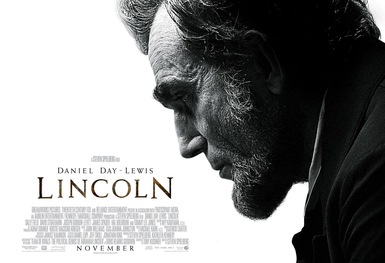
I finally got around to seeing Lincoln last night. Steven Spielberg's masterpiece about the passing of the 13th Amendment. Daniel Day-Lewis truly gives the most remarkable acting performance in the history of film. In the best bio-pics, the actor becomes lost in the character so you forget there's even an actor there at all; with Lincoln, it's is if you never knew. There was not one scene in which I said to myself, "Oh, that's Daniel Day-Lewis." Obviously I never saw or heard Abraham Lincoln, but I might as well have.
The movie is written by the great Tony Kushner, a master of eloquence - and Lincoln's stories and speeches are no exception. There are many times when the audience is roused to emotion on the gravity and importance of the moment. We are lifted on the back of grandiose prose to sail on the best notions of democracy and America.
They left me thinking, "the good is the enemy of the great."
All of our ideals of liberty and freedom are won on the backs of truly horrific pain and death. The opening scene of the film is uncomfortable hand-to-hand combat on a muddy field. It's unfathomable to me that anyone could feel so strongly about anything that they'd be willing to engage in such battle. Spielberg pays lip service to Lincoln's understanding of what he's done, touring battlefields and witnessing the death - yet the movie leaves a clear sense that all of it is worth the higher purpose.
I have a hard time getting excited about ideals being won by the sacrifice of others. Whether it is sending young men and women to war or being willing to kill another. In both instances, we require more from someone else than we do from ourselves. Why is jumping on a live grenade the go-to example of the best in war? It is a clear moment when one man sacrifices more than anyone else.
I thought Lincoln was a beautiful movie. Often these films can be overshadowed by a dominant acting performance, but the rest of the cast is just as strong. They tell a remarkable story about a remarkable man in a remarkable time. There is no doubt about the good present. I just wish they, and the rest of our national culture, would allow for more reflection.
Perhaps Memorial Day isn't the right time for a barbecue and fireworks?
I know we like the certainty of a parade, the same way we enjoy the reverence of a movie like Lincoln. They're helpful ways to deal with difficult realities like war and death, realities like the inequality of the world in which we live. We like having "heroes" among us, to give us confidence that there are better, stronger people out there to do those difficult tasks we could never handle.
Memorial Day has become another part of the patriotic calendar. The one we see played out in the rotating aisle at Wal-Mart - as beach chairs and sunblock give way to costumes and candy, auburn hewed leaves and turkeys, santas and snowmen, roses and hearts, shamrocks, chocolate bunnies, graduation caps, and flag-draped paper plates. We want these notions, these holidays, these events, to become ordinary in their extra-ordinariness.
What struck me uncomfortable about Lincoln, I think, is the same thing that strikes me uncomfortable about civic holidays and celebrations, is the need for an unassailable good.
The problem we have with war and with violence, is that we lack better options for achieving positive ends. Democracy doesn't represent freedom any more than war wins it. The problem is, what freedom we experience, for the most part, comes at the end of a sword or through the legislative process. We recognize the inherent problem with these methods, but lack any framing narrative for something different. Americans once had the same love/hate relationship with war than we now do with government, holding it at arms length with a healthy skepticism. A skepticism earned through the horror of Civil War. It was only after millions lost in two world wars, that things began to change.
I don't think we came around because we decided war was a good thing. We came around because we needed a narrative to justify the loss of so many we loved. We need a Lincoln narrative of universal good to upend the tragedy of Civil War. What could be more good than freedom?
What unsettles me is not that some fight and die in war. It's not the desperate need of those in power to remain there or even the messianic narrative some ascribe to the United States. It's our unwillingness to be wrong.
I have no doubt that those who fought and died, for the most part, did so because they thought it was the best choice they could make in a difficult situation. Being the best choice does not make it necessarily a good choice or a correct choice. We have to be willing to allow for that. In the same way, those who choose non-violence, who speak out against militarism, who are willing to die, but refuse to kill - we know there are problems inherent in that choice as well - may also be making the best choice they could make in a difficult situation. Being the best choice doesn't make it good or right.
There is nothing good about hundreds of thousands dying so millions can be free. We have to move away from using math to make our calculations about life. These people are not numbers, but people - and so are the "enemies" they killed before they died.
Memorial Day is not a happy occasion - neither is the 4th of July for that matter - they're somber events where we can reflect with love on those we've lost, recognize both our mistakes and our successes, and vow to do better in the future.
We cannot hide our unsettledness in celebration. And if we ever cease to be unsettled, we have truly lost.

Yes, they aim to save lives not take them, which makes them different. I'm just not sure life and death are the terms by which we should live our lives.
I have a different perspective, I know. My faith affirms resurrection, that no matter how or when we die, it is not the end. Our bodies will be raised from the ground and remade. Our lives will go on forever, albeit with a little speed bump of death in the middle. Because of this belief, life and death are less important as motivators. I'm not claiming anyone should agree with me or should be forced to risk their lives against their will - what I am saying is that the response to this tragedy and the attempts to catch the bombers is not monolithic.
I'm merely stating a very unpopular opinion I happen to believe in deeply. I'm not attempting to influence anyone or represent anyone - I'm not even making a claim to a "Christian" position, although my thoughts are formed entirely from my Christian faith.
There are a lot of things to fear in life. There are lots of things we have we don't want to lose. There is pain and loss and those things make us feel terrible. We don't like feeling terrible. It makes sense to avoid them - we are evolutionarily hard-wired to avoid them. If I ran into a deranged terrorist on the street, I'd probably run like hell.
That doesn't mean I think it's the right thing to do.
I'd much rather ignore fear than protect my own life. The idea of sitting at home, disrupting my life while the city cowers in fear sickens me. If I were in Boston today, I'd be out walking the streets simply as a refusal to live in fear.
I'm happy the Boston PD announcement said, "if you value your own life" before listing the requests they made on residents. I just don't think my life is worth more than my integrity. I don't know how I could preach and believe what I do and still act out of fear. I suppose that's what grace is all about, because Lord knows I couldn't live up to my beliefs.
I'm not really afraid of death, but I'm terrified of pain, intense pain anyway. I've always chocked that up to being a rich, lazy, spoiled American - and there may be some truth there. Of course it could also be because I've never really experienced intense pain (maybe those are the same thing). Special Ops forces in the military go through training in such things. They endure pain to prove to themselves they can withstand it.
As a Christian, I should be engaging in something similar. Enduring difficult situations to better prepare yourself for them in the future. Practicing non-violence in routine situations, so it's easier to react without violence when things get hectic. Athletes exercise muscles to make them stronger and more capable in difficult situations. We fast from food and other things we don't believe we can live without to prove our resilience and our frailty.
I have to believe facing and ignoring fear is part of that process. As a parent, I'm terrified that my daughter will get hurt, physically and emotionally. But that's going to happen anyway - and I'm just doing her a disservice if I become so protective she never has the opportunity to face pain and learn from it.
Just as there is a fine line between being protective and negligent that parents have to negotiate - I imagine there's a fine line between facing fear and just being stupid.
You always have to ask the question - what is worth dying for? Some people are lauded for defending their home against intruders. The things we own are worth the fight and, sometimes, the life of a criminal. Someone else's life is worth my own - that's more than honorable. Should we also consider than refusing to let someone hold fear over us might be worth our lives, at the very least?
I'm certainly in a minority position - and I'm ok with that - but I object to the people who are supposed to protect us operating on the same fear as those they intend to stop. I'd love to hear things framed not so much in terms of "what you should do," but "if you value your life." It gives people a chance to decide.
We just have to remember that some people put less value on their lives than others.
I'm not willing to kill for anything, but I am willing (I hope) to die for what I believe. "There is no fear in love. A perfect love drives out all fear." 1 John 4:18. I'm not sure I'll ever mine the depths of that truth, but I do believe it.

Even as I write this, the details are unclear. It appears the shooting involved an ongoing custody battle and the shooter knew and chose the victims purposely.
I hate to admit, but that made me feel better, somehow. Learning that the man had a reason to do what he did, to kill, somehow made it seem easier to handle or explain or deal with emotionally. I'm not sure it should be that way. Shouldn't we be shocked and saddened at the loss of life and not immediately ask why? Have such killings become so accepted, so commonplace that we take the actual loss of life for granted and fixate on the justification (even if it's poor justification)?
As a follower of Christ's way, I am committed to non-violence and I've intentionally sought to foster practices that shape me and my reactions in that direction. Thankfully I live in a place where violence is not even an occasional occurrence. It's not as though I have ample opportunity to exercise my alternative responses. What I've settled for is an attempt to expand my gospel imagination. In what new or different ways could I handle such a situation. What is the gospel approach, the non-violent response here?
Sadly, there have been ample opportunities over the years, and especially in recent months, to think about the tragedy of encountering violence. I won't pretend to be an expert or even a novice; so many people in this world respond to violence every day - and do so with more humility, grace, and commitment than I could ever muster. Still, I think the exercise worthwhile.
When we thought the worst, that this shooting in Wilmington was random, an act meant to instill fear, it was more confusing. In cases of targeted killing or specific threats, it's at least easier to imagine how one might respond. If the shooter is angry or upset or sad or depressed, but not at you, there's room for loving intervention. It may not be likely, but it's within the realm of our imagination. Perhaps there is someway to connect with this person, beloved of God, who is angry enough to take life.
When there are indiscriminate bullets flying at anything that moves, that response becomes less likely to result in peace. I am amazed at how paralyzing it can be to encounter a situation where neither fight nor flight is a morally acceptable response. I've never even been close to such a scenario, but even the thought of it this morning created intense anxiety.
Ultimately, the logical, theological side of me says this is the result of living in a broken world. There are violent and destructive acts which are truly senseless. There just may not be an answer. I appeal to the notion that Jesus always knew the right thing to say or do. On countless occasions he disarmed hostile crowds with incredibly creative responses the likes of which I could never hope to imagine. But then I realize, despite all of these effective, non-violent responses, even Christ didn't solve the last conflict. He ended up on a cross.
Still, it sits wrong deep inside that I lack the imaginative and creative abilities to solve (or even attempt to solve) such problems in the world, problems that seem so fundamental to God's redemptive work in which we've been invited to join. Then again, the taking of life is supposed to sit wrong with us. That's what drives this longing for non-violent response in the first place. Death is not a solution to death, nor killing to killing.
In the end, all violence is senseless. It doesn't have to happen. But it does happen. Our attempts to make sense out of the senseless really distract us from the opportunity to breathe life into lifeless situations. The only response to violence is love. Comfort the hurting. Pray for the aggrieved. Refuse to accept such violence as simply the way the world works.

That being said, I find it more than bit troubling how the world so easily claims this tragedy as it's own. Of course every death is a tragedy and the death of children even moreso because we recognize the loss of what could be. I don't have any problem expressing remorse and voicing the reality of the injustice and evil of an act like the killing of kindergarten students in Connecticut this week. I don't think we should ignore it.
I do think we should have firm and sensible boundaries. A Facebook meme with a lengthy quote attributed to the actor, Morgan Freeman, made the rounds in the wake of the tragedy - it expressed a desire for us to stop focusing so much on these mass killings - making the perpetrators defacto celebrities and perhaps incidently inciting more. I'm not just talking about the media - after all journalism, as tasteless and exhausting as it can be sometimes, is an important service. I don't think we need 24 hour coverage. I don't think we need interviews with little children who just escaped such a terror or a high school classmate of the shooter. They do it for ratings and because we have this inherent desire to know.
I'm not sure it's good for us to have that need satisfied.
I'll just say I don't understand how so many people find a tragedy like this makes them think more about their own children. I saw all the Facebook posts of people hugging their children. I've tried to figure out what mindset brings people to those posts - my only answers are unkind and likely untrue; I won't share them here. I do have a child now, one I love quite a bit - but I don't find myself more in love, more sentimental or more anything in the wake of this tragedy. One thing I do resonate with - I can't even imagine losing her.
I think that's what bothers me most. Those who haven't lost children really can't identify - we'd like to think we can, we'd like to think we have something to offer besides prayers and condolences. We don't. We're helpless and we're disconnected and we don't like it.
I think it's entirely appropriate for the President to stand up and acknowledge the tragedy and loss - to pledge the nation's support. I don't think it's appropriate for him to show up. It's not a national tragedy. It's a very localized tragedy in a small Connecticut town, specifically for 27 families and those who are a part of their lives. It is certainly evidence of a troubling national epidemic, but it shouldn't be treated as part of a larger problem. That's a disservice to those in mourning.
Certainly there are things we can do to help - but its a general help, not a specific one. There's absolutely nothing we can do for these families but allow them time and space to mourn. We can have those discussions of gun safety and the mental health process - we can work to shape our society into one where things like this occur less.
I also think we can leave the grieving to grieve. I am not saying we abandon the families of the dead - not at all. But we can't mourn with those who mourn when we have no connection to them. Ninety-nine percent of us don't have any connection to these deaths - allow those who do to represent us in comfort.
We want to express outrage - to feel like we have some power over the evil in our world. These are good honest responses, but sometimes focusing on a problem from which we're disconnected keeps us from addressing similar problems in our own communities. In 2011, more than 14 children were killed by guns every day of the year, just in the US. The number rises precipitously when the age goes to 18. 40,000 children die of starvation in the world every year. Nearly a dozen kids are killed by their own parents every day as a result of abuse or neglect.
I suspect, more than better gun laws or improved mental health services, we're most likely to prevent things like this from happening by being present and available to suffering in our own neighborhoods and communities.
If you need to hug your children extra, please do so. If you need conversation in your workplace or congregation or around the dinner table to help deal with the trauma, by all means have it. I am not trying to diminish your response or the tragedy that has happened, I just hope to remember, for myself if no one else, that pain and tragedy exist all around us. Our society has gotten pretty good at hiding it, which is why these times it smashes out into the open trouble us so deeply.
I'm not upset, necessarily, with what's being done. The desire and urge to help those far away from us is righteous and positive. At the same time, it's difficult to stomach in a culture where everyone and everything seems kept at arms length.
We have grandiose ambitions and we live in a super-sized world. We want massive solutions to massive problems - when likely the most effective course of action is, once again, to love your neighbor.
That's when things get messy. That's exactly what the people of Newtown, Connecticut are discovering in the wake of this terrible event. For me, at least, it seems disrespectful to assume I can have some part in that from far away. As much as I desire to comfort and solve. I just can't - not as a stranger hundred of miles away.
I'd like to hope (I am an optimist beneath all these contrarian ideas) that the legacy of this disaster could be a renewed sense of community around the country and perhaps the world. That we could find, on the other side of this loss, pain, and confusion, a sense of community and connection - some small piece of the relational world in which God created us to live.
I have to embrace my place, my town, my people - to own my pain and the pain around me. This just doesn't work from a distance.

I have no experience in combat or as a soldier so anything I say here is more speculation, hypothesizing and questioning. I hope those experienced soldiers who read this will be able to bring their informed opinions to my thoughts.
Obviously the question is why?
I don't know. I have a couple of questions. Could it have something to do with the changing cultural understanding of war? It seems like war, combat, killing was once something people did out of perceived necessity - it remained "bad," regrettable, and terrible. People knew the "evils" of war, so to speak, and what men did in battle stayed there.
Over time we, out of patriotic fervor (especially those who never go, serve, or sacrifice) made such combat service into something admirable. It wasn't the nastiness of war anymore, at least in the public realm, it was good and noble. Something that had to be difficult when the realities of combat are relatively unchanged. We had a whole generation of veterans whose experiences in war didn't line up with the descriptions of such by people who hadn't been there.
Is it more difficult to deal with the realities of combat when people treat soldiers like heroes for killing people? I don't know. Just a thought.
Of course that doesn't address, at all, those soldiers who kill themselves while never having seen a war zone. TIME profiled a doctor, stationed in Hawaii, who cited the difficulties meeting responsibilities to his family and to his comrades. Is there an issue with priorities? The military does a great job breeding brotherhood - bringing people together in such tight-knit ways that they become family. Does this familial bond end up trumping a soldiers spouse and kids? Is too much emphasis placed on the connection to fellow soldiers? I don't know.
I did think about potential comparisons to ministry - something with which I am familiar. Often, pastors were trained to give everything to their ministry assignment - the people in their pastoral care became such a priority that their spouse and kids suffered because of it. I use the past tense because things are improving; it's not a conquered problem, though.
Because of these pressures, you see a lot of depression, burnout, and relational problems in pastors. Thousands of pastors quit each month because of these or similar pressures. As a whole, ministry preparation did not include the proper understanding of priorities for family and ministry.
I don't know if this is analogous to the military or not. It sure seems like it from the outside. Are there better ways to train soldiers to maintain proper perspective - or are the requirements of the job too demanding to make this work?
Certainly there is more each of us can do to support combat troops as they return home, but the Pentagon isn't sitting on its hands either - 4% of the budget goes to mental health and most of the active duty suicides had counseling and other preventative services.
If trends continue, in a few years suicide will be a greater cause of military deaths than combat. We owe it to our our soldiers and ourselves to keep this from moving to the back burner.

When the President said, "If I had a son, he would look like Trayvon" what he said was correct, but the truth is, if any of us had a son, he would look like Trayvon. Ironically, crazy Newt Gingrich was the only person of note to bring this up. And while I disagree with his charges of race-baiting (and nearly every other things that comes out of his mouth), I do agree this statement highlights race and should be given additional notice.
I believe the quote, and others like it, is meant to draw attention to the very real possibility that being black in the United States (and nearly anywhere else), in and of itself, is more dangerous than being white. As obvious as this realization is to millions of black parents, it may have taken an event like this for it to really sink in for Barack Obama (and for many other parents).
I want to be careful here and not ignore the reality of racism and our collective denial of the real effects of slavery and segregation in this country. Even if race had nothing to do with the death of Trayvon Martin, it's certainly reminiscent of many other deaths in which race played a pivotal role.
In the President's statement, Trayvon was not just a child, but a black child - which, inadvertently, pushes those of us who will likely never have a black child into a second class of relatability. Of course, my righteous indignation does precisely the same thing - why does Trayvon's age make his death, under these circumstances, any more tragic?
As a Christian, I believe that life is precious, that the taking of life is always tragic - even if, on occasion, we find it regrettably necessary. I believe that when a human being takes life there is an incongruity with our own created nature - something damaged that requires divine intervention to be healed. I wonder if we assign these levels of tragedy to killings as an attempt to buffer ourselves from the very real effects of those others we deem justified?
I think we create these levels of tragedy specifically to correspond with ourselves. The more innocent, the more well-intentioned, the more responsible for others, the more physically similar to me, the more tragic the death. Is this ultimately a way of calling our own lives more worthy of continuing than others? This becomes vitally important if we're ever in a situation where our life is threatened. We have a built in excuse to "kill or be killed" - our death would be more tragic than their's.
It all leads me to ponder what sort of actions and thought patterns I should be practicing to enforce and instill the idea that my life is not more important than any other? If indeed there exists a situation in which "kill or be killed" are the only two options, the more tragic is to choose killing - after all, the victim doesn't have to live with the consequences.

The Feast Day of St. Martin of Tours is also November 11th and I picked up on the profound statement the juxtaposition of these holidays makes from reading Shane Claiborne. St. Martin was a soldier in the Roman Army and descended from a long line of soldiers. He had a crisis experience early in his Christian journey that led him to risk his life to quit fighting. He volunteered to stand unarmed between two warring armies to prove both his bravery and his commitment to Christ.
One of the things I believe most strongly about Christian life is the call to make a unique statement, to engage in actions, a lifestyle that does not mark one out as simply "a good person," but one that marks one out as a follower of Christ. We must remember that there is a difference between what common morality demands and what faith in Christ requires of us.
I appreciate the statement of a Christian holiday commemorating one who was brave enough to die for peace set alongside the civic holiday commemorating many who have been brave enough to die in war.
I have nothing against soldiers - I've never met one who fit the movie stereotype of the bloodthirsty goon. I'm sure they exist in some small number, but every soldier I have ever met committed to a military life with careful consideration and generally selfless motives.
The desire to protect innocent people and the desire to stand up for what one believes to be noble and good causes are commendable. Most combat veterans exhibit the kind of bravery I doubt I could ever muster. For this they have my humble respect.
However, as a Christian, I feel fighting in a war relies too heavily on human means to achieve these positive ends - in the same way politicians rely too heavily on human means to bring justice and security - in the same way we rely too heavily on our paychecks and the sweat of our brows to feed and clothe our families.
The message of the gospel is one of alternative choices. Choices that make little sense in the rational extrapolation of our common wisdom, but choices that I must believe will ultimately prove victorious.
There is no way to completely rationalize one's outlook on life - at some point we must have faith in something, whether in human ability or scientific discovery or in God. The one thing I have to believe is that the humiliating execution of one man 2000 years ago changed the way the world works for all time.
I don't want to argue about pacifism here. That is not the subject of this post. While my ideals would lead me to take a stand elsewhere, I cannot claim, given the intense situations which have been faced by so many people before me, I would choose any different. This should not be an issue of idealism versus reality. It is an issue of how the Church responds to the reality of war.
I don't begrudge Christians who join the military. There are veterans in my family and among some of my closest friends. I understand the choice they've made and the faith they continue to possess. When people are away I pray for their safety and for God's presence with them and with the families they leave behind. I think we should all do what we can (and in my case, much more than I do) to support those families torn apart by war in this way.
At the same time, we must stand for peace. We must pray for an end to all war and not through one side defeating another, but for both sides to recognize the sovereignty of God and turn their tanks into tractors (to paraphrase the prophet).
So I suppose my opposition is not in recognizing veterans (as I've said, there is so much to admire in their lives and characters) as it is to what seems like the glorification of war. Freedom and security are not won through battles or revolutions or elections. They are gifts from God; and gifts that we're not promised to always enjoy. In fact, the promise we receive is hardship and persecution - this is the cost of a gospel that makes no good sense to those who stand on the outside - but one that is the very definition of life and death.


.jpg)


