
Palm Sunday presents the challenge to the powers of the world - a law of peace and love and suffering over a law of power and might. It's easy for us to constrain it in the ghetto of idealism and ignore it as we tackle the real world. Jesus says love overcomes hate and peace, violence, suffering over power and control. We're down with that until it's too difficult, then we make justifications.
It's called conditional approval - we can do bad things in certain situations because it's for the greater good. We can nuke Japan, but North Korea can't. We can blow up buildings all over Iraq and Syria, but Saddam Hussein and ISIS can't. A police officer or, perhaps, a local vigilante who feels threatened, can shoot unarmed teenagers, but they can't shoot back.
They're cut and dry situations because conditional approval always goes to the powerful over the less so. Why? Because the powerful make the laws. They get to decide. (I guess I should fairly say "we" here, since I benefit from conditional approval far more often than I suffer from it.) We like to say it's just democracy or fairness or good vs evil, but that's really not true. We skew the rules to benefit us. When we do it, it's good; when other people do it, it's wrong.
This is precisely why the radical gospel of Jesus Christ is so dangerous: there's no conditional approval. Killing is wrong, no matter what your justification. Abuse, oppression, selfishness, violence, power - they're all out, regardless of context. What's wrong is wrong, no matter who does it. Without an "us" and "them" the powers that be have no means of coercion or co-option.
The gospel is good news for the poor because the message is literally, "we have nothing to lose." The Empire took over Christianity when it gave the Church something to lose, something worth protecting, something requiring conditional approval. God is an easy excuse to give ourselves cover. "I'm just doing it for your own good," or "I don't make the rules, God decides what's right and wrong."
The problem with conditional approval, though, is when we find ourselves on the other side. We're down with killing our enemies until we become the enemies of a more powerful force.
Jesus marched into Jerusalem on the back of a donkey, accompanied by losers, and proclaiming peace to people who'd always been under the heel of conditional approval. Pilate marched into Jerusalem on the very same day, astride a white war horse, accompanied by legions of soldiers proclaiming peace to anyone who fell in line and followed the rules of conditional approval.
Many through the years have been tempted by the power of power. When you've been on the wrong end of justification, it's quite easy to use the same rationale to overthrow the oppressors. Forgiveness doesn't jibe very well with justice. Yes, we can argue that our conditional approval is necessary - that's how it works - those rules don't just protect us, but the people we love, innocents, children. It's not about war, but about self-defense. Surely staying alive is the most important thing?
Jesus didn't think so.
The call of the Christian is the call to Christlikeness. It's not the call to use the weapons of the world for some purportedly righteous end; there's nothing of God in that. The very notion of friends and enemies, good guys and bad, is directly contrary to the gospel of love and grace.
I ran across a quote this week that perfectly sums up the problem of the spirit of empire, of power - the ideas that seem to run the world:
"We are advocates of the abolition of war, we do not want war; but war can only be abolished through war, and in order to get rid of the gun it is necessary to take up the gun."
You may say that's foolish, but it under-girds just about every dealing with power that exists in every society. Those who fight for righteousness do it to destroy evil. We never both to wonder if perhaps we're just as evil as the ones we try to kill or if they're as good as we think we might be. We really don't stop to wonder if perhaps power just simply can't overpower itself. Maybe violence can't stop violence and war can't end war. We know that deep down, but we keep giving conditional approval, because we don't really believe there's another way.
It's not just about intellectual assent, it's about putting our lives where our minds are and living differently in the world. Do we do it perfectly? By no means; in fact we're downright failures, but I'd rather be failing in the right direction that succeeding on the highway to hell.
...by the way, that quote? It's from Mao Zedong, former Chairman of the Chinese Communist Party and one hell of a success.

A transcript of the exchange can be viewed on any number of sites I'd rather not link to, but here's one anyway, since you need context.
The crux of the matter is Vought's comment, in support of his alma mater, Wheaton College, that people of non-Christian faiths (specifically Muslims in this particular case, but it's expanded to all) "do not know God" and "stand condemned." Sanders uses this statement as a means of rejecting (or voting for the rejection) of Vought in a government position because this view might be offensive or fear-inducing in people whom he's referenced.
In my view, both of these guys made real fools of themselves.
Sanders is easy - he falsely equated personal opinion with action. You need to show actual discrimination to justify denying someone a position of power, at least in the US government. Vought's belief that some people are condemned is just a belief, unless there's proof he acted on it. Shoot, this is a position in the Office of Management and Budget, for crying out loud, are there even religious issues that this guy would have power to rule on in the first place? Even if Sanders thought he might act prejudicially, he would be hard-pressed to come up with a scenario where such prejudice could even be possible.
People have rightly pointed out that this is, essentially, making a religious test for office - something the constitution forbids. Of course, what we conveniently never talk about in those scenarios are the ways in which our laws already impinge on the freedom of religion for things like child brides or abusive corporal punishment, to name a few. It's not outside the realm of possibility that "condemnation" on the basis of religion, might be one step on that same train Sanders would like us to pursue.
All of those are interesting, but what I didn't hear too much of is criticism for this notion of condemnation coming from Vought. It's terrible theology, to begin with, and just over-archingly anti-Christian to make such a statement. I could see justification, perhaps, for the condemnation of specific actions, but to condemn not just individuals, but whole groups of people, simply for a theological difference, feels like precisely the kind of thing Jesus denounced the Pharisees and religious leaders of his day for doing all the time.
In fact, I feel like Jesus said, at one point, "God did not send his son to condemn the world, but to save the world through him." Time and again Jesus failed to condemn anyone, except those claiming religious authority. We miss that boat a lot, as Christians, and maybe it takes a wildly over-zealous, secular Jew to get someone to notice.
I don't think Sanders was remotely right - at least constitutionally - in his statements and his badgering. In fact, it sounded an awful lot like condemnation in its own right. At the same time, Vought shouldn't be defending those words; he should be profusely apologizing for them.
To use the name of Jesus, the Church - his followers - as the means for doing it just makes me sad. The people most committed to the name of Jesus Christ don't appear to know Jesus at all. Rather they've bought into a dogmatic theology that serves its own internal logic more than the God it purports to represent.
It's intellectual assent taken to its logical conclusion - a person's acceptance or rejection of the idea of Jesus overrules individual action.
No one is saved or condemned based on their religious affiliation - we're saved or condemned by our commitment to love and selfless service -
you know, living in the way of Jesus Christ, whether you're in a position to admit that's what you're doing or not.
Neither of these guys did much to advance their cause in this matter. Neither one showed any real understanding of honor or respect. I'd say those actions - the words and actions of both men - are embarrassingly counter to the message of Jesus. Fortunately, that doesn't devalue them or their identities in any way. There's still plenty of love and hope and grace to go around.
At our very best, we're still more prone to condemnation than grace. I'd say the best we can hope for is to recognize it in ourselves, admit our failings, and work to be different moving forward. The intractable positions we see here are far more alike than they are different and we deserve better than either one from people we've placed in positions of power.

The first third of the book is a series of essays wherein a 9 year old reviews the NYC restaurants his mom drags him to so his Dad will have to pay (as part of the divorce settlement). As the section continues, the boy begins to review every meal he has, including Thanksgiving with the militant vegans next door. Part of this review is him pondering what a turkey would think about people eating it and especially what the turkey would think about people focusing a holiday on the act of eating it.
Because I'm a theology nerd, this got me thinking about communion. It's essentially a celebratory meal with (depending on your level of adherence to classic Catholic doctrine) involves the eating of a person (a no longer dead person, mind you) as the center piece. Unlike Jesse Eisenberg's hypothetical turkey, Jesus is (allegedly) capable of contemplating you eating him (or in memory of him*).
I feel like Jesus would care a lot less about us taking communion. I'm not saying he would be upset with how prominent we've made it - although I've always been intrigued by the argument (which Derek Davis once presented to me, although I have no idea whether this is just an idea he's was aware of or an idea he holds or even if he did hold and no longer does - that conversation is now a decade old) that Jesus only ever intended the Lord's Supper to be an annual add-on to the Passover Seder, important, but not necessarily pivotal - just that the meal itself should be a sort of reminder that we're supposed to actually live out the things it's designed to symbolize.
If the only thing we're doing in imitation and remembrance of Christ is dipping some bread in some wine, then we're probably missing the point. so in short, perhaps Jesus would say, "yeah, you've got this whole celebration set up around a meal I'm the main course for - great - just don't forget all the other stuff.
And that brings me right back to the turkey at Thanksgiving. We don't eat meat in our house, but I don't object to the eating of meat. I have problems with the way most of our meat is raised and killed, but the meat itself is not an issue with me.** Specifically, in this scenario Eisenberg created, I'm not sure an animal would object to being eaten, especially if it was (humanely) raised for food or killed to keep the overall wild population healthy (although, I suppose, this assumes hypothetical thinking animals would be more rational than the actual thinking animals alive today).*** Again, a scenario in which the meal itself means less than everything leading up to and following from it.
So this is a good example of what my brain is thinking about when you find me staring off into space when I should be paying attention to the party I'm at or the conversation I'm having with you. I do apologize for being rude, but not for having this messed up brain; I kind of like that part.
Toodle-oo.
*Which is, when you think about it, an odd thing to say about a person you believe to be no longer dead.
**Scripturally it's pretty plain to see that God never intended humans to be carnivores - meat is conspicuously absent from the list of foods given by God in Genesis 1; however, I tend to align with the great hebrew scholar Terence Fretheim who says that humans eating meat has become part of creation through human participation in ongoing creation, especially with the advent of domesticated animals, whose major purpose is to supply food for humans.
***I always struggle with that last part. I want to say that a properly managed world shouldn't have the need for culling by humans because the rest of things are in balance. At the same time, though, it feels like that balance would be impossible without predators roaming populated areas to manage the prey who also live there. So, on the one hand we've royally messed up the eco-system by removing dangerous predators from our neighborhoods, but on the other hand, I'm really, really, really glad I don't have to worry about my four year old being dragged off by a mountain lion when I send her out to play in the back yard - even if the existence of that fear would probably mean a world with greater moral integrity.

That argument ultimately lasts until it passes from your mouth to someone else's ear. Even if you're not on board with the "my truth is my truth and your truth is your truth" movement, you almost have to admit that everyone is going to have a slightly (or drastically) different perspective on what's true - AND none of us is going to get it completely right. I do appreciate the effort, though. I do think we should be seeking absolute truth - we just can't look at it propositionally; doing so is basically an exercise in absurdity.
What we need to do instead is understand truth relationally. Truth is not some abstract notion or idea or principle - truth is that which extends between two people. The way we treat others, the way we act, tells everyone all they need to know about what we hold true.
This is where a lot of Christians get in trouble - well, religious people in general, really - it's certainly not limited to Christianity. We sometimes get so worked up trying to defend (to others and to ourselves) our notion of truth that we equate our understanding of truth with actual truth. What's more we do so by seeking to prove some truth claim by another person to be wrong or faulty or imperfect. In doing so, though, we betray another truth we'd rather not own up to - in short that being right is the most important thing, that being right comes before showing love and grace to others.
At its core, Christianity hold that absolute truth is Jesus Christ. Truth personified - that idea even came out of his mouth. Christians believe that truth is not an idea or a concept or something to be mastered or defended - truth is a person to know and by whom to be known. Truth is inherently relational. We need to treat it that way.
Jesus never went out to crush the ideas or perspectives of others, he only really had criticism and challenge for his own people - the religious leaders of the day. He was holding people accountable who were already part of his own group - he wasn't challenging strangers or seekers with some propositional knowledge. He just sort of loved people. He did a lot of forgiving, often in ways and places where it didn't always seem wise. He was gratuitous with grace.
This is something we forget when we make truth propositional. We forget that real truth is not a concept, but an action. Truth is living out what we believe to be true - living in imitation of Jesus, seeking to live in peace and value everyone for the human being they are - a human being made up of actions and experiences uniquely formative of that particular individual.
Perspective does indeed matter when it comes to truth. We can only really approach truth when we recognize and respect the perspective of another. Yes, there are certainly propositional values that are important to Christians, but they're not learned for their own sake, but out of relationships - both with God and with the world (and the people) around us.
So when people get up in arms about "defending the truth," I think, "the truth is fine on its own; it doesn't need defending." What the truth needs, though, are people who believe it enough to live it out. That might make a real difference in the world and, who knows, might actually help other people find the truth themselves.

Once, Jesus was invited to the home of a church person. He went and sat down to have a beautiful dinner with him and his friends. Although the church people were skeptical of this Jesus guy, it was an honor to have him in their home and word spread quickly. Lots of people gathered outside, hoping for a glimpse. One brave woman found her way in. She brought a jar of expensive perfume and was visibly shaken. Crying, she knelt by Jesus, her tears wetting his feet. She wiped them with her hair and poured perfume on them.
When the "Church people" saw what was happening they began speaking quietly to each other. I thought this guy was a prophet - if he were, he'd know who "she" is and what "she's" got under those robes. We've got a special bathroom for "her."
Jesus turned to the host with a question.
"A man suffered from crushing debt. Early in his life a local benefactor took pity on him and paid the debt, so the young man could live an easy and productive life. Another spent her whole life suffering from such a debt before she had the good fortune to run into that benefactor and experience his generosity. Who will love that benefactor more?"
The host replied, "the one who suffered longest."
Jesus answered, "You have forgotten what it's like to be ridiculed, scared, threatened, or disowned - perhaps you never knew. This woman is grateful for even the most basic human kindness; you chose not even to honor my presence in your home."
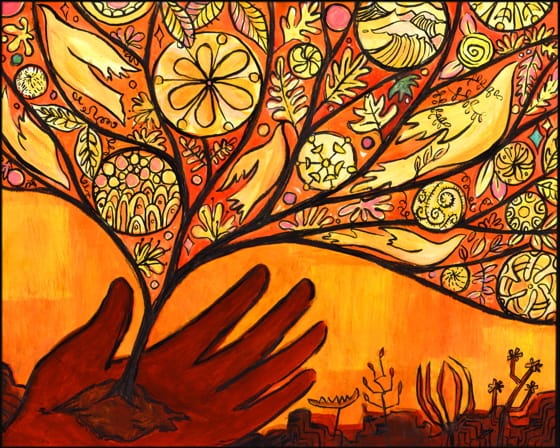
It's a beautiful idea, an escape from the constant drive to accumulate and hoard. Jubilee provides a great picture of what justice could look like in our world.
But...
I've never really asked myself until recently, why is there a need for jubilee?
Why would this command be included in God's word to God's people? Why would this beautiful image even be something people might strive for (even though we never have seemed to live up to it)? It's really because people weren't taking care of each other. People in difficult circumstances or on wrong side of bad decisions were being left to their own devices. There was no justice and so justice was demanded.
But we really shouldn't need a reset every 50 years, especially not the people of God. We should be a people of compassion and justice at all times. Frankly, there isn't really a reason why people should have to sell their land or themselves to survive. Society never should have even gotten to a point where the call to Jubilee was warranted. We should all be more gracious than that.
Jubilee is great and we shouldn't cease to marvel at its greatness, but we have to remember, it's an accommodation to human society, not some ideal for us to aspire to fulfill. Yes, jubilee would be better than what we've got now, but jubilee is not the Kingdom; it's not the goal. Jubilee is just a marker on the journey, a sign pointing towards eternity and the Kingdom of God. It's a correction to the collective sin of human society and despite our inability to imagine its reality, it's very existence as an idea is an indictment of how we live.
Go ahead and live in whatever consumeristic ways your heart desires, but every 50 years, you have to show a little grace. It's like throwing God a bone. I've always looked at Jubilee as this amazing image, but our faith and life should really have progressed well beyond Jubilee at this point. Jesus, in his Sermon on the Mount, brings us well passed Jubilee - give to those who ask without expecting anything in return, turn the other cheek, love your enemies. These are notions well beyond Jubilee.
So often it seems we accommodate ourselves to failure. I try to eat just two cupcakes and actually mow down a half dozen. Well, maybe keep it to four next time, right? Jesus doesn't work this way. You can't get this Jubilee thing to happen, well let's just up the ante a bit so you know I'm serious.
We always complain out of our fear, specifically a fear of lack, a fear of suffering. Some of these people deserve to lose what they have, Jesus - me giving them more will just be enabling poor choices. Of course, then we start to sound like those people who tried to stone him when he proclaimed universal grace: release to the prisoner, freedom to the captive, sight to the blind. We're happy to take that grace for ourselves, but we're not sure there's enough of it to go around.
This is why we needed Jubilee - because it only takes an instant for us to look away from suffering and into our own pockets (or pocketbooks), terrified that we won't have enough. Jubilee was supposed to be a reminder that there's enough for all - Jesus takes it one step farther and shows even when there's not enough, it's somehow enough to go around.
I've said for a while now that the greatest tragedy in history is that God's people never practiced Jubilee, but I'm starting to wonder if perhaps the greatest tragedy in history is that we ever needed to be called to it in the first place.
The example he uses is SS agents coming to the door of a home during Nazi occupation and asking if there are any Jews present. The owner, knowing there are Jews present, but not wanting to turn them over, faces an ethical quandary. In reality, some people did in fact tell the "truth" and leave those Jews they were protecting in the hands of God. Others "lied" and continued to hide the Jews. Rollins argues that denying the presence of Jews is actually the truer statement, because it positively transforms reality.
Coming from a scriptural perspective, if Jesus is "the truth," then anything resembling Christ or in line with his life and teachings would also be truth. Rollins argues that saving Jews during the holocaust is inarguably true, no matter what factual inaccuracies one must espouse to do it.
Yes, it's a convenient example - one difficult to disagree with, but I think the larger notion of truth as an action that positively transforms the world helps in a lot of situations.
There's the old trope of a wife asking her husband if a dress makes her look fat. As a husband, you know there are some realities to navigate there. It may very well be that the wife has chosen a dress that is unusually unflattering and she would look (and feel) much better in something else. Saying as much is an important truth in the moment, because there's a potential she'll be embarrassed later on. Now if the wife has simply chosen one of many dress options that all make her look equally beautiful (even if she might actually be overweight), you say as much, because it is also true. There is no other answer you can give which will positively transform reality.
Again, this is a convenient and common example that doesn't always translate to real life - but I imagine you can imagine a lot of scenarios where this is a helpful guide (certainly more helpful than asking yourself, "is this an accurate description of reality?).
Putting our words up against some arbitrary definition of "true" or "factual" is ultimately pointless. The point in life is not to be accurate (especially since we've long entered a period where bias and perspectival error are well accepted and few people believe truth, by that definition, is even possible), it is to positively transform the world.
Of course, this adds a layer for Christians (or really anyone) when debating how to speak truth. It certainly seems easier to say whatever will make our own lives easier and, in a way, one could argue that positively transforms the world from my perspective. Using this definition of truth, though, requires a willingness to submit our own preferences and ease to the greater good. Something we're not always very good at.
Then again, using the standard definition of truth requires much the same thing - only it gives us less room to justify our actions and correct or ethical. This idea from Rollins makes more space for interpretation and disagreement, but we live in a world where that's reality anyway.
In any event, I'm not at a place where I'm adopting this notion of truth wholesale anyway, but I do think it's worth thinking about - or perhaps the larger point it's making about how we approach ethics. I'd love to hear what other people think, though. Chime in.

In the buildup from Part I and Part II, we've sort of covered the introductory stuff to get to a place where it feels ok to explain what I've been really excited about - not so much because the idea itself is exciting, but more because it seems to explain things in a way that is a little more cohesive with scripture, the world around us, and the way postmodern theology is trending.
I was talking about some of the things I've covered so far in a Theology of Creation class I took a few years back and the professor (whom you can likely figure out, but will remain nameless here just in case he doesn't want to be associated with this crazy, crackpot idea) mentioned an old Rabbinic teaching about two forces at work in the world - not a "good vs evil" kind of thing, but two contrary, amoral forces underlying reality. (I wrote a paper for that course exploring the biblical and historical basis for this idea, which is long and pretty dense, but gives more detail.)
Ultimately, I decided the biblical basis for the notion was tenuous at best (and that's being generous), but the fact that people have been toying with this notion for thousands of years really sparked my imagination. It struck me how well this notion of two forces fit into the way I had already conceptualized sin and creation; it also made great room for evolution in the process.
Selfishness isn't good or bad - it's one of those amoral forces I mentioned above. Selfishness is what keeps a baby alive - if it didn't cry for food and attention, it would die. There's a sense that our self-preservation is essential to our survival. Now, obviously, selfishness can be really terrible and lead us to do terrible things, but the notion to self-preservation can't be condemned on its own. This is essentially what evolution is - an individual trying to survive and pass some part of itself on to the next generation. That's natural selection; it's survival of the fittest. You can even extend it back to the big bang. Even when the elements of the universe weren't sentient or alive, they were living in a process of continuing.
What if that was how God created? Just spoke existence into existence with the knowledge that things would continue to develop. God wouldn't have to plan out what specific things would evolve and arise, but putting the universe on a trajectory of self-preservation necessarily determined where things would end up. Eventually some specifies would arise capable of understanding this selfish force at work in the world, evaluating it, and potentially acting contrary to the very forces that provided for its creation.
I'm not sure God planned on relatively hairless, bipedal primates as that species (we could have been purple, globulous things with beaks for all it mattered), but we would have the ability to understand our natural inclinations and choose against them. That was the important part. From there God could enter into our existence in a relational way - choosing a specific tribe, for example, to pass on specific guidance for life - but even more broadly than that, the very reality that humans can think outside instinct and drive makes the God who inhabits all reality not only a possibility, but a force in the world we are aware of. The very nature of who we are as humans means we have some understanding of God - it's why we can see core elements of a very similar belief underlying the metaphysical understanding of every culture and religion. There's something deep within us as humans who understand at least the reality of God. The creative force of the universe - this amoral self-regard - demands it.
Now this force, on its own, it utter destruction, right? It's what leads a society to kill of its disabled members, it's troublesome. Those things make sense evolutionarily, but we naturally react against them because we also have within us this force of selfless love. This is the presence and action of God in the world. God is love. This force of selfless love works in tandem with the force of self-preservation, where they can temper each other and keep us moving forward towards God's end.
The way I'd describe the reality of this is simply that from the moment of creation, that self-preservation force "took the lead" (for lack of a better term). This force was the driving force that brought us to existence and drove the world to where it needed to be for God's big turn. That turn comes in the life, death, and resurrection of Jesus Christ. Creation has reached a point (in the fullness of time, as the gospels put it) where God could physically enter into the picture. We always talk about the cross meaning something - that it effects not just spiritual change, but real, permanent, physical change in the world. Theologically we might say Jesus was the "inauguration of the kingdom" or the point in which we start to experience heaven.
In this particular narrative we say this is where self-preservation takes a back seat to the selfless love of God. We talk about the defeat of death and the coming of eternity, in which there is no need for self-preservation because the self will be eternally preserved in resurrection. Death is the roadblock that drives evolution - without the reality of death there is no imperative to grow and change, to reproduce and survive. You can't start a world like our without death - it would change all the rules.
Now, however, we can build upon this world already created - with the rules already in place - and we can begin to work by a different set of rules, to change and shape the future into something that looks like the life Christ lead, the kind of hope and future most religions envision. We begin to work toward heave. Jesus is the turning point.
This leaves us with a future world in which we're being shaped and formed by different rules, moving again, without prejudice for specifics, into a different kind of people - no longer ruled by self-preservation, but by selfless love. This is what people talk about in the coming of the Kingdom. Just as creation could have taken an infinite number of paths to get to it's crisis point, so creation can again take an infinite number of paths to get to our final destination (which may, in itself, be an eternal, continual process - who knows?).
Everything in our world is changing - moving from one thing to another. It always works this way - in nature, within ourselves, and in the relationships we have. There's no reason to think, as the traditional narrative does, that God started with what he wanted, we screwed it up, and the purpose of all existence is to get back to what we lost.
No, rather, I'd argue we were created exactly as God intended - through a process that produces people with a distinct lack, a lack only filled by the selfless, mysterious love of God, exemplified in Christ, that will eventually provide us with the power and grace to become what we ere always intended to be. The story of God is one of things getting better and better, becoming more and more right, ever increasing in value and purpose. So, to address the second half of the title - sin is simply any action which works against this trend, some of it is accidental, some is intentional; some does real damage, some is merely a detour that slows us down, but all of it is covered by the love and grace of the God who designed and inhabits the whole thing.
Now this raises any number of questions - some I've thought through and many, many more that I couldn't even have imagined yet. I'd love to keep doing posts tackling some of those - likely not with answers, but with directions and ideas for further conversation. So bring on the feedback.

Why is death such a big deal? I tend to think it's because of evolution. The way life seems to have come about in this world is through a long process of reproduction. It really seems a strain of self-survival has been laid within all of life to the very smallest, simplest organisms. Something inside us wants to live on. At the base, natural level we want to reproduce, as much as possible, giving "us" the best chance of surviving to the next generation.
I know there's this traditional Christian belief that death only existed after humans sinned. But that's not even really in scripture. It's not an issue of literal or non-literal reading. It's just not there. That belief emerged through interpretation, to answer some questions that arose around the text. There's some question about whether death was inevitable for Adam and Eve, say, but no real question about the reality of death for everyone else (with a couple key exceptions that are relatively irrelevant to this post).
I've written elsewhere, something that will be part of a larger post (or series of posts) about evolution and theology that is in the works, that it really seems there is a force of selfishness at work in the world - this is the evolutionary drive to survive and reproduce. Selfishness doesn't necessarily means bad, after all, a selfish baby is one that survives, because it makes enough noise to be properly fed and cared for.
If we look at death in its strictest element, without all of the emotional attachments we've laid on it - say from the perspective of a rabbit or a skunk - there isn't necessarily a reason to fear it. You may desire to avoid it the way you'd also avoid falling in a cold lake, but the fear we attach has nothing to do with death itself, only with what death represents. We'd miss out on more chances to reproduce; it would cut into our inborn ability to be selfish or self-sustaining. We're programmed to live as long as we can - which is why death becomes real scary.
Now there is room for altruism, of course. Human beings have evolved to such a point where our brains can step outside themselves, so to speak. We can analyze the natural inclinations we possess and choose to work against them. We can recognize this inborn desire for survival and put it aside, sacrificing ourselves say, for simple pleasures, or in place of one we love. Even so, death is still feared. I suppose we may find a sense of calm in the notion that we've chosen death as opposed to it sneaking up on us from behind, but it's still scary. Even if we push beyond that inclination to survive, we still possess it. It still makes an impact on us.
In the Christian faith there is a belief in resurrection. This notion is simply that death is not final. We die and then later we come back to life. Christians believe in an eternity, where, at some point, everyone will live in perfect harmony with God, each other, and the world around us. It might take a literal eternity to get there, but it is in the future.
If that's true, then death becomes relative benign. We might be afraid of that which accompanies death - emotional and physical pain, loss, etc - but death itself is not to be feared. Death is not the finality of us - perhaps, in fact, we have no finality at all.
I like the notion (and I'd love some input if there are those of you who know others who've posited this notion - I'm starting to wonder if I'm not the first one) that God represents a force opposed to that of selfishness - we can call it love (because that sounds great), but it's really just a selflessness. As the evolutionary process that brought us about came through a move towards selflessness, so the counterbalance that will lead us into eternity comes from a force of selfless love at work in the world. I guess my idea is that both forces have always and will always be at work, but the person of Christ represents the tipping point at which time that selfless love takes the upper hand from selfishness.
I say all this just to say - perhaps our fear of death is really just a lie. Yes, those things which accompany death are scary - we don't like pain, pain works against the notion of selfishness that lives in all of us - but death itself is a fear reaction to potentially losing the future. If there is no way to lose the future - no end to who we are - then death is just not scary.
I pay special attention to the parts of scripture that talk about fear. As near as I can tell, fear and love are completely incompatible. A perfect love drives out all fear (I think a pretty wise dude once said something like that). If we really do have these forces working within us - a selfish drive towards survival and a loving force pushing us to seek the good of others before our own, at some point they come into conflict (probably at a lot of points) and we have to choose between them. If death is on the horizon, it makes some logical sense to choose fear, but I guess what I'm wondering (recognizing that my faith in the future does not equal knowledge of the future) maybe that choice is the wrong one.
I could go on and on (I'd like to at some point), and it some ways this could be viewed as me saying life isn't precious or valuable. On the contrary - this is where that drive towards selfishness comes in handy (I told you it's not necessarily bad) - those things which accompany death make us treat it with utmost care and respect. The very notion we might lose our life leads us to value it. At the same time, perhaps these serious accompaniments have been given too much power. They must be taken seriously, yes - but perhaps not given control in our lives and decisions.
Ultimately, I suppose, we fear death because we recognize that we've not given to this life or gotten from it all we'd like to. I think that fits within this notion of self-preservation very well. We fear death because we doubt what's on the other side. Maybe it's that notion of feat that needs to change. There is a big difference between taking something seriously and being afraid of it. If you encounter a bear in the woods, both the one who ignores it and the one who responds in fear will likely find themselves with less than desirable outcomes. The best chance of survival is putting away the fear and taking the reality of the bear seriously.
There is no flippant response to death, but, just maybe, there also shouldn't rightly be fear either.

Church people may get what that means, but it's not the most easily decipherable concept. He's pretty much saying that rules exist to help people live better, not to restrict them or make things more difficult. Sometimes the rules make our lives more difficult in the short term, but prove important for our long term ease of life. This wasn't one of those instances. In this case, the rules were incongruous with common sense and reality.
It's easy for some of us to become obsessed with the rules. We get this notion that if something is codified in law or rule, then it's morally impeachable. Yes, there is moral value in following the rules and getting along with one another. This isn't necessarily an anarchist sentiment, but we do have to recognize that context matters. Rules are made for people, not people for rules. No one gets pulled over for going 66 in a 65 - they certainly could - it's a violation of the law - but reality gives us some leeway there, especially if the car is already going slower than the speed of traffic. Rules are made for people, not people for rules.
I was thinking about a real life situation where this comes up and I came up with this:
Let's say there's a midweek day game at Tropicana Field, home of the Tampa Bay Devil Rays (capacity 40,473) in early May. We're just starting the second inning and Steve is camped out with his three year old son along the third base line. They've got hot dogs half eaten and frosty lemonades in the cupholders. They've also got the section to themselves (attendance for this game is about 4,500). It's a great day until Jim arrives. He stands over Steve and waves his ticket, "I've got Section 119, Row E, seat 2 - you're in my spot." Steve motions around to his kid and their food. "Sorry man, I figured it didn't matter today, can you just sit somewhere else?" "No way. I want my seat." "We've got all our stuff out, it'll be difficult to move everything - there's four empty rows between us and the field, you'll have a great view anywhere." "Sorry. Get out. My ticket says Section 119, Row E, seat 2, and that's where I want to sit."
The exchange catches the attention of an usher who hurries down to ask if she can help. Hearing the situation, she also encourages Jim to pick a different seat. He refuses even more vociferously. Reluctantly the usher sighs and asks Steve and his son to move, helping them with their food and setting them up two rows back.
Obviously the rules are the rules. The guy has a right to sit in the seat he purchased, but common sense and the interests of human decency dictate that the guy just pick a different seat. Rules are made for people, not people for rules. We really need to be sure we're not so committed to getting everything "right" by some objective standard that we miss the real opportunity for human interaction and care. No one is really right in this story, and no one is really wrong. In these moments it becomes an issue of discernment - figuring out what makes the most sense for calm and peace and order to proceed.
(And for those of you following the sports news recently, Tom Brady is Steve, the NFL is Jim, and Ryan Grigson is the guy sitting by himself in the top row of upper deck section 322 complaining that the whole thing's unfair.)

Aslan comes from a family of Iranian-Americans who fled after the overthrow of the Shah. His family blamed Islam for the ruin of their country; he does not come from an antagonistic perspective. In fact, he was converted to evangelical Christianity as a teenager and only slowly moved away from this tradition in his further studies. The book's stated aim is to recast Jesus, though intense cultural and historical study, from Jesus the Christ, the ethereal, disconnected savior Aslan encountered in evangelical Christianity, to Jesus of Nazareth, a radical Jewish revolutionary.
Zealot argues that Jesus is not divine, mostly because it's highly unlikely. Obviously, those who disagree do so by faith, and Aslan readily admits there is no argument for or against - it is simply a matter of faith, mostly centered around the fact or fiction of resurrection. This is an assumption underlying the book, but not an essential part of his attempts to understand Jesus.
Something I'd never considered before was the likely fiction of the birth narratives. With the gospels having been written so long after the life of Christ, the details therein are theological in nature and not necessarily historical (or even real in some cases). It's a disconcerting thought, especially this time of year, but his arguments make a lot of sense; I don't find them particular helpful or harmful to an understanding of Jesus.
Aslan's notation system is more narrative than technical, lacking footnotes, but including a lengthy section for each chapter, which helps communicate his frame of reference. There is a strong attempt to be inclusionary of diverse opinions there, even if not in the prose itself. At the same time, "I agree with Richard Horsley" is an oft used phrase and it's clear many of his more controversial conclusions rely on the work of one man (albeit a strong scholar).
The book provides powerful, vivid descriptions of life in 1st century Palestine, along with an important summary of intertestamental history and a gripping narrative of the Jewish revolt and subsequent annihilation of Jerusalem in AD 70. I can't recall any element of his historical and cultural research that I questioned to any great degree. Zealot can be an important resource for anyone, Christian or otherwise, to better understand the context of Jesus' life and ministry.
The main problem, however, is the more we uncover the more difficult it is to define and understand both Jesus himself and the faith his life spawned. Aslan does indeed poke holes in the colloquial understanding of Jesus' life, something relatively easy to do now that the Church doesn't have a monopoly on information and authority. At the same time, he resides in an almost extreme opposite position, giving almost no credence to any element of the traditional Christian narrative that might speak to reality.
This is no more clear than in Aslan's characterization of Jesus' aims and intentions. Jesus of Nazareth is rightly placed into the mold of messiah, a common Jewish archetype of the period, usually a radical revolutionary bent on overthrowing the spiritual monopoly of the temple or the political domination of Rome (or both). Aslan lumps Jesus wholesale into the tradition, including its dedication to violence almost entirely on the authority of one verse - "I come not to bring peace, but a sword." For someone so willing to take liberties with the text, to parse them for redaction, sarcasm, and the like, he takes this one verse, upon which a main tenet of his argument hangs, with no critical engagement. The idea is to challenge the notion that Jesus' Kingdom was intended to be celestial. I personally have no problem challenging that notion; I do think there is plenty of room to affirm Jesus as a political and religious revolutionary bent on establishing an earthly Kingdom, I just suspect there's more nuance and possibility than Aslan ever seems willing to entertain.
More difficult, but important is Aslan's narrative of how the life of Jesus was communicated to subsequent generations. He sees the church quickly devolving into two competing bodies - a Jewish core, made up of the Apostles and Jesus' brother James, centered in Jerusalem, adhering to Jewish law and customs, and committed to the notion of Christ's immanent return and the arrival of the promised Kingdom. The other group, comprised of wealthy, educated Hellenized Jews - those who traveled from the farther reaches of the Empire for Passover, those more inclined to disconnect this new faith from its Jewish roots, the group led by Paul.
It is really Paul who becomes the villain of Aslan's story, a power-hungry egotist who hijacks the story of Jesus, transforms him into the literal Son of God, rejects the Torah, and makes the faith acceptable to the Roman world.
These claims are not entirely far-fetched, even within the corpus of scripture itself. Certainly there is a measure of real tension between the message of James' epistle and most of Paul's teaching. While some might consider these two important streams of Christianity necessarily held in tension, Aslan considers one valid and other false, despite Paul's clear victory in the long run.
There are a number of dichotomies that Aslan highlights in Zealot. He tends to make them either/or decisions, which is perfectly in line with traditional Christianity, which does the same thing from the opposite side of each debate. I am not convinced that any one "side" is going to (or needs to) "win." This book brings to light important realities and troubling contentions that are easier for the Church to simply forget, ignore or deny. We do ourselves a disservice to give in to those temptations.
There are a lot of doctrines the official "orthodox" church has established in stone that have always seemed less than crystal clear to me. Aslan succeeds in highlighting many of them - the largest being how Jesus relates to God. Many traditions, some existing through to the present day, refuse to affirm the absolute equality of Jesus with Yahweh. While I have no problem affirming the divinity of Christ, I suspect we do ourselves and the mystery of God a disservice to exclude those traditions outright. Ultimately, I don't see the Nicene Creed as the unifying faith statement of Christianity, but the early and simple declaration that "Jesus Christ is Lord." That can mean a lot of things to a lot of different people, but I believe our gracious willingness to work those out together is the best possible testament to the truth of our faith.
Zealot is not an easy read - and certainly has the potential to be earth-shattering for the unprepared. I'd love to have more time to investigate many of the sources he cites and the history he so deftly wields. There are some clear theological holes in his argument, but none of them strong enough to justify entirely writing off Aslan or his position.
Aslan ends the book with an interesting conclusion:
Two thousand years later, the Christ of Paul's creation has utterly subsumed the Jesus of history. The memory of the revolutionary zealot who walked across Galilee gathering an army of disciples with the goal of establishing the Kingdom of God on earth, the magnetic preacher who defied the authority of the Temple priesthood in Jerusalem, the radical Jewish nationalist who challenged the Roman occupation and lost, has been almost completely lost to history. That is a shame. Because the one thing any comprehensive study of the historical Jesus should hopefully reveal in that Jesus of Nazareth - Jesus the man - is every bit as compelling, charismatic, and praiseworthy as Jesus the Christ. He is, in short, someone worth believing in.
I don't believe we need to choose between Jesus the man and Jesus the Christ. I agree that there is a narrative of Jesus in the Christian tradition that fails to take into account the reality of Jesus' life and times. I think we too often fall back on traditional interpretations, failing to analyze the gospel as a theological document from a specific period in history. There are a lot of challenges to faith inherent in the rediscovery of Jesus the man. At the same time, I see this rediscovery happening with great strength inside the Church. My seminary experience was filled with a rooted foundation of Jesus in Judaism, both culturally and religiously. It has made a profound impact on my faith - and quite honestly, if I had to make the choice between Jesus the Christ and Jesus the man as Aslan describes them, I'd make the same choice he does. I just don't think it's an either or.
The radical, revolutionary Jesus is a great critique of the traditional, ethereal, heavenly Christ narrative which has formed the backbone of much of Christianity, I just don't think one should, or can, ever subsume the other.
*This is not one of the books I've reviewed as part of the Booksneeze project. I chose this one myself and got it from the library. I'll probably have another one of those later in the week.
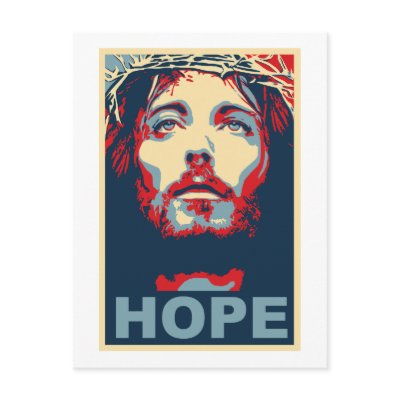
It's been challenging for me lately. Rocky Anderson, former mayor of Salt Lake City, and nominee of the Justice Party, seems like a great candidate. He believe things should be done that mirror my own thoughts and ideas quite closely. He's everything I could ever hope for from the leader of our nation.
By all accounts, he's someone I'd like to vote for.
It's here where I can finally get some perspective on how many of my GOP and Democratic friends live in election season. They really believe their guy is best for the country, that their guy will get things right. All evidence points towards the inherent goodness of this vote.
It's difficult.
But much of God's Kingdom is not yet evident in our world. The way the world seems to work is still a fading shadow of the world as it was - not an accurate representation of the world as it is becoming.
One of Israel's most egregiousness sins was to ask for self-governance, for putting faith in a King to make things right. It was the repeat of Babel - the idea that we can build something to equal God.
In the end, God knows our tendencies; God made them. And so God provided us a King and a Kingdom - one that would fulfill all our wishes and desires - a King to make things right.
But this King didn't reign the way we wanted. We killed him.
But that didn't end the Kingdom. The King didn't stay dead. The world is different. The Kingdom is here, the Kingdom is coming. The Kingdom comes through the Church, the physical embodiment of that King who reigns in humility, wields power by refusing it, and commands without asking anything, but living selfless love.
Our system doesn't look like that Kingdom. It never can. Our system, no matter how perfect - no matter how aligned with the way I or you or she thinks the world should be - will not satisfy.
Let me be the first to say my candidate will not make things better. Yours won't either. That doesn't mean we can't vote for them - by no means. We just can't put faith in them.
For me, that means not voting. I don't have the discipline to vote for someone and not believe in them.
I'm voting for Jesus. I'm voting every day.

There have been a lot of comments about the newly dead "being with Jesus" or "meeting relatives in heaven," and the like. Sentiments, which can be very comforting, but which I don't believe are quite supported by scripture - at least not as definitively as everyone seems to believe.
One of those phrases has gotten be thinking - someone said, "I envy her being able to see Jesus face to face." It struck me strange. Obviously I admire Jesus quite a bit and I am certainly grateful for everything that he has done for us - at the same time I wonder if I would be starstruck meeting Jesus. What's more, I wonder if Jesus would ever have wanted me to be?
There's a lot made of Christ downplaying himself while on earth. He was always deferring to the Father and pointing people to God. There's little overt reference from Jesus concerning himself - so little, in fact, that there were hundreds of years of doctrinal controversies about whether Jesus Christ was God at all.
Perhaps because of those problems, we seem, today, to have relegated Jesus' humanity to the back-burner. Yes, Jesus is human, but he is God! The life, ministry, teaching, and gospels of Jesus Christ seem to do the opposite. There's a casual reference to his divinity, but mostly they are about the ways in which human beings can live in the way God created us to live.
We are not fascinated by Jesus because of his power, but because of his humility, because of his embrace of human frailty.
Jesus never asked to be worshiped. He never expected it. Most times when people tried, he rebuked them or asked them to wait for his death and resurrection. I'm not arguing that we should not worship Christ, but simply that it doesn't seem like something he wants us to do with him present in the room.
When I look forward to the consummation of all things, I look forward to a world of justice - where the wolf and the lamb lay together, where enemies embrace, and love reigns in the absence of fear and loneliness. I don't really look forward to spending time with Jesus, I look forward to living in the world he has created and redeemed.
I'm sure Jesus will spend plenty of time in eternity with each of his creatures. We are all beloved and important - from the most dedicated saint, to the lowliest plants and animals. I don't want to condemn our looking forward to any of that. I'm just not sure we're going to want to spend more time with Jesus than with anyone else.
If we really believe the words we speak and the power of the Holy Spirit - eternity begins now. While we await the fulfillment of the promise, the new Kingdom has already begun. We are already living into the future we'll live for eternity. Perhaps our worship of Jesus Christ is less about awe for the savior and more about loving those he loves.
In a world remade in love, in a word absent selfishness and sin, sure, Jesus is the reason we are here, but he's not any more important than anyone else - and I think that's precisely the way he wants it to be.

There seems to be a problem in this country. Well, likely more than one... but specifically we've come to believe that government and politics are synonymous and it's slowly killing us.
Politics means our public lives, the ways in which we get along with each other. Government is simply one way to do politics. Government, no matter what type, relies on power. Tribal governments have a chief or elders, for most of human existence we had kings. Lately we've been experimenting with oligarchies, aristocracies, and various types of democracy. No matter how we slice it, government means power.
Those with power generally do all they can to stay in power - in our unique US context that has come to mean convincing the populace that government is politics; that there are no other options.
This is essentially the situation an intensely political Jesus showed up in. Rome's most successful venture was not its extensive system of roads or its virtually unstoppable army. Rome's most successful venture was its ability to convince everyone living within its borders of its own inevitability. Rome was life and life was Rome.
Into this rather depressed, vagabond population stepped an unlikely messiah who refused to play the game. His politics were exactly the opposite - no power, no persuasion, simply love. Rome did what it do to those who challenged hegemony. If life is Rome and you aren't down with Rome, they take your life.
The thing is, the cat was already out of the bag. Over the next two thousand years the power changed literally hundreds of times. What didn't change was that those who despised power, those who rejected it - they found a different way to live.
The way of Jesus is an alternative politic. The Church was created to be an example to the world of another way to live - one embodying the Kingdom of God that, like Jesus, begins and ends with love. We are all responsible to each other; we were designed that way. But our politics don't have to be those of power and survival of the fittest. There is another way.
Newsweek wanted to distance Jesus from the petty bickering for power that so consumes our nation. There's nothing wrong with that sentiment; the Church has always been at her worst when she was (and is) obsessed with power and government. It's just vitally important that we refuse the line of thinking that leads us to abandon the politics of Jesus for that is the end of hope.

