
However, as I've been thinking about the ways in which people approach politics these days, particularly in the area of news coverage, I've come to what should've been a very obvious realization: evangelicals understand the world the same way they understand the Bible. It should not have been a surprise.
When you reject interpretive tools for studying scripture, relying on a "plain sense" reading that amounts to, "what makes sense to me," there's a very small leap - really more of a shuffle - over to viewing the world the same way. No need to research or investigate factual representations, just decide for yourself whether they make sense or not.
This doesn't just apply to Christians or conservatives, of course, we all, as humans, are prone to confirmation bias. We have to work hard to question those things with which we agree. As much as I try to research the sources of anything I read, I'm much quicker to check those conclusions I like over the ones I don't.
I hadn't thought much about the connection to scripture until recently, though. I believe I am more prone to question a news report, because I've had a lot of training in Biblical Studies, where one is challenged to ask about context, perspective, purpose, and meaning. In practice, I have to work hard to make sure that my biases aren't filtering my interpretation of scripture and that I have some evidence to back up the ways I present it to others. It's a learned skepticism - not necessarily of the material in front of me, but of my ability to interpret it correctly.
Life, like scripture, does not provide the easy answers and black/white thinking in which the human mind finds comfort. Forcing ourselves to examine reality, context, and actual evidence usually creates more tension and less clarity. No wonder we shy away from it.
With news or with scripture, the giveaway is a refusal to deal in substance. We might say the media outlet is biased or fake or irresponsible; we might say someone has been brainwashed by education or led astray by the world. In both instances, we fail to address the argument, evidence, or issue on its own terms. This is an ad hominem* attack and it serves as more of a distraction than anything else. It puts the opponent on the defensive and changes the subject of debate.
When it comes to scripture, people are genuinely afraid to get away from that "plain reading," because it moves us from firm ground to shaky. I'd argue that scripture was never intended to be firm ground, but to point us towards a relationship with God, something that is always changing and adapting (the relationship, not necessarily God), because we are changing and adapting. You can't ever have a firm relationship with someone, because none of us are static.
In the same way, I'd argue all our idealism is ever intended to do is form a pathway to dealing with other people. The relationships we have with friends (and enemies) and neighbors necessarily involves us negotiating the chasm of reality. Relationships cannot be static, because we're always changing.
As I said, there is a wider world out there, but, for me at least, this realization, that people are actually being consistent, even if I disagree with their approach, has helped me better deal with those friends and neighbors who've been virtual enigmas the past few months. It may be a gap too difficult to bridge, but at least I believe we have the tools to try.
*The fact that my spell checker suggested "Eminem" might be the word I wanted here probably says more to prove my point than anything in this whole post.

Yes, this is the result of laws that deport felons and other violent immigrants without legal status. Those are generally good laws. In this case, a judge had the opportunity to grant a reprieve and found Crapser's story unworthy of such. We all know it behooves reporters to write one-sided pieces and perhaps this guy isn't a model non-citizen. It's tough to be too harsh on the judge when I wrote just last week about the difficulty of making "good" decisions in the midst of a messed up world.
At the same time, I have to wonder if the language we've come to use with regards to undocumented immigrants, even the words we've come to associate people who break the law, aren't prejudicing those entrusted with carrying out those laws, or even the rest of us who form opinions about these things? That cuts both ways. We want some subjectivity in matter like this. A man who's lack of citizenship is not really his own fault is falling prey to laws designed to rid the country of murderers and otherwise violent people. Whether we like subjectivity or not, the law says once violent, always violent. Criminals generally pay for their crimes long after official punishment has ended.
Although, it's this very subjectivity that makes room for dangerous bias* - both being unreasonably lenient and unreasonably tough. Subjectivity leads to discrimination and our society is, despite the calls against political correctness, terrified of discrimination perhaps more than any other domestic issue. We want to be fair.
We want to be fair, so we turn to objectivity. Do everything the same. Treat people the same, no matter what. This is what every corporate lawyer will tell you. Masters degrees in Human Resources are built on this principle. If someone can prove you treated them differently, they can often win, or at least scare you into a settlement.
I live with a teacher - that profession is increasingly obsessed with objectivity, creating automaton teachers who can regurgitate focus-grouped lessons and provide every kid in every class an identical educational experience. The assembly line plan works really well in some areas. Interchangeable parts have kept costs down and expanded innovation all over manufacturing. Of course, people are people, not things.
Outside of all the life and death talk surrounding the notion of "pro-life," it seems the most pro-life thing to do might be to work for a society in which every person can be treated not the same, but as an individual. A teacher should be doing what's best for each student, not the same thing for each student. No one wants a doctor who treats every illness exactly the same, right?
That's the rub, we don't like objectivity when it applies to us, but we're generally in favor of it when we're talking in general terms. We're down with a constitution that proclaims equal treatment for all, but we'd sure like other factors considered if we were in Adam Crapser's position. That's precisely what happens in education when a child is identified as having special needs - the get an individual plan of action, protected by law, to address their specific needs. I'm all for this kind of care and concern, but it sure feels like the kind of thing every child deserves, right?
That's just it, though, right? It's not really that people are opposed to subjectivity, it's that subjectivity in impractical in a nation of our size. The cost and manpower required to address individual instruction to every child would be near impossible, not to mention the complex logistics to actually make it work. The same goes for the law - yeah, it would be great to consider each individual person, their alleged crimes, and the impact of these actions on themselves and others within the context of their own lives, but who's got the time?
What we've tried to do is set up a system that does both. We have judges appointed to, well, judge. They try to make gracious and earnest decisions about individuals in front of them, but we've also got laws that set parameters for their power (for good or for ill). We're constantly arguing over this system, changing it. We're riding the pendulum of subjectivity and objectivity.
It feels like, at least in this moment, the pendulum is way too far on the objective side. I think there're a lot of good reasons for that, but there are also a lot of difficult results. We could look into this particular case a bit, if we find Adam Crasper deserving, we could work to have the crimes pardoned that are keeping him from getting a Green Card. That's a subjective solution to an objective problem, but there's probably dozens, if not hundreds, of other people in the same boat. This is also where we get all these overly specific, convoluted laws - people trying to ran subjectivity into an objective system.
In the end, we control how we interact with the people around us. Our systems and structures may not be perfect, even as we strive to perfect them, but we, ourselves, can be committed to treating people as people, individuals rather than interchangeable cogs in the machine.
*We should not, though, that subjectivity does not cause bias or discrimination, it merely provides a convenient excuse. We have to guard against throwing out something good, because of how it's being used for evil.
The example he uses is SS agents coming to the door of a home during Nazi occupation and asking if there are any Jews present. The owner, knowing there are Jews present, but not wanting to turn them over, faces an ethical quandary. In reality, some people did in fact tell the "truth" and leave those Jews they were protecting in the hands of God. Others "lied" and continued to hide the Jews. Rollins argues that denying the presence of Jews is actually the truer statement, because it positively transforms reality.
Coming from a scriptural perspective, if Jesus is "the truth," then anything resembling Christ or in line with his life and teachings would also be truth. Rollins argues that saving Jews during the holocaust is inarguably true, no matter what factual inaccuracies one must espouse to do it.
Yes, it's a convenient example - one difficult to disagree with, but I think the larger notion of truth as an action that positively transforms the world helps in a lot of situations.
There's the old trope of a wife asking her husband if a dress makes her look fat. As a husband, you know there are some realities to navigate there. It may very well be that the wife has chosen a dress that is unusually unflattering and she would look (and feel) much better in something else. Saying as much is an important truth in the moment, because there's a potential she'll be embarrassed later on. Now if the wife has simply chosen one of many dress options that all make her look equally beautiful (even if she might actually be overweight), you say as much, because it is also true. There is no other answer you can give which will positively transform reality.
Again, this is a convenient and common example that doesn't always translate to real life - but I imagine you can imagine a lot of scenarios where this is a helpful guide (certainly more helpful than asking yourself, "is this an accurate description of reality?).
Putting our words up against some arbitrary definition of "true" or "factual" is ultimately pointless. The point in life is not to be accurate (especially since we've long entered a period where bias and perspectival error are well accepted and few people believe truth, by that definition, is even possible), it is to positively transform the world.
Of course, this adds a layer for Christians (or really anyone) when debating how to speak truth. It certainly seems easier to say whatever will make our own lives easier and, in a way, one could argue that positively transforms the world from my perspective. Using this definition of truth, though, requires a willingness to submit our own preferences and ease to the greater good. Something we're not always very good at.
Then again, using the standard definition of truth requires much the same thing - only it gives us less room to justify our actions and correct or ethical. This idea from Rollins makes more space for interpretation and disagreement, but we live in a world where that's reality anyway.
In any event, I'm not at a place where I'm adopting this notion of truth wholesale anyway, but I do think it's worth thinking about - or perhaps the larger point it's making about how we approach ethics. I'd love to hear what other people think, though. Chime in.
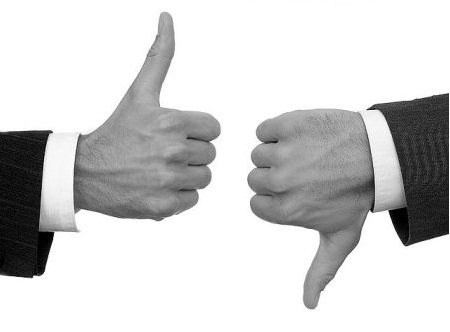
What this becomes, if we're not aware of what's happening, if we're not conscious of it, we try to fit everything and everyone into one group or the other - when we encounter something knew, mostly some one new once we're adults, our first instinct is to label. "Oh, ok, this guy talks a lot about the environment - liberal, hippie, etc." Then we move on to engage.
But we engage with the label first, then the person... if it every gets that far. Which is precisely the trouble.
Things don't have to fit categories to be true.
Which is, I guess, a bit of a relief, since life never fits into quick and easy categories. Our culture puts things into dichotomic order almost out of necessity - no one pays attention to things long enough to engage on a unique level. We need to be different.
There might be a lot of people out there living life for some purpose or goal, and most people, if they don't fit specific categories, are just getting in the way. I'm not so sure that's true, though. The more I live the more it seems to me the point of life is to know and be known by the people around you - all the people around you.
That's obviously easier said that done. I know a lot of my neighbors, but I don't even known half my neighbors - and most not well enough. I certainly can't say there are many people with whom I interact regularly who know me very well. We don't really live in a society built for that.
We live in a society built for labels - well, as human beings, we, ourselves, are built for labels. This intentional focus on people, on getting to know the unique qualities of those around you, is just another of those things we have to fight against instinct to accomplish. No one wants to be labeled. No one wants to feel pushed into a group or defined by some intangible property. It's dehumanizing and it pushes us away from each other.
Be aware. Even if it's just realizing how our brains work, that we're wired to label people, to make two boxes and put everything (and every one) into one of them. Knowing what we're prone to do is the first step towards learning a different way.
Perhaps this is timely as we're in the midst of Presidential candidates announcing their campaigns. The US election system is front and center in this movement to label. Maybe we can treat these guys (and lady(ies)) as complex individuals or maybe just as people, instead of caricatures in boxes of our own design?
If we can't do it with our candidates, let's try to at least do it with our family, and friends, and the people we meet each day on the street.
Don't label me, bro, I'm not like anyone else you've ever met. I'm just me.
