
I think we're more aware these days of privilege - the notion that straight, white men are more likely to end up getting chosen or recognized or empowered when these choices are made. It's part of the reason why CEO's and politicians and Nobel Prize winners are primarily part of these groups. This kind of self-reflection is often part of the equation when we engage in such decisions - do I belong on this panel? Do I really deserve this recognition? Is there some voice or perspective we're going to miss if I serve here?
It's wonderful progress, even if it is hard, sometimes, to answer those questions in the right way. We do still, generally, want recognition. Sometimes we even deserve it. But the question of who's most deserving or the "right" choice is real difficult to parse. You've got two parties responsible for parsing things out - are the people in charge considering the effects of privilege in the same way I am?
What often trips me up, though, is the second, more often hidden layer of privilege. It's not just that being a straight, white male gives me a leg up; culture and society also teach me to ask without guilt when I think I deserve recognition. If I've gone through all the appropriate mental gymnastics and conclude this is something I should and want to do, I'm far more prone to ask or volunteer than someone who doesn't enjoy my privilege.
I wonder how often we miss out on great contributions because there's a societal expectation for certain people to pursue opportunities and others to be invited. Now this is a little easier for me, since I tend to have a pretty low evaluation of myself and avoid putting myself out there to avoid rejection, but even if I believe that I am the best person for a position - after considering those in marginalized, hidden, or overlooked groups - it's become a discipline (one I don't think I exercise very well) to sit back and, if its going to happen, let opportunities come to me.
Men, particularly educated, white men, are taught to sell themselves. I'm not sure that's a natural inclination, at least not for me. If it's an evolutionary, survival-of-the-fittest quality, I might be in trouble. I think it's far more likely assertiveness is learned, or at the very least, cultivated sporadically. Those with the most privilege are also those who've most been taught to sell themselves. The people who could most benefit from assertiveness are those who are more likely to have it trained or punished or intimidated out of them over time.
I'm not really sure what the point of this post is, other than to highlight something I've been particular noticing recently. For those of us used to this system, it feels so natural it's often hard to notice. It would be very good if we did, though. We need to recognize the ways in which our mores and patterns have been created the benefit some more than others. It behooves us to actively change the way things work rather than expect people primed for an underprivileged place in the system to adapt.
Just because things are the way they are, doesn't mean they always have to be.
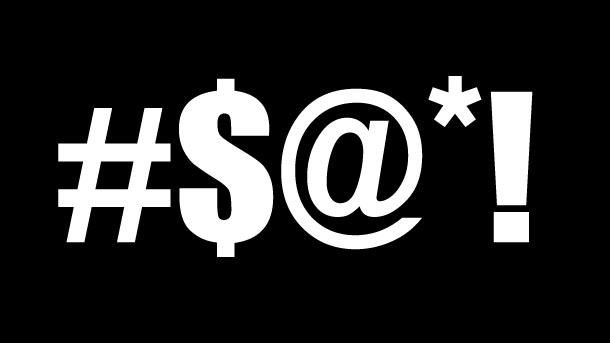
So, someone asked me for a comment on a particular post from a blog. It's a blog that often upsets me (although, in fairness, I did share one post last week that I thought was helpful) from a person I believe to be inconsiderate, illogical, and generally ill-informed - particularly so in this instance. As part of my response, I used the word "ass" to describe this writer.*
I spent a good deal of time reflecting on the use of that word in that context. I was raised in a pretty conservative home and that was certainly among the words we did not say. In fact, it was not even among the words we might say if we were trying to walk the line with our parents (those would be more like 'sucks' or 'crap,' you know, words Bart Simpson taught me). I don't like offending people and I recognize that this particular word is offensive to many (perhaps a large portion of my acquaintances that for most other people). I don't generally use what are traditionally considered profanities or crude language, but this somehow felt like a rare, appropriate use. I think I still believe that.
I don't like the contradiction that this decision embroils within me. It didn't make things any easier when my Dad called today, I think, primarily, to mention that maybe I shouldn't be using that word on the internet. It's a valid point. Perhaps I shouldn't.
I wasn't very old when I realized the incongruity of using the biblical mandate to "not take the Lord's name in vain" to cover a whole list of vulgar and offensive words that have nothing to do with God (not to mention the flip side of the coin - saying hurricanes are God's judgment of sinful cities, for example - which is likely more what the Ten Commandments had in mind there). Some words are just harsh, abrasive and offensive - they'd likely be offensive whether or not we were culturally conditioned to recoil from them.
In the end, though, it comes down to this concept of profanity - what exactly is the profane. In strictest context, it is misusing holy things for common purpose. I imagine there is a long, interesting argument about language as a "holy thing," that I'm just not going to get into here.
I do think, though, that this concept, taken more generally, can be real helpful dealing with these "strong" words that are oh so controversial (at least in my life).
Strong words are strong for a reason; they communicate extremes - pain, anger, sorrow, depression, frustration, etc - in ways more deeply felt than those words (and yet somehow less deeply felt than guttural screams). They're supposed to be rare and shocking - its the whole point.
I recoil or roll my eyes or bemoan human existence when I see just how many people are littering their everyday speech with words set aside for a purpose. It's jarring, grating, and downright offensive (on multiple levels) - but ultimately it removes all power from the words themselves.
I suspect - I don't know this of course and I'm not qualified to do the research - but I imagine you might see more violence among persons who use profanities the way stereotypical SoCal girls use "like." I imagine this because we need something to express our deepest frustrations - and if the words meant to provide that rare, emotional outlet no longer mean what you need them to mean, physical reaction may be the only other recourse.
I do think language is precise. It communicates something very specific (which is both the problem and the answer). Calling someone a jerk is slightly different than calling them an ass. Synonyms are words than mean similar things, not identical things.
This may be splitting hairs for most people - and in general I agree. Why use an offensive word when a less offensive one does 98% of the job without ruffling feathers. That makes sense to me. It really does.
Sometimes, though, you need that extra 2% - you just do.
It's wise to take into account the audience. This is where my dad is likely correct. The internet is a pretty big audience. It hurts me to potentially offend the people who might read that word and be offended. Certainly the subject of the comment is not worth offending people over, but I think - in spite of it all, I still think - the expression of that sentiment at that moment in that context might be worth the potential offense. That notion is still lingering, and if it's still there after 48 hours of internal second-guessing, then there might be something to it.
We're all likely going to have a different measure of profanity - when certain words are used in ways they shouldn't be. For many, especially those who shared my upbringing, the appropriate ways are none. For me, there is still clearly a line - a pretty strict one, I think, which will seem harsh and puritanical to a lot of people. I imagine, like Potter Stewart and obscenity, when it comes to profanity, we know it when we see it - which isn't quite an exact science.
*I was and do intend that description to speak only for the persona that comes through his writing and not the actual person himself (a person I don't know and have never met), but I realize that intention was not entirely clear and for that I am sorry.
