Showing posts with label immigration. Show all posts
Tuesday, October 23, 2018
We All Fall Short
We don't often look at Jesus' most famous parable from the perspective of the Samaritan. I, myself, have re-written the parable a number of times - I posted one here, part of a sermon, five years ago - but even while it was from the perspective of the "Samaritan" it was intended to speak to us as the wounded man.
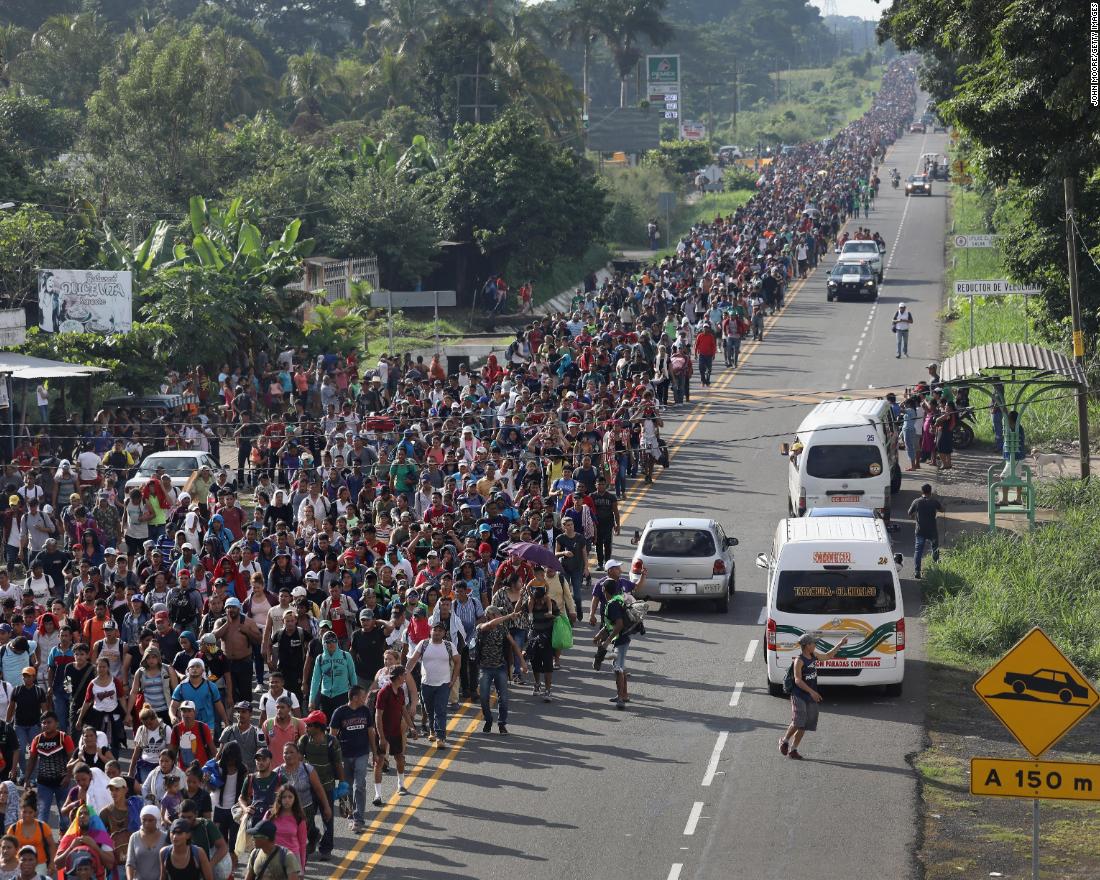
I think about being the Samaritan today, as the plight of thousands of refugees and immigrants is systematically weaponized and ignored in our media. The left, apparently, doesn't think immigration polls well and the right sees the thousands of desperate people trying to reach the unwelcoming, relative comfort of the US as something to be feared. I don't watch cable news, but CNN and Faux are next to HGTV and ESPN at the gym, so I can't help but catch the headlines for an hour or so 3-4 times a week.
I've struggled with how to address the issues beyond simply the religious approach. As a follower of Jesus Christ, I can't see the world through the eyes of an American citizen, but only as a citizen of the Kingdom of God. Thus, borders and documentation don't mean much to me. People are people and we all deserve the same treatment no matter where we are or how we got there. Immigration isn't really a "debate."
Not everyone begins from the same perspective, though. US civil religion has infiltrated our culture enough that many people see themselves as US citizens first (or, worse, no difference between being a Christian and being an American - maranatha). Is there a way to approach this situation that goes beyond legalities and borders and fear - fear is the key element, as always, that we fight. We're challenged to be afraid of the other, of the sacrifice that loving someone else might mean for us.
That's where the Good Samaritan comes in. We see that story as a call to sacrifice for the other, even the one who is hated, called enemy. Jesus takes the question "who is my neighbor" and turns it into "what does it mean to be a neighbor." At the core of the parable is one line - "he was moved with compassion." The Samaritan saw the hated other in trouble and not just felt bad for him, but imagined himself in the same situation.
When we see desperate people fleeing for their lives - whether it be in Guatemala or Syria or those dark-skinned neighbors moving in from the city for a safer neighborhood and a better school district - our reaction cannot be "there might be a few bad apples mixed in, so I better avoid the whole lot." That's what our culture is doing right now. Better safe than sorry is an extreme reaction to fear. It might keep us physically safer, but it's killing our souls, diminishing our humanity, and literally costing thousands of vulnerable people their physical lives.
We must be moved with compassion - not just the heart-wrenching pain of seeing suffering. I suspect the left-leaning channels avoid the story because real relief for refugees in the US just isn't an immediate reality (not to mention it's a losing issue most places in the upcoming election). We don't like to feel sorry for people when there's not much we can do to alleviate the pain.
Compassion is something deeper - not just feeling another's pain, but identifying with the other in their pain. Until the plight of those refugees is our plight, until their future is inextricably tied up with our future, we are not truly seeing them, valuing them as humans of equal importance. I am guilty of this sin, of omission, or lack. I'm no better than CNN - "poor them; if only there was something we could do."
I don't think it's enough - not by far - but it's better than what we've been doing. Let's, all of us, people of faith or none at all, Democrats of Republican or those fed up with anything red and blue, let's pray or focus or meditate or whatever practice we employ to help form and shape ourselves into people different than we were this morning. Can we beg to be broken? Can we ask or strive to or be transformed into the kind of people who not just notice the plight of others, but internalize it?
We must see ourselves in the suffering, not on some superficial level, but deep down, intrinsically. They are us, not metaphorically, but quite literally. They are us; we are them. That is the hope for a bright and beautiful tomorrow. It seems impossible, but it is not.
May it be so.
Amen.
Tuesday, July 17, 2018
Urbanity, Immigration, and Change
I know I've not been keeping up my end of the bargain this summer. We went on a two week, 2200 mile sojourn to the southest for a family reunion (48 Scotts!) and a wedding. It was fun and I did not miss the internet much at all. I've been reading a bit, trying to keep up with all the library holds that seem to come in at the same time. In that reading, I ran across an interesting statistic: in 1910, 40% of US urban residents were foreign-born.
There had been a wave of immigration following the Civil War, which only increased at the end of the century. Most immigrants at least began their lives in the US in the cities, a fact that continues to be true today. There are just better support networks for immigrants in largely populated places. Part of the reaction to this fact in 1910 was a retrenchment from the cities. There was an intellectual rejection of science, education, and global engagement. The suburbs didn't explode until after WWII, but the movement out of the cities (largely by white folks) began earlier.
This is the same period that produced radical, protectionist, conservative politics and the fundamentalist movement in Christianity. New ideas, in general, were rejected because they challenged a largely homogeneous culture that develops when people spend a lot of time with each other. Rural places were familiar and predictable and it brought comfort.
In reading that development, I couldn't help but think about today's US culture. Immigration and "the other" have once again become bogeymen, scapegoats for the plight of white, working-class, largely rural citizens who've been left behind by economic and political changes in the last decade. I've been saying that's it's not really the fault of immigrants, but I've struggled to really articulate an underlying problem.
I don't know the data for our current situation, but I suspect that with the rise of technology and communications, it's becoming easier and easier for immigrants to survive in more rural and suburban areas. Cities are still a big draw, but no longer are a required jumping off point for a new life in the US. Perhaps the encroachment of new ideas, customs, and cultures into previously homogeneous and isolated areas is creating the same kind of fear-based backlash we saw a century ago?
Obviously, it's not really about immigrants, but the new and unpredicatability they present to largely settled communities with accepted ways of life. It's not an issue of "good" and "bad" or "right" and "wrong" so much as it's a necessary struggle to deal with "different." Fear is a natural reaction to different, especially when we're used to accepted and predictable habits - like when our house guests don't put silverware in the dishwasher in the right direction.* There's a real tension that needs to be resolved. It can only be ignored or endured for so long before a conversation needs to be had and an arrangement worked out.
It's the same kind of issues every community goes through, but for rural areas, where population hasn't changed much (in number of composition) those conversations are relics of the past with no immediate memory in the present. We need to get passed the surface fears of change and otherness and see the infusion of new people, ideas, and customs as not a "problem" at all, but a challenge that requires attention. Religious fundamentalists discovered you can only put off dealing with modern science and thought for so long. Yes, the communities and ideas persist, but they bleed off population with each generation, as some adherents fail to escape the necessity of navigating the larger world.
I've never, ever met or experienced anyone who genuinely and openly encountered an "other" with an open mind and ears, who didn't soften their stance on the person or their ideas, even if they continued firmly in their own beliefs. Different people might not (and need not) change our minds to truly change our hearts.
I hate change as much as anyone. I like to have a long runway and lots of time for preparation to do or think anything different, but even I know you can't give in to your fear of change. Other people might have to patient, but we also have to be willing. Change is scary and difficult, but it can't be avoided. If others are willing to give us time, we have to be willing to consider the possibility. All it takes is a little trust and a little grace.
I guess what I'm trying to say is that if I can change, and you can change, everybody can change!
*Knives and small spoons facing down, forks and large spoons facing up, obviously.
There had been a wave of immigration following the Civil War, which only increased at the end of the century. Most immigrants at least began their lives in the US in the cities, a fact that continues to be true today. There are just better support networks for immigrants in largely populated places. Part of the reaction to this fact in 1910 was a retrenchment from the cities. There was an intellectual rejection of science, education, and global engagement. The suburbs didn't explode until after WWII, but the movement out of the cities (largely by white folks) began earlier.
This is the same period that produced radical, protectionist, conservative politics and the fundamentalist movement in Christianity. New ideas, in general, were rejected because they challenged a largely homogeneous culture that develops when people spend a lot of time with each other. Rural places were familiar and predictable and it brought comfort.
In reading that development, I couldn't help but think about today's US culture. Immigration and "the other" have once again become bogeymen, scapegoats for the plight of white, working-class, largely rural citizens who've been left behind by economic and political changes in the last decade. I've been saying that's it's not really the fault of immigrants, but I've struggled to really articulate an underlying problem.
I don't know the data for our current situation, but I suspect that with the rise of technology and communications, it's becoming easier and easier for immigrants to survive in more rural and suburban areas. Cities are still a big draw, but no longer are a required jumping off point for a new life in the US. Perhaps the encroachment of new ideas, customs, and cultures into previously homogeneous and isolated areas is creating the same kind of fear-based backlash we saw a century ago?
Obviously, it's not really about immigrants, but the new and unpredicatability they present to largely settled communities with accepted ways of life. It's not an issue of "good" and "bad" or "right" and "wrong" so much as it's a necessary struggle to deal with "different." Fear is a natural reaction to different, especially when we're used to accepted and predictable habits - like when our house guests don't put silverware in the dishwasher in the right direction.* There's a real tension that needs to be resolved. It can only be ignored or endured for so long before a conversation needs to be had and an arrangement worked out.
It's the same kind of issues every community goes through, but for rural areas, where population hasn't changed much (in number of composition) those conversations are relics of the past with no immediate memory in the present. We need to get passed the surface fears of change and otherness and see the infusion of new people, ideas, and customs as not a "problem" at all, but a challenge that requires attention. Religious fundamentalists discovered you can only put off dealing with modern science and thought for so long. Yes, the communities and ideas persist, but they bleed off population with each generation, as some adherents fail to escape the necessity of navigating the larger world.
I've never, ever met or experienced anyone who genuinely and openly encountered an "other" with an open mind and ears, who didn't soften their stance on the person or their ideas, even if they continued firmly in their own beliefs. Different people might not (and need not) change our minds to truly change our hearts.
I hate change as much as anyone. I like to have a long runway and lots of time for preparation to do or think anything different, but even I know you can't give in to your fear of change. Other people might have to patient, but we also have to be willing. Change is scary and difficult, but it can't be avoided. If others are willing to give us time, we have to be willing to consider the possibility. All it takes is a little trust and a little grace.
I guess what I'm trying to say is that if I can change, and you can change, everybody can change!
*Knives and small spoons facing down, forks and large spoons facing up, obviously.
Labels:
change,
community,
compassion,
conversation,
fear,
immigration,
listening,
rocky,
trust,
urban
Tuesday, June 19, 2018
Christian or Citizen?
The very fact that some Christians call immigration "complicated" betrays the real problem. Christians cannot hold the flag in one hand and the cross in the other; it's just impossible. We (as American Christians) don't have any allegiance to the United States. It's not our job to supply answers to governance problems. We're part of a different nation and a different empire. When it comes to immigration, our policy is "y'all come;" everyone is welcome. There are no places for borders or nations or citizenship in God's empire. You can't have a Christian nation, because to govern as Christ is to eliminate national distinctions.
The ends cannot justify the means, because, for Christians, there is no "end." It doesn't matter what the "right" goal or outcome from a particular policy might be, if it's abusive or un-loving or harmful to peace, it's wrong. "We can't get to ________ without _________" is not a valid argument for doing the wrong thing.
I'm pretty sure I've written about this very thing recently, but I can't find it, so I assume it would be hard for you to track down as well. The idea that we have some obligation to offer alternatives for what the government is doing just flies in the face of Christian action. We're taught and trained to be "citizens" of the US from an early age - most of the time in ways we don't recognize. One of them, though, is this obligation we feel to provide a government solution to everything.
We must have an opinion not just on immigration or gun control or taxes, but on how the government can regulate these things within the Constitution. Why? Why do we feel that obligation? We're not elected officials? We don't have to pass laws or defend them in court? We feel an obligation because we've bought into the American narrative of democracy. A good Libertarian will always tell you, the US isn't actually a Democracy, but a Republic - which means we elect people to speak for us, rather than actually speaking for ourselves. We're not actually part of the process, as much as the narrative says otherwise. The only thing that keeps a Republic from becoming an Oligarchy is the consent of the people.
Outside of that, though, why does the government response to anything dictate our understanding of it. I believe people deserve healthcare and education and a warm place to sleep and nutritious food and meaningful work. I don't have to provide some blueprint for the US government to provide those things (if it even ever could), because politics is more than elections and laws. Politics is the way a society functions, the way people engage with each other. It encompasses everything. Yes, laws and government are part of that, but they are not "politics." Politics is much bigger.
The Bible is pretty clear that there's no special treatment for God's people - the "us" and the "them" are one and the same, in our attitudes and actions, at the very least. There is no argument from citizenship or safety in the Church of Jesus Christ, because citizenship in God's Kingdom doesn't come with any special rights or privileges; there is no promise of safety (in fact, actually a promise of the exact opposite).
I get that not everyone is a Christian and that citizens of the United States have different rights and expectations. I know no earthly government can or will operate on a Christian perspective. I would never argue for such a thing. Just because not everything a government does is inherently evil, though, doesn't mean, however, that Christians should compromise their beliefs or principles to accommodate or participate in the empires of the world. A "Christian nation" is just a myth and we've got to put myths to bed - you can't play both sides.
Immigration is only complicated if you're working from a Constitution or the electoral realities of a nation state. If you're a Christian, those things are quite simple. The problem only arises when you try to hold them together. Christians should have already made a choice - if you haven't, now's the time.
Applaud the good done by the nations of the world, oppose the bad; there is no obligation to offer a compromise - indeed, a compromise does not exist.
The ends cannot justify the means, because, for Christians, there is no "end." It doesn't matter what the "right" goal or outcome from a particular policy might be, if it's abusive or un-loving or harmful to peace, it's wrong. "We can't get to ________ without _________" is not a valid argument for doing the wrong thing.
I'm pretty sure I've written about this very thing recently, but I can't find it, so I assume it would be hard for you to track down as well. The idea that we have some obligation to offer alternatives for what the government is doing just flies in the face of Christian action. We're taught and trained to be "citizens" of the US from an early age - most of the time in ways we don't recognize. One of them, though, is this obligation we feel to provide a government solution to everything.
We must have an opinion not just on immigration or gun control or taxes, but on how the government can regulate these things within the Constitution. Why? Why do we feel that obligation? We're not elected officials? We don't have to pass laws or defend them in court? We feel an obligation because we've bought into the American narrative of democracy. A good Libertarian will always tell you, the US isn't actually a Democracy, but a Republic - which means we elect people to speak for us, rather than actually speaking for ourselves. We're not actually part of the process, as much as the narrative says otherwise. The only thing that keeps a Republic from becoming an Oligarchy is the consent of the people.
Outside of that, though, why does the government response to anything dictate our understanding of it. I believe people deserve healthcare and education and a warm place to sleep and nutritious food and meaningful work. I don't have to provide some blueprint for the US government to provide those things (if it even ever could), because politics is more than elections and laws. Politics is the way a society functions, the way people engage with each other. It encompasses everything. Yes, laws and government are part of that, but they are not "politics." Politics is much bigger.
The Bible is pretty clear that there's no special treatment for God's people - the "us" and the "them" are one and the same, in our attitudes and actions, at the very least. There is no argument from citizenship or safety in the Church of Jesus Christ, because citizenship in God's Kingdom doesn't come with any special rights or privileges; there is no promise of safety (in fact, actually a promise of the exact opposite).
I get that not everyone is a Christian and that citizens of the United States have different rights and expectations. I know no earthly government can or will operate on a Christian perspective. I would never argue for such a thing. Just because not everything a government does is inherently evil, though, doesn't mean, however, that Christians should compromise their beliefs or principles to accommodate or participate in the empires of the world. A "Christian nation" is just a myth and we've got to put myths to bed - you can't play both sides.
Immigration is only complicated if you're working from a Constitution or the electoral realities of a nation state. If you're a Christian, those things are quite simple. The problem only arises when you try to hold them together. Christians should have already made a choice - if you haven't, now's the time.
Applaud the good done by the nations of the world, oppose the bad; there is no obligation to offer a compromise - indeed, a compromise does not exist.
Thursday, September 07, 2017
Living the Dream
None of us earned the right to live where we do. We just didn't. Yes, there are laws that govern who can go where and we've created this thing called "citizenship" that gives some people more privileges than others, but nobody earned anything. I get that there are legitimate debates about how a country should be organized and although I am not a believer in borders or nations,
I can set that discussion aside for today.
This who DACA thing makes me sick. If you're unaware, this is the program that allows residents of the US who were brought here or sent here when they were children to get enough legal recognition to live, work, and go to school in the US. Again, I get that there's a series of laws that govern this sort of thing and some people would like to see them followed more closely than others - but I want to come at it from a different angle.
How are these people any different than you or I? They live in the same place, attend the same schools, work in and contribute to the community.
They pay taxes, take their kids to dance class, and volunteer in the same places we do. What makes them different? They were born somewhere else. They might have a different cultural heritage and history - maybe, but that's not even true in all cases. What makes them different?
I get that some people are rooted in one place for generations. I'm a wanderer. I lived in ten different states by the time I turned 30; my family has always moved around. I'm not "rooted" anywhere. I share a different history and cultural understanding from the people with whom I live right now.
Maybe I can only speak for me, but I'm not any different than the people affected by this DACA policy. Well, I'm white, I guess - but, you know what, so are some of the immigrants covered by this policy. Not every undocumented resident is Hispanic - some grew up speaking English. That's the difference, though, right - it's people who look and sound different from us that we want to target. Maybe not even that - it's probably strangers who look and sound different from us; if we know one of these people, live or work or go to school with them, we're much less likely to support their deportation, to send them back into the shadows.
It's the different and the unknown. Those should never be things to fear.
At one point, the English-speaking white folks were the immigrants to this country. They claimed divine right to be here - something higher than whatever law or custom the native people's might have valued. The documents they brought to justify their presence were signed by a foreign monarch who never set foot within the borders of their new land. When the natives objected, we killed them.
Maybe that's what we're afraid of? That the sins of our past will come back to haunt us. That's the message, right? That these immigrants will replace us, remove us, overtake us - that we'll be left unemployed and impoverished and morally defeated, struggling to survive and maintain a once glorious way of life?
I can't help by think about all those laws and regulations, borders and nations - this whole system we've set up to regulate who can be where,
when, and why - I can't help but think about how that process if viewed on the native american reservations scattered across this land.
Even if every bit of racist, fear-mongering propaganda concerning immigrants were true (and none of it is) - we've still got no moral right to object to any of it.
Either the dream is for those who take it or it's not - we can't have it both ways.
I can set that discussion aside for today.
This who DACA thing makes me sick. If you're unaware, this is the program that allows residents of the US who were brought here or sent here when they were children to get enough legal recognition to live, work, and go to school in the US. Again, I get that there's a series of laws that govern this sort of thing and some people would like to see them followed more closely than others - but I want to come at it from a different angle.
How are these people any different than you or I? They live in the same place, attend the same schools, work in and contribute to the community.
They pay taxes, take their kids to dance class, and volunteer in the same places we do. What makes them different? They were born somewhere else. They might have a different cultural heritage and history - maybe, but that's not even true in all cases. What makes them different?
I get that some people are rooted in one place for generations. I'm a wanderer. I lived in ten different states by the time I turned 30; my family has always moved around. I'm not "rooted" anywhere. I share a different history and cultural understanding from the people with whom I live right now.
Maybe I can only speak for me, but I'm not any different than the people affected by this DACA policy. Well, I'm white, I guess - but, you know what, so are some of the immigrants covered by this policy. Not every undocumented resident is Hispanic - some grew up speaking English. That's the difference, though, right - it's people who look and sound different from us that we want to target. Maybe not even that - it's probably strangers who look and sound different from us; if we know one of these people, live or work or go to school with them, we're much less likely to support their deportation, to send them back into the shadows.
It's the different and the unknown. Those should never be things to fear.
At one point, the English-speaking white folks were the immigrants to this country. They claimed divine right to be here - something higher than whatever law or custom the native people's might have valued. The documents they brought to justify their presence were signed by a foreign monarch who never set foot within the borders of their new land. When the natives objected, we killed them.
Maybe that's what we're afraid of? That the sins of our past will come back to haunt us. That's the message, right? That these immigrants will replace us, remove us, overtake us - that we'll be left unemployed and impoverished and morally defeated, struggling to survive and maintain a once glorious way of life?
I can't help by think about all those laws and regulations, borders and nations - this whole system we've set up to regulate who can be where,
when, and why - I can't help but think about how that process if viewed on the native american reservations scattered across this land.
Even if every bit of racist, fear-mongering propaganda concerning immigrants were true (and none of it is) - we've still got no moral right to object to any of it.
Either the dream is for those who take it or it's not - we can't have it both ways.
Tuesday, January 31, 2017
Not Everything is Partisan
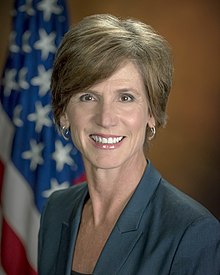
I am not saying the acting Attorney General, Sally Yates, refused to defend the Immigration Ban strictly for reasons of legality; what I am saying is that there is no reason on God's green Earth to assume she did. There is no reason for the media and those opposed to Trump to hold her up as some martyr for the cause and turn the issue partisan.
It seems pretty clear from her statement that Yates was personally opposed to the ban, but so is the vast majority of American - even a large part of Trump's constituency. The Executive Order was so broad and poorly defined that all sorts of legal residents are caught up in the web - if you need a source for that, check out the statements of pretty much every Senator, Governor, and sane person in the country. There's probably a solid legal precedent to do what Trump was trying to do; he just didn't do it well.
The job of an Attorney General or any District Attorney or State's Attorney, is to determine where to place the scare and valuable resources of their office. They decide which cases are worth fighting and which ones aren't. That's their job. Yes, you can say Yates was an Obama appointee, but that was after a career of non-partisan service in the Justice Department for a variety of Presidents. At some point, in gov't positions, you can't get promoted farther without a Presidential appointment.
She made a determination about the legality of the ban based on her expertise in making such decisions - decisions not unlike many Republican members of Congress made for themselves. It's not some protest against Trump; it's called doing her job. Does it align with her personal beliefs? Maybe; we don't know. Odds are that it does, but there's no reason, here, to make it into a partisan fight - that just plays into the hands of people you're trying to thwart.
I've come to believe that no one with power in Washington actually wants to change anything. They don't want peace. Rancor and division is what keeps them employed, on the news, and in business. They're (and this includes activists, media, and whoever else has their life and livelihood wrapped up in political games) just trying to score points for their side to better obtain or secure power.
Should Trump have fired her? That's complicated only because of the Department where she works. Any other Executive employee, I'd say, "Yes," absolutely. They all work to help Trump do his job, so he should be able to replace them at any time. The Department of Justice is a little different in that it's sole purpose is to make legal decisions about how to spend resources in the service of "justice." Presidents appoint people they know and trust presumably because they are in greater alignment on those issues, but it's also a dangerous place to meddle, because it's very easy for a President to, or to appear to, be tipping the scales with alternative motivations.
One of the biggest criticisms of the Eric Holder Justice Department, especially early on in the Obama Administration, was how political his decisions seemed to be. That's always something to avoid. Of course a President wants their Executive Orders, laws, pronouncements, and decisions defended as fervently as possible, but, at some point, they do have to let the department do its job.
Even so, I wouldn't say Trump's move was partisan so much, either, as personal. It's been proven, in the last few days, that the GOP is not entirely on board with this move; it's not an issue that divides along party lines. Jumping to conclusions about back and forth as if one side is the enemy doesn't help anything actually get accomplished. We need to take issues on their own merits to hold down the rancor and heal divisions.
Opposing Trump just because he's a perceived enemy is paying back precisely what the GOP did to Obama for most of his time in office. It's fighting a person, rather than dealing with issues. I think this ban is silly and stupid. I think the Executive Order imposing the ban was overly broad for its stated purpose, poorly conceived, and a waste of time, but I don't see it as an avenue for fighting a left-right war. When we treat it that way, we've done ourselves, and the country, a grave disservice.
It seems pretty clear from her statement that Yates was personally opposed to the ban, but so is the vast majority of American - even a large part of Trump's constituency. The Executive Order was so broad and poorly defined that all sorts of legal residents are caught up in the web - if you need a source for that, check out the statements of pretty much every Senator, Governor, and sane person in the country. There's probably a solid legal precedent to do what Trump was trying to do; he just didn't do it well.
The job of an Attorney General or any District Attorney or State's Attorney, is to determine where to place the scare and valuable resources of their office. They decide which cases are worth fighting and which ones aren't. That's their job. Yes, you can say Yates was an Obama appointee, but that was after a career of non-partisan service in the Justice Department for a variety of Presidents. At some point, in gov't positions, you can't get promoted farther without a Presidential appointment.
She made a determination about the legality of the ban based on her expertise in making such decisions - decisions not unlike many Republican members of Congress made for themselves. It's not some protest against Trump; it's called doing her job. Does it align with her personal beliefs? Maybe; we don't know. Odds are that it does, but there's no reason, here, to make it into a partisan fight - that just plays into the hands of people you're trying to thwart.
I've come to believe that no one with power in Washington actually wants to change anything. They don't want peace. Rancor and division is what keeps them employed, on the news, and in business. They're (and this includes activists, media, and whoever else has their life and livelihood wrapped up in political games) just trying to score points for their side to better obtain or secure power.
Should Trump have fired her? That's complicated only because of the Department where she works. Any other Executive employee, I'd say, "Yes," absolutely. They all work to help Trump do his job, so he should be able to replace them at any time. The Department of Justice is a little different in that it's sole purpose is to make legal decisions about how to spend resources in the service of "justice." Presidents appoint people they know and trust presumably because they are in greater alignment on those issues, but it's also a dangerous place to meddle, because it's very easy for a President to, or to appear to, be tipping the scales with alternative motivations.
One of the biggest criticisms of the Eric Holder Justice Department, especially early on in the Obama Administration, was how political his decisions seemed to be. That's always something to avoid. Of course a President wants their Executive Orders, laws, pronouncements, and decisions defended as fervently as possible, but, at some point, they do have to let the department do its job.
Even so, I wouldn't say Trump's move was partisan so much, either, as personal. It's been proven, in the last few days, that the GOP is not entirely on board with this move; it's not an issue that divides along party lines. Jumping to conclusions about back and forth as if one side is the enemy doesn't help anything actually get accomplished. We need to take issues on their own merits to hold down the rancor and heal divisions.
Opposing Trump just because he's a perceived enemy is paying back precisely what the GOP did to Obama for most of his time in office. It's fighting a person, rather than dealing with issues. I think this ban is silly and stupid. I think the Executive Order imposing the ban was overly broad for its stated purpose, poorly conceived, and a waste of time, but I don't see it as an avenue for fighting a left-right war. When we treat it that way, we've done ourselves, and the country, a grave disservice.
Thursday, October 27, 2016
Objectivity is Overrated
I ran across this story on NPR today. Essentially, Adam Crapser was adopted from Korea at age 3, by abusive parents, who never filed his citizenship paperwork and then abandoned him to the foster care system, where he continued to be abused until he was 18. After some struggles, which included jail time for theft and assault, he got his life together, got married, has kids... and is now being deported. The article doesn't say for sure, but based on that life story, I'm guessing this guy doesn't even speak Korean, but he'll be living there soon.
Yes, this is the result of laws that deport felons and other violent immigrants without legal status. Those are generally good laws. In this case, a judge had the opportunity to grant a reprieve and found Crapser's story unworthy of such. We all know it behooves reporters to write one-sided pieces and perhaps this guy isn't a model non-citizen. It's tough to be too harsh on the judge when I wrote just last week about the difficulty of making "good" decisions in the midst of a messed up world.
At the same time, I have to wonder if the language we've come to use with regards to undocumented immigrants, even the words we've come to associate people who break the law, aren't prejudicing those entrusted with carrying out those laws, or even the rest of us who form opinions about these things? That cuts both ways. We want some subjectivity in matter like this. A man who's lack of citizenship is not really his own fault is falling prey to laws designed to rid the country of murderers and otherwise violent people. Whether we like subjectivity or not, the law says once violent, always violent. Criminals generally pay for their crimes long after official punishment has ended.
Although, it's this very subjectivity that makes room for dangerous bias* - both being unreasonably lenient and unreasonably tough. Subjectivity leads to discrimination and our society is, despite the calls against political correctness, terrified of discrimination perhaps more than any other domestic issue. We want to be fair.
We want to be fair, so we turn to objectivity. Do everything the same. Treat people the same, no matter what. This is what every corporate lawyer will tell you. Masters degrees in Human Resources are built on this principle. If someone can prove you treated them differently, they can often win, or at least scare you into a settlement.
I live with a teacher - that profession is increasingly obsessed with objectivity, creating automaton teachers who can regurgitate focus-grouped lessons and provide every kid in every class an identical educational experience. The assembly line plan works really well in some areas. Interchangeable parts have kept costs down and expanded innovation all over manufacturing. Of course, people are people, not things.
Outside of all the life and death talk surrounding the notion of "pro-life," it seems the most pro-life thing to do might be to work for a society in which every person can be treated not the same, but as an individual. A teacher should be doing what's best for each student, not the same thing for each student. No one wants a doctor who treats every illness exactly the same, right?
That's the rub, we don't like objectivity when it applies to us, but we're generally in favor of it when we're talking in general terms. We're down with a constitution that proclaims equal treatment for all, but we'd sure like other factors considered if we were in Adam Crapser's position. That's precisely what happens in education when a child is identified as having special needs - the get an individual plan of action, protected by law, to address their specific needs. I'm all for this kind of care and concern, but it sure feels like the kind of thing every child deserves, right?
That's just it, though, right? It's not really that people are opposed to subjectivity, it's that subjectivity in impractical in a nation of our size. The cost and manpower required to address individual instruction to every child would be near impossible, not to mention the complex logistics to actually make it work. The same goes for the law - yeah, it would be great to consider each individual person, their alleged crimes, and the impact of these actions on themselves and others within the context of their own lives, but who's got the time?
What we've tried to do is set up a system that does both. We have judges appointed to, well, judge. They try to make gracious and earnest decisions about individuals in front of them, but we've also got laws that set parameters for their power (for good or for ill). We're constantly arguing over this system, changing it. We're riding the pendulum of subjectivity and objectivity.
It feels like, at least in this moment, the pendulum is way too far on the objective side. I think there're a lot of good reasons for that, but there are also a lot of difficult results. We could look into this particular case a bit, if we find Adam Crasper deserving, we could work to have the crimes pardoned that are keeping him from getting a Green Card. That's a subjective solution to an objective problem, but there's probably dozens, if not hundreds, of other people in the same boat. This is also where we get all these overly specific, convoluted laws - people trying to ran subjectivity into an objective system.
In the end, we control how we interact with the people around us. Our systems and structures may not be perfect, even as we strive to perfect them, but we, ourselves, can be committed to treating people as people, individuals rather than interchangeable cogs in the machine.
*We should not, though, that subjectivity does not cause bias or discrimination, it merely provides a convenient excuse. We have to guard against throwing out something good, because of how it's being used for evil.

Yes, this is the result of laws that deport felons and other violent immigrants without legal status. Those are generally good laws. In this case, a judge had the opportunity to grant a reprieve and found Crapser's story unworthy of such. We all know it behooves reporters to write one-sided pieces and perhaps this guy isn't a model non-citizen. It's tough to be too harsh on the judge when I wrote just last week about the difficulty of making "good" decisions in the midst of a messed up world.
At the same time, I have to wonder if the language we've come to use with regards to undocumented immigrants, even the words we've come to associate people who break the law, aren't prejudicing those entrusted with carrying out those laws, or even the rest of us who form opinions about these things? That cuts both ways. We want some subjectivity in matter like this. A man who's lack of citizenship is not really his own fault is falling prey to laws designed to rid the country of murderers and otherwise violent people. Whether we like subjectivity or not, the law says once violent, always violent. Criminals generally pay for their crimes long after official punishment has ended.
Although, it's this very subjectivity that makes room for dangerous bias* - both being unreasonably lenient and unreasonably tough. Subjectivity leads to discrimination and our society is, despite the calls against political correctness, terrified of discrimination perhaps more than any other domestic issue. We want to be fair.
We want to be fair, so we turn to objectivity. Do everything the same. Treat people the same, no matter what. This is what every corporate lawyer will tell you. Masters degrees in Human Resources are built on this principle. If someone can prove you treated them differently, they can often win, or at least scare you into a settlement.
I live with a teacher - that profession is increasingly obsessed with objectivity, creating automaton teachers who can regurgitate focus-grouped lessons and provide every kid in every class an identical educational experience. The assembly line plan works really well in some areas. Interchangeable parts have kept costs down and expanded innovation all over manufacturing. Of course, people are people, not things.
Outside of all the life and death talk surrounding the notion of "pro-life," it seems the most pro-life thing to do might be to work for a society in which every person can be treated not the same, but as an individual. A teacher should be doing what's best for each student, not the same thing for each student. No one wants a doctor who treats every illness exactly the same, right?
That's the rub, we don't like objectivity when it applies to us, but we're generally in favor of it when we're talking in general terms. We're down with a constitution that proclaims equal treatment for all, but we'd sure like other factors considered if we were in Adam Crapser's position. That's precisely what happens in education when a child is identified as having special needs - the get an individual plan of action, protected by law, to address their specific needs. I'm all for this kind of care and concern, but it sure feels like the kind of thing every child deserves, right?
That's just it, though, right? It's not really that people are opposed to subjectivity, it's that subjectivity in impractical in a nation of our size. The cost and manpower required to address individual instruction to every child would be near impossible, not to mention the complex logistics to actually make it work. The same goes for the law - yeah, it would be great to consider each individual person, their alleged crimes, and the impact of these actions on themselves and others within the context of their own lives, but who's got the time?
What we've tried to do is set up a system that does both. We have judges appointed to, well, judge. They try to make gracious and earnest decisions about individuals in front of them, but we've also got laws that set parameters for their power (for good or for ill). We're constantly arguing over this system, changing it. We're riding the pendulum of subjectivity and objectivity.
It feels like, at least in this moment, the pendulum is way too far on the objective side. I think there're a lot of good reasons for that, but there are also a lot of difficult results. We could look into this particular case a bit, if we find Adam Crasper deserving, we could work to have the crimes pardoned that are keeping him from getting a Green Card. That's a subjective solution to an objective problem, but there's probably dozens, if not hundreds, of other people in the same boat. This is also where we get all these overly specific, convoluted laws - people trying to ran subjectivity into an objective system.
In the end, we control how we interact with the people around us. Our systems and structures may not be perfect, even as we strive to perfect them, but we, ourselves, can be committed to treating people as people, individuals rather than interchangeable cogs in the machine.
*We should not, though, that subjectivity does not cause bias or discrimination, it merely provides a convenient excuse. We have to guard against throwing out something good, because of how it's being used for evil.
Labels:
bias,
courts,
education,
immigration,
judges,
law,
objectivity,
relationship,
subjectivity
Tuesday, February 11, 2014
Identity and Place
I've been reading stories lately about the social upset over rents and tech companies in San Francisco. A lot of Google and Twitter and Facebook, etc employees are moving into geographically compact San Francisco, forcing rents through the stratosphere and resulting in many, many long-time residents having to move. There have been protests at the special bus stops the tech companies run to help employees commute out to Silicon Valley. It's a big deal.
Reading the article immediately made me think of Israel. Both are struggles over how we handle land and, more specifically, how we claim and identify with a particular piece of land.
It's fairly foreign to me. Delaware is the tenth state in which I've received mail in my life. I like to be comfortable in my home, but I don't altogether mind moving from place to place. I've sort of had to be good at it.
Don't get me wrong, I want to stay where I am. I'm happy in Delaware and ten states is more than enough. At the same time, if I found myself priced out of the community or driven away at gunpoint, I might be upset for a day or two, but I'd get over it. I'm not at all connected to place in that way.
Some people are.
What does it mean for someone to be connected to a place? The complaintants in San Francisco argue they know no other neighborhood, something should be done to allow them to stay. Our economic system generally states that housing is sold for market value and if a lot of people want to live in a small space, you either have to build up or raise the prices.
But is there something deeper than economics at play?
For all the reasons I mentioned above, I never really got the theological significance to the land in my Old Testament studies. I recognize it's importance and the ways in which Hebrew society and religion centered around this concept of land - it's the same motivation that makes Israel a difficult place to figure out today - but I never really got it. I have no comparison.
Maybe San Francisco is a start.
I've never been to San Francisco. I think I only know a half dozen people who even live within 100 miles of it. At the same time, I can sympathize with people forced to relinquish part of their identity. I've never been associated with a place all that much. When we moved to Colorado I was "the kid from back east" with all the cultural and social oddities that came with it. I went to college in Boston in 1999 as "the kid from Colorado;" I was the only one on campus. I wasn't a fan of being lumped in with my (temporary) location.
But I can understand a little those people who have no choice, but to associate themselves with a place. If you've never been anywhere else, or you spent significant time in one place, it is part of you. I suppose that's why so many place names in the US mirror those from the old country. My identity, in a way, has been formed as a man without a country, so to speak. In the absence of a place, I'm defined by no place.
I think, and I'm not sure I like this intellectually even as I believe deeply in its truth, that our places do influence us in profound ways, ways that cannot and should not be so callously disregarded.
I spent six years in Vermont. Any Vermonter will tell you, that's about six generations too few to be a "real" native. Yet the nuance of place has forever seared Vermont to my psyche. I still expect winter to start in October and last until May, even though it's been 20 winters since that's been true in my life. I can only eat pancakes with real maple syrup (in a pinch I'll take stuff from Quebec or New Hampshire, but not New York!). As much as I've moved and changed and adapted and been shaped by all sorts of varied geographies and experiences, the place in which I lived during many of my formative years was, in fact, formative, in profound and in real ways.
I can only imagine that runs deeper and thicker and more important with greater years and longer family connections.
I wonder if our reluctance, as a society, to attach real, permanent connection to place comes from our unseemly history. A lot of us (our genetic forbears, anyway) gave up place to come here. It was a sacrifice of identity to forge a new one. Those people were brave. Unfortunately, part of that new identity meant ripping other people from their connection to place by force; it meant killing others and taking their place. Our historical connection to location-based identity is a mixed bag, at best.
What does it say if we grant San Franciscans the right of connection to place, given our past? What does it say for Israel and Palestine - when even the historical chain of occupation is convoluted and likely indecipherable?
I don't think any of us will argue we have a right to live wherever we want. If we did, there would be even more structurally questionable dwellings dangling precariously from the cliffs of southern California. But I wonder if we don't have to accept a person's right to live where they have been living.
I know sometimes unforeseen forces make people move. Rivers change course, volcanoes happen, we dig all the natural gas out from under a neighborhood thus sinking it a dozen feet below sea level in the midst of a terribly hurricane prone marshland, you know, natural disasters and the like.
Perhaps it's time we recognize (or, I suppose, re-recognize, since our ancestors understood this far better than we probably ever will) that place matters. When people lose their identity-defining place, we must mourn. I don't think I'd go so far as to continually rebuild Jersey Shore beach-houses with federal money simply because three generations have vacationed there every summer, but I, for one, must take into account the profound effect of place on people.
For better or for worse, you are where you live - and I think we can all take that a bit more seriously going forward.
Reading the article immediately made me think of Israel. Both are struggles over how we handle land and, more specifically, how we claim and identify with a particular piece of land.
It's fairly foreign to me. Delaware is the tenth state in which I've received mail in my life. I like to be comfortable in my home, but I don't altogether mind moving from place to place. I've sort of had to be good at it.
Don't get me wrong, I want to stay where I am. I'm happy in Delaware and ten states is more than enough. At the same time, if I found myself priced out of the community or driven away at gunpoint, I might be upset for a day or two, but I'd get over it. I'm not at all connected to place in that way.
Some people are.
What does it mean for someone to be connected to a place? The complaintants in San Francisco argue they know no other neighborhood, something should be done to allow them to stay. Our economic system generally states that housing is sold for market value and if a lot of people want to live in a small space, you either have to build up or raise the prices.
But is there something deeper than economics at play?
For all the reasons I mentioned above, I never really got the theological significance to the land in my Old Testament studies. I recognize it's importance and the ways in which Hebrew society and religion centered around this concept of land - it's the same motivation that makes Israel a difficult place to figure out today - but I never really got it. I have no comparison.
Maybe San Francisco is a start.
I've never been to San Francisco. I think I only know a half dozen people who even live within 100 miles of it. At the same time, I can sympathize with people forced to relinquish part of their identity. I've never been associated with a place all that much. When we moved to Colorado I was "the kid from back east" with all the cultural and social oddities that came with it. I went to college in Boston in 1999 as "the kid from Colorado;" I was the only one on campus. I wasn't a fan of being lumped in with my (temporary) location.
But I can understand a little those people who have no choice, but to associate themselves with a place. If you've never been anywhere else, or you spent significant time in one place, it is part of you. I suppose that's why so many place names in the US mirror those from the old country. My identity, in a way, has been formed as a man without a country, so to speak. In the absence of a place, I'm defined by no place.
I think, and I'm not sure I like this intellectually even as I believe deeply in its truth, that our places do influence us in profound ways, ways that cannot and should not be so callously disregarded.
I spent six years in Vermont. Any Vermonter will tell you, that's about six generations too few to be a "real" native. Yet the nuance of place has forever seared Vermont to my psyche. I still expect winter to start in October and last until May, even though it's been 20 winters since that's been true in my life. I can only eat pancakes with real maple syrup (in a pinch I'll take stuff from Quebec or New Hampshire, but not New York!). As much as I've moved and changed and adapted and been shaped by all sorts of varied geographies and experiences, the place in which I lived during many of my formative years was, in fact, formative, in profound and in real ways.
I can only imagine that runs deeper and thicker and more important with greater years and longer family connections.
I wonder if our reluctance, as a society, to attach real, permanent connection to place comes from our unseemly history. A lot of us (our genetic forbears, anyway) gave up place to come here. It was a sacrifice of identity to forge a new one. Those people were brave. Unfortunately, part of that new identity meant ripping other people from their connection to place by force; it meant killing others and taking their place. Our historical connection to location-based identity is a mixed bag, at best.
What does it say if we grant San Franciscans the right of connection to place, given our past? What does it say for Israel and Palestine - when even the historical chain of occupation is convoluted and likely indecipherable?
I don't think any of us will argue we have a right to live wherever we want. If we did, there would be even more structurally questionable dwellings dangling precariously from the cliffs of southern California. But I wonder if we don't have to accept a person's right to live where they have been living.
I know sometimes unforeseen forces make people move. Rivers change course, volcanoes happen, we dig all the natural gas out from under a neighborhood thus sinking it a dozen feet below sea level in the midst of a terribly hurricane prone marshland, you know, natural disasters and the like.
Perhaps it's time we recognize (or, I suppose, re-recognize, since our ancestors understood this far better than we probably ever will) that place matters. When people lose their identity-defining place, we must mourn. I don't think I'd go so far as to continually rebuild Jersey Shore beach-houses with federal money simply because three generations have vacationed there every summer, but I, for one, must take into account the profound effect of place on people.
For better or for worse, you are where you live - and I think we can all take that a bit more seriously going forward.
Sunday, May 29, 2011
Across the Water
Immigration is a bit more complex than the scripture verses people toss back and forth at one another - usually Romans 13 and various Hebraic codes from Deuteronomy and Leviticus. With any contemporary application of scripture, we have to remember that none of the writers of the Bible could ever have conceived of the issues with which we deal in our present time. There will always be a bit of interpretation. No verse is going to tell us specifically how to act.
I am not concerned with how the government handles immigration. I believe every government is free to make any law it sees fit. That is the benefit of power - the ability to control that over which you have power. It's exactly what Romans 13 is all about. I am concerned, however, about how Christians handle immigration and how we respond to laws of the land.
First, I don't think a Christian can, in good conscience, actively help undocumented immigrants cross a national border in violation of law. Now there is a big exception to that, specifically when the life and safety of people is concerned. Most nations do a poor job of recognizing and facilitating the immigration of asylum seekers and refugees. Christians should have a strong presence among these groups, treating them as valued and worthy people as opposed to the inconvenience they become to most nations.
Second, Christians have a responsibility to care about the problems and injustices which perpetuate immigration. Generally, people want to stay at home. If the opportunities (for safety, work, nutrition, love, and healthcare) available in the new country were available at home, there would be few immigrants. In most wealthy nations, peaceful foreign aid is a political tool and not a priority. Again there is great slack here which Christians can pick up and carry.
Third, and most controversially, is a Christian attitude towards immigrants in your own country. Most nations have a legal process of immigration and most immigrants who come through these processes are treated as any other resident of the nation. There are some problems with those who wish to retain the identity they've left behind, but if there is mutual respect and communication, these problems are not insurmountable.
Great contention arises for those immigrants who are unable to move through the proscribed process - those who immigrate in violation of law. God has always been clear about our treatment of others - we are to love. God specifically instructed Israel to treat foreigners in their midst exactly as they treat citizens. This is the crux of those Torah instructions so often quoted. Every person is God's creation and every person deserves the same treatment, no matter their place of birth.
What then, do we do with the seeming contradiction with Romans 13 - which tells us that God established the authorities over us and instructs us to submit and not rebel? What it means is that every authority is answerable to God for its execution of authority. We do not have a right to rebel, to overthrow, or undermine our government. Vigilantes, who take border enforcement into their own hands - whether fishing boats in the Mediterranean or militia groups in the Mojave - are not submitting to governing authorities.
This passage does not mean that civil authority is equivalent to moral authority. Breaking the law is not sin - not when it violates the authority of God's design for life in creation. Every Christian would violate the law if it outlawed worship of YHWH. Most would violate the law if it prevented them from feeding the hungry or clothing the exposed because of immigration status. Many would violate the law if it meant denying an undocumented immigrant the chance to work for a living. They do so because of their belief that every person is equal in God's eyes - and thus in ours as well. An argument from legality has no standing for Christians in light of an argument from morality.
I am not saying every Christian will understand their responsibility towards undocumented immigrants the same way - nor should we. There are different lines drawn based on conscience - but they must be drawn with grace. It pains me to see Christians assert their perspective as the correct view or to engage in "us and them" language. There may be more creative ways to supply jobs and education and we must work for them. Remember, treating the foreigner as you treat your own is secondary to the foreigner having their needs met at home. We must remember to do the first until the second is a reality.
Ultimately, however, I do not think our contention about immigration has much to do with immigration or law. It has everything to do with individual rights and liberty. Most opposition to immigration comes from those who feel it will cost them something - lower standard of living, lost employment, increased taxation, etc. These are legitimate human fears. They require a Christian response.
Christ challenged us to "deny ourselves" and to "take up our cross and follow" him. This means that the Christian is willing to give whatever is necessary to show love to others, even if it means our very lives. At times, following Romans 13 means sacrifice. Submitting to authorities often means willingly embracing the punishment required for disobedience. At times, following the Torah teaching on the treatment of foreigners means sacrifice.
Christians are told to thank God for the privilege of suffering for the gospel. It is rarely easy, but it is our ideal. As Saint Juniper put it as he met a beggar, "I have nothing to give you except my robe and my superior has told me under obedience not to give it or part of it to anyone. But if you pull it off my back, I certainly will not prevent you.”
For Christians, liberty is found only as we are enslaved to the God of love; rights are useful only to be given away. If our words and actions do not reflect unconditional love and self-sacrifice, they do not reflect Christ.
I am not concerned with how the government handles immigration. I believe every government is free to make any law it sees fit. That is the benefit of power - the ability to control that over which you have power. It's exactly what Romans 13 is all about. I am concerned, however, about how Christians handle immigration and how we respond to laws of the land.
First, I don't think a Christian can, in good conscience, actively help undocumented immigrants cross a national border in violation of law. Now there is a big exception to that, specifically when the life and safety of people is concerned. Most nations do a poor job of recognizing and facilitating the immigration of asylum seekers and refugees. Christians should have a strong presence among these groups, treating them as valued and worthy people as opposed to the inconvenience they become to most nations.
Second, Christians have a responsibility to care about the problems and injustices which perpetuate immigration. Generally, people want to stay at home. If the opportunities (for safety, work, nutrition, love, and healthcare) available in the new country were available at home, there would be few immigrants. In most wealthy nations, peaceful foreign aid is a political tool and not a priority. Again there is great slack here which Christians can pick up and carry.
Third, and most controversially, is a Christian attitude towards immigrants in your own country. Most nations have a legal process of immigration and most immigrants who come through these processes are treated as any other resident of the nation. There are some problems with those who wish to retain the identity they've left behind, but if there is mutual respect and communication, these problems are not insurmountable.
Great contention arises for those immigrants who are unable to move through the proscribed process - those who immigrate in violation of law. God has always been clear about our treatment of others - we are to love. God specifically instructed Israel to treat foreigners in their midst exactly as they treat citizens. This is the crux of those Torah instructions so often quoted. Every person is God's creation and every person deserves the same treatment, no matter their place of birth.
What then, do we do with the seeming contradiction with Romans 13 - which tells us that God established the authorities over us and instructs us to submit and not rebel? What it means is that every authority is answerable to God for its execution of authority. We do not have a right to rebel, to overthrow, or undermine our government. Vigilantes, who take border enforcement into their own hands - whether fishing boats in the Mediterranean or militia groups in the Mojave - are not submitting to governing authorities.
This passage does not mean that civil authority is equivalent to moral authority. Breaking the law is not sin - not when it violates the authority of God's design for life in creation. Every Christian would violate the law if it outlawed worship of YHWH. Most would violate the law if it prevented them from feeding the hungry or clothing the exposed because of immigration status. Many would violate the law if it meant denying an undocumented immigrant the chance to work for a living. They do so because of their belief that every person is equal in God's eyes - and thus in ours as well. An argument from legality has no standing for Christians in light of an argument from morality.
I am not saying every Christian will understand their responsibility towards undocumented immigrants the same way - nor should we. There are different lines drawn based on conscience - but they must be drawn with grace. It pains me to see Christians assert their perspective as the correct view or to engage in "us and them" language. There may be more creative ways to supply jobs and education and we must work for them. Remember, treating the foreigner as you treat your own is secondary to the foreigner having their needs met at home. We must remember to do the first until the second is a reality.
Ultimately, however, I do not think our contention about immigration has much to do with immigration or law. It has everything to do with individual rights and liberty. Most opposition to immigration comes from those who feel it will cost them something - lower standard of living, lost employment, increased taxation, etc. These are legitimate human fears. They require a Christian response.
Christ challenged us to "deny ourselves" and to "take up our cross and follow" him. This means that the Christian is willing to give whatever is necessary to show love to others, even if it means our very lives. At times, following Romans 13 means sacrifice. Submitting to authorities often means willingly embracing the punishment required for disobedience. At times, following the Torah teaching on the treatment of foreigners means sacrifice.
Christians are told to thank God for the privilege of suffering for the gospel. It is rarely easy, but it is our ideal. As Saint Juniper put it as he met a beggar, "I have nothing to give you except my robe and my superior has told me under obedience not to give it or part of it to anyone. But if you pull it off my back, I certainly will not prevent you.”
For Christians, liberty is found only as we are enslaved to the God of love; rights are useful only to be given away. If our words and actions do not reflect unconditional love and self-sacrifice, they do not reflect Christ.
Subscribe to:
Posts (Atom)


