Showing posts with label redemption. Show all posts

Tuesday, March 30, 2021

Schrodinger's Cat, the Limits of the Possible, and Hope for Eternity


Originally published on Misfits Theology Club

The famous Schrodinger’s Cat problem is much more complicated (and, perhaps interesting) than I’m going to make it here, but for my purposes, it’s all about how reality affects possibility.

The basic description of the problem is that an airtight box exists, inside which we place a cat and the exact amount of poisonous gas whereby the cat has precisely a 50% chance of dying.  The problem comes when we ask, before looking in the box, “is the cat alive or dead?”  We don’t know and neither answer is more likely than the other.  In some sense, the cat is both alive and dead, because reality has not yet come to bear on possibility.  Until we open the box, the cat is both or neither.  Yes, the cat is either alive or dead, but until we look, we can’t know.

This problem speaks to the role of an observer in reality and asks a lot of questions about whether there is some “higher” observer of our universe that forces our possibilities to become realities.  Those are cool questions, but almost definitely beyond my ability to tackle today (or, probably, ever).  I am 

interested, though, in what this perspective has to say about our own prior actions.

My family loves to play board games.  Upon marrying into said family, my wife, almost immediately, noticed (to her chagrin) that my brothers and I spend an inordinate amount of time after each round, hand, or game, analyzing prior play.  We talk about strategy and possibility and alternatives while my wife would rather just get on with what’s next.

I think this analytical nature, while helpful to learn and change moving forward, hasn’t actually served me well overall.  I tend to spend an inordinate amount of time looking backwards.  I hate to fail.  Most people do, but I seem to have a more difficult time than most, especially if a poor choice, on my part, is likely the culprit.

When I watch Jeopardy, I’m much less bothered by the questions to which I don’t know the answer than I am by the questions whose answers exist in my brain, but I’m unable to recall.  The notion that I could’ve answered correctly under different circumstances bothers me.

I suspect this is a trait many perfectionists share.  Lots of hesitation and second guessing.  In school, I typically did all my assignments at the last possible moment, because, if I’d finished earlier than the deadline, I’d obsess over how to improve upon the assignment and stress myself out.  Not everyone obsesses about the possible as often or as deeply as I do, but we all obsess about the possible at some time or another.

Imagine I’m playing ball in the house and knock my mom’s glass vase off the shelf and it shatters on the floor.  When she comes into the room, I have two choices.  Well, I have infinite choices, but they all boil down to two main categories: 1) take responsibility; 2) attempt to avoid blame.  In hindsight, most of us would’ve preferred to go with option 1; in the moment, we’re less sure.

This is how nearly all of our regrets come about.  We have a choice.  We reject the choice we later believe we should have made.  If its a big enough regret, we can get caught up in shame and guilt and self-hatred that really takes a toll on us and our psyche… and pretty much everyone around us.  If we obsess about all our mistakes the way I obsess about Jeopardy answers or board games, life is pretty miserable.

What if I told you, though, the actions you took were the only actions you could have taken?

That might be a relief to the conscience, but it doesn’t really ring true.  Clearly, in the moment of the broken vase, there are two possibilities: own up or deflect.  I wonder, though, if this isn’t like Schrodinger’s cat.  We may have two theoretical options in the moment, both very real, very possible, but its only with hindsight, with action, that we can see which one was actualized.

I’m not arguing for a fully pre-determined world here.  By no means.  I do believe in choice.  I don’t, though, believe in unencumbered choice, uninfluenced choice – and I don’t think anyone else does either.  We’re not – none of us – as perfectly free as we’d like to think we are.  We’re all governed by the past.

Yes, I could possibly have apologized to my mother, taken responsibility, and refused to lie or blame-shift in that moment; I was physically capable of doing so.  I might argue, though, that in that moment, that particular action was actually impossible.  I could not have acted differently because I didn’t.  Beforehand, anything was possible, at least in my mind, because it hadn’t happened yet.  Once it did happen, though, it was the only thing that could’ve happened.  

Maybe certain physicists are correct and there is a multiverse out there in which every possibility is a reality in some particular universe.  But in this world, in this universe, in the reality in which we’re all living right now, the only thing that could’ve happened is what did happen, because that’s what happened.

We can go back farther than that moment, of course.  Perhaps if I’d been punished more severely the previous time I’d lied to my mother, it would’ve changed what happened in the moments following the breaking of the vase.  Maybe if I’d seen her cry over my betrayal instead of her retreating the bedroom to mourn my disobedience, my later reactions would’ve been different.

Of course, the same logic that says my action in the incident of the broken vase was determined, means those prior actions were also determined – by the actions that preceded them – and so on and so forth to the beginning of existence.

This is the essence of the Prime Mover argument for the existence of God, by the way.  Everything is influenced by everything that’s come before it, so either existence has always existed or there was some source by which all that is came into existence.  There’s a lot to think about in that argument, too – but it’s also beside my current point.

What I think we need to learn from this whole concept is not to look back, but to look forward.  That doesn’t mean we should leave the past unexamined – in fact, the very act of examining and evaluating the past may be the instrument for changing the future – it just means we shouldn’t worry so much about what I could’ve done differently in some past decision, but we should focus on how our prior actions might inform our future choices.  How do I become the kind of person who makes fewer regrettable choices moving forward?

The bad news is, there’s no real way to get out of this cycle.  We can’t find a reference point outside our own existence by which to influence what happens within it.  We can’t omnisciously control our own lives any more than God can (hey, here’s another complicated argument for another time; we’re up to three now), but, I think, an embrace of this process does help us have faith in the future.

What I have noticed about the world, is that each of our choices, whether positive or negative, influences us in a positive direction.  You may argue that’s not true and give evidence of people who’s lives have spiraled into a morass of sinister evil, one sin compounding upon another until redemption seems impossible.

You’re not wrong, but this is where my Christian perspective comes into play.  Christianity teaches that we’re living in an eternity (ironically, this belief might be more consistent with the notion of an eternal past over that of a Prime Mover, but this is, alas, a fourth complex distraction we don’t have time to address today).  That means our physical death – perhaps at the bottom of this evil downward spiral – is not actually the end of the story.

Given an infinite amount of time, redemption is the only possible future.

The only thing that ever gets us in trouble in our decision making is a prioritizing of short term thinking.  If we’re operating in fight or flight mode, for example, we’re only thinking about the immediate results of our actions, which may lead us to make choices we’ll later regret.

Even if we’re forward-thinking, through – willing to sacrifice the immediate best result for an improved result down the line – we may not be (or even be capable) of thinking far enough ahead.  What seems like the right decision two years later, may prove, in hindsight, the wrong decision a further two years beyond that.

Thus, the only time we make the wrong decision is when we’re not thinking far enough ahead.  In an infinity, we have both an infinite amount of future time to consider, but also an infinite amount of time to learn to think farther ahead.

Experience also tells us there is a “rock bottom” for almost everyone.  There’s a moment in which we’re so obsessed with the immediate that our compoundingly poor choices become so immanent to our experience that we’re thrown out of that downward death spiral and finally capable of making a better choice – largely because there’s now no worse choice available to us, there is no shorter term for us to falsely consider a priority.

At the very least – an absolute worst case scenario – in a world of infinite time, we’re getting infinitely closer to that rock bottom with each increasingly poor choice, but never reaching it.  This is basically what people, who believe in Hell, mean when they talk about Hell.

In a world of infinite future, with infinite time and infinite choices, the chances of that worst case scenario are infinitesimally small.  If there is just one outcome from which redemption is impossible, where “rock bottom” is actually unreachable, then there are a near-infinite number of outcomes where redemption is possible.

Now, by this same logic, the chances of a perfect redemption are also infinitesimally small.  There’s only one possible outcome in which our choices become so positively influenced as to eliminate entirely the impact of negative choices – a sort of escape velocity from the orbit of sin, if you will.  However, between these two extremes, there’s an almost infinite number of possible infinite futures that hold the hope of redemption.

That might sound hopeless, but this is where we can go back to Schrodinger’s Cat.  The unknown reality in the box is only unknown so long as the gas inside provides a perfectly equal chance of the cat living or dying.  If that balance is off, the likelihood of one result or the other improves.

We sometimes take for granted an existence in which the forces of selfishness and selflessness are eternal opposites, pushing in different directions towards diametrically opposed ends.  I’m not sure this is a given, though.  Certainly from the creation of the universe, this has been the case – the trajectory of those two forces were divergent.

One of the great mysteries of Christian faith – or at least one of the challenges – is our struggle to describe the tangible change wrought by Christ’s life, death, and resurrection.  We’re pretty good at spiritualizing the difference before and after, but we’ve not always been great at naming what is genuinely different in the world.

What if the result of God’s intervention through Christ was an ever so slight alteration of the cosmic trajectory of those two forces: selfishness and love?  What if their divergent paths were skewed just past parallel to ensure an inevitable merging in some far future?  What if there is some future moment, determined and set in stone, when our desire for self-fulfillment will be entirely satisfied by and aligned to a complete emptying of self?

In a world of complete determinism, we’re stuck between the extremes.  The possibility of an eternally degenerating hell or the achieving of some miraculous escape velocity from the cycle of success and failure are so minuscule as to be illusory. But, if the elemental forces of the universe are not actually speeding away from each other, but instead gradually approaching, there is nothing but hope and optimism for the eternity to come.  There’s no way to necessarily prove it, of course, but this is the Christian hope.

While our futures are, in many ways, determined by the past, they are not mindlessly or randomly determined.  Love exists.  And love expressed, is love compounded.  There is a force in the universe that is working in each of our infinities to push us towards the preferred future and away from the worse case scenario.  We are not equally likely to move towards one extreme or the other; the cat has a much higher chance of being alive than dead.  In fact, if we persist long enough, the cat can only be alive.  This is why some of us, who believe in Hell, believe its likely no one will end up there.

Given infinite time and infinite possibility, I believe in love.


**And, even if life is limited to the 80-odd years we get on this Earth, or if, biologically, we’re someday capable of extending life indefinitely, or, perhaps, if infinity is not, in fact, destined towards anything at all, then, even still, when it all comes down to it: love still seems pretty worth pursuing.

Thursday, November 15, 2018

The Myth of Second Chances

The last 24 hours have seen a rare national glimpse into an oft-hidden world I inhabit: NCAA Division III basketball. I am the national columnist for D3hoops.com - THE source for news and information about Division III basketball for over 20 years. Division III is non-scholarship athletics, so the athletes are paying tuition just like every other student. We like to call them the real "student-athletes." Schools range from very small (400 or so in enrollment) to gigantic (40,000+) and talent varies as well. It's the largest division in the NCAA, with 450+ members, but even so, unless you've got a connection, most people don't pay attention or even know some of these schools exist.

Of course, that changes when something bad happen. Tuesday night Fitchubrg State hosted Nichols college in an otherwise ordinary early season non-conference matchup. Nichols is pretty good; Fitchburg isn't so much. The game was pretty uneventful, except that Fitchburg was making a late run, led by the truly excellent play of transfer Kewan Platt. Platt will now forever be google connected to the elbow he delivered, seemingly unprovoked, to the face of Nichols freshman Nate Tenaglia. If you follow sports even remotely, you've probably seen the video somewhere.

It was pretty vicious and ugly. Platt checked to see if the ref closest to him was looking before he delivered it, but failed to notice another ref nearby (or the webstream cameras that caught the whole thing). Tenaglia was in pain, obviously, but did and does (so far) seem physically unaffected. He passed a concussion test and hit both his free throws, following the foul. The Nichols team should get immense credit for responding so coolly and appropriately in this matter. Platt got ejected from the game and has since been removed from the team and banned from campus until official processes can be executed.

It got out on Twitter first, with all the various ugliness that comes with just about anything on Twitter. From there, the general consensus was that Platt should never be allowed to play basketball again and should probably be arrested. It likely was assault, although courts have to make that distinction, which they might do - another D3 player was arrested and received a one year suspended jail sentence for punching and stomping on another player and helping to incite a riot at a game last year. Hockey has had some similar issues with violence on the ice, as well as other sports from time to time.

I am a bit baffled by the severity of the reactions, though, even after you discount the Twitter factor. There's been time for discussion, both in person and in more civil, relational online forums, to talk about Platt's elbow, and people still seem pretty set on this moment ruining the kid's life.

First, I should say, I'm all for consequences, although I've written before on this blog about how easily we confuse consequences with punishment in this society. I don't think shame should be a consequence, though, especially an outward, national shame. Being ashamed of one's actions - maybe disappointing family, friends, and coaches, yes - but having national public shame heaped upon you doesn't feel like an appropriate consequence for an action that was extremely localized.

Fitchburg State will do what they do and the school's athletic conference will probably have a say. I hope those are fair and gracious processes not unduly influenced by the attention this has received. Schools are about shaping people and it's really hard to do that if they people aren't there. Every coach talks about shaping women and men of integrity and responsibility, but at the Division III level there's almost nothing else to do. Yeah, win basketball games, but those don't get you much on their own.

I don't know the context, obviously. Platt could have a long history of violence and this is a final straw. Schools can't have violent, angry people roaming around campus; that's not good for the formation of people either. Of course, I don't know if this is indicative of something deeper or just a one-off terrible decision. It's not really my place to even find out.

I do think we should recognize though, even if this isn't a pattern, that kind of violence is indicative of some kind of impulse control problem. That usually stems from some kind of mental trauma or illness, in which case shame is about the worst thing to help someone improve. Platt needs more people on his side than ever - not excusing actions, but offering help and support. I can't see how any of the internet traffic really helps that.

Yes, my site reported on it. We got video (hopefully with more context than the six second that went around Twitter) and we did background work to understand as much as possible. It's news; it happened. We can't shy away from admitting difficult truth, just because it hurts somebody. That's the balance. Recognizing there are consequences to our actions, but also refusing to dehumanize a person or define them by their actions.

We are not what we do. What we think, what we believe, what shapes and forms our understanding, those things are evident only in our actions. But we, as people, are more than just what we do. To define a person by their actions is to dehumanize. Kewan Platt is the kind of person who can elbow a guy in the face and walk away; he'll have to live with that and deal with that and it'll be hard - but we can't say any of us is inherently different. We can't say, given the same set of circumstances - from childhood to relationships to genetics to whatever - that we wouldn't do the same thing. That's humanity.

Now, providing a reason is very different from providing an excuse; we often get those two things confused in society as well. It's always wrong to hit someone. I'm a firm believer in non-violence. I don't think anything justifies what Platt did, ever. There is no excuse for that kind of thing. There are always reasons, causes. We have to be careful not to equate causes with excuses.

Immediately after the video started circulating, a lot of the comments were, "what did the white kid do to deserve that." We justify violence as a response to violence. We do it all the time. I get that it makes sense to some people in some contexts and I've certainly written about violence in other posts; there's not time for that discussion here. What those comments do, though, is recognize that actions depend on context.

We see less fighting in basketball than we used to see. We're less tolerant, so that may have something to do with it. We've also got this global social media platform that amplifies the violence that exists. My freshman year of college, a friend and I drove ten minutes down the road to watch our basketball team play a local rival. During the game, an on-court altercation ensued that really exploded. Eventually people were coming out of the stands to fight players and each other; it was a pretty terrifying experience. We told the story. We moved on. I don't think the local paper even covered it. Times change.

If both players had gotten shots in, we'd be having a very different conversation. It wouldn't have gone viral at all. People get mad playing sports. Adrenaline is running and emotions are high. Earlier this year there were NBA suspensions from punches thrown. It's rare, but not uncommon, even in basketball. It was a defenseless, unprovoked elbow to the face; that's worse.

Is it this much worse, though?

We tend to justify those things we could see ourselves doing and vilify those which seem foreign to us. The gap between the two, though, isn't as wide as we make it. In fact, it's razor thin. A hard foul during a basketball play is a response many might deem appropriate for a perceived slight. If Platt had been tripped or terribly insulted, more people would've come to his defense. It's all about perspective... and context.

I've never been in a frat, but I did go to college in Boston. I've seen some violence from drunk frat boys on a Friday night, maybe even an out-of-the-blue sucker punch or two. You hit a guy in a bar, is it even a 50/50 chance you get arrested? That's assault, but it's not always handled that way.

This wasn't a racial incident, but when you're talking about violence, crime, and punishment in our society, race does matter. I don't want to see another young black kid get his life derailed because of a really terrible decision like this. It's just harder to "learn" from this experience and move on if you're black, especially if Platt ends up with a rap sheet because of it. Anger management is a skill you learn in your teens and 20s. Some kids learn it more easily or more thoroughly than others. The patience we have with people as they learn this skill doesn't have to be dependent on race, but sometimes it is. That's just the truth.

I don't think this kind of behavior should ever be excused or justified or forgotten or swept under the rug. I'm just not sure what the end game is here for all the shame? Do we feel good about someone being "worse" than us? That says more about our own guilt and inadequacy than it does about Kewan Platt. It does feel good. I'm sure if you went all the way back in my Twitter feed you'd see some shaming I'm not proud of, but I'd like to think I've learned over time. I'd like to think we all can. I want to believe we can be better, more caring, more compassionate and understanding people than we were yesterday. I'd like to think that of Kewan Platt, too.

Violence creates two victims. Always. It shapes the life of the victim in ways they don't deserve or ask for. It also shapes the life of the offender, regardless of the consequences. In both cases, the only healthy response to violence is knowing, believing that we are more than what we experience, more than what the violence tells us we are.

If we're willing to call Kewan Platt "trash" or "worthless" we might as well just wish him dead, because we're writing off his future. For so many people, the future is determined by the mistakes they make. It doesn't have to be that way for any of us. We don't hear it enough, but we can be something different than what we've been. We have to be, or there's no point to life.

Nate Tenaglia is really the only one with standing to address Kewan Platt. Yeah, his coach and school and family and friends have a responsibility to address what he did; those actions come with consequences. But they, like us, really have one choice: to do what's going to help him be more than he was Tuesday night. Shame doesn't do that, no matter how much it feels like the right way. We've all had enough experience with shame to know that life itself is just a succession of second chances.

Thursday, October 26, 2017

God, Evil, and Excuses

I received an actual stranger comment on one of my old posts - and one that's not trying to sell me counterfeit pharmaceuticals or infect my computer with a virus. It references a post on "Atheism and the City" addressing the failure of traditional theism to properly address the problem of evil. I wrote a response to that post that I thought might be good to share.


I found this piece because of a comment on my blog post about never having been born.

I appreciate the valid critique this post gives to a certain theistic perspective on evil, although I do tend to see some flaws in the analogy. First, the bag of money - the notion that there is an end or reward, while very common in religious circles, isn't something I'd associate with the teachings of Jesus (my only real frame of reference, religiously speaking). At the very least, I'd argue he says the means are the end - whatever "reward" or "goal" is in the process, not the conclusion. Therefore the gifting of a bag on money, in this sense, doesn't really represent my understanding of how the world works. I do grant that it's a very common religious (and especially Christian) perspective - but I have just as many problems with it, as someone trying to take Jesus and the Bible seriously, as you do as an atheist. This is the kind of critique of which we need more.

I'd also point you toward theist philosopher Thomas Jay Oord, who's recently been writing a lot about the problem of evil, especially as it comes to determinism. He works with principles of Open and Process Theology to challenge the notion of God's omnibenevolence. I can't say I'm totally on board with the direction of his work, but I do agree with him (and you, apparently) that those "omni" claims are more problematic for Christianity and theism than most people want to admit.

My personal views are that we're too quick to individualize everything in the modern western world. While I do recognize the place, worth, and value of individuals, I tend to see existence itself as more of a coherent whole and advocate the necessity of evaluating individual participation in the whole through that context.

I don't find as much need for addressing the problem of evil as many others - it just doesn't keep me up at night in the same way - I tend to see evil as a reality in the world and I just don't have much impetus to ask why. I do tend to ask "what should I/we do about it," and my answer is generally "love."

I don't think it's a complete answer, but I do find a certain beauty in redemption (the reconciliation of warring or aggrieved parties) that simple isn't possible without pain. I know there's a sometimes-distinction made between pain and evil (cheating on your wife vs genocide, for example), but I'm less inclined to believe in it. I feel like a poor philosopher saying it so simply, but I find great peace in the notion that pain breeds pain and love breeds love. I have great hope that the latter can eventually defeat the former - or that, if I'm wrong, a life lived with that expectation is worthwhile even if it's ultimately futile.

Thursday, October 20, 2016

Loving the Unlovable

We've got two really disturbing stories in the news this week that bring some real difficulty when thinking about them theologically. There is this man in Montana who, three times, raped his own teenage daughter and was given a suspended sentence, which will result in just a couple months in jail, provided he completes serious counseling and other treatment plans (and has no solo contact with minors, pretty much ever again). The judge in that case is getting a lot of flack, including a potential impeachment/recall, but he also sites the insistence of the girl's family that having the head of their household gone for, potentially, forever, would be a real detriment to the family, especially the man's young sons.

We've also got a police report out, which details journals and documents from the counseling sessions of NFL kicker, Josh Brown, who admitted to abusing his wife in many ways and on multiple occasions. There was a police incident over the summer that lead to a suspension, but these details show both a lengthy, serious pattern of abuse, but also an equally lengthy, involved process of counseling and recovery.

Our general society like revenge. We say, "do something awful, pay for it forever." That's generally our attitude in public and it's the way most of our laws are written. It's not hard to say, "You rape your own daughter, you're lucky to get to live." Although "life" for a child rapist in prison is probably not preferable to death, but then again, people are often ok with that - whatever punishment we can get for people like that. Spousal abuse used to be something we brushed aside as "private," but lately (and sadly) largely due to the spotlight of the NFL, those attitudes are changing - and perhaps to make up for all those years of neglect, the vitriol with which we approach those situations is as intense as just about any other crime someone could commit - and with good reason; it's pretty sickening.

What we seem to miss in all of this, and what makes it so difficult to really parse, is that despite the inhumane things these men did and the dehumanizing our system of laws, courts, and punishment does to those who commit them, these people are, in fact, still human beings.

I've written before that we take such extreme responses largely to separate ourselves as people from other people who do terrible things. We don't want to think of child rapists or murderers or domestic abusers as humans, because we are humans and it forces us to face the reality that we are capable of entirely inhuman things. Given a specific set of circumstances, that could be us. It's terrifying.

We rightly run from it.

Although I'd argue that people who embrace that notion - that we are all capable of tremendous evil, are the ones most likely to find the kind of health and peace necessary to avoid such evil. Hate is powerful, but it rarely plays out to our benefit. We tend to become that which we hate. In dehumanizing, we become like those we dehumanize. That's a lot of historical precedent for this.

I read, last week, the memoir of Bryan Cranston, who played Hal on Malcolm in the Middle and Walter White on Breaking Bad. He talked about an incident early in his adult life, where he became so afraid of and angry at an ex-girlfriend-turned-stalker that he believed himself capable of killing her, even had a lucid dream of doing the deed so real he believed, for a time, that he'd done it. The rest of the book (which is very good, by the way) illustrates, though, how the realization of that moment, those feelings, his actions, led to a really healthy process of growth and development that shaped his life in profound ways, building a solid foundation that helped prevent many of the mistakes he seemed bound for in his early years.

If we're going to see terrible people as human beings, we have to treat them humanely. Providing counseling and rehabilitation - programs for healing, growth, and recovery make a lot more sense than archiving evil in prisons and jails, ignoring mental illness, or labeling people as hopeless. Is Josh Brown going to be punished because he sought help? Will we eliminate any possible good this Montana rapist might ever do in his life, because of the atrocities he's committed? That's the Bill Cosby question, right?

If you're like me, it leaves you totally confused. I like black and white. Even in difficult issues, I tend to work until I find a path through the weeds - it might not be perfect; it might even need to be altered a time or two, but it's something, a decision. It doesn't work that way here.

A man raped his own daughter, three times! Certainly he should never, ever, ever have contact with her ever again; his name should never be uttered in her presence, unless she initiates it. I believe she earned that kind of respect and protection by what she's suffered. And Josh Brown is not the kind of person anyone would want to employ - and his bosses should have every right to fire him and no one should feel sorry about it.

At the same time, I believe in redemption. I really do. My faith is built on the idea that love changes people - not often quickly or completely, but I've formed my life around the idea that no one should be written off. It creates a real problem - the old punishment vs consequences problem - which is easy to solve in the abstract, but darn near impossible to even fathom in the reality of people's lives.

How do we separate our need for revenge and dehumanization, for distance and escape, from the very real responsibility we have as a society to ensure people don't escape the consequences of their actions. We long to shelter and shield innocent others from the consequences of the guilty, but it's rarely that simple. The pain we inflict on one person necessarily radiates to others - many others - for whom it was never intended.

That is the reality of life.

I'm not going to take a "position" on either of these two issues I brought up - other than to say I think we'd all be wise to consider every perspective with care and genuine concern. I don't think this judge is just trying to let a rapist off; I don't think it's necessarily undue compassion (the way it probably was for that Stanford athlete) - at the same time, it's real hard for me to call what the judge did "right." It's courageous and it flies in the face of what society expects.

Of course, as in any public event, there are a lot of details we don't know that are pretty core to making a learned opinion. And as much as these travesties compel us to speak, act, and react, we can never be in the position of those actually involved. We will never understand or fully appreciate the context. I'd just like for us to consider what our reactions say about what is important to us. I'd like to suggest that perhaps we expand that definition of "important" influences beyond those emotions which immediately spring to mind.

Life is difficult. Life is complex. Life is messy. But, man, is life worth it.

Thursday, May 19, 2016

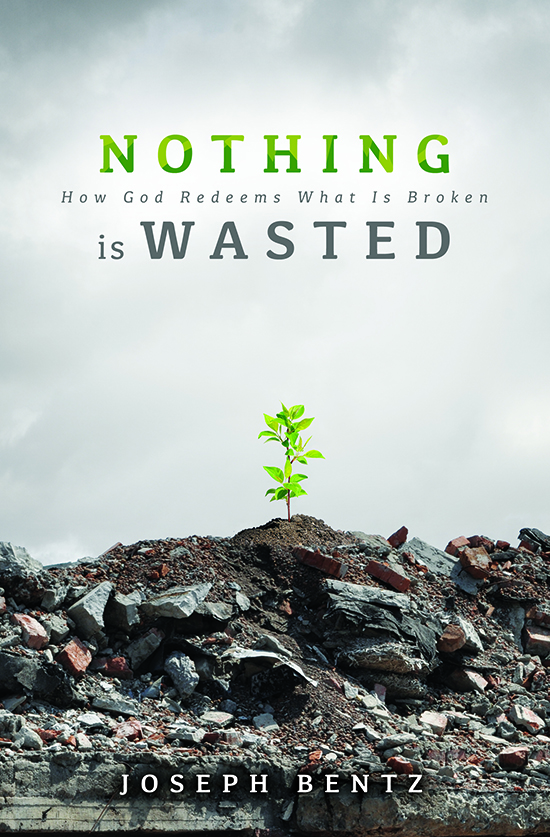
Nothing is Wasted by Joseph Bentz

Disclaimer: I was given a free copy of this book for the purpose of review. My integrity is not for sale. Those who know me well are aware a free book isn't enough to assuage my cutting honesty. If I've failed to write a bad review, it has nothing to do with the source of the material and only with the material itself.

Nothing is Wasted by Joseph Bentz opens with seven chapters about redemption. This is the stated point of the book - to encourage people that tragedy is not the end of the story, that the narrative of the world is one of redemption, that God brings beauty from even the ugliest of things. In these chapters, he uses stories, both modern and ancient to illustrate both the tragedy of the world in which we live and the beauty of redemption. Bentz, a literature professor at Azusa Pacific, is a talented writer. His prose is warm and inviting; he paints a great picture.

It's also a vital topic. I believe redemption to be the highest form of love, the purpose for existence itself, and the highest of beauty. THe first half of Bentz's book provides a powerful and forceful picture of the importance of redemption. He talks about how God is always at work making good out of bad. When I picture the beauty of redemption, I most often picture undeserved redemption - when goodness and mercy flow to me even after I've created my own tragedy. Bentz focuses more on undeserved tragedy and the universal human deserving of redemption. This is probably more interesting for the reader.

People question why bad things happen to good people; it might be the defining question of faith and human existence. Bentz tries admirably (and wisely) to stay out of that debate, focusing more on the redemption which God can bring from tragedy, but it's an impossible task. Those early chapters fall short in not addressing the underlying unspoken "why?" Bentz puts the notion that God does not cause tragedy in the mouth of one of his story subjects, but also gives indication that God uses tragedy for a purpose in the explanation of others. There is some talk of free will, but also determinism and it's pretty unclear how exactly Bentz wants us to view God role in tragedy.

I get why an author (and publisher) would seek to avoid what can be a controversial topic - it might slice up the readership for the book and detract from the univerally acknowledged reality of redemption. Still its hard to manage one without the other and that's a real problem in Nothing is Wasted.

The other issue is the second half of the book. A book that begins with sprawling, contagious narratives of hope and redemption ends up in a very narrow, conventional folk theology about Christian life and afterlife that really puts a damper on the wonder and beauty of the opening chapters.

There are several chapters that speak to the notion God might use tragedy to wrench us out of an unhealthy existence, but there's no real care to parse the difference between God using tragedy for this purpose and God planning tragedy for this purpose. At times, these chapters come off as laying guilt on people for not accepting the adventurous challenge of a Spirit-filled life with the gusto they probably should. It seems a far cry from the good news of redemption in the midst of pain and struggle - almost as if he's trying to cram too many objectives into one text.

One of the most joyous results of redemption is the peace and beauty it can provide for people in this life, yet the final chapter of the book talks about how this life is relatively unimportant in light of eternity. This seems to be the opposite of Christian teaching, in which the eternal life of Christ can begin here and now. On page 172 he writes, "Eternity is the fulfillment of the good things our earthly life promises but never quite delivers. It is not simply more of what we have now; it is a life of an entirely different character." I'm not sure I could disagree more; in fact I said pretty much the opposite in a Sunday School class I taught just two weeks ago.

I believe scripture teaches eternity will look very much like the life we live now - yes, there are some redemptive differences we don't fully understand, but we understand that the love, redemption, grace, and peace of eternity is possible here and now. This is the very heart of what makes the Church of the Nazarene distinctive. I'm unsure if Bentz is a Nazarene (although he did go to Olivet Nazarene University for undergrad), but certainly the publishing company is and it seems silly to miss the opportunity to reinforce this point in print.

Finally, the last chapter further talks about how our lives here and now are a constant struggle to find fulfillment. Bentz paints heaven as the thing which will fulfill that desire - even using the extended analogy of medically procured long life to illustrate the failures of the life we're living in comparison to eternity. This is a dangerous notion, in my view. I agree that we're constantly looking for fulfillment, but I think the solution in this life is the same as the solution for eternity: it is recognizing that this desire is a false desire. Self-fulfillment is a dangerous myth. We find our purpose, peace, and place, both in this life and the next, through selfless care and love for others.

The redemption painted in the first half of Nothing is Wasted is really powerful and good. It's a beautiful picture of eternity accessible now through the love and grace of Jesus Christ. One of the benefits of having a talented, professional writer do this book is that these narratives are incredibly well constructed and thoroughly enjoyable. The downside is that the theology is weak and sporadic and muddles the message. If it were just these first few chapters, I'd recommend the book for anyone, especially those struggling with depression or dealing with loss - Nothing is Wasted can be a real source of comfort - but with the second half of the book tacked on, there really isn't enough positive here for me to recommend it overall.

Tuesday, June 09, 2015

Evolution and Sin (Part I)

So it all started with something simple. As far as I can tell, Christians have held, almost universally and quite uncontroversially throughout history, that the incarnation (that's the Christmas story - God coming to Earth as a man, for those of you without the inside scoop on theological mumbo-jumbo) of Jesus Christ was the plan from the beginning. It's easy to see how sending Jesus to die as a solution for sin might appear to be a reaction to the actual sinning we humans did - but the Church has never believed that (this is part of a more complex discussion of God's knowledge and power - which may be better left for Part II... or III).

It's a rather unassuming assumption, really, but it has some pretty profound implications. If God was always planning to come to Earth in the person of Jesus Christ how does sin affect that plan? The traditional understanding of the beginning is that Adam and Eve were born perfect and immortal, but once they ate the forbidden fruit they became imperfect and mortal. One, that leads to a whole lot of difficult questions in light of actual history, human behavior, logic, and even just physical coherence. It's certainly a possible explanation for things - a simple, elegant one at that - but it's not very satisfying, at least for me.

It's possible God always planned, had things worked out better for Adam and Eve, to come as Jesus and just stay - that the Incarnation would essentially be the start of heaven. We have an Earth full of faultless loving humans and now God joins them in life. Beautiful. Encouraging. But, somehow, it just didn't seem right. Especially since human history did, in fact, play out much differently.

I've always been told that Adam and Eve were given free choice - to eat or not to eat - and certainly in a moment I believe that's true. We always have a real choice. I don't believe in determinism. But over time, I'm not sure the choice between obedience and disobedience is really a choice unless both are chosen. If someone goes their entire life always doing the right, most loving thing, well, there's something unnatural about it.

I know this is a point where people can and will disagree - and that's ok - but for me, I came to the realization, or at least asked the question: what if God intended for humans to sin?

That brings us to a little discussion of sin, something that's been difficult for Christians to pin down well over time. At one point a lot of people might have said, "Sin is something that leads you to end up in Hell," which is a difficult definition to parse, you know, before actually dying. It's part of the reason we end up with this long list of Dos and Don'ts; people are just trying to have their bases covered.

I tend to define sin as some action which works against God's intended purpose for the world. I suppose that's not entirely different than the one above, but it does put the impetus on the moment instead of the far future. It's also not really that different from what some of the earliest Protestant reformers used. They talked about sin as anything that falls short of the mark - a major tenet of this thought is that we sin every day in thought, word, and deed (I know this doesn't reflect completely the position of the first reformers, but certainly is suited well enough to most of them). On the cosmic scale, that's a pretty good definition - those things we do which aren't helpful in bringing about peace and unity in the world are sin.

But I'm also a Wesleyan, and John Wesley didn't like that notion of sin, because it leaves us guilty of things we may never have intended. An off-handed, innocent comment might really offend someone - clearly a wrong move in the world, but more a mistake than a sin. He defined sin as "an intentional violation of a known law of God." You could certainly be doing wrong things without knowing it, but God wouldn't hold those against you.

This definition is still trying to match up with an eternal reward/punishment idea - keeping our butts covered in the event of a surprise rapture (you can look that one up) or something.

I've never really thought, though, that the purpose of this life is to get to the next one. That's doesn't make a lot of sense - it makes no more sense, really, than God waiting thousands and thousands of years from the creation of humans to the incarnation if they weren't sinning.

So I've sort of come to the conclusion that perhaps it makes the most sense, given our scriptural witness, the experience of life, and what we know of God, to believe that God intended Adam and Eve (and thus the rest of us) to sin.

I know it sounds like blasphemy, but it makes sense in a lot of ways.

Firstly, let's look at love. The Bible pretty clearly states, "God is love." I'd say the action of Jesus on the cross is the ultimate example of love (more on that later). If love is the ultimate action, goal, lesson, what-have-you, then perhaps we need to look at this whole thing through that lens.

If I were to ask what makes the death of Jesus the ultimate example of love many people would respond, "dying to save life - even the life of an enemy," and that is certainly noble. But I'd argue that the ultimate sign of love is redemption. It's not the death of Jesus, the pain and agony that makes the cross so powerful, it is the forgiveness that comes with it and the commitment to reconciliation. On the cross, God is providing a way for people who've been separated by sin to be redeemed, to be restored to relationship with full rights and privileges.

Love is love, but no love is more powerful than a love that's undeserved.

If we've done something to justify a cutting off, a breaking of relationship, and the other chooses to work for restoration, to keep loving, to work through the pain and find healing... that's the highest pinnacle of love. I believe God set out to demonstrate that love through creation. That requires, though - absolutely requires - a break in relationship.

God created humans not only with the power to choose something other than God intended, but with the understanding that they would. We can get all existentialist and ask whether a choice not taken is ever really a choice - I think perhaps it's not.

If you go back to the scriptural record, this story is told in Genesis 3. The real problem doesn't occur in verse six when Adam and Eve eat the fruit, but in verses twelve and thirteen when first Adam and then Eve blames someone else for their error instead of taking responsibility. This is the real break in relationship. God gave them the chance to repent, seek forgiveness and bring restoration. They chose to get defensive. Whatever cosmic consequences rippled out through history, I believe, happened not when the ate, but when they chose not to be reconciled.

God continues to love them, because God is love. Thank God. But the consequences of their actions, the reality of their sin, that lingers. God forgives. God redeems. God loves. But God does not take away the consequences of our actions. God walks through them with us.

I'm not sure exactly what the real plan was - the hopeful plan - but I'll venture a guess. I think God created people who would be selfish and disobedient. Those are precisely the kind of people you need if you're going to act out redemption, the ultimate act of love - they also happen to be the kind of people each and every one of us is. We're people who do stupid stuff, hurtful stuff - not always with malicious intent, either. I'm guessing God knew, planned, for us to sin in this way. This would still require an ultimate reconciliation - an incarnation - something to fully restore the separation created between God and Creation through this action.

I'm guessing the further refusal to reconcile really broke God's heart. This just made things worse. The divide was expanded and pain increased. The consequences of these actions to effect the rest of the world - the ripple down to everyone we know and love and come in contact with. The scope of restoration provided in the incarnation had to increase exponentially. Exactly as scripture tells it: Adam and Eve made life more difficult for everyone. Telling it this way, though, makes it a lot more understandable for us - it lines up a lot more with the life we recognize and the world in which we live.


That's probably enough for now. More to come in the future (I didn't even mention evolution yet)...

Thursday, January 01, 2015

It Will Be Okay by Lysa TerKeurst

Disclaimer: I was given a free copy of this book for the purpose of review. My integrity is not for sale. Those who know me well are aware I would relish the chance to give a bad review in exchange for a free book. If I've failed to do so, it has nothing to do with the source of the material and only with the material itself.


So, I've been a little dissatisfied with the book selections from BookSneeze lately.* This is the company that gives me free books in exchange for reviews. I sent a strenuous denouncement after I saw Suicide Pact - Andrew Napolitano's partisan political screed listed. Apparently, it counts because he claims everything he says is the way God wants the world to work; I simply was asking, if they're not going to stick to strictly religious topics, could they please include good books in the selection - like Shrink, by my friend, Tim Suttle or even the new Rob Bell book (although apparently a book by a pastor about relationships isn't Christian enough to get the Zondervan imprint). Anyway, they don't seem to have been taking my advice - so I got a children's book this time. As the father of a two-year-old, I feel it an appropriate thing for me to review.

It Will Be Okay is a cute book about a seed and a fox who learn God can make beautiful things out of scary situations. The illustrations by Natalia Moore are whimsical and endearing. The story wanders a bit, but my daughter was enraptured the whole time, even though the word count per page is a bit above her normal tolerance level. Unlikely partners, a fox and a seed, become good friends and go through struggles together - ultimate discovering that the benevolent farmer had unimaginably good things planned all along.

I like the theme of friendship that develops - we don't see enough emphasis on our necessary interconnectedness in Christian media today. The notion of using a seed to illustrate the beautiful, unexpected things God can grow in us despite our circumstances is clever and inventive. The drawings evoke the right emotions - sympathy with the characters and proper personification. I suppose kids need the metaphor to be plainly spelled out in the end, but I'd prefer to teach my daughter early to begin picking up on such things.

The biggest drawback for me - and I'm still debating whether to put this on my daughter's shelf or to donate it to the nursery at our nearest Baptist church - is the implication that everything in life is orchestrated by God. The seed goes through a scary ordeal, separated from his best friend, Fox, and planted in the dark, lonely ground, but all the while God has great things in store.

I have no doubt God leads us through challenging circumstances to help us grow, but I categorically reject the notion that "everything happens for a reason." God doesn't lead us into fear, hurt, or loneliness. God is with us in dark times, but God does not lead us there. God leads us out. God's redemptive provision is evident in the book, but it's secondary to a needless narrative frame of "God's plan." Without proper distinction between the bad things in our lives and God's plan of restoration, I can't fully recommend this book.

There are plenty of ways it could have been organized to appeal to a broader theological spectrum (my Wesleyan beliefs are not some minor outlier), but if you can get over the notion that your child will think "everything happens for a reason," then there's a lot to like about It Will Be Okay.


*Note: They've realized how terrible that name was and changed it to BookLook, but no one ever specifically told me that, so I'm sticking with the terrible old name.


Disclosure of Material Connection: I received this book free from the publisher through the BookSneeze.com® book review bloggers program. I was not required to write a positive review. The opinions I have expressed are my own. I am disclosing this in accordance with the Federal Trade Commission’s 16 CFR, Part 255: “Guides Concerning the Use of Endorsements and Testimonials in Advertising.”

Thursday, March 27, 2014

Futureville by Skye Jethani

Disclaimer: I was given a free copy of this book for the purpose of review. My integrity is not for sale. Those who know me well are aware I would relish the chance to give a bad review in exchange for a free book. If I've failed to do so, it has nothing to do with the source of the material and only with the material itself.

Skye Jethani has a unique way of approaching faith and life. I appreciated greatly his perspective in The Divine Commodity and eagerly anticipate his important contributions to public faith. Futureville is an exploration of human purpose in the context of God's overall purpose for creation. Jethani examines the whole scriptural narrative and helps reclaim the biblical concept of vocation - finding responsibility and purpose in everyday life. Futureville is a stand in for the cosmic conclusion, heaven, paradise, whatever comes next. Futureville argues that by properly understanding God's purpose and desired end for creation we can more appropriately live within it. Jethani guides the reader away from the false hopes of humanism and escapism that so captivate Christians and resets the frame on redemption and resurrection; a move I wholeheartedly support and am excited to see more often in print.

Some chapters and some sections of chapters in the book are well written, poignant, and powerfully effective. The book as a whole, however, seemed disjointed and unconnected. It likely needed to be longer or separated into two volumes - one discussing the theology and interpretation of Futureville and the other elucidating what those conclusions mean for Christian life. The two are not well combined in Futureville and the reading experience suffers.

There are some key, if common, mistakes that fall below expectations for a thinker and writer of Jethani's abilities. In explaining the shortcomings of humanism and escapism (dubbed evolution and evacuation for prime alliterative effect) there is too much of a straw man built up. The targets are too easy precisely because all of the positive elements of each belief system are saved for incorporation into "Resurrection," Jethani's third way. I like the third way and I am happy it's included, but there has to be a better way of investigating alternatives than the clumsy manner pursued here.

I really did find the book helpful and positive. While not the best example of what it's trying to do, it is a prominent example and the good parts are surely good enough to make up for the shortcomings.

At the same time, one section in particular really upset me. In the section on humanism he plays up the notion of evolution - primarily social evolution - and the idea that humanity will continue to improve and get better, more moral, more peaceful, more successful as time goes along. He calls the evolution of men to supermen a natural outflow of Darwin's chain of evolution from bacteria to jellyfish to minnows, mice, monkeys, and men. He then proceeds to announce his book won't discuss those kinds of scientific controversies.

There are just better ways of making this point. Again it seems like lazy construction. Even if you're among the disbelievers of biological evolution, a responsible party would take pains to represent the idea in a responsible manner, not playing into the "we came from monkeys" stereotype that's already ingrained in the minds of your largely evangelical audience.

That may be an odd soap box on which to stand and shout, but I'd hope leaders, like Jethani, would take seriously the responsibility to bridge such divides rather than perpetuate them.

Normally, I'd give Futureville 4 out of 5. It's got some very good parts, with a solid focus, with some awkward writings and poor construction. However, there are just too many shortcuts and examples of literary laziness to move it above mediocre.

There are definitely better books with a similar message out there. They may be a little more technical and not quite as accessible, but they're far more straightforward and connected. If you're really just interested in the author, he's got better books available as well.


Disclosure of Material Connection: I received this book free from the publisher through the BookSneeze.com® book review bloggers program. I was not required to write a positive review. The opinions I have expressed are my own. I am disclosing this in accordance with the Federal Trade Commission’s 16 CFR, Part 255: “Guides Concerning the Use of Endorsements and Testimonials in Advertising.”

Thursday, October 17, 2013

Sin and Redemption (and maybe evolution)

So, over the last couple of weeks I've had good conversations with a few friends about the implications of evolution on traditional Christian understandings of sin. My beginning on this course had nothing really to do with evolution, but I wound up there quite by accident when I found it dovetailed with my explorations of sin, especially original sin and redemption. I just finished a paper for a Seminary course I took on the Theology of Creation. It's a doozy (over 4,000 words), but I suspect a few of you might appreciate it. It's sort of an expansion on some of the ideas I touched upon in my Nazarenes Exploring Evolution essay. I was hoping this could be a summary of my study, but I fear it is merely a starting point.

Happy Reading!

Sin and Redemption: An Exploration of the yetser hara in the Past, Present, and Future of Creation

Monday, February 18, 2013

Physical Spirituality

It's been a busy week for me. I had the privilege of spending Friday evening and all day Saturday with an awesome group of teenagers and college students from West Chester Church of the Nazarene. Then, early Sunday morning, I enjoyed a wonderful drive through South Jersey, from the retreat in Ocean City to Rising Sun Church of the Nazarene in Maryland where I had the opportunity to preach.

I didn't plan on the themes of these events dovetailing together, but they did. I suspect it's a subconscious effect of my current fascination with how our practices form us as people. At the youth retreat, we walked through God's plan of resurrection and redemption, talking about the hope and joy we have in God's continued creation in setting the world right. The final talk I gave began to deal with the ways in which we become the kind of people God can use in this mission of redemption. The Sunday sermon ended up in about the same place - with an emphasis on fasting, during this season of Lent.

Then I arrived home today and listened to the sermon from Pasadena First Church of the Nazarene and pastor Scott Daniels. This is a practice I try to maintain weekly - and he was preaching from an entirely different passage in the midst of a series on the core of our faith. However, he ended up in the same place. The things we do shape who we are - our practice, our physical action, have the most profound effect on who we become.

The things we do make us who we are. The things we believe only matter if we embody them in practice. An embodied gospel. That is the challenge I've been undertaking and avoiding in recent years. Undertaking because I believe it true; I believe my purpose on the is planet is to live into reality, into God's intended once and future way of life for creation. Avoiding because, well, it's dang hard.

I've always been an analyzer - I'm always asking why. I can be pretty stubborn if I don't see a good reason to do something. "We've always done it" or "everybody does it," are not going to help your case.

Why? Because what we do matters. Every little thing reinforces something within us.

I'm amazed how drastically, over time, a few little things have so damaged my discipline. There are so many things in my life I do without thinking. I am grateful for the practice of fasting - and for the season of Lent to show how much I need it the rest of the year.

Good intentions and right belief - even the best analyzed and thought out beliefs - don't mean much if you don't follow through.