
More than that, though, I wonder if the Reformation really did us any good. No one will argue the Roman Catholic Church was utterly corrupt in 1517 and needed some serious help. All of the things Martin Luther proposed to do were good (well, most of them, at least; confession: I haven't fully vetted all 95 theses) and even though the narrative goes that he didn't do what he set out to do (reform the Church), that may have been what we ended up with.
While many of my fellow Protestants will claim we liberated the faith from its bureaucratic, stale, and limiting tendencies, what we replaced it with was basically the same. The Church was still an institution.
I'm enough of a historian to know that, given the era, institutionalism was probably inevitable. However, the Church - no matter how corrupt and un-Christlike it became - always had radical factions, witnessing with their lives to the true gospel of Jesus Christ. Yes, they were often brutally hunted and killed off, but they were also always followed by another movement doing basically the same thing.
What I'm thinking is that the real reformation of the Church comes not with a changing of the gatekeepers, but with a changing of the life and practice of faith itself. I've been working a lot with Jesus' Kingdom motif lately - most of the parables begin as an explanation of the Kingdom - and I've found a recurring theme I hadn't noticed before. Most parables involve not the separating of saint from sinner, but the separating of the saints into faithful and otherwise. It's as if one message of the Kingdom, consistent throughout Jesus' ministry and thereafter, was that practicing the faith in the established institutional way is no guarantee of entry to the Kingdom of God.
We know that, of course; I can recount many a Sunday School lesson that stressed the very Lutheran notion of salvation by faith over works - that we can behave our way into the Kingdom - but I'm not sure we ever make the full connection to worship. We can't worship our way into the Kingdom either - at least in the way the institutional Church has come to define worship. Merely participating in the practices established by the community is not enough if there is no real transformation.
This is the message of Jesus' parables. The people of the Kingdom are noticeably different, not in habit or confession, but in being. The core of who we are is transformed by love and while may never act as perfectly in-line with "Christian" expectations as we'd like (or to the liking of some who share our pews), we may very well be experiencing and living into the Kingdom of God in ways those others don't yet understand.
When I think about the Reformation, I don't doubt the sincerity of its heroes or the core of its convictions, but I do wonder if the net result was just to change the expectation the institution places on its adherents, rather than a real testimony to the gospel of Jesus Christ.
We have a long history of truly counter-cultural, prophetic movements - mostly small and unorganized - who witnessed to this great power.
Maybe we would've been better off with one monolithic Church that continually battled the prophets of its own conscience than to have 10,000 different perspectives on what the monolith should look like, each claiming to be radical and prophetic?
Now, perhaps, instead of one corrupt organization in need of salvation, we've got 10,000 and the work of the prophets is all the more difficult.
It is the converted who need to be converted, continually and for all time. Maybe, just maybe, in the grand scheme of things, the Reformation really didn't do much to further that cause?

My wife took the Myers-Briggs test online today. She's done it before, but it's always interesting to see if things change. I took it too. I'm pretty much the same all the time (INTJ, if you care). Anyway, the explanation for mine talked about how people of my personality like to attack systems (usually in a good way) loaded with idealistic pragmatism. We have an unwavering belief things can work better and an irrational confidence we can do something to improve things. That's likely right, too.
I, along with about 80 others, were invited today to be part of the listening process for the strategic plan of the local school district. IO was, of course, flattered when I received the invite; less so when I found out how many people would be there. That's all ego. I didn't have high expectations that they'd really get anything concrete or specific out of the group. I'm not sure they did. I'm not sure they were planning to. (We provided some good general directions and we'll see how that translates to action later this summer.)
But one thing that did strike me as important was just how many people were there to generously and sincerely contribute to the process. There were a lot of people there - at least half weren't being paid to be there. There were a lot of diverse opinions and perspectives, but things were really positive and civil. People whose positions lead to our making assumptions about motives and character got a chance to be people. That was good.
It was also a chance, as I reflect, to really understand systems better. As much as my idealistic pragmatism wants to make me a tyrant, using my specific skills to improve the world around me (or some small part of it), things don't really work that way. Providing a strong education to 10,000 students requires, by necessity, a relatively complex system. It's going to be big and it's going to include people. It's not a problem to be solved or a puzzle to be cracked.
Yes, systems are problematic, but they're also necessary. Most systems, even dysfunctional ones, are made up on good, well-meaning people. Those people might act or react in less than ideal ways, but often that's in response to some systemic issue - the machine isn't working quite right and the parts are breaking.
I'm still a pragmatic idealist (I doubt I'll ever escape that) and I'm still an iconoclast when it comes to respecting tradition or authority (that was another character trait from my INTJ description), but I think I have a better appreciation for the necessary mess involved in systems. It bugs the heck out of me, but deep down there was a real recognition of broader understanding.
Whether it's a school district or a worshiping congregation, a family, workplace, or neighborhood, systems are what they are. They can be better, but they're never going to be depersonalized.
That might not sound like news to you, but it was my satisfyingly profound revelation for the day.
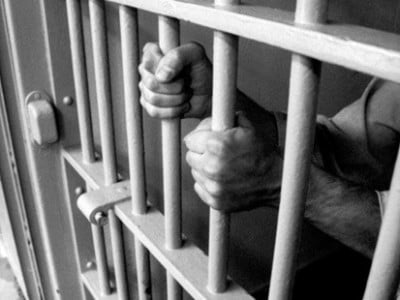
That's pretty sad.
It's sad, but it's sadly reflective of the way our society views prisoners. Honestly, it's pretty reflective of the way many prisons function. Society looks at prison as the place to put bad people. We want those who can't get along away from everyone else. It just naturally leads us to assume prisoners are bad people. We characterize them as "bad" and thus any behavior that looks remotely human is surprising.
Our prison system tends to set things up as "us vs them." Of course that's not true everywhere - not by a long shot. Many correctional facilities work against this model, but for many, prison is a place to dehumanize people. We send the bad people off to be treated like animals and then expect them miraculously to act human again when they get out.
If you read through the story you notice this incident was never going to be reported at all. Officers had to organize a makeshift strike, refusing to work until superiors named it a sexual assault, complaining that too many assaults by prisoners get covered up in the process.
The dichotomy is striking.
I'm not saying prisons are useless. We live in an involuntary society - no matter how much help, grace, assistance, and education we offer people, they may still choose not to participate in society fairly. Prison is sort of a necessary evil. But does it have to be so evil? We send tons of people to prison because its simply easier than dealing with them - or bringing to light the root causes of many of these crimes. It's a complex issue, with lots of unfair parts. Prison is used for people who aren't really a danger to anyone - it's just easier to lump people in together.
But people are people. It's good of these inmates to remind us of that. People are also different. Different problems require different solutions, yet we continue to operate under a "one size fits all" banner. It's not even a good one. We spend tens of thousands of dollars to keep people locked up, most of whom are worse off when they return to ordinary life. We're generally ok with it because these inmates generally come from small pockets of communities and don't affect the lives of most people.
One of John Wesley's early commitments (Wesley was an anglican priest in the 1700's, who founded Methodism and gave rise to the particular stream of theology from which I come) was to visit prisoners. It was on the "to do" list for all of his followers, along with giving to the poor and caring for the sick.
Our society makes it very difficult to even visit people - just part of the systemic means of dehumanization that occurs. I don't know what to do about it, really. Even as a minister, when its easier to gain access to prisons, it's pretty difficult to meet people you don't know ahead of time. The very people who most need connection to people outside the prison bubble.
This is sort of a failed blog post, since I have no neat conclusion. I'm happy some people have recognized prisoners as people. I wish we'd do it more often. Prison reform will likely not happen, since it effects the lives of so few voters and a few people make a whole lot of money keeping other people locked up.
It's not fair. It really sucks. We should be able to do better.
