
I don't watch TV news - neither the six o'clock (do they still have that?) nor the twenty-four-hour varieties. I do occasionally catch a headline on one of the TVs at the gym, where FauxNews and CNN are right next to each other in my peripheral vision. Apparently two years ago there was a big kerfuffle about an Air Force veteran who was forcibly removed from a flag-folding ceremony, which was part of the retirement celebration for a friend, when he used a religiously-tinged and unapproved script. Apparently the guy had a history of inflammatory incidents and had been told he couldn't speak at the event, however the guest of honor insisted he go on. When asked to leave, the guy refused and continued to shout his words as he was forcibly removed from the proceedings. Basically everyone looked bad all around, the Air Force changed their policy and the guy's now suing (conveniently, I believe, right before the statute of limitations runs out).
This is a talking-head special if there ever was one. How do I know? Well, the only place you can get any coverage of this event or the lawsuit is on fringe (both right and left) and military-specific websites. I'm linking to the AirForceTimes which, amazingly, seems the least partisan. As you might expect, this has become a virtual hand-grenade where people are lobbing different notions of religious freedom/persecution at each other without really saying anything.
I'm all for peaceful protest, even vociferous and disruptive protest, should the situation call for it. Clearly the guy retiring wanted to make a statement by asking his friend to use a non-standard script. They were warned and continued and they should be free to do so. The Air Force is also free to remove the guy from the ceremony, as they did, and he's free to keep shouting as he's removed, which is what happened. I wouldn't say there was physical resistance, but everybody was sticking to their line pretty firmly.
What I don't get, though, is this lawsuit. The guy and his lawyer are all over the television demanding I'm not sure what - money, I guess - but the Air Force already changed the policy as a result of this incident. It seems like, if the guy was really standing up for his religious rights, that the battle was won.
That troubles me a bit, as a Christian, because it's downright offensive to the gospel to associate it with any nation or military, but that ship has sailed long ago, I'm afraid. Not only has Americanism become our default religion; it's getting labeled as Christianity. The use of power and force are antithetical to the message of Jesus Christ and we have another exhibit of that in this situation.
The purpose of the lawsuit is to get a court to admit the Air Force violated this man's rights. It's a move for dominance. Regardless of whether or not I agree with his actions (and I don't, although there are plenty of other times I do, and it still rubs me the wrong way), Christians can't demand "rights." We gave up the right to our "rights" when we accepted the way of the cross. In the way Jesus refused to argue for himself during his many trials, we're called to live out our understanding of right action and accept whatever response we receive.
It feels like this guy should be overjoyed that his actions produced change in the direction he wanted. To me, that's the ultimate victory. I don't understand how one could make a Christian argument to then essentially humiliate your opponent. Paul, on several occasions, used his Roman citizenship to call officials to follow their own laws; he didn't then return to rub it in their faces or embarrass them to their superiors. In the end, he took whatever judgment the law required and did so willingly, following the example of his savior.
This is why Christians can't hold a cross in one hand and a flag in the other; the two are diametrically opposed, not necessarily in the game of ideas, but in lifestyle and action. Too much of "religious" dialogue these days is an attempt to browbeat people into assenting to ideas we call Christian. It's about winning the intellectual assent of others, or at least their grudging tolerance. The gospel, though, is not really about theology, but about the lifestyle inspired by our understanding of God. If we do not act in accordance with our beliefs, we don't believe at all.
The national religion of the US tends to work backwards - seeking the best course of action (best defined as most beneficial to me and mine) and then inventing a theology to support it. This is the path of least resistance and people stumble into bad theology this way all the time (its not just the purview of nationalism or convenience). In the end, the gospel is absurd from the perspective of practicality. It's predicated on truth and reality not being readily apparent. The idea that weakness is strength and love leads to truth just doesn't fit with how we've constructed our world to work.
If you're pushing your own agenda through force or persuasion, you're not representing the gospel. The way you present your ideas is far more important than those ideas themselves. For Christians, winning society's games necessarily means losing your faith. It's great to stand up, with your body, and live your beliefs in the public square - I applaud those who do, even if I disagree with them; it's quite another to expect the public square to celebrate you. That's a game you can't win and shouldn't play.
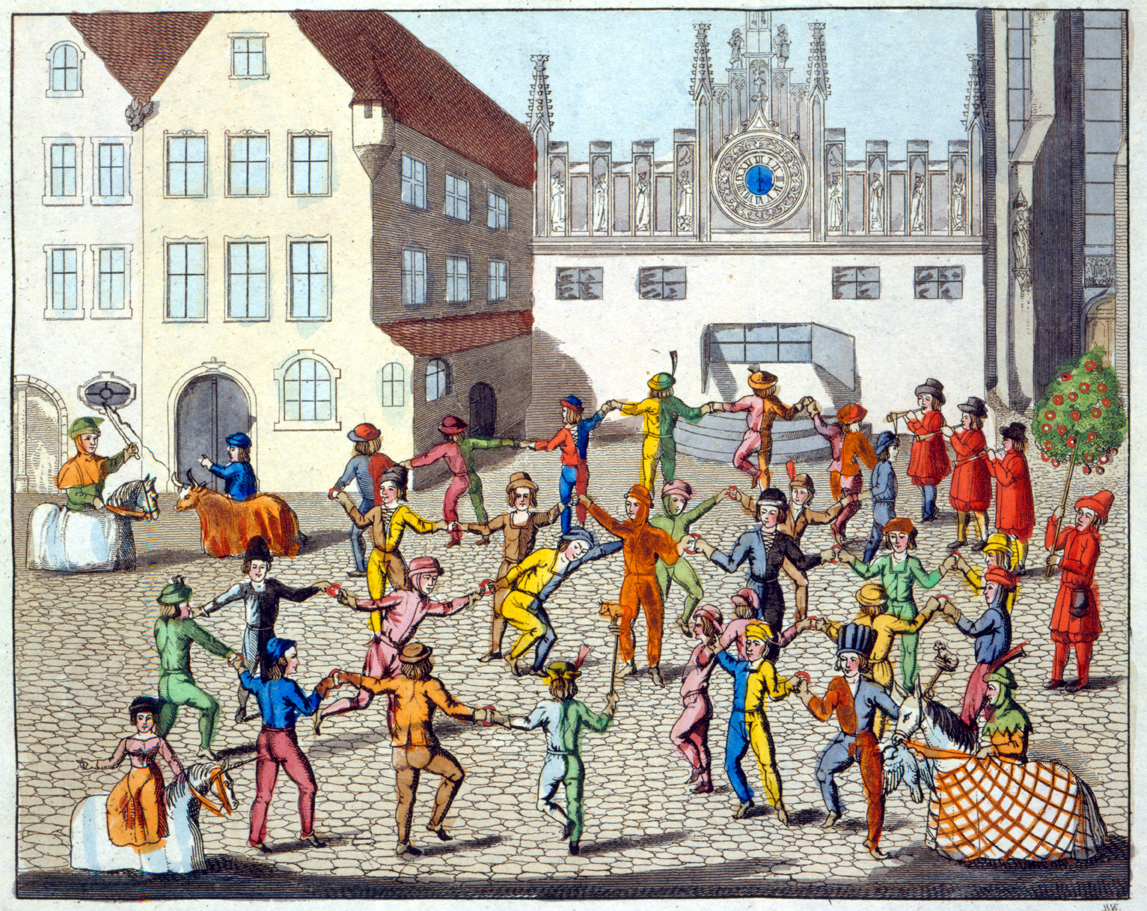
That value, though, is not in its ability to foster dialogue. Social media can certainly foster dialogue, but usually its only healthy if its with people you know outside of the internet. When we treat Facebook like the public square, a place for open debate, we ruin it.
You have to look at social media as the bulletin board at the coffee shop - people plaster it with ideas, events, and advertisements in the hope someone will notice - but you don't see people furiously scribbling opinions onto those bulletin boards, because that is the act of a crazy person.
We have (and I say this knowing you don't "have" to do anything) to look at it more like a diary without a lock, one that someone leaves on a public park bench, but returns to update every five minutes. Social media is an outlet for crazy weirdos (of whom I am the worst) to express themselves. It's not a forum for conversation - at least not generally.
The most successful and famous internet site is Reddit, an odd mix between message board and social media, but it continues to exist because it creates community. Each board is moderated under its own agreed upon rules (with a few, general, overarching commandments in place to govern semi-civility). People can talk about things in their own way because they've built relationships, no matter how tenuous, with those with whom they interact.
Otherwise, it's not really designed for conversation. Communication, maybe, but not conversation.
The quicker we can agree on this, the quicker we'll be able to harness its real potential in the world. People who do social media well - people who becomes famous for it - don't generally respond. Their posts might spawn other conversations, but they generally stay out of them. You have "arrived" on Twitter when not only can't you keep up with your mentions, but you just don't look at them at all (secretly, though, I think everyone cares; some just have more discipline than others... cough, cough, @RealDonaldTrump).
Just because we can engage with total strangers in unimportant arguments with almost no repercussions, might be a therapeutic shortcut of dubious health, but it's not great for society at large. Social media functions well to keep communities connected, perhaps even to launch them, but it can't exist in a vacuum. Nothing without actual personal buy-in can really be societally beneficial, because it lacks even basic accountability. Milo Wassisname didn't fall out of public consciousness because he got kicked off twitter or nearly burned at the stake - he took a header from the top of Mount Pop Culture when he had an editor's salary and a book deal that meant something to his actual life.
We have to keep that connection of accountability and it has to go both ways. People get fired for things they write on the internet, but we've got to make sure they're getting fired for what they said and not for what other people thought of it. Creating outrage is not a crime, but if you hate it and want to end it, you have to ignore it.
Going back to the coffee shop bulletin board - if someone puts up a flyer that's downright offensive, you just tear it down and throw it away. On the internet you block people. "Yeah, but others can still see it." Good for them - God forbid our brilliant little castle is stormed by the reality that some people believe and say offensive things - or that we're the ones saying and believing them.
Maybe the downfall of social media is that it's just 1s and 0s on a screen - as much as we personalize everything, we're still not people to each other. Of course that's a total cop out. We are people and that's the point. Pretending we're not just because we're connected through beams of light in tiny tubes is no real excuse. My four year old know the people on TV are representative of real people who exist somewhere. She even knows the difference between animated ones and real ones. She's four. None of us capable of typing has an excuse.
Maybe I'm strange, because, in general, I'm a strange person, but I've always treated social media as an extension of me. I can post on my Facebook wall and you can't, because you're not me. Yeah, I might be "breaking convention" and "being anti-social," but I think it keeps things in perspective. You're welcome to comment and disagree in the comments, but know I might delete some of them if I don't think they reflect the spirit I want to convey (or if your argument lacks logic or merit). It might be posted by you, but it's still ultimately under my name.
I don't see any of this as mere words. I like the transparency of people knowing what I'm thinking, but I also like the accountability of people knowing what I'm thinking. It doesn't cause me to edit myself, it causes me to reflect on what I think and likely evaluate and change those thoughts if, for some reason, it seems problematic to post them publicly.
Social media is NOT the new public square. Ideas are not disembodied; they can't be divorced from context - a context comprised largely of the people and experiences that birth them. We want to believe that, but now we've got billions upon billions of megabytes to the contrary.
