
This isn't a post about our conceptions of heaven, but needless to say a place of unlimited, consequence-free indulgence might not be all it's cracked up to be. Indulgence just isn't good for us. I'm terrified of ever going on a cruise, because it takes all my willpower (and usually I don't have enough) just to maintain a below-average modicum of discipline. It's terrible difficult to get back to a normal sleep routine after a vacation. I just can't imagine what life would be like coming off the week of pure indulgence that those boats seem to embody. It's scary.
You may wonder how all this ties in with the title of the post, but it's really indulgence that drives the ridiculous "news" coverage we all publicly lament and secretly enjoy. TMZ is my guilty pleasure. Talking about the private lives of total strangers seems odd, but it's really a firehose of false intimacy that costs me nothing. It's indulgent and it's fun.
This is what the news has become. There's no more journalistic curation - what's news is what gets ratings. We can all pinpoint some "moment" where it started - whether it was Elvis's death or the royal wedding or OJ's car chase, but the reality is it's always been this way. TMZ is no more than the modern, digital version of the gossip at the town well you could've experience in 2,000 BC.
Granted, it seems as though this gossip has become mainstreamed with just about every "media" outlet signing on for the circus - that's new - but it also fits with the times. We're an indulgent people dominated by the idea of more. More information, more false intimacy, more purposeless pleasure. We want what we enjoy - and we want as much as we can get. It's indulgent.
I shouldn't be surprised by the traction this Trump phone call to the soldier's widow is getting, but I am surprised. Maybe it's a sign we've moved beyond all propriety when it comes to other people. Maybe empathy is truly dead. That's what it feels like.
None of this is our business. That congresswoman with the hat shouldn't have brought it up and the White House shouldn't have responded. Even if the President had a dispassionate, awkward, offensive conversation with the widow of a soldier, it's not news. It's not something that should be covered. It's private correspondence about dead loved ones. We should all know better than to be interested, but of course we don't.
It's not as though this is even news, in the proper sense. It's not new information. It doesn't change anyone's perception of Donald Trump. It's not as thought he was some suave public speaker, beloved by the masses for his compassion and empathy and this particular phone call were dispelling common perceptions. Even his most ardent supporters know the guy doesn't do words very well and he's even worse with the feels.
No matter where your conclusion resides on the spectrum, no matter if this was deliberately disrespectful, a sign of sociopathic incompetence, or the guy just can't talk to people very well - heck, even if he made a perfectly normal, well-intentioned phone call with proper decorum, nothing about this story presents any information people didn't already know. It's useless fodder for the indulgence machine.
At some point, we have to just stop. It's not news and it's more than a little unseemly.
While we're on the subject - most of what Trump says isn't news, as in "not worth covering." From the very beginning we've known that he says outrageous things on purpose, to stir up a firestorm of angry coverage and distract from substantive policy issues. We've known it and we've said it; it's been widely reported. Yet we still play into it.
The week before he made the comment on NFL players kneeling, just six - enough to be counted on one hand by about 1 in 1000 human beings (look it up) or Count Rugen (I hope you don't have to look it up) - were kneeling during the anthem. The week after? Hundreds. Guess what? Now we've got a giant mix of protest. Were they kneeling to speak up for free speech or to oppose Trump or were they actually speaking out for the original protest - the continued disproportionate killing and mistreatment of young black men in society? Who knows?
What's more, since those comments, we've heard very little about racial injustice and a lot about patriotism and free speech. The narrative has been completely overwhelmed with stuff that just isn't news - and the real news, the shootings and brutality, the sentencing and prison imbalance, the real, actual problems that need to be addressed don't seem to be news at all anymore.
Why? They're less indulgent. They affect the lives of each of us on a near-daily basis. It's not abstract conversations about the hypothetical, about the mindset of strangers, about issues that play into our desperate need to emote. Yeah, we can make real news black and white, yes and no, hard line opinions, but most of us still have a conscience that recognizes the grey. Those things don't get ratings unless people are yelling at each other and, in general, the public doesn't like watching the yelling when it's about an issue that hits home.
CNN tried to run the middle ground for a brief time there. They ceded partisan bickering to Fox on the one side and MSNBC on the other. Their ratings tanked and they became the media scapegoat of a scapegoating President anyway. We can bemoan the lack of principle all we want, but a principled CEO in that moment would've been fired for not making shareholders any money.
No, the real responsibility lies with us. Some egotistical hotshot somewhere decides what goes on TV, but we, the viewers, decide what stays.
I've never been in the majority on that account (RIP Trophy Wife) and maybe I'm not now, but it feels like something worth saying.
We need to take responsibility for our indulgence. No one is force-feeding you media comfort food. You can say no. It feels good to pound donut after donut on a Saturday morning, especially when the week has been stressful and life seems unfair, but we all know it's not good for us.
The current state of "news" is like a free donut machine someone installed in our living room. It's got an endless supply of sugary goodness just waiting for us to consume - and it's even socially acceptable to do so.
In the end, though, some things aren't news. We need to be focused on the real events that really shape the real people who live real lives all around us. Maybe that's the rallying cry when we see something interesting pop up as click bait on facebook or scroll across the TV screen -
does this have anything to do with people I know and love? Should I care more about the people this story involves? If the answer is "no"
to both of those questions, just turn it off. Even if the whole world is consumed with fighting about it - it still might not be important.

Stephen Colbert hosted the Emmys and one of his early gags was to joke about the size of the audience and then have Sean Spicer (one-time Trump spokesman) come out on a rolling podium (reminiscent of the Melissa McCarthy parody of Spicer on SNL) to joke about the size of the audience,
the way he once, very seriously, lectured the White House Press Corps about the size of the Presidential inauguration crowd.
I found this funny. I suspect lots and lots of the home audience found it funny. The attendees of the event and the pop culture press found it tasteless and inappropriate. All I've heard, in interviews with actors and writers, and in commentaries on the event, are critiques of this moment "in an otherwise great awards show."
I want to call BS.
This is the kind of hypocritical self-importance that plays directly into the hands of people the left tends to criticize for hypocritical self-importance. Is it totally absurd that Trump, and his administration, spent the better part of his first few days in office persisting with the obvious falsehood that his inauguration crows was the largest in history? Of course. That's hypocritical self-importance. Is it equally absurd to demonize a professional PR guy (a profession that basically gets paid to lie for a living - excuse me "massage the truth" or "accentuate the positive") because he worked (and got fired by) a guy you don't like?
I know, I know, "Trump is the antithesis of morality and decency, a dangerously incompetent President and the worst person alive" blah, blah,
blah. He's portrayed a Satan by a certain class of left-wing elitists and thus contaminates anyone in his orbit. By not taking a joke, Hollywood is sort of proving a point.
The left characterizes the right as a greedy, heartless mob of rich businessmen willing to sacrifice the lives of the poor for personal gain.
The right characterizes the left as sheltered intellectuals with no real grasp on how most people live. Each side calls those characterizations baseless. This is the message of the echo chamber - "am too," "are not."
The reality is both of those bogeymen do really and truly exist, but those aren't really characteristic of the majority of the opposition. I imagine most people, both democrats and republicans, can laugh at Sean Spicer making fun of himself. Stephen Colbert knows this, which is why he's a pretty popular guy (much to the bemusement of the head-scratching pop culture media). The guy understands regular people and they like watching him.
Ricky Gervais was the best Golden Globes host of all time, because he made fun of celebrities honestly. He played to the TV audience and not the one in the room. The actors hated him for it, but the ratings were fantastic.
Now what I'm not sure of - what has yet to be proven - is if this overemphasis on the echo chamber can really change reality. If all we're given is the propaganda of the extremes, will it, in turn, change the vast middle into a polarized confusion. I'm fairly certain Breitbart and DailyKos don't represent the majority of people they claim to represent; what I'm unsure of is whether that will always be true.
I'd like to think there will always be a sane middle, that can recognize the positives and negatives of whatever is presented to them, but I'm not entirely confident that's true. What causes me concern is the seeming inability of the extremes to admit their own absurdity. It's even more troubling if we're refusing to let the opposition laugh at theirs.
If we've really gotten to a place where we can laugh at you, but you can't laugh at yourself, then we may have moved beyond the place where we can even talk to one another. Don't let the caricature become the portrait. The best thing you can do to turn enemies into friends is agree with their critiques when they get them right and be willing to laugh at yourself.
I've watched most of Spicer's recent late night interviews. I still cringe and disagree with most of the things he says and the opinions he expresses. But I'm much happier about the guy who's stepped out of the echo chamber than all those who've double down and settled in (on both sides). At least we can talk to each other - and we should be able to laugh at each other, too.
So, this guy, Reggie Osborne, poured his well-intentioned heart out on his personal blog more than a year ago and, for some reason, it's found its way to viral now. I see lots of my Christian friends sharing and praising this post. I'm going to savage it - I think it's deluded, misguided, and dangerous - but I don't want this to be some attack or rebuke on Reggie himself. He's coming from the right place - in fact, I think I agree with what might be his most important sentence, in reference to today's youth, "They’ve heard the message and believed it: 'Sex is no big deal'." That's the point in this thing, he just surrounds it with so much outrageous bunk, I'm enraged.
Yes, I recognize that he wrote a follow up to clarify some of the more egregious inferences, but that doesn't remove them from the piece. The impetus for the article was a California law requiring affirmative consent training in high school sex ed. To quote from the piece,
"Do you want to kiss her? Ask for consent. Do you want to touch her breasts? Ask for consent again. Do you want to take her clothes off? Ask for consent again. Do you want to penetrate? Ask for consent again."
I get that he's outraged this is something that would have to be taught in school, but there's nothing in the piece supportive or affirmative of this idea at all. I think it comes from a naivte about the past that we evangelicals like to nurture, that there was a time when conservative Christian morality was the societal norm and people "behaved" themselves. This just isn't true.
Sexual assault on college campuses is not a new phenomenon, it's just now become an issue for people in power. Women being taken advantage of is not a new phenomenon; it's just become culturally unacceptable. To think that affirmative consent is the kind of thing we have to do to stem some rising tide of sexual dysfunction is to have your head in the sand. This is the kind of training that's been needed for all of human history. Yes, I, too, am upset that it's needed - and that outrage is justified - but it's not a new need.
He beings the piece with a story about his wedding - how because of the (right and good and agreeable) chastity he and his wife practiced, along with their commitment to life-long marriage, his wife "only said yes once." I understand the meaning; it's about commitment, but that's not how the words read. They're irresponsible in a world (especially a conservative Christian world) where often the man is empowered as dictator in a relationship. The evil of complementarianism is alive and well - and many women are committed to the idea that what their husband says, goes.
I'm not accusing Osborne of this - (well, maybe he's into complementarianism, I don't know - but he makes a strong denouncement of spousal rape in the follow up piece) - but it is real and prevalent still. Sometimes it does apply to sex. I've heard more than one committed Christian address what's appropriate in the bedroom by saying, "once you're married, anything goes," which is fine, if there's real affirmative consent, where one partner actually feels free to say no (I'll try to use partner as often as possible, but sexual pressure in a relationship can come from either partner, and it certainly applies to same-sex relationships, too).
I don't know how it works for other people, but I've pretty much found in my 12 years of marriage that affirmative consent works really well for everything, not just physical intimacy. The majority of Osborne's post seems to be denigrating or marginalizing its importance. As the dad of a daughter, I think it's just about the greatest thing to come along in society in recent years. I am overjoyed knowing that when I empower my daughter to take control of her body there's a whole culture out there supporting that notion. It's not a luxury that women in previous generations enjoyed.
When I read the list of things Osbourne cited he gets to do because his wife said 'yes once,' at their wedding, I just feel sad for her.
"Yes, I could kiss her. Yes, I could sleep with her. Yes, I could steal glances of her in the shower because I think she looks great even after 5 kids. She said, “Yes,” to me, forever."
I'm sure they've got a great relationship (or as good as any of us) and this was maybe poorly worded, but they're still there, for people to read. None of those things are implied by a wedding. Kissing and sex might be expected (although, again, with real affirmative consent), but I can't imagine too many people (male or female) enjoy being bothered in the shower. It was a real shock early in my marriage when I was told some of the things I did with good intentions to be cute or flirtatious just made my wife uncomfortable and angry (and it took some time of quiet suffering before she told me).
Lack of communication is the easiest way to kill a relationship and, frankly, Christians have done more to make talking about sex and intimacy difficult for couples than anything else. Yes, culture and media have exposed kids to sex more often, earlier, and in unhealthy ways than in past generations. That's absolutely true. Yes, pornography and media portrayals present a distorted view of sex that leads to real relationship problems for people when they have unfair expectations of a partner.
But that doesn't make it the cause of anything. What it's done is force us to talk about things previous generations could've gone their whole lives never bringing up. How many Christian kids heard simply that sex was bad until they're married, then its great, with no other instruction whatsoever? It's a lot. What that leads to is just as much dysfunction, misery, and fear, albeit different from the kinds prevalent today.
The difference now, in this oversexed world, is we have to talk about it or someone else will.
Beyond the way many of these other peripheral issues were poorly addressed, what drives me most nuts about "She Only Said Yes Once," is its blame shifting. Yes, sex has been casualized and devalued and misrepresented in society, but if my child grows up with a messed up perception of sex and its related issues, that's not anyone's fault but mine.
We're afraid of oversexualizing our own kids if we talk about the natural, biological processes of reproduction before they hit puberty. We think we're just going to drive our kids to experimentation and danger if we empower them to make their own decisions about sex after puberty. We want to tell them what to do, but we're afraid they won't listen, so we say nothing at all.
That is when culture and experience and outside voices enter the fray. If you don't want your kids listening to a culture that glorifies selfishness and hedonism through sex, then give them another voice. I won't go into great detail on what I might say, because I've written it a couple times, at least - this one still holds up.
I think the big issue, especially as it relates to Osborne's piece and the way evangelicals have handled sex, is the approach. If you start with "Don't have sex," and follow it with a discussion of the very real and important realities surrounding sex, it just seems like justification for the demand. If you start with, "It's your body and you can use it however you want," the rest becomes honest and caring support as they wrestle with a massive responsibility.
I am positive my daughter will make choices with which I disagree (and not just about sex, either) - when I think about it even now I tear up little - but it's much more important to me that she makes those choices with the broadest reserve of knowledge, the deepest well of thought,
and my unwavering support.
The sexualized world around us is not evidence of its own depravity - we're naive if we think this is anything new - rather it is evidence of our abdication of responsibility to speak life into it.

If you really look at this "fake news" stuff, yeah there's some talk that it's being secretly funded by foreign governments to mess with US elections, but for the most part, it's a product of economic disparity in a globalized world. Most of this stuff comes from shops set up in rural Macedonia, where low-level gangsters pay school children to write (or even just copy and paste) stories about the US elections in their off hours. With the advent of online advertising, you don't need any actual substance, just a headline click-baity enough to draw interest. People get paid for the eyeballs on the ads - that's all that matters. Fake news is no different than kitten videos or clever memes - it's just content meant to make someone money.
It might be poor satire, but it's certainly inventive - well, some of it - the best fake news is genuinely creative and clever, people make up stories that other people want to read. We live in a world where almost everyone universally doubts the bias of the press, even historic, well-established journalistic brands - even if a fake news site bills itself as real news, people are conditioned not to trust media. Heck, even fake news sites like the Onion that are overtly up-front about the fakeness of their news still end up getting retweeted by actual elected officials.
The problem is not some masquerading pseudo-journalist who's really a fourth grader in Gostivar (look it up); the problem is us. The great Western Individualism that we've come to know and love (and claim is the reason much of those who hate us hate us) has led us to be self-absorbed egotists, assuming that our common sense is the closet approximation to truth. We're also lazy. It doesn't take much in this internet age to research a story and then utilize that profound common sense with, you know, a basic level of information. It's the same internet these fake news sites mine to figure out what stories we might click on and then provide them to us.
If you listen to any of the numerous reporting pieces on fake news, you can hear interviews with these kids and their bosses. They're not interested in shaping US policy (although they take pride in the fact that they are), they just want to make money. If people click on Trump stories, they'll write Trump stories. It's industrious and inventive and intelligent - all things you need to be to avoid falling for this kind of news.
I hear all this hand-wringing from people lamenting the place fake news held in the recent election and I've heard nothing about the responsibility of a society to educate its people and motivate them to perform basic functions. It's not like you have to drive down to some college library to look up economic charts from the past five years - you type a couple words into google and you click on a few "about us" tabs and then you click on google a few more times to verify the information you're finding.
Yeah, it's not perfect, but the more information one has the better capable we are of making real, informed choices. Not doing the work to be informed is our fault, not someone else's.
I love fake news. If I'd had time and a little more internet marketing savvy, it sounds like a fun way to make some money. I like writing. I'm pretty creative. I'm pretty knowledgeable about the political landscape. I bet I'd be really good at it. About ten years ago, when I had a break from grad school, I'd go onto Yahoo Answers and write long, details answers to questions that were entirely false. For example, one girl was trying to get help with her homework on Romeo and Juliet and I described in 1500 words, the plot of A Streetcar Named Desire (I just used the names Romeo and Juliet instead of Stanley and Stella).
There's really no excuse for believing something just because it sounds good. I imagine it has to do with our aversion to suffering - we only work as much as we have to work, and we try to avoid it as much as possible. Talk to a middle school teacher sometime - one of the most difficult things to teach is research - good research - it's too easy to get into a mindset of "it says this somewhere" and "their opinions is as valid as anyone else's." I don't disagree with the opinion part, but there's a certain level of knowledge that's assumed. Opinions are equally valid when they come from the same level of knowledge. My opinions on the origin of black holes is not nearly as valid as that of Neil DeGrasse Tyson. If I were ever going to disagree with him, I'd have to do a lot of actual work to gain the kind of knowledge I'd need to do so.
That or I could just tweet some fake news at him.
Sadly, in the court of public opinion, that would probably be enough to win the argument. But that's not my fault; it's the fault of all those people who believe me. Don't penalize creative people exercising their gifts for a better economic future. Let's pull the plank out of our own eye before we go after the speck in someone else's. I feel like that's good advice I heard somewhere once.
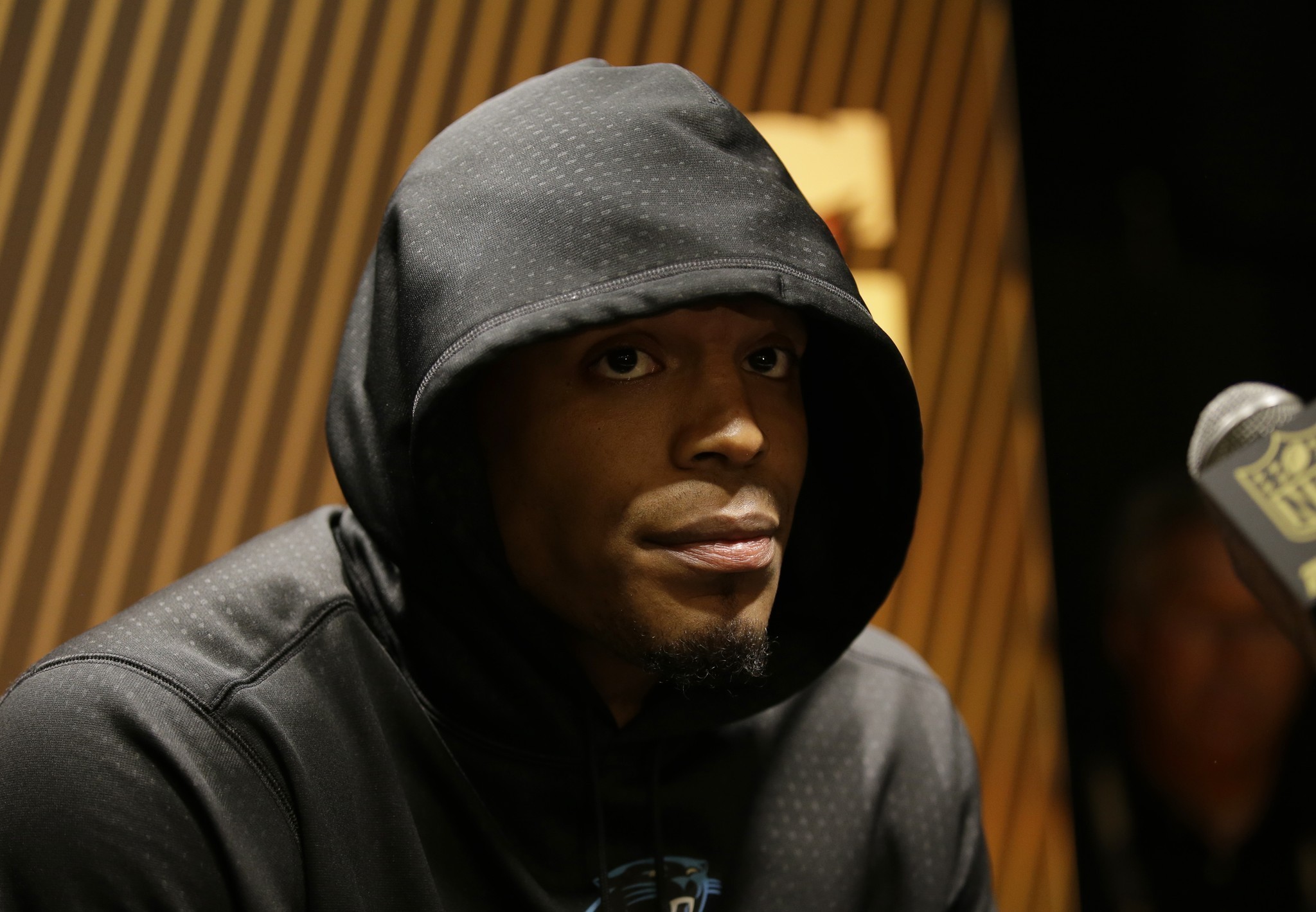
Millennial athletes are taking a different tactic - we saw it on display after the Superbowl. Cam Newton came out visibly sad and frustrated, gave a bunch of one word answers and one incredibly concise, but accurate explanation of how the game went, before leaving the stage. It was raw and honest and expressive and is shows the kind of authenticity and openness that characterizes this millennial generation.
It wasn't pretty. He was sulking and short and visibly upset. He took a lot of beef for being childish or a poor loser. I didn't see any of that, though. I saw a guy who did his duty, answered his questions, took responsibility for his mistakes and gave credit to the other team for winning. He did everything we expect an athlete in his situation to do - he just didn't look happy doing it.
This is the new battle ground, and I think it is very much a generational shift. In many workplaces around the world there are discussion about how we define "professional" and what expectations we place on workers. None of those is more visible, though, than professional sports. We've long been accustomed to the "suck in up" mindset, where even if a player or coach is passionate (either positively or negatively), they calm down for the cameras, answer questions as best they can, and emote in private.
It's prettier, for sure, and it makes the media's job a lot easier. But, as Cam said in his follow up comments today, is it really necessary or required? I'd ask, is it healthy?
We make these guys out to be robots, vessels for our entertainment. We don't like seeing them as real people - unless its in a factory polished window into their real people-hood that's as managed and fake as the image we think we're seeing past. The athletes have played into this, of course - look at the Michael Jordan quote above. It's about marketing and branding and money. Be as bland as possible and don't alienate anyone.
That's the down side of Cam's honesty here. He's going to make some people mad. They're not going to like the way he conducts himself and they might not buy his products or support his team. It could cost him something. He seems to be ok with that - and I am, too - I don't think people have to like Cam Newton. I just have an issue with people saying he's wrong, or it's not the way things should be done.
As with much in life, just because it hasn't been done that way before, doesn't mean it can't. Just because it's how things work, doesn't mean it has to be that way. Reality doesn't make right. Maybe there is no right, and players will choose to do their duty in a variety of ways, rather than those approved by media and tradition.
I'm not quite a millennial, but I really appreciate the millennial love of authenticity. Cam Newton doesn't want to be a different guy in the media than he is out of it. That's incredibly strange to conventional wisdom, but it makes a lot of sense to the kids he's hoping to inspire (and leverage for profit), in fact, it's almost required.
The other element is that players don't quite need the media as much as they used to. Yes, the media is still essential and still pays the bills, just not as many as it once did. Leagues are increasingly beholden to these broadcast deals (although I think the NFL could just set up channels or apps to broadcast all its games and people would follow pretty readily), but the players, especially star players, make more money from endorsements than they do from playing. They need the media, but not desperately. Therefore, they're not necessarily out to make the media's job easier.
Look at NBA star Steph Curry - he's super talented and super likable. He won't put off the old school sports fans upset with Newton - that's just his style. But he's got no problem staking his own claim to the press conference. He was criticized during the NBA Finals last year for bringing his young daughter out to the press conference with him - some journalists felt uncomfortable asking difficult questions or challenging Curry with his young daughter present.
Curry laughed it off (and won the public relations battle largely by leveraging social media - another avenue that marginalizes the traditional player-media relationship) and said essentially that he's an open book, suggesting that both, his daughter can hear the truth AND that perhaps the media need to remember that the guys they cover are real people with families when they ask questions. It was a subtle move, but an important example of how this new generation of players is approaching the media. This long held unwritten contract between the two is being renegotiated and things are a little uncertain.
Allen Iverson was the first to challenge this model (maybe Charles Barkley, although when he spoke out, media just didn't cover it, which means his reach was pretty much non-existent), he was way ahead of his time and we nearly killed him for his honesty. We're now in a generation of players (and increasingly, of fans) who understand and appreciate this approach. It's going to change things.
One thing people seem most uncomfortable with in Cam's performance is emotion. There is, of course, a difference between acting on your emotion and expressing your emotions; people seem to miss this. For the most part, we don't want athletes expressing emotion in a press conference. We like it (sometimes) during or after a game (unless you're Richard Sherman, anyway), but we'd rather get dispassionate comments afterwards. When players and coaches do express genuine emotion, we typically make fun of them (Jim Mora: "Playoffs!").
Cam wasn't whining or complaining. He took responsibility and gave credit to his opponents. When he did finally give more than a one word answer, it was pretty eloquent, honest, and restrained. He summed up the game remarkably well. This was not a guy out of control - he was simply sad. Yes, a happy guy is going to speak louder and longer and more entertainingly than a sad one, but he did his job, faced the press, and answered teh question.
I'm just excited for the precedent this sets. Players might feel free to be more honest about their feelings and we might get to know them a little more as people. You see it being a challenge for everyone, players included. LeBron James tried to manage his response to Newton, but it's clear he's coming from the same long-held mindset that we've too long taken for granted.
It will be interesting to see how the juxtaposition works itself out between this kind of authenticity from athletes and the growing managed output of "reality" stars. In some sense, the millennial generation is trying to figure out the balance between projecting an image and being true to yourself, especially in a world of social media, where the walls are blurred between personal relationships and media portrayals. I find it interesting that we'll get to see this play out among our most recognizable stars.
*Oh, and, yes, there might just be some bias here as well - it might be racial, it might just be flashy vs buttoned down - but this provides an interesting notion to think about with regards to how Cam Newton is viewed.