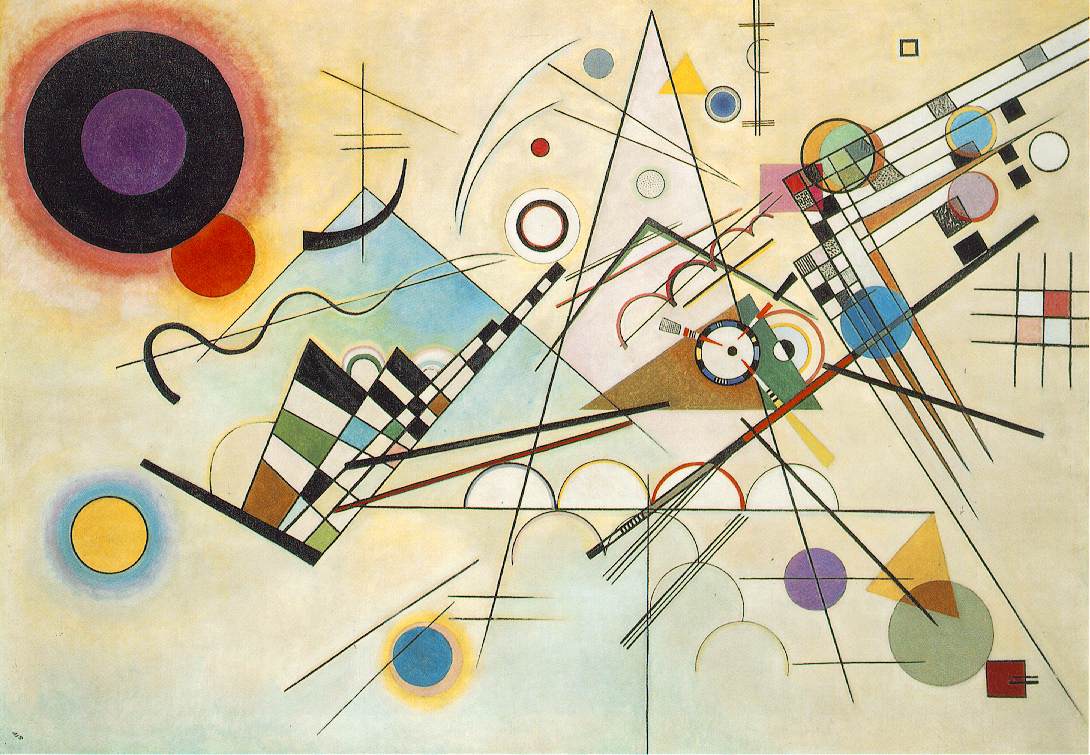
however, one in particular struck me for an entirely different reason.
Towards the end of the book, the author, Maria Konnikova, presents the case of Glafira Rosales, a small-time art dealer who conned big-time art dealer Ann Freedman into selling off 63 forged abstract expressionist paintings as real over the course of many years, even buying some herself.
The fakes were so convincing, reknowned art experts, historians, even museums specializing in the period and Mark Rothko's son, Christopher,
were convinced they were real. It was only when so many previously unknown works emerged that people began to be suspicious, but it was never because of the art itself.
The book talked about how we can become blind to our own expertise - of course Freedman believed in the art, she had two in her entryway and saw them everyday. How could she, an expert, be fooled by fakes she saw all the time.
In the end the scheme bankrupted a lot of people and embarrassed far more, but that notion of the dealer looking at fake paintings in her entryway struck me as odd - the economics of the whole thing. If those paintings were truly indistinguishable from de Koonig's style (for none of them were copies of existing art, but art in the style of each artist, passed off as unknown), why would it be any less valuable? Either the thing takes on more beauty because the artist is famous, or the art itself is more valuable because the artist is famous - but neither option really makes sense.
It led me to think about the ways in which we evaluate beauty. The high art world is strange to begin with - none of the immense, grotesque values on famous paintings are truly accurate; as in any free-market system, value is determined solely by how much money one is willing to pay. A modern artist can now sell a written description of an un-made work as art, and bag $10m for the privilege of letting someone imagine what they would've designed. I get the inherent value of such a thing, as well as the philosophical statement its making - and I appreciate both - but I don't understand the monetary value.
Beauty is beauty. Someone may be unwilling to part with a beautiful work of art for $10m, when no one else would pay twenty bucks for it, because its beautiful and you can't put a price on beauty. People on Antiques Road Show like to know how much Grandma's 400 year old rocking chair is worth, but they're never going to sell it - the connection is too priceless. I'm sure there are psychological effects at play here, too, but it's also a statement on beauty. What we find valuable doesn't always equate to money.
Shoot, I write here at least once a week, hopefully twice - the hits aren't terrible. I'm sure I could throw some google adsense boxes up and make a few bucks, but I don't like the idea of not being able to control what products get sold next to my thoughts and words. Whatever small benefit I might receive is outweighed by the very non-monetary cost to my perception of artistry and beauty.
In the end, though, it is kind of sad how the free-market has taken over art. Yes, I'm sure some of the people who spend gobs on paintings and sculpture really appreciate the beauty on the pieces and just happen to have the money to buy them; a lot, however, just like the investment.
The book treated the forged paintings as somehow worthless, simply because the artist was not who people thought it to be. Absent that knowledge, no one - absolutely no one - could tell the difference.
I suppose this could be some grand example of "beauty is truth and truth beauty" right? It is not the artist that makes the painting less valuable, but the deceit? I can see that perspective, but perhaps I'm too naive. I think something beautiful is beautiful. Wasilly Kandinsky is one of my favorite artists. I've seen a lot of his work in person and even more in prints and books. I absolutely love the unusual way his mind and design work - it strikes me as incredibly beautiful. I've also seen a few of his pieces, though, that strike me as downright ugly -
whether its the particular design or the color choices or what have you, I don't like them all simply because he created them.
I get that some Picassos are worth more than others, purportedly because they're better representative of a specific style or a difference in structure or technique - maybe they're even a little less beautiful. But I wonder how they'd be evaluated if the branding of a name weren't attached?
I suppose its impossible to do. Branding is important no matter who you are - JK Rowling continues to use her Robert Galbraith pseudonym for her adult mysteries long after the connection was unmasked. It's branding and removing it probably hinders the artist in some way. At the same time, I wonder how our understanding of beauty and value gets diluted and confounded by the economy of a free market that limits value to simply what money can buy.

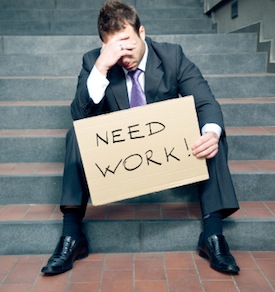
In this particular case, though, where we're talking about minimum wage and poor workers, there's a larger issue at play in the discussion. There're a couple underlying assumptions in that meme that trouble me. The first is that society has no responsibility for quality of life. If we're committed to providing people with the basics in life, it makes sense, at least to me, to provide them with a living wage, so they can afford basic necessities. We're paying for them either way, if we really believe we have a responsibility to each other (and guess what, I do).
The second assumption, though, is more pressing to me - and it's really a secondary assumption, something underlies our entire economic framework. It's simply that people are worth what their skills and abilities are worth on the open market. A surgeon might say, "I'm worth half a million dollars, because that's how much people are willing to pay me." I get the economic argument about your work being worth what someone will pay, but we are not our work. At the same time, we cannot be entirely separated from our work. Work is essential to life - as much as food and shelter and basic health care - we need it to be truly human. We can't reduce people to their work, but neither can we separate them from it.
This is the whole principle of taxation, right? People who's work is worth a lot sacrifice some of that wealth to support people whose work isn't worth as much.* If it were a pure math game, we wouldn't need taxes - that's the ultimate social darwinian experiment - but everybody needs something basic. There is a floor on what people need to survive as human beings and we, as a society, have the responsibility to provide it. So when someone argues for $15 an hour for McDonalds employees, the argument is not that their work is somehow "worth" $15/hr, but that the workers themselves are worth that much.
The number can be debated and changed and there's myriad other ways to construct a society that cares for itself well - it's not really about minimum wage. I'm more concerned that we're thinking about the underlying assumptions behind even a simple meme that we throw around.
Yes, we should automate the McDonalds, because it's efficient and it makes sense. Life would be easier for everyone involved. Locally here, Wawa has been doing this for years - and has some of the best employee relations in the industry. It's not an either/or kind of thing. At the same time, we should also support a living wage, so people can enjoy the basic human right of work and also be able to live a balanced life. We should care about the quality of education our lowest performing students receive, because these are the kids most likely to rely on societal support later in life. We should have a broad view of our economic and social responsibility to each other and stop trying to find the easiest way to salve our consciences.
The absolute worst that can happen is we end up with a society so remarkably efficient that there isn't enough economically productive work to go around. That could be a disaster if we're operating on the mindset of individuality - but if we're really committed to responsible society, it might just leave room for people to explore art and invention, science and sport - things that are valuable on a human scale, but lag behind on the purely economic spectrum.
Humans are economic beings, but we are not purely economic beings. We're more than just what someone will pay us and we have to work hard to remember that and to live differently in a society that often, either implicitly or explicitly, says different.
*Now there are broader political arguments about whether our current society really wants people to work and I do believe we are pretty terrible at matching people with fulfilling work. It's extremely inefficient, but that's a different argument and such discussion here misses the point.

Then, on Friday night, for just $10, I (and about 100 others) were treated to 90 minutes of musician Derek Webb, playing and talking from his living room via the interwebs. He took requests and interacted with the relatively small audience and is going to start doing similar broadcasts regularly. Derek Webb is a fantastic songwriter and one who inspires my own writing with his creativity and skill. He's an evolving spiritual thinker who provided and important soundtrack to much of my own growth and maturation during college years and after.
Both of these things are quite mundane for the world we live in now, but they're pretty revolutionary ways for artists and thinkers to not only have their work engaged and critiqued, but to make a living. Concerts are really starting to price out a lot of people (myself included) with their associated costs and expenses - this is a great evolution, allowing someone like Derek Webb to interact more directly with listeners.
For Rollins, who can only speak so often and in so many places, but perhaps has a widespread, eclectic audience, he can bring people together in ways that are mutually beneficial and cost effective for both parties. I'm not sure exactly what all these possibilities hold for the future, but it's exciting to know and experience the new possibilities.
It's gotten me thinking more about art and it's place in society. For a while now we've (the collective, societal 'we've') really only valued art for what it fetches in the open market. Someone may be very talented, but they're a good artist if they can sustain themselves with their art. It's led to this crazy market for fine art and, as mentioned, crazy expensive concerts. Even those artist who tour constantly or sustain themselves with niche communities of support, it's often a day-to-day, week-to-week existence often supplemented with something else they do.
We've lost the real, intangible value of art in society.

It doesn't always pay off. Sometimes good art isn't worth a dime because it's not entirely comfortable or welcomed. This means art is rarely appreciated for its own sake - for its contribution to society. When politicians talk about budget cuts, the Arts are often the first to go. Symphonies and museums are working hard to build self-sustaining endowments, expecting an inevitable end of public support.
The fact those endowments are, in places, succeeding is testament to the reality that some people still value art for more than it's monetary worth - and are willing to put some monetary value on the intangible benefit it provides to all of us, individually and as a collective. Hopefully this new direct connect-ability will provide a better way for our society to recognize and support the artists among us - that it becomes not just a benefit to me, sitting on my couch, but to the artists themselves and the larger world.
*I include Rollins in this conversation about art, because as much as he's incredibly intelligent and knowledgeable, he is ultimately a storyteller. His best work is framed narratively, using his extensive background to inform the larger art with which he teaches and attempts to live.

Let's get our language correct people - and perhaps gain some perspective on ourselves and the world around us.
The truth is, comparing Bernie Sanders to Soviet Russia is sort of like comparing a pile of freshly raked leaves to a hard boiled egg - there are certainly comparisons to be made, but they're not going to be helpful.
First, let's talk a little about the difference between Socialism and Communism. Communism is a form of government (like a monarchy or a parliamentary system or a representative republic). Socialism is an economic system. Yes, Soviet Russia was indeed socialist, because socialism is the only type of economic system possible within communism (unless you count corruption, in which case Soviet Russia wasn't socialist at all).*
Most nations on Earth today are basically democratic. There are some failed states with virtually no government, a few military dictatorships, and the odd monarchy - but for the most part, everybody is a democracy of one kind or another (which just means people get to vote for the people in power). Yes, there are varying degrees of effectiveness and freedom here, but that is a discussion for another day.
Economically, those democracies that exist (and no, just because the UK or Thailand has a monarch, they really aren't monarchies) have economic systems incorporating elements of both socialism and capitalism. In the extreme, capitalism means every man (or amorphous corporate "man") for himself; people use whatever resources they possess to leverage their ability to survive (or enrich the few and starve the many). Socialism, in its extreme, means every resource is collected together by society and used to meet individual and collective needs (or enrich the few and starve the many).
Every economy on Earth (except maybe Somalia) works along a spectrum between socialism and capitalism.
One of the easiest ways to look at this might be a rather un-contentious issue like roads and bridges. A purely capitalist system would keep gob't completely out of the transportation business, allowing private entities to control and toll roads that cross private property and allow market forces (ie trial and error, essentially) to control safety and prices. A purely socialist system would commandeer land for roads and bridges, then construct and maintain such using a corps of transportation workers on gov't payroll. Most societies use a mixture of the two - often using competitive bidding to keep construction costs down, but using regular payroll labor for maintenance.
Another way of looking at this spectrum might be the recent economic recession. Most gov'ts around the world used public money to keep banks and other institutions from going bankrupt and closing. This is a socialist intervention meant to prevent further losses in other parts of the economy. A purely capitalist solution would have let every failing business fail, leaving those bankrupted or impoverished to learn their lesson and do better next time. A purely socialist solution would have been to nationalize the banking industry, with the gov't taking over investment institutions and running them as departments of the gov't. Most nations fell somewhere in between, propping up institutions that could be saved and hoping to avoid future problems by enacting regulation to better keep such business in check.
There is a lot of strong opinion about how well these efforts have failed or succeeded in various places, but they represent elements of both socialism and capitalism. I'm not really aware of anyone anywhere (outside of maybe North Korea) who advocates for a straight socialism or a straight capitalism. Even places like Cuba, avowedly communist in gov't, collects only about half of its country's production in a given year, and could thus be said to be, maybe (grossly simplified) half socialist.
Now that last example, finance, is a great way to illustrate that whether your economic system is largely socialist or largely capitalist doesn't matter as much as how well its managed. Sweden and France, very similar European countries each take roughly 45% of GDP (money made in the country in a given year) for gov't expenses and provide lots of public services (free health care, education through college, etc). They have among the highest rates of taxation in the world and are considered among the most socialist. They are both strong, advanced democracies with stable governments and high average incomes. France is a giant economic mess, with skyrocketing public debt and a stagnant economy, while Sweden is swiftly ridding itself of debt and growing rapidly.**
All this to say, the United States has always been, in some sense, socialist. Granted, following the Great Depression and FDR's New Deal, we're a lot more socialist than we used to be. Things like medical care for children and the elderly, along with unemployment and emergency housing measure are socialistic by nature. I'm sure everyone would agree these things can be done more efficiently and effectively than they are, but that is, again, a conversation for another day.***
What I'm saying is: every Presidential candidate from both parties is a socialist (yes, even Rand Paul). The degree to which any candidate is a socialist is certainly up for debate, it's just not that productive a discussion. It's a much better idea to evaluate candidates based on actual plans to address actual problems (which will all be a variety of socialist and capitalist solutions whatever candidate you pick). And let's stop bringing Soviet Russia into things - they haven't really been relevant since Taylor Swift's been alive (but I'm sure that's merely coincidence).
*Yes we also have the example of modern China, which is trying to keep communism as it adds elements of capitalism to its socialist economic system. As we'll see later on, nothing is purely socialist or purely capitalist.
**In Frace's defense, they are roughly 6 times bigger than Sweden, population-wise and have a more varied set of difficulties to work around, however, their situation isn't really all that different from Germany, which isn't quite so far up on the socialist ladder, but still totally has its house in order.
***Just to be clear, there's no "Christian" backing for socialism or capitalism - a "Christian" economy would look something like benevolent anarchy in which people worked hard each day for what they needed and gave away the rest, but nothing was required or anyone. In other words, it wouldn't work in the US anyway, so don't worry about it.

Most proponents of these economic systems believe there is some sort of natural state by which, if left alone (whatever that means) human society would naturally gravitate towards. In (very broad, overly generalist) terms, extreme capitalism is attempting to free people to interact in ways they would naturally, while extreme socialism is attempting to remove allegedly artificial barriers of historic development to return people to some natural state.
I suspect most anyone will tell you perhaps there is a necessary tension between these two ideas - which are really just competing notions of communal and individual responsibility. Again, crudely: "being selfish helps everyone" vs "being selfless helps everyone," when in reality human beings are neither selfish nor selfless. We tend to be both.
Underlying all of these economic theories, however, is one universal theme. They're consumed with more. the assumption of economics is the production of more wealth. It's the old, "bigger house, better car, more luxury" mantra of human society. Capitalism might use this drive to elicit competition, while socialism might use this drive to elicit compassion, but they're ultimately in search of the same thing.
I've been thinking about this in light of what I guess we call Biblical economics (although that's a pretty terrible term). I'd prefer to use "Kingdom economics," but that's entirely insider lingo and tough to access without help.
In any event, I'd describe such economics as Generous Simplicity.
God calls people to less. Use less, need less, be happy with less. God calls people to less so we can be givers and recipients of generosity. A people who need and want less, have plenty to give, but also receive simple gifts as great treasure.
We often simplify things to say, "God doesn't want anyone to go without," but fasting and sacrifice have always been a real part of God's formation of people. Those practices exist to show us just how little we really need. Of course, no one should be hungry or thirsty - but how few of us really know what those words mean? Especially those of us immersed in the economics of more?
God doesn't want anyone forced into poverty, but God does want us to desire simplicity.
Jesus, through words and example, calls people to be downwardly mobile. Our eyes and aspirations should not be on those above us in the prosperity ladder, but on those below. We should not be working to need more, but to need less. There are a lot of ways to interpret the literally meaning of those words; I believe all of them are correct.*
In truth, simplicity works against a capitalist system; it works against a socialist system, too. Perhaps when we talk about economics, the real inherent tension is not between which particular ism makes the most sense to us, but the tension between the drive for more and the drive for less.
This speaks powerfully to our understanding of "security." God speaks powerfully that our economic hope should not be in wise investments or proper planning, but in the provision of God - which is most real only when the cupboard is truly bare.
I can't tell you exactly what it means to live simply in the midst of our complex economic age. It seems straightforward that followers of the man with no place to lay his head, of the man who brought abundance from a severely lacking meal of loaves and fishes, of the man who relied entirely on the generosity of strangers - would embark on similar lives. It also seems straightforward that this lifestyle is irresponsible in our day and age (in fact we have a whole industry of non-profits built around helping people leave it).
So, I can't tell you exactly what it means to live simply in the midst of our complex economic age. And I'm not going to say that "less is more," because less is usually less and more is usually more - there's no deep paradox there.
I can say the real economics of life revolve around less, not more - and it's vitally important with wrestle with that notion as we seek to live well in the world.

I was watching a debate the other day and slavery came up. It was in the context of context - that the same person who could write "All men are created equal" could also own slaves. The point was that slavery didn't have the same place in the public consciousness it does today; that context matters.
As a student of history, my first reaction was that this analogy was unfair to Thomas Jefferson. He, like many others in Virginia (James Madison among them) were adamantly opposed to slavery on moral and philosophical grounds - even as they owned slaves.
We don't like to bring this up, because it speaks of hypocrisy. They were against the system, but used it so long as it was legal, because it benefited them. Sort of the way a lot of politicians talk about campaign finance laws. They don't like all the anonymous money involved, but they'll gladly take it if it helps them win.
Thomas Jefferson was heavily indebted. Economically, he could not free his slaves and also maintain his standard of living. In reality, even with his slaves, towards the end of his life, Monticello fell into disrepair.
I think we all know today that most of our clothes are made mostly of "asian suffering" as Louis CK would say. I continue to buy $6 t-shirts from Wal-mart because I can't really afford the $25 version that's guaranteed fair-trade. In many cases, even those "certified" products have murky backstories, which is why more and more people are making their own clothes (presumably from home-shorn wool or backyard cotton).
My point being, so many of us - me first in line - are unwilling to follow through on our moral compunctions because it requires a sacrifice we're unwilling to make. We're even more unwilling when such sacrifice would put as at odds with standard cultural assumptions. Everyone owns slaves - yeah, it's not the best situation, but treat them as well as you can and at least you're trying, unlike some people.
It's not just clothes, really - there are all manner of issues we don't actually have to act upon simply because we're so removed from the suffering. I guess what I'm trying to get at is a few simple questions - What are we willing to sacrifice? What does it even mean to sacrifice in this day and age? and What values do you have that are worth the sacrifice?
I'd like to rag on TJ's hypocrisy as much as the next guy. I'd like to think I'd be on the cutting edge, like those ultra-hip Quakers, but, I imagine my life would probably be pretty similar to Jefferson's in the same situation. There's not much in my current life that would indicate otherwise.
Our modern solution to poverty - the Welfare State - is likely another. We've battled one demon with another and it's left us with a different, albeit similar mess. We now can guarantee most people (at least most people in the West) bare minimums for food, clothing, shelter, even some health care, certainly at a level to which a large part of the world's population can only aspire. Poverty in the US is just not the same as poverty in Thailand or Malawi.
Of course, we've also created a more or less permanent underclass. As crass an unseemly as Mitt Romney's deathknell quote might be, there is some part of that 47% which really is entitled and dependent and irresponsible. It may be a small part; it may be large. You all can fight about those numbers somewhere else. The truth is, a Welfare State teaches people to be dependent and entitled because it treats them that way. Work ethic, education, self-reliance all break down over time - certainly not universally among the poor, but as an inevitable cultural shift among some.
It's an unfortunate cyclical pattern. Those who tout the benefits of a Welfare State are just as correct as those who caution against its drawbacks. Change is inevitable. This solution to poverty will be followed by a solution of its own. I apologize for being negative, but I don't expect whatever comes next to be much better - different, for sure, but with similar problems - a new demon.
It's inevitable because the same refusal to sacrifice that gave us our societal demons in the first place will equally prevent us fully addressing them. As the Welfare State was the easy way out of poverty, so whatever comes next will be the easy way out again. The path of progress is the path of least resistance. I won't deny it's progress of a sort, but it's only progress from the starting point, not progress towards a solution - more like walking around in circles than anything else.
Writ large this problem stems from sacrifice, or the lack of it (we're not going to solve big problems until we're willing to put the comfort, benefit, and even survival or others, perhaps undeserving others, ahead of our own). However, in microcosm, I think our direct problem comes from disconnecting work from wealth. That's not just an indictment of the Welfare State, but of private welfare states known as families. We give money to the poor whether they work or not (we often make it easier to get help without work), but we also give money to the rich without work (it's called inheritance, and sometimes it's just called letting your deadbeat 29 year old live in the basement).*
You hear this notion of reconnecting welfare and work a lot from the conservative side of the table. I think there's real value there (so long as we recognize the genuine pain such a transition will cause for those who've been taught to operate in a culture of dependence over the course of generations, and make proper, gracious preparations to work through it). What those advocates sometimes forget is that the same notion behind connecting wealth and work for the poor is the notion that led to things like inheritance tax or the 90% tax bracket (things that group is generally against). The idea is that no one should unduly benefit from someone else's work. I'm not saying I agree with those principles and practices exactly, just pointing out they come from the same place.
There is a real racial argument to be made, at least in the US. There are some who say welfare, which goes disproportionately to African Americans, is the least the country can do for a people who've been so badly abused over time. "Our mothers and fathers have already worked for this money. We're just getting it now on their behalf." It's a similar argument to that of inheritors: "My parents worked hard to make this money, it should stay in the family (if they so desire)."
Both of those claims may be true. I will readily admit that self-determination is an important right for all individuals, however, I don't believe society has the responsibility to always make it easy. I don't have the right to determine right and wrong for you, but we as a group can decide what's right and wrong for us as a group. You don't have to like it and we can't force you to follow it (or we shouldn't, at least), but we also don't have to make it easy for you to step out on your own.
We fail as a society because we don't recognize work as a human right. It's more than just making sure people are accountable for the thing they're given, there is a basic human need to work. When we incentivize not working - in whatever ways we do, rich or poor - we dehumanize each other.
As a Christian, I take scripture seriously (or I try hard to). Genesis chapter 2 say pretty clearly humans were made to work. That doesn't equate to painful, unending, backbreaking toil, but there's something to be said for getting one's hands dirty on a regular basis (even if it's just proverbial dirt). We're designed to be actively engaged in caring for the world (and that's not just environmental claptrap, we're all a part of the world. Work is an integral part of what it means to be human. I think that if we can reclaim work for the good it is - and not just as an economic necessity, we can begin to tackle our demons, or at least avoid creating any more.
*I've got nothing against charity or generosity, in fact I think we need more of both. Beyond that, I believe we need to give to undeserving, disrespectful, irresponsible, and uncooperative people simply because they're people. I'm fairly confident we can provide for people without enabling them; I think most of us have experienced exactly that at some point in our lives. The big problem is that such provision requires a relational investment - we put ourselves, our lives on the line. That's generally seen as above and beyond the call of duty. It's a shame.

Our consumer mentality has trained us to satisfy immediate desires and this has crossed over into our politics. We pass our economic woes down the line - then the other party points it out and we vote for them because we want to feel good about ourselves for caring about future generations - of course, then we expect the new party to also pass the buck... and they do.
It's a vicious cycle.
We are constantly seeking gratification. Like any addiction, we must constantly be upping the ante. Why were the three stooges so funny? (No, seriously, why are they funny? I was never much into slapstick.) People laughed at getting hit in the head with a hammer precisely because it wasn't real. Fast forward a couple generations: we only laugh if the problems are real. The outcomes of wrestling matches might be fake, but the chairs are real.
We are morbidly fascinated by The Real Housewives and The Jersey Shore because these are people living completely for the moment, completely without responsibility. It is our most intimate human drive: total self-indulgence.
Why do most people avoid such frivolity? We have a conscience. We have lives, families, responsibilities. If I get blackout drunk on a Tuesday, I get fired the next morning. If I take off for Vegas after lunch, my kid get stranded at school (and maybe spend the same weekend in foster care).
Of course we'd never actually do the things we laugh at on TV.
Right?
We might not, but our kids certainly will. Our culture is not reflected in our entertainment choices, our culture is formed by our entertainment choices. Check out this video for some insight on how MTV is actively shaping culture. It's a little dated these days, but the principles are the same.
One book I read earlier this year spoke eloquently about how our decision to become a consumer economy forces us to act like teenagers. If we weren't constantly making impulse purchases, we'd not be as well off as a society as we are, financially anyway... for those who don't actually buy into the impulse purchase game.
That's sort of the point. What's best for the top end is usually not what's best for the bottom. The election focuses on this economically, but it plays out across the spectrum of life. The partying culture works out well for those who can hold their liquor, manage their relationships, and avoid addiction - it works out terribly for people who don't have that kind of money to spend, don't know when to stop, and end up alcoholics.
It plays out in our sexual culture, our religious culture, our social culture - there is an elite who "succeed" by building, inheriting, or possessing better natural defenses. They can enjoy the pleasure without conscience because the bad stuff happens to other people.
Conscience is what turns our attention from ourselves, our wants, desires, and limits, and focuses it on others. Conscience makes pleasure less pleasurable when not everyone is in on the fun. Our society works hard to keep conscience out of the picture. It encourages anonymity and discourages intimacy. We have lots of friends, but few relationships. We can post a sympathy comment on Facebook when someone is hurting and never have to enter that hurt and suffer with another.
Is there a way for our society to make money without some ending up homeless? Is there a way for our society to enjoy alcohol without some ending up in AA? Is there a way for us to serve a God of love without some feeling rejected?
Gandhi seemed to think so; I believe Jesus would agree.

I'll just come out and say it: I hate the greeting card industry. I can't imagine a more vile waste of time and space than an industry devoted to laziness and stupidity. How many times a year does one feel obligated to spend between $.99 and five dollars on a stupid little card with some pithy remarks about "congratulations on the new lake house" or "happy valentine's day to my brother and his wife?" (Only one of those was made up.)
It seems to me that if you don't care enough to write your own thoughts down on paper, then perhaps you don't care enough to send a card at all. Culture has conditioned us to think, "my, what a nice gesture" when receiving a card, when really the person is saying, "I spent three dollars on this and I mildly agree with the cheesy words this total stranger wrote."
I vowed at a young age not to support this vile laziness with my hard-earned cash. I have come to a bit of a compromise since vowing my love and fidelity to the wife. Whenever possible, I locate and procure a greeting card with nothing written on it so as to enable me to put my own thoughts down on paper and thus give a truly sincere token of respect or care. (In the interest of full disclosure, I do search for and occasionally purchase humorous cards, but only for the comedic value, not the sentiment; it's my version of the annoying email forward from Uncle Stu, et al).
Without getting into my utter (although quite related) disgust with the evil Free Market Economy holiday that happens to fall tomorrow, I was out searching for a card this evening. I scoured a full, two-sided aisle at the local grocery story in search of the elusive (blank inside) label, which is becoming as difficult to find as a polar bear with a bright outlook on life. I was forced to settle on a plain white Thank You card in the second row from the bottom at the far end of the aisle.
As I looked down the row, at the crowded section of bewildered men hovering in front of a very red section of cards, I couldn't help but smile. Even though their labor will result in a perfectly appropriate card, mine will have a truly unique representation of my feelings and will also look decidedly better than an index card.

