Showing posts with label elections. Show all posts

Friday, November 08, 2024

Political Theology


I believe deeply the Church of Jesus Christ is called to embody and alternative politic.  Politic defined as, simply, the way human beings live with each other.  The Christian politic needs to follow the example of Christ, who, borrowing liberally from Philippians 2, did not consider power something to be used, but lived in weakness, suffered, and died.  Through this counter-intuitive process, he was resurrected, vindicated, glorified.  Christians believe this model is the purpose and intention of creation.  Our politics must look like Christ.

It's also become pretty clear to me that Christians cannot faithfully critique any system they are trying to control.  That doesn't mean we can't participate in systems of power, but we must be very careful not to attempt to control those systems.

Practically, that means in deliberative bodies - places like local or federal parliaments of one kind or another - that are genuine attempts to seek consensus and work together, align well.  I'm comfortable voting for a representative of my community, if I feel they'll honestly engage this process and not seek to dominate or unduly influence the process.

When it comes to donating towards or working for the election of representatives from other constituencies, that's a clear attempt to control the process and, I don't believe, can be compatible with Christian ethics.  The same goes for participation in "party" politics, where blocs of like-minded representatives seeks to influence the process.  Any deliberative body must seek consensus - simple majorities overruling unwilling minorities are incompatible uses of power.

With regard to executive positions, where one person is expected to make unilateral decisions, I'm unable to envision a way to do this in imitation of Christ.  If you had a genuinely compassionate, selfless human being, they would either be corrupted or fail as a government executive.  Those jobs are not designed to be done in line with Christian ethics.  I can't, in good conscience, put any human in a position where they cannot succeed.

Now, all of this does not mean I'd advocate disengagement from the process.  Christians can and should still protest and express their views on how people should treat each other.  The line must be drawn, though, in using threats or coercion to convince others of our positions.  The example of our actions, we must believe, are capable of "winning converts," rather than the strength of our arguments.

It comes down to control.  Am I attempting to get my way against the will of another.  That's not how Christ operated; it's not how the Kingdom works; it's not how Christians can ethically engage in politics.

Our priority must be on the politics of the everyday.  How do we treat our neighbors?  Feed the hungry?  Advocate for justice - not with threats, but with pleas to our common humanity?

If the life, death, and resurrection of Jesus Christ has both showed us how and enabled us to be truly human, capable of reaching our creative purpose; we must believe a Church, living in imitation of Christ, can facilitate the same transformation for the world at large.

God is in the business of redeeming creation.  It does not come through force or coercion, but through humble, selfless love; a willingness to suffer; and a commitment to engage politics with an open hand and not a closed fist.  It may also come in refusing to exercise "rights" we've been given as citizens of the world, because they violate the duties of citizens of Christ's Kingdom.

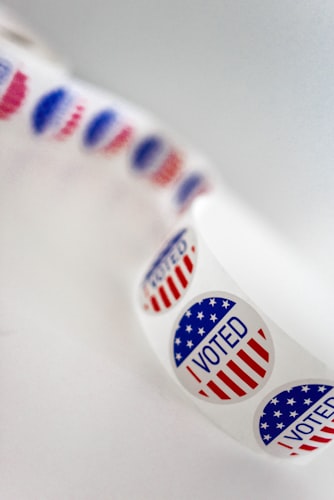
Sunday, November 01, 2020

The Temptation of Democracy

This post originally appeared at Misfits Theology Club.

Democracy muddles the Christian ethics of power. In a world where most people have no say in or control over the selection of governmental leaders, it’s relatively easy to determine how God’s people should respond: give to Caesar what is Caesar’s and to God what is God’s. Follow the laws so long as they don’t violate the gospel and be willing to suffer the consequences gracefully when you must disobey.

Democracy changes the equation, though. It gives each voter a position of power. Christian ethics move from a discussion of our relationship to power to a discussion of how we use the power we’ve been given. Whether we hold elective office or not, by voting, we become part of the power structure.

There’s an argument that this is a positive development. By receiving a place within the power structure, God’s people have some ability to shape it, perhaps in ways that reflect the Kingdom of God. The question I’ve been pondering, though, is whether or not the Kingdom of God can ever be served by the use of coercive power.

The power of God, as demonstrated in the life, death, and resurrection of Jesus Christ is entirely non-coercive. God loves us and forgives us and bears with us in radical patience as we continually refuse to be shaped by that love. God is relentless in love, returning over and over again with a divine faith in the power of love to outlast all opposition.

By that I don’t mean God’s love will eventually wear us down in the end – that would be coercive – simply that our power to reject God’s love and refuse the transformation it offers can never outlast God’s ability to keep loving. Christians believe in a world that never ends, because God’s non-coercive love can never be exhausted.

What does that have to do with democracy and power? Well, even the most benevolent governments are coercive. The very nature of worldly power is its ability to force reluctant participation. There will always be some part of us (both individually and collectively) that spurns coercion, even for the common good.

The most good for the most people is still coercion, because it doesn’t allow real freedom for the minority who are negatively affected. It might be the best any human authority can muster, but it falls short of the gospel ideal and of the Kingdom of God.

So, when we vote, aren’t we just contributing to the coercive authority of whoever happens to be in charge of government? Yes, one could argue one candidate is better than the other for the majority of people, but that’s still a short sighted goal achieved through coercion. The Kingdom of God promises a world in which all people live together in peace and love; there is no human system that can promise or produce this eventuality by way of coercion.

I wonder if the opportunity to vote is not the same temptation faced by Jesus when he was shown all the kingdoms of the world and offered authority to rule them all. Certainly the reign of Christ would be preferential to whatever human leaders would emerge in those kingdoms. There would be less suffering and more freedom is Jesus were on the literal throne.

Jesus refused that option, because to take it would be to endorse coercion, even perfect, holy, divine coercion. This was, evidently, unacceptable to the mission of Jesus Christ.

When we vote in elections, we’re expressing a preference. We believe the government of one candidate or party would be better than the government of another. That is almost certainly true (even if we make the “wrong” selection). But neither government could ever advance the Kingdom of God, because coercion is anathema to God’s eternal future.

What if one government would alleviate the suffering of one or more oppressed groups? Shouldn’t we be able to choose the best available human government for the thriving of the most people AND also work for the coming of God’s eternal now and future Kingdom?

You’d think so. I’d hope so. And yet we’re left with the decision Jesus made on that mountain. He forsook the immediate help he could offer to the suffering and oppressed in all the kingdoms of the world to embrace a non-coercive mission of love that led to his own torture and execution.

Couldn’t Jesus have chosen to rule the kingdoms of the world and usher in the Kingdom of God? One would think so and yet he didn’t. The fact that Jesus did not choose both immediate and eternal good leads me to the conclusion that perhaps both are not possible – at least on the level of governmental authority.

I can surely feed the hungry and clothe the naked and work for the freedom of the oppressed in my own individual ability, but to employ the means of coercion to that end on a grander scale just isn’t morally responsible given Jesus’ example.

I don’t like it, but that’s the only conclusion at which I’ve been able to arrive. Voting is an endorsement of coercion and even if that coercion is in line with the principles of God’s Kingdom, it violates the principle of non-coercion and thus can’t be the means through which the Kingdom is fulfilled.

I wonder if, like with issues of violence, there are moments where voting for (or against) a particular candidate or party might be preferable to abstaining. I don’t think, though, in those moments, we can justify our actions as “right” or “moral” or “correct.”

It just seems impossible to believe voting is a particularly Christian or moral duty when Christ himself had the ability to be elected King and refused. He rejected coercion and I think, no matter how reluctantly, we should reject it, too.


**Edited for clarification: 1) This applies largely to Presidential elections (and to a lesser extent, Governors and Mayors) – the notion of singular executive authority is one that pretends (even unintentionally) to compete with God.  Politics, in general, is just how we get along with each other.  At the neighborhood level, we talk to each other and work things out.  As we get into larger societies, we have to elect representatives – there’s a different power dynamic there, although I see elective office as more important, the lower the level.

2)This shouldn’t be seen as abdicating the importance of political action.  Christians should continue to march, protest, advocate, and evangelize on behalf of food for the hungry, equity for the foreigner, and release for the prisoner.  We should do so, though, not with an aim at changing laws, but with an aim at inviting people into the Kingdom of God.  As our collective heart is changed, our laws will follow; they just shouldn’t be driving the ship.

Monday, August 10, 2020

If You Vote, You Can't Complain

This was originally published at Misfits Theology Club.


I decided to stop voting in the run up to the 2008 US Presidential election. I found myself genuinely believing that this Barack Obama guy might be able to solve the problems of the world. I’m not sure I used to word savior, and I wasn’t treating him like a messiah, but I started to feel convicted.

I felt convicted again when I got to the end of Shane Claiborne’s Jesus for President, and he talked about how many people had literally died for the right to vote and that sacrifice had to be considered if anyone was going to willingly stop going to the polls.

That year I ended up voting on behalf of one of my immigrant co-workers (after all, the outcome of the election had far more impact on her than on me), but it started me on a journey of discovery.

A lot of my seminary classes focused on the Kingdom of God – basically THE central theme of the gospels, but not something super emphasized in my evangelical upbringing.  I started to see how God’s Kingdom was an alternative to the kingdoms of the world and how even democratic systems distract Christians from the full practice of their faith.

The real insidious accomplishment of US democracy is its claim to politics. The word politics really just means the way in which people interact publicly. There are so many different ways to do politics, but in the US we’ve come to (falsely) believe that our system of elections and elected office are the only way.  If you want to change the world, change the laws.

Every system of power aspires to universality; it’s a further means of control. Louis XIV of France famously said, “l’etat c’est moi,” “I am the State.” Caesar put his face on money and democracy’s egalitarian, ‘everyone gets a voice’ mantra does the same thing.

Growing up I was taught it was a literal sin not to vote. Maybe not so bad as having sex outside of marriage, but certainly on par with dancing. Civic duty was synonymous with Christian duty, just another example of the grand Constantinian bargain. The legitimacy bestowed by the first “Christian” emperor came at the great price of the Church’s subjugation to the State. Whether Empire, Kingdom, or Democracy, the Church has historically served as an accessory to power.

Despite my provocative title, I don’t think it’s necessarily wrong for Christians to vote; I do think it’s wrong for Christians to vote out of a sense of obligation. Christians should never have to pick between the lesser of two evils, because Christians always have another way: the Way of Jesus.

We’ve long been told that those who don’t vote have no right to complain, but I’d argue the other way: those who vote are participating in a flawed and ultimately fruitless system; you’re voting for democracy as the means to a right and proper future.

Churchill was citing a well worn phrase when he said “Democracy is the worst form of government, except all the others that have been tried.” That’s probably true, if we’re speaking of nations, but Christianity itself is an alternative and the one alternative politic (or kingdom or government) that we should feel confident in to produce the eschatological future God promises to us.

Acts 2 outlines the early Church sharing goods and caring for each other in a kind of benevolent anarchy that fully aligns with the Kingdom of God, explained by Jesus in the Sermon on the Mount.

Of course that only existed for a short time and it would be impossible for a nation to adopt. Christianity requires voluntary association; it can’t be imposed upon people.

Those counter arguments are true and valid, but they are also misleading. The very notion that we must have nations or leaders or voting or governments at all is not a Christian concept. Jesus, and the writers of scripture take the existence of those things as given, but they don’t require them. In fact, much of scripture is an explanation of how God’s people can be a faithful people in the midst of and in spite of the governments and nations around us.

Citizenship, then, becomes the primary Christian concern.  We can’t be Democrats or Republicans (or even Americans), because we already have membership in the Body of Christ.  I am tangentially a citizen of the United States by virtue of my birth, I might vote for a Democrat or a Republican in some specific election, but I can never be those things, because my allegiance lies with Christ.

That’s not to say elections can’t be politics, but they can’t be all of politics.  Christians must rely on the practice of the gospel as evidenced in our communities of faith, for our primary political expression.  Our congregations are called to be examples of the Kingdom of God.  We’re supposed to show, through our lives and relationships, how people can love and care for each other without threat of punishment or exercises of coercive power.

In the end, I do vote. I vote for representatives – the US House and Senate, my State legislators, the town council. A “Christian” means of doing life in community naturally involves people getting together and hashing things out.  We might rue how partisan and politicized our deliberative bodies are these days, but their purpose is still right and true.

I refrain from voting for positions of sole authority, like governor or president. I just don’t believe those kinds of positions are possible for any human to handle without compromising their integrity. Christ is the head of all and we can be nothing but members of the obedient body.

I don’t advocate for my position on elections; I don’t think it’s universally right or wrong. It’s where I’ve found a balance between answering the democratic call to participate in the town, state, and country in which I live, and the Christian call to the alternative politics of the Kingdom of God.

I try not to fault people for their own voting choices (although I will be quick to tell people it’s okay not to vote, if they don’t feel comfortable doing so).  I do hope, though, to be a continual reminder, to myself and others, that the electoral system is not the only way to do politics, that it’s not the primary way, nor the best.

We must put and keep our faith in the politics of Jesus, lived out in communities that bear his name.  We must remind each other that our hope lies not in armies or laws or elections, but in the Kingdom of God, as evidenced in the life, death, and resurrection of Jesus Christ.

If you have complaints about the system, stop participating in it and embrace the power and promise of the politics of God’s people.

Thursday, June 01, 2017

The Next President

I doubt this predicition will come true - most don't, but as I was listening to Elizabeth Warren's interview on Pod Save America this week, I realized she's just about the perfect candidate to be elected President in 2020. While I certainly agree with some of her policy positions, this is not an endorsement, just an observation that she possess most of the hard-to-come-by qualities that makes somebody electable.

She's fiercely partisan and ultra-competitive, those are essential qualities for someone to even bother entering the modern Presidential selection process. She might care some about specific issues, but she cares most about beating the other guy. You can hear the edge in her voice if you listen closely - she's a killer and she doesn't like to lose. Even the seemingly most laid back Presidents have this drive. You can read stories about Jimmy Carter's competitiveness - he was a little-known Georgia governor running for President because he wanted it and he wanted to win. That's what it takes (for better or, well, just for worse, probably, but thems the facts).

The key for Warren, though, is that she comes off so relatively harmless. She's an actual grandma. She's got the right tone to her voice and an accent that disarms people. There's a smile underneath her speech most of the time. It's folksy and charismatic and is incongruous with her actual position in life. It's the Bill Clinton magic that endears people to her. You need that to win, too (ask Ted Cruz).

When it comes to the issues, well, she speaks to working class people - that's her policy passion and her political lane. She's a populist to the core with an intellectual's ability to explain populist ideas in a way that sounds mainstream to people in the mainstream. It's like if Bernie Sanders baked you cookies and had a better sense of style.

She's even got a killer story about how a living minimum wage saved her family from homelessness during her childhood. Narrative matters - maybe not as much anymore as soundbytes, but she's got those too.

I know this isn't a profound analysis of Elizabeth Warren, her politics or politics in general. There's no real depth here as you've commonly come to expect from this blog. In reality, I needed something to post today and this was the thing that most piqued my interest that didn't involve a mental breakdown over Trump's Paris Accords speech (maybe Tuesday - we'll see - that guy is an idiot).

Happy reading - and if the 11/1 odds do, in fact, pay off, you can say you heard it here first.

Tuesday, September 27, 2016

The President's Job

With all the Presidential debate stuff going on, what would otherwise be a pretty big story is taking the back burner. There's been a bill kicked around for a decade or more that would allow US citizens to sue the government of Saudi Arabia for damages as a result of 9/11. This has come up now because of the recently un-redacted portion of the 9/11 report that speaks to potential Saudi involvement. Ultimately, the pages are pretty tame - it says the commission looked into links and while there may be some financial connections to individual Saudis, there isn't any direct evidence and no real connection to the Saudi state itself.

Now, lots of people doubt the veracity, or perhaps, the specificity of these details. The very fact that the government took a decade to declassify these pages invites suspicion. It's a messy situation.

What media coverage that exists of this issue is trying to play it off as a good and evil scenario - Congress fighting for the families of 9/11 victims and the President protecting diplomatic cronies with their hand on the oil spigot. That comes off pretty thin, mostly because it's an obviously complicated narrative. For example: a Bush presidency might be more open to Saudi special treatment - no one has yet figured out why Obama would want to help them.

But what this is, and why it's so boring to the media and the general public, is because it's representative of the government working properly. Congress is specifically charged with speaking for the people, in 485 individual blocks. They are supposed to take up the cause of victimized families and support individual issues. That's what Congress is for.
Pre
At the same time, the President is responsible for the country as a whole. He has to speak with one voice for the whole, which is a difficult spot to be in with the country so confused about who it wants to be. Foreign policy is one place in which we are just one place - you have to make decisions. The President's job is specifically to represent the best interests of the nation as an entity. As much as we like to say the nation is the people, there is a difference. The State exists as a thing - it represents the people, it is the outer layer of our democratic structure, but it's not the same. There's a reason we have separation of powers, because they represent different things.

So, what's happened is precisely what should happen when everyone is doing their job. Congress worked together to pass a pretty universal bill meant to allow 9/11 families to explore Saudi culpability in court. Yes, it is a tricky foreign policy issue and allowing US citizens to sue foreign governments in US courts could set a lot of difficult precedents, with unknown consequences to our economy and politics. Which is precisely why the President vetoed the bill. It's great for Americans, but not great for America. Both parties did their job.

Now it looks like Congress will override the veto and make the bill law against the President's objection. Again, they're doing their job. Potentially, now, the Courts will weigh in - a third branch of government not specifically representing the nation or the people, but some timeless combination of the two, meant to stand outside of context.

This whole episode is interesting in the season of a Presidential election, where what it takes to be elected is entirely different from what it takes to govern. This is beyond simply the ability to sell yourself in one case and to be reasoned and considered in the next. What it takes to be elected President is to convince the population that you're going to represent them well, but the role of the President isn't to represent the people; it's to represent the country. Presidents run like the nation's congressman, but have to govern like a President.

You see Hillary Clinton struggling with this because she's spent so much time governing. She knows that what a President has to say isn't going to get her elected - she has to act Presidential without actually being Presidential. In this sense, her experience is what's killing her. Trump, on the other hand, has no clue about what it means to govern - he only knows how to sell himself and is going all in on representing the people (of course it can be debated exactly what kind of people he's representing).

We've got one candidate who has no idea what it means to be President and one candidate who has too good an idea of what it means to be President - and neither of them are attractive to the average US voter.

There is, without doubt, a lot of dysfunction in the system, but it has very little to do with the system itself, but the ways in which our culture at large expects people to act towards their own self-interest. Our politicians live into those expectations the same way our voters do. I'm not sure that will change, but I'd hope we can begin to take a step back and figure out how each part contributes uniquely to the whole and make our decisions accordingly.

Thursday, July 28, 2016

Messiah Complex

"At the time of Christ, people were ready for the world to change." --Scott Daniels


It was the 2008 election that finally drove me to stop voting. It was a bit of a strange election for me; I'd written in John McCain for President the two previous times I'd been old enough to vote. Now he was on the ballot for real and I was not a fan. It was a "change" election, right? I'm not sure people had the same sense of change in 2000; I know they didn't have it in 2004 because they re-elected the same guy.

2008, though, people wanted something different. Change was in the air. Which, I guess, made that election ripe for a messiah complex. Oh nearly every politician has it; it would be near impossible to put one's self through a modern American campaign without really believing you were the one to change everything, to get it right. I'm not sure the candidates ever have it as bad as their voters have it for them. When they do, that's when you get autocrats and dictators. But the narrative is bigger than the man.

In 2008 I saw myself too easily subsumed with that mentality - that one person could be the one to change everything. About four months before the election, I checked out. I was reading Jesus for President at the time. It's a compelling argument. Oh, I was still excited about the election - it was historic, after all - but it was the start of a different perspective.

Barack Obama, like every other President, didn't really give us change. He certainly did some of the same things in different ways (there are uniquenesses to everybody), but he did things the same way. Who, was it, who said: "meet the new boss, same as the old boss."

That doesn't stop us from hoping, though. We're seeing it again this time around. People want change; they're desperate for something different. So they gravitate to a candidate who's real good about setting himself apart. To look different, in our mind - in our society, is to be different. That's the narrative anyway. So we find someone, this someone just comes right out and says it, who's "the only one" that can make things right.

That's got messiah written all over it.

If you're looking for a new way to achieve an old goal, Donald Trump can seem like a good option. There ain't nothing traditional about him. It's hard to imagine anything but change from a President Trump, however you want to slice it. But, of course, it's not really change. It can't be, because we're still all playing the same game. It's the real danger of nationalism, of patriotism - the system becomes so ingrained in us, over generations, that we can't imagine anything different - we are incapable of seeing any alternative to playing the same game by different rules.

That's what people were hoping for from Obama and it's what people (almost assuredly a 100% completely different group of people) are hoping for from Trump. New rules - or at least a reset - a chance to right what once went wrong. What we're missing, though, is a real alternative.

This is the subversive gospel of Jesus. People were expecting a change, and looking to messiah to bring it. There had been a lot of messiah's in Jesus' time and before. Years and years of dead guys who ran on hope, incapable of bringing real change. Because they were playing the same game, just hoping that new rules would change things. They never do.

It's ironic that the one guy who perhaps deserved to have the messiah complex didn't. Jesus looked at the expectations of messiah and said, "no thank you." The people wanted him to play the game, to march into Jerusalem and then, maybe Rome, at the front of a righteous army and fight power with power, grab the throne, change the rules, and make things good and just and right for all those who'd been wronged.

Sound familiar? I know; it's enough to make you sick.

Jesus gets to be messiah because he refused to play the messiah game. No change. No marching into the eye of the political machine and taking the world by storm. He just checked out. Said, "you can play all your crazy power games, I'll be here with the hopeless and the helpless; give us a call when you get tired and want to really live."

You can see a bit of this in those 60's radicals - the hippies. They lived in a tumultuous time, one in which most people couldn't help but beg for change. They tried, they really tried to get outside the game. They checked out, too. Let's all go live on a farm in upstate New York and grow our own food and love each other. It sounds great; it is great. The problem is they expected to change the game by not playing.

It's a subtle difference.

Your brother is cheating at monopoly, so you thrown down your wad of colorful cash and stomp off to the other room. You're reading a book with a frown on your face, but also with a constant glance over the top of the pages, just waiting for him to give in. "Oh come on," he'll say, "I promise I'll play fair, just come back." You might refuse a time or two, but ultimately you'll return, because you really do love playing the game. It's the only one in town.

Jesus didn't look back, though. It's the one thing his followers miss the most when they try to imitate him today. We're always expecting our alternative lifestyle to change the mainstream. Christianity has become an avenue of change. We're walking away with our neck craned over our shoulder, unaware that it's just going to turn us into a pillar of salt.

The way of Christ is not a new and improved way to change the game. It really means leaving the game for good. Giving up. Not because you're a sore loser, but because you really recognize that the game's not worth playing. It doesn't actually have the meaning and importance we've always been told it possesses.

I still love the political game. It's entertaining and unpredictable; it's fun. It's even more fun when you ascribe to it no power whatsoever. It's like a game of solitaire. Have you ever got to a point where the board is so hopelessly messed up it's more frustrating than fun? Do you keep going because it's a game and there are rules and you need to see it through? Or do you remember it's just a game, what's more, a game with no opponent. There's nothing wrong with just piling up the cards and putting them back in the box.

It's so easy for us to press on, to seek out real change from the messiahs that so readily offer themselves up to us. It's far more difficult to give up our notions of right and wrong and power and privilege and just live, outside the game. The Matrix started out as some great gospel allegory. People saw Neo's escape from fantasy into a larger world as akin to a Christian conversion - from something fake to something real. As the movies went along, though, we came to realize that the game never ends. When he thinks he's escaped, Neo has just reached a different level. Yes, maybe the rules are different and things look new, but the game is always the same.

Those movies end up depressing and nihilistic. The message is that we're always caught in the game; there is no escape. You know what? Maybe that's true. Maybe even the messianic way of Jesus, of checking out without checking back, is just another layer in a game that is both vitally important and epically meaningless. I mean, there's no real way to be sure, right? At least not until we've explored the whole thing - not until we've journeyed through Zion and found the architect wanting.

I just know I'm not about to play the game the way it's always been played, and especially not with the meaning and importance it's always been given. I'd prefer to have my messiahs in denial, refusing the power others so desperately crave. It seems like the only way to make a real life in this world. It's just so easy to succumb to the siren's spell, to fall in line with the chorus of those who see no other way.

What piques my interest, what makes this non-messiah messiah worth following is how he challenges this power game. By refusing to play, Jesus rejects power as powerful. By choosing to die he somehow finds life. It is this self-sacrificial love, as improbable and unfathomable as it may be, that just seems to fit.

In the end, maybe those hippies were right - they just didn't have the patience to see it through. Perhaps all you really do need is love?


*For an in-depth analysis about how The Matrix really says this same thing, check out this piece I didn't discover until after I wrote mine - it's way cooler than the last movie itself.

Tuesday, June 07, 2016

The Veil of Politics

I've had a number of conversations recently about issues, both local and national. I've noticed - I guess I've always noticed, but it particularly struck my fancy this week - how often people take positions on issues simply based on partisan politics. I recognize it's a particularly contentious election year (with is a redundant description of the year) and that this really isn't a new phenomenon in the US, but it does seem to be presenting itself in new and unique ways. You've always seen this kind of thing with politicians and people actively involved in the machinations of party politics; it's become an increasing part of news coverage as well, with the proliferation of networks and diversity of opinion. At the same time, it does seem relatively new on a broad scale.

It's not that Mr. Middle Management in 1950 didn't say or do things, "because I'm a Republican," but that he wasn't necessarily the norm AND he wasn't generally saying, "I'm against ____________ because the other guys are for it." Our two main political parties have done a great job of getting people to identify with one or the other - even as the number of registered independents goes up. This has happened because we've become a nation of objectionists. People won't call themselves a Democrat or Republican so much anymore, but they certainly have Democrats and/or Republicans they want to stop. We've become a nation of people who identify our politics by what we oppose more strongly than what we support.

That's not really what I want to talk about though - I'm more interested in how this particular connection to our electoral and governance process limits and distorts how we see the world. This is the difference between politics and politics. If you've read much of this blog at all, you know I take a broader view of politics - it is the way in which people live together - and there are many ways of doing politics, only one of which involves elections and legislatures and laws.

There is a broader scope to politics, one that, until recently, seemed to be clear for most people most of the time. It wasn't about winning, but about making space where you and your neighbor could get along and thrive together. It was more about building community than installing some ideology or winning a legislative battle.

Even in that statement, I'm guessing a bunch of you had interjecting thoughts about how "the other guy" does those slimy things and how "my side," is working for right and good. Don't blame yourself; this is the way we've been shaped.

We're taught to accept a set of facts, often carefully crafted by professional fact-crafters in one party or another - and then to question anything that comes along which challenges us to think about those things. We can easily throw away Report X because some liberal wrote it or reject Study Z because the foundation behind it is conservative. Sometimes those things are true - I mean, fact-crafters do have to craft their facts somehow and using media outlets, research studies, and investigative reports are easy means to convince people of truth (whether its true or not).

At some point, though, we have to avoid the easy route of rejection.

We can't just look at the byline on something and say, "This is trash." There has to be some engagement. I mean, there doesn't have to be - just look at the US Congress: no matter who's in power, they refuse to listen to the other side, whilst the side being ignored can win political points claiming to want compromise when they know their bluff will never be called. It's the same no matter who's on each side.

We've been fooled by this over and over, assuming things will be different if we change the letter next to the name of the guy (or gal) with the gavel. But that's the con - we've been so shaped by objectionism that we're content just to win the battle on the ballot and not worry too much about why it's having a negative effect on the world around us - no matter who wins.

This is why we see so many people searching outside the "mainstream" for candidates this time around. People want something different, but they're looking for it within the same partisan, objectionist, winner take all system that's never proven to do anything good for anyone (except maybe the people at the root of it, regardless of party). Putting "outsiders" into a corrupt system will only make the outsider insiders and corrupt the values that made them attractive in the first place.

In the end, I think the answer is simple: don't believe anyone.

That sounds super cynical (although I'm not sure there are many adjectives I've been called more), but it's true. Maybe we could say, be attentive to everyone. That sounds nicer. If we treated every piece of information with the same skepticism we treat those things we deem "opposition," we'd be far better off. It might lead us to actually research the "facts" we're fed no matter who's manufacturing them. In this age of the internet it doesn't take much time or effort to be really informed. Even Wikipedia has links to things that purport to back up what they say.

We just need to take responsibility for our own opinions and not outsource them to parties and pundits we've found common ground with for some reason. We see layers of argumentative exposes all the time: "Look at How Bad the GOP is," followed by, "Things the Dems Didn't Tell You in that Last Piece," followed by, "Ways the GOP Spun that Last Rebuttal," and on an on. What looks like a genuine search for truth is just a stalling tactic to keep you from looking for yourself.

If your response in an argument is "that source is biased," you need to know why, in this particular instance, about these particular fact, that the conclusion isn't sound. You're probably right about the bias - no one is without one - but it's even more biased to simply accept or reject another person's interpretation of facts simply because you're more comfortable with them.

I've long been an opponent of political parties for exactly this reason. It leads people to generalize and it allows politicians to avoid taking a real stand on anything. Party (or ideological) loyalty trumps having an actual, reasoned opinion on anything.

How many people would even bother to vote if there weren't party affiliations next to names on the ballot? How informed would people actually be if they had to find out what specific candidates think about a variety of issues and make decisions that way? How much easier would it be for neighbors to sit down together, talk through issues, and make decisions to better everyone's life?

It's not Republicans or Democrats or Socialists or Libertarians who are the problem, it's us, who let them dictate agendas and divide us into groups of adversaries, pitted against each other in some zero-sum game where only one team can win. Life isn't like that. We can and must live together - we are ultimately all human beings - let's remember that and treat each other that way.

Thursday, February 18, 2016

The Constitution has No Clothes

Doesn't the very fact that Democrats and Republicans are willing to fight over this Supreme Court appointment prove that our system of gov't is inherently flawed? The very fact that the final arbiter of legality in this country is entirely controlled along partisan lines mean it's entire purpose is moot. What we've got is the legal version of an MC Escher drawing - one hand drawing the other. We've got each branch of gov't, instead of exercising checks and balances, essentially propping up the next, with no real authority vetted anywhere.

Traditionalists will tell you this is why ultimate power is left in the hands of the people - but those same people will generally tell you the Constitution is fine, if people will just follow it. Those aren't necessarily contradictory opinions, but it sure seems that way. The solution, right, is some kind of new constitution, that can be negotiated and agreed upon - but we know, given the polarization of our country, that this is just an impossible task. It could never be done. And even if it could, we'd just need to do it again later (right France?).

We're stuck playing games in a flawed system we know is dysfunctional, but unable to really admit it to ourselves. This is the naked king continuing to parade down main street and ordering the wise young man who claims he's naked into prison.

Ultimately, we're people, which means we're generally poor at managing ourselves, let alone others. Throw in power and fear to the mix and it's amazing we lasted this long before royally messing everything up. Somehow we managed to keep FDR from doubling the size of the Court to get his ideas passed and perhaps Kansas can keep religious oligarch, Sam Brownback, from naming his own court in the same way. There is some hope that this crisis will not be the one that brings the whole edifice crumbling to the ground (I don't typically go in for Chicken Little scenarios), but if it's not this, it'll be something else, right. I mean we have to, hopefully, maybe, finally admit that our Constitution really isn't some all-encompassing, world saving gift to humanity, right? It's a piece of paper that took a lot of smart people a long time to figure out (on the second try, mind you) that work pretty well for the most part - but it isn't, nor could it ever hope to be, perfect.

This is why the Christian response is, as it always should be, an alternative example. We really shouldn't be worried about trying to make the system work, because "the system" doesn't work. We should be living out the alternative politic handed down by Jesus Christ. A friend of mine recently asked the rhetorical question - What if Jesus is enthroned now and this is the way he governs the world?

I don't think that's wrong. Christ has come. Christ reigns. The Kingdom is here now, but it's one built not on power and might, but on self-giving love, the kind Christ commissioned the Church to carry out in life and practice. This is precisely why I believe no nation can be a Christian nation, because you just can't be both.

It is times like this when it becomes apparent just how little faith we put in our gospel. We're so entirely invested in the systems of the world that we can't rightly believe in Christ's kingdom enough to live in it. I'm not saying we need to withdraw from the political process- not at all - we just need to take it less seriously. An election, even the regular governing of the country, is not the end of the world; it's not a lynchpin of history or even a referendum on the future. Those make great debate quotes, but they contribute to this overwhelming faith placed in flawed institutions.

It's important, sure, but it's not as important as we make it.

It's not unlike your typical homeowner's associate writ large, right? Yes, there are far too many rules, and much of its construction and function make no rational sense, but in the end, you win some and you lose some and you live your life. It might mean you have to cut the grass in a northeasternly diagonal instead of to the south-southeast, and you may have to give in and let Gladys put up that ghastly inflatable snowman, because its in her back yard. It's a nuisance, yes, but the only time it becomes unbearable is when someone takes it too seriously and makes everyone's lives miserable.

The easiest thing to do would just be to let the President pick a nominee and if they're competent to do the job, confirm them, regardless of their interpretive philosophy. That worked for the first 200 years of our country and it would put an end to all this mess. I know the Democrats made a stink when Alito came through, but they did let him through. It was wrong to make a stink then and it's wrong now. It's petty and it's childish and we need to get over it.

I know everyone caught up in our electoral and governance system thinks they're doing really good in the world (or trying to) - I'm willing to grant that kind of gullible optimism - but in reality, life is so much more important. I know I wrote hear a few months ago that as much power as the President has, he could do far more good for the world as an actual community organizer. I really believe that; I think it's true of every politician. Again, I'm not saying we should get rid of them, but we should get over them.

I think this is a good attitude for anyone, but I think it's especially important for Christians. What we say or affirm or swear to has little to do with what we really believe. Our actions bear out our real commitments and it's about time we take seriously the claim that, just maybe, the way of Christ is actually the hope of the world?

I doubt it would end electoral contentiousness, but it would certainly de-escalate the situation if we just all took a step back, a deep breath, and a moment to re-orient ourselves to reality. An election year may be a bad time to suggest such a thing, but it's certainly the time we need it most.

Good day.

Wednesday, November 05, 2014

My Favorite Election Lie

Last night was the mid-term US elections - a lot of Governors and Senators were elected, plus all of the House of Representatives. Most often as I watched victory speeches, one phrase stuck out above the rest - "You didn't vote for me, tonight, you voted for yourselves."

This is, by far, my favorite lie of election season. It's not even limited to election season, its the lie woven into the entire fabric of US democracy that keeps the whole structure afloat.

We don't vote for the candidate most capable of doing the job - every single voter could name a half dozen age-eligible acquaintances more appropriate for the position - we choose between two narratives, representative of larger institutionalized power positions, carefully crafted to appeal to our emotions and fears.

This system is perpetuated by rhetoric of representation, as if the mere ability to vote ensures free and fair elections or could ever hope to deliver on its promises. These applause lines, "You stood up for Arkansas today," serve only to perpetuate the myth that orderly authority is the only means by which we can effectively live together.

It trickles down. How often does a neighbor talk to a neighbor about a noisy dog or an overgrown yard before they call the police? Do you even know your neighbors' names? Are we informing ourselves about the social safety net by talking to people in our own town whose lives it affects (both positively or negative) or do we get our information from talking heads on TV?

Every winner, regardless of party of ideology, adopts the language of populism - a good fight against smarmy elitists (either of ideological or economic stripe), because all of them are hiding the real system of elites who make decisions. Power's only purpose is to maintain power.

The real "players" in this system are empowered interests. Yes, they spend and spend to influence elections, but not out of some ideological bent; they spend to make sure the people elected are the people who listen to them.

Our own collective association with the larger narrative plays right into this scheme. We believe by voting we can defeat the powers, when our participation only enables them.

That's not to say Democracy is bad. There are plenty of ways to collectively decide how we'll best live. Usually the best way to do this is face to face. We don't have to vote to meet the people and problems really affecting our daily lives head on. In many nations, even those with similar representative systems, there is a stark contrast between the business of government and the life of the nation.

We don't want government interfering in everything we do, but we continue to perpetuate a system that can function only by doing exactly that.

When you vote, if you vote, try to remember you're never, ever voting for yourself. You're voting for a ridiculously ambitious, well-crafted, well-funded illusion of freedom and participation. (It's interesting to note how often the loser speak extemporaneously and rambles, while the winner never does.)

The real revolution is the revelation that we need no politicians to control us or free us from control. Our communities, the people with whom we live and work each day, have all the power - on this fact nearly everyone agrees. What we so often fail to see is how the current voting system incentivizes our giving it away.

You can't change the system from within the system, only from without. All of these self-proclaimed outsiders become something different when they enter in. The only real change comes in starving the system of power, which sounds insidious, but starts by simply knowing and talking to the guy across the street. You are worth far more than your vote, and so is he.

Tuesday, April 08, 2014

Money Talks

I'm more than a little frustrated with the Supreme Court and these campaign finance rules. I'm not so much against the rulings as the reasoning. Money rules the world, that's the state of things (for the time being); I think it's a little silly for us to think our laws can change that in some way (although I'm not against trying). However, the idea that the money I give to someone is somehow and expression of speech is downright silly.

Yes, lending support via cash is a way of expressing yourself, but so is punching someone in the face. It always helps to have some insight into motivation. I suppose you call this kind of "speech" art, in that it leaves interpretation up to the individual, but it's not even direct speech. That's really my problem.

Essentially, what a gift speech is doing is saying, "I support this candidate or organization," the message is intended for a general audience. However, anonymity obscures that communication. We end up with ads and flyers that essentially say, "some people with money think what we say is good." That's not real speech, it's funding someone else's speech.

Again, I'm not opposed to that sort of thing. I think it's going to happen anyway. I do, however, think it's perfectly appropriate to make such speech clear and public. We, who are hearing these messages (especially as their broadcast publicly) deserve the right to know who's speaking. Anonymous acts are cowardly.

It's been argued in court, successfully sometimes, that donors have a right to anonymity to protect them from backlash by opponents of their views. It seems to me that acceptance of reprisals are a good and natural part of our free speech doctrine. I'm not talking about criminal or violent response; that is wrong, but being cut off from business or other relationships because of what we say is simply a natural consequence of speech. The government can't penalize someone for their speech, of course, but the rest of us are (and should be) perfectly welcome to do so.

(Many of my evangelical brethren seem near addicted to boycotts for any perceived slight of speech; they also seem to be the least capable of receiving the same treatment for their own speech... odd.)

In the end, I think I've come up with a compromise that might please everybody. I'm not sure bans and limits of campaign finance will really work, but what if we required the donors to appear in the ads they fund. What if we really required political giving to be actual speech?

What if, instead of the slickly produced attack ads with blatantly false or misleading ominous voice overs, we had grizzled, wrinkly, 80-year-old Sheldon Adleson whining crankily about whatever issues he's upset with at the moment?

That seems more real and more fair. If you respect the guy's opinion, then you'll listen, if you don't, you'll tune out. Just like real speech. The same would go for the UAW or the NEA or the Sierra Club.

There may have been a time in the world where words could be received devoid of context. I suspect more than a few of our Supreme Court Justices still live in that world. I'm just not sure most of the rest of us do.

I don't mind all the money poured into election campaigns - I think it's a waste and an embarrassment, but certainly not immoral - I do think the receivers of those messages are owed some transparency.

It only makes sense.

Thursday, March 06, 2014

Political Future

I used some expiring airline miles last year to get a subscription to The Economist. This is a magazine geared towards very rich well-connected people. All the ads involve private planes and watches that cost more than my car. It's full of inquiries for high level diplomatic jobs and request for bids on projects like building an interstate highway system in Angola - you know, the usual stuff.

Anyway, I'm learning a bit about economics; there's also a lot of commentary on politics around the world. The Economist is a pretty solidly conservative magazine. Not conservative in the American sense, but solidly European conservative. What's fascinating is that, when commenting on US economic policy, they always tend to cherry-pick and endorse the kinds of moderate-Republican ideas that could never get passed in a million years. (Incidently, they couldn't get passed because the majority of their own party would call them traitors and neither party seems keen to vote for anything the other party comes up with, no matter how much they like it or how much real sense it makes.)

Reading this magazine, which is old (ancient in terms of economics; if it weren't for the name I might think the magazine preceded the professional discipline altogether), it's easy to get the impression that the solution to America's problems is just one vote away.

There's an easy to believe narrative - that some moderate Republican sweeps to the forefront of national consciousness, bullies his (we're talking the GOP after all) way through the primaries and takes the White House on noting but personal charisma and the confidence of common sense.

I almost wrote a blog post extrapolating the realities of this narrative as a prediction of the next three years.

But, sadly, this narrative is an unrealistic, mean-spirited joke. It is the narrative our political classes try to sell us each election cycle - that we're only one vote away from sanity (or conversely, inept stupidity). We usually buy it. We like happy endings.

In reality, though, a narrative of this sort would require too many people to sacrifice their own power and personal interest for the common good. Powerful people don't generally work that way. Yes, we can point to heroes of the past who did that very thing - George Washington who refused to be King or [fill in name here] who conceded an election they could have continued to challenge. But really, we know those names because they are exceptions.

If I were to predict the political future - as much as I'd like to construct a beautiful, heart-stirring narrative with a warm, fuzzy conclusion all wrapped up in a utopian, American-flag bow - here's just not much good to say. People in power will cling desperately to it. Those who do manage to wrest some of it away will quite soon begin to act like the people they overthrew. Life for those at the bottom will remain relatively unchanged.

It is the story of human history.

Ultimately, I'm glad for this little reminder today. The Economist is smart, plus they actually cover news from the entire world on a regular basis, people would all be better off reading it more often - at the very least it would raise the level of discourse in our world - but in the end, solutions are only easy on paper.

One positive note, though, I was much quicker to recognize the callow allure of political theater and to wake myself up from the dream that governments and elections are the key to human interaction. I am happy to watch the happenstances of the electoral class as spectator sport, but I am even happier to be free from those connections. A while back I made the decision to throw my lot in with the politics of everyday life, to commit full-bore to the Church as an alternative system of doing life together (Jesus for President!). I've exempted myself from my place in the structures and systems of government. That choice just seems smarter and easier to maintain as the years go by.

Don't get me wrong - I'm looking forward to some excellent theater in the next election cycle - I'm just not pinning my hopes on that cycle getting us anywhere we haven't been before.

Thursday, October 18, 2012

Which Team?

The other day, one friend described another as being "an observer in the system, rather than a participant." He also used the word apolitical. What he was describing, in my opinion, is someone who doesn't choose sides in the election process.

I don't mean that to say he doesn't vote. This isn't about voting or not voting; it's about being invested in the outcome.

I like this image of observing the election rather than participating in it. As I have been wrestling with my own thoughts (and those of others) - and also as I've been thinking about Election Day Communion, I've been trying to put into words the appropriate position for Christians to take in a process such as this.

I don't mean which candidate a Christian should vote for - or even whether they should vote at all. I don't think there's anything more to be said on the matter. Christians of all shapes and sizes will choose what they think most satisfies their conscience.

I am more concerned with how we approach the general topic of power in society, and the process of bestowing power.

I think we need to get beyond the cliches flying around (especially that bumper sticker claiming "God is not a Democrat or a Republican") that seem to put God within our own political processes.

It's most clear with Saul, but it's evident even to the beginning of scripture that God has told us "I'm in charge; I'm your leader - follow me," and we've chosen other leaders - whether it's ourselves, a King, or a President. God has been gracious to grant us our request. God allows us to choose who rules over us.

Of course, that allowance also comes with a caveat - those we choose to rule over us will use us and abuse us and we'll inevitably want someone new, who will do the same thing. When we hear that oft-quoted verse from Chronicles, the healing of the land is not about spiritual condition (at least not exclusively) - it's about proper authority. In times of trouble and great distress, we call to God, but we look to new leaders.

I hope, as Christians, we can look upon elections without giving in to the prevailing narrative that salvation (political, economic, ideological, or otherwise) comes from new leadership.

I don't want to denigrate the ways in which our collective will (that being the definition of democratic government, after all) can produce positive results. But at the same time we must recognize that, as Christ said, there is none good but God - and the collective will of not-good people doesn't ever equal good.

I firmly believe the purpose of the Church, the reason Christ commissioned his followers for a specific purpose is not to save souls. I believe the purpose of the Church is to serve as a community of reconciliation, to be the tangible presence of redemption as God restores creation to its intended purpose.

I believe our call is to model the kind of world God intended all along. Not mistake-free or otherworldly holy, but a messy, dirty, sticky model of how God's love can truly bring about peace.

As a reminder to myself, one prone to be far too involved in places of power, I choose not to vote for President. It helps keep me focused on the task at hand, of loving those around me and trusting in God. It also keeps me from putting too much faith in politicians or from worrying too much about the calamity they might bring.

At the same time, many of my fellow followers of Christ vote carefully and conscientiously. I applaud them. There are so many people, throughout history and around the world, with no say over the conditions of their own lives - our exercise of this privilege can be important.

At the same time, I hope to challenge Christians everywhere to stand outside the system. Favor one candidate over another, sure; make wise choices. But please don't join a team. Don't buy into the name calling and denigration that so inhabits out election process. Don't buy into the myth that a President or a Senator or a Congress or a Supreme Court can be the answer to life's troubles.

I hope we can stand alongside our civil society as the Church, as an example of how to get along with one another. Over time elections have proven better than authoritarianism - perhaps we can demonstrate how holy love works even better.

If you want to vote, please do. If you just can't stomach the idea, don't feel obligated. But be observers of the process and not participants. In the waters of baptism we chose our team - no need to join another.

Monday, September 24, 2012

Gandhi for President?

Obviously, Mohandas Gandhi would not make the best President of the United States. It would be tough to get him elected. First of all, there's the nebulous religious background, plus the criminal record, the vegetarianism, the non-violence - not to mention his distinct lack of a birth certificate. Then, of course, the largest hurdle: he's dead.

In any event, Gandhi was dedicated to the welfare of society. It would be difficult to place him in a partisan category in the US - there's some educated, elite stereotypes there, but he also fought hard for the right of people to work and be unconstrained by the government. He believed in people and in people working together. I don't think any politician could argue with that.

One of the most intriguing things about Gandhi's life (and there are many) is the enduring legacy of his "Seven Social Sins." They are, in his view, the deadly sins of a society - violation of such will result in the failure of society. Important stuff, in other words.

Gandhi believed that violence was the premier destructive force in the world and that ignorance of these seven principles incites violence. He talked of them often, but there remains little printed, recorded evidence of how he explained them.

It seems to me, in this time of deeply divided rhetoric and partisan battles surrounding the US Presidential election, it might be interesting to examine these social sins more closely. They speak prophetically into the false divide created by current US politics.

Perhaps that's precisely what's addressed by the first sin: Politics without Principles.

We live in a system in which re-election is more important than governing. Power has become the only goal and preserving or regaining power the only principle. Nobody stands for anything besides whatever the other guy is against. Our politics is one of division.

This may not be true of each individual, but we've allowed the whole to become a game. We do not enter politics with an interest in getting along and living together, in building a world where everyone is at peace. We enter politics to win.

I suppose it could be argued that making everyone come to my side or bend to my will is a principle in itself, or that there are real principles behind the battles - I'm just not that sure what it says about those principles. It certainly says that the principle of winning, of self-determination is more important than anything else we believe.

That may be true for some, but it results in little more than "convert or die."

Thursday, September 20, 2012

Hidden Camera Soundbites and Gotcha Politics

By now just about everyone has heard the comments made by Mitt Romney at the fundraiser this spring. People are a little upset. Obviously, putting a specific number on the people who are entitled and lazy was his biggest mistake (although there's some other terribly unfortunate comments on that recording that aren't getting the same kind of press). Making it a specific claim and not a generalization is going to hurt his campaign down the stretch.

However, I'd prefer to talk about the generalization itself. Again, outside the specific number, I thought about the last election and President Obama's comment that some people react to the challenges of society by "clinging to guns and religion."

I'm struck by the similarity of these claims. Obviously they're generalizations from opposite sides of the aisle, politically - but they seem no less important for a solid public debate. The media gets riled up protesting how thoughtless the candidates are for making such outrageously unflattering claims.

The problem is: they're partly true.

I wasn't outraged at Obama for talking about people clinging to guns and religion. I know a lot of those people. It's a natural human reaction. When things seem tumultuous in the world, we seek out security. One of the places people find security is in God - another is in their own ability to control a situation (for many, with a gun). Certainly the President (candidate, at the time) was speaking derogatorily (I'd've preferred compassionately), but the truth of the statement stands.

When I heard about the Romney comments, I was upset at his use of a specific number - that's dangerous territory (especially because - as just about every media outlet in the world has explained - the number is silly) - but I also understood the implication. Some people are overly entitled, steeped in a culture of victimization, and often unwilling to work for what they deem is owed them. This number is far, far below 47% of the population, but it's not zero. I know some of them, too.

I think this response is equally about security. A lot of times these people live in unstable environments, where there's no guarantee of a place to live, food on the table, or a job to go to. As a response, they cling to the idea that society owes them something - and they want government to cash that check. They want the safety and security of (a quite literal) check in the mail.

Romney's lack of compassion is no less troubling than Obama's. Although I suspect that these two, both steeped in ideology and partisan politics, can't fathom why so many people who they'd love to help if they'd just be allowed to do so, could possibly think the other party would do it better. It's more an exasperated frustration over a different way of thinking than it is any real animosity.

From a theological and philosophical perspective (As I've written before) I do think society owes all of us some basic things: healthcare, nutritious food, education, shelter, a full day's work, and a loving community. I'm not convinced government is the way these have to be provided.

When these sorts of honest statements are made public, it is a great opportunity for us as a people to discuss how we want to live. There's a place for discussing how much government intrusion we want in our lives - but beyond that is a discussion of how we want to live with each other.

There is a basic dignity in all persons - something God-given and inherent. We do have a moral obligation (if not an existential one) to treat people in accordance with that dignity.

There exist people in this culture (likely some part of this exists in all of us, as it is indicative of the human condition) people who want the security of being left alone, self-reliant; and there are people who want the security of dependence, that they'll be ok even if they're not able to provide for themselves. Likely we've all experienced both of these desires at one time or another.

It seems that by refusing the acknowledge the truth and validity of both these positions, we're unable to win the right to speak into them - to remind those inclined to self-sufficiency that we need each other and we must stick together in tough times, and to remind those inclined to dependency that they have something essential to contribute.

It's almost as if we use the lack of political correctness as an excuse to avoid hard truths. We want to take the easiest path in times of turmoil; we must not let ourselves or each other do so.

Monday, September 17, 2012

Fear!

There's no doubt fear is an easy motivator. If we are afraid, it triggers our fight or flight response: we react. Everyone knows this. If people can be made to fear precisely the right thing, the reaction can be predicted.

We see it everywhere. We see it in the political race, "vote for my opponent and the world will crumble around you!" and it reared its ugly head again in a Newsweek article about the need for infrastructure improvements in the US.

That article is probably a better case study than a Presidential campaign - a little less controversial. It was titled, "America's Coming Infrastructure Disaster," and used historical failures of infrastructure to push the point that attention is needed.

It is a classic appeal to fear.

The articles actually does a half decent job of laying out a logical case for needed infrastructure improvements in the US. The lack of security and efficiency in our electrical grid. The postponed maintenance on roads and bridges. Even an economic argument about the impact that the $2 Trillion in needed works would make on the current recession.

Still, the headline, the pictures, and the overarching theme is fear. It's as if the author doesn't think anyone else will take it as seriously as he does.

I wonder if that drive to use fear to motivate others comes from an internal fear in ourselves? Even if a political group is using fear of one thing to get another (scaring people about a foreign invasion to get a candidate more likely to give them tax breaks) it still comes from a position of fear, right? I'm afraid I will be harmed or otherwise disadvantaged with a different outcome.

This sort of fear tactic can lead to outright lies. We tell people whatever will scare them enough to get them to do what we want. At some point a parent through it was ingenious to tell their child a monster lived under the bed to get them to stay in it.

This is another ends vs means issues.

We're so afraid the ends won't come about that we resort of rotten means - we do it out of fear. Those people we attempt to control are only secondary victims. We are the ones in the grip of fear.

As Christians go back and forth over which candidate should be President of the United States, you hear a lot of fear language. "Barack Obama wants our country to fail." "Mitt Romney wants to give everything to the rich and let the poor die." These are statements intended to make you afraid of the future.

If I can say anything to my brothers and sisters - both those who speak about such things and those who listen - it is simply "be not afraid." The gospel of Jesus Christ is a gospel of love. Jesus was constantly telling his followers to be not afraid. There is nothing to fear. 1 John 4:18 says, "There is no fear in love. Perfect love casts out all fear."

If someone is trying to make you afraid, if something has already made you afraid - God is not in that. If the world seems like it would crumble under a certain eventuality - this is a lie in the vein of the serpent in the garden.

I know we can't actually control when our emotions rise up - when we feel terror or fear. It happens. I do believe we can discipline ourselves, that we can change how often or how easily those fears come upon us. The first step is taking rational control of those emotions. Be on the look out for fear tactics. Recognize them and ignore them.

So often our fear is tied to difficulty. I might have to work harder or suffer more if this comes to pass. That is still no reason to fear. Love wins. Death has been defeated.

Let's avoid the pain and the worry and fear this election season. There's plenty of real, actual things to discuss. And the world won't end if ____________ is elected. At the very least, the world ending won't be caused by his election.

Saturday, September 08, 2012

Freedom

There's a lot of talk of freedom during election campaigns. In the US we also have a semantic love for liberty. Overall the idea is to be as unconstrained as possible without negatively affecting anyone else.

I've always had a hard time with this idea. I've never been able to figure out exactly how we determine the effect of our actions on other people. When are we doing harm to others? When are they just being too sensitive?

Freedom and liberty work great as campaign slogans, but the details can bog you down.

Can someone use their freedom to give up freedom? Could a democratic election result in a dictatorship, if the free voters freely chose?

There's a lot of issues surrounding freedom, which is why philosophy exists and why there's no shortage of libertarian debates to be had (go to any message board anywhere and type five simple letters: obama - and if your posting privileges aren't immediately revoked, you'll understand the cultured nuance of the topic).

But what if our idea of freedom isn't really freedom at all? What if our striving for unconstrained rational pursuit of our own good isn't the end all and be all of life? That might make things a bit more complicated.

That's exactly my proposal.

As a Christian attempting to live in this world of ours, it seems important to understand how to approach freedom from the perspective of the God who created it in the first place.

The Bible is full of paradoxes and unexpected reversals - it's what keep us on our toes. Freedom is no different. Christian faith calls the ability to make unconstrained choices a kind of slavery - and the single-minded adherence to someone else's preferences, freedom.

It blows the mind a bit, I know - but stick with me.

In Corinth, Paul encountered some Christians enjoying their freedom - doing anything their hearts desired, living unconstrained. He rebuked them saying, "everything is permissible, but not everything is beneficial." Beneficial to whom? Certainly not to me. I know we humans are prone to immediate gratification over long term benefit, but I'm smarter than that; I'm rational. I can plan for the future and make the right decisions for me.

I'm responsible - even more so because I have the moral code of a Christian. I can use liberty better than anyone else.

That's not freedom. We can't take our selfishness, bless it with faith, morality, and reason - and call it righteousness. When our own benefit/happiness/desire is the focus of our actions (even good, moral actions), we're enslaved.

In Romans Paul calls it the law of sin and the law of grace. Sin is our desire to put ourselves first - that doesn't change when we do it in a way that is culturally and morally acceptable. Christ came to free us from our slavery to self.

This law of grace, though, is not just a free-for-all; it is deeply rooted in the creative purpose of the world. We are interconnected. Everything that happens affects everything else. Human beings were not created to look after themselves - but to maintain God's creation in the way God intended.

We're supposed to make sure everything goes according to plan. This is real freedom - when we're relieved of the need, the drive, the desire to satisfy ourselves, to look after ourselves. Only then are we free to enjoy the world as it was intended. We no longer have to think about when it's ok to indulge ourselves; we are free to truly love others.

How does that work? Christ serves as the model of freedom. He came with a single-minded devotion to love. That love, so extreme, it could only be proven by a brutal, but willing, execution for an innocent man. That's what freedom looks like - it's sacrifice.

Of course that doesn't entirely leave us off the hook for making decisions. None of us has that direct a line to God, to know instinctively what to do in any given situation. We can't either simply say that we'll do only for others - that is also a form of slavery (no different, really, than chattel slavery, except it's willing).

No, true freedom involves living into the creative purpose for the world. Read Genesis 1 and 2 again - creation is not a gift for humanity; humanity is a gift for creation. Jesus took time for himself. He partied. He vacationed. It's not just about self denial. This freedom is a bit more complicated.

I can't tell you exactly how to live free (I think we're supposed to reason that out together - which might just be a useful purpose for government), but I can tell you it never involves asking the question, "what's best for me," and it never involves envisioning ourselves outside the community.

The United States gives people the right to live enslaved to themselves. We have a thing, often called freedom, that allows people to cut themselves off from others, to live independently, to do what they want (so long as it doesn't overly upset others). That is not freedom, but slavery - and it doesn't have to be rewarded.

We can value individual choice as a nation, as a society, as a people. We can, and should, be a place where people are unconstrained to do as they please. We do not have to collectively celebrate it. We do not have to idealize it and praise it and lift it up as an example.

Ultimately what people want is not freedom to choose, but freedom from consequences. That freedom just doesn't exist.

Thursday, September 06, 2012

Government, Politics, and Hope: A Mea Culpa


The last couple of weeks I've been floundering a bit. I've been struggling to reflect on the US Presidential election in the midst of the party conventions - and to somehow communicate my perspective on the whole thing. I don't think I've done a great job. You may have seen the evidence on Facebook or Twitter.

As a Christian, I am called to embody and live into a different culture. The people of Christ are to be formed in love with different (if often complementary) values to those of the dominant culture. It's difficult to explain or embody those differences as I am as co-opted by this US culture as anyone.

I feel like a child, re-learning the ways of the world around me with a different set of values, attempting to change my reactions and foundations. (Incidently, it's just as difficult to try and teach a child to understand the world differently the first time around).

Part of the counter-narrative, the counter-story that the gospel presents is a different take on power. Christ ignored the power structures of the day. The religious leaders, both inside and outside the temple, as well as the Roman governmental and military rulers. He acted as if they were unimportant for life. Jesus called collaborators and zealots (people who hated each other more than Democrats and Republicans).

I don't believe Christ came to found a religion, but to remind us of God's creative purpose for life. I believe the mission of the Church, of God's people, is to embody that purpose in an alternative community.

I find it more and more difficult to put my hope and faith in God's mission when I'm being pulled and pushed to put faith (even if its reserved faith or skeptical faith) in a political system. The type of power that infuses government is the type of power from which God has delivered God's people time and again throughout history.

I struggle to participate in that power, even in a small way - like voting.

I also struggle to put such faith in an ideology other than love. When choosing a candidate, we're choosing a way of looking at life. No political candidate has the Christian perspective: love, love love; give, give, give; submit, submit, submit; sacrifice, sacrifice, sacrifice; love, love, love. The ethic, the ideology of the gospel is the exact opposite of the ideology of power (no matter what stream of politics you subscribe to).

I believe strongly that life is about relationship. God's relationship to the world and our relationships with each other. We need each other; we were created for cooperation. There is nothing in scripture that speaks to the individual - we receive the gospel personally only as we participate in God's people, in relationship.

For that reason I am a lot more amenable to politicians and elections the smaller and more local the race. I believe the election of block captain or school board is more important than the election for President or Governor - because they're the people we deal with on a regular basis. They are the people responsible for enacting our values within our own communities.

Now I understand that there's some real benefits to a federal system, be it a county, state, or nation. There's a lot of things that are streamlined and simplified by scale. I'm not trying to say or infer that governments can't be a part of our life together.

I think the most important role government can play is holding us accountable to do the things we know to be right, but that are hard for us to follow through on. We want to take care of the poor and the elderly (there's a lot about widows and orphans and strangers in scripture), but we don't always want to make big sacrifices when those needs present themselves - so we put money in trust with the government to do that for us - to help us follow through.

You can already see the pitfalls, even in that example. Now we've moved ourselves one step away from the relationship. Those in need are now helped through a middleman, an intermediary. The same problem applies if its a private charity rather than the government.

In the end, our politics are simply our way of living with each other. Politics is not limited to governments and elections. I believe strongly that, for Christians, the Church is the avenue in which we express our politics. We love each other and we take that love out into the world - we bring that politic to everything else we do. Our jobs, our schools, our neighborhoods, our communities, our government.

So often our culture has attempted to confine our politics to our government - so that we outsource our responsibility to live together to someone else. Life is not a competition. People with different politics don't disappear just because they lose an election. When we're neighbors, we still have to see each other when we put the trash out. We have to live together - and not in dominance or victory, but in peace.

I don't see our government working for the good of anyone, for the end result of peace. We have lofty goals, things like justice and freedom. I'm not sure we really understand what those words mean. In the end, government is a play for power - for the authority or the ability to enact our politics, our vision, on the nation, the state or the school board. As great as the opportunities are for good, that kind of power doesn't bring what we seek. It just doesn't.

It is part of the paradox of faith. The gospel finds power in weakness and authority in submission. The gospel finds influence by avoiding power. The politics of Christ is humble love.

I have not been humble or particularly loving. I see a strong correlation in the two parties to the parable of the tax collector and the pharisee. The tax collector comes to worship and prays for forgiveness - have mercy on me, O God, a sinner. The pharisee prays - thank God I am not as sinful as that tax collector. One is attuned to the heart of God, the other is not. Our reaction, however, is too often to say, "thank God I am not like the pharisee" and thus become him.

The political parties point the finger at one another like the pharisee toward the tax collector. I pointed the finger right back.

There is a better way. There must be. I haven't yet found it. I'll keep trying.

I treat the political conventions like a baseball game - tweeting my comments and trying to be funny and mostly failing. I truly don't view them as much more than a spectator sport. A lot of people take this stuff deadly serious, more than they should. But elections and governments have the opportunity to be more than a sport - there is some value there, we just can't let it be the source of hope.

I included the video above. Emmanuel Cleaver is a United Methodist minister and the Representative from Kansas City. He's a great man, a good pastor, and a strong man of faith. He's doing his best to bring the politics of the Church into the public sphere. You can see in the speech above how much he believes in hope.

I think it's a bit misplaced to associate those politics with government and elections - Republican or Democrat. A party means a platform and an ideology - and we've covered that already.

I do think we can and should speak together on big issues. One of the travesties of our political system (one with two parties) is that our public debates are generally limited to either/or options. We tend to view every major issue with one of two solutions. There is always another way.

I think we'd be more likely to find those ways forward if we'd stop associating ourselves with an ideology or a platform and just talk about issues.

I tried to do that a few weeks ago with the voter ID situation. I will do that in the future as the election approaches. I don't think I'll vote; I just don't think either man represents a workable politic, nor do I think any human should be given the kind of power the President of the US has - it's unhealthy and unloving to put anyone in that role.

I believe that candidates who get our hopes up for change, for success, for a future that meets our expectations, they represent a temptation to think we can make things work through the sheer force of will, through our own power.

In the end, I don't vote because we cannot build the tower to heaven, no matter how just, how free, how virtuous we craft our government, it will not satisfy the longing we have for peace, freedom, and justice. I just don't like fooling myself or getting my hopes up. For me, that's what a vote does. I want to stand up and cheer Rev. Cleaver in his video, but I just don't believe his God-given vision is possible through governments and elections.

The next three blog posts will be concerning those three words - peace, freedom, and justice - the ways we use them and my understanding of the Christian perspective on each. I hope we can have a conversation about how our politics plays out across the many spheres in which we live together.