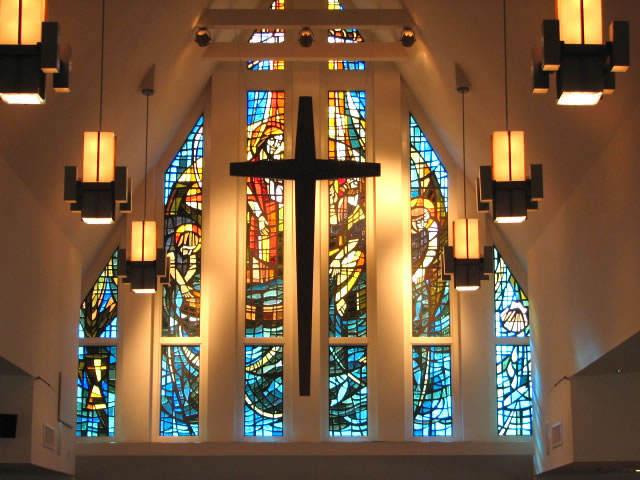
Part of the problem in Israel was that they took a God who could not be contained and made a box, called a temple. Pretty quickly, as you might imagine, the God who infused and inhabited all things was confined to the religious. Instead of life being worship in all of its minutia, worship became something people did in a specific place, at a specific time, in a specific way. Oh there was always rituals, but they were rituals pointing and imaging the everyday actions of the people. And no, there's no reason why religion can't still be practiced in that way (and is!), but you have to admit it's a lot easier to keep religion in a corner when the God at the center of it is wrapped up in a neat little box.
This is why it was so necessary for God to be re-incarnated - to show up in a living, breathing person - to explode back into the world that God's people had pushed God out of. No longer would God be segregated to the temple, but would be active and alive in the world. It's no wonder that Jesus seemed to reject the trappings of the temple and the religious system that had built up around it over the intervening years: there were more important things to do. Life was to be lived - lived in the way it had been created to be enjoyed. In Jesus we see a person fully inhabiting his personhood, humanity being truly human - even to the point of giving up that humanity for the sake of others.
What did we do then? Well, for a while we lived into that example. There were lots of people sacrificing and going to their deaths out of love for neighbor and enemy alike. That tradition continues; let's not say it's faded away. But what it means to be Christian, in general, over time, has faded away. We've taken that great sacrifice of love and imaged it - imbuing meaning and honor on the instrument of Christ's death and giving it pride of place in our sanctuaries.
Again, I am not arguing that the cross is misplaced or ill-used or inappropriate. For certainly the reminder of death is key to our lives as God intended them. What is most important is not blessing or survival, but sacrifice - the meaning of life is to give it away in whatever manner we are called. Love, of course, but how much love? The cross reminds us there is no limit to such love.
But we've still contained it in a box. Yes, we may wear it on a chain around our necks or tattoo it on our calves or adorn it on our clothes, but for all practical purposes we've locked it up tight in our houses of worship just as Samuel did all those many years ago. It's a method of control, for one - when God is in our box, we decide how and when and where people experience and respond to God. There's safety and security in that - the same kinds of things the cross challenges us to forsake.
This domestication is also a means of ignoring the creative purpose of our lives: to live freely and wholly into God's future. When the cross is locked up in the church, we can relegate the Kingdom to that place and time we choose to think of it. We no longer have to infuse our lives with the radical, counter-cultural otherness that so characterized the one who died upon that cross, the one who rescued a people from slavery and lived among them as they wandered, poor and helpless in the desert. We can abandon the call of God to be humble when we've made the symbol of that God to important.
That's the catch, though, isn't it. God first told God's people not to make images of worship. We brush off the Muslim desire to keep their God and prophet unseen, but forget that our tradition has the same command. Yes, we're a bit more of a gracious people, at least in paper, but the teaching is the same: do not make idols - images that depict God - because God has made the only image necessary: us. Christ, as Paul says, the very image of the invisible God, is humanity as it was intended. We are God's image. We do not have the right to make another, simply because it better serves our purpose.
The cross is a call for our lives to embrace God's purpose. We must take it up and lay it down in service of God's radical love, not our own convenient agenda. It is not an excuse to make one place sacred and another secular. It is not permission to lie and steal and cheat in our everyday lives, because something better exists in another world. Something better exists, alright, but it's not in another world, it's in the world God created this one to become.
The means by which God is transforming the world God created into the world God intended is love. The path that transformation takes is through our lives and witness, not through our religious rituals and houses of worship. That shouldn't demean or diminish the importance of those things in our lives, but it does radically alter the way we view the cross. It is not an image to be exalted and looked up, but one to be shouldered and carried.
Carried out of the boxes we have created for it and into the world where it - and we - were meant to really live.
I think about the historical example of medieval China. The Chinese had a bigger, stronger, more capable fleet of sailing ships than anything in Europe. They regularly traded as far as the eastern coast of Africa before Columbus was even born. At some point, though, Chinese leadership decided it was better to focus domestically and gave up sailing the seas with the same intensity.
If things had gone differently - if China had continued to expand its empire - likely it would have been Chinese vessels rounding the Cape of Good Hope rather than Vasco Da Gama coming the other way. The Chinese might have established trading hubs in Lisbon or Portsmouth rather than the Portuguese and British in Macao and Hong Kong. History would have been quite different.
Empire is not strictly about size, but the way in which we leverage that size or even the pursuit of size (and accompanying power) itself.
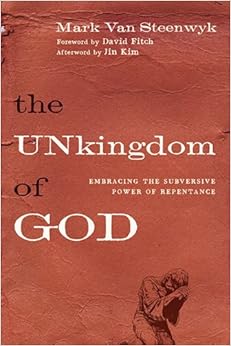
While reading Van Steenwyk's book, I couldn't help but think of the evangelical church of the past thirty years. My tribe, specifically, was caught up in what's known as the Church Growth Movement, in fact, for a while our motto was, "Our Church Can Be Your Home." We had incentive to bring in as many people as possible - and pretty free rein to do it in any way that produced results.
This lead to worship services as entertainment, professional staff pastors catering to different interest groups and filling the social calendar. It led to a more passive membership (nothing too serious, then people might leave). It also led to huge attendance increases and greater influence.
It really is the Spirit of Empire. Bigger is better. More people, more attention, more influence. What's the harm when we're influencing for good?
What we didn't learn too well in the 70's is that the medium is the message - the way we bring people in is the ethic to which we're converting them. Church Growth strategies worked really well because they tapped into the natural inclination of American culture - a culture already steeped in Empire.
The US has been essentially running the world since the 1940's. Our empire isn't geographic like the British Empire of yore, but it's political and economic. Our size produced influence, expansion, growth. Our consumerism feeds the beast, as it were, pushing the notion of empire.
Our congregations played right into this. The political power of the Religious Right gave voice to people who always thought themselves a silent majority. TV brought exposure for preachers with charisma and media savvy. Sunday worship became a competition for the eyes and ears of people. It was only natural.
That doesn't make it good.
Our desire to conquer is a cultural desire, it's bred into us from the moment we're born. We need to recognize it, name it, and renounce it. As Christ's people, we're not conquerors - at least not in the way of Empire. On the cross, Jesus conquered by losing, by confusion, by demanding so much of his followers they all ran away.
Every opportunity Jesus had to take hold of power or force, he ran from. Empire is not the way of the Kingdom. There's nothing wrong with a large congregation, but beware our attempts to become one.
China never ceased to be influential. They lost the power of position they might otherwise have held. Those nations which embraced the Spirit of Empire came and conquered, carrying off riches and knowledge that China might otherwise have capitalized on. Choosing against Empire was a choice away from self-determination (whether they knew it or not).
Empire is a great way to retain control. Of course, human control of anything has never really worked out well; it's certainly never been part of God's ideal plan for life on this planet. Superintendency, service, yes - God gave us a lead role to play - but always one in service of the other.
Empire is a spirit of self-promotion. We often fool ourselves into thinking our aims are pure - freedom, justice, democracy, evangelism, morality - but in the end, what speaks louder than our motives are our actions.
The medium is the message. Not great size and strength, but humility and service.
There is certainly a Jewish argument to be made for capital punishment - there's just not a Christian one. Assuming we can get past the things Jesus said (you have heard it said an eye for an eye and a tooth for a tooth, but I tell you love your enemies...), we have to deal with what Jesus did.
This is where, I think, the spiritualization of salvation has some serious problems. Evangelicalism has often reduced the cross to a necessary spiritual transaction. Our souls need saving, thus Jesus has to die. He was a special case, not a normative human experience because only Jesus could do what Jesus did.
Beyond the issues of atonement at play and given the real truth of Christ's uniqueness, there's something deeper at work here.
Salvation is not purely spiritual. As crazy as many of you think I am, there's a reason it always comes back to the resurrection with me. Our faith, Christian faith, is not about going off to heaven to laze around on clouds and play soccer with Jesus. It's not about going somewhere else. It's about God coming here and making all things right.
There's something deeply physical about salvation. Buried deep within the reality of the cross is a visceral change in the make-up of all that exists. When Paul says that those who are in Christ are new creation, he is not speaking metaphorically; it is not a spiritual analogy. He means that those who are in Christ as substantively different - they are participating in a new reality. It may not be fully realized as of yet, but it has begun. The change is made, it is real.
If there is such a physical component to salvation then Christ's sacrifice on the cross is not purely a spiritual act. It is not simply a special case, it is a normative example of the way our physical self must be manifested in the world.
Christ has died. We will die. We must be willing to die.
Belief is only belief when it's backed up by action. So often Christians believe in an afterlife because it's a better alternative to the nothingness they suspect awaits them. We live in a world where science and reason dominate; it's difficult - even for those of us fully steeped in the Church - to imagine that there's some cloudy, harp-filled paradise up there waiting for us.
And so we run from death. We run with all our might because we're just not sure.
The cross presents a different path. The cross, with all of its various spiritual AND physical components, compels us to a different sort of belief, one that requires action. We must prove this belief by truly hating our own life. Hating in the sense that it is worthless to us, not because life has no value - life is indeed precious and wonderful - but because death is nothing but a blip on the radar of eternity.
It would be easy to enter this mindset and emerge with the "kill'em all and let God sort'em out" mentality. Death is just a phase, so who cares? Of course, then we also have to look at Jesus. He refused to throw himself off the temple and prove his greatness. No, this new creation operates differently. It's not about power and control or even reason and practicality. It's about loving your enemies.
I can't get my head around it. I work and try and I discipline myself in the hope I might someday do the right thing in a tough situation. But I'm still running scared. Running scared towards the cross as I am firmly committed to the idea that it's the only hope for the world - and running scared away from the cross because I can't bear the thought of facing pain and death when there's an easier way out.
This is the problem of non-violence, the problem of the cross. It's not a problem to be solved, but a problem to move in with. If you work your way through the jungle-gym of logic and come out on the other side, you've done something wrong. We are creatures of a new and redeemed world, living in the midst of a dying reality. We're not supposed to fit. It's not supposed to make sense. That's why it's called faith.
