
It said, essentially (and you'll find stories about it all over the internet) that 26 of the Democrats involved are also gun owners. That's it. Almost no other context. I think the implication is that this is hypocritical position. I think. It's still not clear to me. Although, I suppose, it's very clear to the people who are the real recipients of the message.
A lot of people in the US believe "gun control" means "taking my guns away," despite the incredible irrationality of the message. It's not that these people are themselves irrational or stupid - often quite the opposite - it's just that our fear-based political system encourages this kind of black/white thinking devoid of rationality.
Again, I don't want to delve into guns specifically, but to illustrate the logical point. The US Supreme Court has pretty much upheld two basic constitutional facts about guns, 1) people have a right to own guns for self-defense, and 2) the government has the right to regulate and control the use and possession of guns. The entirety of rational gun conversation (what little there is) falls in between these two poles. However, the vast majority of actual gun conversations in the US are people who think either option 1 or option 2 are invalid - that the Court got them wrong.**
This is why the notion of gun owners also supporting gun control seems hypocritical to those on both extremes - gun control advocates should not own guns and gun owners should not advocate for gun control. These are both legally, logically, and constitutionally irrational statements, but they're certainly real.
We can have the same fun with abortion if we want to: cut and paste the following on Facebook and see what happens "I believe abortion is killing and I believe women should have the right to do it." This is a real position that a lot of people hold,^ but you'll absolutely confound extreme activists with it - in fact, you may do the impossible and bring them together in their mutual hatred of you.
David Brooks wrote a piece a week or so ago that talks a little bit about this. I'm not sure it's super well-written, but the idea is phenomenal (and he borrowed it from Richard Rohr, so you know it's got to be pretty great). He talks about those people who are inside specific groups, but not so far inside as to be subsumed by group identity (and thus group think). These are people who have opinions, but deal with some measure of distance from those ideas - another term might be "principled pragmatism" or maybe just plain "rational."
It's not something we have much of in our current public discourse. Maybe not in our private discourse either. I remember last month, as the United Methodists were trying to figure out how to talk about homosexuality and the Church, someone came up with the idea of having small groups share opinions to make sure it wasn't just the loudest, most passionate people (on both sides) who were heard. There was a lot of talk about the "silent middle," and perhaps some good reason to believe they really do exist.
I hesitate to appropriate "silent majority" in any event these days, because I'm no longer certain the middle is the majority. We're just so shaped and formed by this kind of all-or-nothing, burn the ships behind us, siege mentality for everything social, political, or electoral that we've almost forgotten just how important it is to live together.
In the end, this is one of the core reasons I'm doing the work to get on the Presidential ballot in Colorado (which should almost be official by now). Yes, it's fun and funny and strange - and precisely the kind of thing I like to do just to say I did it. But there's also something more. A few people have made comments about how it seems to be mocking the electoral process or demeaning the importance of our governmental system - and they're right. I'm happy to demean the importance of our system, because most people put far, far, far, far, far, far, far too much importance on this system - as if their entire existence depends on our government (and all its citizens) agreeing that they're right about everything. It's just not that important - I'm not sure anything is that important.
But we've been told its so vitally important for so long, we believe it. When we believe these things have existential import for our very survival, it's really easy to be influenced by fear - which is 100% entirely irrational. Well, fear itself is a very rational response to certain stimuli, but what we do with fear is downright nuts - I think I'd rather be trapped in a small room with a deranged meth-head than someone who's scared for their life. Fear don't mess around.
You know how to combat fear? Knowledge. Specifically knowledge about that which you fear. When that which we fear is our neighbor who thinks differently from us, it's not that difficult to walk next door and have a conversation.
Although maybe you should call first... in case they've got a gun.
*But seriously, folks, one of the votes these Dems wanted was a repeal of the federal ban on funding gun violence RESEARCH! If we aren't allowed to even find out about gun violence, there's no way anyone will come up with a legitimate plan to address it.
I, personally, do not believe in self defense (although I wouldn't want my view legislated, necessarily) - but if we're talking constitutionality, I'm fine with both positions. I do, however, think you can't honestly call yourself a "strict constructionalist" and also think option 1 is constitutional - there's some logical confusion there; however, I suspect the answer is really for people to stop calling themselves "strict constructionalists," and not to change the rulings.
^Me included.
^^And, no, I have no idea what potatoes have to do with anything, but that picture came up on a google image search for "rationality and fear," and I thought it was funny.
The answer I always got was, "we pledge allegiance to both and when they conflict, we choose God." Of course, that gives us incentive to try and keep them from conflicting, since our loyalty to each is tough to break or forsake. You can see in current society (and across religions - Jews in Israel, Muslims in many countries, even Buddhists in Myanmar) how easy it is to begin to equate religion and patriotism.
I say that not to start some grand political argument (there are plenty of other posts for that) I say it because it's the best illustration in my life of something really interesting I picked up from reading Buyology* by Martin Lindstrom last week. Lindstrom is a brand consultant, and a very good one at that - he's worked in marketing big companies and popular products all over the world.
In 2008 (so it's a bit dated, even as you read the book), he commissioned a study to see how our brains respond to advertising and help us make consumer decisions. He found that over 90% of our decision-making process is subconscious or beyond our ability to properly comprehend (at least at the time). This explains why surveys and focus groups are often terrible indicators of what people actually like and buy. We simply don't consciously know what we like.
There were a lot of brains scans and tests done to show which areas of the brain light up at different times and why. Neuroscience has gotten pretty good at knowing which parts of the brain correspond to which emotional responses and activities.
For the particular study that most interests me today, they took a baseline reading from a bunch of nuns in a Carmelite monastery, to get brain images of them talking about and reliving their most spectacular religious experiences. These brain scans matched up with others from many religions and around the world. When people have or remember religious experiences, it lights up a part of the brain entirely separate from please, ecstasy, and joy. There really is a specific brain response for God interactions (or perceived God interactions). Religious experience is different in our brains that mere attraction or pleasure.
This is important because the next scan they did was on a cross section of regular folks. They used a series of strong brands - brands people are attached to deeply, like Apple, Harley-Davidson, and Ferrari. They also used weak brands, brands people would recognize, but not feel great attachment to, like BP oil (this was before the Gulf spill).
What they found was that strong brands, the ones people might call "lifestyle brands," cause the same reaction in people's brains as religious experiences. The great loyalty engendered by these companies - the reason your friend buys Ferrari clothes or looks down on PC users - is akin to religious loyalty, which, in turn, makes it very, very difficult to break.
I say all this to say, it does really seem like our brains are not wired to reject religiously loyal brands as easily as those respondents from my childhood (and today) might believe.
Of course, not everyone is religiously loyal to Apple, but we all certainly know someone who is (or substitute Google or Starbucks or CrossFit there). Of course not everyone is religiously loyal to the United States, but I think we know a whole lot more people who at least exhibit these markers.
This is brain chemistry here. Likely those people you're thinking of would entirely deny that their connection is religious. I imagine their brain would differ, if put to the test.
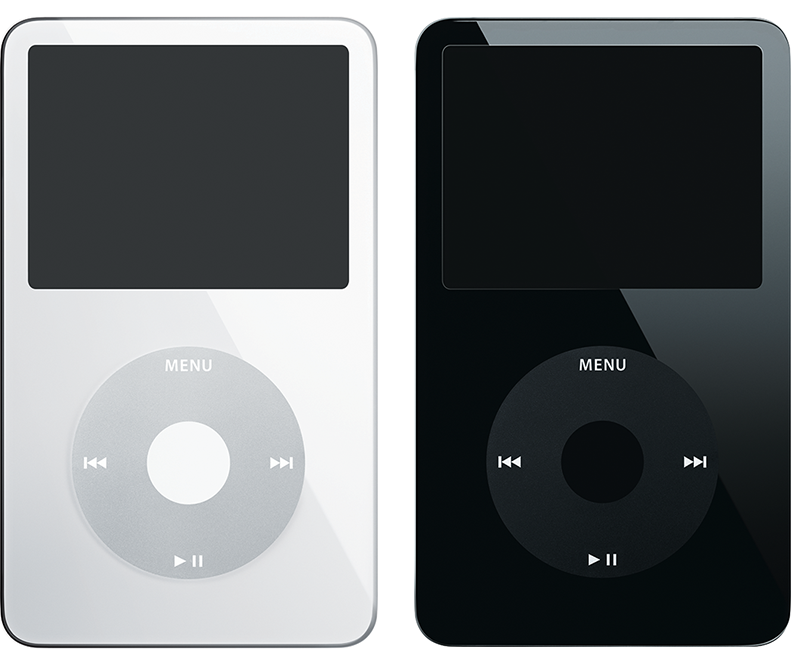
These loyalties are reinforced in many different ways. Apple stores pump a specific smell into their locations, so people will equate the pleasantness of vanilla (an ingredient in breast milk and one of the most universally beloved scents by humans) with their products. The sound made when spinning the dial on an iPod was similarly designed to attach people to the brand. Rituals as well, which come into play specifically when we're talking nationalism - flag presentations, the national anthem before sporting events, putting your hand over your heart... and the pledge of allegiance, all reinforce a religious devotion to the brand.
I'm not saying people can't be Christians an Apple aficionados or Christians and really excited about their country. They can. But we do need to be careful about how we show our support and loyalty. The things we do, say, and experience connect us beyond our ability to consciously perceive. They just do. Yeah, it might be unfair, but it's biology and there's not much we can do about it (at least until some major advances in science).
I don't vote in elections because I want to remember that ALL my hope is in Christ - not the next slick young politician to come along. I don't sing the national anthem or say the pledge of allegiance because it's far too easy (for me, at least) to get caught up in the notion that wielding power well can solve the world's problems.
I will admit, though, I'll have to take a harder look at how I work with brands. I'm pretty cheap, so usually finances make a lot of my decisions. I do have a few brands, though, that trouble me. We've been with T-Mobile for like 17 years or something. There have been times when sticking with them was a poor choice. I justified it because we have such long loyalty and the benefits that affords us are pretty nice. I also justify it by how uncomfortable I am with change (which is also true), but in reality, there's something inside me - something I can't fully explain or understand - that just makes me feel like T-Mobile sends an accurate message about who I am as a person. Don't think that's by accident. They've got a lot of highly paid marketing people working to make that true. The same goes for Apple and Starbucks and the US Gov't.
In the end, I do think the loyalty thing will keep me with T-Mobile rationally (especially now that we no longer live in a place where they don't provide service) - but I will be more conscious of how committed I become to things other than Christ moving forward.
*The book had lots of great insights about how we buy stuff and what we like (although I think this was the best one) - it's a great read, even if it's a little old. In the final chapter (updated in 2010) he even predicts the explosion of all things Kardashian, not by name, but as a personal brand in which the person and the brand become indistinguishable. The reason this is possible is entirely biological - it's happening inside us without our even being aware of it.

I'll just come out and say it: I hate the greeting card industry. I can't imagine a more vile waste of time and space than an industry devoted to laziness and stupidity. How many times a year does one feel obligated to spend between $.99 and five dollars on a stupid little card with some pithy remarks about "congratulations on the new lake house" or "happy valentine's day to my brother and his wife?" (Only one of those was made up.)
It seems to me that if you don't care enough to write your own thoughts down on paper, then perhaps you don't care enough to send a card at all. Culture has conditioned us to think, "my, what a nice gesture" when receiving a card, when really the person is saying, "I spent three dollars on this and I mildly agree with the cheesy words this total stranger wrote."
I vowed at a young age not to support this vile laziness with my hard-earned cash. I have come to a bit of a compromise since vowing my love and fidelity to the wife. Whenever possible, I locate and procure a greeting card with nothing written on it so as to enable me to put my own thoughts down on paper and thus give a truly sincere token of respect or care. (In the interest of full disclosure, I do search for and occasionally purchase humorous cards, but only for the comedic value, not the sentiment; it's my version of the annoying email forward from Uncle Stu, et al).
Without getting into my utter (although quite related) disgust with the evil Free Market Economy holiday that happens to fall tomorrow, I was out searching for a card this evening. I scoured a full, two-sided aisle at the local grocery story in search of the elusive (blank inside) label, which is becoming as difficult to find as a polar bear with a bright outlook on life. I was forced to settle on a plain white Thank You card in the second row from the bottom at the far end of the aisle.
As I looked down the row, at the crowded section of bewildered men hovering in front of a very red section of cards, I couldn't help but smile. Even though their labor will result in a perfectly appropriate card, mine will have a truly unique representation of my feelings and will also look decidedly better than an index card.

I'm not sure if you've been watching much television since the writer's strike has dragged into it's sixth fortnight, but Burger King, the always a bridesmaid, never a bride of national burger chains, has introduced a new ad campaign. If you're too lazy or lack the bandwidth to take a look, I'll summarize: the premise of these commercials is that Burger King has stopped serving their signature burger, the Whopper, and they film real reactions on hidden camera.
Needless to say, despite the general lack of quality or originality in their food products, there are serious Burger King customers out there who will freak out if they can't get a Whopper. I might be able to put a whole post together about the suspicious nature of these so-called "real" reactions, but let's take a step back and analyze what these commercials are really saying.
Suspend your disbelief and imagine that you love Whoppers, just absolutely cherish every moment of flame-broiled scrumtrilescence. You walk into the local BK and order the number one special with Mr. Pibb (or whatever quenches your imaginary thirst), only to find out that the Whopper no longer exists! It would be a funny joke and a great prank. I am all for hilarious and time-consuming pranks, but is it really wise to publicize this as a means of increasing business?
You know what these commercials say to me?
Welcome to Burger King: where you may or may not get what you ordered!
And we wonder why they consistently fail to compete on a national level?
