
Despite all that, I may have reached a tipping point with this whole Wheaton College thing.* It's not so much the theology of the matter, although that bugs me, but because the theology seems to be more an excuse for institutional preservation than it is a legitimate theological argument.
We've seen this all over the place within evangelicalism in recent years - calls for theological purity that are far more about power and control than they are about genuine intellectual and theological inquiry. Beyond even theology, my own denomination, The Church of the Nazarene, has seen incident after incident where institutional cohesion, control, and continuity have trumped the basic tenets we claim to believe. It's undermined the authority of the institution and caused the exact divisive harm it was intended to prevent.
I've tried to be a big believer in the ideal of Christian community - that despite our messed up tendencies we can and should be together. I'm not rejecting that notion, either practically or theologically, but I feel like I've now abandoned the notion that our historic or traditional institutions have any real place in the future of Christianity.
The institutional church in America - at least the evangelical variety - is eating itself alive.** At the same time, I'm pretty certain any group of people must, in some measure, be institutionalized to remain cohesive in any way - not that it has to be done, but that it will inevitably happen. There will always be institutions when people try to live together - from communes to corporations, overt or unintentional, we all institutionalize, even the most radical revolutionaries. We're going to have (and need) institutions, but I'm no longer convinced those institutions we have are capable of being the institutions we need moving forward.
More and more I'm realizing that perhaps talk of a "new reformation" is not so far fetched.
You have the argument from history. As (the late, great) Phylis Tickle so eloquently laid out, every 500 years or so there are massive changes in both the form and institutionalization of Christianity. We went from a movement of loosely connected local cells, to an empire-influencing centralized body, to an almost brazenly political force, to a relatively disconnected conglomeration of competing denominations. None of these system looked much at all like the last. For years people have been foretelling a similar change (it is about time, after all) - I've resisted those calls, but my resistance is waning.
On a small scale, I can see in my own denomination the real dysfunction and purposeless that continues to radiate from the center. At the same time I witness a real vibrancy of mission by those on periphery.*** There is a hunger for living out the Christian life in creative, faithful ways among people that just can't be supported by the old structures of the institution. The two forces seem increasingly divergent - one pushing to fit new developments into an old structure and one marching forward with intention, ready to build whatever structure makes sense as we go along.
Our idealism as Christians tells us we should be able to reconcile these forces. I'm just not sure that's really possible anymore, especially as sustaining the institution becomes more and more important to those in charge. I get the tension there - being in charge specifically means care for the institution, but what I'm beginning to realize is that perhaps, in this rare and unique instance, caring for the institution might just mean tearing it down and working to rebuild something different.
I have a lot of fear in that statement. There's a lot of grief and sorrow. I imagine it's similar to the sorrow of Martin Luther, who saw much of his beloved catholic church deconstructed by the movement he started - not that he regretted speaking out and sparking a reformation, but that he felt genuine grief over the loss of something beloved and familiar. It's a difficult position to be in; I don't envy any institutional leader.
At the same time, those leaders must be willing to make difficult decisions, even if they're unpopular within the institution itself. That is sort of the point of leadership, right? To recognize when context is changing and lead people to change with it. Mission and ministry in the coming years will not be served by the structures and systems of the past. This isn't just a generational shift, I'm starting to think it's something bigger.
At the end of the last reformation, the catholic church was broken - broken to such an extent it's taken 500 years to begin to recover its footing. The idealist in me celebrates the re-emergence of catholic leadership in the world because it speaks of the real perseverance of the saints. Even if missteps are taken in dealing with a new reality, there is hope for the future. It's what keeps me optimistic about the old systems and structures I love, but often bristle against. The core goodness within them is real, even if it's not expressed in appropriate ways for a changing context.
Evangelicalism is facing a whole host of pressures from various forces and perspectives. It's not really about one thing. It's not just about theology, but also the place of religion in society. It's not just biblical interpretation, but how human society itself is evolving over time. It's not just about what science means for core beliefs, but how those new realities impact the way our very institutions are ordered and designed. It's not an easy picture.
I guess, in the end, I'd call on all of us - those who cling to institutions for security and safety and those who push boundaries almost by nature, and even those in the middle, like me, who see the real value of both - to maintain a vision of Christ. We do claim to be Christians after all, and even if we can't agree on theology or practice or organization, perhaps we can agree on the need for continued communication, charitable discourse amongst ourselves as we move forward with whatever comes next.
I really struggle with some of these incidents, like the one at Wheaton, the one before it at Northwest Nazarene, and many others - not because they're emblematic of some larger issue, but because they're precisely the opposite - they're distractions from more important conversations. They're side-skirmishes in a larger struggle to engage the changing global context with the grace and peace and love of Jesus Christ.
I'm loyal, probably to a fault. I love my denomination and my evangelical identity - even when evidence suggests I resemble those things less and less every day. I don't want to see us descend into the literally wars of religion that marked the adjustment period following the last reformation, I'd like to see us moving forward together, even as we're a bit wary of each other and what lies ahead.
So I guess we could say, there's still a little bit of idealism left in me, and I hope, with good reason.
*If you want further information about this issue, you can see both the professor's statement and the statement from Wheaton.
**The mainline version has pretty much marginalized itself over the past 60 years in a different, but no less effective way.
***I wrote a little bit about how that functions psychologically in a post a few weeks back.

He's got some good things to say there, specifically about how corporate worship has become institutionalized in a specific format that's difficult to change. He begins to suggest some ways to be more diverse and inclusive in how we interact corporately, but I'm not sure he really goes far enough.
I'd start with an understanding of worship. Worship is really everything we do - from the time we spend watching TV to the after school discussions with our kids, to, yes, serving Thanksgiving dinner at the local homeless shelter (oh, yeah, and all that church stuff, too). Worship is our life, because the way we spend our time, the principles by which we actually live, are our expressions of worship.
I don't mean this as a guilt trip - that you should be doing more "worthwhile" stuff with your life, because frankly I don't know and the last thing I'd want to do is badger people into being busier. We don't usually need that help. I am saying that our actions determine our beliefs, not our minds or our mouths. Those actions are worship. It's not something we set aside specific time to do. Worship is life.
That's not to be confused with the specific times people set aside to worship together. Those are intentional (usually, the church stuff) and important. For Christians, specifically in the West, but I imagine almost anywhere, those times look remarkably similar, both to everyone else and to the last 500 years (or more) of Christian tradition.
We gather together, sing some songs, pray some prayers, hear scripture and a homily of some kind. We usually collect money. Very often eating is involved. McKnight suggests some ways to include other elements in that basic structure, but the post referenced above sort of leaves it at that - as if this form of corporate worship is simply a given.
For all the fights that have been fought over the years on style (what kind of songs, prayers, and sermons to hear; how we dress or where we sit), the actual structure of our corporate worship is largely unchanged and near universal. I'm not wondering if, more than changing elements of an existing system, we shouldn't be exploring alternative ways to structure the corporate worship events themselves?
The late, great Phyllis Tickle wrote the seminal, The Great Emergence, around the notion of 500 year (give or take) epochal changes in the structure and function of Christianity. We're certainly in the midst of one of those right now, but it's still very unclear exactly what kinds of reforms and changes will emerge.
There's a lot to be said there (and I likely have and will continue to do so), but I wonder if worship and our perspective on worship won't be one of them? My family and I moved to Middletown, Delaware with a sort of crazy dream. We wanted to move into a community to just be good neighbors. We want to live our worship out in the midst of a people, try to love and serve those around us, and see what happens. It was all sort of based on a different notion of worship - that the acts we're doing to live out our beliefs (that all people are important, that we HAVE to live together and sacrifice to get along, that community is important, etc) are worship and become corporate worship when we do them together.
So far it's been less than explicit. The dream was to have one or two other families make the same move, so there'd be a specifically Christian core of people with the same idea of worship and mission. It would allow us to do corporate worship differently, but intentionally - sharing meals together, helping with child-rearing, sharing our stuff and abilities. To do life together.
It didn't work out exactly that way (there's a lot of "great idea, but not for me," which is cool - but, seriously, it's a great town if you still want to come), but we have found great neighbors in this place. It doesn't look anything like my lofty visions, but it looks like what it's supposed to. We do dinners and parties in our shared back yard, we try to organize community events, we share cars and lawnmowers, we take care of each other's pets and homes and kids.
I see all of this, in some sense, as corporate worship. It's not as fully developed as I'd like, but it's starting from the right place, I think - an understanding of life as worship. There's no need to worry about right beliefs or who has to believe what - it's a relationship of action, caring for one another, learning to develop trust. We trust that our neighbors will come through for us and that we can expose our flaws and weaknesses to them; they won't take advantage of us.
I get the sense in which others will say this isn't specifically Christian, because it's not - at the same time, though, it is. This is the care for others that God challenges us to. It's also fair to say, "this doesn't look much different than any other neighbor relationship out there." Yes and no. I don't think people know or trust their neighbors too often in our world; what's more I'm not sure people even really want to all that much. Yes, it certainly happens some places and we see these kinds of relationships thrive - maybe that's corporate worship, too - even if nobody knows or says that's what's happening.
Now, I'm working on how to do this a little more overtly. I want to have a gathering where we can get together and talk about beliefs - not to argue over which ones are right, but to seek out why our friends and neighbors believe what they believe, to figure out how my beliefs impact my actions, to see things from different perspectives and for each of us to grow deeper in our own journeys towards doing life well.
I think that'll be a lot more specifically religious (if not Christian), but I hope it's not Christian in the way that turns so many people off. As McKnight says in the post above, the way we've done things - what's come to be the standard definition of corporate worship for everyone, whether they participate or not - doesn't work well for everybody; it has a kind of bad reputation, mostly as something unhelpful (at least to those people who don't go, and even some who do). I'd like whatever gathering we manage to put together to be Christian in the sense it looks like Christ - people who are genuinely interested in each other, seek to be life-giving and encouraging, to love and trust one other as we do life together.
I'd love for everyone to be doing this in whatever communities you find yourself a part of, but if you want to come do it here, let's talk.
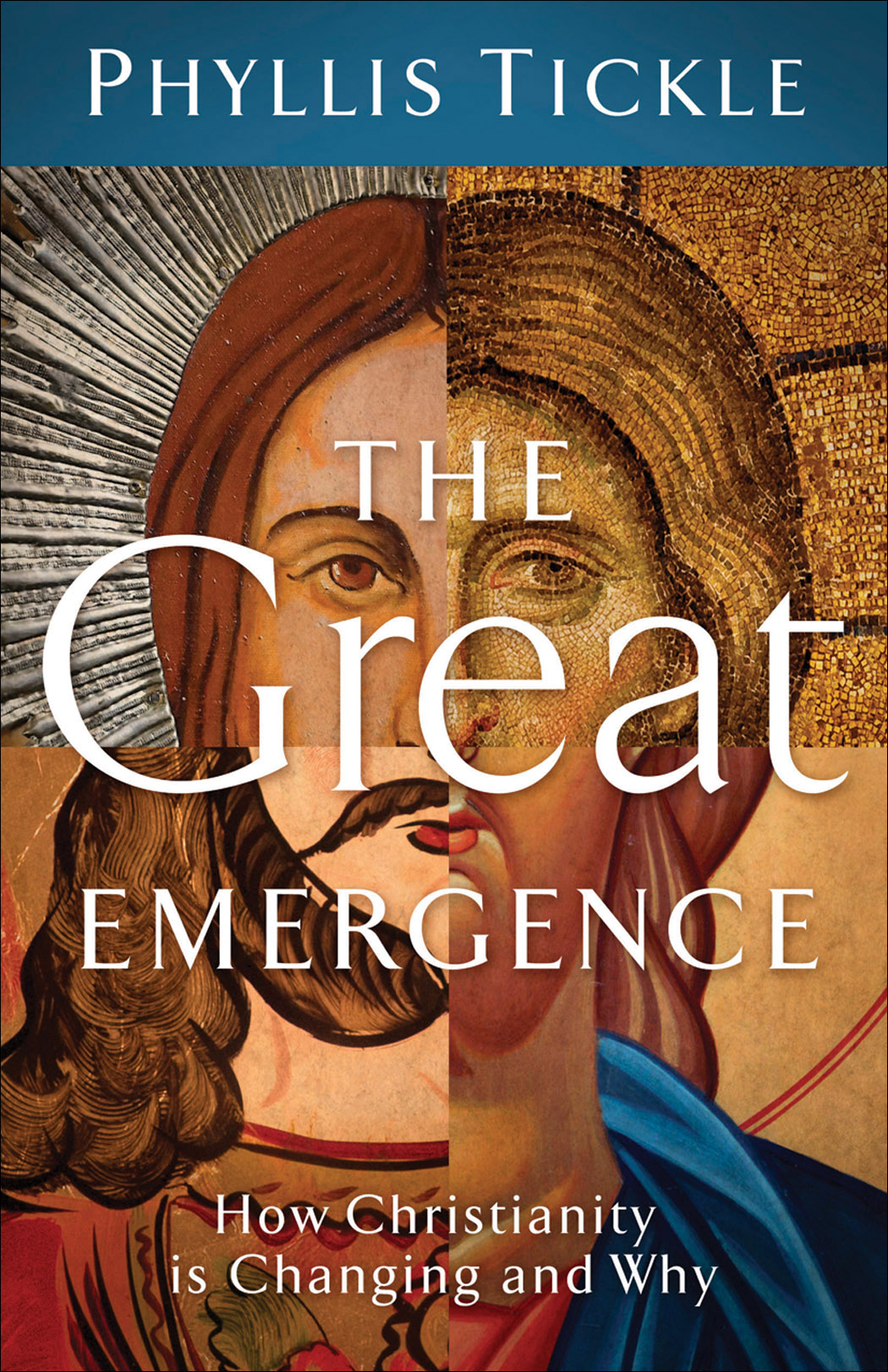
I know I'm half a decade behind at this point, but The Great Emergence really is a profound and important book for our time. Tickle examines the current cultural/political/religious shift towards post-modernism, particularly the religious aspects, from a historical and sociological perspective. Her perspective and approach are more clinical and scientific, providing a breath of fresh air from the emergent evangelists. There is little discussion of doctrine or specific beliefs, but more an analysis and breakdown of how we believe, how belief itself changes over time, and how these changes relate to the larger world.
I found the book simple to understand and yet profound in its depth. There's a lot of mine and ponder. Perhaps her most important contribution, however, is the provision of a nomenclature for the shift. Tickle gives precise descriptions to otherwise nebulous conversations and provides an overview of a process in which so may of us find ourselves stuck in the midst. I've often had trouble orienting my own thoughts in regards to others and to religion itself because of my necessary biases and limited perspective. Tickle gives us a way to speak about what's happening around us and a firm foundation from which to speak with each other.
It's a book that anyone who finds faith important should read.
