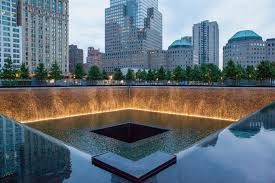
9/11 is only going to become more important as the distance from it to the present increases. The kids I see in schools everyday weren't even alive when it happened and so many young people have no living memory. As much as telling our stories can feel old, at times, it's important to help our collective memory.
The world is different now than it was, which is always true, but rarely do we have such definitive, recognizable transition moments as 9/11. The militant nationalism so prevalent in our society can be traced to that day and the ones following. Our obsession with safety and security are collective travails that extend from the emotional trauma of watching a nation that had never previously been attacked succumb to the kind of violence that's commonplace in so many countries around the world.
It's a real thing and we must, absolutely, with all our might, prevent it from becoming legend.
Legends lack complexity and context. When we were in Hawaii a few years back, we got to tour the Pearl Harbor memorial. What struck me most about the museum was the dearth of historical context. The US was competing with Japan for influence and control in the Pacific, and part of that meant limiting Japan's supply of oil. War was inevitable, because that particular US policy was an existential threat to their country. We can talk about tragedy - a surprise attack that cost a lot of lives - without negating the issues surrounding it's place in history. We don't tend to do that, though, we paint ourselves the innocent victims and the "other guy" as the bloodthirsty evil.
The speed with which we did that in 2001 is why 9/11 has much a troubled connection in my mind. We set out for revenge real quick. It didn't even seem to matter who was on the other end of our national fist. It got us into a lot of trouble and it shaped our society in really negative ways (beyond the governmental and economic consequences, which were nothing to sneeze at).
9/11 was a violent attack; all violence should be denounced. I don't like the distinction between civilian and military targets, because, as I said, all violence should be denounced - but 9/11 was certainly beyond even the commonly accepted rules of war: terror at it's very definition. The purpose of terror, of course, is to create a fear that grows, panic and overreaction that feeds itself in a cycle of expansion that ultimately gnaws at the roots of a society.
In that sense, the terrorists won.
That's why context is so important. We need to tell the stories of our experiences and emotions on that day. We need to communicate just how traumatic it was for people entirely disconnected from the lives lost, because violence has real consequences - when we do it and when we're the victims of it. We need to tell the stories to learn the lessons of how to respond to terror, how to control our very real and right fear and not allow it to eat us up and dictate our actions.
We need to keep 9/11 within the larger narrative of international politics, recognizing the out-sized influence the US has played in middle eastern politics and how quickly a religious narrative can be used to manipulate people and power. We need to keep perspective on the "good vs evil" dynamics and tell the story of 9/11 honestly - not filtered through the lenses we'd like it to fit.
Things have been sanitized that don't deserve cleaning. The impact of the clean-up on the fire and police officers, the rescue workers, both paid and volunteer - they're lionized in the stories we tell as they lie forgotten, suffering and dying as a result of their work. Hundreds of thousands of ordinary people in Iraq and Afghanistan died because of decisions our government made. Casualties of war are not just numbers on a page or phrases in a history book; they're real people - and there's many more of "them" who died than there ever were of "us." Such small numbers of "us" were ever asked to serve or sacrifice and we continually cut corners and pinch pennies to care for the hearts and heads of people who gave life and limb and family to fight angry, vengeful wars. We can't even be bothered to sacrifice the next marginally better drone or fighter jet to provide the medical care veterans across the country need.
Yes, I'm opposed to war and violence, precisely because they dehumanize and devalue life. It's all the more reason to support and care for those who've been victims of such war (and there are always many victims on every side of a fight).
I feel very different about 9/11 today than I did seventeen years ago, but that should also be part of the story. Reliving the vivid memories and emotional legacy of the moment as well as the changes it's wrought in us since that day, both individually and collectively. We need to recognize that while this is a singularly remarkable event, it is but one of many singularly remarkable events in our history and each come from somewhere and lead to somewhere. They fit in a larger narrative with both causes and consequences. While we may not be able to internalize all the complexities of experiencing such an event, we can understand why it happens and how we need to respond.
We can only do that, though, if we're honest - not just about the story we want to tell, but about the story that must be told. The worst possible way to memorialize 9/11 is to make it legend. The best thing to do is to keep it real.
May we all keep it real. On this day and on every one to come.

Regardless, I am who I am - at least for the moment. I'm over-protective. My main aim in life, since the moment my daughter was born, was to let go. I have distinct memories of those being the first thoughts in my mind when I held her. "Your Dad is precisely the kind of person to wrap you in air bags and never let you leave the house." It was my fear - and my determination - not to be the guy I'm most prone to be.
I'm pretty proud of how I've done so far, although I do still want to shelter her; it's my natural state, after all. She sometimes revels in this. As a, thus-far, only child, there's a part of my daughter that enjoys having things done for her. As much as we challenge (read: force) her to do things for herself, we're still often in too much of a hurry to make her buckle her own seatbelt (and she's six, I know, it's embarrassing).
While I have always marveled at just how quickly she's grown up, I've still be unprepared for just how quickly she's grown up recently. It's not linear, but exponential. Last year, in Kindergarten, she'd make the occasional pun and her inferences blew me away. Now, as a first-grader, she's her own person entirely - smart, aware, and thinking with depth and breadth way beyond what's fair for a six year old. I've realized that the influences and ideas from which I might naturally want to shield her or be the one to present are already very present in her mind and in her life and she's dealt with them in ways I can only define as impressive.
I've spent a fair bit of time working with young people; the number one thing I've learned in that time (as I'm sure I've said here before) is that they always know, experience, and understand more than their parents would ever believe. What I'm learning as a parent is that my previous work with young people does not exempt me from that axiom. No matter what my expectations for my daughter's engagement with the world might be, they're going to fall short.
This is both terrifying and incredibly comforting.
I've never been a big fan of the emphasis our society places on safety and security. I think it's usually overkill and often exacerbates an atmosphere of fear over any kind of relief. As part of that, I've struggled with the vast array of "drills" they do in schools these days, to prepare for all kids of trauma. Last year, in Kindergarten, I thought I was told the school didn't do lockdowns, so I put off my worry. As first grade approached - and entry to the "big" elementary school - I mused, out loud, about how I might approach my daughter's school to perhaps surreptitiously take her for ice cream, or something, when those drills occurred.
She overheard the conversation and while I don't remember her words exactly, they went something like, "we did those last year, Dad, where we all sat quietly in the corner so people couldn't see us from the door - nothing will ever happen in school, but we have to make the teachers happy."
I don't know if that's how it was presented to them, but I'd like to think my daughter has both learned a thing or two about Christian social critique from her old man and maybe inherited both sound logical reasoning and a compassionate heart.
In the end, the whole experience has helped relieve some pressure. I don't have to work extra hard to make sure my daughter is her own person, because there's nothing else she can become. I'll have an influence on her - for good or ill - but from the moment she was laying there in my arms, screaming her giant, grossly-misshapen head off, whatever control I thought I might have was simply an illusion.
I suspect the sooner we learn that lesson, the better.
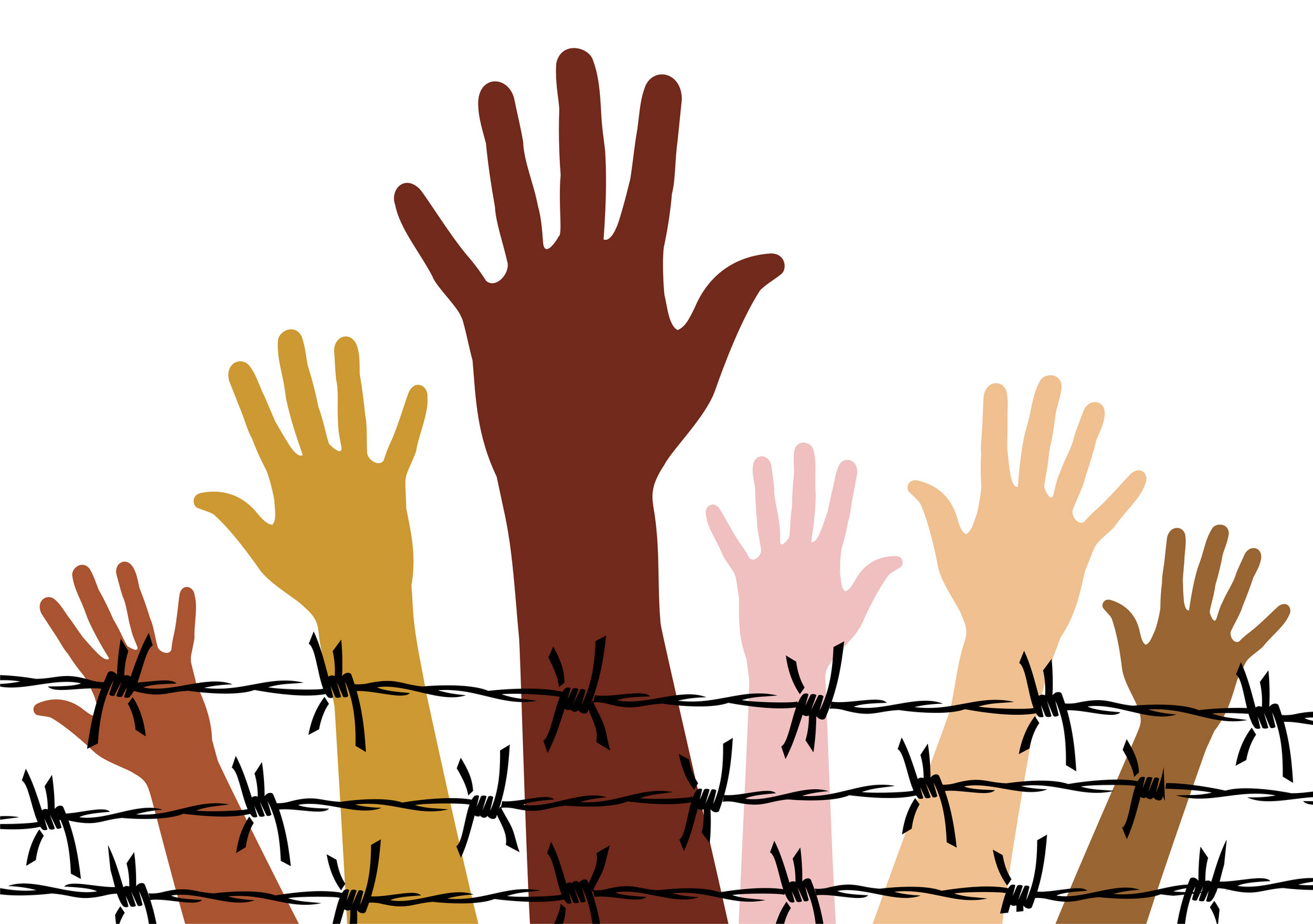
I believe a society (however one defines such a thing) is obligated to provide these things to everyone within the society or sacrifice mightily in the effort. That doesn't necessarily mean a government is obligated to provide such rights, especially if society has other means of doing so. However, governments, in a modern sense, are all-encompassing; they claim sovereignty over borders and all (human or otherwise) that lies within. To me, and I understand where some might disagree, this obligates them to be rights-provider of last resort.
Hear me: I don't think a government has to be all-encompassing. In fact, on the political spectrum, I'm much closer to a true anarchist than anything else. However, where a government makes such a claim without any major resistance (such as in the US), certain responsibilities come with such claims.
That's sort of the round about way to get to where I'm trying to go today - how I've come to, shorthand, claim that people living within the US deserve certain things - not because citizenship or residency automatically earns such things, but because their humanity demands them and their government, in a roundabout way, inherits the responsibility for ensuring they're provided.
I'd be all for society structuring itself in ways that provide for basic human rights without the need for heavy-handed top-down intervention. But until we have those systems working consistently and near-universally, responsibility remains. If you want the power, it comes with (Spiderman-like) responsibility.
Problems come when we focus our society around freedom. Yes, we like the wind-in-our-hair vitality of choosing our own destiny; and we love to have that coupled with the security of a nanny state. Make all your free-spirited decisions and trust that the social safety net will be there to catch you. It's the glory of celebrated self-sufficiency. Freedom is only real if we're capable of being self-sustaining individuals of true independence. I'm just not sure how anyone can believe that's the real state of humanity. It's wonderful wishful thinking and it might make for top-notch idealism, but a great ideal is not something you can eat for dinner.
I like the classic philosophical argument for the existence of God that says God is that of which nothing greater can be conceived. It's beautiful in its simplicity - the point being that while we can imagine the most gracious, benevolent, loving cosmic being, a real one is infinitely greater than the one in our head. That assumes, of course, limitless possibilities. It fails to take into account the very real world in which we live.
I have always considered myself an idealist. Those who (appropriately) nicknamed me Debbie Downer might disagree. However, I like to say I work my idealism within the parameters of reality. I believe the world contains greater things, profounder possibilities, and more infinite beauty than our senses can currently conceive - but that doesn't make the world completely open, because it still contains us and all our feeble human frailties.
We have and need rights precisely because we cannot achieve our aims, wants, and desires by ourselves. Self determination most certainly exists, but freedom does not. Our self-determination always comes with a cost and is contingent on our willingness to pay. That's precisely why we must secure, confirm, and provide these basic human rights to one another: because we can't supply them for ourselves.
We want to conflate rights and freedom, but really they're at the opposite end of the same spectrum. One is all about individualism, while the other is communal. As much as it would be nice (speaking as an introvert) to be able to wall ourselves off and survive, reality is as reality does, which means we're stuck with each other - for better or worse.
I choose better.

It's easy to condemn the celebritizing of our culture. Everything we (the societal we - you can self-righteously exempt yourself at whatever point you wish) do revolves around professional celebrities. (Kim Kardashian made more money from the release of her cell phone game than any actual artist will make from their work this entire year.) Our celebrity-obsessed media culture sets the tone for life - what's cool, what's important, what's "news" - and it's all, essentially, a facade. Celebrity culture is marketing - it's fake.
I can remember the sadness I felt as a teenager when I discovered that even the "personalities" our favorite stars exhibit when on the couch with Kimmel or Fallon is an act. We don't ever get to know the "real" people because we don't actually have relationships with these people. I mentioned to my wife just this week how, in my memories, Gwyneth Paltrow always seemed so cool and now she seems, at best, really odd - never thinking that perhaps her life got busy enough and complicated enough that the maintaining of her public image isn't a top priority any longer.
Ultimately this is about depersonalization. We don't want our celebrities to be people - we want them to feed our egos. We want celebrities we love unconditionally - Brad Pitt and Angelina Jolie are insanely beautiful people who found each other and travel the world helping poor people; it doesn't make sense that she'd get married in an ugly dress simply because her kids helped design it. The notion that her family means more than our image of her makes Jolie a person, and that makes us uncomfortable.
We'd be incredibly uncomfortable knowing as much about our neighbors as we know about our favorite athletes and actors. We'd either feel creepy for knowing so much or uncomfortable because there'd be some expectation of reciprocal life unveiling. We don't want people to know that much about us - they might not like us, they might point out all the faults we're already well aware of and secretly beat ourselves up over ever night as we cry ourselves to sleep.
To treat someone like a person is to be included in everything - and frankly, most of us are pretty messed up people. Celebrities can't be themselves on TV because real people are boring and strange and troubled and ultimately uninteresting (and just in case you want to go that direction, the people on Jerry Springer are just as much depersonalized characterizations, they're just otherwise anonymous ones).
But what really made my heart sink was the realization that our society has depersonalized itself. I came to this tragic conclusion reading some of the stories about the recent dump of hacked celebrity cell phone pictures. I was intrigued because this seemed to be getting far more media coverage than the typical leak. It is because of the sheer volume - several dozen (some accounts more than a hundred) female (and it's always female for some reason) celebrities had nude or risque pictures and videos released to the wild. There was also a groundswell of opposition - reminding the public that these people are indeed people and it's an invasion to even look at the pictures.
Despite that warning, a lot of the articles had samples - albeit with blacked out eyes and digitally imposed modesty bars. I didn't even recognize most of the names, let alone out-of-context necks and midriffs, but what I found most shocking is that these celebrities, in their most private and intimate moments, assumed the same poses our kids do when snapping a selfie.
With the salacious parts properly covered, few of the photos I saw looked any different than those these women are paid to pose for. They've essentially participated in the mass depersonalization for so long, it's shaped and formed them as much as it has the rest of society. There was nothing natural or normal about these pictures - no one looked like they were taking candids in the privacy of their hotel rooms - even if they were.
I've talked before about how some of our societal problems we created ourselves, but have now grown so large than we're incapable of actually defeating them. Things like hunger, homelessness, violence, etc. It's part of the reason I believe in God; I recognize humanity's inability to fix itself, even if we're the cause of our own problems.
Selfishness is nothing new - and that's exactly what this sexualized depersonalization is: a feeding of our own selfish desires. When I think about the kind of girl I wanted to date when I was sixteen, it was usually someone who could exist in my life without challenging or changing it. I wanted someone who looked pleasant and attractive at all times, someone who liked the same things I did, someone who understood me completely and always knew what I wanted or needed. In short: I wanted someone to indulge me. I didn't want someone who possessed traits and abilities I lacked, I wanted someone who would give me what I wanted, but didn't have.
In growing up, getting married and staying that way, I've realized the most important thing in another person is a different perspective. My wife and I are frustratingly different. I never know what to expect or how she thinks. I guess I'm better at it than I used to be, but in many ways we're still struggling to live together well - because real relationships involve real people. Real people are sometimes tired, stressed out, and unpleasant. They push you to think differently; they expect you to change and adapt to the world around you. They won't be content to give and give without getting something in return - relationships take two invested people.
Our society has long fought that notion, because it's bad for business. Selfish indulgence makes money. It makes money because selfishness is never satisfied. We want more and whatever we get isn't enough. At some point, this was an intentional ploy by marketers - tapping into our insatiable desire to drive the economy - but I wonder if now, it's just an uncontrollable force. I'm not even sure those perpetuating it - the actors, directors, producers, advertisers - even realize what they're doing any more. Clearly these actresses come by it naturally - or they learn to do so very quickly, not just in front of the professional cameras, but in front of their own as well.
This doesn't excuse the invasion of privacy or the continued depersonalization that dominates the comment sections of these stories. But it does, I think, move the problem from one of "us and them" to one that we all have to own.

Anyway, I'm learning a bit about economics; there's also a lot of commentary on politics around the world. The Economist is a pretty solidly conservative magazine. Not conservative in the American sense, but solidly European conservative. What's fascinating is that, when commenting on US economic policy, they always tend to cherry-pick and endorse the kinds of moderate-Republican ideas that could never get passed in a million years. (Incidently, they couldn't get passed because the majority of their own party would call them traitors and neither party seems keen to vote for anything the other party comes up with, no matter how much they like it or how much real sense it makes.)
Reading this magazine, which is old (ancient in terms of economics; if it weren't for the name I might think the magazine preceded the professional discipline altogether), it's easy to get the impression that the solution to America's problems is just one vote away.
There's an easy to believe narrative - that some moderate Republican sweeps to the forefront of national consciousness, bullies his (we're talking the GOP after all) way through the primaries and takes the White House on noting but personal charisma and the confidence of common sense.
I almost wrote a blog post extrapolating the realities of this narrative as a prediction of the next three years.
But, sadly, this narrative is an unrealistic, mean-spirited joke. It is the narrative our political classes try to sell us each election cycle - that we're only one vote away from sanity (or conversely, inept stupidity). We usually buy it. We like happy endings.
In reality, though, a narrative of this sort would require too many people to sacrifice their own power and personal interest for the common good. Powerful people don't generally work that way. Yes, we can point to heroes of the past who did that very thing - George Washington who refused to be King or [fill in name here] who conceded an election they could have continued to challenge. But really, we know those names because they are exceptions.
If I were to predict the political future - as much as I'd like to construct a beautiful, heart-stirring narrative with a warm, fuzzy conclusion all wrapped up in a utopian, American-flag bow - here's just not much good to say. People in power will cling desperately to it. Those who do manage to wrest some of it away will quite soon begin to act like the people they overthrew. Life for those at the bottom will remain relatively unchanged.
It is the story of human history.
Ultimately, I'm glad for this little reminder today. The Economist is smart, plus they actually cover news from the entire world on a regular basis, people would all be better off reading it more often - at the very least it would raise the level of discourse in our world - but in the end, solutions are only easy on paper.
One positive note, though, I was much quicker to recognize the callow allure of political theater and to wake myself up from the dream that governments and elections are the key to human interaction. I am happy to watch the happenstances of the electoral class as spectator sport, but I am even happier to be free from those connections. A while back I made the decision to throw my lot in with the politics of everyday life, to commit full-bore to the Church as an alternative system of doing life together (Jesus for President!). I've exempted myself from my place in the structures and systems of government. That choice just seems smarter and easier to maintain as the years go by.
Don't get me wrong - I'm looking forward to some excellent theater in the next election cycle - I'm just not pinning my hopes on that cycle getting us anywhere we haven't been before.

That got me to thinking about how well we, as God's people, have embraced and internalized the real victory of the cross. Do we believe death had been defeated? What about hunger, pain, or greed? Do we believe that those battles have already been won? Our actions often betray our lack of faith.
We too often mistake the very real remnants of sin for some force with actual power - and not as the last vestiges of a dying structure.
I used to pride myself on being a realist - to dispassionately analyze a situation and come up with the most likely path for success. I've given up on realism thanks to resurrection. I'm unabashedly optimistic now. Perhaps you can say I'm still a realist, but with a different perspective on reality?
I might have to recognize the fallen, broken, messed up reality of our current age, but that doesn't keep me from holding myself, and the rest of God's good creation, to a higher standard.
I know human beings make terrible choices; I don't expect any of us to act rightly or properly or even morally most of the time. I broadly admit that the failures and faults of the world will likely remain, if not worsen, over time. I'm not denying the real suckiness of our present.
However, I also believe in a good creation, one endowed by its creator with an ever-present grace - calling and pushing and, at times, dragging us towards our intended selves. Resurrection means that death doesn't - that selfishness and convenience and efficiency, while immediately effective, are ultimately fruitless.
Resurrection means that while individual freedom likely means an open door to depravity and destruction, it's not the only answer. The powerful good we were created to be is possible - and not in some far off magical world with clouds and harps and fairies - but in the world God created for good.
What seems is not what is... and that is the power of the resurrection.
