Showing posts with label life. Show all posts

Saturday, September 19, 2020

Anti-Abortion, Pro-Roe v Wade


Abortion is always tragic.

It’s a loss of life. We can get into biological and theological arguments about when exactly cells become an individual life, but those cells – all cells – have always been a part of the collective reality we call “life.” Our modern, individualistic world focuses on individual life as if that’s the only life that exists. I’d argue individuals are only bit players in the grand reality of existence.

When we say Christians value life, we’re not (or at least we shouldn’t be) speaking only of individual life. Individual lives are indeed important, but only insomuch as they point us to a larger understanding of life. We want to be life-giving people, but that doesn’t mean our primary aim is procreation. It means we are contributing to the health and well-being of all life – usually through interactions with one or more individual lives, but with a higher purpose.

This is evidenced in the traditional evangelical approach to abortion: ban it. We want laws changed to criminalize the practice, not necessarily to put women in jail, but to fearfully discourage abortion as an option. We’re willing to lie to pregnant women about science, laws, health outcomes, and whatever else it takes to influence their choice away from abortion.

If the purpose of our efforts was to limit the number of individual abortions, this might be justifiable on a purely numeric scale (although these tactics remain morally suspect). The Christian aim, though, when it comes to abortion is not to limit the practice, but to eliminate it. Even one is too many!

Laws, fear, and coercion will never eliminate abortion. Making it difficult, scary, or unpopular will indeed stop some women from following through. Desperate women, though, will revert to back alleys, homemade poisons, coat hangers, and “falling” down the stairs – all common abortion practices in times and places where traditional evangelical approaches to abortion dominate.

Legal limits can never stop abortion, because they do not address the desire to have an abortion.

The only means to remove the desire for an abortion is to provide social conditions that preclude the desire. If women and children and families (and men, who are an integral factor in, and often root cause of, every unwanted pregnancy) were supported in true, loving community, there would not be a need for abortion. That’s the goal: elimination, not moderation.

That doesn’t mean Christians can’t or shouldn’t address individual life. Coming alongside vulnerable women, supporting them during pregnancy, and demonstrating your commitment to the value of their life and the value of the life of their future child is important. Adoption, especially adoption out of foster care, adoption of older children, and adoption of those with special needs, are important.

These things are not important, though, because they might limit abortions. These individual actions are important because we have a Christian duty to provide such loving care for all people at all times. There are hundreds of millions of vulnerable women around the world who’ve chosen to have their babies and still live unsupported and unloved. Abortion is irrelevant to the call for us to care for the vulnerable.

The point of life itself is to be a life-giving presence to all people in all circumstances, especially those most vulnerable to the insidious tentacles of trauma, pain, and death. Being present is not a means to an end, but an end in itself. THE end itself.

Guilt, shame, fear, and coercion cannot get us to the Kingdom of God – which is what Jesus called those optimal social conditions that prevent the desire for abortions. This Kingdom is also the future we have been promised. At the core of Christian faith is a belief that the Kingdom is not just a possibility, but a reality. Jesus announced and makes possible the world we seek; we must live into it as it comes into being around us.

The “end” Christians seek, the Kingdom of God, cannot be realized through guilt or shame or fear or coercion. We cannot achieve our goals through those means. The means by which we seek the Kingdom is the goal. We must do all things in love, because love is the only law in the Kingdom of God.

If you are calling guilt, coercion, shame, or fear “love,” because you have good intentions, you have missed the point. That is transactional morality; it is not what Jesus taught.

These conclusions can be infinitely expanded upon, but they are a good start for those who wish to end abortion:


The mandate to love means working for systems that fully support mothers and children.
The mandate to love means ensuring safety and equality for all women.
The mandate to love means holding accountable all people who abuse and manipulate women.
The mandate to love means working to change systems that oppress and disadvantage women.
The mandate to love means naming and addressing racial inequities that disadvantage women of color.
The mandate to love means naming and addressing economic inequities that disadvantage poor women.
The mandate to love means providing community and support to all women in all walks of life.
The mandate to love means organizing society in which every child is treated as if they were yours.

I was raised in a very conservative household. I picketed an abortion clinic when I was barely old enough to remember it. My parents remain, to this day, largely one issue (anti-Roe v Wade) voters. Many of the members of my denomination would largely be appalled if they knew our own Manual of Christian life and practice allows for abortion after much prayer and counsel with a pastor.

My creativity on this issue was sparked by reading John Irving’s novel, The Cider House Rules, which powerfully illustrates not the value of abortion, but the tragic realities out of which women seek abortions. I began to see the problem not as the intellectual moral debate over abortion itself, but the deficiencies of a society that immorally withholds life-giving options from desperate pregnant women.

I began to study the scriptures more directly and think about how to apply Jesus’ words on the Kingdom to this particular issue. All you’ve read above is the summary of that process – a process that’s boiled down to one troubling conclusion:

The Christian mandate to love means ensuring safe access to abortions for those who desire them.

I believe this not because I’ve become persuaded that abortions are acceptable or justified or moral, but because I don’t believe it’s Christ-like for the most vulnerable in our society to pay the price for our collective sin and indifference.

The woman caught in adultery was not justified in her actions. Jesus did not excuse her behavior, but he refused to allow her to be the scapegoat for a society’s sinful indifference.

An abortion is not the “fault” of the woman who seeks it or the doctor who performs it. It is not the “fault” of the child’s father or the laws that allow it. Every abortion is a condemnation of our collective failure to provide the healthcare, emotional support, education, housing, validation, purpose, and physical protection every member of our society is entitled to as a beloved child of God.

We ALL bear collective AND individual responsibility. We don’t ignore individuals in need, but we can’t limit our scope to fixing individual problems. Christian faith calls us to a higher purpose: to embody a people, God’s people, who exist to be an example to the world of God’s Kingdom – a place where, among other things, abortions don’t exist, not because they’re illegal, but because they’re unnecessary.

If you think this perspective on the world is fantastical or unrealistic or impossible, please, let me introduce you to Jesus Christ and the wonderful message of the gospels: the Kingdom of God is at hand. If we fail to see it, it is only because we fail to live into it.

Sunday, August 04, 2019

We Shouldn't Be Surprised

It's no secret there's a lot of mass violence in the US. We trot out the numbers every time another shooting happens, and those numbers are sickening. It's literally become a more-than-daily occurrence. One thing I don't agree with, though, is the rhetoric that seems to accompany it, especially among church people, that not reacting viscerally to such violence is a sign it's become routine, or that we've accepted the inevitability of such violence.

I mean, I get where that's coming from. We don't want to so forget the world God has promised us, the one Christ began to bring about, the one with no tears or sorrow, the culmination of which we look forward to each day and celebrate in our weekly gatherings, that we stop working and living into it. We don't want to say this is the world we live in and we just have to deal with it. We don't want to forget that there's something more. I get it.

The problem is, though, that the world we're rejecting, the one that's dying away and will ultimately parish still exists. It's not dead yet - and that world is one where violence is embraced and justified to gain and maintain power. Violence anywhere leads to violence anywhere. If you can justify any violence, someone will, in fact, justify any violence. The notion of good guys and bad guys is a fallacy from the pits of hell, but so long as we live in a world where it's still believed and lived out, this is the result.

I'm not saying you can't be saddened and heartbroken for the violence of our world, for the lives lost, and the lives forever changed by mass shootings, I just don't think we can be surprised that a world built on violence produces violence any more than we can be surprised that pulling the lever on the soft serve machine means ice cream comes out. It's cause and effect.

We don't have to live the effect, we don't have to be satisfied or complacent with it, but we shouldn't be surprised. Christians least of all. We should have a worldview that understands the problems inherent in the machinations of power, the complications that arise when love is not our response to absolutely everything. We should not be shocked by the world in which we live, even as we grieve it.

I get especially upset with this "don't be numb" rhetoric, because it's rarely accompanied by a full-throated, scripturally-based, Christ-like denunciation of violence. I recognize that the realities of the world mean we can't expect everyone to be 100% non-violent in every situation. That's not the issue, though - the issue is our inability to condemn ourselves, even as we recognize violence is sometimes the least bad choice we can make.

Just because violence is the best course of action we can come up with in a given moment, doesn't mean it's justified. If we, as Christians, resort to violence, we should be doing so with pleas of forgiveness and mercy on our lips. Taking life, even to protect life, is not a Christ-like virtue. When we make heroes out of people who do so, we contribute to a culture of violence whose byproducts are these senseless murders.

That's another thing: we call them senseless, because they make no sense to us. Often, though, perpetrators of societally condemned violence find great sense in their own actions. They plan them; they feel compelled that they are the best possible course of action, given the assumptions they hold.

Just because we disagree with those particular assumptions doesn't make them morally any different than the assumptions we use to justify the violence we deem (even regrettably) necessary. We live in a society where we're privileged to mostly outsource our violence to others - police, military, etc. Just because we're not perpetrating that violence, doesn't mean it's any less ours; it's done in our name, by people's whose actions we justify (at least passively).

Jesus said those who live by the sword will die by the sword. We can make our individual decisions - and I pray they are always to non-violence and love - but we're also communal people by nature; like it or not, we participate in a world that lives by the sword. Christians can be saddened by violent deaths, but we really shouldn't be surprised. Christians should know better.

People who grow up in a society where violence is the answer to evil have a right to be shocked and surprised when it's used to perpetuate evil. Christians, who've been exposed to the Kingdom of God, where violence is never the answer and always the enemy, just don't have an excuse. Gun laws are great and I'd support better ones. I don't believe any weapon should ever be directed at any human ever. Laws pushing us in that direction will likely save lives, but they won't solve the problem.

Violence is the problem. Until we name it and address it, nothing will change, and we shouldn't be surprised by anything.

Tuesday, February 19, 2019

Have We Given Up on Change

I was born and raised in a Christian environment, specifically a Wesleyan, evangelical environment. One thing for sure about us, we're all about change. Conversion and transformation is at the core of Wesleyan theology and evangelical faith practice. The idea that people can become fundamentally different than they were before is an assumed and accepted foundation of my life. This is the Saul/Paul story in the Bible - super hardcore Jewish purist, killing Christians one moment and becoming the leading voice of the movement the next (well, it took a couple decades, but it feels very immediate in scripture).

I had a realization, today, though, that this foundation is far from universal. I wonder if our society at large has given up on the notion of change. When I say that, I mean real change - from being one thing to being another. We're big on change in the sense that some facade we put up can come down to reveal our true selves on the inside. This is both the beauty and the tragedy of the movie Green Book. You've got an overtly racist guy who's really got a heart of gold underneath and this friendship, portrayed in the movie brings it out of him. He didn't change, he just got more comfortable with who he is.* We love those stories, I think, in part, because we don't actually believe in change. We believe people are who they are and that they're basically good. The only change is not substantive, but perspectival.

I got thinking about this because a guy at the gym today had a shirt on that said, "If you don't respect this flag I'll help you pack." I spent the rest of my hour on the elliptical playing out the conversation we'd have if we were able to unemotionally talk through that line of thought - if I went up to him and said, "Where am I supposed to go?" He might ask what country I'd rather live in and I'd reply that there isn't necessarily another one, I'd just like this country to be better.

At the core of this notion - like it or leave it - is the idea that change isn't possible. Reform might be possible - we can get slightly better or slightly worse based on hard work and circumstances, but deep down it is what it is.

We take this same approach to relationships, a lot of the time. This situation isn't working for me anymore, so I'm out. We don't expect another person to change, because we wouldn't accept them expecting us to change. What's more, we don't think change is possible - either for ourselves or someone else. We might have hope that our true selves can come out more clearly, but we may also be delusional about what our "true self" actually is.

In my marriage, some of the most difficult, important, and ultimately positive periods have been those where either myself or my wife says to the other, "this situation is untenable going forward; something has to change." Those are difficult conversations, because we're imperfect and self-conscious. We get defensive and we argue and feelings are felt and stepped on, but we come out the other side and we change. We had a brief argument yesterday where my wife reacted in a way that would've been appropriate ten years ago. She expected something out of me that would've been dead on in 2007 or 2009. My reply to her was, "Don't act like I haven't changed."

It didn't seem like much in the moment, but in retrospect, today, it was important. Both because I think she understood and accepted that response, but also because it's true. We're such different people than we were - not just because we've been married almost fifteen years, but because we've both changed (I'd say, demonstrably, in both cases, for the very much better). Yes, we're both more our true selves than we were before - which hopefully happens in any long-term relationship, but also because we've fundamentally changed.

I think a large part of that is the environment in which we were raised, where true transformation was not only possible, but expected. It sure creates a high bar in our minds for each other, but it also allows us to reach those expectations (once in a while). I'm not saying other people can't have these experiences, but I don't see a society that really believes in genuine change.

I see it in my daughter all the time. Part of it is because she's six - there's a lot of permanence built into her world view and a lot of black and white thinking. Somebody does something mean; they are always mean. I'm sure it's a failing on our part that we haven't done better to create that environment of change in her life, but it just seems like the messages she receives - not curricularly from school, but socially and relationally - is that the only real change is conformity: we act as we're expected to act, because that's how society works.

One of the hallmarks, they say, of millenials, is constant change. New job, new relationship, new city, new ideas, whatever. Young people are more comfortable outside routine. That's true in a lot of ways, but I also wonder if it's not a reality because they've been conditioned not to expect change. If things aren't going well here, they never will; let me find something else.

There's a sense of optimism there - that something better exists elsewhere - that isn't really present in older generations (I'm going to stick with this job/relationship/situation because nothing else is better), but I'm guessing both outlooks are ultimately joyless and fruitless without a real belief in change.

Can we say we'll invest in something because we believe it's possible to be different - like radically and substantially other than what it was before? I don't know that society has the tools to do that anymore and it's something I think the Church could offer, but if so, we've got to rid ourselves of our own Christian version of the same thing.

It's easy for us to fall into behavior modification as a default position. We don't expect people who come to Jesus to change substantially, we expect them to change behavior. It's our worst failing, for sure. We, as the Church, have largely give up on the idea of transformation and settled for a specific, comfortable sub-culture that's not fundamentally different than the rest of the world (just labeled with a cross).

It's not really an us vs them thing - at least from a Christian's perspective - it cuts across the kinds of dividing lines we like to put up. You can experience and believe in transformation regardless of your faith background, for sure, but I do think it's something that's fundamentally at the core of Christianity. Although I'm wondering if even the Church is losing that battle.

Like many other core elements of Christianity, people are picking up these ideas and championing them outside the traditional forms and labels of "the Church." That's where my real passion and interest lies - I want to be someone who champions what I'd call Jesus-values anywhere they exist, regardless of how we label them (and maybe without a real need to label at all).

So in the end, this isn't a celebration of Christian and denunciation of the world, but a reminder and advocacy of a firm belief in transformation wherever it manifests itself. This kind of hope is vital for any real meaning in life and any sense of a fulfilling future.


*It's a tragedy, because the other character is an African-American guy who seems to have everything altogether and it's revealed over time that he's just a lonely, broken individual deep down - which is fine, since we're all lonely and broken a lot of the time, but the racial component of the white guy being good at heart and the black guy being flawed is all sorts of problematic - especially since the movie was written by the white guy's son with no input from the black guy's family.

Saturday, February 16, 2019

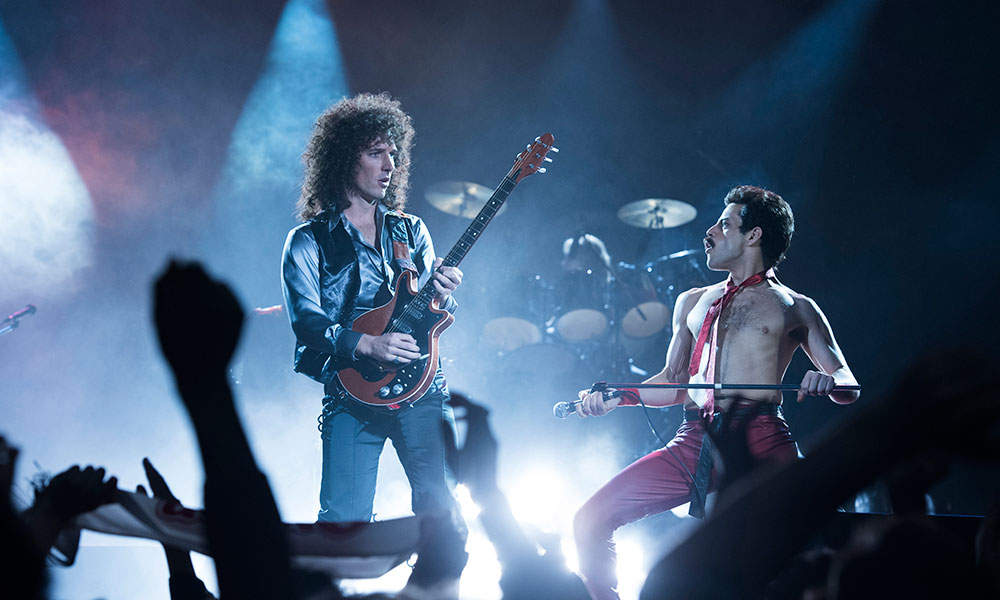
Bohemian Rhapsody is the Movie Freddie Deserved

I've been absent from posting for a month! Sorry. I've been bogged down in basketball and illness. I'll be honest, I didn't even write this new - it's something I wrote when the movie first came out (of course I saw it right away). Now that "BoRhap" is up for a bunch of Oscars, it seems timely. If I haven't told you already, I think Gwilym Lee is a revelation! I did watch the movie a second time this week and found even more problems with it - I sure hope it doesn't win much, but it's worth seeing anyway. Keep yourself alive!


By now, we all know the flaws of Bohemian Rhapsody, the jumbled semi-biopic about Queen front man, Freddie Mercury, but also sort of about the band itself. It plays like a film that lost its director halfway through production, which it did. The first hour is full of cliché and tired storytelling tropes. The casting and performances are excellent, but it drags under the weight of indecision.

That being said, the most compelling critiques of Bohemian Rhapsody are about its narrative choices. Mercury’s sexuality is downplayed or avoided and Queen’s historical timeline was cut into a million pieces and re-assembled randomly, with key elements fabricated or “finessed” to serve a storyline that doesn’t deserve it.

Still, I walked out of the theatre on a high, partly because of how cool the recreation of Queen’s Live Aid set was, but mostly because the music of Queen is just so wonderful. Mercury was magnetic and his voice is unparalleled (I know, because I spent three hours the other day listening to Youtube links labelled, “Best Freddie Mercury Impersonators” and not a single one was).

Ultimately, Bohemian Rhapsody is the story of perseverance and belief, the band’s belief in each other and Freddie’s belief in relationship and stability. It’s disappointing to moviegoers because what we know most about Mercury is the period he spent in Germany in the early ‘80s forging new territory in the definition of hedonism.

The most famous anecdote that’s been trotted out is from Lesley-Ann Jones’ biography in which she recounts Mercury serenading construction workers from a hotel balcony before inviting up the one with the “biggest dick.” The film depicts one scene where Mercury tells Mary Austin, the love of his life, he’s bisexual and she contradicts him, “No, you’re gay.”

Mercury’s life was largely about refusing to be pinned down and defined. That translated to sexuality in ways that were beyond uncomfortable, even for much of liberal society.

Queen guitarist, Brian May, and drummer, Roger Taylor, spoke intentionally about Mercury following his death from AIDS-related diseases in 1991. They sought to combat the stigmatized public image of Mercury, reminding the world that he was kind, generous, and faithful to the people he loved. Whatever promiscuity and experimentation happened during the tumultuous German period was not what defined the man they’d known more than half their lives.

The general public might prefer a film that explores how someone so vulnerable on stage and in the public eye could also engage in some of the darkest debauchery the ‘70s and ‘80s had on offer. The struggle for an outwardly confident, incredibly unselfconscious rock star to reconcile a deep inner insecurity and loneliness would’ve made better Oscar fare and a more compelling storyline, but it wouldn’t be true to the vision of Mercury those closest to him embraced.

Bohemian Rhapsody is not the movie we wanted. Beyond even the awkward pacing, poor writing, and odd (lack of) directorial choices, it just wasn’t the story we wanted to see. Bohemian Rhapsody is, though, the movie Freddie deserves. It is an attempt to capture the essence of a unique individual beyond merely the accumulation of his actions. Freddie Mercury was outrageous and amazing and, at times, selfish, inscrutable, and offensive. To his friends, though, he was Freddie. Could the film have benefitted from better creative professionals? Absolutely, but this isn’t our story to tell; it belongs to those people who most knew and loved him. Even the best version of the story they wanted to tell would never make us happy.

The Freddie we saw on stage was genuinely and authentically Freddie, but that wasn’t all of him and that’s a hard pill to swallow, especially when he so willingly and completely gave himself to his fans on that stage. “You’ve brought me fame and fortune and everything that goes with it; I thank you all.”

In the age of Instagram, we’re accustomed to seeing behind the veil of celebrity. In reality, we’ve just agreed to the shared delusion that those “candid” moments are authentic as opposed to them being part of the overall marketing machine.

Fans want Freddie’s larger than life persona to be all of who he is. Bohemian Rhapsody shows a Freddie Mercury who desperately wanted to please everyone around him. A more compelling movie would’ve explored how he reconciled coming as close as anyone ever has to being everything to everybody, while also not really knowing who he wanted himself to be.

Instead, his friends chose to make a movie that graciously explained such reconciliation wasn’t necessary. Bohemian Rhapsody illustrates why people – fans and friends alike – loved Freddie Mercury. It’s the movie he deserved. It’s not what we wanted, but it is what we have – and there’s no truer description of life than that.

Tuesday, June 12, 2018

Swearing

I had an interesting conversation about Christians and swearing a while back. I don't quite recall with whom, so I can't give credit, but thanks, whoever you are/were. The idea brought forth was an examination of the purpose for Christians taking a strong stance against profanity. (Even the definition of what words are course, offensive, or "bad" is a pretty tough slog, but we'll just define them as however you would define them, for the purposes of this post.) Christians generally try to avoid needlessly offending people (so much so we've gotten squeamish about necessarily offending people, but that's a topic for another day) - and avoiding certain words was a way of ensuring we weren't lumped in with a particular, marginal group of people - you know, the proverbial sailors and skullduggers, the kind of people who had tattoos back when tattoos were something only a few, unwashed people had. It was a "set apart" kind of thing, an abstention from something that was generally seen as detrimental to society.

The question then emerges, what is the purposes of maintaining such abstention when the only people who are really offended by those words are the Christians themselves? I mean, in a world where you can't say "crud" because we all know you really want to say "crap" and crap is just a stand-in for "shit," which you can't even say on television (except you mostly can, now, because, by and large, don't care), is any of this verbal gymnastic even serving a purpose?

There's something to be said for a unique distinctive. Holy means to be set apart, after all, and there's lots of peculiar things Christians do because they're Christians. My question remains, though, is this one really saying anything of substance theologically? Does utter avoidance of certain words strengthen or enhance the cause of God's Kingdom in the world?

I'm not saying we go willy-nilly, say whatever the (circle one) heck/hell/
fuck you want, because that's just selfish and inconsiderate. I'm all about embracing situational appropriateness. There are times and places for every word just as there are, most assuredly, times and places where they don't belong. I'm not even saying we should abandon the worthwhile endeavor to avoid offense in our speech; I'm just saying that maybe we tone down the good/bad talk and treat every word in relation to context.

Christians should absolutely be an odd, marginal people in the world, but probably not because of the words we avoid.

There's a book that came out last year, one that I've been on the library waiting list for, called Swearing is Good for You by Emma Byrne. As I said, I've yet to read it, but I did catch a very short article by her, about the book, in TIME Magazine (link unavailable) where her basic argument is that "profanity" words have real power and should be reserved for appropriate times. (Funny how he brings up a book that agrees with the idea he just put forth. Hmmmm....) I'm looking forward to reading the book because she talks about how people develop positive associations with particular swear words. Research seems to indicate that positive connections only occur during adolescence and come from "a friend's laughter, parent's disappointment or an enemy's fury," to name some examples. It's a learned behavior.

Not learned so much as "someone taught me," more learned in that swearing induces pleasure when it makes someone uncomfortable, angry, or upset. In other words, parents lecturing their kids about swearing only make those same kids MORE likely to swear. It really does seem like a universal issue - abstinence and/or shame (because they're almost always the same) imbues a thing with greater power than it would otherwise possess.

As I said, twice, I've yet to read this book, but instinctually I took this tact with my (now six year old) daughter. I've never said a single thing to her about "good" or "bad" words. She's heard swear words on occasion - whether it's something slipped into a podcast or some neighbor on the street - I've tried really hard not to react in any way to those instances (other than perhaps repeated or gratuitous use, where I might make some comment about needed a broader vocabulary to vary one's word choice). I feel like it's worked out pretty well. Our kids learn their vocabulary from the words they hear us use, not from everyone word they hear anywhere. My daughter is going to learn to talk the way my wife and I talk - for better or worse. If we're using words in ways that are comfortable to us, she will, too.

I was just using some potentially faulty logic when I made that decision, but I'm glad to know science backs me up on this one.

I still cringe a bit (at least internally) when I think about the little mouth click/disapproval vocalization my dad made literally every time an even moderately offensive word was uttered in our presence (and outside our presence, for all I know). There was certainly no doubt which words were acceptable and which weren't - and what's more, I don't think I was harmed in any real way by that. I'm not sure it served the purpose for which it was intended, but I do appreciate growing up in an environment where I was taught to consider my words.

That's the other side of the coin on this one.

We all know people for whom "those words" make up a shockingly high percentage of their vocabulary - like where the 'f's outnumber the conjunctions. There's something a little off in those conversation - not because such a person is lesser in any way, but because words do, in fact, mean something. I've got a pet theory I'd love for sciency person to actually test out: I think people who swear so casually are more likely to be violent.

Hear me out on this. "Swear" words are those we generally save for our most emotionally intense situations - from the proverbial hitting on a thumb with a hammer, to hearing the news that a loved one has tragically and unexpectedly died - the moments when we feel our feels to the feeling-est degree are often those times when profanity is most understandably used. These are special words to express special emotions at special times. (That's the very definition of profanity, by the way, making sacred - or special - things ordinary.)

My theory is that people who use profanity casually, as placeholder or filler word, when they encounter those moments of extreme emotion - the places where profanity is most appropriate - they lack a vocabulary to properly express those emotions and there's nothing left but a physical response. If some guy hits my care out of sheer carelessness, I might say "what the _____ were you thinking" while we wait for the tow truck on the side of the road. But if that's my response to someone setting the table with forks on the right or bringing back an espresso instead of a macchiato, I may lack the ability to express myself appropriately after the car crash and just take a swing at the guy.

I'm not saying it has to happen that way, just that it makes sense that it would for some people. I'm suggesting correlation, not that individuals who swear a lot are more violent, just that collectively, people who swear a lot might be more violent. Obviously it's an unscientific hypothesis that's convenient in that it proves my point. Still, I think it's got some merit.

This brings me back around to where I started in the first place. How and why do Christians approach this topic? Maybe, since Christianity is profoundly non-violent, there is some real world, theological purpose for avoiding profanity. Maybe banning even the replacement words, like darn or gosh, really does help us learn to save the "bad" words for extreme moments. There's also an argument to made that Christians shouldn't be reacting out of anger anyway (and that's one I do agree with, by the way) - disciplining our use of profanity might actually be discipline, as in practices designed to control our use of those very words so can avoid them even when they might be warranted and overcome the kind of anger that leads us to act in un-Christian ways towards other people.

I guess I'm saying if we're going to call people to be really, really careful with the way they use words, we should also be really, really careful that we know why we're doing it (both calling people to greater consideration and avoiding certain words ourselves). "That sucks" might be a crude phrase I was discouraged from saying growing up, but, as a pastor, I've found it profoundly helpful as a response when someone tells me a parent has died, or they lost their job, or an engagement was called off. It's an expression of compassion and solidarity and truth, regardless of how it's judged socially - I've found it to be comforting and cathartic and appropriate in ways I never would've imagined.

Words are indeed just words... in the same way that people are just people. We can define them from afar, offer our value judgments, and put them into neat little boxes, but none of that can actually define who or what they are in the context of our relationship to them. The world would be a lot easier if people would just be happy being who we expect them to be - that's just not how things work. We need a language that's just as specific and unique and flexible as the world we use that language to create, describe, and engage.

Tuesday, May 29, 2018

Subcultural

A few weeks ago, at a pastor's meeting, we discussed the notion of "cul-de-sac" groups - specifically boards or committees and congregations. The cul-de-sac was a concept developed to impress upon people the idea of safety, security, and privacy (which never really materialized, to be honest). He had a great quote: "a committee is a cul-de-sac down which ideas are lured and then quietly strangled."

It is human nature to insulate ourselves. We want a predictable, familiar community of people - and when we find it, we want it to remain the same forever. Too often we've built these insular communities and called them "churches," when that couldn't be farther from the original design. Intimate, connected, familial - for sure - but closed and private, certainly not. The whole purpose of the Church is to live out a specific lifestyle in the midst of the public square, to be an example of an alternative way of life.

This brought to mind a distinction I ran across months ago (so long ago I've now forgotten who to properly credit) that Christians, especially American evangelicals, intend to be counter-cultural, but have actually constructed a subculture, separate and distinct from the culture at large. This is the distinction between living differently in the world and living in a different world altogether.

Conservative Christians in the US - what's become commonly known as "the evangelicals" - have created their own little world and, instead of engaging culture, reject it and recreate it separately, expecting people to take notice. What's worse: so much of this subculture has very little to do with Christianity; it's largely a generic moralism that's vaguely related to carefully curated scripture passages - often entirely devoid of context.

In a subculture, your primary concern is checking the right behavioral boxes to live in a way that will qualify you for the subculture. The colloquial expression growing up was "don't drink, smoke, or chew, or go with girls who do." It was an out-of-touch joke even then, but it betrays a reality. It's not even that a distinctive set of practices (either done or avoided) is a bad thing - a common rule of life is a community-defining practice and often vitally important, even for a counter-cultural presence. The problem really arises when you start to look at "why" those things are done (or not done). If it's simply to bodily identify with a specific group or to check off the boxes for heaven, you're in real trouble. If it's to embody a different set of principles, foundational assumptions for life, then it makes a lot more sense.

One of the real benefits, though, of American evangelicalism becoming and ever more exclusive subculture is that it has less and less presence in the real world. Not having been in a traditional ministry setting the last few years has woken me up to the fact that most everyone, even many people very involved in Christian ministry, just have no clue this evangelical subculture even exists. I hear pastor friends lamenting some preacher/author/conference that's embarrassing themselves and Christ and I gladly don't know what they're talking about.

As a subculture prefects its isolation, it disappears. The only time evangelical leaders pop up in mainstream culture is when they're saying ridiculous, usually deplorable things. It's a strange novelty - a bit more offensive than the Amish or a hippy commune, but equally as irrelevant in everyday life. I suspect (and hope) that by the time my daughter's grown up, the average American will know as much about Franklin Graham as they do about snakehandlers.

True counter-culture makes it's present felt simply by existing. Subcultures fade from consciousness as they reach their goals. Counter-culture is generally painful for the mainstream, but largely by asking difficult questions about relevant issues. Subcultures are annoying to the mainstream, because they feign relevancy by making a scene (almost literally the original definition of geek).

The gospel of Jesus Christ is wildly relevant to this (and every other) time and place. It is a counter-cultural message of suffering, unconditional love. It does not always provide the safety, security, or privacy of a cul-de-sac - but those very well may be illusions anyway.
There is no question of whether Christianity will survive the current upheaval of culture and human understanding, but whether the organizations and institutions we now associate with Christianity survive the change is entirely dependent on them rejecting the human desire for subculture and embracing a truly revolutionary counter-cultural presence.

Thursday, March 22, 2018

Mao, Conditional Approval, and Palm Sunday

Dealing with the message of Palm Sunday upcoming, the gun debate ongoing, and the historical context of protest, revolution, and resistance, there's a lot of think about when it comes to challenging power. I live in country built on armed rebellion. One of the most problematic aspects of the US gun control debate is the continued tradition of citizens seeking to be prepared to overthrow a corrupt government.

Palm Sunday presents the challenge to the powers of the world - a law of peace and love and suffering over a law of power and might. It's easy for us to constrain it in the ghetto of idealism and ignore it as we tackle the real world. Jesus says love overcomes hate and peace, violence, suffering over power and control. We're down with that until it's too difficult, then we make justifications.

It's called conditional approval - we can do bad things in certain situations because it's for the greater good. We can nuke Japan, but North Korea can't. We can blow up buildings all over Iraq and Syria, but Saddam Hussein and ISIS can't. A police officer or, perhaps, a local vigilante who feels threatened, can shoot unarmed teenagers, but they can't shoot back.

They're cut and dry situations because conditional approval always goes to the powerful over the less so. Why? Because the powerful make the laws. They get to decide. (I guess I should fairly say "we" here, since I benefit from conditional approval far more often than I suffer from it.) We like to say it's just democracy or fairness or good vs evil, but that's really not true. We skew the rules to benefit us. When we do it, it's good; when other people do it, it's wrong.

This is precisely why the radical gospel of Jesus Christ is so dangerous: there's no conditional approval. Killing is wrong, no matter what your justification. Abuse, oppression, selfishness, violence, power - they're all out, regardless of context. What's wrong is wrong, no matter who does it. Without an "us" and "them" the powers that be have no means of coercion or co-option.

The gospel is good news for the poor because the message is literally, "we have nothing to lose." The Empire took over Christianity when it gave the Church something to lose, something worth protecting, something requiring conditional approval. God is an easy excuse to give ourselves cover. "I'm just doing it for your own good," or "I don't make the rules, God decides what's right and wrong."

The problem with conditional approval, though, is when we find ourselves on the other side. We're down with killing our enemies until we become the enemies of a more powerful force.

Jesus marched into Jerusalem on the back of a donkey, accompanied by losers, and proclaiming peace to people who'd always been under the heel of conditional approval. Pilate marched into Jerusalem on the very same day, astride a white war horse, accompanied by legions of soldiers proclaiming peace to anyone who fell in line and followed the rules of conditional approval.

Many through the years have been tempted by the power of power. When you've been on the wrong end of justification, it's quite easy to use the same rationale to overthrow the oppressors. Forgiveness doesn't jibe very well with justice. Yes, we can argue that our conditional approval is necessary - that's how it works - those rules don't just protect us, but the people we love, innocents, children. It's not about war, but about self-defense. Surely staying alive is the most important thing?

Jesus didn't think so.

The call of the Christian is the call to Christlikeness. It's not the call to use the weapons of the world for some purportedly righteous end; there's nothing of God in that. The very notion of friends and enemies, good guys and bad, is directly contrary to the gospel of love and grace.

I ran across a quote this week that perfectly sums up the problem of the spirit of empire, of power - the ideas that seem to run the world:

"We are advocates of the abolition of war, we do not want war; but war can only be abolished through war, and in order to get rid of the gun it is necessary to take up the gun."

You may say that's foolish, but it under-girds just about every dealing with power that exists in every society. Those who fight for righteousness do it to destroy evil. We never both to wonder if perhaps we're just as evil as the ones we try to kill or if they're as good as we think we might be. We really don't stop to wonder if perhaps power just simply can't overpower itself. Maybe violence can't stop violence and war can't end war. We know that deep down, but we keep giving conditional approval, because we don't really believe there's another way.

It's not just about intellectual assent, it's about putting our lives where our minds are and living differently in the world. Do we do it perfectly? By no means; in fact we're downright failures, but I'd rather be failing in the right direction that succeeding on the highway to hell.


...by the way, that quote? It's from Mao Zedong, former Chairman of the Chinese Communist Party and one hell of a success.

Tuesday, November 14, 2017

Real Life and Real Life

So, last week was a crazy busy one. Not only that, but the business required a level of creativity that's difficult to sustain. I feel pretty taxed. So, because I missed last Thursday's post and I've got no time or energy to write one for today, you get my sermon from Sunday.

It was partially inspired by chapter eight of Empathy for the Devil by JR Forasteros, which came out last week (and which I reviewed in my last post). I struggled mightily with how to make sense of the parable of the wise and foolish bridesmaids, but the idea of psyche and zoe that he elucidated so well in the book framed what I was trying to say quite nicely.

Anyway, here's my take on Matthew 25:1-13:


There was a guy, we’ll call him Fred – an ambitious young man with lots of potential. He joined the military out of high school and stayed in long enough to pay for college and an MBA. He got the education he wanted, but when he hit the work force, he was already years behind his peers. So he worked extra hard, burning the candle at both ends – and within five years he was the youngest executive in the history of his company. A great success story.

He got there the right way, too. People genuinely liked him. He was tough, but fair. Fred was everybody’s image of a go-getter. Along the way he’d even managed to marry a wonderful woman, and after five years, they were starting a family – with his new position, they thought it best for her to take time from work and stay at home with the kids.

So Fred just kept going. He continued to work harder than everyone else and now he coached his daughter’s soccer team and made it home for family dinner at least once a week. They took the right vacations to the right places and his wife never felt like an outsider when she got away with her friends. They had anything and everything they wanted.

Fred and his family went to church, too – religiously, even – spent every Thanksgiving at the soup kitchen, serving turkey and eating with folks who just weren’t as fortunate. Will was one of the other volunteers – he and Fred knew each other from church and their families ended up sitting together one Thanksgiving. Will invited Fred to his pick-up basketball game.

“Oh man, I haven’t really played basketball since high school,” said Fred, “It was absolutely my favorite thing in the world; I’d love to come. You said 5:30 on Thursdays? I’ll be there.”

So Fred got up a little earlier, sent his secretary an email that he’d be in late and entered the middle school gym. The guys were going back and forth, maybe a dozen – running up and down the court in a way that was simply nostalgic. The smells, the echoes, the squeaks on the floor.

Fred jumped into the next game and started running. Most of it came back – his shot was a little off, but he hit one or two and no one was really young enough to play defense anyway. By the end, though, his lungs were burning and the lack of sleep couldn’t just be covered up.

As Fred heaved on the sidelines, Will came over. “We won, Fred, we have to play again.” Fred responded, “Sure thing, can I buy some of your stamina.” Will began laughing and started to play along, but then he saw something in Fred’s eyes, “You’re not serious, are you.” “Of course, I’m serious,” says Fred, “I need more stamina to play. I’ve got the money. What does it cost?”

Will’s a little taken aback, “Fred, you have to know it doesn’t work that way, right? We’ll just get somebody else.” He called to another waiting player and they started a new game. Fred was left, breathing heavy, voice sounding desperate, “C’mon guys, let me play. I just need a little energy, a little more oil for the fire. I’ll pay whatever it costs. Please, I need to play.”


I grew up going to church. I heard the parable of the wise and foolish bridesmaids any number of times. They’re all waiting for the groom. It’s getting late. Some run out of oil and ask those with oil to borrow some. I always wondered why they couldn’t just share the oil? If the groom is coming, that means they’re not going to need much more – surely there’s enough to give the foolish ones a little bit to tide them over, right?

The best answer I can come up with is that it’s a parable, an analogy for life and in real life, it doesn’t work that way. Like Fred, we discover there are some things we need we just can’t buy.
I can give you the best running shoes in the world, give you all the water and nutrition and maps you need – professional level marathon support – but if you didn’t train you won’t be able to run the race – it’s as simple as that. Some things in life require preparation.

You might say, like Fred in the story, I’m working so hard, doing all the right things, just trying to find happiness or fulfillment, or to appease my guilty conscience, and it just doesn’t seem like enough. We’ve all been there: desperate for just a little more oil. One more hour, one more dollar, one more prayer, one more date – just one more and I’ll have what I need to be happy.

Satisfaction is always just over the next horizon – and that’s what makes heaven such a hopeful proposition. We slog through life the best we can, then finally, someday, we have what we need.

If you come to adult studies you’ve heard this a whole bunch, but we get heaven wrong. The Kingdom of God is not about the fulfillment of all your desires; it’s about being content without them. The Kingdom of God is not some far off future event, it came with Jesus and while it’s not fully realized yet, we can begin to live into the Kingdom of God right now.

In the parable, the foolish bridesmaids didn’t have what they needed to enjoy the party, because they were waiting for the party, rather than preparing for it. They were looking for some far off heaven, rather than seeing the Kingdom of God all around them already.

It’s a confusing parable for us, because in our world things are reversed. The people we call prepared are the ones doing everything. Like Fred, they’re working hard, taking care of their families, and checking all the boxes of success. Jesus is saying, though, that these are the fools, the people who think they can work their way into the Kingdom by doing everything right.

In the end, though, they just end up desperately looking for more oil, because they never arrive. They never find what they’re looking for, just more pressure to do even more.

That sneaks into the Church as well. Too often we’ve made Christianity about checking off our own list of requirements. As much as we say we can’t earn our salvation, that’s what it sure looks like we’re trying to do. Church becomes a scary, unwelcome place precisely because we greet desperate, overworked, unhappy people at the door and hand them an additional list of things they need to do. Our solution to the problem is to do more of the same.

So it ends up that Christians look no different than the rest of the world. We might have a different checklist, but we’re still running ourselves ragged trying to get it done and desperate for just a little more oil to see us through the day. That’s not really a life any of us wants to live.

The good news of the gospel, however, is that the Kingdom of God is not some far off heaven. It’s not something we have to wait for or work for or discover the secret to get in. Jesus invites all people, the lost and the least along with the best and most prepared. He invites the wise and the foolish alike to enjoy the eternal benefits of true life in Christ. He even says, “my yoke is easy and my burden is light.”

However – and this is the hard part for us – the invitation is not for a destination. The Kingdom of God is not about arriving some place, or achieving some goal. The Kingdom of God is a journey. It’s a path we have to walk. You can join anywhere and at any time – and it doesn’t matter if some people are farther along than others; we’re all in. You can be prepared or you can be totally winging it, but you have to understand it’s not about where we’re going, it’s about how we get there.
You ever wonder about the Sermon of the Mount? We read those chapters from the beginning of Matthew where Jesus teaches us to love our enemies, to give to anyone who asks without expecting anything in return, to not worry about what we’ll eat or wear – we read those chapters and our first response is “wouldn’t it be nice to live in a world like that?” We think, “maybe someday our world can be like that,” and then we go right back to doing things the same way.

These “judgment” parables always scare people, as if Jesus were saying, “Do this, or else,” but really Jesus is saying, “Life is short, here’s how to live it well.”

The wise bridesmaids are the ones who do life differently. They’re the ones who live not for the destination, but the journey. They’re prepared for life if the goal we so desperately seek never comes to fruition. They’re happy in all circumstances and always ready to respond with love and grace. They look like Jesus and there’s no reason we can’t look like them.

Yes, the Kingdom of God requires us to give up our goals, to let go of this desire to feel safe or happy or secure. I think we know, in our heads, those pursuits won’t really bring us what we want, but our hearts still believe they will. Guess what? Jesus is in the business of changing hearts.

Living into the Kingdom of God does cost us something, because we won’t look like everyone around us. We won’t be seeking after the same things. There is tremendous peer pressure in our society to live by a certain set of ideals and values all of which are designed to bring fulfillment and yet never will. People who step out of that life or approach things differently get labeled – and those labels are never good. Why? Because we all want the same things, but most of us are too scared to try a different way.

Some of you here are old enough to remember the Apollo space missions. NASA made those first astronauts huge celebrities. Neil Armstrong and John Glenn and all the rest were all over TV, with their crew cuts and their perfect American families. They didn’t look like hulking superheroes; they looked like regular guys.

It’s easy for us to watch videos of them floating around in space and think, “that looks like fun; I’d love to do that,” and forget the years and years of intense training that went into those space visits and the real, constant, inherent danger involved in every one.

What’s more, we see space as this exotic, attractive destination, where people like us can have the time of their lives. But I’ll tell you what, those Apollo astronauts did not see space as a destination; for them it was just something they had to do in order to get back home.

There’s a blessing I love, although I’m rarely brave enough to say it people: “May all your dreams come true tomorrow, so you can discover they aren’t all they’re cracked up to be and you can get on living.”

We’re constantly in search of more oil to keep the lamps burning, because we desperately want to find peace, solace, comfort, greatness. The message of the gospel, though, is that you’re already home – the Kingdom of heaven is here! The key is to learn to live in the moment, to love the people around you, to give up the search for something great – and surprisingly, unbelievably, impossibly, you find what you’re looking for in the most unexpected of places.

In the name of the Father, the Son, and the Holy Spirit, amen!

Tuesday, October 24, 2017

Some Things Aren't News

Indulgence is a double-edged sword. We're tantalized by the notion of "too much of a good thing." You don't want to eat chocolate until you're sick, but you do want to eat chocolate long after you should've stopped. We fantasize about indulgence so much it's become our de facto picture of heaven, paradise; we want a place where we can do whatever we want with no repercussions.

This isn't a post about our conceptions of heaven, but needless to say a place of unlimited, consequence-free indulgence might not be all it's cracked up to be. Indulgence just isn't good for us. I'm terrified of ever going on a cruise, because it takes all my willpower (and usually I don't have enough) just to maintain a below-average modicum of discipline. It's terrible difficult to get back to a normal sleep routine after a vacation. I just can't imagine what life would be like coming off the week of pure indulgence that those boats seem to embody. It's scary.

You may wonder how all this ties in with the title of the post, but it's really indulgence that drives the ridiculous "news" coverage we all publicly lament and secretly enjoy. TMZ is my guilty pleasure. Talking about the private lives of total strangers seems odd, but it's really a firehose of false intimacy that costs me nothing. It's indulgent and it's fun.

This is what the news has become. There's no more journalistic curation - what's news is what gets ratings. We can all pinpoint some "moment" where it started - whether it was Elvis's death or the royal wedding or OJ's car chase, but the reality is it's always been this way. TMZ is no more than the modern, digital version of the gossip at the town well you could've experience in 2,000 BC.

Granted, it seems as though this gossip has become mainstreamed with just about every "media" outlet signing on for the circus - that's new - but it also fits with the times. We're an indulgent people dominated by the idea of more. More information, more false intimacy, more purposeless pleasure. We want what we enjoy - and we want as much as we can get. It's indulgent.

I shouldn't be surprised by the traction this Trump phone call to the soldier's widow is getting, but I am surprised. Maybe it's a sign we've moved beyond all propriety when it comes to other people. Maybe empathy is truly dead. That's what it feels like.

None of this is our business. That congresswoman with the hat shouldn't have brought it up and the White House shouldn't have responded. Even if the President had a dispassionate, awkward, offensive conversation with the widow of a soldier, it's not news. It's not something that should be covered. It's private correspondence about dead loved ones. We should all know better than to be interested, but of course we don't.

It's not as though this is even news, in the proper sense. It's not new information. It doesn't change anyone's perception of Donald Trump. It's not as thought he was some suave public speaker, beloved by the masses for his compassion and empathy and this particular phone call were dispelling common perceptions. Even his most ardent supporters know the guy doesn't do words very well and he's even worse with the feels.

No matter where your conclusion resides on the spectrum, no matter if this was deliberately disrespectful, a sign of sociopathic incompetence, or the guy just can't talk to people very well - heck, even if he made a perfectly normal, well-intentioned phone call with proper decorum, nothing about this story presents any information people didn't already know. It's useless fodder for the indulgence machine.

At some point, we have to just stop. It's not news and it's more than a little unseemly.


While we're on the subject - most of what Trump says isn't news, as in "not worth covering." From the very beginning we've known that he says outrageous things on purpose, to stir up a firestorm of angry coverage and distract from substantive policy issues. We've known it and we've said it; it's been widely reported. Yet we still play into it.

The week before he made the comment on NFL players kneeling, just six - enough to be counted on one hand by about 1 in 1000 human beings (look it up) or Count Rugen (I hope you don't have to look it up) - were kneeling during the anthem. The week after? Hundreds. Guess what? Now we've got a giant mix of protest. Were they kneeling to speak up for free speech or to oppose Trump or were they actually speaking out for the original protest - the continued disproportionate killing and mistreatment of young black men in society? Who knows?

What's more, since those comments, we've heard very little about racial injustice and a lot about patriotism and free speech. The narrative has been completely overwhelmed with stuff that just isn't news - and the real news, the shootings and brutality, the sentencing and prison imbalance, the real, actual problems that need to be addressed don't seem to be news at all anymore.

Why? They're less indulgent. They affect the lives of each of us on a near-daily basis. It's not abstract conversations about the hypothetical, about the mindset of strangers, about issues that play into our desperate need to emote. Yeah, we can make real news black and white, yes and no, hard line opinions, but most of us still have a conscience that recognizes the grey. Those things don't get ratings unless people are yelling at each other and, in general, the public doesn't like watching the yelling when it's about an issue that hits home.

CNN tried to run the middle ground for a brief time there. They ceded partisan bickering to Fox on the one side and MSNBC on the other. Their ratings tanked and they became the media scapegoat of a scapegoating President anyway. We can bemoan the lack of principle all we want, but a principled CEO in that moment would've been fired for not making shareholders any money.

No, the real responsibility lies with us. Some egotistical hotshot somewhere decides what goes on TV, but we, the viewers, decide what stays.
I've never been in the majority on that account (RIP Trophy Wife) and maybe I'm not now, but it feels like something worth saying.

We need to take responsibility for our indulgence. No one is force-feeding you media comfort food. You can say no. It feels good to pound donut after donut on a Saturday morning, especially when the week has been stressful and life seems unfair, but we all know it's not good for us.
The current state of "news" is like a free donut machine someone installed in our living room. It's got an endless supply of sugary goodness just waiting for us to consume - and it's even socially acceptable to do so.

In the end, though, some things aren't news. We need to be focused on the real events that really shape the real people who live real lives all around us. Maybe that's the rallying cry when we see something interesting pop up as click bait on facebook or scroll across the TV screen -
does this have anything to do with people I know and love? Should I care more about the people this story involves? If the answer is "no"
to both of those questions, just turn it off. Even if the whole world is consumed with fighting about it - it still might not be important.

Wednesday, September 20, 2017

Lessons and Limits

You may have noticed that the blog schedule has been a bit sporadic since the school year started. There's good reason for that. One, the school year represents a really big change in schedule for our family - we're very school-year centric here - and I'm just not good at change. It takes me a while to get into a new schedule (in fact, I'm not even there yet - notice this Tuesday morning post is coming out on a Wednesday).

The other reason is that I got called to sub on the second day of school. I was a substitute teacher, when I could, for half days last year (while my daughter was in school). With her starting Kindergarten this year, I'm available for full days (when I'm available), but I never expected to get called the first week (teachers tend to want to be there to get the year started well). One of the local schools has a teacher out on maternity leave and they were having trouble finding a long-term replacement and needed some extra help in the classroom.

It was great - same kids every day for a couple weeks - students I had subbed with pretty frequently last year. Smooth sailing. Then the school went through two long-term subs in about four days without much hope on the horizon. I got offered the chance to take over the class for two months, so I thought I'd give it a go.

Listen, I only signed up to sub last year because they were short. I wanted to fill a need and help the public school system, which has become the community space our family is pretty heavily invested in. I've served on district committees. I try to make most school board meetings. It makes sense. I knew the kids; I'm ok with seventh grade math. Shoot, I've lived with a middle school teacher for more than a decade.

Despite having lived with a middle school teacher for more than a decade, I just simply had no idea the skills and abilities one really needs to teach. I don't know many people who have more respect and admiration for public school teachers than me - but I gained a whole lot more over the weekend. Trying to get a handle on everything required to even take over a class for a few weeks was literally overwhelming. I couldn't sleep,
riddled with anxiety (not something to which I'm prone - it took me some time to even realize what was happening).

I also learned the difference between someone who can teach and a teacher. I've done Sunday School classes and tutoring - I've even taught actual classes in the ministry training program on two districts. It's a lot different getting a class of kids through the day and being a consistent,
positive presence there with everything on your shoulders.

I knew this. Of course I knew this - but knowing something intellectual or through observation is a lot different than knowing through experience.

I'm a wimp, for the most part. I don't tend to attempt things I'm not certain I can complete. Risk is not my thing. However, when I'm pretty convinced something has to be done, I buckle down and do it. There aren't a lot of things in my life that I've attempted and failed. Yes, that's because I'm cautious, but it's also because I'm a pretty quick learner and I'm good with systems and organization.

In the end, I probably could've done it. I could've taken my lumps, endured sleepless nights, learned from my many, many inevitable failures and possibly survived. My sanity might not have been intact, but it could've technically been done. I opted out though. There's a sense of shame in that. One, I don't like to admit defeat. I've gotten less obsessed with winning over the years, but I'm still darn competitive. This feels like a loss to me, and that's a big ego hit. I also feel like I'm letting people down who work hard and a tremendously difficult job. My not being there created extra work and more headaches for people who have an impossibly tough assignment to begin with. That stinks.

It was a good lesson in limits, though. Just because I can do something or something needs to be done, doesn't mean I have to do it. I probably should've known this was a bad idea from the beginning. I'm not a teacher; I don't really want to be one. I can fake it through a day or two -
which is really useful and helpful in its own right - but that's about it. So many great people have a passion for it, and skills to be really good - and, despite my close proximity to one of them, I'm not sure I ever truly appreciated that, certainly not as much as I do now.

My life is not where I thought it'd be. I'm not upset at all; I really like my life. It's just that I don't really have a job description.
I find great joy in being "of use," although I never know from one season to the next exactly what or where that will be. I keep trying to jump into new thing where I'm needed, but I learned over the last few weeks that perhaps a little more self-reflection might be important in figuring out where that is.

Even more so, other people might have a different perspective of what I am (or should be) capable of doing. I need to trust myself a little more. It's a difficult balance between challenging one's self (or accepting the challenge of others) and knowing one's self well enough to say 'no.' Hopefully I got a little better at that this week - and maybe it'll mean I can make more of a difference in the right places moving forward.

Anyway, we should be back to a better posting schedule now - at least until basketball games start November 15th.

Tuesday, September 12, 2017

Love Like Family

I was listening to Scott Daniels' recent sermon from Romans 12. The version of scripture he used translated one line as "love like family." That really struck a chord with me. It seems like we have a wholesome image of family in our minds, even though most people don't have the most functional or idealistic relationship to their own family.

When we think about the "love like family" line (as a way Christians should treat each other, by the way), we tend to go towards one idealistic extreme - a sort of utopia, where stress and anger and dissent are absent, replaced with nothing but warm fuzzies and lots of affection. That's not how real families function, though, is it - people who have actual family relationships understand that things aren't always easy or rosy or particularly fun. We commit to them precisely because there's something about family that means something to us. Even when you don't have any real relationship with your relatives, we tend to form families anyway - people we treat the same way, people we're committed to despite whatever roadblocks or disagreements might arise. While those are powerful and meaningful, they're not perfect either.

As I was thinking about this analogy of "loving like family," I'm wondering if the idealistic extreme that comes to mind oughtn't (that's a real word, I promise) be more like Game of Thrones. I'll admit some bias here - my wife decided to start watching the show very recently, so I've seen something like 40 episodes is three weeks - it's on my mind a bit." The show is full of regal families, reminiscent of the nobility of European past - people whose family name means something - something valuable that they're trying to protect.

Now, I'm not suggesting that we should be callously marrying off children to fulfill social or economic purposes, and, obviously, secretly plotting to kill each other whilst publicly displaying loyalty and honor seems a far cry from anything remotely Christian, I wonder if the concept of family that underlies the dysfunction isn't a more apt analogy for what Paul's trying to convey.

There is a duty present that overwrites any personal emotion; a communal consideration that outweighs individual preference. This is important. I don't want you to hate your fellow Christians - far from it - but I think Paul's calling us to respond to them with the same kind of Christ-like selfless love, even if you do.

We're certainly not going to feel ecstatic love for one another all the time - real relationships exist within the entire gamut of emotions - and we obviously disagree about all sorts of things. Love like family should trump all of that, though. In Game of Thrones, everything is a means to an end (the characters for whom it's not almost always find themselves unceremoniously dead) and if you've read just about anything I've written, you know I don't look kindly on that way of viewing the world. This is why it's an extreme - it's one thing to sublimate your own happiness for the greater good; it's quite another to force those whom you purport to love to do the same (often against their will).

Our preferred extreme isn't any better, though. Envisioning a world in which everyone loves each other so much there's never any conflict denies people their humanity in the same way. It respects no individuality or choice - it's also only imaginable in a world where our preferences are everyone else's. We've essentially composed our ideal in our image and just image everyone else in total agreement. That's as arrogant and selfish as anything done on TV.

As with most things we'd prefer to be black and white, we have to find our way in the murky middle. Obviously either extreme is problematic, neither one is "right" or desirable or something to aim for - one of them, however, is others focused. If we see family as the move towards kumbaya serenity, any disruption is going to feel personal - we're all supposed to be happy; why am I not happy? If we see it as duty, as an obligation we have to others above and beyond our own happiness, disruptions become externally focused - why is she not happy; how can I make his life better?

I suppose the gospel answer to all of this is that we find whatever "fulfillment" we need by not seeking it. We are satisfied by forgetting satisfaction. The real ideal is, in fact, an oxymoron. There's no guarantee we will be rewarded for loving others above ourselves, but there's some beauty in the logic of everyone doing it; it just seems like that would create the kind of family that both reflects reality AND our desires.

We all fall short of that, of course, but in doing so, let's remember that "loving like family" is most certainly not about our happiness -
and let's try real hard not to chop off anybody's head.

Thursday, August 10, 2017

What I Learned on My Summer Vacation

It's been a crazy summer for me. I made the last second decision to head out to Indianapolis for the Church of the Nazarene General Assembly, an every-four-years meeting of my brothers and sisters from (literally) around the world. A lot of important stuff happened, but perhaps the most lasting impact were the workshops I attended, each informative and important for my future life and ministry. I learned a lot.

I found help for the adult Sunday School class I often teach at the local United Methodist Church; I got some seemingly obvious tips about children's spirituality that I never would've figured out on my own - things that I think will definitely help me be a better parent. I was challenged to think and grow beyond some of the hyper-focused and segmented places in which my mind tends to live. I'm not sure exactly what it will mean going forward, but I'm really glad I went - even if it was just for two days.

Getting back, there were just a few weeks until our marathon vacation. I accidentally scheduled myself to be away from home for 23 out of 25 consecutive days. We did a week with my in-laws that was relaxing and enjoyable - the kind of thing that probably should've come at the end of the trip. Not that the ten days spent with my own family wasn't good, but with three small children involved, I'm not entirely sure "relaxing" is the right word. My wife and I did get to take a quick anniversary trip to New Mexico where, in about 36 hours, we visited the Georgia O'Keefe Museum and climbed a very steep 13,000 foot mountain with an awesome night at Taos Ski Valley sandwiched in between.

Between those two trips, I spent a week at Mid-Atlantic District Teen Camp with the Church of the Nazarene. This is my third year here and it's always an awesome experience. The camp's run so well and the staff and kids are great to be around. I truly enjoyed it. There weren't any radically life-changing moments for me, but I did have some dedicated time away from my normal life and schedule to think and pray about the future. I've really felt a draw to be speaking or teaching or preaching more than I do right now.

Early in our time in Middletown, I was filling in preaching A LOT. The Nazarene congregations in the area all seemed to be transitioning between pastors about the same time and I probably preached 20 times a year. The last couple years, though, those congregations have been more settled and it's been more like four or five times. I really feel like preaching is what I "do." It's a strange thing, even for me, but the process of researching and compiling and preaching a sermon is my true art. I do a lot of writing - and those skills are heavily involved in sermon preparation - but it's really the preaching that feels most "true" to me. I wrote about it in my 6th ever blog post (one that's been read all of seven times, which is probably a good thing; I can't even bring myself to go back and read it).

We're also at a point this fall, where my daughter is starting Kindergarten and she'll be on the same campus where my wife teaches. What that means is that this stay-at-home Dad will not have pick-up or drop-off responsibilities for the first time in five years. My schedule's going to change. We're not entirely sure what that means, but I'm thinking perhaps travel is more of an option.

So, what I'm saying is that I guess the big revelation of the summer is that I feel like I should put myself out there a bit for speaking and teaching opportunities. I've done it a few times, been invited to various places, and it's always been a great experience. I'm not sure if there's a lot more opportunity out there or if anyone cares much to hear what I might have to say, but if you need someone to bring his typically unique perspective on God and life and such to your group or congregation, maybe I'm the guy?

Typically summer is a time for me to check out, relax, and avoid deep thoughts - this year, in the midst of fun and busyness, there's been a lot of time for reflection and growth. And that's what I learned on my summer vacation.

Thursday, May 25, 2017

What Happens After You Die by Randy Frazee

Disclaimer: I was given a free copy of this book for the purpose of review. My integrity is not for sale. Those who know me well are aware a free book isn't enough to assuage my cutting honesty. If I've failed to write a bad review, it has nothing to do with the source of the material and only with the material itself.


Randy Frazee is a good pastor. I've read a number of his books and I'd characterize him, above all, as someone who loves and cares for people. He's not an ideologue or someone in search of fame. I've also dedicated most of my theological exploration in recent years to issues of afterlife and scripture. So seeing a book called What Happens After You Die by Randy Frazee was an easy choice for review.

Frazee addresses this looming question in a loving, careful and personal way. It's rooted in the narrative of his mother's death and both her questions and his explorations relating to what happens when we die. He sets the book up as a biblical exploration of the matter and I'm certainly glad to see a popular pastor and author talking about resurrection vs afterlife and new creation vs disembodied heaven. We need more access to such important, foundational scriptural concepts beyond what's available from NT Wright.

However, I was a bit disappointed in the way Frazee goes about structuring the book. Rather than actually present texts dealing with various issues of life, death, afterlife, resurrection, and new creation, he more explains his conclusions on the matter and provides some scriptural support to back them up. In most cases, his interpretation is certainly not the only reliable and orthodox opinion; it would be better to deal with the passages themselves and guide people through possible answers, rather than supplying the answers and ignoring differing opinions. In this way, readers of this book will not really be able to internalize and process the very questions he hopes to answer. A theologically conservative approach that leaves conclusions open to the reader can be found in Steve Gregg's All You Want to Know About Hell.

I disagree with some of the specifics Frazee presents as "biblical" fact, although certainly he nails the basic outline from scripture with great ease. Frazee essentially lays out a traditional, systematic system of answers for the questions he poses from with the framework of penal substitution theory. Essentially he's working under the assumption that "justice" is God's core character trait - specifically a kind of justice that's informed by our treatment of justice in human society today.

While I won't take a ton of time to present alternative interpretations and conclusions in this space - Rob Bell's book Love Wins deals with the same material in a different way. It's not exactly how I'd answer the questions, but I think it's a much better framework.

Frazee does not beat people over the head with his opinions, while he takes a perspective on eternal destiny that offends my understanding of God and the world, he does it with great sincerity and utmost care. My disagreements are with the substance and not the style of a well-written book that comes off genuine, positive, and encouraging.

I think his lack of symbolic treatment where the specifics of resurrection and new creation are concerned probably creates more problems than it solves. Issues of the cubic footage of the new Jerusalem of how one might be marked on the forehead are simply unnecessary at best and distracting at worst. It provides an incorrect perception on what is an entirely symbolic book - and one already difficult for Christians to understand.

Similarly, I find his picture of heaven far too indulgent to be reflective of Christ or the Kingdom of God. Frazee did not put in enough effort (or explain that effort well enough) to wrestle with the call of God to sacrifice and selflessness in terms of heaven and resurrection life. To say heaven is where our dreams come true without doing the hard work of examining what our dreams are and whether they might be righteous in the first place, is to leave untouched the most difficult aspects of heaven and hell.

I've written plenty of other places, and would be happy to speak personally at more depth, but I just don't believe a future in which some are forever lost, punished, or destroyed accurately represents the God revealed in Jesus Christ. Similarly, a God who lets us off the hook is also unworthy. But a God who loves us unendingly and allows us to be shaped and formed and transformed by the love of God into the beings we were created to be over whatever time it takes is surely the kind of God to whom I can commit my life.

Frazee takes a decidedly hopeful position on the future and the present, but I think there is even more cause for optimism and celebration to go along with our good struggle to be more like Jesus. For what it is, What Happens After You Die is well-written and compassionate, but I'm not sure it adds much of anything to the conversation besides pointing the cultural searchlight to important topics that need more attention.


Disclosure of Material Connection: I received this book free from the publisher through the BookSneeze.com® book review bloggers program. I was not required to write a positive review. The opinions I have expressed are my own. I am disclosing this in accordance with the Federal Trade Commission’s 16 CFR, Part 255: “Guides Concerning the Use of Endorsements and Testimonials in Advertising.”