
I wonder if the real problem is our need to classify people in the first place? I heard a lot of conservative people decrying how terrible it is that Bruce Jenner had so many problems he couldn't see any other option but to become a woman. Those hypotheticals that rang out all over the internet became comically un-hypothetical when Rachel Dolezal said those immortal words, "I identify as black." What do we get to choose? It's more difficult to say, "but she's not black," if you're also on Team Caitlyn, isn't it?
I think we all know a Rachel Dolezal - maybe not someone who might potentially, allegedly, lied about her race to enhance her social position (and quite possibly the first American to ever "pass" the other direction... on purpose). But we know that white kid who grew up in a largely black neighborhood and identifies (perhaps subconsciously because I didn't think anyone would have the stupidity guts to say it out loud) as black.
They do that, though, not necessarily because of a race thing - it's cultural. When we have a society so thoroughly segregated - like we do in the US - it's almost inevitable that these cultural identities get associated with race. It's "black culture" not because there's anything specifically African-American about it, but simply because it's a culture with which a lot of African-American identify. From there, though, things get all jumbled up as we choose to identify race and culture together.
(Now, just to be clear, I am not condemning or condoning what Dolezal did - I simply haven't followed the story much because it seems like a really totally crazy waste of time - I had to even look her name up to use it here. I just think it's an interesting interjection in the larger conversation of identity we're having in this cultural moment.)
I've always been a fan of removing labels, getting rid of boxes - in fact I think I wrote about this very thing a couple months back, and to some extent in the Jenner piece a couple weeks ago. Maybe my perspective has shifted just a little bit with more time to think, but it seems like the issue with identity is not how we see ourselves, but how we're taught to see ourselves through the lens of culture.
We define man a certain way - and it really has very little to do with genitalia. Even when you hear personal accounts from transgender people, you don't hear, "I felt like I shouldn't have a penis," you hear, "I felt like I was in the wrong body." That can be a subtle difference, but the difference is real. They feel like they're in the wrong body because culture has told them they should feel a certain way based on the body they have. It's not that they objectively look at themselves as "wrong," but that seeing themselves through the lens of the larger society, things don't match up.
Now I certainly believe identity can get irreversibly intertwined with body over time. I can see where someone like Caitlyn Jenner could not feel like her true self if she's still a man - but so many transgender people can't afford the kind of surgery that might make that true - even so, it's still playing the box game. I'm not box A, like you think, I'm box B. Eventually, though, Box B will come to be defined in such a way that some people feel incapable of living there and we'll need box B1 and box B2 and we'll fight over those definitions as well.
Why can't we just let people be people?
Maybe that's a ridiculous pipe dream. I certainly don't see how its really possible in any society at all. Very few people are overtly creating boxes for others (although we do do it subconsciously) - but there are just averages. Stereotypes are what they are because they adequately describe some measure of the population. There are like two or three white guys out there who can dance... sort of. A cultural definition becomes what it becomes because it's largely true.
For most of human history you could say, "Most women have children," and be completely correct. Actually, you can still say it today and be correct, but the latest numbers have it at about 53-47 percent, so it may not always be true. There was a time, though, when a childless woman struggled with whether she could be called a woman at all. It was hard to feel secure in that box without having kids.
What it means to be a man or a woman largely changes from one culture to the next and across generations. Yes, there is still the biological element of things, which works at a very high success rate, but why do we make that the end all and be all of definitions? The sad truth is because we like boxes. Our minds are wired to categorize. We feel comfortable when we can define others. It also allows us to compare (I might not be very manly, but I'm macho star athlete, Bruce Jenner compared to that guy).
Perhaps this is why (in the Bible) Paul talks about Christians being neither Jew nor Greek, Slave nor Free, Male nor Female? To be a Christian is to forget identity altogether. No comparison. No competition. Now, the Church has historically been about as bad at this as you could possibly be, but that doesn't change reality. For Christians, we're supposed to see Sam as Sam, not as man or woman or white or black. It may be difficult for us to step outside our cultural definitions and categorizations, but it is what we're called to do.
To me, one of the best explanations of this whole idea is a story I heard or read sometime in the last few weeks. I have no idea where I saw (or heard) this and i'll be largely paraphrasing. I couldn't nail it down well enough to even find it on google - and I'm pretty good when it comes to internet searching.
It was a story about a mom scolding a child in a department store (or some such place), the child may have been wearing clothes of the opposite gender or just doing something odd that caused embarrassment for the mom. She said to her kid, "why can't you just be normal?" A bystander happened to overhear and addressed the mom saying, "You're not describing normal, you're describing average, and I'd think most moms want their kids to be something other than average."
On pure numbers, it's likely true. The average man might be a sports nut who likes cars and tells the occasional dirty joke, but that doesn't make this definition normal. It's just average.
Yes, I think it's silly for a woman to say, "I identify as black," when she's not really black (although our means of determining such are pretty culturally conditioned as well - that Skip Gates TV show taught me pretty much everybody in the US is a little bit black: for example, does me calling him "skip" slide me a little farther along on the "black" scale?). I have a little harder time making judgement on identifying as a man or a women against mostly because it seems like there's a lot of biology and psychology there that experts don't know much about, let alone me.
I'd prefer we really just allow people to be themselves. If we were better at this, perhaps these news stories of the last month wouldn't be stories at all - they'd just be people trying to figure out exactly who they are and express themselves more fully and honestly - and, in the end, isn't that all any of us wants to do anyway?
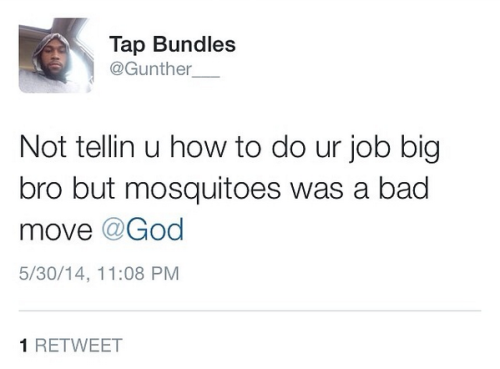
What troubles me most, though, from those conservative reactions, is the line that keeps cropping up, "God doesn't make mistakes." It bugs me not because I disagree with it. I don't. I agree wholeheartedly. What bothers me is that this phrase seems to indicate the user knows how to define someone else's mistakes.
If my wife asked me to move the clothes from the washer to the dryer and I didn't do it, there are three basic explanations - throwing out some unforeseen occurrence physically preventing me from doing it, we're left with 1) I remembered, but was too mean or lazy to do it; or 2) I forgot. Only the latter is a mistake, but from my wife's perspective, there's very little way to truly know if it was option 1 or option 2. She may be able to guess given my past performance at such tasks and what she knows of me as a person, but she can't really know.
I say all that to say, whether God makes mistakes or not, we don't know that Olympic hero Bruce Jenner believing from the time he was very young that he should have been born a woman is, in fact, a mistake. Even if we go so far as to say such transgender persons (along with anyone else whose biology and inclinations don't line up with religious or cultural norms) are sort of evolutionary byproducts (this sounds really harsh, but hopefully I explained it a little better and in more depth elsewhere), there's no indication that anyone turned out differently than God intended them to be.
No, there's no more reason that what I've just said is "right" when describing God's intentions than those who believe Jenner suffers from a comic mistake - and that's precisely the point. Invoking that notion in this context, as if there's some absolute understanding of God's intentions is trite and irresponsible. I get that some people believe there are very specific gender and sex roles - it's a valid opinion because people hold it - at the same time it seems proper to at least allow for a difference of opinion when it comes to judging the intentions of almighty God.
I tend to see a lot more of God's purposes in a world where people are different from each other. In fact, it seems one of the big contributions of Christianity to the world is the notion that radically different people could possibly live and worship and love each other without ever becoming like each other. I don't happen to believe the kind of uniformity hinted at in this particular use of "God doesn't make mistakes," really represents a Christian understanding of God at all. You are, of course, free to disagree.
What it seems to do is downplay the notion of identity and our responsibility to act. I know they got in trouble showing this in our local high school this year (and perhaps, in context, with good reason), but Hank Green really breaks down some of these identity pieces quickly and simply in this video. If you watch it, you'll see a visual aid used with two people - one representing identity and the other representing action.
It seems to me the heart of any conversation between people who care for each other should involve some real discussion of how we act and why we do what we do. If we love people, we want the best for them. Having a person to think through our actions with and providing that same sounding board for another is really key to living life well. For Christians, this is sort of the ideal goal for relationships - something mutually beneficial and beyond the superficial. But, of course, this is only possible if we accept the person for who they are. We can't be going around harping on that left hand person if we expect to have any influence on the right hand person - we can't be skeptical of who people are, if we want to have enough respect to be invited to speak on how people act.
Yes, I get that there are some legitimately dangerous identities out there - various body dysmorphic issues that will kill people if not addressed. (I also get that some people believe a homosexual or transgender identity falls into the same category of dangerous.) But even if you disagree with how someone identifies (and there are certainly good reasons to do so), making this known or a priority in the relationship is foolish, because, well, if you do that, there is no relationship. You can't help someone with anorexia by telling them they look great. If it were just as simple as changing how one feels or identifies, they'd've done it already.
The notion that someone must fit into a box I've created is pretty ludicrous. The retort may be, "I didn't create the box, God did," but of course, that's up for debate (and you better bring something better than, "see... the bible says it" to that fight if you don't want to get laughed out of the ring.
I imagine, a God who is so powerful as to make no mistakes is also powerful enough to let people know when they're outside the box. People may need nudging now and then to listen to that voice, but it's a nudging they ask for once they know someone loves and accepts them completely.
Call me crazy, but it seems like the kind of peace and calm people like Caitlyn Jenner experience when they're finally true to themselves to friends and family (and maybe the world) is pretty close to the kind of peace God intends for all of God's beloved creations. Yes, as a pastor, as a Christian, I've got a lot of opinions about how people should act - what things might be wise or unwise, helpful or harmful, having positive or negative effect on the world. I love sitting down and walking through future possibilities both in my own life and in the lives of others - it's part of why I feel called to be a minister. How do we act? How do we live rightly in the world? Those are important questions. I'd love to talk to you (or anyone) about them. I think it's the most important conversation in the world. I have opinions about how we should act in the world.
I don't have opinions about who we are. I can't. I know God doesn't. All people are perfectly loved and infinitely accepted just as they are in the eyes of God. I'll shout that one from the rooftops and defend it to the death. We are who we are. That doesn't mean there aren't parts of ourselves we have to work around, compensate for, or learn to discipline - nobody's perfect. But those are actions. They are the way we respond to who we are. The faults and failures that comprise our identities are no less mistakes than the blessings and successes that make us who we are. We may make mistakes (a lot of them), but no one and no part of anyone is a mistake.
As for Christians, we're never going to have a place in the world, never going to be able to influence people or support people or help people, unless we learn the difference between identity and action. Choose your words carefully. Don't back down from what you believe... even if it's different than what I believe, but, please, choose your words carefully.

