With the Supreme Court hearing arguments over gay marriage issues, the topic has come up in a lot of conversations lately. Being an evangelical minister, there's an added layer of theological questions that come with such conversations.
Most of the time these conversations leave me unbelievably frustrated - not that people aren't sincere about their beliefs or even that they're not being kind (most people have been exceedingly kind of late, a welcome change) - but because they always focus on what "should" be the definition of marriage, either legally or doctrinally.
Of course those decisions do have to be made, but I've never had a conversation with any Senator or Supreme Court Judge on the matter, quite frankly none of the people I talk to have any real say in how those things are defined. What most people do have power over is the way they define and participate in their own relationships.
I'd love to just publicly admit that we're not going to agree on who should be married (if you've never been to a wedding that you thought was a mistake, more power to you), and move on to conversations about how marriages should work.
I understand that the position of some will be, "marriages should work the way that works best for the couple." That is a fine position to take - although it's awfully individualistic for my taste. I don't think an open marriage is a healthy one, even if it "works" for the parties involved.
I'm going to draw some lines. Of course, people do still get to make up their own minds about things. I'd hope all of us can at least consider other ideas with an open mind.
The thing I'd love to discuss with couples is how dominance and submission play a role in the relationship. This is especially intriguing to me in homosexual relationships because of the stereotype that one partner must be "the man," even if both or neither are men. The same issues arise in heterosexual relationships, but that's been so ingrained in culture that we hardly notice.
Perhaps the real issue is our understanding of dominance as a masculine trait. That's been the course of human history for, well, all of it. Men are in charge and women follow. The feminist and equal rights movements have done a lot to make this less of a given, but for the most part, they've really only made it acceptable for women to be dominant and to assume those traditionally masculine traits.
It's as if we take power as relational currency for granted. I don't think it "should" work that way. I take this position because of my faith and my understanding of scripture. I know Christianity, for a long time, reinforced this male-dominated position - but the Church was wrong.
From the beginning God designed people, human beings, specifically married couples, to be complementary powers - supporting and encouraging each other, not fighting for "hand." Paul reinforces this in the New Testament with his calls to mutual submission in marriage.
We are to love and serve each other - not control by manipulation or power. That's good advice for all our relationships, but I think it's essential to getting marriage right. The need to express, emptiness of lacking, or struggle to gain, power in relationships are responsible for a whole lot of the issues that mess things up.
I speak mostly from experience here - and while my marriage is far from perfect, one of the things I think we get right often is our ability to let the other lead in areas of strength. My wife makes decisions in some areas, I in others. I'll freely admit (and she'll freely agree) that I make them too often, but we're working on it.
The issue of dominance and submission were marriage issues long before gay marriage became an acceptable topic for public discourse. However, I'm intrigued by the way this plays out in relationship contains a non-traditional gender mix.
I'll freely admit I know little to nothing - I apologize if any of this has been insensitive or offensive - it's only because of ignorance. Yet these are the types of conversations that just don't get had. It's partly due to the personal nature involved, but also because the gateway conversation, the one about who should be in marriages, always blocks the conversation about how they actually work.
I have some general beliefs about marriage, but for the most part, I don't care much about how one "defines" marriage in terms of make-up. I do care quite a lot about individual relationships and the way they help and harm individuals and stifle or further the work of God in the world.
I believe God is at work drawing all people closer to God. I suspect the path for many (perhaps even for myself) will be uncomfortable to witness, might challenge my assumptions and beliefs. I also believe, though, that God is bigger and more capable than those challenges; they are not something to fear. I think we'd all be surprised at the things that could happen in our lives if we'd converse deeply and just stop blocking the door.
We were walking the booths at Middletown's famous Peach Festival a couple weeks ago and I was bombarded by an eager pamphleteer pushing his local congregation. He didn't ask if I worshiped anywhere or even if I cared, but went on happily extolling the virtues of his congregation. "We've got a great children's program," he said, like noticing the stroller I was pushing, "and we're starting up an awesome men's ministry where we're going to do cool man stuff, like wrestle alligators." (I did not make that up.) I politely took his half sheet of paper, glanced at the address (ten miles away in another town) and put it in my pocket to recycle at home.
I could make bones about how his sales pitch had no mention of Jesus in it or how he didn't seem to care who I was (other than a male with a baby), or what exactly wrestling alligators has to do with "ministry," but that would be a lame, lecture-y post.
I wasn't going to write about this incident at all, except later on in the week I read an article somewhere (I really forget; this is what happens when I don't write on the blog regularly). It is likely a common theme and something well documented; it seems overly simple. Yet I had never considered it quite this way before - the article's contention that basically every societal definition of masculinity has to do with dominance, which runs counter to the gospel of submissive love. The result being that when men hear a gospel sermon, it proclaims their very existence as sinful or evil.
If you think about it, this idea of masculinity as dominance makes a lot of sense. We focus on sports (and not those wussy ones where people tie, but the real manly sports where someone has to win - even if it's in "sudden death!), we win at work, even in relationships it's the language of competition. Manly activities include killing animals (and the closer to the extremes of the "with your bare hands - with a bazooka" scale you get, the more manlier the kill). Men are encouraged to shrug off pain - to dominate their own body. It goes on and on.
It's also true that the gospel is often completely counter to these notions. Service, mutual submission, and cooperation are all hallmarks of Christ's teachings. The vision of the Kingdom is one, essentially, where there are no losers (I imagine that makes March Madness much less exciting).
There's a growing faction of pastors out there pushing the "manly" Jesus as a way to recapture the hearts and attention of men so shaped by these societal demands and definitions. All this really does is conform the gospel to the expectations of the culture.
So how do we begin to re-imagine a definition of masculinity which embraces the gospel, but also avoid the wimpy, effeminate portrayal that well serves neither men, nor Christianity?
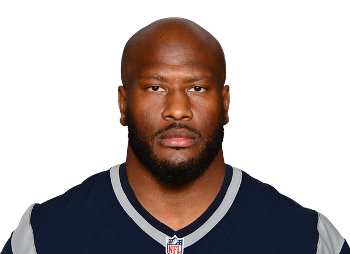
I think we have to begin with the notion than humanity was created to be disciplined. We have many different impulses and ambitions, but while letting these roam free often benefits us in the short term, the long term effects can be deleterious. I think about the struggle in the NFL between players taught to go all out, but also to be conscious of the places and ways in which they're hitting an opponent in light of recent understandings of head injuries. It's tough to be both brutal and controlled at the same time. James Harrison believes it impossible; I will not argue with this man.
Society seems to want a man who is kind, compassionate, loving and caring - until all hell breaks loose, then they want someone who can knock a few heads.
I'm not sure it works that way.
Strength does not have to go hand-in-hand with domination. I think of Michael Clark Duncan's character in the Green Mile - someone strong and gentle. One of my favorite definitions of "meek" is "strength under control." A Christian definition of "manliness" is more akin to someone who would never use strength, under any circumstances, to benefit himself.
Can we even go far enough to differentiate winning from dominance? Is this why trash-talking is so prevalent in sports? When you reach the highest levels of competition, everyone is good. The games are more an exhibition of skill and not a contest. Trash-talk adds an element of dominance - the attempt to anger or humiliate an opponent. I'm not talking about eliminating pick-up basketball, just the need to use it as a means of proving one's worth.
Maybe that's the answer? Perhaps our equation of masculinity and dominance has something to do with worth. Does our society teach that men are only worthy in proportion to their dominance? Richest, strongest, smartest, nerdiest - men seek out their niche for domination as a way to prove worth. It happens all the time.
The men I know who most embody a gospel masculinity are those with a strong sense of who they are and that they are valued irregardless of what they bring to the table. They are men whose weaknesses are not insecurities, who cannot be threatened by force or dominance; they are men who stand up for what they believe in, even if it means refusing to stand up and fight over who's more dominant.
Isn't that what Jesus did? The Roman Empire challenged him for dominance and he just took the beating and the execution and still came out on the other side. The gospel is about refusing to dominate or be dominated. That's a tricky row to hoe and I'm not sure how well any of us can navigate the space in between.
Instead, let's watch this Oscar winning best song in a motion picture for 2012; I think this sums up my perspective on this issue well: