
Regardless, I am who I am - at least for the moment. I'm over-protective. My main aim in life, since the moment my daughter was born, was to let go. I have distinct memories of those being the first thoughts in my mind when I held her. "Your Dad is precisely the kind of person to wrap you in air bags and never let you leave the house." It was my fear - and my determination - not to be the guy I'm most prone to be.
I'm pretty proud of how I've done so far, although I do still want to shelter her; it's my natural state, after all. She sometimes revels in this. As a, thus-far, only child, there's a part of my daughter that enjoys having things done for her. As much as we challenge (read: force) her to do things for herself, we're still often in too much of a hurry to make her buckle her own seatbelt (and she's six, I know, it's embarrassing).
While I have always marveled at just how quickly she's grown up, I've still be unprepared for just how quickly she's grown up recently. It's not linear, but exponential. Last year, in Kindergarten, she'd make the occasional pun and her inferences blew me away. Now, as a first-grader, she's her own person entirely - smart, aware, and thinking with depth and breadth way beyond what's fair for a six year old. I've realized that the influences and ideas from which I might naturally want to shield her or be the one to present are already very present in her mind and in her life and she's dealt with them in ways I can only define as impressive.
I've spent a fair bit of time working with young people; the number one thing I've learned in that time (as I'm sure I've said here before) is that they always know, experience, and understand more than their parents would ever believe. What I'm learning as a parent is that my previous work with young people does not exempt me from that axiom. No matter what my expectations for my daughter's engagement with the world might be, they're going to fall short.
This is both terrifying and incredibly comforting.
I've never been a big fan of the emphasis our society places on safety and security. I think it's usually overkill and often exacerbates an atmosphere of fear over any kind of relief. As part of that, I've struggled with the vast array of "drills" they do in schools these days, to prepare for all kids of trauma. Last year, in Kindergarten, I thought I was told the school didn't do lockdowns, so I put off my worry. As first grade approached - and entry to the "big" elementary school - I mused, out loud, about how I might approach my daughter's school to perhaps surreptitiously take her for ice cream, or something, when those drills occurred.
She overheard the conversation and while I don't remember her words exactly, they went something like, "we did those last year, Dad, where we all sat quietly in the corner so people couldn't see us from the door - nothing will ever happen in school, but we have to make the teachers happy."
I don't know if that's how it was presented to them, but I'd like to think my daughter has both learned a thing or two about Christian social critique from her old man and maybe inherited both sound logical reasoning and a compassionate heart.
In the end, the whole experience has helped relieve some pressure. I don't have to work extra hard to make sure my daughter is her own person, because there's nothing else she can become. I'll have an influence on her - for good or ill - but from the moment she was laying there in my arms, screaming her giant, grossly-misshapen head off, whatever control I thought I might have was simply an illusion.
I suspect the sooner we learn that lesson, the better.

The question then emerges, what is the purposes of maintaining such abstention when the only people who are really offended by those words are the Christians themselves? I mean, in a world where you can't say "crud" because we all know you really want to say "crap" and crap is just a stand-in for "shit," which you can't even say on television (except you mostly can, now, because, by and large, don't care), is any of this verbal gymnastic even serving a purpose?
There's something to be said for a unique distinctive. Holy means to be set apart, after all, and there's lots of peculiar things Christians do because they're Christians. My question remains, though, is this one really saying anything of substance theologically? Does utter avoidance of certain words strengthen or enhance the cause of God's Kingdom in the world?
I'm not saying we go willy-nilly, say whatever the (circle one) heck/hell/fuck you want, because that's just selfish and inconsiderate. I'm all about embracing situational appropriateness. There are times and places for every word just as there are, most assuredly, times and places where they don't belong. I'm not even saying we should abandon the worthwhile endeavor to avoid offense in our speech; I'm just saying that maybe we tone down the good/bad talk and treat every word in relation to context.
Christians should absolutely be an odd, marginal people in the world, but probably not because of the words we avoid.
There's a book that came out last year, one that I've been on the library waiting list for, called Swearing is Good for You by Emma Byrne. As I said, I've yet to read it, but I did catch a very short article by her, about the book, in TIME Magazine (link unavailable) where her basic argument is that "profanity" words have real power and should be reserved for appropriate times. (Funny how he brings up a book that agrees with the idea he just put forth. Hmmmm....) I'm looking forward to reading the book because she talks about how people develop positive associations with particular swear words. Research seems to indicate that positive connections only occur during adolescence and come from "a friend's laughter, parent's disappointment or an enemy's fury," to name some examples. It's a learned behavior.
Not learned so much as "someone taught me," more learned in that swearing induces pleasure when it makes someone uncomfortable, angry, or upset. In other words, parents lecturing their kids about swearing only make those same kids MORE likely to swear. It really does seem like a universal issue - abstinence and/or shame (because they're almost always the same) imbues a thing with greater power than it would otherwise possess.
As I said, twice, I've yet to read this book, but instinctually I took this tact with my (now six year old) daughter. I've never said a single thing to her about "good" or "bad" words. She's heard swear words on occasion - whether it's something slipped into a podcast or some neighbor on the street - I've tried really hard not to react in any way to those instances (other than perhaps repeated or gratuitous use, where I might make some comment about needed a broader vocabulary to vary one's word choice). I feel like it's worked out pretty well. Our kids learn their vocabulary from the words they hear us use, not from everyone word they hear anywhere. My daughter is going to learn to talk the way my wife and I talk - for better or worse. If we're using words in ways that are comfortable to us, she will, too.
I was just using some potentially faulty logic when I made that decision, but I'm glad to know science backs me up on this one.
I still cringe a bit (at least internally) when I think about the little mouth click/disapproval vocalization my dad made literally every time an even moderately offensive word was uttered in our presence (and outside our presence, for all I know). There was certainly no doubt which words were acceptable and which weren't - and what's more, I don't think I was harmed in any real way by that. I'm not sure it served the purpose for which it was intended, but I do appreciate growing up in an environment where I was taught to consider my words.
That's the other side of the coin on this one.
We all know people for whom "those words" make up a shockingly high percentage of their vocabulary - like where the 'f's outnumber the conjunctions. There's something a little off in those conversation - not because such a person is lesser in any way, but because words do, in fact, mean something. I've got a pet theory I'd love for sciency person to actually test out: I think people who swear so casually are more likely to be violent.
Hear me out on this. "Swear" words are those we generally save for our most emotionally intense situations - from the proverbial hitting on a thumb with a hammer, to hearing the news that a loved one has tragically and unexpectedly died - the moments when we feel our feels to the feeling-est degree are often those times when profanity is most understandably used. These are special words to express special emotions at special times. (That's the very definition of profanity, by the way, making sacred - or special - things ordinary.)
My theory is that people who use profanity casually, as placeholder or filler word, when they encounter those moments of extreme emotion - the places where profanity is most appropriate - they lack a vocabulary to properly express those emotions and there's nothing left but a physical response. If some guy hits my care out of sheer carelessness, I might say "what the _____ were you thinking" while we wait for the tow truck on the side of the road. But if that's my response to someone setting the table with forks on the right or bringing back an espresso instead of a macchiato, I may lack the ability to express myself appropriately after the car crash and just take a swing at the guy.
I'm not saying it has to happen that way, just that it makes sense that it would for some people. I'm suggesting correlation, not that individuals who swear a lot are more violent, just that collectively, people who swear a lot might be more violent. Obviously it's an unscientific hypothesis that's convenient in that it proves my point. Still, I think it's got some merit.
This brings me back around to where I started in the first place. How and why do Christians approach this topic? Maybe, since Christianity is profoundly non-violent, there is some real world, theological purpose for avoiding profanity. Maybe banning even the replacement words, like darn or gosh, really does help us learn to save the "bad" words for extreme moments. There's also an argument to made that Christians shouldn't be reacting out of anger anyway (and that's one I do agree with, by the way) - disciplining our use of profanity might actually be discipline, as in practices designed to control our use of those very words so can avoid them even when they might be warranted and overcome the kind of anger that leads us to act in un-Christian ways towards other people.
I guess I'm saying if we're going to call people to be really, really careful with the way they use words, we should also be really, really careful that we know why we're doing it (both calling people to greater consideration and avoiding certain words ourselves). "That sucks" might be a crude phrase I was discouraged from saying growing up, but, as a pastor, I've found it profoundly helpful as a response when someone tells me a parent has died, or they lost their job, or an engagement was called off. It's an expression of compassion and solidarity and truth, regardless of how it's judged socially - I've found it to be comforting and cathartic and appropriate in ways I never would've imagined.
Words are indeed just words... in the same way that people are just people. We can define them from afar, offer our value judgments, and put them into neat little boxes, but none of that can actually define who or what they are in the context of our relationship to them. The world would be a lot easier if people would just be happy being who we expect them to be - that's just not how things work. We need a language that's just as specific and unique and flexible as the world we use that language to create, describe, and engage.

Through this process I learned yet another way that my brain seems to work opposite from how most people process things. Visiting Colorado this summer, I made a joke about Dad maybe having died that was not met with the laughter I might've thought from my family. I do understand, intellectually, why my Mom and brothers wouldn't find that thought funny - there's a part of me that doesn't understand.
I tend to worry about things I can control. "Tend" is a misnomer; I worry about things I can control. I take weeks - months, sometimes, if the Burlington Coat Factory is out of options - to buy new shoes. I replay board game decisions over in my head for days. I don't like thinking about what to have for dinner until almost the point of eating. If I have a choice to make, chances are I will second guess it, often to the point of over-stressing my brain.
I don't tend to worry, though, about things I can't control. My father's brain surgery seems like a strange place to discover this, but: there it is. In my head, at least, while Dad was undergoing surgery and recovery, he was essentially Schrodinger's cat. He could die. He could live.
He could be afflicted with all sorts of damage or disabilities; there was really no way to know for sure. My mind did, briefly, start thinking about what he'd have to do with each or any of those eventualities, but the options are quite vast and without any real indication of the direction to think, I decided not to.
If and when we knew more, I'd worry then.
Through many conversations with people asking if I "was ok," (which, by the way, is a strange thing to be asked when someone else is in surgery) I came to realize other people do the opposite. They don't worry about things they can control; they make decisions and move on. It seems like most people worry about things they can't control. When the options or outcomes are up in the air, it stresses people out.
I'm the opposite.
In many ways, this stinks for me. I literally get stressed out if the competing brands of facial tissue are unit priced in different units (Seriously, why would one be 'per 100 count' and another 'per ounce?' That makes no sense and requires an insane amount of math.) I don't seem to be phased by my father's brain surgery. I get that this is odd, but I also get that this is reality.*
This whole thing has given me pause to ponder worry. Is it really a fear of losing control? I don't know? I worry about landing in an airplane, partly because most airplane accidents happen when moving at high speeds very close to the ground, but also partly because we're moving from what seems like a carefree position, floating peacefully through the air, to one of turmoil, engaging the tarmac. With an emergency surgery, we're moving from a life-threatening scenario to one where life might be saved. My Dad's brain was never going to fix itself, so even if he got a below average surgeon (and he didn't - the guy, by all accounts, is pretty darn good), his chances are still better than they were before.
In the end, this is probably just an extreme example of my control-freak nature. If there's even the slightest hint that I might be able to do something, I want to do it - and not just well, perfectly. If it's out of my control, I guess I'm pretty content to let the chips fall where they may (which is a logging idiom, in case you were wondering). It also comes from selfishness - I worry about things I can control because they reflect on me (or at least have the potential to do so). If it's not something someone can pin on me, who cares?
It's not really "who cares;" I most certainly care whether my father comes through brain surgery ok. It's more, why worry? Worry, at least to me, reflects anxiety over my own actions. I'm concerned about things I can't control, but, if I can't do anything, I'm not going to upset myself over it.
In the end, I think the difference between worry and concern is really the crux of the matter. We should care about those things that matter and not care about those things that don't. I'm not sure we should really worry about anything, especially if we've given our full attention to doing the best we can.
So, for me, I guess the next step is learning to be ok with mistakes. I probably should've figured out how to do that by 35 years of age - let's just hope you can teach an old dogs new tricks. Either way, it's probably out of my control... or is it?
*To be fair, had I known that a huge number of people with brain bleeds die and a huge percentage of those who don't have permanent brain damage,
I might've worried a bit more. I don't know, since I didn't find out until afterwards, but that does seem like something that would keep me up at night.

I was asked to preach today the weekend of the violence in Charlottesville. I imagine I’ll associate that event with this passage for a while. The whole thing is troubling, obviously, for a number of reasons, but I’ve been haunted these last few weeks by one line I heard in an interview with one of the participants. The man said, “These people are worthless; they’re making the country worse and they should go back where they came from.”
I want to be careful here. I don’t want to get into the “both sides” game that’s become so problematic. However, I do think this quote is a good illustration of where this passage is going today. When it comes to the ideology of race – there is a clear right and wrong – it’s because this is an issue with such a clear distinction between opinions that I think it makes a good illustration.
You see, that quote above – “these worthless people should go back where they came from,” – is the kind of hate we might associate with racists and bigots, but it came from one of the leaders of the counter-protest, the defenders of equality.
Now, let’s be clear, being the subject of hate and scorn does not give any credence whatsoever to this “alt-right” movement or whatever they’re calling themselves. We are all human beings. There is just one race: the human race – and we should, collectively, be lamenting the thousands of years we’ve spent acting otherwise and the terrible toll it’s taken on people around the world. We, especially we, should be working to heal and repair that damage as much as we’re able.
But, as much as there is a right and wrong ideologically, it pains me to see how often those in the right have used hate to condemn hate. As a follower of Jesus Christ, I am a student of non-violence – many of my personal heroes are leaders of the civil rights movement, not just because of their cause, but because of their commitment to non-violence and the belief that love wins.
It’s troubling, mournful, to see how this generation – my generation – seems to be abandoning those ideals. I can’t tell you how often I’ve heard language not just advocating the destruction of racism, but the racists as well. I’ve been seriously conflicted with how to affirm that the cause of justice and equality is righteous, while also rejecting the means by which it is so often delivered.
This is a timely and difficult example of a much larger problem. It might not be what you expected when we read that familiar verse from Romans – Be not conformed to the pattern of this world – but this is what I think of immediately, at least in our current context and reality. The pattern of this world so ingrained in us we don’t even know there’s an alternative, the pattern that we’ve largely come to think of it as part of our faith, when it is the exact opposite:
Power and control.
These are weapons of strength, rooted in fear. White supremacists fear the loss of power and privilege that’s long been the purview of white men. It’s a real and justified fear, even if it is completely lacking in perspective. White men do have less power, even if we’re still, by far, the most powerful group on the planet. But the fear is real. In fact, it’s basically the same fear that sparked the counter-protests: people with a real vision of justice and equality who are afraid that whatever progress has been made on those fronts will be turned back or snatched away. That’s a real fear, too.
When we are afraid, our first reaction is to recover control. That’s human nature. If someone is mugged on the street one night, they might respond by taking self-defense classes, or they might respond by never leaving home again – both responses are attempts to take back power they lost at the hand of another. They are fear reactions. It’s the pattern of this world.
It’s this notion that we should be in control that really gets us in trouble. And this is at the heart of Jesus’ gospel message: the actions of others are not your responsibility. That might sound strange, since Jesus didn’t say any of those actual words, but perhaps it’s more familiar this way:
Do not be afraid.
Our fear is entirely based on our inability to control other people. Even when we’re afraid we can’t do something – I’m not strong enough to be a good parent, I can’t do this assignment the boss just gave me, I don’t have enough money to make rent this month – the fear is not about our inability, but about how other people will respond. We’re afraid of being judged; we’re afraid of being fired; we’re afraid of being left alone and abandoned and exposed.
Even those existential fears, about food or money or shelter, are really fears that no one will provide for us if we can’t provide for ourselves. It’s not about our actions, but about how other people respond to them. We’re afraid of losing control.
So Jesus comes in and says, “You aren’t in control, and you never will be.” And that’s supposed to be our hallelujah moment for today, our good news. You aren’t in control and never will be; Praise the Lord! I know it sounds terrible, but that’s because we’ve spent so long being conformed to the patterns of this world. We’ve been so ingrained with the idea that we need to be in control of as much as possible as often as possible that we don’t see the good news when it’s right in front of our face.
We never look at it from the other side of the equation. Even if we control everything in our lives we could possibly conceive of controlling, it’ll never be enough. People will still die. We still argue with spouses and kids. Jobs are lost. Mistakes are made. Control is just an illusion.
When Paul says here, “offer your bodies as a living sacrifice,” he’s saying, “stop trying to control everything – in fact, stop trying to control anything at all.”
Why are we challenged to give sacrificially? Most of the world, if they’re generous, is taught to make a budget, figure out what you need to live, and then spend a sizeable portion of the rest on others. That’s sort of the worldly principle of generosity. Christians are different, though – Jesus calls us to give everything, even, quite literally the shirt off our back, if need be. We’re called to give until it hurts and then give some more. We’re called to figure out what others need to live and then budget for ourselves with what’s leftover. Why? Why do we do this?
I’m sure there are a lot of reasons, but one big one is simply to remind ourselves that our bank balance does not equal control. No matter what’s in the investment fund, our future is more dependent on the grace of God than the sweat of our brow. We have a different motivating factor than mere survival or even personal happiness. And that is foolishness to the world around us.
We are living into the Kingdom of God and this vision of the world in which there is no fear. Attempting to shout down an angry, hateful mob does not eliminate fear, it heightens it. God has instilled within us a greater creativity than that – we have the ability to respond to hatred with love and to violence with peace, if we’re willing to be transformed by the renewing of our minds.
I struggled for the longest time trying to figure out why verses three through eight are where they are in this chapter. If you skip from verse two to verse nine, it makes total sense with what I’ve been trying to say. “Honor one another above yourselves” is exactly the kind of outrageous thing Jesus calls us to. The world tells us to secure our oxygen mask before assisting others – because it makes sense – but Jesus has a different way of life in mind. “Be joyful in hope and patient in affliction. Bless those who persecute you. Be willing to associate with people of low position. Do not repay evil with evil. If your enemy is hungry, feed him.”
You can move from verse two to verse nine seamlessly, yet Paul puts this thing in between – something we’ve seen him write in many other letters as well – we are part of one body with many members; we’re all different, but important. He talks about spiritual gifts and contributing to the people of God through your strengths. But why is that here, in this position?
Well, after some time pondering, I think it’s about fear again. We’re afraid because we don’t know how other people will react to us. We’re afraid of what they’ll do – or not do –so we try to gain and maintain control. We try to wall ourselves off, if not from people, than from needing people. We love having friends, but we hate to depend on them.
This is precisely what Paul is telling us we have to do in verses three through eight. He says, You can’t do it all yourself. No matter how hard you try, how much you work, all the effort in the world, you do not have everything you need. We need each other. In fact, you’re not even ‘you’ without me.
We forget this sometimes, because in English “you” is both plural and singular, but 99% of the time we see “you” in scripture, it’s plural. “Offer your bodies as a living sacrifice.” It’s something we do collectively. We’re in this together.
So ,what does that mean when it comes to Charlottesville? In that case, you’ve got a group of people saying exactly the opposite. “If you’re not white or male, we don’t need you.” It’s a message of hate spawned from fear – it might even be a universal fear, that we’re not needed, that we are worthless – and out of that fear, we attempt to grab power by making those around us worthless and lesser. Hate flows naturally from fear – that is the pattern of this world.
Too often our response to hatred and fear is doubling down, is meeting hatred and fear with more of the same. Christians are called to end that cycle – to be not afraid – and we show our trust, our lack of fear, not by acting powerful and in control, but by responding in love. When someone comes at us with hatred and violence, the Christian response just might be, “You may not need us, but we still need you.”
This doesn't mean we allow hatred and violence and evil to go unopposed, but we must not oppose them with power and control, but with love. It’s a dangerous position, for sure, but it’s not weak and it’s not backing down – it is the turning of our actual bodies into a quite literal living sacrifice. It is putting our money where our faith is, believing that sacrificial love, in imitation of Christ, can really change the world. It is showing, with our bodies, that we are not in control, and breaking the cycle of hatred and fear.
It sounds impossible, but it starts here, folks. We aren’t just transformed into living sacrifices at the drop of a hat. The whole purpose of the Church is to be a place where the Kingdom of God is lived out as an example to the world. We have to love each other, before we can love our enemies. We have to reach across whatever divides exist here – class, race, gender, income, age – as a means of training ourselves to take this good news to the world around us.
The people of Jesus Christ do life differently. We are not conformed to the pattern of this world. We remind ourselves of this every week as we celebrate the Lord’s Supper. This is a small scale enactment of what Paul calls our true and proper worship, which is to live our lives like we really believe what we’re doing here today. We come to the table together, one body, one family, united – everyone is welcome and everyone is equal – then we have to live like it, even when it hurts.
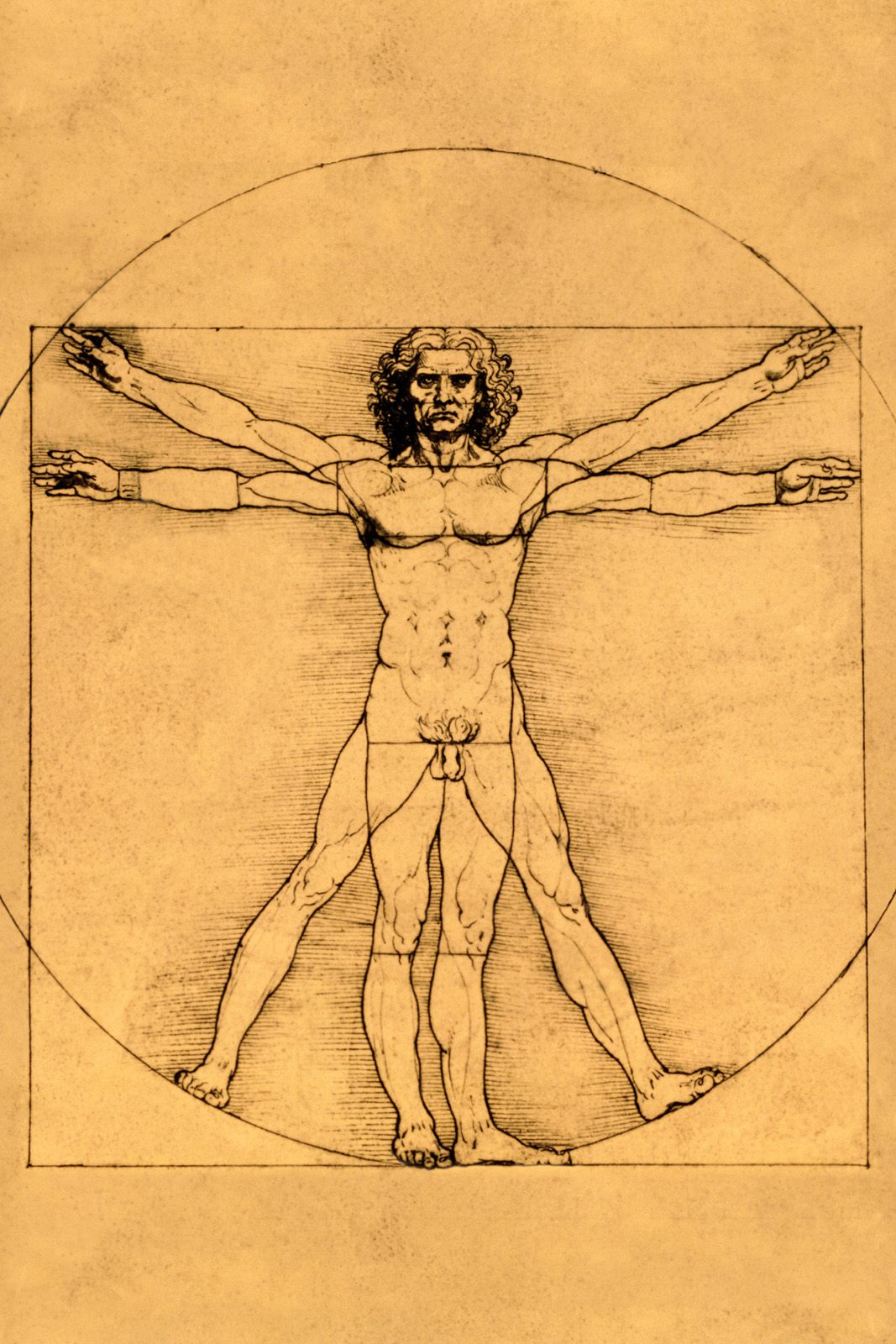
I experienced something I first mistook for guilt. It's easy to see how guilt at the relative ease of life in the West compared to rape and hunger and war and abandonment makes sense - but it really wasn't guilt. It was more a sadness - yes, sad for these people, but as I said the emotions didn't really get through - it was a sadness at the realization that my life will provide me with only the narrowest picture of the human experience. Even the most adventurous and well-traveled among us will barely scrape the surface of what it means to be human - for good and for ill.
It's not just the horror of child rape as a weapon of war, but the whole gamut of emotions and experiences that will just never be an option for me. I guess this is sort of like someone staring at the night sky, depressed about their own insignificance. We (or at least me) like to cling to the illusion that I'm a "normal" or "average" person - at the very least "representative." I want to believe that my life is, give or take a few particulars, just about like everyone else's life. That's simply not true.
I wonder if this is why individualism is so attractive, because it makes us completely representative, because there is nothing "real" outside ourselves. We can never be insignificant, unless we choose to be. We can never be below average or strange unless we choose to be. It's a far cry from understanding ourselves as but incomplete portions of the larger whole. As a human, I am barely discernible compared to the grand scheme. Theologically I might argue I'm completely complementary to the whole of creation - there is no such thing as an individual human any more than there is an individual cell. Yes, they can be delineated and even survive on their own, but that existence is nothing, really, compared the the beauty and complexity of the society in which they reside.
I still can't get my head around rape as a weapon of war and the dehumanizing that precedes it. This is one of those horrors that seems beyond comprehension, let along solution. We Christians like to put these most difficult ones on God - "you take care of that, because I just can't deal with it." As real as that inability to deal is, it's also a little cop out.
But the cop out has two sides. In one sense, it helps to preserve the illusion that we matter - again, I'm not saying that individuals don't matter; they do, but not in the way we like to pretend. It makes us think we can solve our own problems, that just maybe if we get some of the smaller ones figured out, we can work up to the real horrors.
On the other hand, it just lets us draw a comfortable line between the possible and the impossible. We can put that line wherever we choose and convince ourselves that there's nothing we can do about it - that the line exists outside ourselves.
I don't know what to do with this. There's no conclusion here. I've just been thinking about it a lot - and hopefully it will change the way I approach hope and the world itself. Ultimately, it help me internalize the notion that we're not in control - human selfishness and greed have set free the kind of pain and horror we cannot easily rewind. To think otherwise is really just fooling ourselves.


