I did a bit of driving this week. One of the conversations that stuck out to me was people starting to analyze this spate of harassment news that's come out, especially surrounding entertainment. People were asking how to respond to Kevin Spacey's work now that he's been exposed as the nasty, brutish dude he's always been rumored to be. You can sort of excuse things as "genius at work," until it proves to be at least borderline criminal. This is the same conversation people have been having for several years about watching The Cosby Show.
Time and again people brought up Alfred Hitchcock - a guy who abused many of the actors (and especially actresses) who worked for him, perhaps partly to evoke a specific performance, but also, likely, because he enjoyed the benefits that come with power and privilege.
I want to posit an idea. I'm not sure it entirely holds up, but it seems to be true from a certain vantage point. That idea is simply that when people are with us, they are more than just the sum of their actions. People are relational; they're good and bad and something more, something intangibly human that makes judgement calls difficult. When they're gone, all we have are our memories, our interactions with them - essentially, we have just the things they've done.
One of the things I repeatedly explain to my daughter - something she probably does not understand at her age and level of development - is that there are no bad people (there's no good people, either, but she rarely ever uses that kind of language), just bad actions. People are people;
they are beloved because they exist, but they do not exist as good or bad, just as people, human.
Our society doesn't like that. I wonder if it's because we're collectively (if not individually) stuck in an earlier stage of development. I've been substitute teaching a lot this year, usually in 7th and 8th grade. I've had a lot of conversations about big issues and current events -
which is cool, because 7th and 8th grade are the years when human beings begin to experiment with the notion that not everything is black and white, true and false. I'm not sure we collectively understand how to express that.
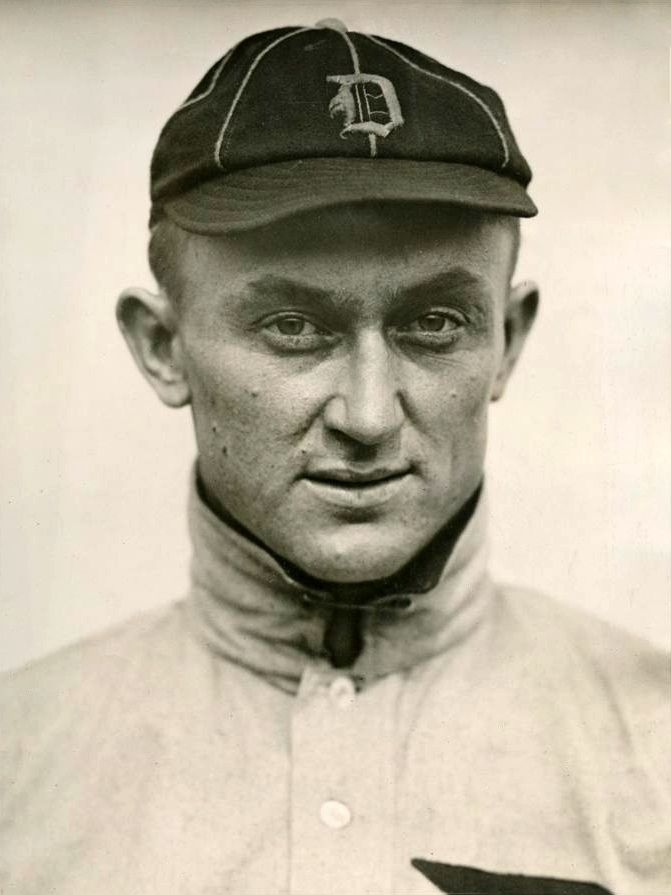
We can say Ty Cobb was a racist jerk and also one of the best human baseball players of all time, precisely because he died in 1961. He is literally just words on a page (and a great Tommy Lee Jones movie sadly almost no one saw). We can say "racist bad; baseball good," and not lose too much sleep.
Harvey Weinstein isn't tough for us because he's only famous for being an ass. The guy browbeat people into giving his movies Oscars, so it's not hard to imagine him being a perverted, bully jerk. It's not as easy when Kevin Spacey is smiling back at us from Baby Driver on demand or we think about Dr. Cliff Huxtable waltzing off the set in his snazzy sweaters only to celebrate by raping a drugged starlet.
I think, in the end, we're all going to make up our own minds. And just because there aren't bad people doesn't mean our views of people are entirely shaped by their actions. I'm not trying to defend anyone or anything, just simply pointing out that nothing makes a person entirely worthless. I think we know that deep down, because we're all a little self-conscious about our own flaws, but we also want to be outraged at things which rightfully provoke outrage.
In the end, we are more than the sum of our parts. However, once we're gone, there are nothing left but parts. Those realities should provide some balance for us as we think about our own worth and try to determine how to judge and characterize others. What we do matters, but it's just not everything, as much as we'd like it to be that way.
I was reading an interesting article about the place of Macklemore in the cultural conversation.* The article included a video from his new album - a song featuring Kesha. I thought the song was below average, in fact the only parts I enjoyed were the parts Kesha sings. It got me to thinking that she, herself, just put out a tremendously well-received album that I hadn't yet listened to. So I listened to it.
It's tremendous, by the way, ranging over a bunch of different styles and musical genres, all of which are pretty good. Kesha, herself, has an improbable story - the daughter of a semi-successful songwriter, she came to prominence as her family hosted Paris Hilton and Nicole Ritchie during their ill-fated reality show The Simple Life. She was soon after handpicked by mega-producer Dr. Luke and signed to a record deal. The Song Machine - a book about the manufactured pop sound of the last two decades - makes it seem like Dr. Luke (not a doctor) chose Kesha specifically as part of a project to literally create a pop star from scratch; it depicts her as more of a tool, from his perspective, than even an artist.
This all came to an ugly head when Kesha accused Dr. Luke of sexual and financial abuses and sued to be released from her recording contract. This request was denied and it was ruled that the statute of limitations on the rape allegations had expired. She was left to release her newest album, the one I listened to, through Dr. Luke's label, even though he had nothing to do with its production.
Kesha's carefully curated persona through most of her career had been as a drugged up, sexually adventurous, party queen - her songs were generally about drinking and laughing off disastrously bad decisions in a way that makes teenagers excited and parents concerned. Typical pop music to the extreme. With the new album Kesha is being more personal, exploring the depths and breadth of her actual reality, and dealing with all the crap in her life (of which the above description is just a tiny fragment).
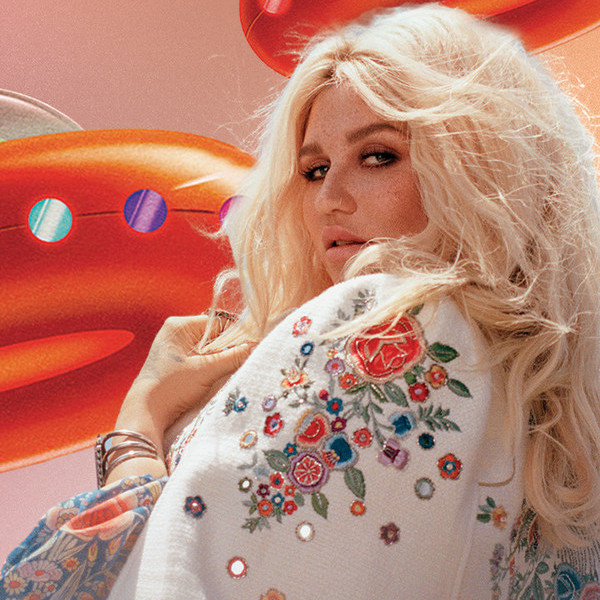
We went from seeing this Kesha
To this one
It's a little jarring, both to see how pop culture is manipulated and to see what it can do to real people. Kesha's new album isn't polite - there are a bunch of tracks marked explicit and while there are some potential Top 40 hits there, it's mostly about an artist expressing herself. In other words, it's real art. I recommend the whole thing - it's not too long and it's insanely real, especially if your aware of Kesha's journey to making it.
One of the songs that really caught my attention is called "Hymn." I tend to enjoy music that uses religious language or overtones, especially the songs that challenge the staid assumptions of religiosity. This one, in particular, talks about being a "hymn for the hymnless," a song for "kids with no religion."
I got it, immediately; it really resonated with me. She's not talking about religion persay (and you can read a longer description of Kesha's thoughts on the song here), but about people who feel left out. It's a song for people who don't fit in.
I wouldn't say I've been an outcast in my life; I've rarely felt alone. I have, however, often felt like I don't fit in. I tend to challenge the status quo, mostly because I believe deeply that somebody should. I also tend to think differently. I like this song in particular because of the religious language. Christianity, a movement of outcasts, specifically designed to include and accept everyone, has become one of the most exclusive, homogeneous movements around. Even in the midst of our deep Christian divisions, we tend to be people who like to congregate with people like us.
I love that the very fact this song includes explicit profanities, it'll be rejected by many Christians as bad or troublesome or dangerous, when, to me, it seems downright prophetic. I get that it sounds like an unapologetic apology for all things hedonistic and sinful. It's got overt celebration of selfishness and individualism - generally things Christianity frowns upon. I think, though, above it all, "Hymn" is a declaration of human worth - that's something the Church could use more of.
We have theological statements about how grace and salvation is a free gift from God, but we tend to supplement those statements with actions that show we really do expect a specific standard of behavior to really belong. A lot of the things Kesha has done or sung about are not the kinds of things I want for myself or my children; they're not things I'd condone - and not because they're inherently bad, just that they tend to be harmful. However, when we hold the ideal up as the standard, we all end up falling short. It produces shame and guilt that only lead to a devaluation of self-worth and, often, a devaluation of someone else's worth in our eyes.
Yes, there's a balance between judgement and grace, especially when we actually have the kind of relationship with people where they can hear hard truths as love. The problem we run into is that almost everybody already knows their guilty, but almost nobody really believes they're loved (and lovable). The balance can't be 50-50, because we don't need to hear judgment in equal measure with love. We need a lot more of the latter. It is love and acceptance that's truly transformational.
I believe that. More lives are changed, more positive, healthy decisions are made, because people are loved and accepted in spite of their faults, than will ever be changed because those faults have been highlighted and condemned.
People aren't perfect and they certainly aren't all the same. The expectations we have for each other might be made with the best intentions, but if they're not true to who people are, they're not expressing the kind of value and validation we need to be loved - to be truly human. Just this week I heard and friend and mentor of mine say some powerful words. They perfectly express the reality of this seeming paradox and they fit perfectly with this post, that I'd already been constructing.
He said, "I don't mind the 'I'm okay, you're okay' culture we're in" - this is not what you'd expect from a pastor, for sure - "because what it's really saying is that I'm valuable and so are you."
This culture of acceptance - "I'm okay, you're okay" that's so often decried in religious circles is not meant to be a discussion of the individual merits of an opinion or action or belief - it's meant as the validation of someone's humanity. We're saying, "You are a human being, with experiences and insights that come from real living; you have the right to believe what you believe, even if we disagree."
There's no ability to even get to a discussion of our various views, until I accept your right to come to your own conclusions. That kind of fearless freedom is, truly, at the heart of human life as Jesus understands and explains it. It should be at the heart of Christianity - although it so rarely is - and it's definitely at the heart of Kesha's new album.
I may not agree with the content and substance of the words in these songs, but they express a fierce determination to prove personhood and value in the face of inexplicable tragedy. For someone who's been dehumanized and devalued in ways we can't fully understand to be able to stand up and produce such a strong statement in defiance of those circumstances is entirely worth celebrating.
This new album, Rainbows, is a triumph of the human spirit - and there's a particular, if unintentional, gospel lesson there, if we've got the ears to hear it.
May it be so.
*It's a pretty intriguing topic - a white rapper comes to prominence with culturally conscious and often challenging lyrics and takes the world by storm, winning Grammys with solid, but inferior material over a black rapper (Kendrick Lamar), who's essentially a better, more credible version of the archetype Macklemore was chosen to fill. It wasn't really a position Macklemore asked for, but one he really struggled with.
I'm reading this book, The Confidence Game, about the psychology of belief and the ways in which grifters use our biological proclivities to fool us. It's a very interesting book, that uses lots of real examples to illustrate its points,
however, one in particular struck me for an entirely different reason.
Towards the end of the book, the author, Maria Konnikova, presents the case of Glafira Rosales, a small-time art dealer who conned big-time art dealer Ann Freedman into selling off 63 forged abstract expressionist paintings as real over the course of many years, even buying some herself.
The fakes were so convincing, reknowned art experts, historians, even museums specializing in the period and Mark Rothko's son, Christopher,
were convinced they were real. It was only when so many previously unknown works emerged that people began to be suspicious, but it was never because of the art itself.
The book talked about how we can become blind to our own expertise - of course Freedman believed in the art, she had two in her entryway and saw them everyday. How could she, an expert, be fooled by fakes she saw all the time.
In the end the scheme bankrupted a lot of people and embarrassed far more, but that notion of the dealer looking at fake paintings in her entryway struck me as odd - the economics of the whole thing. If those paintings were truly indistinguishable from de Koonig's style (for none of them were copies of existing art, but art in the style of each artist, passed off as unknown), why would it be any less valuable? Either the thing takes on more beauty because the artist is famous, or the art itself is more valuable because the artist is famous - but neither option really makes sense.
It led me to think about the ways in which we evaluate beauty. The high art world is strange to begin with - none of the immense, grotesque values on famous paintings are truly accurate; as in any free-market system, value is determined solely by how much money one is willing to pay. A modern artist can now sell a written description of an un-made work as art, and bag $10m for the privilege of letting someone imagine what they would've designed. I get the inherent value of such a thing, as well as the philosophical statement its making - and I appreciate both - but I don't understand the monetary value.
Beauty is beauty. Someone may be unwilling to part with a beautiful work of art for $10m, when no one else would pay twenty bucks for it, because its beautiful and you can't put a price on beauty. People on Antiques Road Show like to know how much Grandma's 400 year old rocking chair is worth, but they're never going to sell it - the connection is too priceless. I'm sure there are psychological effects at play here, too, but it's also a statement on beauty. What we find valuable doesn't always equate to money.
Shoot, I write here at least once a week, hopefully twice - the hits aren't terrible. I'm sure I could throw some google adsense boxes up and make a few bucks, but I don't like the idea of not being able to control what products get sold next to my thoughts and words. Whatever small benefit I might receive is outweighed by the very non-monetary cost to my perception of artistry and beauty.
In the end, though, it is kind of sad how the free-market has taken over art. Yes, I'm sure some of the people who spend gobs on paintings and sculpture really appreciate the beauty on the pieces and just happen to have the money to buy them; a lot, however, just like the investment.
The book treated the forged paintings as somehow worthless, simply because the artist was not who people thought it to be. Absent that knowledge, no one - absolutely no one - could tell the difference.
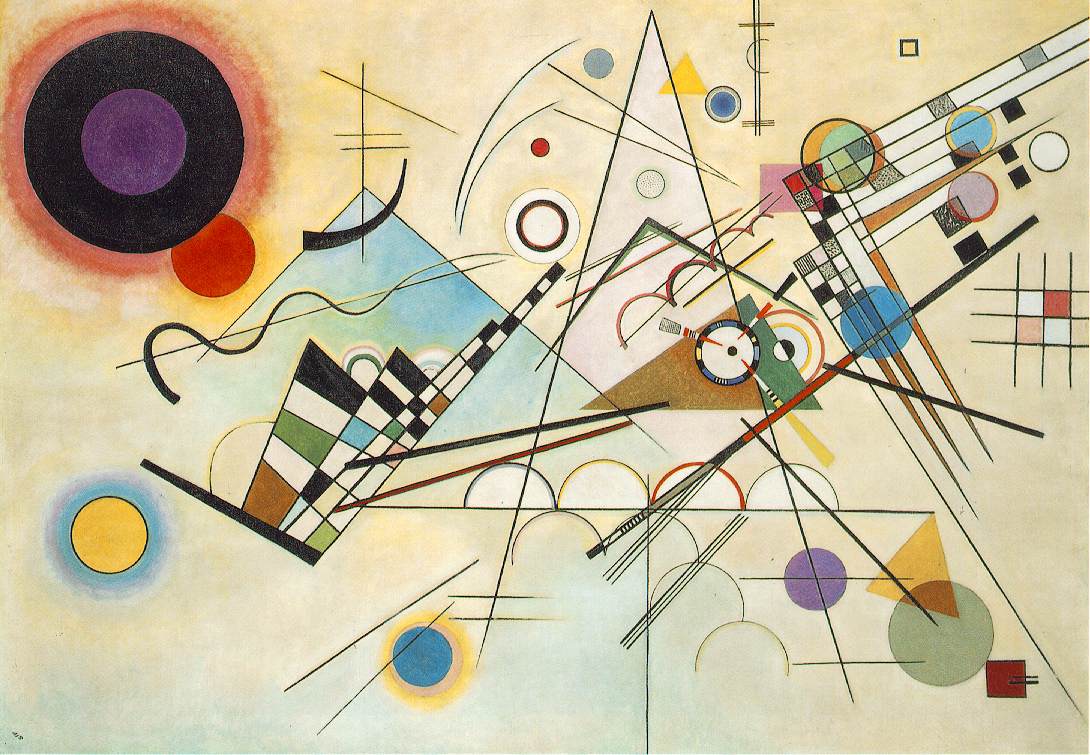
I suppose this could be some grand example of "beauty is truth and truth beauty" right? It is not the artist that makes the painting less valuable, but the deceit? I can see that perspective, but perhaps I'm too naive. I think something beautiful is beautiful. Wasilly Kandinsky is one of my favorite artists. I've seen a lot of his work in person and even more in prints and books. I absolutely love the unusual way his mind and design work - it strikes me as incredibly beautiful. I've also seen a few of his pieces, though, that strike me as downright ugly -
whether its the particular design or the color choices or what have you, I don't like them all simply because he created them.
I get that some Picassos are worth more than others, purportedly because they're better representative of a specific style or a difference in structure or technique - maybe they're even a little less beautiful. But I wonder how they'd be evaluated if the branding of a name weren't attached?
I suppose its impossible to do. Branding is important no matter who you are - JK Rowling continues to use her Robert Galbraith pseudonym for her adult mysteries long after the connection was unmasked. It's branding and removing it probably hinders the artist in some way. At the same time, I wonder how our understanding of beauty and value gets diluted and confounded by the economy of a free market that limits value to simply what money can buy.
I've been thinking about relationships a bit. How do we choose the people we love and why? There are obvious connections, like parents with children; there are not always perfect or always loving, but for the most part, they are. Spouses choose to love each other - a lot of the time, anyway. Being completely crass, though, we tend to love the people who can benefit us in some way. It's a sort of automatic co-dependency. We care about people who make our lives better in some way.
Yes, those people we love most often exasperate us and frustrate us and sometimes it seems like the investment in the relationship just isn't worth it - but at the end of the day, those relationships are usually important to us because we use them to help define us. It's still a reflection of us. A parent might be a bad parent, but the part of them that defines themselves as a parent is really strong. That's why its a serious thing to take someone's children from them and why it's the single most amazing thing for a parent to give their child up for adoption.
Co-dependency can become a real problem. We can so define ourselves by our relationships that we never find out who we are - then every relationship has disproportionate value and we can't afford to lose even one of them, even though we lack the ability to maintain any of them. That's real trouble. But we do have to define ourselves somewhat through our relationships. We're relational beings. A parent, a spouse, a child, a teacher, a doctor, a cashier - you can't really be any of those things without other people.*
I don't think any of this is wrong (unless, obviously, it becomes unhealthy) - I'm not sure we can transcend those natural inclinations and we certainly can't be detached, unconnected individuals and still be fully human. I do think, though, it's incomplete.
As I've been thinking about relationships, I've been especially pondering how some people can be so loving and selfless and compassionate towards some people and completely the opposite towards others. Those in a specific circle (let's say the circle of co-dependency, but in the nicest, most respectful way) are protected and served vehemently, while strangers or casual acquaintances are demeaned, devalued, or ignored (if not actively hated).
Because I'm a pastor, the first thing that came to mind was that this is the difference between love and Christian love. I probably should say "Christ-like" love, because Christian is a hairy word in this instance; Christians often love in very un-Christ-like ways, with some of the most restrictive circles imaginable. Some people love only those they know well and whose presence they value (usually for at least partly, and understandably, selfish reasons). Others have trained themselves to love unconditionally (or at least as close as we can get with our biology) - seeing the homeless man on the street with as much compassion as their own child.
Now we certainly don't always act the same towards these two groups - I imagine this comes partly from social conditioning and partly because relationships do matter and no matter how much love we may have for a person, we can only act within the context of the relationship we have - but there is clearly some division between those who seem to love regardless of context and those who have circled the wagons, so to speak, around a particular group.
Now I could be philosophical and say, those wise people with an unlimited love range have understood that everyone is part of our immediate circle - that the well being and health of every person directly affects me - and thus have just come to an enlightened understanding of co-dependency. I think there's some truth there, for sure, but it doesn't seem realistic. We might get to a place where we know that intellectually, but I don't think it can really penetrate our hearts enough to create emotional responses.
I think it's more likely in the compassion neighborhood. We can get to a place where we recognize the inherent value and dignity of every person and thus are able to love them the way we love our close friends and family. We see them as people - whether it's the guy at work who eats at his desk and never talks to anyone or the driver of a car stuck on the side of the road with a flat tire or maybe that neighbor lady who's only ever yelling at people.
Again, we act towards people based on the relationship we have with them (and this is smart), so there's only so much we can do in each scenario, but for me it's a good entry point for a discussion about what it means to be Christian. To paraphrase Jesus in the Sermon on the Mount: "Do you only love those who love you? Even the worst people in the world can do that. Are you proud of yourselves? There's more to love than that."
Maybe that is the call of Christianty (or should be). Do you want to love more and love better? Come and see.
I hope it's this journey towards loving more and loving better than I am dedicating my life to pursuing. I hope it's this journey to love more and love better that people see in me. I hope there are people out there longing to love more and love better that are willing to try and fail (and maybe succeed) along with me. I'm not sure there's anything more to life or faith than just that:
Love more, love better.
*Not that any of the people who are parents or children or doctors or cashiers necessarily define themselves that way, but some certainly do.
**Sorry if you clicked on this looking for an in-depth analysis of Deadpool. I just haven't seen it yet. Again, my apologies.**
One of the things that doesn't really come up in this election cycle (outside of soundbytes, anyway) is the rise of China. It's not something I'm super interested in - and maybe that's telling in itself. There are some good article out there recently about the consolidation of power the current Chinese President is working towards within the country and how an emerging middle class and increasingly world responsibility are changing China. I find those interesting, but it seems a lot of people (especially people 15+ years older than me) take much more interest.
Now I have no living memory of a competing super power. I was born in 1981, when the USSR was at the beginning of its slide to irrelevance and certainly I wasn't paying attention to global politics during the 80's. One of my earliest "public" memories is watching the Berlin Wall come down on television and following the "Unified Team" at the 1992 Olympics. Just by virtue of age, I'm going to have a different perspective on China than someone who lived through the Cold War. The notion of a competing super power just isn't part of my intellectual vocabulary. Even though I have a history degree and I'm certain I know a lot more about the Cold War than most people of my generation, the lack of lived experience changes my perspective. Even if my impressions of China are absolutely correct, they're going to be lacking something that I can never recover.
There are arguments to be made that using experience with the USSR hurts one's impressions of China because you might read into this situation something that exists only in ghost memories of the past. It's hard to say if one is better than the other.
That's the real rub - because it's not always about China either. I suspect current, actual, real, up-front discussion of socialism and what extent it plays a part in a functional democracy works on the same spectrum. Those without experience are missing a key part of the puzzle, while those with experience may retain a part of the puzzle that just isn't useful - and there are myriad positions in between.
I'm not sure what to do with that - other than to simply be aware. No one, unless they are some kind of anti-emotional, brain-dysfunctional logic robo-god, is going to discount their own experience and perspective in favor of another. Hopefully - and I think it's probably the most we can expect - is that we'll allow the shared perspective of others to influence how we look at the world and the various situations to which we put our mind. The very existence of someone with a different perspective should shift and change our own.
That's something we don't see much of in our current political climate. We tend to double down on defense, playing a zero-sum game of perspective - wherein we see clearly and everyone else must be tricked or broken or blinded in some way to see things differently. That doesn't mean we agree or even treat every perspective as equally valid or important, but we also can't completely marginalize anyone. Every perspective exists because the people who hold it exist. Our political engagement must be more about listening and inclusion and less about power games and marginalization.
This is perhaps why Donald Trump is bringing such an intense reaction. Yes, he's opportunistic and unpredictable and wildly irresponsible, but it seems more scary to most is his unconscionable willingness to destroy detractors, to insult and demean and bulldoze people who have a different perspective. What people fear far more than losing an argument is not being heard and acknowledged in the process.
This post is a day late. My schedule has been terrible lately, which is entirely the fault of my lack of discipline. I'll own it. But the off-kiltered posting has not been the result of that messed up schedule (I can almost always find the time to write). I've just had real trouble finding the right thing to write about. Every couple of weeks I'll get a rash of inspiration and I'll find myself with a half dozen ideas, presented as draft posts on the blog. Then it's pretty easy, I sit down, choose one, and go. Right now, I'm out of pre-ready topics. Well, that's not true. I have two in the hopper, but they're more in depth and require more time than just grabbing the computer in a spare moment. So, this one may feel a bit forced and possibly repetitive. It's a topic I struggle with and one that's close to me heart.
As you may be aware, legislators in my state (Delaware, small wonder) have tried in the last two years to get our death penalty repealed. I know I've written about life and death, especially in the context of revenge, quite often in this space. I'll try not to go too much into that today. But we have, again, it seems, failed to get this thing through. There was far more vocal support this year - even the Governor, "High Highness Sir Wishy Washy" came out in support, making public his intent to sign the bill when it got to him. Last year, it passed the State Senate by one vote and was killed in committee by the House. The House committee once again failed to pass the bill along to the full body - where it has (and has had for quite some time) more than enough support to pass. There is a procedural option, by which the rules can be suspended and the committee process skirted, to bring it to the full house. However, in order to make that motion, the Speaker has to give permission - and he's just flat out refused.
That brings me to the real crux of the issue. The Speaker, and many of our elected leaders, are retired police officers and the police organizations in the state are (at least it seems so) the only real opposition to death penalty repeal. It's not a party issue - many Republicans support repeal because of cost savings or a truly "pro-life" philosophy, and the Speaker in question is a prominent Democrat. It's really come down an issue of assigning value to life.
Many of the law enforcement contingent say they'll vote for the bill if it includes a provision allowing for continued execution of cop killers, a revision the bill's supporters have so far refused to employ. This rubs me the wrong way.
I get that police officers have a dangerous job. I can't imagine what it would be like to sit at home every day and realize a spouse, child, or parents works in a job where injury or death is a real possibility all the time. I don't want to see any police officers injured or killed, but the notion of capital punishment as a deterrent is just not supported in any way but anecdotal. Then again, I also have a strong commitment against violence and coercion, which provides a real tension in dealing with police in the first place.
I don't feel like I have the right standing to be super vocal in this matter. There are plenty of police officers who do oppose the death penalty, for a variety of reasons; they're in a much better position to argue this point. For me, it never seems to be about deterrence; it always seems more an issue of revenge. The notion of "an eye for an eye" makes a lot of sense to us (me too!) as human beings. In the fraternity of police, I get the "they took one of ours, we'll take one of theirs" mentality. I do get it. While I disagree, I think it's certainly a valid argument for keeping capital punishment.
What I don't get is making that distinction just for police officers. Doesn't this keep us going down the road of assigning differing values to the life of different people? We're already talking about a devalued life for criminals. If we're going to kill them, then their life must be worth less than the life they took. Adding in this police exemption seems, to me, to be valuing the life of a police officer above that of ordinary citizens.
As I said, I get the nature of their job is unique. It requires a kind of commitment and bravery most don't possess. In a sense, they have a lot of the qualities we value highly. I just hope we haven't gotten to a place where a person's value is the sum total of their qualities (for good or ill). We do need to maintain the notion than human-ness itself, contains a value far beyond any characteristics or actions that person might have or have done.
It's not the most popular of the anti-death penalty arguments, but the one that rings most true with me is the notion that killing is bad and that executions compound the tragedy of death with more death. I don't believe it's good or healthy - for society or for us individually - to take part in a process like this. But it bothers me even more if we're going to start designating some murder victims as more tragic than others.
If you want to support capital punishment, support it uniformly across the board. We may disagree, but at least it's a coherent argument. Separating life into different categories of value puts us on potentially dangerous ground. Saying, "It's just an unrepentant murderer," is only a few steps away from saying, "it's just a drug addict," "it's just a homeless guy," "it's just a sick, old man." I recognize that "slippery slope" arguments are general reactionistic and ultimately baseless - but that's exactly my point: there is no slippery slope here. There's a cliff.
If we begin to say, "not all life is equally valuable," we've devalued all life. We've made the worthiness of our existence just another competition in the world. I guess that's what evolution tells us about how life came to be and how we got where we are - but where we are is thinking, rational beings. We are not entirely bound by our instincts and drives; we have the ability to work against our natural reactions. We have the ability to choose differently.
I hope we choose to remember, to recognize that all life is valuable, even if the person inhabiting that life doesn't seem to understand that fact. There is no value spectrum. All life is tied together. We either value life or we don't.*
*There's a whole other discussion of how we can value life and still, regrettably, take it in certain situations - an argument that is still important in discussions of societally sanctioned killing. I've talked some about this here (there's more than one post).
So I've been trying to put some semblance of order back into my life lately (it's gotten a bit discombobulated). Most mornings I've been picking out a few of the Daily Office passages and taking some time to rest and relax before embarking on the business of the day. As a result, you might actually get a few more calm, devotional-type posts here once in a while.
Last week sometime I was reading Jesus' parable of the sower and the seeds. The narrative is of a sower, scattering seed; it falls among rocks, thorns, packed ground, and actual good, tilled soil. When you get towards the end, Jesus explains what it means to those who really want to know.
For most of my life I've been shaped by the evangelical church in the US. It tends to emphasize spiritual success. Make converts, sin less, be good, do better. This particular parable is usually a cautionary tale in the way I've been formed. Most of the seed ends up wasted. Birds come and get it, it withers from weak roots, the weeds choke it out. Don't be like that bad soil. Be the good soil. Grow. Make more Christians. Be fruitful. Produce!
It's sort of depressing, honestly.
Anyway, I sort of had a realization last week. God doesn't waste seed. There may be some theological streams that tell you some people are destined to fail - that God throws seed their direction, but knows nothing will come of it. I just don't believe that. God doesn't waste seed.
I mean, it's not like soil gets to choose where it sits. There's nothing dirt can do to make itself more amenable to growing things. It's just dirt. (Any good Biblical scholars among you will be recognizing the connection here about now, if you have not already. If you still have not - look here - that is all the help you get.)
I'm going to out on a limb here and say most of the people I know, most of the Christians I know, if they're really honest and look at their lives, it's tough to claim they're producing a hundred, sixty, or thirty times what was sown. That's miraculous numbers. If I'm gardening, I would be ecstatic if my crop produced double. That would be a dream come true. As far as biology goes, I think most seeds generally produce what was sown. If you're lucky you get one plant from one seed. Very rarely do you see a hundred plants growing from one seed. I'm not even sure where there would be room for all of them.
Regardless, I'm not that soil. The one that gets the good seed. That's not me. I have a sneaking suspicion it's not you either. The seeds on the rocky soil, the path, and among the weeds, the wasted seed - that's me. That's my kind of soil.
I'm the seed that gets stolen away. The seed so distracted by my own junk, I fail to see hurting people around me. My seed is careless and thoughtless and obtuse a lot of the time. I fold under persecution and I give up when things get too tough. My seed is filled often times with doubt that any seed, any soil is really good deep down. Sometimes I'm not sure anything will ever grow anywhere at all. My seed is envious of everything that looks better, smarter, easier, more successful than me.
I live my life among the wasted seed.
But God doesn't waste seed. If it's falling in my direction, it's doing so for a purpose. I feel a bit daft for seeing this parable as bad news. The only people for whom Jesus has bad news are the ones who are already convinced they're the good soil. The bad soil is still getting seed - and getting a lot of it. The sower keeps sowing where there's little chance of growth.
If there's one thing I know about the Kingdom of God, it's that things in the Kingdom don't quite work the way they seem to work in the rest of the world. That term itself is loaded, but essentially the Kingdom of God refers to those places where things work as God desires them to work, where justice is done, peace reigns, and people are loved and respected not for what they do, but just because they're people. The Kingdom of God is a place where love wins.
In this rambling parable of an analogy, the seed is the Kingdom. We may not always see it breaking through all the time - it only hits the good soil once in a while - but it keeps coming. And instead of the bad soil corrupting the seed, keeping it from becoming all it can be, well the Kingdom seed works the other way around. The seed makes the soil better.
Yes, there are times when I fail, when I forget and reject and refuse to follow the Kingdom way of love. There are times when the world beats me down. Or my lack of discipline holds me back. Or the demons in my life rear their ugly heads. But those seeds I waste, they're not the only seeds I'm going to get. The love keeps coming. The Kingdom continues to break through. And, believe it or not, those seeds are changing me. Very likely - no, absolutely, the Kingdom is coming in me in ways I just can't see. I suspect it will continue to do so, so long as I still care enough to worry about it.
You see, God doesn't waste seed. There's nothing the soil can do to make itself better. It's just dirt. It's the sower who comes along and works the ground and spreads the seed. It is love that makes something beautiful out of our lives.
I heard an NPR interview with Kimberly Rae Miller, author of a new book, Coming Clean, about growing up with a hoarder for a father. I haven't read the book (although my wife is on the list at the library) nor do I necessarily plan to. I was intrigued by something she said, though.
Miller, several times, described her father as someone who "saw value in everything" even as he admitted there would never be a monetary value assigned. He sees value in everything simply because it exists. This is an intense understanding of inherent value.
As a born pack-rat myself, I can relate in some ways. I'm not sure if this is part of the hoarding psychosis, but I always feel much better having something than not having it - even if there's very little chance I'll ever need said thing. If I can think of a potential use for it (even if that use is just pure amusement), there's justification to keep it.
I've been able to move beyond this compunction (the real turning point was leaving college and having to fit everything I own in a 1997 Honda Civic), and I recognize the paralyzing pain such attachment can and does cause for people who've been unable to overcome it.
However, I also see some real value in approaching life from the perspective of inherent value. Something is worth having because it exists. Obviously this can create problems in a world where the market makes and sells virtually anything anyone can ever dream up. You just get too much stuff.
If we apply the idea to people, however, then hoarders might have an advantage when it comes to Christian life. At the very essence of Christ's teaching is the idea that everything has value by virtue of its existence. God doesn't make junk. Every person is worthwhile and valuable simply because they exist.
It's quite an oddity in a world where everything and every person is valued by their monetary production - dead, alive, or disabled. My wife has dismemberment insurance through her work - they have literally put a price on her limbs and her value without them.
We're so inundated with this concept of value as what we can get from another person that it's difficult to readjust to life in God's economy. Hoarders has become a cautionary tale through it's emphasis on TV. These are real people, with real problems - partly due to their isolation from society. As we work to include and encourage healthier interaction, perhaps there's also something we can learn and latch onto whereby we find mutual benefit.
My wife shared a story with me last night about a conversation she overheard. A student being asked about things not working well in the school and how they could be changed. The student mentioned the awards ceremony, where they give out recognition for academic achievement. Some people are not good students, some don't even try hard or care much at all about academics. This student thought they still should be recognized - that everyone has something of value that they do.
That student is crying out for community.
A school is a place of learning - that's the whole point - giving out academic awards makes sense. A community is a place where each member is significant, knows it, and is both recognized for and expected to contribute their gifts and talents. Our most basic community should be our family; sadly, it's often not the case.
The more reading I do the more I'm convinced that the counter-cultural, radical call of the gospel is to supersede that family structure and replace it with another - the family of God.
In a world where we're so intimately connected in just about every time and place, we lack that final layer of intimacy. Facebook allows me to be better friends with people than I would otherwise. I know more about people and have more interactions with people who, in a previous generation, I'd likely never see or hear from again. I think that's a positive.
The negative is how easily this connectivity masks our need for real community. As an introvert and someone better at writing than talking, it's a tough lesson to remember. I could literally spend all day online, just reading and consuming information. I suspect this is because I have a strong wife and daughter; I feel valued and appreciated enough to keep the need at bay.
Every so often, however, it sneaks out. I just feel incomplete - and it's usually because I've been missing community.
Our society would have us believe that we meet that need by going out with friends or taking a vacation. Recharge, refuel and back to normal. I've come to believe we need normal to be community - interactive, loving, supportive. That should be normal, not the exception.
We used to have this - not in a false nostalgia, 1950's fantasy kind of way - we used to be tribal. People lived, worked, ate, relied on and with each other. We were individuals and we had individual responsibility, but only in the context of community.*
Ultimately, I think it's the necessary connections that come with true community that make it difficult today. We are so imbued with the notion of self-sufficiency and independence, that we shy away from really connecting ourselves to others.
This is where we end up lonely and hurting and self-destructive. We are free of encumberances, but for what? How's that working for you? I am, after all, a pragmatist at heart.
It comes down to trust. Community requires it - and we shy away from it, run from it often. Because we've been hurt. When someone breaks trust, it's tough to trust again. I don't know the answer - other than to walk in with your eyes open. Trust someone you deem worth trusting (don't be naive), but in the same way, walk in with the expectation you'll be hurt and hurt others, that you'll need to forgive and be forgiven.
We need this. We know it.
The analogy doesn't work all the way through, but the way we do community now is sort of like relational dialysis. I can be my own person, except when I run low on intimate human interaction, then I hook myself up, get back to health and go about my business. I don't think there's a way to win that game. We need something completely different.
In the end, we're all just a kid who feels left out and unappreciated. The answer is simple - get to know the people around you well enough to value them.
*I don't think this has to be a Christian community, that is one based on Christ. I do think centering community life on Christ makes it work better and keeps it sustainable. I'll offer our move away from such community in the western world as proof of this.
I've been noticing hair dye commercials lately. Just for Men had a commercial about the world eradicating grey hair in men with a new product. Tonight I saw another commercial featuring Tina Fey, a comedian and writer whose comedy generally revolves around empowering women and combating superficiality.
For most of history and in many cultures still today age is respected, and the signs of age are coveted. Here in the US we tend to worship youth and avoid anything that reminds us we're growing older. I saw a Dick Clark retrospective and the man looked older in 1980 than he did before his stroke in 2004. America's Oldest Teenager aged for a while, then seemed to reverse the process.
Like just about everything else, this is a complex issue - I think there's probably something to be said about how our cultural fear of death fits in - but today I want to focus on this obsession with youth and appearance.
We've built up a culture where youth, beauty, and sexuality are valued above all else (except maybe money). We associate the value of a person with how young they look. I imagine there's some biological component to this - the idea that the people most likely to propagate the species are more attractive to us - but human beings do also possess the ability to understand, evaluate, and ignore those natural impulses.
Why do we not just encourage, but assume that anyone under the age of 60 who has a few gray hairs will, obviously, dye them? Because it's easy? Why do we only make, sell, and buy little girl clothes that make them all look like grown up women? Because we don't want to be left out? Perhaps we just want everyone to have as much time as possible at their peak?
Why is it a peak? Life is diverse and ever-changing. Each and every stage of life is important and valuable. We're not who we were and we're not who we will be. I don't think there's anything wrong with being nostalgic for previous times - or anything wrong with looking forward to what lies ahead. However, we can't get so caught up in the past, or the future, that we neglect today.
Of course, we also have to work hard to encourage and affirm others to embrace who they are and not buy into the cultural conditioning that drives us to live in the past, the future, or to be someone else. We have to combat the notion that our ability to make ourselves someone else is freeing and empowering. You are valuable because you're valuable - not because of what you look like or the color of your hair.
There's been a lot of discussion about gun laws, self defense, and justice of late, mostly precipitated by the killing of Trayvon Martin, a 17 year old killed from Florida. Many people have shared opinions and argued back and forth. I have some thoughts about all of those issues - you're just not going to see them here. For the past several days, there's been one intriguing aspect of this story that's been on my mind.
When the President said, "If I had a son, he would look like Trayvon" what he said was correct, but the truth is, if any of us had a son, he would look like Trayvon. Ironically, crazy Newt Gingrich was the only person of note to bring this up. And while I disagree with his charges of race-baiting (and nearly every other things that comes out of his mouth), I do agree this statement highlights race and should be given additional notice.
I believe the quote, and others like it, is meant to draw attention to the very real possibility that being black in the United States (and nearly anywhere else), in and of itself, is more dangerous than being white. As obvious as this realization is to millions of black parents, it may have taken an event like this for it to really sink in for Barack Obama (and for many other parents).
I want to be careful here and not ignore the reality of racism and our collective denial of the real effects of slavery and segregation in this country. Even if race had nothing to do with the death of Trayvon Martin, it's certainly reminiscent of many other deaths in which race played a pivotal role.
In the President's statement, Trayvon was not just a child, but a black child - which, inadvertently, pushes those of us who will likely never have a black child into a second class of relatability. Of course, my righteous indignation does precisely the same thing - why does Trayvon's age make his death, under these circumstances, any more tragic?
As a Christian, I believe that life is precious, that the taking of life is always tragic - even if, on occasion, we find it regrettably necessary. I believe that when a human being takes life there is an incongruity with our own created nature - something damaged that requires divine intervention to be healed. I wonder if we assign these levels of tragedy to killings as an attempt to buffer ourselves from the very real effects of those others we deem justified?
I think we create these levels of tragedy specifically to correspond with ourselves. The more innocent, the more well-intentioned, the more responsible for others, the more physically similar to me, the more tragic the death. Is this ultimately a way of calling our own lives more worthy of continuing than others? This becomes vitally important if we're ever in a situation where our life is threatened. We have a built in excuse to "kill or be killed" - our death would be more tragic than their's.
It all leads me to ponder what sort of actions and thought patterns I should be practicing to enforce and instill the idea that my life is not more important than any other? If indeed there exists a situation in which "kill or be killed" are the only two options, the more tragic is to choose killing - after all, the victim doesn't have to live with the consequences.
I have been thinking a lot about identity lately. I believe in identity. It is vitally important that we know who we are. As a Christian, I have a very specific understanding of identity. We are all beloved creations of an all-loving God. We were made carefully and intentionally and we were made good. We were made for a specific purpose: to care for and nurture the creation of which we are a part, to exude love in all circumstances. We are, most important, entirely dependent - on God and on each other. We were made for relationship.
The various societies in which we live have identities for us as well. Often these identities serve to control us or corral us or to help us fit into the whole. We are uncomfortable with differences because they lead to self-examination and we'd prefer not to look in the mirror.
While some of these outside identities are malicious and intentional, most of them come simply from tradition. "Boys have always played with trucks and girls have always been bad at math." These identities are passed down without much thought because they have become a part of who we are and how we define each other. We rarely stop to ask why they exist or from whence they came.
One of the things I appreciate most about Christian corporate worship is the sense of identity. Christians gather (or at least they should) to be reminded of who they really are. We tell each other the story of God to remind each other that we don't live in the story around us; our identity is not that which is imposed upon us, but that which satisfies our created purpose.
I've been thinking a lot about identity because my wife will soon give birth to our first child, a daughter. I was sort of hoping for a son - not because boys are better than girls or because society has told me that fathers are supposed to want sons, but simply because boys are familiar - I once was one. I felt more capable of helping a boy navigate the identities of the world and to find his place.
As I have journeyed through the impending arrival of a daughter, I realized that I am just as capable of helping her understand identity - not because I am intimately acquainted with the experience of girls, but because I am intimately acquainted with real identity and it's creator.
There have been a lot of labels and identities that continue to oppress and limit the way girls understand themselves and their connection to the world (it's the same with boys - just in ways that we've been conditioned to accept as "good"). It is part of my responsibility (or at least a responsibility I am taking on) to help remind her where her true identity lies.
My daughter is being born into a world of identities - one that says female adjectives are fragile and male adjectives are rugged; and the stories we tell re-enforce these perceptions. I want her to be what God has made her to be, not assuming the identity society has formed her to inhabit. I want her to be brave and confident and self-assured; I want her to be loved - because none of us has any higher identity than as lovers and receivers of love.
So when you see this awesome little child for the first time, please, by all means, call her cute and precious and beautiful, for that is what she is. But don't stop there. Call her strong and intelligent and curious and bold - for she is all of those things, too.
Immigration is a bit more complex than the scripture verses people toss back and forth at one another - usually Romans 13 and various Hebraic codes from Deuteronomy and Leviticus. With any contemporary application of scripture, we have to remember that none of the writers of the Bible could ever have conceived of the issues with which we deal in our present time. There will always be a bit of interpretation. No verse is going to tell us specifically how to act.
I am not concerned with how the government handles immigration. I believe every government is free to make any law it sees fit. That is the benefit of power - the ability to control that over which you have power. It's exactly what Romans 13 is all about. I am concerned, however, about how Christians handle immigration and how we respond to laws of the land.
First, I don't think a Christian can, in good conscience, actively help undocumented immigrants cross a national border in violation of law. Now there is a big exception to that, specifically when the life and safety of people is concerned. Most nations do a poor job of recognizing and facilitating the immigration of asylum seekers and refugees. Christians should have a strong presence among these groups, treating them as valued and worthy people as opposed to the inconvenience they become to most nations.
Second, Christians have a responsibility to care about the problems and injustices which perpetuate immigration. Generally, people want to stay at home. If the opportunities (for safety, work, nutrition, love, and healthcare) available in the new country were available at home, there would be few immigrants. In most wealthy nations, peaceful foreign aid is a political tool and not a priority. Again there is great slack here which Christians can pick up and carry.
Third, and most controversially, is a Christian attitude towards immigrants in your own country. Most nations have a legal process of immigration and most immigrants who come through these processes are treated as any other resident of the nation. There are some problems with those who wish to retain the identity they've left behind, but if there is mutual respect and communication, these problems are not insurmountable.
Great contention arises for those immigrants who are unable to move through the proscribed process - those who immigrate in violation of law. God has always been clear about our treatment of others - we are to love. God specifically instructed Israel to treat foreigners in their midst exactly as they treat citizens. This is the crux of those Torah instructions so often quoted. Every person is God's creation and every person deserves the same treatment, no matter their place of birth.
What then, do we do with the seeming contradiction with Romans 13 - which tells us that God established the authorities over us and instructs us to submit and not rebel? What it means is that every authority is answerable to God for its execution of authority. We do not have a right to rebel, to overthrow, or undermine our government. Vigilantes, who take border enforcement into their own hands - whether fishing boats in the Mediterranean or militia groups in the Mojave - are not submitting to governing authorities.
This passage does not mean that civil authority is equivalent to moral authority. Breaking the law is not sin - not when it violates the authority of God's design for life in creation. Every Christian would violate the law if it outlawed worship of YHWH. Most would violate the law if it prevented them from feeding the hungry or clothing the exposed because of immigration status. Many would violate the law if it meant denying an undocumented immigrant the chance to work for a living. They do so because of their belief that every person is equal in God's eyes - and thus in ours as well. An argument from legality has no standing for Christians in light of an argument from morality.
I am not saying every Christian will understand their responsibility towards undocumented immigrants the same way - nor should we. There are different lines drawn based on conscience - but they must be drawn with grace. It pains me to see Christians assert their perspective as the correct view or to engage in "us and them" language. There may be more creative ways to supply jobs and education and we must work for them. Remember, treating the foreigner as you treat your own is secondary to the foreigner having their needs met at home. We must remember to do the first until the second is a reality.
Ultimately, however, I do not think our contention about immigration has much to do with immigration or law. It has everything to do with individual rights and liberty. Most opposition to immigration comes from those who feel it will cost them something - lower standard of living, lost employment, increased taxation, etc. These are legitimate human fears. They require a Christian response.
Christ challenged us to "deny ourselves" and to "take up our cross and follow" him. This means that the Christian is willing to give whatever is necessary to show love to others, even if it means our very lives. At times, following Romans 13 means sacrifice. Submitting to authorities often means willingly embracing the punishment required for disobedience. At times, following the Torah teaching on the treatment of foreigners means sacrifice.
Christians are told to thank God for the privilege of suffering for the gospel. It is rarely easy, but it is our ideal. As Saint Juniper put it as he met a beggar, "I have nothing to give you except my robe and my superior has told me under obedience not to give it or part of it to anyone. But if you pull it off my back, I certainly will not prevent you.”
For Christians, liberty is found only as we are enslaved to the God of love; rights are useful only to be given away. If our words and actions do not reflect unconditional love and self-sacrifice, they do not reflect Christ.