
Last week there was more than a little hubbub about Cam Newton, Carolina Panthers Quarterback and all-around mercurial dude. He answered a question about the routes one of his receivers was running - asked by a woman - by saying it was "funny" that a female was asking about routes.
It was a terribly awkward thing to say, made worse by the accompanying body language that came off as more than a little dismissive of someone just trying to do their job. The reporter said as much in a statement following the press conference - she was insulted, both personally, and on behalf of women and female sports journalists everywhere.
I think it's very likely Cam Newton is a sexist - or at the very least, felt like one in that moment - sexism is the devaluing of a person because of their sex, in our society, it's women, valued less than men for no real reason whatsoever. However, the actual words the man spoke merely expressed his feelings receiving that question in that moment - the interpretation of their meaning is left up to the beholder.
We know how the reporter felt - and rightly so - it seems most of the world agreed with her, again, that is their right. But the way in which this "story" was covered in the media took a slightly different tack. Instead of discussing what those words could mean and having opinions on those various meanings, most outlets I saw, heard, or experienced, decided that Cam Newton meant that women shouldn't be covering sports and proceeded to fill their time arguing against that point.
It may be a slight difference - and one not worth really arguing about since almost no one is giving Newton the benefit of the doubt here (although, in subsequent statements, Newton both admitted the reporter's interpretation of his words was correct and argued she didn't understand what he was trying to say). There's a large cultural point at play here, though: namely that we've reached a point where almost everyone is comfortable treating their own opinions as fact.
We don't really know what Cam Newton meant. In fact, in statements since the incident he's apologized for saying exactly what everyone thought he said and also defending himself, claiming he was merely commenting on how rare it is, still today, to see a women covering sports and that his comment was intended to be a complement.
The proper response to all this is to argue what should be the interpretation of the comments and explain why. We just didn't do that - we extrapolated meaning from the words and then claimed that meaning as fact.
It then happened again, in a different way, on Sunday - when the Vice President of the United States and the owner of Dallas Cowboys made statements that equated kneeling during the national anthem with disrespect of the flag, the country, and/or the military. These echo the comments of the President, but as we all know, in the current administration, the words of the President don't count until someone else repeats them.
Equating the various protests taking place at NFL games during the anthem with disrespect is certainly a valid opinion, but, of course, stating that opinion works against the direct statements of most of those very players - and, indeed, with Colin Kaepernick, the originator of the protest, who moved from sitting on the bench to kneeling specifically because he wanted to avoid the kind of disrespect Mike Pence and Jerry Jones happen to see.
Now I get that someone could mean no disrespect, but have their words or actions perceived as disrespectful anyway. Both parties, in that case, have a right to their intentions and opinions. But it is a far cry from fair to simply state your opinion as fact and cluelessly defend it. It's the kind of behavior you might expect from a twelve year old, whose brain development hasn't yet let them truly grapple with the reality of a non-binary argument. It's not the hallmark of mature individuals.
Yet here we are.
This is the world in which we live.
I find it particularly interesting that we're quick to call out those who devalue others. Sexist, racist, traitor - yet we seem to do it in such a way that we devalue those we accuse of devaluing others. If people are indeed people and worthy of respect simply because of that fact, then we should probably treat them that way.
That's not to say we don't oppose those ideas, actions, words, and opinions we deem to be wrong - but we need to do it in a way that honors and values the person who said, did, thought, or expressed them. People come up with the stupidest, most inane, illogical, and all-around terrible ideas out of great earnestness of thought. Not that every idea is a well-wrestled achievement, but many of even the stupidest truly are.
We should be able to say to or about Cam Newton: the words and actions he used the other day really make it sound like he doesn't think women should cover sports without automatically making our interpretations truth. The frickin' Vice President of the United States should be able to say, "your actions during the anthem bother people who love this country," and those players should be able to say to the Vice President of the United States, "the inaction of the country in the face of injustice bothers people (like me) who love this country," without having to denominze, devalue, and denude the dignity and respect of those who disagree.
I guess it's better radio, better tv, better click bait, to just make the most outrageous claim possible and wait for the fireworks. We can excuse it as business or marketing or entertainment all we want, but most people don't see it that way; they see it as life and death or at least a matter of honor. It's not just in good fun when its so pervasive and half the audience isn't in on the joke.
We've engaged the post-modern post-truth world in exactly the wrong way. Instead of coming into every conversation holding our facts and opinions lightly, willing to have our minds changed, we enter in combat mode, willing to denigrate the different and deny the validity of anything but my own ideas. One of the biggest problems we have right now in this country is that everyone thinks everything they think is a fact. When in reality, we could all use a little bit of humility...
...or maybe a lot.
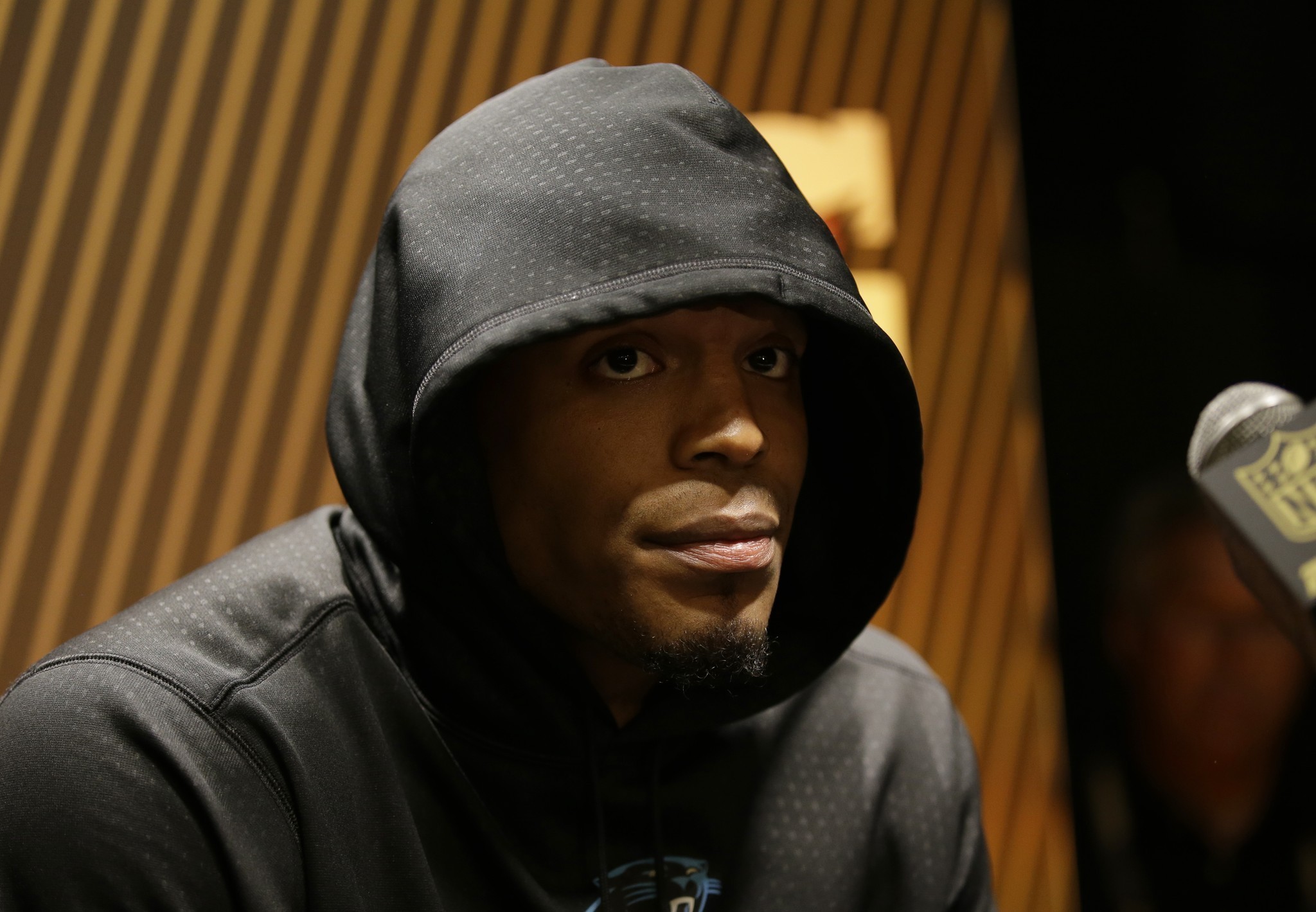
Millennial athletes are taking a different tactic - we saw it on display after the Superbowl. Cam Newton came out visibly sad and frustrated, gave a bunch of one word answers and one incredibly concise, but accurate explanation of how the game went, before leaving the stage. It was raw and honest and expressive and is shows the kind of authenticity and openness that characterizes this millennial generation.
It wasn't pretty. He was sulking and short and visibly upset. He took a lot of beef for being childish or a poor loser. I didn't see any of that, though. I saw a guy who did his duty, answered his questions, took responsibility for his mistakes and gave credit to the other team for winning. He did everything we expect an athlete in his situation to do - he just didn't look happy doing it.
This is the new battle ground, and I think it is very much a generational shift. In many workplaces around the world there are discussion about how we define "professional" and what expectations we place on workers. None of those is more visible, though, than professional sports. We've long been accustomed to the "suck in up" mindset, where even if a player or coach is passionate (either positively or negatively), they calm down for the cameras, answer questions as best they can, and emote in private.
It's prettier, for sure, and it makes the media's job a lot easier. But, as Cam said in his follow up comments today, is it really necessary or required? I'd ask, is it healthy?
We make these guys out to be robots, vessels for our entertainment. We don't like seeing them as real people - unless its in a factory polished window into their real people-hood that's as managed and fake as the image we think we're seeing past. The athletes have played into this, of course - look at the Michael Jordan quote above. It's about marketing and branding and money. Be as bland as possible and don't alienate anyone.
That's the down side of Cam's honesty here. He's going to make some people mad. They're not going to like the way he conducts himself and they might not buy his products or support his team. It could cost him something. He seems to be ok with that - and I am, too - I don't think people have to like Cam Newton. I just have an issue with people saying he's wrong, or it's not the way things should be done.
As with much in life, just because it hasn't been done that way before, doesn't mean it can't. Just because it's how things work, doesn't mean it has to be that way. Reality doesn't make right. Maybe there is no right, and players will choose to do their duty in a variety of ways, rather than those approved by media and tradition.
I'm not quite a millennial, but I really appreciate the millennial love of authenticity. Cam Newton doesn't want to be a different guy in the media than he is out of it. That's incredibly strange to conventional wisdom, but it makes a lot of sense to the kids he's hoping to inspire (and leverage for profit), in fact, it's almost required.
The other element is that players don't quite need the media as much as they used to. Yes, the media is still essential and still pays the bills, just not as many as it once did. Leagues are increasingly beholden to these broadcast deals (although I think the NFL could just set up channels or apps to broadcast all its games and people would follow pretty readily), but the players, especially star players, make more money from endorsements than they do from playing. They need the media, but not desperately. Therefore, they're not necessarily out to make the media's job easier.
Look at NBA star Steph Curry - he's super talented and super likable. He won't put off the old school sports fans upset with Newton - that's just his style. But he's got no problem staking his own claim to the press conference. He was criticized during the NBA Finals last year for bringing his young daughter out to the press conference with him - some journalists felt uncomfortable asking difficult questions or challenging Curry with his young daughter present.
Curry laughed it off (and won the public relations battle largely by leveraging social media - another avenue that marginalizes the traditional player-media relationship) and said essentially that he's an open book, suggesting that both, his daughter can hear the truth AND that perhaps the media need to remember that the guys they cover are real people with families when they ask questions. It was a subtle move, but an important example of how this new generation of players is approaching the media. This long held unwritten contract between the two is being renegotiated and things are a little uncertain.
Allen Iverson was the first to challenge this model (maybe Charles Barkley, although when he spoke out, media just didn't cover it, which means his reach was pretty much non-existent), he was way ahead of his time and we nearly killed him for his honesty. We're now in a generation of players (and increasingly, of fans) who understand and appreciate this approach. It's going to change things.
One thing people seem most uncomfortable with in Cam's performance is emotion. There is, of course, a difference between acting on your emotion and expressing your emotions; people seem to miss this. For the most part, we don't want athletes expressing emotion in a press conference. We like it (sometimes) during or after a game (unless you're Richard Sherman, anyway), but we'd rather get dispassionate comments afterwards. When players and coaches do express genuine emotion, we typically make fun of them (Jim Mora: "Playoffs!").
Cam wasn't whining or complaining. He took responsibility and gave credit to his opponents. When he did finally give more than a one word answer, it was pretty eloquent, honest, and restrained. He summed up the game remarkably well. This was not a guy out of control - he was simply sad. Yes, a happy guy is going to speak louder and longer and more entertainingly than a sad one, but he did his job, faced the press, and answered teh question.
I'm just excited for the precedent this sets. Players might feel free to be more honest about their feelings and we might get to know them a little more as people. You see it being a challenge for everyone, players included. LeBron James tried to manage his response to Newton, but it's clear he's coming from the same long-held mindset that we've too long taken for granted.
It will be interesting to see how the juxtaposition works itself out between this kind of authenticity from athletes and the growing managed output of "reality" stars. In some sense, the millennial generation is trying to figure out the balance between projecting an image and being true to yourself, especially in a world of social media, where the walls are blurred between personal relationships and media portrayals. I find it interesting that we'll get to see this play out among our most recognizable stars.
*Oh, and, yes, there might just be some bias here as well - it might be racial, it might just be flashy vs buttoned down - but this provides an interesting notion to think about with regards to how Cam Newton is viewed.
