
What I failed to take into account is this idea I struggled with earlier this year - and one that could use a bit more working through - that a big issue with being a Christian in a democracy is the assumption of responsibility. We feel, somewhere deep down, that we can't really pass judgement on the value or morality of a law, policy, or government action without also proposing an alternative. Because it's nominally a government of, by, and for the people, democracy requires something of us beyond support or opposition.
This is really where our citizenship in a nation comes into conflict with our citizenship in the Kingdom of God. The Kingdom doesn't have a government, other than the benevolent grace of God; and it doesn't have a law, other than the law of love, exemplified in the life, death, and resurrection of Jesus Christ.
In many ways, nations give us an out. We're less inclined to sacrifice or suffer with or change our lifestyles very much to help others, address needs, or express radical, Christ-like love, because we've got this government over our heads with nominal responsibility to take care of people. Maybe we get off the hook by saying, "if everyone just acted like me, things would be ok," and hopefully we're making choices and living lives that bear this out, but that's far from certain.
Getting back to the question at hand: I think Kingdom ethics speak just as strongly to the dangers of wealth as they do to the dangers of poverty. They might be different physical situations (deprivation vs indulgence), but both are harmful and both lead to pain. So, in one sense, it's very easy to say Christians could support a maximum wage, in which the earnings of folks are simply limited.
I'm not so sure, though, you could make that claim and also be in line with the US Constitution. In other words, for the government to institute a maximum wage, they might have to appeal to a morality the first amendment specifically prohibits them from enacting. This gets into all sorts of grey areas and arguments about the relationship of the US to Christianity and the Kingdom to the nations of the Earth, but those are really discussions beyond the immediate.
I believe Christians need to be able to make ethical and moral judgments about the laws, policies, and actions of the government without feeling obligated to propose a government solution. It is not the duty of Kingdom citizens to ensure the survival or orderly operation of the nation in which they happen to live. We certainly have responsibility to our neighbors, but that relationship does not need (and probably should not be) mediated by the government.
Do I think people would be better off with less? As a general rule, I do. Is a maximum wage one way to help the richest among us live with less? Sure. Does that make it good policy? That's not really a question Kingdom ethics can or should answer. I mean, you can have a similar Kingdom conversation about whether a maximum wage really helps anyone else beyond the few very rich folks it effects. Does increasing the coffers of the government do anything to further the Kingdom? Probably not. Would additional funds for health care or education be beneficial to people? Absolutely. Will the consequences of this potential action be as we envision? Almost certainly not.
Of course, that's the rub with everything.
I believe Kingdom ethics dictate a communal responsibility to provide people with a love, a family in which they are nurtured and valued.
I think this manifests itself in things like meeting basic human needs: nutritious food, shelter, medical care, education, and work. Of course, Kingdom ethics say you shouldn't need money or taxes to do any of those things.
In the end, maybe that's the solution: to just continue to preach the Kingdom - sharing, sacrifice, hospitality, love - and let the distinction between those ideals and the realities of the world be a judgment in and of themselves. Compare the Kingdom that's lived out among God's people to life in the nations of the world. I'm not sure either party will come out looking so rosy on that one.
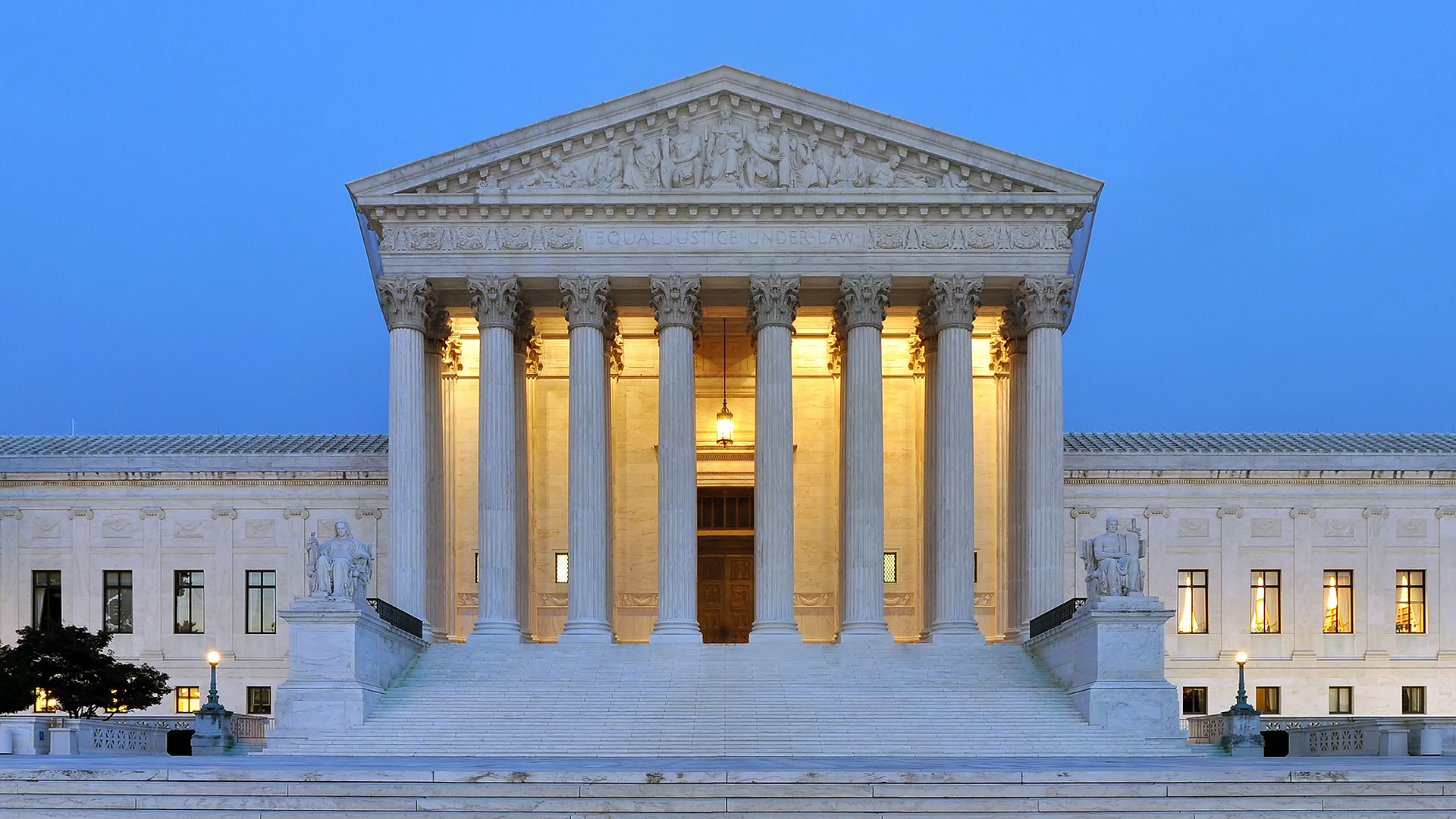
I was listening to a bunch of self-satisfied, out-of-touch blowhards (otherwise known as the US Senate, in this case, specifically the Judiciary committee) talk about the Supreme Court (and nominally Brett Kavanaugh) today. I didn't intend to listen, but NPR has decided to interrupt regular news coverage for the day and broadcast it live. Some of them were going on and on about how nominees keep saying they're not going to rock the boat and then get into office and try to swamp it. Some of them were talking about how credentials and experience should trump the kind of hearing they're wasting our money and their time on today. Most of them, though, are throwing around the term "rule of law" as if it were a room full of lawyers.
That's what gets my goat.
You may say that my one semester of Intro to Law as an undergraduate makes me unqualified to speak on such a matter, but I'd argue the fact I've covered the basics of law and government without all the extraneous nuance makes me exceptionally qualified to opine on a very broad, unspecific point: We have got to stop letting lawyers run things - especially the Supreme Court!
Were you aware that you don't have to be a judge to be on the Supreme Court? Would it surprise you to learn you don't even have to be a lawyer?
It's true. In fact the only real qualification is that one be appointed by the President with the advice and consent of the Senate. That's it.
I've said for years that the first name on my Supreme Court list were I to ever find myself President and faced with a Court vacancy would be Jim Cameron - the guy who taught my American Political Institutions class in college. He's a constitutional law scholar, but more importantly a practical and caring individual, full of wisdom. Now, he's gotten up in a age a bit and retired from teaching, so perhaps I'll need to formulate a new list (you know, in the event we adopt my new election plan of picking a name out of a hat for every position and taking turns), but the point stands.
You don't need to be a great legal scholar to be a great Supreme Court justice, you just need a little intelligence, a lot of common sense, and a heart full of compassion.
Why do we insist on having "the greatest legal minds of her generation" sitting in those robes? Well, they tell us it's because the minute arguments and facts of law argued over in these immense cases are so extraordinarily difficult to parse and understand, let alone decide, that people need to be extremely well trained and versed in the process. Of course, who is it that tells us that? Lawyers. Who gets to decide who those people might be? Presidents (often lawyers) and Senators (I believe still over 50% lawyers). It's sort of the same gilded wall people in my profession have built - that only theologians can really do theology. Well, you don't have to be a lawyer to be a good Supreme Court justice.
You just don't.
Why not? Well, because there are layers and layers of lawyers and judges working on the lower levels of justice who do know all that stuff and make really good decisions. The Supreme Court was never meant to be the ultimate arbiter of minute legal matters - the Supreme Court was designed to save the nation from the lawyers, to step in when the law clearly violates fairness or justice or the common good. We've got plenty of lawyers making and defending and parsing our laws. We don't need another layer of them in fancy robes with no expiration date.
What we do need are wise people who can find the few cases where the law failed us and make heartfelt changes for the common good. Sure, we're never actually going to agree on what the common good might be and these grandstanding confirmation hearings will continue ad nauseum, but at least, perhaps, they might be talking about things that really matter in a candidate for the highest office in the land: wisdom.
You might be surprised to know I'm generally progressive, especially on social issues. When it comes to individual freedom over corporate or government control, I tend to be willing to risk a little chaos to side with the little guy. It puts me more in the RBG camp than the other one.
Still, I think perhaps the most wise decision any Supreme Court justice has made in my lifetime was Chief Justice John Roberts letting the ACA stand. We all know his legal arguments were bunk - virtually indecipherable when it comes to logic, but clear as day when it comes to social awareness. He said "this law is a mess, but I don't want to be the guy whose Court invalidated the notion that people should have healthcare.
Congress and the voters will have to fix this mess, but it's a mess that we deserve (for any number of different reasons).
The guy did precisely what the Supreme Court is supposed to do. He knew that because, at least according to everything I've read, he was one of the greatest Supreme Court fanboys of all time. He knows what the institution is supposed to be and he knows his role as the head of it. We might not have the same inclinations when it comes to decisions, but I trust the guy understands his role. I wouldn't say that for some of the other justices (both conservative and otherwise) and I certainly wouldn't say that for most of the US Senate.
I don't want this to be a dig at lawyers. Not to be cliche, but literally, some of my best friends are lawyers. I get the importance of what they do and would never want to minimize it. I do think the Supreme Court is something different, though - it's a part of that "government by the people" thing. It's not about who can tie themselves up in the best legal knots - the kind of logic and wordplay I truly admire from lawyers - it's about how the decisions of that legal system effect the country as a whole. It's different.
I don't want judges to be elected or any old person in those positions. I'd just like for us to change our perspective on the Supreme Court a little bit. Just because it's the highest court in the land, doesn't mean it has to look like all the others - in fact, it really shouldn't.
In the end, we're not a nation of laws, as the lawyers so often like to claim, we're a nation of people. People and laws are different. I don't mind having lawyers on the Supreme Court - a great legal mind is a good thing almost anywhere - I just hope they (and the people who choose them) will be mindful that a great legal mind is not the most important thing for that particular position.

I don't think the theory of oppressive government should be overthrown though, because it's wrong. The gun nuts are absolutely right. Government is our example of empire in this day and age - it's a large power center, using dominant force to exact its will. If anyone's wrong, it's the folks who believe government is a force for good in the world. It may be necessary and our scriptures might indicate it's purpose is to do good, but that's simply not the reality.
Those with power will use it in oppressive ways. That's a historical fact 99.9% of the time. Shoot, many a scholar has said the main story line of the Bible is the faithful resistance of empire. It's the exact trajectory of the gospel of Jesus Christ. Identifying the problem is not the issue. Those gun nuts have it right all the way.
The problem comes in the solution. Armed resistance has generally been the course of things. Sure, Canada and Australia had a more diplomatic approach to freedom, but it was really only after both sides recognized the alternatives. Gandhi had great success with non-violence, but economic factors were far more prevalent in the decision of Britain to excise itself from the sub-continent.
Of course, that doesn't invalidate the idea or it's affect on the process. This faithful resistance those biblical scholars talk about is not the same thing as taking up arms to surprise a violent power with a counter-violence they didn't expect. The gospel provides an alternative. Faithful resistance in the way of Christ is simply to take up your cross and follow Jesus, which literally means an execution for treason. It's not a court battle or an actual battle, but a commitment to love in ways that may only make a difference after we're dead (or maybe after our children's children's children's robot children have been decommissioned).
It's not super attractive and it's not entirely logical. No, the way of faithful resistance in love really only comes into view after we've tried out the other options and found them wanting - not always in effectiveness, but certain in overall satisfaction. Violent resistance - even stubborn non-violent resistance - often gets us what we want, but what we want in that scenario is power of our own and inevitably we use it terribly (even if slightly less terribly than those we overthrow - which had lower odds than a coin flip, if we're taking history into account). In the end, it doesn't get us across the finish line; it just perpetuates the problem (albeit in a more palatable way, short term).
So, in short: the gun nuts are right in identifying the situation in which we find ourselves; they're just typically (and by that I mean indicative of typical) off on how to address it.
It's not really any different to solutions other people proscribe to problems of this nature. Outlawing something is perhaps less violent in the physical sense, but no less oppressive. This is where we have to have our discussion about separating government responses from moral ones - a discussion we certainly don't have time for today.
The question we ultimately have to grapple with is how we comprise our values for life in the world. Do we believe in love and hope and faithful resistance on a personal or religious level and deal with government oppression (hopefully in our favor) as an interim measure? Do we leave the governing to the government and simply reserve our engagement to other venues? Do we simply live the way of the world until things change (presumably supernaturally), when its easier to do as we believe?
None of those seems great, but they're also not entirely dismiss-able; you can't blame people for choosing any of them. I can say, very clearly, violence itself is not Christian, but what level we're willing to live with oppression (of and by ourselves) in this world is truly a contemporary quandry.
The gun nuts have chosen their answer.* What are the rest of us going to do?
*Yes, I know I'm going to catch flack for continuing to say "gun 'nuts,'" but I think you all know exactly what I mean. If I'm going to be politically incorrect, I don't mind doing it in a way that's disrespectful of violence. Sorry. You'll just have to live with that (and hopefully be graceful and forgiving).

to love the people around me, to love my enemies, to love the whole of creation.
Christianity is an alternative form of politics that exists within, contrary to, and separate from the political machinations of the world. When I say, "all people deserve healthcare" or "borders and citizenship shouldn't dictate how people are treated," often the response is "how do we make a law to ensure that" or "how can we fit that within the constitutional framework." A Christian response really is - and should be - who cares?
It's not our responsibility to ensure the United States of America functions properly - or even exists. We're here to live into the Kingdom of God. To love people, to suffer patiently, to act like Jesus.
This is ultimately why I'd argue a Christian perspective on governance is anarchy. It's not the anarchy of Purge movies, but a place in which people aren't forced to do anything, but challenged to sacrifice for the other.Governments and forms of government come and go - there are always attempts by people to gain, seize, exercise, and maintain power. Christians are called to avoid power games - to renounce them and condemn them.
The Church is an alternative politic where those who have give willing to those who don't - where there is a race to the bottom, so to speak,
where people are glad to do with less and less so our neighbors can have enough.
I'm not sure you could ever run a government that way, but it's not really my concern.
I can say, "there should be no borders," because there shouldn't. All people are equal - race, creed, nationality, none of it matters - that's truth. People should have access to healthcare, food, education, work, a loving community. If that messes with your constitution or causes problems with your government, so be it - it doesn't make the truth any less true.
Governments are, at their core, attempts to isolate "us" from the problems that exist elsewhere. Christians are called to immerse themselves in those problems, to suffer with those who suffer. When we allow ourselves to be constrained by the laws or Constitutions of the governments in which we reside, we are putting those things above the core tenets of our faith.
Too often American Christians (and perhaps Christians around the world) really expect their faith to inform a reformed version of government -
this is certainly the perspective of many evangelicals who run for and/or are elected to office - but really Christianity was designed to be a way of life outside those manufactured human institutions. The gospel of Jesus ends religion itself; it ends government.
Our core belief is that the Spirit of God can and does change people, that God's love - expressed in and through us - can and will overcome whatever inevitable ugly reaction we get from sharing it unconditionally. The road isn't easy - Jesus said as much, if the whole crucifixion thing didn't prove it - but it's the only one worth living and suffering and dying for.
We need to reclaim the gospel as a true alternative and not the magic elixir that will fix the world we've created.

A transcript of the exchange can be viewed on any number of sites I'd rather not link to, but here's one anyway, since you need context.
The crux of the matter is Vought's comment, in support of his alma mater, Wheaton College, that people of non-Christian faiths (specifically Muslims in this particular case, but it's expanded to all) "do not know God" and "stand condemned." Sanders uses this statement as a means of rejecting (or voting for the rejection) of Vought in a government position because this view might be offensive or fear-inducing in people whom he's referenced.
In my view, both of these guys made real fools of themselves.
Sanders is easy - he falsely equated personal opinion with action. You need to show actual discrimination to justify denying someone a position of power, at least in the US government. Vought's belief that some people are condemned is just a belief, unless there's proof he acted on it. Shoot, this is a position in the Office of Management and Budget, for crying out loud, are there even religious issues that this guy would have power to rule on in the first place? Even if Sanders thought he might act prejudicially, he would be hard-pressed to come up with a scenario where such prejudice could even be possible.
People have rightly pointed out that this is, essentially, making a religious test for office - something the constitution forbids. Of course, what we conveniently never talk about in those scenarios are the ways in which our laws already impinge on the freedom of religion for things like child brides or abusive corporal punishment, to name a few. It's not outside the realm of possibility that "condemnation" on the basis of religion, might be one step on that same train Sanders would like us to pursue.
All of those are interesting, but what I didn't hear too much of is criticism for this notion of condemnation coming from Vought. It's terrible theology, to begin with, and just over-archingly anti-Christian to make such a statement. I could see justification, perhaps, for the condemnation of specific actions, but to condemn not just individuals, but whole groups of people, simply for a theological difference, feels like precisely the kind of thing Jesus denounced the Pharisees and religious leaders of his day for doing all the time.
In fact, I feel like Jesus said, at one point, "God did not send his son to condemn the world, but to save the world through him." Time and again Jesus failed to condemn anyone, except those claiming religious authority. We miss that boat a lot, as Christians, and maybe it takes a wildly over-zealous, secular Jew to get someone to notice.
I don't think Sanders was remotely right - at least constitutionally - in his statements and his badgering. In fact, it sounded an awful lot like condemnation in its own right. At the same time, Vought shouldn't be defending those words; he should be profusely apologizing for them.
To use the name of Jesus, the Church - his followers - as the means for doing it just makes me sad. The people most committed to the name of Jesus Christ don't appear to know Jesus at all. Rather they've bought into a dogmatic theology that serves its own internal logic more than the God it purports to represent.
It's intellectual assent taken to its logical conclusion - a person's acceptance or rejection of the idea of Jesus overrules individual action.
No one is saved or condemned based on their religious affiliation - we're saved or condemned by our commitment to love and selfless service -
you know, living in the way of Jesus Christ, whether you're in a position to admit that's what you're doing or not.
Neither of these guys did much to advance their cause in this matter. Neither one showed any real understanding of honor or respect. I'd say those actions - the words and actions of both men - are embarrassingly counter to the message of Jesus. Fortunately, that doesn't devalue them or their identities in any way. There's still plenty of love and hope and grace to go around.
At our very best, we're still more prone to condemnation than grace. I'd say the best we can hope for is to recognize it in ourselves, admit our failings, and work to be different moving forward. The intractable positions we see here are far more alike than they are different and we deserve better than either one from people we've placed in positions of power.
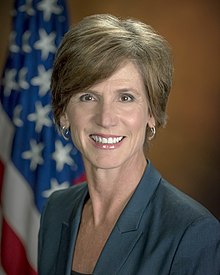
It seems pretty clear from her statement that Yates was personally opposed to the ban, but so is the vast majority of American - even a large part of Trump's constituency. The Executive Order was so broad and poorly defined that all sorts of legal residents are caught up in the web - if you need a source for that, check out the statements of pretty much every Senator, Governor, and sane person in the country. There's probably a solid legal precedent to do what Trump was trying to do; he just didn't do it well.
The job of an Attorney General or any District Attorney or State's Attorney, is to determine where to place the scare and valuable resources of their office. They decide which cases are worth fighting and which ones aren't. That's their job. Yes, you can say Yates was an Obama appointee, but that was after a career of non-partisan service in the Justice Department for a variety of Presidents. At some point, in gov't positions, you can't get promoted farther without a Presidential appointment.
She made a determination about the legality of the ban based on her expertise in making such decisions - decisions not unlike many Republican members of Congress made for themselves. It's not some protest against Trump; it's called doing her job. Does it align with her personal beliefs? Maybe; we don't know. Odds are that it does, but there's no reason, here, to make it into a partisan fight - that just plays into the hands of people you're trying to thwart.
I've come to believe that no one with power in Washington actually wants to change anything. They don't want peace. Rancor and division is what keeps them employed, on the news, and in business. They're (and this includes activists, media, and whoever else has their life and livelihood wrapped up in political games) just trying to score points for their side to better obtain or secure power.
Should Trump have fired her? That's complicated only because of the Department where she works. Any other Executive employee, I'd say, "Yes," absolutely. They all work to help Trump do his job, so he should be able to replace them at any time. The Department of Justice is a little different in that it's sole purpose is to make legal decisions about how to spend resources in the service of "justice." Presidents appoint people they know and trust presumably because they are in greater alignment on those issues, but it's also a dangerous place to meddle, because it's very easy for a President to, or to appear to, be tipping the scales with alternative motivations.
One of the biggest criticisms of the Eric Holder Justice Department, especially early on in the Obama Administration, was how political his decisions seemed to be. That's always something to avoid. Of course a President wants their Executive Orders, laws, pronouncements, and decisions defended as fervently as possible, but, at some point, they do have to let the department do its job.
Even so, I wouldn't say Trump's move was partisan so much, either, as personal. It's been proven, in the last few days, that the GOP is not entirely on board with this move; it's not an issue that divides along party lines. Jumping to conclusions about back and forth as if one side is the enemy doesn't help anything actually get accomplished. We need to take issues on their own merits to hold down the rancor and heal divisions.
Opposing Trump just because he's a perceived enemy is paying back precisely what the GOP did to Obama for most of his time in office. It's fighting a person, rather than dealing with issues. I think this ban is silly and stupid. I think the Executive Order imposing the ban was overly broad for its stated purpose, poorly conceived, and a waste of time, but I don't see it as an avenue for fighting a left-right war. When we treat it that way, we've done ourselves, and the country, a grave disservice.

Now, lots of people doubt the veracity, or perhaps, the specificity of these details. The very fact that the government took a decade to declassify these pages invites suspicion. It's a messy situation.
What media coverage that exists of this issue is trying to play it off as a good and evil scenario - Congress fighting for the families of 9/11 victims and the President protecting diplomatic cronies with their hand on the oil spigot. That comes off pretty thin, mostly because it's an obviously complicated narrative. For example: a Bush presidency might be more open to Saudi special treatment - no one has yet figured out why Obama would want to help them.
But what this is, and why it's so boring to the media and the general public, is because it's representative of the government working properly. Congress is specifically charged with speaking for the people, in 485 individual blocks. They are supposed to take up the cause of victimized families and support individual issues. That's what Congress is for.
Pre
At the same time, the President is responsible for the country as a whole. He has to speak with one voice for the whole, which is a difficult spot to be in with the country so confused about who it wants to be. Foreign policy is one place in which we are just one place - you have to make decisions. The President's job is specifically to represent the best interests of the nation as an entity. As much as we like to say the nation is the people, there is a difference. The State exists as a thing - it represents the people, it is the outer layer of our democratic structure, but it's not the same. There's a reason we have separation of powers, because they represent different things.
So, what's happened is precisely what should happen when everyone is doing their job. Congress worked together to pass a pretty universal bill meant to allow 9/11 families to explore Saudi culpability in court. Yes, it is a tricky foreign policy issue and allowing US citizens to sue foreign governments in US courts could set a lot of difficult precedents, with unknown consequences to our economy and politics. Which is precisely why the President vetoed the bill. It's great for Americans, but not great for America. Both parties did their job.
Now it looks like Congress will override the veto and make the bill law against the President's objection. Again, they're doing their job. Potentially, now, the Courts will weigh in - a third branch of government not specifically representing the nation or the people, but some timeless combination of the two, meant to stand outside of context.
This whole episode is interesting in the season of a Presidential election, where what it takes to be elected is entirely different from what it takes to govern. This is beyond simply the ability to sell yourself in one case and to be reasoned and considered in the next. What it takes to be elected President is to convince the population that you're going to represent them well, but the role of the President isn't to represent the people; it's to represent the country. Presidents run like the nation's congressman, but have to govern like a President.
You see Hillary Clinton struggling with this because she's spent so much time governing. She knows that what a President has to say isn't going to get her elected - she has to act Presidential without actually being Presidential. In this sense, her experience is what's killing her. Trump, on the other hand, has no clue about what it means to govern - he only knows how to sell himself and is going all in on representing the people (of course it can be debated exactly what kind of people he's representing).
We've got one candidate who has no idea what it means to be President and one candidate who has too good an idea of what it means to be President - and neither of them are attractive to the average US voter.
There is, without doubt, a lot of dysfunction in the system, but it has very little to do with the system itself, but the ways in which our culture at large expects people to act towards their own self-interest. Our politicians live into those expectations the same way our voters do. I'm not sure that will change, but I'd hope we can begin to take a step back and figure out how each part contributes uniquely to the whole and make our decisions accordingly.
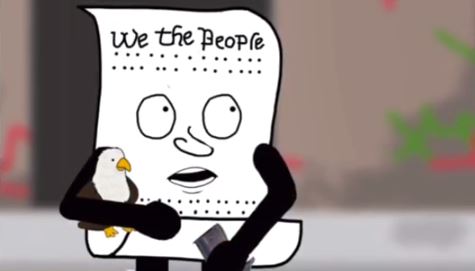
Traditionalists will tell you this is why ultimate power is left in the hands of the people - but those same people will generally tell you the Constitution is fine, if people will just follow it. Those aren't necessarily contradictory opinions, but it sure seems that way. The solution, right, is some kind of new constitution, that can be negotiated and agreed upon - but we know, given the polarization of our country, that this is just an impossible task. It could never be done. And even if it could, we'd just need to do it again later (right France?).
We're stuck playing games in a flawed system we know is dysfunctional, but unable to really admit it to ourselves. This is the naked king continuing to parade down main street and ordering the wise young man who claims he's naked into prison.
Ultimately, we're people, which means we're generally poor at managing ourselves, let alone others. Throw in power and fear to the mix and it's amazing we lasted this long before royally messing everything up. Somehow we managed to keep FDR from doubling the size of the Court to get his ideas passed and perhaps Kansas can keep religious oligarch, Sam Brownback, from naming his own court in the same way. There is some hope that this crisis will not be the one that brings the whole edifice crumbling to the ground (I don't typically go in for Chicken Little scenarios), but if it's not this, it'll be something else, right. I mean we have to, hopefully, maybe, finally admit that our Constitution really isn't some all-encompassing, world saving gift to humanity, right? It's a piece of paper that took a lot of smart people a long time to figure out (on the second try, mind you) that work pretty well for the most part - but it isn't, nor could it ever hope to be, perfect.
This is why the Christian response is, as it always should be, an alternative example. We really shouldn't be worried about trying to make the system work, because "the system" doesn't work. We should be living out the alternative politic handed down by Jesus Christ. A friend of mine recently asked the rhetorical question - What if Jesus is enthroned now and this is the way he governs the world?
I don't think that's wrong. Christ has come. Christ reigns. The Kingdom is here now, but it's one built not on power and might, but on self-giving love, the kind Christ commissioned the Church to carry out in life and practice. This is precisely why I believe no nation can be a Christian nation, because you just can't be both.
It is times like this when it becomes apparent just how little faith we put in our gospel. We're so entirely invested in the systems of the world that we can't rightly believe in Christ's kingdom enough to live in it. I'm not saying we need to withdraw from the political process- not at all - we just need to take it less seriously. An election, even the regular governing of the country, is not the end of the world; it's not a lynchpin of history or even a referendum on the future. Those make great debate quotes, but they contribute to this overwhelming faith placed in flawed institutions.
It's important, sure, but it's not as important as we make it.
It's not unlike your typical homeowner's associate writ large, right? Yes, there are far too many rules, and much of its construction and function make no rational sense, but in the end, you win some and you lose some and you live your life. It might mean you have to cut the grass in a northeasternly diagonal instead of to the south-southeast, and you may have to give in and let Gladys put up that ghastly inflatable snowman, because its in her back yard. It's a nuisance, yes, but the only time it becomes unbearable is when someone takes it too seriously and makes everyone's lives miserable.
The easiest thing to do would just be to let the President pick a nominee and if they're competent to do the job, confirm them, regardless of their interpretive philosophy. That worked for the first 200 years of our country and it would put an end to all this mess. I know the Democrats made a stink when Alito came through, but they did let him through. It was wrong to make a stink then and it's wrong now. It's petty and it's childish and we need to get over it.
I know everyone caught up in our electoral and governance system thinks they're doing really good in the world (or trying to) - I'm willing to grant that kind of gullible optimism - but in reality, life is so much more important. I know I wrote hear a few months ago that as much power as the President has, he could do far more good for the world as an actual community organizer. I really believe that; I think it's true of every politician. Again, I'm not saying we should get rid of them, but we should get over them.
I think this is a good attitude for anyone, but I think it's especially important for Christians. What we say or affirm or swear to has little to do with what we really believe. Our actions bear out our real commitments and it's about time we take seriously the claim that, just maybe, the way of Christ is actually the hope of the world?
I doubt it would end electoral contentiousness, but it would certainly de-escalate the situation if we just all took a step back, a deep breath, and a moment to re-orient ourselves to reality. An election year may be a bad time to suggest such a thing, but it's certainly the time we need it most.
Good day.

Now conservative, I think, is a more difficult position to nail down using the same terminology. I know few conservatives who think government (as an idea) is completely worthless, even if that is the stereotype. In that sense, I share with conservatives, the healthy skepticism that government can really solve social problems. At the same time, I tend to butt heads with many conservatives who seem to believe that government will inherently make any social problem worse. For the most part, I sense a belief that government is a necessary evil. I'm not sure I'd go that far.*
I tend to see government as a tool, not a solution. Just like the free market or private enterprise or non-profits or human responsibility, government is a tool society has at its disposal to address problems we see around us. I don't think it's always the most effective tool to use and its often simultaneously the easiest and least efficient, but it is a tool nonetheless. Because I hold this view, I don't see "government" in and of itself as good or evil any more than a hammer or a saw is good or evil - it simply is; judgement comes once we use it for something - AND, it must always be evaluated in context.
Now there are ideological arguments that arise - specifically "government is an inappropriate tool for that job." Some are willing to give up pragmatism in search of ideological purity. I applaud that notion; I might even share it in some instances. However, when it comes to government, I'm entirely practical.
If my choices for pounding in a nail are the blunt side of a wrench or my own hand, I'm gonna give the wrench a go and not worry too much about the appropriateness or efficiency of the choice (which seems to be a conservative tactic). Now I'd also rather not be so content with my ingenuity that I never buy a hammer or even look for a better wrench (which is often the liberal move). There's some sense of desiring an ideal solution so thoroughly that it paralyzes our system - either too stubborn to admit the solution we have is imperfect or too stubborn to admit a bad solution is better than none at all.
Now, I'm always the one screaming "there's never just two choices," so it's not as simple as I outlined above - creativity is good - but that also illustrates my complaints with the typical ways we handle government - it's either a solution or a problem. I'm not willing to call it either. I'd like us to see a more expanded society, in which we use whatever tools at our disposal to address needs. We can ask not, "should the gov't be involved in this or not?" but "in what ways and to what degree does gov't make sense to address this?" The answer might be, "a lot," or, "not at all," or something in between - I'd just rather we figure out something that works, not be satisfied with that answer and also not reject it out of hand for ideological reasons.
I read another lengthy piece about the problems of our prison (and court) system this week. It's an issue that needs addressed (and won, thankfully, members of both major parties want to address). So here, as part of the solution, I'd be fine with private companies and free market forces running the prison system, so long as the government incentivizes (ie, pays) them based on how few prisoners re-offend. I'm fine with prosecutors holding the reigns on prison sentences (as they do now), so long as their judged by crime rates, not conviction rates (and thus invested in long term solutions). To me, that's pragmatic and it makes use of every tool at our disposal, rather then fighting over one.
Portugal decriminalized all drugs for personal use and usage rates dropped (and drug-related health problems plummeted). They've given free methadone and clean needles to addicts in Switzerland for years - and outcomes continue to improve. It works. I'm all for stuff that works. Ideology be damned.
Of course, we can't actually remove ideology from the equation. Everyone believes something about the world and we all use these beliefs to inform our actions. We all have an ideology. We can't divorce our ideology from our participation in society. The point I'm more trying to make is that our government is a shared tool; it can't be governed by any one ideology. It's got to be pragmatic.
Some people believe individual freedom is the highest aim of society; others believe providing for the common good should be ideological aim of humanity. Those people are not likely to be reconciled, but they do have to live together. Thus we have government - the messy attempt to keep everyone from killing each other. People aren't going to agree on ideology, so government must be kept clear of adopting one - it's got to be pragmatic.
This disagreement, though, is also why we must work diligently to remind people that government is not the end-all and be-all of our interactions with each other.
The Church has a unique place in this process. The Church is called to be an alternative community, living out an example of how people can get along with each other in love and sacrifice. The Church should never be involved in running government - it's certainly not a Christian duty to impose beliefs or actions on anybody.** If there are problems the Church believes should be addressed ideologically (and, for the Church, all problems should be addressed that way), it's the duty of the Church to do it, not worry about trying to make the government do it. Yes, government can make the efforts of the Church to be faithful to its calling easier or more difficult, but government certainly can't prevent the attempt.
Any other ideological group is free to pursue the same alternative community. If someone wants to found a collective based entirely on individual freedom, they are, of course, free to do so. Yes, government might make that more difficult than we'd like, but if the ideology is strong enough, people will see the truth in it. That's the belief of the Church anyway; I find it odd anyone would believe in something they don't think could ultimately win people over without coercion.
The government can't be that avenue for ideology - mine or anyone else's - precisely because it's an involuntary organization. People could, I suppose, up and leave, if they were really fed up, but it's an unrealistic solution for most and, ultimately, if it's not this government it will be another.
I don't think it's wrong for people to voice their opinions - that's sort of the whole point of government in a democracy. We express our views on how things should work, hear competing views and try to figure out some compromise. It's this whole business of treating government like something we can win that's driving the problems. Ideology can only win out on its own merits. It can't be enforced.*** When there are different people involved, the opinions will be different.
Government is a tool. We can (and maybe should) have strong beliefs about the appropriate use of that tool, but, in the end, we're going to have to come to some agreement about how to actually use the tool. I might eventually convince you and you might eventually convince me, but it's not going to happen through argument and law, it'll happen through providing a credible example.
Let's use the wrench to drive nails for now, and work on a better hammer as we go along.
*Although I do see government as unavoidable, which is sort of like both "necessary" and "evil" in a different context. You're always going to have someone telling you what to do - whether it be an elected Congress or a guy with a bigger gun; whether you see them every day or just once every couple years, none of us will ever be left entirely alone. There's always going to be some type of government. I suspect, given that reality, it'll also always been seen by people as a means of power, rather than, as I say here, a tool. I tend, from this context, to look at government's necessary-ness and evil as simply a given and worry more about its function - pragmatically - as I outline here.
**There's still this undercurrent running through Christianity (even when it's not outrightly claimed) that our nation should be a Christian nation, governed by moral laws, informed by Christ. I wrote a lot about this last month, so I won't rehash it here - just to say I think this idea is a horrible corruption of the gospel of Jesus Christ as should be opposed as strenuously as possible.
***Unless your ideology is "everyone should do what I say without questioning," then, you know, I guess, good luck, Hitler.

Let's get our language correct people - and perhaps gain some perspective on ourselves and the world around us.
The truth is, comparing Bernie Sanders to Soviet Russia is sort of like comparing a pile of freshly raked leaves to a hard boiled egg - there are certainly comparisons to be made, but they're not going to be helpful.
First, let's talk a little about the difference between Socialism and Communism. Communism is a form of government (like a monarchy or a parliamentary system or a representative republic). Socialism is an economic system. Yes, Soviet Russia was indeed socialist, because socialism is the only type of economic system possible within communism (unless you count corruption, in which case Soviet Russia wasn't socialist at all).*
Most nations on Earth today are basically democratic. There are some failed states with virtually no government, a few military dictatorships, and the odd monarchy - but for the most part, everybody is a democracy of one kind or another (which just means people get to vote for the people in power). Yes, there are varying degrees of effectiveness and freedom here, but that is a discussion for another day.
Economically, those democracies that exist (and no, just because the UK or Thailand has a monarch, they really aren't monarchies) have economic systems incorporating elements of both socialism and capitalism. In the extreme, capitalism means every man (or amorphous corporate "man") for himself; people use whatever resources they possess to leverage their ability to survive (or enrich the few and starve the many). Socialism, in its extreme, means every resource is collected together by society and used to meet individual and collective needs (or enrich the few and starve the many).
Every economy on Earth (except maybe Somalia) works along a spectrum between socialism and capitalism.
One of the easiest ways to look at this might be a rather un-contentious issue like roads and bridges. A purely capitalist system would keep gob't completely out of the transportation business, allowing private entities to control and toll roads that cross private property and allow market forces (ie trial and error, essentially) to control safety and prices. A purely socialist system would commandeer land for roads and bridges, then construct and maintain such using a corps of transportation workers on gov't payroll. Most societies use a mixture of the two - often using competitive bidding to keep construction costs down, but using regular payroll labor for maintenance.
Another way of looking at this spectrum might be the recent economic recession. Most gov'ts around the world used public money to keep banks and other institutions from going bankrupt and closing. This is a socialist intervention meant to prevent further losses in other parts of the economy. A purely capitalist solution would have let every failing business fail, leaving those bankrupted or impoverished to learn their lesson and do better next time. A purely socialist solution would have been to nationalize the banking industry, with the gov't taking over investment institutions and running them as departments of the gov't. Most nations fell somewhere in between, propping up institutions that could be saved and hoping to avoid future problems by enacting regulation to better keep such business in check.
There is a lot of strong opinion about how well these efforts have failed or succeeded in various places, but they represent elements of both socialism and capitalism. I'm not really aware of anyone anywhere (outside of maybe North Korea) who advocates for a straight socialism or a straight capitalism. Even places like Cuba, avowedly communist in gov't, collects only about half of its country's production in a given year, and could thus be said to be, maybe (grossly simplified) half socialist.
Now that last example, finance, is a great way to illustrate that whether your economic system is largely socialist or largely capitalist doesn't matter as much as how well its managed. Sweden and France, very similar European countries each take roughly 45% of GDP (money made in the country in a given year) for gov't expenses and provide lots of public services (free health care, education through college, etc). They have among the highest rates of taxation in the world and are considered among the most socialist. They are both strong, advanced democracies with stable governments and high average incomes. France is a giant economic mess, with skyrocketing public debt and a stagnant economy, while Sweden is swiftly ridding itself of debt and growing rapidly.**
All this to say, the United States has always been, in some sense, socialist. Granted, following the Great Depression and FDR's New Deal, we're a lot more socialist than we used to be. Things like medical care for children and the elderly, along with unemployment and emergency housing measure are socialistic by nature. I'm sure everyone would agree these things can be done more efficiently and effectively than they are, but that is, again, a conversation for another day.***
What I'm saying is: every Presidential candidate from both parties is a socialist (yes, even Rand Paul). The degree to which any candidate is a socialist is certainly up for debate, it's just not that productive a discussion. It's a much better idea to evaluate candidates based on actual plans to address actual problems (which will all be a variety of socialist and capitalist solutions whatever candidate you pick). And let's stop bringing Soviet Russia into things - they haven't really been relevant since Taylor Swift's been alive (but I'm sure that's merely coincidence).
*Yes we also have the example of modern China, which is trying to keep communism as it adds elements of capitalism to its socialist economic system. As we'll see later on, nothing is purely socialist or purely capitalist.
**In Frace's defense, they are roughly 6 times bigger than Sweden, population-wise and have a more varied set of difficulties to work around, however, their situation isn't really all that different from Germany, which isn't quite so far up on the socialist ladder, but still totally has its house in order.
***Just to be clear, there's no "Christian" backing for socialism or capitalism - a "Christian" economy would look something like benevolent anarchy in which people worked hard each day for what they needed and gave away the rest, but nothing was required or anyone. In other words, it wouldn't work in the US anyway, so don't worry about it.

It is NOT persecution to be required to follow the same rules as everyone else - that's not persecution. Persecution is being singled out for different treatment based on religious beliefs. We've come to call it persecution in this country when we're asked to do things we don't like, even though everyone else is required to do the same thing. That's not persecution, it's society. Expecting the rest of the world to cow to your beliefs and opinions is selfishness. It's not persecution.
For eons, people of faith (all kinds of faith and moral persuasions) have been exempting themselves from all or parts of society to maintain purity or conscience. Passing a law that forces some measure of self-exemption is not persecution. It's life. We are not guaranteed the opportunity to have our cake and eat it too.
What's more, as a Christian, this sort of sacrifice is expected, it's promised to all followers of Christ. Christianity is a different way of looking at and interacting with the world. It is, by definition, contradictory. To expect anything different is a sort of narrow, short-sighted perspective.
Last month, demi-hero Brian Zahnd wrote a blog piece addressing torture and Christian perspective on such. In the midst of this piece (which, overall, has little, if anything to do with my post here), there's a shortened version of the historical position of Christianity as it relates to world power.
For three hundred years everyone knew that it was dangerous to be a Christian, and therefore knew what it was to be a Christian. Then things changed and Christendom was born. Christendom was the subordination of Christianity to the sovereignty of empire. More to the point, Christendom was an attempt to invent a risk-free Christianity. And it was a “success.” But it came at a price. The price was that no one quite knew anymore what it meant to be a Christian. How can you be a Christian when there is no risk? How can you take up your cross and follow Jesus if there’s no danger of suffering? Removing all risk makes Christianity incomprehensible.
We've reached a point where we're so removed from any sort of suffering, it's become a bogeyman. We call suffering persecution because it impedes our self-determination. Pleasure, ease, and comfort have become the gods we serve. Anything that feels bad or unsafe or risky becomes the enemy.
I'm not saying we should go out looking to suffer, but we shouldn't be afraid to choose suffering if it makes sense to do so. I watched Unbroken last week and recoiled at the kind of suffering people endured. I kept saying to myself, I'd rather die than suffer. Why? Because it's the easy way out. It used to be that life was suffering (life is pain, highness), now life is all about avoiding suffering, putting it off, or pretending it doesn't exist.
I think the gospel message is supposed to be something about peace, forgiveness, love. Somehow we've twisted that into lazy self-indulgence. Peace is hard work. It takes sacrifice. It's not easy. If you want your life to be easy, stop standing for anything. The path of least resistance is often really successful in our time and culture (just ask a Kardashian).
There is real persecution in the world. Being forced at gunpoint to don a yellow Star of David, that's religious persecution. Being forced to claim a religion to get an ID card or medical care or to vote, that's religious persecution. Getting your head chopped off for what you think is religious persecution. Having to choose between following the same laws as everyone else or violating your conscience - that's just life.
As much as we recoil against it, choosing to suffer is not always the wrong choice. The example of humble, patient suffering is a profoundly strong one in our self-gratification culture. Pope John Paul II chose lengthy, painful public suffering as a testimony to the grace of God and his belief in something deeper. People might disagree with him, but they certainly respect his commitment to the cause.
When we ask for special treatment so it's easier to live our faith, we've gotten well off track. Anything real in this life, anything worth doing, anything of value, is worth suffering for. Peace is tough. We must be willing to work hard; we must be willing to sacrifice.
This is, by far, my favorite lie of election season. It's not even limited to election season, its the lie woven into the entire fabric of US democracy that keeps the whole structure afloat.
We don't vote for the candidate most capable of doing the job - every single voter could name a half dozen age-eligible acquaintances more appropriate for the position - we choose between two narratives, representative of larger institutionalized power positions, carefully crafted to appeal to our emotions and fears.
This system is perpetuated by rhetoric of representation, as if the mere ability to vote ensures free and fair elections or could ever hope to deliver on its promises. These applause lines, "You stood up for Arkansas today," serve only to perpetuate the myth that orderly authority is the only means by which we can effectively live together.
It trickles down. How often does a neighbor talk to a neighbor about a noisy dog or an overgrown yard before they call the police? Do you even know your neighbors' names? Are we informing ourselves about the social safety net by talking to people in our own town whose lives it affects (both positively or negative) or do we get our information from talking heads on TV?
Every winner, regardless of party of ideology, adopts the language of populism - a good fight against smarmy elitists (either of ideological or economic stripe), because all of them are hiding the real system of elites who make decisions. Power's only purpose is to maintain power.
The real "players" in this system are empowered interests. Yes, they spend and spend to influence elections, but not out of some ideological bent; they spend to make sure the people elected are the people who listen to them.
Our own collective association with the larger narrative plays right into this scheme. We believe by voting we can defeat the powers, when our participation only enables them.
That's not to say Democracy is bad. There are plenty of ways to collectively decide how we'll best live. Usually the best way to do this is face to face. We don't have to vote to meet the people and problems really affecting our daily lives head on. In many nations, even those with similar representative systems, there is a stark contrast between the business of government and the life of the nation.
We don't want government interfering in everything we do, but we continue to perpetuate a system that can function only by doing exactly that.
When you vote, if you vote, try to remember you're never, ever voting for yourself. You're voting for a ridiculously ambitious, well-crafted, well-funded illusion of freedom and participation. (It's interesting to note how often the loser speak extemporaneously and rambles, while the winner never does.)
The real revolution is the revelation that we need no politicians to control us or free us from control. Our communities, the people with whom we live and work each day, have all the power - on this fact nearly everyone agrees. What we so often fail to see is how the current voting system incentivizes our giving it away.
You can't change the system from within the system, only from without. All of these self-proclaimed outsiders become something different when they enter in. The only real change comes in starving the system of power, which sounds insidious, but starts by simply knowing and talking to the guy across the street. You are worth far more than your vote, and so is he.

It strikes me as wrong.
This has nothing to do with the particular merits of any one claim. I happen to appreciate some and others draw out an improperly equivalent anger. I have no problem agreeing that a Catholic hospital should be allowed to use theology in it's decision-making. At the same time, I think the complexities of reproductive care and contraception prove the Green family of Hobby Lobby fame foolish at best, ignorant at worst.
However, the real struggle I have is with the implication that any of these lawsuits are faith-based in nature. Certainly the issues discussed are matters of faith and practice. I also believe the participants are motivated by faith. Still, it seems like the suits themselves, the struggles and the manner with which these struggles are engaged, lack any grounding in faith.
Well, that's not true. It is a sort of faith that has wrapped up its own belief within the definition of America. By America, I am speaking of the United States. Often we forget that America applies to a pretty large land mass, stretching from Greenland to Chile, with an awfully diverse mix of people. Still, to most of the world, in colloquial shorthand, if nothing else, the US is America.
For many of my tribe - the American Evangelical - our understanding of America is indistinguishable tied to faith. Really, America brings this on herself. This union of faith and civics stems from the mythic and religious language characterizing the history of this country (or at least the European history of this country). From the Puritan "City on a Hill" to the Mormon New Israel, there has been a real understanding for many that the United States has somehow assumed the role of God's chosen people and carries with it an inherent righteousness beyond all other nations.
This is more than simply American exceptionalism; it is a civil religion. One in which the flag and the cross are interchangeable symbols of identity. Soldiers become martyrs, and freedom is the highest ideal. This is a painful union because flags and soldiers and freedom are not evil concepts; they're not wrong. They are simply not Christian. Unfortunately, attempts to illustrate the necessary separation of faith and patriotism involves a critique, not of the things themselves, but of what they represent to some people. This distinction, however, is often lost - and the resulting pain is truly regrettable.
But it is the truth. No nation can be a Christian nation - even if that nation adopts the symbols, practices, or morality of Christianity. That's ultimately what these battles are about - they're struggles over the moral definition of America.
Some are under the belief that these are and should be identical; for others, the civic morality should be influenced by Christian morality; for still others there should be careful consideration to intentionally preclude Christianity from impacting civic morality.
That's the struggle. And it seems the civic leaders, in the legislature, the White House, and the Supreme Court are just as engaged in the struggle - with no firm or evident lines drawn.
Regardless, the machinations of the civic process should not be the concern of Christians. We should be acting without regard to those systems. Christianity - life in the way of Jesus - has always been (even before Jesus) a lived critique of the systems around us.
We can and do, even as Christians, disagree about which laws are just and unjust and which are worth obeying and which require considered disobedience. If Hobby Lobby wants to make what I consider ill-informed and poorly-reasoned decisions based on the faith of their owners, wonderful. If the Catholic Church wants to make similar decisions for their schools and hospitals, great. We, as Christians, should not expect or even fight for, the acceptance of those ideals from the civic government under which we live. It just doesn't make any sense.
Now, there is certainly a case to be made that various Christian morals can be supported by non-religious reasoning. I don't have a problem with advocacy along those lines at all. Personally, I can't think of a single thing I do strictly because "God said so." I tend to have firm, real world rationale for just about everything.
I am not saying Christians can't and shouldn't be involved in shaping civic morality - simply that we should not be doing it by appealing to our faith or religious freedom.
Religious freedom is the freedom to practice one's religion without being harmed or hindered. This does not include the right to participate in society with the same unmolested religious practice. When civic morality differs from religious morality, there is still freedom of religion, just not freedom of participation. That's not guaranteed - nor should it be.
Christians participate in civic society as much as as the society allows and as much as their own faith practices allow. Amish communities are exempt from a lot of the taxes and responsibilities of other citizens, but in exchange they've given up many of the benefits as well - sometimes the privilege of being involved in civic society. The separation is not all by choice.
Religious organizations and individuals are free to act on their faith in their own communities. The idea that this freedom must be extended to the public economic, social, and cultural spheres is pretty antithetical to the idea of a nation. No nation can afford to have competing life narratives at play among decision makers.
As much as we make of the differences between Republican and Democrats (or Libertarians and Socialists for that matter) they are all simply divergent voices in the midst of the unified national narrative. Certainly there could be a religious party alongside, with its own unique perspective on how we define America (that happens in a lot of countries). We avoid that here because religion is still an undercurrent of the grand narrative.
It's simply not a Christian undercurrent.
The American narrative, our civil religion, the machinations of government - none of them are conducive to actual Christian participation. This is what's borne out in the lawsuits that so trouble me.
Christians do not demand rights. We have none. That is the very definition of Christian freedom. When Paul speaks of being slaves to Christ, he equates that with freedom. We have a way of life particular to us, peculiar as it may be. That way of life gives us freedom - not freedom to do as we please, but freedom from the alternative narratives in the world.
Yes, that does sometimes mean suffering. We must live with the consequences of our actions. What it means to live as Christ in the midst of a world that thinks and lives differently is sometimes suffering. But again, as Paul says, it is not really suffering if we genuinely believe the Christian way is the right way to live in the world. Often, though, it seems our modern, American, Christian desire is to live a comfortable life and also go to heaven when it's over. That's much more the embodiment of the American civil religion than it is anything to do with Christ.
So how then do Christians have any influence on the world? Well, it's through example - through loving action. I truly mourned when the Catholic Church used claims of rights and constitutional arguments concerning its schools and hospitals. A Christian response would be to continue living out their faith (on this particular issue - the evils of birth control - I don't even agree with the stance). But I guarantee you, if the Catholic Church had been willing to close all its schools and hospitals over this stance, the public would have reacted and the civic morality would have been sufficiently changed. It would not have been a power move, but one of humility. All the good, positive, loving action generated from Catholic schools and hospitals would have overwhelmed what is, in reality, a much smaller controversy.
When Christian stand up for their principles and no one notices, it's simply because they haven't been making a positive enough impact to be missed.
This is a real problem for public, for-profit companies. The ways the markets work, if one company shuts down because of moral or religious reasons, some other, less morally constricted company will take their place. The Hobby Lobby suit was an attempt to participate in civic society without cowing to civic morality. That's wanting to have your cake and eat it, too.
Yes, it would be wonderful if that were possible, but it would require the civic morality to match the morality of the business owner. That's the real struggle - not for religious freedom or Christian expression or any of that - it is a fight for the definition of America.
If the system is Christian, then Christians should be able to participate in it. If it is American, then Christians have to choose where their allegiance lies.
I'd like to say this is a new problems, but it really isn't. It's simply a new, more overt twist on an old problem. Since government first began using Christianity to advance its own causes (way back in good, old Roman times), the faith itself has been altered and amended and sacrificed to please the civic morality - the needs of the State. Yes, the civic morality has equally been altered and amended and sacrificed at times as well - it is a mutual symbiosis. But the underlying relationship has been to advance the cause of civil society under the mantle of Christianity.
There's been an almost 2,000 year old lie that the two can be one.
Many are only now realizing that this is not true (although many have always known so and been silenced as radicals). Civil society has realized it doesn't need Christianity any longer - its interests can be advanced just as well and just as fervently with the civil religion - a story of social, economic, and military success - a story of personal freedom and hard work.
Christians react to this in many different ways. Some are simply so attached to the civil religion that they'll go along with the change and notice no real difference in life. Some cling to the notion that the two - civil society and Christian faith - must be connected and are necessarily by divine right, whether reality plays out this way or not. I humbly offer an alternative:
Recognize that civil society and Christian faith are not of the same kind, that they cannot be united simply by virtue of their existential purpose and also by the underlying principles of their individual narratives.
Live in the way of Christ. Be willing to sacrifice whatever is necessary (including everything we might call a "right") in order to live the transformative love we know can change the world. But leave God to do the changing. We can only make choices for ourselves and our lives - to live in the way of the cross - we can't force anything else to change, no by lawsuits or hard work or manipulation. We can only love and let that mystical, unexplainable transformation take place in the way of Christ.

Regardless, they spur heated debate over the way our society owns and handles firearms. I'm talking about guns to start with, because it was this particular issue that got me thinking today. This post is not really about guns - at least not specifically. It's more about the way society handles its own irresponsibility.
The bottom line is: people should be responsible with their guns. There is no reason guns have to be a public hazard. This is what every NRA member and hunting enthusiast says; and they're right. We may not all agree on which uses for firearms are appropriate and which aren't, but I hope we can say, at least intellectually, devoid of specific context, that guns don't have to be a problem in society.
The same is true of alcohol. It doesn't have to be a problem. There are loads of people in the world who drink responsibly. We can argue over how it's sold, marketed, regulated, and enforced, but intellectually, we can say that alcohol doesn't have to be a problem in society.
It is, though. We have massive binge drinking problems and routine DUIs that lead to destruction and death. Simply because it is not a problem for many individuals, doesn't mean alcohol isn't a problem for our society as a whole.
I am a part of the Church of the Nazarene, which has long took flack for it's unabashed abstention from alcohol (and, in it's early days, was driving the bandwagon for prohibition). I think it's safe to say our understanding of our abstention has evolved over time. Still, I think we're pretty firmly committed to it - not because alcohol is inherently evil or because people can't drink responsibly, simply because, as a society, we haven't figured out how to handle our liquor.
I suspect a lot of it has to do with our hyper-individualism. What my neighbor does is none of my business, nor is it my responsibility. Which is true right up until the point he's beating his kids in a drunken stupor or she's crashing a car into a wall of pedestrians. Then it is both our (collective) business and responsibility.
If our society could figure out how to properly interact with each other in supportive and redemptive ways that rendered alcohol unproblematic, the stance of the Church of the Nazarene would likely become irrelevant. It should be possible, it just hasn't yet been realized.
We (I'm talking society now, not my denomination) have generally recognized the real issues with irresponsible alcohol use and we've taken steps to address them. Age limits, purchase limits, accountability for bars and restaurants over-serving, the education of minors, penalties for drunk driving, etc. It can be argued we've gone too far or not far enough.
There are similar measures in place for some guns and some people at certain times. I'm hopeful that the conversation about our societal irresponsibility with guns and our collective responsibility to do something about it is moving in the direction of productive conversation. With each tragedy, it seems people are more willing to talk to each other and figure out how to bridge the gap between what should be and what really is.
In each of these cases, we have to be willing to sacrifice something valuable (usually some measure of individual freedom) for the common benefit. There's a lot of ideology mixed up in that, a lot of stubbornness and pride, but in the end, I think we'll get there. As much as we don't like it, we do (most of us) recognize that we have to live with each other.
I do think perhaps one of the biggest stumbling blocks to taking action on these two or any of the other societal problems that shouldn't be but are, is a fear that once something is sacrificed, it will never be returned. This is where the fear of big government stems from in the first place. "You take my assault rifle today, you'll be back for my hunting rifle tomorrow."
It's a fear and mistrust that works both ways.
There are plenty in the Church of the Nazarene who argue changing the alcohol stance in any way is a slippery slope to immorality. That argument isn't entirely without merit, but it does betray a lack of trust (justifiable or not).
To see this in action, at least in the US, you have to go no farther than public education. We have a long history and tradition of free public education in this country. It wasn't always universal or mandatory or even popular, but it is part of the cultural fabric.
At some point during the last century, the powers that be realized that education was vital for the next generation to succeed; there were just less opportunities available for an uneducated work force. At the very least, the minimum standard needed to be raised.
That didn't go over too well in some places. This, coupled with the economic and racial disparities across the diverse landscape led to increased control and organization on a federal level.
This was an important and needed change - a sacrifice of freedom (often unwilling) to ensure a sea change in the perception and impact of public education. Local communities should be able to educate their children effectively. It just wasn't happening.
Nowadays, though, people generally understand the importance of a basic education. There may be cultures or families or individuals who don't believe they have a chance to really receive such an education, but no one denies it's value. The movement has succeeded.
Now, instead of local communities fighting higher authorities about public education being a waste of time and money, local communities are fighting to increase and improve their educational experience.
Issues of money and equity and all that still need to be figured out, but it might just be time to give local communities control again - return the responsibility. There's a pretty good chance, at least in this instance, the thing that should be happening, might actually be possible.
This post doesn't exactly have a neat conclusion. I was hoping to illustrate the ways we do, and fail to, trust each other; the problems inherent in our society; and the need for sacrifice and interdependence. Our problems are our problems, even if they're not our (personal) problems. I think solutions work the same way.
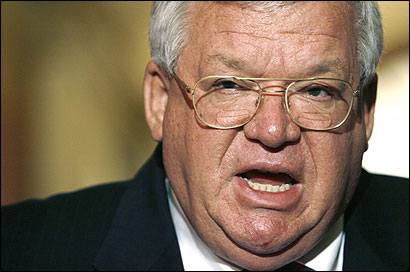
Since Newt Gingrich, Republican Speakers have used an unofficial "rule" whereby no bill comes up for a vote unless a majority of the GOP is in favor. This rule, called the Hastert Rule (named inexplicably for Dennis Hastert, Gingrich's successor as Speaker and the guy who broke the rule most often - and not to be confused with Dennis Haysbert, noted worshiper of the god Jobu), is entirely responsible for the current Government Shutdown.
Yup, that's right. It's not about health care. Yeah, the GOP hates Obamacare and they'd love to repeal it or defund it or delay it - although the spending bills being held up right now have nothing to do with any of those things. Adding such a repeal to the bill is akin to adding an extra ten bucks to your mortgage payment and asking them to deliver a pizza.
Of course Congress does stuff like that all the time. Odd as it is, it's become common practice: to put outrageous things people don't care that much about on the same bill as something hugely important. Except, usually they combine stuff together to get it to pass. This time they've bastardized a bill to keep it from passing, all to get leverage for the next spending bill, the debt ceiling, which needs to be passed next week.
It's crazy good politics for sure. There's a sense of foresight and understanding of political realities that the current crop of Democrats could never dream of figuring out. I suspect they'll get a banner deal in exchange for the debt ceiling vote. It's also wildly irresponsible.
This is the perfect example of an "ends justify the means" mentality that I so often excoriate around these parts. Almost a million government employees are going without paychecks for a few weeks just so the GOP can get better leverage to lower spending on projects that have no real contribution to the National Debt.
In the end, we have to remember politics is politics, which means most everything anybody does is for public perception. Welcome to the land of dysfunction: there are no winners here.

With that, I flipped the dial and turned off the radio. That pretty much sums up all the problems right there.
Now I'll be optimistic and say I don't think this US Congressman is under some delusion that it is the job of the legislative branch to run the country (efficiently or otherwise). I'm pretty sure he knows what separation of powers means (although there's this nagging suspicion in the back of my mind that it's just as likely 90% of our elected officials have no idea about anything beyond what their aides give them in a thin manila folder every morning).
What I'll argue instead is that Congress (and by this I mean any Congressperson of any party, not just the particular nincompoops on the hot seat at the moment) banks on two things: 1) most Americans have no understanding at all of Civics and are blissfully ignorant of what their elected officials are supposed to be doing; and 2) that they'll be able to get away with whatever they do get away with simply because anyone charged with holding them accountable is functioning in the same opportunistic manner.
If you recall third grade, or maybe the 8th grade refresher course, the US government has three branches: Legislative, Executive, and Judicial. The Legislative Branch (Congress) is charged with making laws. The Executive Branch is charged with carrying out (executing) those laws, essentially running the government. As bloated as it has become, the entirety of our Government bureaucracy falls under the Executive Branch; the government may make reports to Congress, but it reports to the President.
Congress has already way overstepped the bounds of its authority - passing bills with volumes of notes and directions to essentially tie the hands of the Executive Branch, giving no leeway for practicality or creativity in carrying out the laws. Instead of providing wide boundaries and goals for the functioning of the nation, Congress essentially makes our civil service corps robotic drones, carrying out orders with such specificity I wouldn't be surprised if the font choices on government forms are codified in law.
This is also why the President tends to meddle in the legislative process so much. There's really nothing else for him (and it seems like they've all be "hims" so far - although I have my doubts about a few: I'm looking at you, "James" K Polk!) to do once the laws get passed besides sign them and avoid lusty interns late at night.
This terrible conflation of the intended order came about, inevitably, because people with power want more of it and everyone, it seems, willing to go through the public flogging of an election campaign, wants to be in charge of the world, not just one half of one third of 1/435th of it.
No one trust each other. That's really the crux of most problems in the world. And it feels like the end of the world if someone breaks our trust - so we withhold. (Maybe we need a National Psychologist to manage our collective phobias and foibles?)
On top of this, we have a Judicial system that is decidedly passive. I know that will come as a shock to all those reliably railing against "activist" judges, but our judicial system won't even comment on anything without a suit being brought. They keep quiet unless asked to speak - and even then, they're pretty, well... judicious. In some systems, if the Judiciary, especially the Supreme Court, sees something fishy happening, they'll just speak up and stop it. Here, ours only steps in if someone asks. I'm not even going to comment on which one is better, simply that our system is less than convenient - the one group that could play referee won't (partly because both warring sides are too scared to lose to even ask).
So we find ourselves with a dysfunctional system, lacking accountability of any kind, overrun by moneyed** interests and power-hungry egotists. I'm not sure why anyone is surprised by the follies that come out of DC or why anyone feels the need to defend any of them.
Just remember, the system we have is the best in the world - in the history of the world - it might not be perfect, but it's better than any alternative. In fact, don't even bother researching or experimenting with any alternatives, just take our word for it, this system rocks. Even with all its faults and failures, it's the best we're ever going to get, the pinnacle of human achievement. Seriously. I promise.
*I included the final clause "more efficiently" to accurately quote the man, obviously the focus and heft of the statement is on "running the government."
**Did you know that's how you spelled "moneyed?" Me neither. At least we all learned something from this post today.


