
This is not a post to discuss the cultural brilliance of Planet of the Apes, but I wanted to set the stage with my bonifides, because my reaction to the recent Roseanne dust-up is unusual for specifically this reason. I will not, in any way, defend Roseanne - she's had a long history of racist and hate-filled comments that betray a point of view. This can't get passed off as mere accident or happenstance no matter how one wants to spin it.
At the same time, I want to be honest about what happened and how what happened guided my train of thought, so:
I saw the headline breaking that Roseanne had been cancelled due to racist tweets. I had no details, so I went to google to get some and be informed, like a responsible human being. Google puts the first couple image search results at the top of the page, especially when you search for a name, like I did for Valerie Jarrett. One of them stuck out to me - because of the hair style she had and the strange angle of the photograph, my mind said, "Wow, she looks a lot like the Kim Hunter character from the original 1968 version of Planet of Apes in that one." Only that photo, mind you. I went back, after actually reading the tweet, and looked at literally hundreds of Valerie Jarrett photos and none of them seemed close. Just the one, with that particular angle.
Again, I'm not here to defend Roseanne or make excuses. You can't see her history and also give the benefit of the doubt that she just happened to be a Planet of the Apes fan and also just happened to see the one photo I found with that specific angle (a photo I'm not ever going to link to for all the reasons I'm speaking about below). She's made her bed, at this point.
The "coincidence" argument, though, intrigued me a bit, mostly because I understand how virulently and fundamentally white people are afraid of being racist or being perceived as racist or having someone notice how racist we really are. People make jokes about white fear of racism, but it's not really a joke. This is why we're so quick to tell you about that one black friend we have (who's probably just humoring us - at least most of the time).
I got to thinking about some other hypothetical person - me for example - who innocently made some comment about a specific African-American person looking like another specific person, who happened to be professionally made up as an ape. How would that be received? Then I realized, of course I'd never actually say something like that, even if the comparison occurred to me, because I understand the long history of racism and how persistently, even today, the comparison between black people and monkeys (or apes) is used to demean and dehumanize a people who've suffered such travesties for way, way too long. In other words, a human adult (especially in the US) with basic social awareness, should know full well the offensive, racist associations such a comparison would invite, regardless of intention.
I briefly thought that was a little bit unfair, until I reminded myself that it is literally the definition of injustice: things in the world that shouldn't be, but are. Not only that, but it's a pretty sorry, blatant example of white privilege. White people, like me, have the distinct privilege of being the only people on Earth who don't have to constantly be thinking about skin color. Talk about injustice! The color of white people's skin never matters, at least in a negative way - whatever minuscule negative example you can come up with is totally and entirely dwarfed by the vast positive benefits of racism we've enjoyed down through the years - which gives us the tremendous luxury of not always having to think about race. Obviously, it's a luxury that everyone SHOULD have, but, of course, they don't, which makes it an injustice.
It also brought to mind a really terrific essay I read a week or so ago. It was written more than a year ago by Sebastian Whitaker and it's simply titled "Dear White People: Your Dictionary Definition of Racism is Wrong." What he brings to the conversation is the notion that racism is not, in itself, an action or attitude, but a world-view that says some people are inherently better than others because of their skin color; racism is the embodiment of white supremacy.
Prejudice is our attitude towards people different from ourselves, where we generalize people for any number of reasons and make judgments about them because of those differences. Discrimination is when we act on those prejudices to somehow hamper or hinder those folks. In this sense, anyone can be prejudiced or discriminatory against any group - white, black, gay, straight, southern, German, ginger, overweight, nerdy, whatever. Those things are about attitudes and actions of individuals regardless of context.
Racism, though, is specifically about a particular world view that's been in existence for a very long time and continues to under-gird the society in which we live - even for those of us who wish it didn't exist. People of all skin colors have been shown to have unconscious biases in favor of white people and against those of darker skin. You can be prejudiced or discriminatory against white people, if you've got the inclination or power to do so, but you can't be racist against white people, because there's no system of non-white supremacy embedded in Earth's cultural history.
(Shoot, part of the purpose of that original Planet of the Apes movie was to specifically create a scenario where the humans were the oppressed species as a statement about racism in the world, with the hope that white people seeing white people as an oppressed minority might wake them up to the challenges of race in America. Whether that was wise or effective is certainly debateable, but they at least were aware enough, even in 1968, not to have any of the apes played by actual black people to avoid the overtly racist connotations that might invite.*)
There is some natural inclination towards prejudice that must be overcome in human evolution, but there was also an actual system of value ranking, based on skin color, that existed overtly for centuries. The 19th and 20th century debunked pseudoscience of phrenology was an attempt to judge the quality and character of a person based on the shape and density of their skull. It was entirely based in race and there are charts you can find where people did "research" to rank dozens of distinct "races" around the world on a hierarchy chart that always, always, always had white people at the top.
Whitaker's essay resonates with me, because it parallels the field in which I'm actually trained: Christian theology. For many Christians, the notion of faith is contained in intellectual assent - a particular passage from the Book of Romans is interpreted to mean all we need to do is believe the correct ideas genuinely and truly and we're "Christians." This is so terribly lacking in context, it will be impossible to explain without making an incredibly long post even more painfully obtuse. Suffice it to say, Christian belief is entirely about action - do the words you say and the actions you take contribute to the world as God intends it to be or not? You can intellectually assent to all the "proper" Christian ideals, but if you're a jerk to the people around you, you're an agent of death.
If you take Whitaker's (absolutely correct) understanding of racism, you can make a parallel claim: it doesn't matter so much how often you profess to believe everyone is equal and the way black people are treated in the world is terrible, if you say or do things (even without mal-intent) that perpetuate the notion that some skin colors are better than others, you're participating in racism.
So while white people like to parse all the intricacies of when and how one might be legitimately called a racist, it's very much an action-based system. What Roseanne said was racist - with or without her track record and reputation. If I were to express the same comparison, regardless of my intentions, it would be equally racist. Does that make me a racist? Well, in that moment, it certainly does - maybe not even though any fault of my own, but because an injustice exists in the world and through my action (even a potentially innocent one), I've perpetuated and participated in that injustice.
White people are obsessed with not being a racist; we tend to care a lot less about actions or systems in which we participate that perpetuate racism. Well, we do care, but only in that we're afraid those actions will define us as racist. Non-white folks tend to be a lot more concerned about calling out the words, actions, and systems of racism precisely because those are the things which actively dehumanize and disadvantage non-white folk. It would probably help if white people stopped being so worried about being called racist and spent more time thinking deeply about our own words and actions, about the systems in which we participate and how they affect the world around us. Yeah, there may one day come a time when everyone equally has the privilege to ignore race, but that day is not today and thus maybe not the most relevant conversation topic.
The other, small part of this that probably should be said, is for non-white folks to recognize how easy it is for white people not to think about race. It may seem impossible that a white person could make a statement like Roseanne's with no racist intent, but it really is (again, it's hard for me to believe Roseanne herself is in this camp, but it's certainly not outside the realm of possibility someone else might be). We do it all the time. White people say stupid racist shit without ever have bad intentions because we have this incredible, unfair privilege. It is still racist and it's wrong and it deserves to be called out. Regardless of intention, it's still abhorrent.
As a society, we're generally pretty terrible at communicating the message that just because you did an abhorrent, offensive thing, you yourself are not a worthless individual that others find impossible to love. We tend to conflate those things together and it's a real detriment to genuine conversation and growth. Healing divides are not possible with demonization, which means we have to bend over backward to be nice to people we don't like and who stay stupid things. (I am still a Christian after all - and the loving your enemies thing is pretty core to that belief system, or at least it should be.) We live in an inherently racist world - and try as we might to change that or rise above it, we're still going to say some terrible, racist things from time to time - we have to be better at recognizing, repairing, and growing, rather than shaming, condemning, and isolating.
White people need to be more aware of the world in which they live and how it continues to be shaped and formed on a foundation of blatant racism that creeps into our thoughts, words, and actions regardless of our intent or espoused beliefs. That's unfair, sure, but it's also reality. Having a conversation without a racial component is an unjust privilege we can't continue to take advantage of if we really want to see some reconciliation in the world. Guess what, it's also not the only privilege we'll have to give up if we genuinely want to see change.
White people, whether we're willing to admit it or not (and I'm just as guilty as the next white guy), generally want to solve the world's problems by making everyone "like us," but normalizing our own position and perspective in the world is, in fact, part of the very racist problem we're intended to solve. You can't have a world where everyone is on top - the very notion plays into a destructive, racist, divisive world view that needs to die. I have great faith that it's possible to overcome, but it does not come without a cost and it does not come without intention.
*One could argue that no black people got those jobs because Hollywood was a pretty white place and black people didn't hardly get any decent jobs, especially in 1968, but they did specifically include a black astronaut as some sign they were aware of the racial elements at play.
Yes, perhaps Charlton Heston should've switched parts with Jeff Burton if they really wanted to make a statement, but they needed to get the movie funded and Hollywood, along with the rest of society, then and now, is racist, and no one would fund this crazy sci-fi experiment if a black guy was in the lead role. MORE INJUSTICE!!

I don't think the theory of oppressive government should be overthrown though, because it's wrong. The gun nuts are absolutely right. Government is our example of empire in this day and age - it's a large power center, using dominant force to exact its will. If anyone's wrong, it's the folks who believe government is a force for good in the world. It may be necessary and our scriptures might indicate it's purpose is to do good, but that's simply not the reality.
Those with power will use it in oppressive ways. That's a historical fact 99.9% of the time. Shoot, many a scholar has said the main story line of the Bible is the faithful resistance of empire. It's the exact trajectory of the gospel of Jesus Christ. Identifying the problem is not the issue. Those gun nuts have it right all the way.
The problem comes in the solution. Armed resistance has generally been the course of things. Sure, Canada and Australia had a more diplomatic approach to freedom, but it was really only after both sides recognized the alternatives. Gandhi had great success with non-violence, but economic factors were far more prevalent in the decision of Britain to excise itself from the sub-continent.
Of course, that doesn't invalidate the idea or it's affect on the process. This faithful resistance those biblical scholars talk about is not the same thing as taking up arms to surprise a violent power with a counter-violence they didn't expect. The gospel provides an alternative. Faithful resistance in the way of Christ is simply to take up your cross and follow Jesus, which literally means an execution for treason. It's not a court battle or an actual battle, but a commitment to love in ways that may only make a difference after we're dead (or maybe after our children's children's children's robot children have been decommissioned).
It's not super attractive and it's not entirely logical. No, the way of faithful resistance in love really only comes into view after we've tried out the other options and found them wanting - not always in effectiveness, but certain in overall satisfaction. Violent resistance - even stubborn non-violent resistance - often gets us what we want, but what we want in that scenario is power of our own and inevitably we use it terribly (even if slightly less terribly than those we overthrow - which had lower odds than a coin flip, if we're taking history into account). In the end, it doesn't get us across the finish line; it just perpetuates the problem (albeit in a more palatable way, short term).
So, in short: the gun nuts are right in identifying the situation in which we find ourselves; they're just typically (and by that I mean indicative of typical) off on how to address it.
It's not really any different to solutions other people proscribe to problems of this nature. Outlawing something is perhaps less violent in the physical sense, but no less oppressive. This is where we have to have our discussion about separating government responses from moral ones - a discussion we certainly don't have time for today.
The question we ultimately have to grapple with is how we comprise our values for life in the world. Do we believe in love and hope and faithful resistance on a personal or religious level and deal with government oppression (hopefully in our favor) as an interim measure? Do we leave the governing to the government and simply reserve our engagement to other venues? Do we simply live the way of the world until things change (presumably supernaturally), when its easier to do as we believe?
None of those seems great, but they're also not entirely dismiss-able; you can't blame people for choosing any of them. I can say, very clearly, violence itself is not Christian, but what level we're willing to live with oppression (of and by ourselves) in this world is truly a contemporary quandry.
The gun nuts have chosen their answer.* What are the rest of us going to do?
*Yes, I know I'm going to catch flack for continuing to say "gun 'nuts,'" but I think you all know exactly what I mean. If I'm going to be politically incorrect, I don't mind doing it in a way that's disrespectful of violence. Sorry. You'll just have to live with that (and hopefully be graceful and forgiving).

Other people get involved in causes because it's a means to power. There are, no doubt, other reasons to join a cause, but I'm willing to venture power and truth are the top vote-getters. Causes exist because some people like influence. The different between fringe nutballs and a powerful lobby is organization, nothing else.
That's not to say these are exclusive reasons - only sociopaths manipulate people just to do it - but one of them generally wins out. You hear stories of politicians who don't believe the policies they sell or preachers who don't believe the words they say, but continue because it's become a way of life. They like the influence and the position. They may even think their cause is better than any alternative, but they're not true believers. In fact, true believers are the only ones who threaten them.
True believers don't see the cause as a means to an end; it is the end. If it comes to fruition, if their understanding of truth becomes generally accepted (not in a coercive way, but willing acceptance), they see no ongoing need for the cause. True believers don't need power, because belief is its own power.
True believers will inevitably betray the cause. Why? Because the search for truth is, by its very nature, ongoing. It grows an evolves as we continue to refine and improve upon what we believe. It's why those in power tend to keep the activists on the fringes - they're better off out in the world recruiting than making decisions about how things run - because they're not interested in practicalities; they're interested in integrity.
Of course you don't start a movement with forcefulness of your ideas. You start a movement by appealing to the human need for power. The powerless are anything but, if you can get them organized. Our fear of having no meaning is an incredible source of motivation. True believers derive meaning from their insistence on being right. As morbid as it may be, suicide-missions are ingenious, because they reinforce the power of the cause, while also eliminating the very people who would threaten it: the true believers.
True believers love truth - they think they've found it, but they're also never going to stop looking. They're the ones who will call for reform and re-evaluation if they ever encounter doubt (and who doesn't) or new information. You can only play power games if you believe power is more important than the ideas you use to wield it. That is the purview of the true believer.
This is part of the reason I treat power with such suspicion. Power requires you to pick sides. Truth is simply concerned with whittling away what's not true. Even true-believers who disagree can find common cause in the battle of their convictions.
Most of the time, true believers simply slide away. The closer they get to centers of power, the more disillusioned they become with the cause itself. The hippies who became yuppies were never out for truth - those folks are still living in a tire-less VW van in the woods of Northern California.
The reality is that everyone is necessary for the system to work. True believers need a cause (and the people who make it function); the cause needs true believers to fuel its fire; and both of them need opposition - true believers as an antithesis that leads to truth and the cause as an enemy around which to build an organization. FauxNews gets better ratings with a Democrat in power precisely because the opposition is essential.
Those hippies in the woods have lost their fervor without active opposition or a cause to funnel their passion. The yuppies have drive and determination, but only apathy and hedonism to guide them. Opposition can never truly function in power, since it's defined only by what it's against.
This feels like a system that we're meant to overcome, but try as I might, I can't envision an alternative. These pieces need each other.
Just because the true believers will betray the cause, doesn't mean causes are bad; it just means we have to hold them lightly. There's nothing wrong with being part of a cause, but it can't outlive its usefulness; we have to let them die. There's also great need for opposition, but it must be embodied in ways that can translate to a cause when the true believers begin to win out.
Truth must be embodied or it is not really truth, but it's not something that can be done on our own and it's never a static process. I don't know if there's a point to this post or if it's just marginally organized rambling, but it feels important and worth sharing. I hope you enjoyed.

I don't watch TV news - neither the six o'clock (do they still have that?) nor the twenty-four-hour varieties. I do occasionally catch a headline on one of the TVs at the gym, where FauxNews and CNN are right next to each other in my peripheral vision. Apparently two years ago there was a big kerfuffle about an Air Force veteran who was forcibly removed from a flag-folding ceremony, which was part of the retirement celebration for a friend, when he used a religiously-tinged and unapproved script. Apparently the guy had a history of inflammatory incidents and had been told he couldn't speak at the event, however the guest of honor insisted he go on. When asked to leave, the guy refused and continued to shout his words as he was forcibly removed from the proceedings. Basically everyone looked bad all around, the Air Force changed their policy and the guy's now suing (conveniently, I believe, right before the statute of limitations runs out).
This is a talking-head special if there ever was one. How do I know? Well, the only place you can get any coverage of this event or the lawsuit is on fringe (both right and left) and military-specific websites. I'm linking to the AirForceTimes which, amazingly, seems the least partisan. As you might expect, this has become a virtual hand-grenade where people are lobbing different notions of religious freedom/persecution at each other without really saying anything.
I'm all for peaceful protest, even vociferous and disruptive protest, should the situation call for it. Clearly the guy retiring wanted to make a statement by asking his friend to use a non-standard script. They were warned and continued and they should be free to do so. The Air Force is also free to remove the guy from the ceremony, as they did, and he's free to keep shouting as he's removed, which is what happened. I wouldn't say there was physical resistance, but everybody was sticking to their line pretty firmly.
What I don't get, though, is this lawsuit. The guy and his lawyer are all over the television demanding I'm not sure what - money, I guess - but the Air Force already changed the policy as a result of this incident. It seems like, if the guy was really standing up for his religious rights, that the battle was won.
That troubles me a bit, as a Christian, because it's downright offensive to the gospel to associate it with any nation or military, but that ship has sailed long ago, I'm afraid. Not only has Americanism become our default religion; it's getting labeled as Christianity. The use of power and force are antithetical to the message of Jesus Christ and we have another exhibit of that in this situation.
The purpose of the lawsuit is to get a court to admit the Air Force violated this man's rights. It's a move for dominance. Regardless of whether or not I agree with his actions (and I don't, although there are plenty of other times I do, and it still rubs me the wrong way), Christians can't demand "rights." We gave up the right to our "rights" when we accepted the way of the cross. In the way Jesus refused to argue for himself during his many trials, we're called to live out our understanding of right action and accept whatever response we receive.
It feels like this guy should be overjoyed that his actions produced change in the direction he wanted. To me, that's the ultimate victory. I don't understand how one could make a Christian argument to then essentially humiliate your opponent. Paul, on several occasions, used his Roman citizenship to call officials to follow their own laws; he didn't then return to rub it in their faces or embarrass them to their superiors. In the end, he took whatever judgment the law required and did so willingly, following the example of his savior.
This is why Christians can't hold a cross in one hand and a flag in the other; the two are diametrically opposed, not necessarily in the game of ideas, but in lifestyle and action. Too much of "religious" dialogue these days is an attempt to browbeat people into assenting to ideas we call Christian. It's about winning the intellectual assent of others, or at least their grudging tolerance. The gospel, though, is not really about theology, but about the lifestyle inspired by our understanding of God. If we do not act in accordance with our beliefs, we don't believe at all.
The national religion of the US tends to work backwards - seeking the best course of action (best defined as most beneficial to me and mine) and then inventing a theology to support it. This is the path of least resistance and people stumble into bad theology this way all the time (its not just the purview of nationalism or convenience). In the end, the gospel is absurd from the perspective of practicality. It's predicated on truth and reality not being readily apparent. The idea that weakness is strength and love leads to truth just doesn't fit with how we've constructed our world to work.
If you're pushing your own agenda through force or persuasion, you're not representing the gospel. The way you present your ideas is far more important than those ideas themselves. For Christians, winning society's games necessarily means losing your faith. It's great to stand up, with your body, and live your beliefs in the public square - I applaud those who do, even if I disagree with them; it's quite another to expect the public square to celebrate you. That's a game you can't win and shouldn't play.
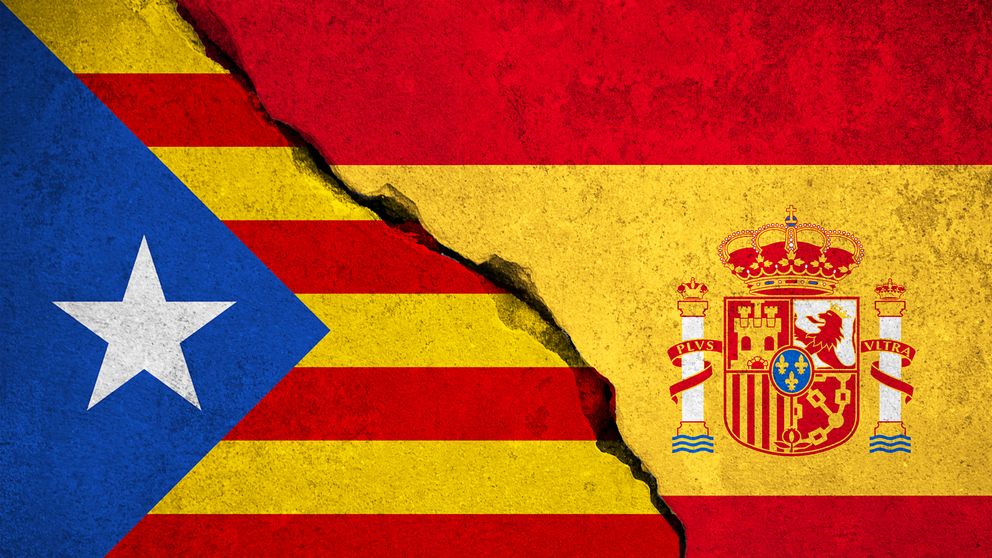
I don't know the ins and outs of this movement. I've been aware of the Catalan Independence movement for most of my life, but I don't have the background or understanding to really parse the facts of the issue. I tend to support movements towards independence on principle, but I'm simply ignorant of the specifics.
What interests me about this whole process is the civilized nature of the whole thing. Yes, there have been protests, a few riots, a little bit of physical violence, but overall this process of rebellion has looked very different from most fights for independence. Catalonia is trying to do things, if not by the book, at least with some respect.
Catalonia has its own language and culture and has long been at odds with whatever government happens to reign in Madrid. Support for true independence has never been more than a slight majority, with polls ranging all over the place. When Catalans make an argument for independence, it's largely on the basis of representation - Catalonia is a pretty rich area that doesn't get proper treatment from the national government. What's interesting to me is how the issues are really the same on both sides. Many Catalans feel they are a disrespected minority, but they've also got a large nationalist population within Catalonia who are scared of how they'd be treated in an independent nation.
This is the clarion call of democratic governments these days. The strongest case they have to make for their own existence is "to keep the mob at bay." Government presents itself as protector of those whose freedoms will be impinged by the will of the majority. We can debate the truth and value of that statement, but it does tend to be front and center in conversations.
In past situations like this one, war has been the answer. The side with the most power gets to make the rules, but that's precisely the opposite of how modern democratic societies present themselves, especially in Europe. The Catalan Independence leaders can't call for armed rebellion without looking a bit hypocritical (not to mention barbaric) and so they've tried to do things the "democratic" way - with civil disobedience, at least when necessary.
That this all comes sort of in the midst of chaos in the US is also fascinating. We've had discussions about gun laws that always involve an appear to our nation's founding, largely on the backs of regular people who took up arms to kick out a ruling power. American democracy came about in the most un-democratic of ways.
It's not as if either of these options makes much sense. Outside the benevolence of the Spanish government, it's unlikely Catalonia will get a democratic independence any time soon. In fact, the only way real independence ever happens without bloodshed is either outside nations coming to the aid of a separatists group (see South Sudan, which isn't really in anyone's "win" category, anyway) or it just becomes too costly or too bothersome for the ruling nation to keep ruling (most of the British commonwealth).
I've found the whole thing a quixotic case study in our desire to win. We like to get our own way - us and them (whomever us and them might be)- and we're generally far more prone to break our own rules if it results in us winning. When we believe we're in the right and the "other" won't or can't see it, we look for ways to shock them (or force them) into changing their mind.
It's an odd dilemma for the season of Easter, which calls and reminds us that great power is not overcome by greater power, but by patience and perseverance. I'm sure the current state of affairs is not what most in Catalonia would want to see, and there are certainly well-founded criticisms of how various parties have proceeded, but it's nice to know that somewhere we moved, if only slightly and certainly not entirely, away from games of force and power.
Everybody's playing by the same rules. As frustrating as that is for all involved, it's a sign that there might just be something more important in the world than winning. That's a lesson for all of us in this day and age.

Palm Sunday presents the challenge to the powers of the world - a law of peace and love and suffering over a law of power and might. It's easy for us to constrain it in the ghetto of idealism and ignore it as we tackle the real world. Jesus says love overcomes hate and peace, violence, suffering over power and control. We're down with that until it's too difficult, then we make justifications.
It's called conditional approval - we can do bad things in certain situations because it's for the greater good. We can nuke Japan, but North Korea can't. We can blow up buildings all over Iraq and Syria, but Saddam Hussein and ISIS can't. A police officer or, perhaps, a local vigilante who feels threatened, can shoot unarmed teenagers, but they can't shoot back.
They're cut and dry situations because conditional approval always goes to the powerful over the less so. Why? Because the powerful make the laws. They get to decide. (I guess I should fairly say "we" here, since I benefit from conditional approval far more often than I suffer from it.) We like to say it's just democracy or fairness or good vs evil, but that's really not true. We skew the rules to benefit us. When we do it, it's good; when other people do it, it's wrong.
This is precisely why the radical gospel of Jesus Christ is so dangerous: there's no conditional approval. Killing is wrong, no matter what your justification. Abuse, oppression, selfishness, violence, power - they're all out, regardless of context. What's wrong is wrong, no matter who does it. Without an "us" and "them" the powers that be have no means of coercion or co-option.
The gospel is good news for the poor because the message is literally, "we have nothing to lose." The Empire took over Christianity when it gave the Church something to lose, something worth protecting, something requiring conditional approval. God is an easy excuse to give ourselves cover. "I'm just doing it for your own good," or "I don't make the rules, God decides what's right and wrong."
The problem with conditional approval, though, is when we find ourselves on the other side. We're down with killing our enemies until we become the enemies of a more powerful force.
Jesus marched into Jerusalem on the back of a donkey, accompanied by losers, and proclaiming peace to people who'd always been under the heel of conditional approval. Pilate marched into Jerusalem on the very same day, astride a white war horse, accompanied by legions of soldiers proclaiming peace to anyone who fell in line and followed the rules of conditional approval.
Many through the years have been tempted by the power of power. When you've been on the wrong end of justification, it's quite easy to use the same rationale to overthrow the oppressors. Forgiveness doesn't jibe very well with justice. Yes, we can argue that our conditional approval is necessary - that's how it works - those rules don't just protect us, but the people we love, innocents, children. It's not about war, but about self-defense. Surely staying alive is the most important thing?
Jesus didn't think so.
The call of the Christian is the call to Christlikeness. It's not the call to use the weapons of the world for some purportedly righteous end; there's nothing of God in that. The very notion of friends and enemies, good guys and bad, is directly contrary to the gospel of love and grace.
I ran across a quote this week that perfectly sums up the problem of the spirit of empire, of power - the ideas that seem to run the world:
"We are advocates of the abolition of war, we do not want war; but war can only be abolished through war, and in order to get rid of the gun it is necessary to take up the gun."
You may say that's foolish, but it under-girds just about every dealing with power that exists in every society. Those who fight for righteousness do it to destroy evil. We never both to wonder if perhaps we're just as evil as the ones we try to kill or if they're as good as we think we might be. We really don't stop to wonder if perhaps power just simply can't overpower itself. Maybe violence can't stop violence and war can't end war. We know that deep down, but we keep giving conditional approval, because we don't really believe there's another way.
It's not just about intellectual assent, it's about putting our lives where our minds are and living differently in the world. Do we do it perfectly? By no means; in fact we're downright failures, but I'd rather be failing in the right direction that succeeding on the highway to hell.
...by the way, that quote? It's from Mao Zedong, former Chairman of the Chinese Communist Party and one hell of a success.

Hopefully this will be the start of me back on a normal, twice weekly posting schedule. I never really should've taken the time off. Granted, dropping down to once a week during basketball, when I'm already posting a 1500-2000 word piece each week would make sense, but getting out of the habit of writing on the blog is bad form on my part. Mea culpa.
So, in this first post back (outside of the random Black Panther and Black Power piece I managed to throw together last month), I'll transition a little bit from basketball back to ponderous, intellectual life reflections. During the last month, I attended a whole heap of NCAA tournament games - nine to be exact - and there's a standard set of announcements that come with each. While they are hosting games mostly on college campuses, they try to keep the experience as uniform as possible to maintain some level of neutrality for the players.
At the start of each day of competition there's a national anthem (as one would expect, I guess) - I've written quite a bit here (even before it was a national storyline) about how I generally handle that piece of nationalistic liturgy for myself. I ran into a bit of a philosophical quandary during this year's tournament, though, because the wording of the announcement was unique (or at least it was the first time I noticed it).
The NCAA pre-game script included this invitation: "Please rise to honor America and all those who support our freedom at home and abroad." Obviously there's usually something about "honoring America" and I typically stand with my head bowed so as not to disrespect those who are worshiping, but the "support our freedom stuff" made me think.
One the surface, it's pretty benign. Freedom, even without a solid definition is pretty universally praised. We like freedom and people who support freedom are certainly worth honoring, I suppose - but there's also the implication that typically the phrasing used here denotes military or law enforcement - it's a celebration of power, at best, violence, at worst.
I've written pretty extensively as well about how I view the military (in short: for the most part well-intentioned, honorable people willing to sacrifice for something they believe in, just not by a means I can agree with). I believe all people deserve celebration in whatever ways they serve others, but to make a mass celebration of power and violence (even under the socially accepted guise of "good guys with guns" is deeply problematic for me). You add to the situation that I'm serving as media, representing a pretty well-known (at least in this context) outlet and sitting courtside, in full view of the crowd, there's a dynamic of whether I'm free to speak for myself or not.
I generally fall into the camp of, even if you're going to protest something, doing it in the midst of a ritual meant to celebrate that things isn't entirely loving. It seems almost disrespectful (which is why I usually stand with my head bowed - as did many players on many of the teams I watched - no visible kneeling though, at least in my memory).
At the same time, it's deeply troubling that we continue to creep ever closer to associating the military with the nation, the same way a demagogue tries to make the government or their own person synonymous with the country. It provides protection and horns in on the cult of national pride that exists pretty much everywhere.
One of the ironies of all this is that it comes amidst a renewed push for gun control in the US. One of the most pernicious problems in the US gun debate is the colonial notion of revolt against tyranny. There is an argument I'd like us to collectively discredit, which says that citizens should not only have the right, but have the obligation to arm themselves in case there's ever a need to overthrow a corrupt government. It's logically and practically problematic in the contemporary age for any number of reasons I might outline elsewhere later, but the underlying principle for this argument is that the State is not the nation; there is a difference between the people and the government.
That gets all blurred to death in an effective democracy (which we at least had in our memories and ideals, if not in reality), but it's both untrue and not entirely untrue. In the same way the government and the military are related and inexplicably intertwined with the nation, so are they not entirely synonymous with it.
Schools teach their students to say the Pledge of Allegiance in part to make them good and loyal citizens - it's an indoctrination of sorts; it's precisely what feels like is happening as we more and more connect the military to our understanding of nation. We're making war and violence inviolable. There's a long history (everywhere, but specifically in the US) of debate between militaristic and peacemaking forces, even within our elected governmental system, a history that's largely going away. We've become comfortable with the power our military might ensures for us to the point where using it to do our bidding is simply assumed by both political parties. The only arguments are when and where.
There are problems enough with nationalism, although they're to be expected in any nation. It gets deeper and stickier when we bring military might, power, and violence into the mix - in fact it's one of the signs of the end stages of Empire. Empires fall once the military becomes more than an ancillary tool.
In the end, though, it's all about power. The more ingrained something is in our everyday lives, the more important it appears to us. People may not spend much time on Facebook anymore, but if it went away tomorrow, we'd be upset - not because it's really important, but because it's become familiar.
I tend to be a person who likes doing everything with intention. I want to have a reason for everything or to find the best/most efficient/most defensible way of doing just about everything - from loading the dishwasher to how I spend money. The message implied in our actions is at least as, if not more important than, the actions themselves.
I know the NCAA was probably just trying to capitalize on a trend that gets them additional good will (Lord knows they need it) and not really thinking about the implications of what those words mean or who might be left out, confused, or troubled by them (if they even care, which I doubt), but they are important, nonetheless. Words mean something and they're worth thinking about.

I do want to write this, though, because I think it's important. Black Panther is coming out this week and what the world needs most is another anonymous white guy's opinion of it. I'm excited to see this movie. I've been excited to see this movie since the director was announced and even moreso as the casting came to light. This is a big time movie with a higher level of talent than any superhero movie before it. Robert Downey, Jr is a fantastic actor, but that's not why he was cast in Ironman.* I've been excited for this movie because I like movies.
TIME has a great piece by Jamil Smith on the movie and it's place in history. It's short and by no means exhaustive, but it does juxtapose the movie with Stokley Carmichael and the Black Power movement. As a white person, I'd been blissfully unaware of the connotations this movie presents of an un-colonized African nation with both the power and technology to take over the world.
It's a radical idea and a scary one for most white people - even those who recognize that it's a bit shameful to be scared. White people don't want black people to have real power because we're afraid black people will use that power in the same way white people have used it for the last 4,000+ years.
That's the long and short of it.
I won't claim to be "woke" or even entirely sure what that means, but I do think I'm more in tune with the sad realities of race than most white people (not that this is a high bar). I've been race-issue-adjacent on occasion, which feels embarrassing to even say - and I only do so to point out that I've at least spent some considerable time thinking about issues of race, even though I'll never be able to even approach the barest glimpse of what it means to be black in this world and I often entirely miss the point.
I see the joys expressed that Black Panther represents black people as heroes in ways that young black kids rarely get to see in society. I can recognize the truth of that statement and the ubiquitousness of people who look like me in pop culture, but I'll never get it. I can't. You just can't experience something you can't experience. The very fact that there's an experience we can't have is enough to make white people angry and expose our entitlement.
This is supposed to be an introduction, but it's already too long. I meant to simply say people with power tend to use it badly and when we use our power badly, it tends to work out better for people who look like us than for people who don't. This is the crux of what I want to say. Ceding power to people who look different from you is rightfully scary - not because people who look different are, in fact different, but precisely because they're the same.
The biggest privilege that comes with white privilege in the privilege to be human. Robert Downey Jr turned his life around and he got the opportunity to do that largely because he's part of the privileged class - he gets to make mistakes and be forgiven. Chadwick Boseman, titular star of Black Panther, also played Jackie Robinson in a movie, a guy who was picked to break baseball's color barrier because he was deemed least human - that is, most able to endure punishing, racist abuse without reacting in completely justified anger.
I prefer the philosophy of Martin Luther King to the philosophy of Stokley Carmichael largely for theological reasons. King was a minister of the gospel and preached an idealized version of humanity because he believed that it is the inevitable future of humanity and our best course of action is to live into that coming future reality as best and as soon as possible. Regardless of race, justice, or equality, this is the concept to which I've dedicated my life.
Carmichael saw the world as it is - a massive power game - and advocating playing that game by the established rules. If skin color were removed from this argument, we'd call it a civil war, memorialize the combatants on both sides and erect nostalgic statues to the losers out of respect for their commitment to their ideals. Why? Because we expect humans to make mistakes. We expect human beings to be wrong. We have grace when people mess up, because we're also people and we also mess up.
We have grace if they look like us or think like us or have some connection to us, anyway. If they don't, we make them a villain, removing their humanity, and raising the bar of acceptable behavior inhumanly high.
The "rights" and the "wrongs" of the black power movement are no different in kind than the "rights" and the "wrongs" of the US response to 9/11; the one difference is that one of them is an "us" and the other is a "them." Tribal identification makes all the difference.
We like to say that we're all the same, that we're all human - that all lives matter, perhaps - but as correct and self-congratulatory as those statements are in theory, they're just not true in practice. We like having good guys and bad guys and it's pretty easy to write off the flaws of one and the positive traits of the other simply because we've got more affinity for the former than the latter.
I do believe that white critique of whatever we describe as "black empowerment" today is largely valid, but what makes it unfair is that those same critics refuse to hold "white empowerment" (or maybe better named "continued white entrenchment") to the same standards of critique. This hypocrisy simply cannot recognize whatever part of "black empowerment"** is actually valid without revealing said hypocrisy. It's a Catch-22 that has almost no repercussions for those in power and far too many for those without.
I genuinely don't believe we need another white voice chiming in on Black Panther or Black Power, but I also feel some obligation as a white person to say what so many white people simply won't. Theory is all that matters to those in power, because we've got reality locked down. Theory matters very little for the unempowered, because reality is all they've got.
So there's a movie coming out, with a largely black cast and a black director that represents real progress on a lot of fronts. It's worthy of support, even if it's not Citizen Kane or The Dark Knight or even all that good. It doesn't have to be the perfect statement on black power or identity or experience to be a valid celebration of those things.
Some white people are afraid of this movie, I guess because it's symbolic of the societal power we're increasingly being asked to give up? We're understandably nervous because we'd like to be sure the "new" world is better than the old one, before we really commit to it. Guess what, white people? A world in which we're not entirely in charge will not feel "better" than one where we run the show. Here is where we have to take our own advice and trust the theory to come through for us, even if reality seems a bit uncertain.
Equality on our own terms is not equality. We've had thousands of years to learn that lesson. We learned it the hard way and other people paid the price. I believe every person has a right to their fear, but I also believe we have a responsibility to reject acting out of fear. That costs us something; it has to. But I don't think any world worth having comes without sacrifice and we've not yet done our fair share.
I don't particularly like that reality any more than anyone else, but I also can't ignore it.^
*We forget this now because he's pretty respectable and super rich, but, at the time, Robert Downey Jr was coming off yet another sobriety slip and literally could not be insured on a movie set. He basically had no other options, but, fortunately, he was talented and white, so second chances abound.
**I recognize that this looks (and feels) a bit condescending as a term, but I don't know any other way to name what I'm trying to name that will be apparent to everyone reading this. It's too easy to get sidetracked by arguments over terminology that we miss the larger point. I do apologize if it's offensive and fully admit my white privilege is primarily why I can get away with it.
^Apologies to anyone who feels like this post is condescending or inappropriate. I feel like just about anything I have to say about race is probably both of those things - I just don't know how else to process and progress without communicating actual thoughts and ideas.

I was asked to preach today the weekend of the violence in Charlottesville. I imagine I’ll associate that event with this passage for a while. The whole thing is troubling, obviously, for a number of reasons, but I’ve been haunted these last few weeks by one line I heard in an interview with one of the participants. The man said, “These people are worthless; they’re making the country worse and they should go back where they came from.”
I want to be careful here. I don’t want to get into the “both sides” game that’s become so problematic. However, I do think this quote is a good illustration of where this passage is going today. When it comes to the ideology of race – there is a clear right and wrong – it’s because this is an issue with such a clear distinction between opinions that I think it makes a good illustration.
You see, that quote above – “these worthless people should go back where they came from,” – is the kind of hate we might associate with racists and bigots, but it came from one of the leaders of the counter-protest, the defenders of equality.
Now, let’s be clear, being the subject of hate and scorn does not give any credence whatsoever to this “alt-right” movement or whatever they’re calling themselves. We are all human beings. There is just one race: the human race – and we should, collectively, be lamenting the thousands of years we’ve spent acting otherwise and the terrible toll it’s taken on people around the world. We, especially we, should be working to heal and repair that damage as much as we’re able.
But, as much as there is a right and wrong ideologically, it pains me to see how often those in the right have used hate to condemn hate. As a follower of Jesus Christ, I am a student of non-violence – many of my personal heroes are leaders of the civil rights movement, not just because of their cause, but because of their commitment to non-violence and the belief that love wins.
It’s troubling, mournful, to see how this generation – my generation – seems to be abandoning those ideals. I can’t tell you how often I’ve heard language not just advocating the destruction of racism, but the racists as well. I’ve been seriously conflicted with how to affirm that the cause of justice and equality is righteous, while also rejecting the means by which it is so often delivered.
This is a timely and difficult example of a much larger problem. It might not be what you expected when we read that familiar verse from Romans – Be not conformed to the pattern of this world – but this is what I think of immediately, at least in our current context and reality. The pattern of this world so ingrained in us we don’t even know there’s an alternative, the pattern that we’ve largely come to think of it as part of our faith, when it is the exact opposite:
Power and control.
These are weapons of strength, rooted in fear. White supremacists fear the loss of power and privilege that’s long been the purview of white men. It’s a real and justified fear, even if it is completely lacking in perspective. White men do have less power, even if we’re still, by far, the most powerful group on the planet. But the fear is real. In fact, it’s basically the same fear that sparked the counter-protests: people with a real vision of justice and equality who are afraid that whatever progress has been made on those fronts will be turned back or snatched away. That’s a real fear, too.
When we are afraid, our first reaction is to recover control. That’s human nature. If someone is mugged on the street one night, they might respond by taking self-defense classes, or they might respond by never leaving home again – both responses are attempts to take back power they lost at the hand of another. They are fear reactions. It’s the pattern of this world.
It’s this notion that we should be in control that really gets us in trouble. And this is at the heart of Jesus’ gospel message: the actions of others are not your responsibility. That might sound strange, since Jesus didn’t say any of those actual words, but perhaps it’s more familiar this way:
Do not be afraid.
Our fear is entirely based on our inability to control other people. Even when we’re afraid we can’t do something – I’m not strong enough to be a good parent, I can’t do this assignment the boss just gave me, I don’t have enough money to make rent this month – the fear is not about our inability, but about how other people will respond. We’re afraid of being judged; we’re afraid of being fired; we’re afraid of being left alone and abandoned and exposed.
Even those existential fears, about food or money or shelter, are really fears that no one will provide for us if we can’t provide for ourselves. It’s not about our actions, but about how other people respond to them. We’re afraid of losing control.
So Jesus comes in and says, “You aren’t in control, and you never will be.” And that’s supposed to be our hallelujah moment for today, our good news. You aren’t in control and never will be; Praise the Lord! I know it sounds terrible, but that’s because we’ve spent so long being conformed to the patterns of this world. We’ve been so ingrained with the idea that we need to be in control of as much as possible as often as possible that we don’t see the good news when it’s right in front of our face.
We never look at it from the other side of the equation. Even if we control everything in our lives we could possibly conceive of controlling, it’ll never be enough. People will still die. We still argue with spouses and kids. Jobs are lost. Mistakes are made. Control is just an illusion.
When Paul says here, “offer your bodies as a living sacrifice,” he’s saying, “stop trying to control everything – in fact, stop trying to control anything at all.”
Why are we challenged to give sacrificially? Most of the world, if they’re generous, is taught to make a budget, figure out what you need to live, and then spend a sizeable portion of the rest on others. That’s sort of the worldly principle of generosity. Christians are different, though – Jesus calls us to give everything, even, quite literally the shirt off our back, if need be. We’re called to give until it hurts and then give some more. We’re called to figure out what others need to live and then budget for ourselves with what’s leftover. Why? Why do we do this?
I’m sure there are a lot of reasons, but one big one is simply to remind ourselves that our bank balance does not equal control. No matter what’s in the investment fund, our future is more dependent on the grace of God than the sweat of our brow. We have a different motivating factor than mere survival or even personal happiness. And that is foolishness to the world around us.
We are living into the Kingdom of God and this vision of the world in which there is no fear. Attempting to shout down an angry, hateful mob does not eliminate fear, it heightens it. God has instilled within us a greater creativity than that – we have the ability to respond to hatred with love and to violence with peace, if we’re willing to be transformed by the renewing of our minds.
I struggled for the longest time trying to figure out why verses three through eight are where they are in this chapter. If you skip from verse two to verse nine, it makes total sense with what I’ve been trying to say. “Honor one another above yourselves” is exactly the kind of outrageous thing Jesus calls us to. The world tells us to secure our oxygen mask before assisting others – because it makes sense – but Jesus has a different way of life in mind. “Be joyful in hope and patient in affliction. Bless those who persecute you. Be willing to associate with people of low position. Do not repay evil with evil. If your enemy is hungry, feed him.”
You can move from verse two to verse nine seamlessly, yet Paul puts this thing in between – something we’ve seen him write in many other letters as well – we are part of one body with many members; we’re all different, but important. He talks about spiritual gifts and contributing to the people of God through your strengths. But why is that here, in this position?
Well, after some time pondering, I think it’s about fear again. We’re afraid because we don’t know how other people will react to us. We’re afraid of what they’ll do – or not do –so we try to gain and maintain control. We try to wall ourselves off, if not from people, than from needing people. We love having friends, but we hate to depend on them.
This is precisely what Paul is telling us we have to do in verses three through eight. He says, You can’t do it all yourself. No matter how hard you try, how much you work, all the effort in the world, you do not have everything you need. We need each other. In fact, you’re not even ‘you’ without me.
We forget this sometimes, because in English “you” is both plural and singular, but 99% of the time we see “you” in scripture, it’s plural. “Offer your bodies as a living sacrifice.” It’s something we do collectively. We’re in this together.
So ,what does that mean when it comes to Charlottesville? In that case, you’ve got a group of people saying exactly the opposite. “If you’re not white or male, we don’t need you.” It’s a message of hate spawned from fear – it might even be a universal fear, that we’re not needed, that we are worthless – and out of that fear, we attempt to grab power by making those around us worthless and lesser. Hate flows naturally from fear – that is the pattern of this world.
Too often our response to hatred and fear is doubling down, is meeting hatred and fear with more of the same. Christians are called to end that cycle – to be not afraid – and we show our trust, our lack of fear, not by acting powerful and in control, but by responding in love. When someone comes at us with hatred and violence, the Christian response just might be, “You may not need us, but we still need you.”
This doesn't mean we allow hatred and violence and evil to go unopposed, but we must not oppose them with power and control, but with love. It’s a dangerous position, for sure, but it’s not weak and it’s not backing down – it is the turning of our actual bodies into a quite literal living sacrifice. It is putting our money where our faith is, believing that sacrificial love, in imitation of Christ, can really change the world. It is showing, with our bodies, that we are not in control, and breaking the cycle of hatred and fear.
It sounds impossible, but it starts here, folks. We aren’t just transformed into living sacrifices at the drop of a hat. The whole purpose of the Church is to be a place where the Kingdom of God is lived out as an example to the world. We have to love each other, before we can love our enemies. We have to reach across whatever divides exist here – class, race, gender, income, age – as a means of training ourselves to take this good news to the world around us.
The people of Jesus Christ do life differently. We are not conformed to the pattern of this world. We remind ourselves of this every week as we celebrate the Lord’s Supper. This is a small scale enactment of what Paul calls our true and proper worship, which is to live our lives like we really believe what we’re doing here today. We come to the table together, one body, one family, united – everyone is welcome and everyone is equal – then we have to live like it, even when it hurts.

They all doubted, but they didn't doubt God - Jesus had appeared to them - they doubted themselves. They had transferred their doubt to Jesus - while he was with them, things were fine, but once they were on their own, they lost all confidence. Even when they knew Jesus was alive and had received the Holy Spirit, it took some work to get them to really believe.
One of the first things I read from Peter Rollins that really stuck with me was about doubt transference - he argued that many average parishioners don't really believe in most of what Christianity describes, but they have faith because their pastor does - or at least seems to, from the pulpit. If they can show up at a place and here these beliefs reinforced, even if they have serious doubts or outright disbelief in core issues, so long as the pastor believes, they're ok.
As Rollins describes, this causes real problems for the pastor. She's just a person like anyone else and doubt is a real part of life. But in these scenarios, the pastor can't doubt, can't express anything but the party line in public or basically anywhere else without the entire congregation crumbling.
I think we could make some comments about theological education or sophistication or the time a pastor has spent dealing with issues of faith vs the average parishioner; we could also make comments about how we define belief and all that, but in the end, I think this is largely true in many situations.
I agree with Rollins that a good pastor makes people uncomfortable by (forcing sounds wrong, but it might be right) forcing parishioners to live in their doubt. His whole theology and practice is built on this notion, demystifying doubt, and banishing certainty. I tend to read and listen to his stuff, because I think it really rings true.
I was wondering lately, and maybe I should send this to Pete and see if he's willing to comment, but perhaps part of this process might be for a pastor to use that doubt transference (or maybe it should be called 'certainty transference') to his advantage.
If people are relying on a pastor for certainly, she has an ungodly responsibility, but it might also be a very godly opportunity. Would it be possible for that pastor to deepen and stretch the faith and beliefs on their congregation by simply being the one confident in "new" ideas? Rarely is an idea "new," of course, but there are certainly more responsible ways to deal with theology, life, scripture, etc than what colloquial or traditional "belief" might have us think.
Could a pastor help a congregation "evolve," just by leveraging that trust? Even if not, would it be an appropriate way for a pastor to challenge the congregation to deal with difficult issues and provide some growth benefit?
I really don't have an answer, because I'm not intimately involved in pastoral work at the moment. I suspect there are a lot more complications - namely belief connections to other pastors, family tradition, and decisions people made much earlier in life. We're not just attached to our pastors, we've transferred our certainty, likely, to many different people or groups over time - a kindly, faithful grandma, the teacher who helped you deal with puberty, some aphorism poorly remembered from a long-forgotten Sunday School class.
Perhaps the best thing to do is just convince people that no one else has the answers they seek. That certainly sounds a bit risky, especially in an evangelical environment that prioritizes certainty, but it might be just the thing to spur those disciples to stop cowering in the sanctuary and get out in the world.

I don't think its necessarily wise to elect a sick person President of the United States, but Lord knows he's not the only narcissist to ever hold the most powerful office in the world (you can go back to that Roman Emperor list and throw darts). I certainly don't agree with his overarching philosophy or "me (or 'us') first," but that political philosophy is hardly new, it's just been stated more plainly.
This isn't an apology for Trump, either - I think those "respect the office, if not the man" arguments are way misguided. Our tradition has been "respect the office, if not the politics." Personal moral failure has been cause for resignation or impeachment in modern Presidencies.* I do think, though, people have too thoroughly conflated politics and personal morality, using Trump's abhorrentness to justify a vilification of everything he says. This is typical practice in political debates (regardless of whether the person in question has questionable morality or not) and thus holds little weight with the other side.
What I've been saying, and continue to believe is that there is no such thing as good and evil when it comes to gov'ts and elections. The pure pursuit and wielding of power is harmful to the world, unless its rejected and given away. Pope Francis is confounding everyone simply because he's refusing to use his power for anything other than loving people. Neither the conservatives nor the liberals can quite understand why he's not using the power he's been given to do more - of anything. I suspect he's just trying to wield power in a way that might be consistent with the theology that is supposed to run the Church.
We get seduced by celebrity and by power. It's no different if its Obama or Trump, just because we happen to like the ways in which one or the other uses that power. As I've said all along, the emperor has no clothes - the position is so revered and powerful because WE, THE PEOPLE, have made it that way. When we play into the power games, we support them. It can't just be something we pick or choose depending on our perspective.
In that sense, I have no problem separating Trump the man from a Trump administration. Power is generally nameless and faceless anyway, despite our desire to personalize it. I feel it will be pretty easy to critique both without having to mix them. It's different for my generation certainly because we've had Presidents our entire lives who were generally kind and decent people. Yeah, nobody's perfect - and one of them was, at best, super creepy, and at worse a serial sexual predator - but we've not generally had real moral issues with the personal lives of Presidents. It's new, and it's hard to deal with. I don't know that I'll ever be able to say the phrase "President Trump," out loud - it just doesn't compute with my life experience - but that's an entirely different thing than critiquing power or how its used.
I see it as the same kind of debate as abortion - the popular practice is to argue over its legality, but people rarely pause to consider its place within a larger moral framework of life and death - we're too individualized. When it comes to Presidents, we're much too consumed with arguing the minutia of bills, and executive orders, and judicial precedent, than we are about how these fit within the large framework of humanity and our responsibility to each other.
This power, and participation in it, is seductive. It makes us forget that the Affordable Care Act is, and always was, a giant travesty of legislation, argued by committee and amended piecemeal to get passage, and never really tackling the core issues of healthcare costs in the first place. It was, however, a grand step forward for the philosophical ideal that all people should be taken care of. Read the stories; people were well aware of that difference at the time; few are today. It's become a political football, not representative of the issue itself, but the struggle for power. That doesn't make it unimportant, but it does, perhaps, I'd argue, illustrate that the halls of power are not the means by which we should work to achieve whatever large ideals we hope to see embodied in the world.
The very magic of power is that it leads people to forget that other options exist. It is the Turkish Delight that blinds us to reality. That doesn't change just because it starts going badly. In fact, it's much easier to have an emperor who's an enemy than one who seems like a friend. Just look what Constantine did to the Church the first time around? Or Henry VIII? Or King Cyrus?
It's far too easy for us to imagine that power and empire are the way to get things done.
I am certainly a pragmatist at heart - in many ways, too much so - but I've learned, through this faith journey, that idealism matters. Not even that one should take precedence, but that one should never be sacrificed for the other. You have to do that in power politics, which is why I like to steer clear - and why I'd recommend others do also.
We are not called to do big things - maybe the creation of the nation state is our modern Babel - we are called to love those around us, and whatever we do in the realm of elective politics, those personal, everyday relationships can never take a back seat.
I've been thinking all along I'd just avoid the Inauguration coverage - and I'm not going to go out of my way to see it - but it is interesting and it feels almost like ignoring something both historcially significant and personally fascinating out of, I don't know, spite or personal offense, is playing directly into the hands of power I just spent all this time denouncing.
I have to get a haircut today. If I miss a speech or two, oh well, and I'm headed out this afternoon to the giant, public, welcome home party for Joe Biden - someone I respect a lot for keeping his sanity in the midst of insanity (even as I regret his choice of where to place a lifetime of energy and effort). I'm going to treat it like a regular day, because that's what it is.
During this week of MLK celebration, I agree with his famous quote, "The arc of the moral universe is long, but it bends towards justice." I just feel its far too limiting for politicians to invoke it as support for policy. Justice and peace and goodness and love are much bigger than that - we have to remember.
*And the revelations of Kennedy's bedroom antics took him off the list of "great Presidents" and put him on the list of "interesting historical celebrities."
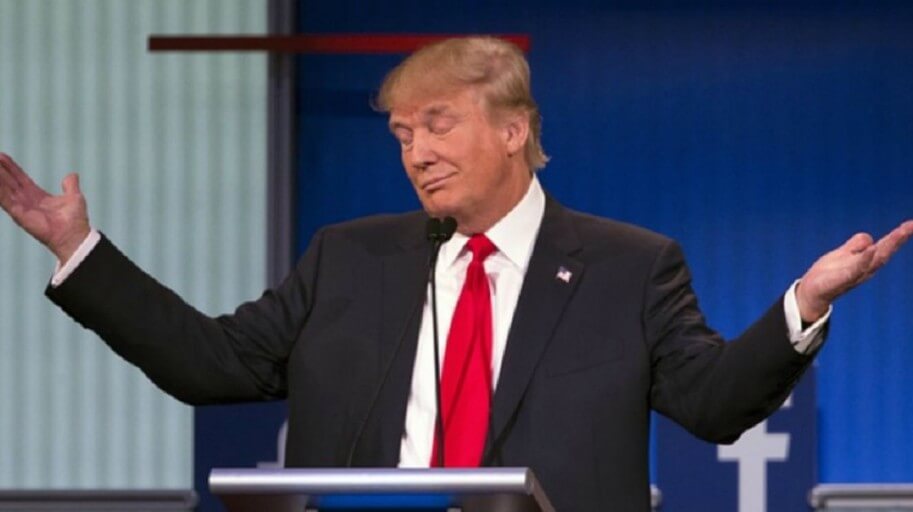
I originally titled this post (way back in November, when I envisioned it) Messianism and the Messianc, which, I'm sure, would have gotten a TON of clicks. I don't like being super topical in the titles - as much as the click bait is attractive, I kind of like to be honest instead of a salesman. At the same time, when do you get a blithering politician's name that also doubles as an actual word than makes sense for the pseudo-intellectual argument of the day? You have to use the topical double-meaning, right?
Trump's the obvious candidate for an example (far more obvious than he was in November, when this was all just a side show). I wanted to talk about Messianism - the "arrival" of a savior. This can be anything - communism, some new computer technology or energy breakthrough, an election - anything that bills itself (or allows itself to be billed) as the solution to a previously intractable problem. Pretty much every politician runs a campaign this way, but none more thoroughly than The Donald.
I'm not going to talk about the politics in particular (although there's an interesting piece here about it), but the manner in which he engages them. Unlike anyone before, Trump litterally touts himself, personally, as the answer to the world's problems. He doesn't have policy papers or complicated proposals, he is simply selling himself as the answer. There's really no better way to define messianism.
Yes, a lot of people see through Donald Trump, but the archetype remains true. We tend to impose this perspective on whoever we happen to want to vote for. A lot of the fervor in 2008 was simply believing that the mere act of electing Barack Obama President would save the world. The Nobel committee gave him a peace prize just for winning an election! I think we all got a little carried away because we spent an entire generation voting for Presidents whilst holding our noses. The notion that some candidate might excite some people was a little unusual.
We see messianism on a smaller scale all the time. TIME did a big piece earlier this year on nuclear fusion, which, if realized, "promises" an end to energy wars and climate change. Skeptics will always be skeptics - and I tend to be a skeptic - but they're not always wrong, especially when the claims are so immense.
We want the quick fix, the easy solution. It's why so many people play Powerball, despite the odds of winning a solo jackpot going down the more people who play. I also noticed that everyone seems to know right away, with some specificity, what they'd do if they won a billion dollars, even if they firmly believe the lottery is a waste of time and would, honestly, never buy a ticket. We're waiting for the windfall.
Whether a political candidate, a discovery, or a pile of cashing dropping from the sky - we're all in on messianism: the promise of a solution.
Peter Rollins would say that the very notion of a messiah is the real problem. He'd argue that whatever energy we put into hoping and expecting the solution to drop from the sky, perhaps in the form of a thick-lipped, jowly dude with strange hair, would better be used actually living and working for the good of those around you.
I'd call this, perhaps, the difference between messianism and the messianic. If, as Christians claim, Jesus Christ is the actual messiah, the savior of the world, this whole notion gets put into perspective. He dropped into a world poised for a messiah, rife with messianism - they even had groups of people who moved into the desert to bide their time waiting for an immanent salvation. Yet when Christ came, it wasn't a get-rich-quick scheme, it was a long slog through tough times; it was a call to suffering and service and patience.
The messianic isn't a sharp guy in a sharp suit. It's the nitty gritty of dirty reality. Salvation doesn't come at the end of a miracle; the real miracle is that we don't need one. Jesus Christ was not the first messiah to come along in ancient Israel. They moved in pretty regular cycles the way we see today. Whether it was the Roman Emperor himself, who certainly talked the talk of messianism, or the various angry prophets who wandered out of the wilderness to rile up the natives against their captors, the world has been and continues to be, filled with potential messiahs.
The real message of Christ, though, was to trump the messiahs. He came without a push for power, in fact to the powerless. He came without a call to heroic action, in fact to the very unglamorous world of selfless service. His message was not "Follow me to freedom," the way William Wallace said it - it was "follow me to freedom" as we escape this cycle of messianism, of waiting for the solution from somewhere else and in some unknown way. The call to salvation is the call to live, simply, with care and concern for everyone - even your enemies.
Trump isn't really the problem. In fact, in many ways, the other candidates like having someone like him running (although they don't like him winning). They like it because he becomes the scapegoat. They can say Trump is the problem, when they're really promising the same thing (if only in saner terms): elect me and save the world. I have the answers. I know what's up. All politics is a call to messianism. It's the kind of thing directly opposed by the messianic way of Christ.
As we enter this season, I'll probably write and talk more about the election. I find it fascinating theater, but this is one major reason why I don't vote for President. The messianism is too strong and too tempting. We don't have to play this game - putting one person in charge and praying for a miracle. The very notion that our patriotic duty is to pick a candidate and vote works against the messianic. Not that democracy and voting are automatically wrong - as Churchill said, it's the best of all the terrible options we've come up with so far - but the notion that this is the only choice, the only way, the necessary framing narrative of human life, is a bit dangerous.
Elections push us towards messianism - even if we're pretty sure the guy we elect isn't messiah, it shapes our outlook on the world in such a way that we expect to see a messiah on the horizon. That's a dangerous thing, because we're supposed to see our salvation in the midst of the poor, the prisoner, the enemy, the outcast. Our true salvation comes not in seeking a savior, but in following the example of the savior who didn't much fit the title.
It's nothing supernatural. It's simply love for those people who get it least and love for those people who give it least. In other words, it's pretty much the opposite of Trump and all the other wannabe messiahs out there this year.

I appreciate his statement that the white struggle to deal with issues of race in our past and present is not a struggle someone else can do for us. It's not a sentiment you hear often, but something I resonate with - that there is not one struggle, but many, from every perspective and position. It's challenging.
Perhaps more challenging, though, is his assertion that the brutality and violence we often rue in our police and prison system is not a regrettable anomaly, but the natural output of our society. Yes, race is mixed up in this pictures because race is mixed up in everything we've ever done as a society, but by presenting the large picture of "you act as you are," Coates addresses a bigger picture that should concern even those deniers of race disparities.
He argues we have a militant and aggressive police force because we are a militant and aggressive country. We might outsource most of that over seas, but it still represents the core of who we are as a people (and if it truly doesn't, then we need to act differently toward the rest of the world). This argument has given me pause to look at all those things we decry in our society:
We hate that our political leaders have entrenched themselves in intractable positions, unwilling to talk or make real progress because they perceive it as some kind of moral or ideological defeat. Yet we have a nation that blunders blindly into war just about anywhere we can frame an ideological message and keep throwing money at problems long after it makes any sense (I'm thinking Syria, but there are a lot of foreign policy moves that would fly here).
The same thing plays out across society. We hate that our attention span is so short, that our people don't seem to care about real issue or knowledgeable arguments. We prefer sex and violence to plot and narrative in our entertainments. Our most vocal and consistent support in sports is for a game in which grown men (and sometimes children) literally kill themselves and each other on the field, then we pat our backs for being mildly outraged when they do the same thing off the field (although not so outraged to stop employing them).
Coates takes an interesting tactic, though. He advises his young son to stick to his own struggle. He doesn't advocate trying to change the system or change the world, but to deal with the situation he's found himself in (as an advantage black man in the 3rd generation since the 60's) and address the world as best he can from that position - even if its not enough to change things, it is the very best that he can do.
You read Between the World and Me searching for glimmers of hope. There's a sense in which Coates has hope, even though he can't rationalize it. There are certainly no words of hope, other than the thankfulness of having one generation in a slightly better position than the last. There is, however, an undercurrent of expectation - something I'll label latent hope. Coates acts as though he expects things to improve, even though there's no real evidence to have such faith, simply because there's not much option outside nihilism, and no one wants to pass nihilism on to their children.
As a Christian, it's a challenge, partly because, while Coates respects the place of faith in Black American history, he doesn't believe in a god. I do see a Christian response in his advice to focus on one's situation to make a difference that might count. Nothing pains me more than Christians who adopt the persona and narrative of conservative and liberal, those who take on the mantra of Republican or Democrat and play the partisan game of our nation. I say that with intention. Nothing makes me more upset. Poverty, rape, slavery, addiction - those things are far more terrible, for sure, but in playing the political games of nations, Christians are, whether consciously or not, giving up on the Church as the hope of the world.
I've said it before; I'll say it a lot more. The message of Christ was for anyone who has any respect for his life or teaching to live as an alternative to the narrative of nations and power. It is only through a alternative lifestyle that we could ever hope to tackle the horrors of poverty and injustice in any meaningful way. The message of Christ is essentially the same message Coates gives to his son at the end of Between the World and Me: live your own struggle. The narrative of the world you've been given will not resonate with the narrative that speaks truth to your soul. Don't get fooled. Skip that national narrative and struggle with the one in your heart.
Coates and Christ might not preach the same narrative (then again, they might be closer than were comfortable with), but it's good advice. We need to speak into the world, with our words and, more important, with our actions, from our own narrative, not adopting one of the positions made available to us by the narrative of power. Participating in the society we have will only continue to produce the results we're unsatisfied with. Playing the game means we've already lost.
The great myth of power is that there exists no alternative; the challenge of the gospel is to live into that non-existent alternative and, through our lives, make it real.
*And I fully admit, Coates will likely be as disappointed with what I've gotten out of his book as he is with all the other people who seem to miss the point. I'm thankful either way and highly recommend it.

