Until very recently, Trump had only mentioned Joe Biden in tweets twice since the 2016 election. All the rumors are the White House isn't scared of any Democratic challenger other than Uncle Joe - and there's no reason for them to be - he's the only candidate with any chance to make Trump play defense. And while Trump defense is just more offense, it's still far more entertaining than when he thinks he's ahead.
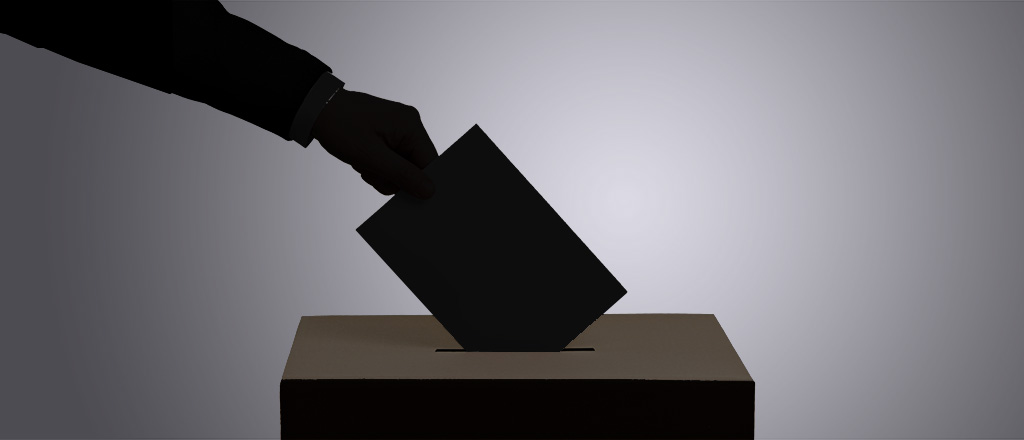
Just a reminder: I don't vote for President. It's a protest against the presumed power of the office and the idea that one person should hold that kind of singular authority. The President of the United States is far from the most important or powerful person in the world and not voting helps make that belief more than just an idea. I watch elections like I watch sports: for interesting story-lines and for entertainment.
This time around, I'm in a pretty unique position. I'm from Delaware, but I'm not from Delaware, which allows me a certain perspective on Mr. Biden while also maintaining a little distance.
What makes Biden so compelling, obviously, is how easily he would've wiped the floor with Trump in 2016. Democrats are always nominating the person who would've won the last election (which is why they can never follow a two-term President: the guy who won the last election isn't eligible). Democrats also like novelty, though (Carter, Clinton, Obama, heck, even JFK), so Mayor Pete or Beto or the potential first woman President is pretty attractive. Democrats rarely care much about electability (to their detriment).
Biden, though, I think, changes the mold. Because his negatives are in the same category as Trump's, but not as extreme, it's a tough match-up for DT. He speaks off the cuff and puts his foot in his mouth, but, you know, Trump makes him look like an amateur in that department. He's had difficult relationships with women - from Anita Hill on down - but even the women who've accused him of making them uncomfortable have specifically rejected claims of harassment or worse.
Let's just say there's no chance a 30 point Democratic loss in Scranton (the white, working-class town that also happens to be Biden's birthplace) would've happened if Amtrak Joe would've been on the ticket. That red run through the rust-belt by the slimmest of margins just wouldn't have happened.
Now, as much as it seems like the same thing would happen this time around, the Democrats live in the past so thoroughly, I find it far more likely something would come out of left field to change the narrative and make the idea of Biden over Trump seem silly by November of 2020. I mean, more likely the Democrats will nominate someone else and kill their chances, but regardless, things are more likely to go wrong than right. That is the Democratic Party Way.
People love Joe in Delaware. I suspect part of it is because he's given a small state a prominent place in the nation's government for near half a century now. Never underestimate the power of a Napoleon Complex. The other part, of course, is because Joe seems so genuine. "Seems" probably indicates there's a seedy underbelly about to be revealed. I don't think that's true. Locally, you hear that people who work for Joe never forget they work for Joe, if you catch my drift. He's only ever been a politician and to survive this long you have to be good. Voters, donors, and media get the full Joe treatment, because they are literally his livelihood.
Some might call that disingenuous, but that's only because we forget (or refuse to admit) that you have to be at least 51% narcissistic just to run for dog catcher, let alone any higher office. Elected officials are not a diverse representation of the general populous; they're almost entirely comprised of that kid in high school who thought he was better than everyone else, but no one knew well enough to really know for sure whether that was true.
I don't think there necessarily has to be a dichotomy between a folksy, homespun, tell it like it is, everyman, and a career politician who treats people around him based on their ability to help his career. I think Joe Biden genuinely cares about the people it's political advantageous to care about, and while that sounds icky, for a veteran politician, it's downright miraculous.
The guy's far from perfect, but perfect is the last thing you want in a President. The harder it is to put them in the role of savior, the better. Maybe that, in itself, is reason he can't win in 2020. At this point, a department store mannequin looks like salvation to 75% of the country; it's virtually impossible to win strictly by asking people to vote against your opponent - even if that opponent is Donald Trump.
That's the real wildcard in this election. We've had Presidents with policy positions we vehemently despise. We've had Presidents who lie regularly and with conviction (in fact, we've probably never had a President who didn't). We've had terrible, inexperienced, mentally unhinged Presidents, too. As I said before, to become President, your capacity for blind self-interest has to be impossibly, unbearably high (yes, even for "the good ones"). Typically, though, Presidents decide that its in their self-interest to appear to be working for some other more noble purpose.
What those people who really hate Trump hate most is that he's not playing the game. The guy doesn't even pretend. That was unique enough for other politicians to be paralyzed in response and it was refreshing enough to voters to put him in office.
It's also the Biden playbook.
No, Joe's never been like Trump, but he's worked hard to cultivate the image that he's not like other politicians either. His gaffes couldn't be political theater, because they're so terribly embarrassing or cringe-worthy. Or is ol' Uncle Joe just that good at what he does?
I live in Delaware and I don't have an answer for that. I'm not saying Biden would be as terrible as Trump (for the record, my opposition to DT is entirely because he appears to lack the ability to even set a standard by which to judge right from wrong - which is far scarier and more dangerous than someone who just has a terrible standard or lacks the ability to use it consistently), I am saying that trump's attempts to expose the truth to the American people would be one hell of a ride.
My gut tells me Biden probably wouldn't be a very good President, but he'd be a terrific general election candidate - probably the only one who could make things entertaining. That's why he's my pick... at least right now.
FauxNews and CNN are right next to each other at the gym - it's almost like a troll from PlanetFitness. Typically, I place myself right between HGTV and ESPN - only the truly crude settle for three-letter networks - but the "news" channels are right next door. I spend 65 minutes on the elliptical a couple times a week (I know, I know, but my knees are shot and I can't even do the stair-climber for more than 15 minutes), so I get a sense of what they're covering.
Lately, it's been two things exclusively: the stupid liberals are talking about mailbombs nonstop and the evil conservatives can't stop covering the migrant caravan (although, I notice, they never actually show pictures of it - easier to be afraid of the unknown, I guess). Literally, hours on end with no interruption, like these are the two biggest issues in the world.
I hope you recognize that neither is significant. They're manufactured either by the networks themselves, because they drive ratings, or by the politicians who think they can score easy point. It's not that security or immigration isn't important, but that these specific things - the "bomb" in the mail and this particular group of migrants - are way down on the list of things that have an impact on daily life. What's not getting covered on these channels? Elections and the issues that matter to the people represented by the Congress getting elected right now.
Those things are left to the other channel, during commercial breaks, where politicians are lobbing toxic lie-bombs at one another non-stop, because the only people who can actually be influenced in an election have no time for FauxNews or CNN. Those networks only cover things that get their audience the angriest, because driving voter turnout is what matters.
It's all a game and no one wins. Voters aren't even capable of winning. It's just a system where a few power brokers fight over the ability to keep power. They've self-selected two teams and throw out shibboleths so people can tell on which side they belong. It's a zero-sum, go-team-go kind of thing, where it doesn't matter so much if we win, so long as other guy loses.
I mentioned on Facebook the other day that I don't vote for anyone who knocks on my door or leaves a flier on my porch. The response I got was, "don't you want candidates to talk to you about issues?" Maybe, but I've never seen that happen. When people come to my door, they don't ask what I care about, they try to convince me to vote for them, usually by appealing to one of the aforementioned, self-selected, focus-group approved issues.
No one is looking for or working towards solutions; if they do that, they're not in office very long. Politicians want to be re-elected. To do that, they have to distract you from what really matters with things that make you angry or scared or both.
This is why, when we, once in a while, get someone so proficient at making you feel heard, someone capable of being both charismatic and articulate, someone good at masking how truly power-hungry they are, we elect them in a landslide. That's what we call Presidential. And just to combat the bias here, Barack Obama is the worst offender at this. Yes, I preferred his Presidency to the alternatives, but that's not exactly high praise.
The guy is probably a decent person. He loves his wife and is kind to his children; that tells you a lot about people. He's still a power-hungry, arrogant, manipulative dude. I'm not saying he can't be that and also be important, mature, sensitive, and compassionate. You can be both; in fact, most Presidents are. When you like their policies, that second part is all you see in them. Ronald Reagan, Bill Clinton, George W Bush, Obama - people love them more with each year, and with good reason. When you're not playing politics, you don't need to play politics.
That doesn't change the game any.
It's not about truth and justice and freedom and equality. Those things are lip service, but they're not anything a government can or particularly cares to provide. That doesn't mean they aren't important or that they're impossible. It just means the system we have - a system that specifically claims to be the only avenue to achieve those dreams - isn't capable of delivering.
I've said it a lot and I'll say it again. Whatever it is you do everyday is far, far more important than who you vote for or even if you vote at all. I will go to my polling place this year, but I may cast a blank ballot for the first time. I can't find a single candidate worth supporting in any of my races. That's ok. It's a little disappointing, but it really just makes things easier.
It's a reminder that real politics is the way I treat my neighbors, the involvement I have with the people in my town, the way I spend my time and money interacting with those around me. That's politics. Not this voting crap.
Elections are all about numbers these days - the right amount of money in advertising can move the needle in predictable ways. The side that's better at figuring out and executing those moves tends to win. A good message helps; the right manipulative issue - but in the end, it's just the using and abusing of people who put their trust in a game they can't win.
Maybe the giant lottery jackpots this week are a good analogy for how the whole thing goes. You invest time, money, and hope in a system where someone else is guaranteed to get rich. Winning is not about a better strategy, but about finding a better game altogether.
Politics has nothing to do with governments or elections. Stop believing the lie.
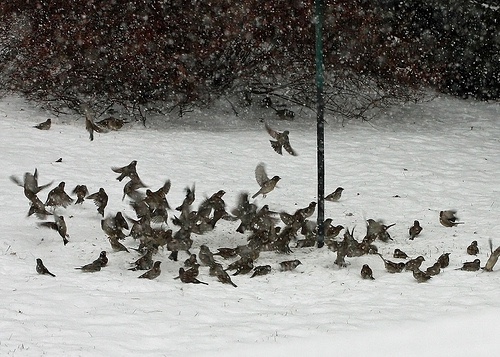
Paul Harvey told a Christmas story once on his radio program. My father uses it quite often in his Christmas Eve services; I've read it for him at least once. It's called "The Man and the Birds." The basic gist of the story is that a man stays home from Christmas Eve service because he just can't bring himself to believe in the incarnation - that God actually became human. While at home, a storm kicks up and he notices a flock of birds lost and weary in his front yard. The man has compassion on them and tries mightily to shoo them into the warm barn. Exasperated, the man wishes he could become a bird to lead the flock to safety - and the realization ignites within him this spark of faith.
I've been thinking about that story this morning, because I resonate with the desperation of the man. I'm not sure how to say this without coming off holier than thou (anyone who's read my twitter feed in the last 24 hours knows that's certainly not true), but part of claiming the title "evangelical" means one cares an awful lot about proclaimed truth. Instead of trying to herd a flock of birds into a barn, picture a man trying to guide trapped birds out of the barn to safety and freedom.
I believe with all my heart that the Kingdom of God is bigger, bolder, freer, more beautiful, and more expansive than any candidate, country, or campaign. I believe the good news of Jesus is that we don't have to get caught up in the machinations of power, choosing between flawed rulers and making due the best we can. When we're caught in this system is feels like birds bouncing back and forth between the walls of a barn they think encompasses the whole world, but is really a cage. Whatever floundering I do, waving my proverbial hands with exasperated one-liners, sub-par attempts at critique and satire, or wildly irresponsible mock presidential campaigns, is a desperate attempt to get the attention of my people who seem lost and unaware of it.
I know it makes me extreme and radical, but I do truly believe we shouldn't vote - not as Christians and at least not for President. As much as we try to hem and hedge and make excuses (and I'm just as guilty as anyone, see aforementioned twitter feed) our participation in that system is idolatry. It is a statement that the Kingdom of God is not enough for us, we must also have the kingdoms of this world.
When Dietrich Bonheoffer joined the plot to kill Adolf Hitler, he wrote, essentially, that he believed his actions were sinful and that they might earn him an eternity in hell, yet he willingly committed them anyway because he could stomach no other option. I try to take this perspective to heart when dealing with difficult issues (especially the taking of life), recognizing that we do not always possess the "right" solution in every instance. Similarly I recognize my tendency to do nothing over an imperfect something has not and does not always prove beneficial to me, my faith, or those around me.
At the same time, it feels as though Bonhoeffer's position is the only one that makes sense for Christian voters. If you're there, I might disagree, but I can understand. I just think we shouldn't be voting if we can, at all, help ourselves. There's nothing good in our preoccupation with power. It's dirty and messy and wreaks of lack of faith. We can't play pretend, saying we believe in a Kingdom ushered in by the life, death, and resurrection of Jesus Christ, then invest ourselves and our future in kingdoms that operate on an entirely different foundation.
I've written this before, but I know it gets trickier on a local level - since we have to get along with our neighbors. If there weren't a town council, we'd have to invent one, right? Or maybe we really could just live sacrificially for the good of the other? Maybe I'm just as trapped in the barn as everyone else, none of us really believing the door exists, or, if we do, not really believing we can ever find it.
I don't mean not voting for one person or another, but exempting ourselves from the conversation of us vs them (or even them vs them, with some obligation to choose sides). There is just us. As much as we'd like to say we can be loyal to our first allegiance and also take sides as Republicans or Democrats, we're fooling ourselves. Those identities in some way hinder us from being who we were created to be. The same is true for our identities as American or Arabian, Ugandan or Dutch. They seem convenient, but they just get in the way. Paul said neither Jew nor Greek, slave nor free, male nor female (boy, is it hard to let go of that one!), and I'm even starting to wonder if even our identity as "Christians" gets in the way of our identity in Christ.
I don't think I've handled myself well in this flailing attempt to point our attention towards the door. I sure hope I've not come off as demonizing "them" who might think differently than me. My genuine desire is to caution "us" about the dangers we have embarked upon - and they are quite likely the exact same dangers we'd've encountered if 80% of us had voted the other direction.
I think it's an emotional over-reaction to say last night's vote was similar to the ancient Church's embrace of Constantine, but that's how it feels. In the US, people who most overtly name themselves the people of God have sided with amoral people in an amoral system we are desperate to sanctify. No, I don't think the other outcome would have produced a different result. Hence my reluctant call to give up voting.
I recognize the great sacrifices that have been paid to secure voting rights for people - and I admonish us to continue that work. Every person deserves the right to voice their opinion through the ballot box, but, as people following in the wake of Christ Jesus, I suggest we give up those rights in favor of living out an alternative.
That same Bonhoeffer proposed the idea of religionless Christianity, but died before he could flesh out his vision. I believe the most promising path forward, for the Church and for the world, is to explore together what that means: namely a life free of dogma and power and being "right;" a life of love in imitation of Christ, trying, as hard as the Holy Spirit will empower us, to avoid sacrificing our vision of the Kingdom to the kingdoms of the world.
I can't say I've done this well in recent days. Certainly many of you have felt less than loved. I don't know what to say. I'm sorry. I'll try to be better. But I have to keep trying. Somehow, we've got to get out of the barn.
You should know by now, I'm not on any "team" when it comes to elections. I encourage you to vote for me, where you can. I'm even fine if you don't vote. What I would like you to do is not vote for someone in order to register a vote against someone else. That's not cool.
What's more, it's not ethical, especially for Christians. That's who I hear talking the most about this. I've tried, over the last few months, to figure out exactly what Hillary Clinton did in the '90s to raise the absolute ire of the evangelical right. I know she did something, because I grew up with the impression she was one of the worst people on Earth. I couldn't, though, even at this point, figure out why. I've heard her called a liar a lot, but I haven't found evidence of egregious falsehoods - at least not any more than the typical politician making empty promises kind of way.
Anyway, I'm not here to defend her, just explain that lots of conservative Christians hate her with an inscrutable passion. This is what leads so many to tacitly support Donald Trump this time around. What I hear most often is the old Roe v Wade argument - "we need a republican President to save the Supreme Court." It's a pretty universal reason for Christians to vote GOP.
These Christians need a reason, because the guy is almost universally recognized as unconscionable. He's crass, selfish, mean, and immoral.* I might say he's more amoral, because I'm not sure Donald Trump possesses the typical human ability to differentiate between right and wrong. People don't like the guy; Christians can't excuse or defend him - and points for actually admitting it (for the most part).
It's the power game, though, that's troubling to me. The argument becomes one of power, particularly the Supreme Court and the underlying message of abortion - the single greatest motivating factor for conservative evangelicals. It is the only issue for so much of this particular part of the electorate - and it's giving Trump some life in this election. It's pretty much the only thing. Without that fear, I'm guessing the electorate might look a little more like Utah - with the religious vote largely going to someone with a very slim chance of winning.
I don't much care who someone votes for in this election. Someone will win and someone will lose. Life will get easier for some people and more difficult for others. Life will go on and things will, on the whole, change very little - even if there are some very noticeable differences that make for good headlines. I do care, however, why people are voting.
To be consistent, at least ethically, Christians really can't use this Supreme Court excuse to vote for Trump. If you genuinely like the guy or his policies, please say that. If you just simply don't trust Hillary Clinton and are terrified of her winning, say it. Don't - please, please please don't - say you're voting for Trump to save the Supreme Court.*
What you're saying there is that the ends justify the means and I know I've written the ethical, theological, and real life problems with that idea into the ground. I searched for "ends means" in my blog directory and found a full 15% of my posts at least mention them both. That justification is bad. It's terrible. We can't justify our means by the ends - that is the very antithesis of the life and teaching of Jesus. The whole point of Christian life is to make the good, right, ethical, and loving choice now, regardless of the consequences. We believe in a world without end and thus the ends are decidedly irrelevant.
I believe some important guy once said something about gaining the whole world while losing your soul.
I suspect the religious right in the US has already lost its collective soul by reckless pursuit of power - that's probably a decades old occurrence at this point. It doesn't have to be the future, though. This is why I so strongly oppose the idea that we have some moral or theological obligation to vote. That's a trap set by the powers that be, attempting to force people to choose the lesser of two evils - to put the ends before the means. You don't have to do it. There is more to the world than elections and government and courts and laws. Life is about relationship, specifically the relationships you have with your coworkers, friends, and neighbors - the people you see every day.
There is nothing - no court case, no law, no election, no cause - that is worth the sacrifice of principles, conscience, ethics, or soul. We can't; we cannot allow the means to justify the ends for us who follow Christ or we have been converted away from the gospel we long to live out.
Vote or don't. Don't feel obligated. If you like one candidate or another, please, by all means, vote for them. If you like neither, vote for someone else. If you're in Colorado, you can just fill in the bubble next to my name. If you're in a dozen other states, you can write me in and it will count. I promise, I won't win. I'd probably be a terrible President anyway - but if I were, I guarantee it won't be because I put the ends above the means.
Please, you don't do that, either. The faith we profess is bigger, better, stronger, and more powerful than anything we might win by betraying it.
*Please understand that these arguments equally apply to people pinching their nose and voting for Clinton because they can't stand the idea of President Trump - I just don't know many people in that situation. It's largely my Christian friends using Christian excuses to violate what I see as a core part of the gospel message. If there's a choice between Clinton and Trump, I'd rather have Clinton, but there's never just an either/or choice - there is always another option - that's part of the Good News of Jesus, too.
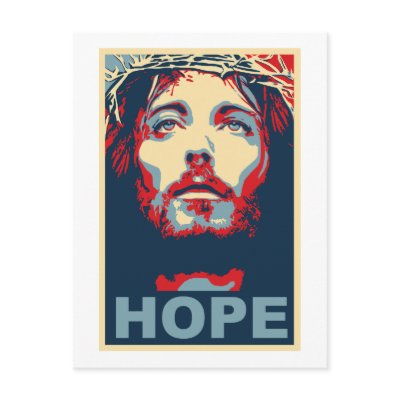
I don't vote for President because I don't want to betray my beliefs with my actions. Government, like all human institutions is deeply flawed. It can be terrible or less so, but it can't be good. For me, the decision not to vote for President is a decision to remind myself that there's only one hope for this world - Jesus Christ. That's the only endorsement I can give.
It's been challenging for me lately. Rocky Anderson, former mayor of Salt Lake City, and nominee of the Justice Party, seems like a great candidate. He believe things should be done that mirror my own thoughts and ideas quite closely. He's everything I could ever hope for from the leader of our nation.
By all accounts, he's someone I'd like to vote for.
It's here where I can finally get some perspective on how many of my GOP and Democratic friends live in election season. They really believe their guy is best for the country, that their guy will get things right. All evidence points towards the inherent goodness of this vote.
It's difficult.
But much of God's Kingdom is not yet evident in our world. The way the world seems to work is still a fading shadow of the world as it was - not an accurate representation of the world as it is becoming.
One of Israel's most egregiousness sins was to ask for self-governance, for putting faith in a King to make things right. It was the repeat of Babel - the idea that we can build something to equal God.
In the end, God knows our tendencies; God made them. And so God provided us a King and a Kingdom - one that would fulfill all our wishes and desires - a King to make things right.
But this King didn't reign the way we wanted. We killed him.
But that didn't end the Kingdom. The King didn't stay dead. The world is different. The Kingdom is here, the Kingdom is coming. The Kingdom comes through the Church, the physical embodiment of that King who reigns in humility, wields power by refusing it, and commands without asking anything, but living selfless love.
Our system doesn't look like that Kingdom. It never can. Our system, no matter how perfect - no matter how aligned with the way I or you or she thinks the world should be - will not satisfy.
Let me be the first to say my candidate will not make things better. Yours won't either. That doesn't mean we can't vote for them - by no means. We just can't put faith in them.
For me, that means not voting. I don't have the discipline to vote for someone and not believe in them.
The last couple of weeks I've been floundering a bit. I've been struggling to reflect on the US Presidential election in the midst of the party conventions - and to somehow communicate my perspective on the whole thing. I don't think I've done a great job. You may have seen the evidence on Facebook or Twitter.
As a Christian, I am called to embody and live into a different culture. The people of Christ are to be formed in love with different (if often complementary) values to those of the dominant culture. It's difficult to explain or embody those differences as I am as co-opted by this US culture as anyone.
I feel like a child, re-learning the ways of the world around me with a different set of values, attempting to change my reactions and foundations. (Incidently, it's just as difficult to try and teach a child to understand the world differently the first time around).
Part of the counter-narrative, the counter-story that the gospel presents is a different take on power. Christ ignored the power structures of the day. The religious leaders, both inside and outside the temple, as well as the Roman governmental and military rulers. He acted as if they were unimportant for life. Jesus called collaborators and zealots (people who hated each other more than Democrats and Republicans).
I don't believe Christ came to found a religion, but to remind us of God's creative purpose for life. I believe the mission of the Church, of God's people, is to embody that purpose in an alternative community.
I find it more and more difficult to put my hope and faith in God's mission when I'm being pulled and pushed to put faith (even if its reserved faith or skeptical faith) in a political system. The type of power that infuses government is the type of power from which God has delivered God's people time and again throughout history.
I struggle to participate in that power, even in a small way - like voting.
I also struggle to put such faith in an ideology other than love. When choosing a candidate, we're choosing a way of looking at life. No political candidate has the Christian perspective: love, love love; give, give, give; submit, submit, submit; sacrifice, sacrifice, sacrifice; love, love, love. The ethic, the ideology of the gospel is the exact opposite of the ideology of power (no matter what stream of politics you subscribe to).
I believe strongly that life is about relationship. God's relationship to the world and our relationships with each other. We need each other; we were created for cooperation. There is nothing in scripture that speaks to the individual - we receive the gospel personally only as we participate in God's people, in relationship.
For that reason I am a lot more amenable to politicians and elections the smaller and more local the race. I believe the election of block captain or school board is more important than the election for President or Governor - because they're the people we deal with on a regular basis. They are the people responsible for enacting our values within our own communities.
Now I understand that there's some real benefits to a federal system, be it a county, state, or nation. There's a lot of things that are streamlined and simplified by scale. I'm not trying to say or infer that governments can't be a part of our life together.
I think the most important role government can play is holding us accountable to do the things we know to be right, but that are hard for us to follow through on. We want to take care of the poor and the elderly (there's a lot about widows and orphans and strangers in scripture), but we don't always want to make big sacrifices when those needs present themselves - so we put money in trust with the government to do that for us - to help us follow through.
You can already see the pitfalls, even in that example. Now we've moved ourselves one step away from the relationship. Those in need are now helped through a middleman, an intermediary. The same problem applies if its a private charity rather than the government.
In the end, our politics are simply our way of living with each other. Politics is not limited to governments and elections. I believe strongly that, for Christians, the Church is the avenue in which we express our politics. We love each other and we take that love out into the world - we bring that politic to everything else we do. Our jobs, our schools, our neighborhoods, our communities, our government.
So often our culture has attempted to confine our politics to our government - so that we outsource our responsibility to live together to someone else. Life is not a competition. People with different politics don't disappear just because they lose an election. When we're neighbors, we still have to see each other when we put the trash out. We have to live together - and not in dominance or victory, but in peace.
I don't see our government working for the good of anyone, for the end result of peace. We have lofty goals, things like justice and freedom. I'm not sure we really understand what those words mean. In the end, government is a play for power - for the authority or the ability to enact our politics, our vision, on the nation, the state or the school board. As great as the opportunities are for good, that kind of power doesn't bring what we seek. It just doesn't.
It is part of the paradox of faith. The gospel finds power in weakness and authority in submission. The gospel finds influence by avoiding power. The politics of Christ is humble love.
I have not been humble or particularly loving. I see a strong correlation in the two parties to the parable of the tax collector and the pharisee. The tax collector comes to worship and prays for forgiveness - have mercy on me, O God, a sinner. The pharisee prays - thank God I am not as sinful as that tax collector. One is attuned to the heart of God, the other is not. Our reaction, however, is too often to say, "thank God I am not like the pharisee" and thus become him.
The political parties point the finger at one another like the pharisee toward the tax collector. I pointed the finger right back.
There is a better way. There must be. I haven't yet found it. I'll keep trying.
I treat the political conventions like a baseball game - tweeting my comments and trying to be funny and mostly failing. I truly don't view them as much more than a spectator sport. A lot of people take this stuff deadly serious, more than they should. But elections and governments have the opportunity to be more than a sport - there is some value there, we just can't let it be the source of hope.
I included the video above. Emmanuel Cleaver is a United Methodist minister and the Representative from Kansas City. He's a great man, a good pastor, and a strong man of faith. He's doing his best to bring the politics of the Church into the public sphere. You can see in the speech above how much he believes in hope.
I think it's a bit misplaced to associate those politics with government and elections - Republican or Democrat. A party means a platform and an ideology - and we've covered that already.
I do think we can and should speak together on big issues. One of the travesties of our political system (one with two parties) is that our public debates are generally limited to either/or options. We tend to view every major issue with one of two solutions. There is always another way.
I think we'd be more likely to find those ways forward if we'd stop associating ourselves with an ideology or a platform and just talk about issues.
I tried to do that a few weeks ago with the voter ID situation. I will do that in the future as the election approaches. I don't think I'll vote; I just don't think either man represents a workable politic, nor do I think any human should be given the kind of power the President of the US has - it's unhealthy and unloving to put anyone in that role.
I believe that candidates who get our hopes up for change, for success, for a future that meets our expectations, they represent a temptation to think we can make things work through the sheer force of will, through our own power.
In the end, I don't vote because we cannot build the tower to heaven, no matter how just, how free, how virtuous we craft our government, it will not satisfy the longing we have for peace, freedom, and justice. I just don't like fooling myself or getting my hopes up. For me, that's what a vote does. I want to stand up and cheer Rev. Cleaver in his video, but I just don't believe his God-given vision is possible through governments and elections.
The next three blog posts will be concerning those three words - peace, freedom, and justice - the ways we use them and my understanding of the Christian perspective on each. I hope we can have a conversation about how our politics plays out across the many spheres in which we live together.
So this controversy has been going on for years. Some people want to make stricter requirements for identification at the voting booth and others accuse them of attempting to suppress the votes of poor people who may not have easy access to official identification. It's getting serious now as a number of laws are actually going into effect (and with a Presidential election on the horizon, likely decided by a very few voters in a very few states) and people are getting nuts about it.
For a long time I didn't give it much thought; quite honestly, it seemed like a convenient political football for the two sides to throw back and forth - and one that really wasn't all that dangerous.
I, like many others (almost 70% of Americans) think it would be pretty easy to commit voter fraud. I've never been asked to do anything but sign that I voted (they were supposed to compare my signature with the signature I used to register, but the poll worker never even looked).
At the same time, there's very little evidence that voter fraud occurs in the kind of numbers that make any numerical difference in elections. (It absolutely occurs, don't get me wrong - there's just never been any evidence it has swung any elections any time in the recent past). We've heard the stories (apocryphal or not) of Chicago mob bosses and third world dictators stuffing the ballot boxes with votes from dead people - but the reality is that just doesn't happen in the US today to any degree that matters statistically.
Still, in this day and age where life and death seem to ride on election results for some people, it's not too tough to imagine a scheme like our worst fears actually happening. People across the spectrum want to see us be a little stricter on how we identify voters.
I doubt even opponents of these voter-ID laws would have a problem with that - if it were done in ways that don't make it more difficult for some people.
I've always said that if these laws go into effect, the State should issue ID cards (not driver's licenses) for free. That way there's no defacto poll tax (even a small one) for voters.
This week, however, I've been exposed to some additional complications. The State of Georgia, for example, due to budget concerns, no longer has a single DMV within the city limits of Atlanta, a city of 400,000 people. Those with a lack of transportation would have a pretty tough time getting an ID.
To make things even more difficult, it was brought to my attention that many black people over the age of 60 who were born in the South don't have birth certificates. Before the Civil Rights movement many hospitals would not take black patients and many black children were born at home with no official record. With new laws in place for 2012, no state is allowed to issue an official ID of any kind without a number of forms of ID, one of them being a birth certificate.
I know from experience, this can be a confusing process. My wife had to go three times to the DMV in New Jersey and had to pay for a new birth certificate from New Hampshire because her original one no longer complied with US law. If there had been no birth certificate in the first place, who knows how long or even if she could have ever proven she was born in the US.
Some people would like to make this a partisan issue (and perhaps there's some knowledgeable persons in each party doing just that), I have to believe it's more of a cultural illiteracy issue. I never would have imagined how difficult or near impossible it could be for someone to get an ID. I always thought the problem was coughing up $40 to pay for it. The problem is bigger and deeper than all that. I suspect lots of well-meaning people voting for these things are in the same boat.
That being said, I don't think this changes anyone's mind that it wouldn't be a bad idea to be a little more secure in our voting processes (my last vote in NJ, they had three sets of previous residents at our address still on the rolls as active voters). It's going to take some more care on the part of election commissions and volunteers for sure. It's also going to take some creative means of identification.
I find it hard to believe anyone would want to withhold voting privileged because of an inability to get to a DMV or the fact their birth certificate doesn't exist.
A week ago I was clueless as to why this was a problem; now I'm not. Perhaps this post can help other people to engage and together maybe we can figure out a better way to secure our voting system and also enable everyone who wants to vote to exercise that privilege.
Ok, so I'm jumping back in to the blog with a doozy tonight. I really can't believe it's been since April that I posted something here. I feel awful about that. However, it should be known that I have continued to write since then and was even published in a small, almost never read magazine.
Regardless, I am ready to detail the long process that has led me up to election day, just a mere thirty-six hours away. For those of you who know me well this will come as no surprise, but I'm a bit of a political junkie. This is one of the more serious veins of an obsession with competition. My father has been laughing about it since I was pretty young. If there is a way for someone to win something, I will be interested - dog shows, beauty pagents, jai alai - whatever it is, I'll not only watch, but research and keep track of numbers. We used to have one of these plastic marble trough sets. You could construct these elaborate obstacle courses for marbles to run through; I remember spending hours with this thing and a stop watch, timing marbles, running little marble tournament races, and constatly re-constructing the thing to produce the fastest possible times.
Political races have about as much numerical data and opportunities for prediction than just about anything in the world. They also give ample opportunity for spirited debate. (Those close to me will also know that I rarely hide from a good-natured argument, even if I actually agree with the other person involved.) The US Presidential race is like heroine for me. The analogy even holds up beyond face value as I still complain that debates, primaries, and polls come too infrequently. I know, I'm a hopeless case.
This particular Presidential contest has been quite unique for me. You see I've been old enough to vote in US elections since 2000. I've twice written in Senator John McCain for the highest elected office in the land. I appreciated his bi-partisan, rebellious politics in 2000 and did not yet understand the political machines that colluded to his demise. By 2004 I had yet to find another figure I thought could handle the job and wrote McCain in again, almost by default. In neither election did I have much concern for who actually won; it seems we've had a string of losers nominated from both major parties for a while now.
Coincidently, in 2004 I, like a lot of human beings, were introduced to Barack Obama via his major speech at the Democratic National Convention. I had heard his name previously, mostly because of the press surrounding three opponents of his for the US Senate from Illinois dropping out of the race for bizarre reasons. I followed up with Obama, purchasing his first book, Dreams from My Father, which was written long before he had any political aspirations and was, therefore, the closest to the truth we were ever going to get out of him.
I was impressed, not only with his speaking and writing abilities, but with his attempt to frame politics with a new vocabulary. Here was the emergence, on a national stage, of a substantative politician from a new generation. It was quite intriguing - even more so when I viewed his speech from the Call to Renewal Conference, sponsored by Sojourners in 2006. This man is clearly a follower of Christ and open to speaking with religious language often ignored or feared by politicians.
Once it became clear that these two men would be vying for the Presidency, I was more than excited to see how things would progress. To my dismay, neither candidate kept to the high-brow and polite campaign they promised; McCain's personal and character attacks on Obama made me regret the previous votes I had cast for him. As I began to understand the issues and each candidate's perspective on them, I realized that I, in good conscience, could not vote for either man.
Now, to set the record straight, I am supportive of Obama. The US election system realistically gives the nation a choice between two people. Given that choice, I would much rather have a President Obama than a President McCain. However, our electoral system does not limit us to the two "big nominees." Every natural born, non-felon, US citizen over the age of thirty-five is elligible to be President of the United States.
Not too long ago, I decided I would write-in Representative Dennis Kucinich (D-OH) for President. I found myself resonating with Kucinich in the Democratic Presidential debates of 2004. I took several of those online candidate surveys to match my views with a Presidential candidate. Both in 2004 and in 2008 my results would invariably point to Kucinich. I will not make a long apology for the man, but regardless, I think his political philosophy is among the best of any person currently serving elective office anywhere.
However, over the course of this long campaign, I have come to admire the calm and comfortable attitude of Senator Obama. He has handled a tumultuous two year span with many crises and problems and yet barely registered any reaction. His plans have remained stable from the beginning and his faith in those plans undeterred. He certainly has a more desireable demeanor than Kucinich and I could just no longer convince myself that Kucinich was the "best" person for the job.
In the past few days, I have spent a good deal of time searching and thinking about how I will cast my vote on Tuesday. I've consulted books and mentors; I've thought and prayed. I have tried to allign my beliefs with voting practice and mostly came up short. As of yesterday afternoon, I was resigned to a write-in ticket including the names of two pastor friends of mine. Both are smart and honorable people whom I would trust with the grave decisions of governance (even if I would not wish the situation upon any person).
However, also yesterday, I was informed that Kansas, much like many states, moves all ballots including write-in votes to the category of "provisional," which drastically reduces the chances of said ballot ever being counted. While I have little desire to vote for the President of the United States, I do want my votes for other contests on the ballot to have some effect.
Early this morning I read the final pages of Jesus for President, a book about the Christian life in relation to the systems of the world around us. It is a fantastic book for anyone who wrestles with the call of God and the demands of life; I highly recommend it. I was impressed that this book avoided any mention of elections until the final few pages and spent perhaps four or five on the topic at all. One of the stories the authors recounted was of a group of US Christians who could no longer reconcile their beliefs against voting with the billions of people who lacked opportunity to vote and the thousands who have given their lives specifically in the struggle to win voting rights. Their solution was to seek out those without a voice and vote in their stead.
Tomorrow morning I will make an off duty visit to the dry cleaners I work with for my job. Their employees are mostly resident aliens from across Latin America. These women live in the US (some have been here for quite some time) and they work incredibly hard to support themselves and their families. They are among the bottom rungs of US society, socially, economically, and practically. They have no voice in matters that affect them, perhaps more than even these matters affect us. I am going to ask which candidate they would like to vote for and I will use my rights as a citizen of the United States to cast a vote for these voiceless friends.
Today I've discovered yet another reason our two-party system is failing America. I've always been of the opinion that we need more political parties. Not that I am naive enough to believe we only have two, but in reality we only have two that anyone gives a crap about. You know why? Because somewhere along the lines these two parties found it both expedient and useful to write into the rules of Congress that only the Democrats and Republicans get special privileges, which, in essence makes them superior in ability and access. Democrats and Republicans get special treatment and have special rights in our lawmaking and electoral process.
This, however, has led to a gigantic vacuum of progress and responsibility. Because they know that there will only be two contenders in every major political race, neither party actually has to DO anything. They can sit around and argue and bicker and vote pay raises for themselves, knowing full well that all they have to do is send some Federal money back home and blame the other party for all of life's problems.
This is what a multi-party government can bring to us. When there are an enormous amount of parties all vying for seats and influence, they are forced to actually take positions on things and be innovative in campaigning. They are forced to work for the betterment of society or else risk losing their seat and power, perhaps forever.
A multi-party system also forces political opponents to work together and build coalitions. You don't see any of this propagandist polarization in multi-party governments because without the support of many different people, you cannot govern.
All of these are reasons why I'm an avowed independent. I tried to vote in my primary yesterday and was barred from doing so, unless I was willing to declare a party affiliation. Well, I have principles.