The Court of Arbitration for Sport ruled this week that International Association of Athletics Federations (the world governing body for Track and Field) regulations concerning testosterone limits for women's sports will be upheld. This is in reference to a challenge brought by South African World Champion 800m runner Caster Semenya.
Semenya is a woman with DSD (difference in sexual development) - she has some male reproductive organs which drastically increases the amount of testosterone naturally present in her body - fighting to compete according to her gender identity without medical intervention. There may yet be other legal action, but those options are longshots at best.
Essentially, what this ruling means is that Semenya will have to run against men or have her testosterone levels medically lowered to within allowable limits for female competition. Neither of those outcomes seems entirely fair. This whole issue is further complicated by the appalling way in which Semenya has been treated during a decade long process to get to this point.
She was, at one time, unaware of her DSD status and found out along with the public when a forced "gender confirmation" test was illegally revealed in the media. She's been subject of scorn, ridicule, and abuse from many parties over a long period of time and has had to suffer greatly in her pursuit of athletic achievement.
The ruling is being framed as a setback for gender identity recognition, but I think things are a bit more complicated than that. We've seen similar struggles at all level of sport. Recently Connecticut State High School track and field has seen transgender girls winning state titles and backlash - or at least frustration - over the real and perceived advantages of a different hormonal makeup.
With athletics, there is always a preference for superior physical attributes, right? People with better fast-twitch muscles, larger frames, or elite hand-eye coordination excel over others. Most every successful athlete works incredibly hard, but there are inherent physical advantages that usually make a difference at the highest levels. Why should testosterone be any different?
It's a good question, especially since the current "best practice" for preventing doping involves a "biological profile" that measures an athlete against their own physiology and not against some objective standard. Athletic officials get biological data from athletes very early in their careers to establish a standard by which to judge if there's any unnatural advantages at play. It's not perfect, but it does recognize that some athletes do have inherent physical advantages, which contribute to their success.
Semenya's case is quantitatively different because her DSD puts her testosterone levels many times above what's ever been measured in women without DSD; it is a far greater disparity than you'd find among more biologically typical men or women. The scale is simply well beyond what's historically been encountered.
Semenya doesn't win every race, though. Women - women with what are now declared to be "typical" testosterone levels - have beaten her in competition. It doesn't happen too often, but the argument is that her physiological advantages clearly aren't unfair, they just provide her with a larger advantage than we're used to seeing. That's a compelling argument on a world-class level, but it's a lot tougher to accept at lower levels of competition; there's just a much, much smaller chance any Connecticut high school girl will be able to compete, because the pool of competitors is so much smaller.
The only reason we have women's sports is because there's a recognition of biological difference, right? If men and women could compete easily, they would. Testosterone makes a big difference in athletic performance and there's no way around it. What are we to do?
Many have called this ruling a loss for gender identity, but I see it more as an early victory in the battle against the concept of gender. I've written about this extensively before, but the only real difference between men and women is reproduction and even that is not a real difference. Yes, you can make gender-based generalizations, but there isn't ever a way to say "all men are ___________" or "all women are ________." Not every women can bear children and not ever man can father them. You might then move to merely having specific reproductive organs regardless of their functionality - but then you're faced with men and women like Semenya, who have DSD and don't fit into those binary categories.
For too long we've stigmatized people who aren't easily categorized. From the brutal ignorance of fay and butch to the more complicated contemporary studies of brain chemistry and hormone balance, all of it is an attempt to fit people into boxes of male and female that don't really matter outside of defined gender roles.
Think about it. There's no need to put people into gendered boxes unless you believe there are different purposes for men and women. Yes, there are some generalized biological differences that make some things easier for women than men, but that doesn't mean those activities or abilities have to be defined by gender. I know I'm repeating myself, but this is the ultimate trump card of opposition: I know men can't bear children, but not all women can either. Reproduction can't be the determining factor; that's just a fact of biology.
Perhaps you want to make a theological argument that whatever grey areas exist between genders are the fault of some sinful, imperfect world and that eternity will be a place where gender difference and roles can and will be completely separate and defined - and thus working towards that separation now is religiously faithful. I get the logic of that argument even if I vehemently disagree with the premise (you can start with Paul's admonition that "there is no longer male nor female" and work out from there), still, I won't ever defend any religious perspective's right to dictate belief or behavior to those who disagree. It's just not relevant to this discussion.
When it comes to athletics, it is unfair to require Semenya, a women, to compete with men or artificially lower her testosterone. It's as unconscionable as turning a blind eye to doping and thus all but requiring people to artificially increase various chemicals in their bodies. It's two sides of the same coin. I think it's also unfair to ask people to compete against others who are so physiologically different. Asking women with typical testosterone ranges to compete against Semenya is as problematic as requiring Semenya to compete against men with typical testosterone levels (levels that are orders of magnitude higher than hers).
My radical solution? Do away with gendered athletics. There's no real reason for it. This ruling has essentially created a third class of athletes anyway; Semenya is now in this strange medium, with higher testosterone levels than are allowed for women's competition and lower levels than can reasonably compete with men. You could have testosterone classes, the way wrestling and boxing have weight classes. At least three, but maybe more, if it makes sense. NBC is not going to balk at getting a third or fourth or fifth Olympic 100m final; those are ratings gold (pun intended). Yeah, it might cost more to stage events, but that's a small price to pay for inclusion, right?
I just think this debate over gender identity is short-sighted. Yes, blurring the lines and increasing the spectrum of how we think of men and women is better than the status quo, for sure, but you're never going to win that battle, you'll only be on a path of constant improvement. Let's work to do away with gender division and treat everyone like human beings. If there are biological or physiological issues that arise, let's treat them on their own terms, not further complicating things by adding problematic gender issues on top.
I know it's uncomfortable for a lot of people, because we've had this male-female distinction as long as humans have existed. It's an accepted part of society and culture, but think for a minute: is there a male-female distinction you make that isn't unfair to somebody? I could go farther and ask if there's any distinction you make, of any kind, that isn't unfair to somebody, but that's not really the purpose of this piece today.
It's also got implications for wider society, too. People complain about how many letters are getting added to the LGBTQIAPK+ acronym and never really including everyone. Why not say we're all people, in various places on various spectrums and stop trying to put everyone into a box. We've been discriminating against each other long enough; we don't need even more categories by which to do it; we need fewer. Ultimately we're all in our own individual box or we're all in one big one together. There's no need for an in-between.*
*I recognize as a cis white male I've got an incredible amount of privilege that makes this whole issue safer for me - and it makes me more likely to ignorantly violate the perspective of marginalized others. There's certainly valid pushback and critique to my position, largely that incremental steps are important and shouldn't be ignored. I acknowledge that perhaps my more general statements towards the end of the piece might be too idealistic and grandiose; I hope those do not take away from a proposed solution to gender and athletic competition, which I think is fair, workable, and a movement in the right direction.
Showing posts with label athletics. Show all posts
Tuesday, April 30, 2019
Thursday, August 11, 2016
Athletics and Ambiguity
So, the Olympics have gone pretty well so far - at least from the American perspective. The US is way out in front in the medal count and the swimming - the #1 feature of prime time coverage in the first week - has been an unquestionable success. I'm glad to see the narrative has been largely on great feats of athletics and not on the drama NBC so often likes to imbue these events with.
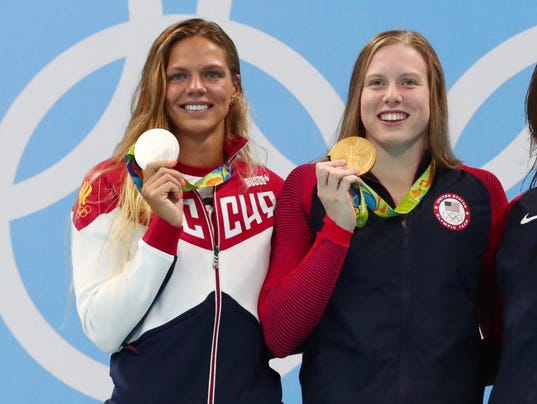
There was a little trouble with Lily King and her comments on doping becoming a new Cold War, USA vs Russia thing, but those blew over pretty quickly. I'm glad a young athlete has the courage to speak out and make a statement - it's exactly the kind of thing we want a 19 year old to do. I was a little troubled, though, that nowhere, does it seem, is NBC going to address the complexity of issues that come along with this Russian doping problem.
It'll likely come up again as Track and Field takes off in the second week, since Russia's entire track team was banned from the games. I'll say up front, I was and remain supportive of the move to ban all Russian athletes from the Games. Yes, it is an unfair punishment for athletes that were never involved in doping, but really Russia was the one making it unfair for them - and bland punishments like this one do nothing to discourage the same kind of thing going forward. The IOC left it up to individual sporting federations to rule on Russian participation. Most sports, like swimming, reviewed athletes on a case by case basis, with some pretty nebulous criteria, before allowing participation. The ambiguity is troubling.
At the same time, the ambiguity of a state-sponsored doping program is troubling, too. Julia Efimova, the Russian swimmer King picked her verbal fight with has been banned twice for doping offenses. King made the case that no one (including US track star, Justin Gatlin) previously caught doping should be able to compete ever.
It's a harsh, but certainly understandable position. Especially in a modern athletic environment where most legitimate supplements have third-party testing and verification so those "it must have been contaminated" excuses we've heard from baseball players over the years don't hold weight anymore. At the same time, a situation like Russia is complicated. Again, King is 19 - she's supposed to think in black & white; I'm just glad she feels bold enough to speak. She's also spent her life in the US athletic environment, which is the most democratic in the world. Usain Bolt was injured for the Jamaican Olympic trials, but they still put him on the team - US athletes never get that special treatment, even the biggest stars; you have to perform to earn your spot.
It's not the same in other place. Russia, especially, as we've seen, has a large state presence in sport. Athletes are chosen, sometimes, for political reasons over performance. In the instance of a state-sponsored program like this, the ultimatum of "take this supplement or never compete for Russia again," isn't all that far-fetched. Efimova and any of the other Russian athletes involved didn't exactly have the clear cut choice PEDs are so often made out to be.
We laugh about the long-standing world records set in the late 70's and 80's by eastern bloc athletes - especially female track athletes and how they're so nearly impossible to break because of the state sponsored doping programs at the time. The athletes become the villains in those stories like Drago in Rocky when more than likely they were taken from their families at a young age, when athletic aptitude was first spotted, and had their lives run for them as they rose to prominence. I'm not saying that Putin was holding a gun to someone's head and forcing a strange powder into their smoothie, but it's also not like an after-school special. Things are complicated.
You can add to that the very real belief by not a few people that everyone is still doping, especially track sprinters, and when coupled with national pressure, there's very little incentive not to go along.
You can make the ambiguity argument for Gatlin as well. He got caught twice, served a long suspension, but seems genuinely the victim of ignorance and bad coaching. His offenses were at the height of widespread doping and well before athletes had real tools for taking responsibility. That doesn't mean he's clean, though - he may simply be doping because it's the only way for him to win and make a living. We just don't know. No one thought cyclists were doping either, right up until they found out literally every single one of them was doing it. It's this ambiguity that makes modern athletics so beautiful and terrifying.
NPR had an author on this week, talking about how performance enhancing drugs were considered a normal and necessary part of professional athletics right up into the 1960's. To do amazing things, people expected athletes to use as much science as was available - and trusted them to judge for themselves how they treated their own bodies. Yes, this was before TV and money was really involved, and it was prior to understanding the long-term effects of these substances - but that only adds to the ambiguity, it doesn't lessen anything.
On top of all that, you have the delineation of what's ok and what's not. Laser eye surgery can correct vision beyond "perfect," improving sight beyond what a "normal" person would have. Is that an unfair advantage? The same might go for advanced blood transfusion techniques - which some sports ban and others allow. What about gene therapy and medical science coming down the road?
It's never, ever going to be cut and dry. Shoot, the boxing, rugby, and the NFL have to worry about whether playing the sport itself is too great a danger to athletes, let alone any of the other additions or performance enhancers that might be involved. We're all going to draw a line somewhere - and I want Lily King to keep doing it and talking about it - but we need to be very careful about making heroes and villains out of this whole thing. We've got to have rules - I think Russia got off too easy in this whole mess. At the same time, we have to remember: in sport, we want things to be simple and definitive, it just never is.
Athletics and ambiguity always go hand in hand.
There was a little trouble with Lily King and her comments on doping becoming a new Cold War, USA vs Russia thing, but those blew over pretty quickly. I'm glad a young athlete has the courage to speak out and make a statement - it's exactly the kind of thing we want a 19 year old to do. I was a little troubled, though, that nowhere, does it seem, is NBC going to address the complexity of issues that come along with this Russian doping problem.
It'll likely come up again as Track and Field takes off in the second week, since Russia's entire track team was banned from the games. I'll say up front, I was and remain supportive of the move to ban all Russian athletes from the Games. Yes, it is an unfair punishment for athletes that were never involved in doping, but really Russia was the one making it unfair for them - and bland punishments like this one do nothing to discourage the same kind of thing going forward. The IOC left it up to individual sporting federations to rule on Russian participation. Most sports, like swimming, reviewed athletes on a case by case basis, with some pretty nebulous criteria, before allowing participation. The ambiguity is troubling.
At the same time, the ambiguity of a state-sponsored doping program is troubling, too. Julia Efimova, the Russian swimmer King picked her verbal fight with has been banned twice for doping offenses. King made the case that no one (including US track star, Justin Gatlin) previously caught doping should be able to compete ever.
It's a harsh, but certainly understandable position. Especially in a modern athletic environment where most legitimate supplements have third-party testing and verification so those "it must have been contaminated" excuses we've heard from baseball players over the years don't hold weight anymore. At the same time, a situation like Russia is complicated. Again, King is 19 - she's supposed to think in black & white; I'm just glad she feels bold enough to speak. She's also spent her life in the US athletic environment, which is the most democratic in the world. Usain Bolt was injured for the Jamaican Olympic trials, but they still put him on the team - US athletes never get that special treatment, even the biggest stars; you have to perform to earn your spot.
It's not the same in other place. Russia, especially, as we've seen, has a large state presence in sport. Athletes are chosen, sometimes, for political reasons over performance. In the instance of a state-sponsored program like this, the ultimatum of "take this supplement or never compete for Russia again," isn't all that far-fetched. Efimova and any of the other Russian athletes involved didn't exactly have the clear cut choice PEDs are so often made out to be.
We laugh about the long-standing world records set in the late 70's and 80's by eastern bloc athletes - especially female track athletes and how they're so nearly impossible to break because of the state sponsored doping programs at the time. The athletes become the villains in those stories like Drago in Rocky when more than likely they were taken from their families at a young age, when athletic aptitude was first spotted, and had their lives run for them as they rose to prominence. I'm not saying that Putin was holding a gun to someone's head and forcing a strange powder into their smoothie, but it's also not like an after-school special. Things are complicated.
You can add to that the very real belief by not a few people that everyone is still doping, especially track sprinters, and when coupled with national pressure, there's very little incentive not to go along.
You can make the ambiguity argument for Gatlin as well. He got caught twice, served a long suspension, but seems genuinely the victim of ignorance and bad coaching. His offenses were at the height of widespread doping and well before athletes had real tools for taking responsibility. That doesn't mean he's clean, though - he may simply be doping because it's the only way for him to win and make a living. We just don't know. No one thought cyclists were doping either, right up until they found out literally every single one of them was doing it. It's this ambiguity that makes modern athletics so beautiful and terrifying.
NPR had an author on this week, talking about how performance enhancing drugs were considered a normal and necessary part of professional athletics right up into the 1960's. To do amazing things, people expected athletes to use as much science as was available - and trusted them to judge for themselves how they treated their own bodies. Yes, this was before TV and money was really involved, and it was prior to understanding the long-term effects of these substances - but that only adds to the ambiguity, it doesn't lessen anything.
On top of all that, you have the delineation of what's ok and what's not. Laser eye surgery can correct vision beyond "perfect," improving sight beyond what a "normal" person would have. Is that an unfair advantage? The same might go for advanced blood transfusion techniques - which some sports ban and others allow. What about gene therapy and medical science coming down the road?
It's never, ever going to be cut and dry. Shoot, the boxing, rugby, and the NFL have to worry about whether playing the sport itself is too great a danger to athletes, let alone any of the other additions or performance enhancers that might be involved. We're all going to draw a line somewhere - and I want Lily King to keep doing it and talking about it - but we need to be very careful about making heroes and villains out of this whole thing. We've got to have rules - I think Russia got off too easy in this whole mess. At the same time, we have to remember: in sport, we want things to be simple and definitive, it just never is.
Athletics and ambiguity always go hand in hand.
Subscribe to:
Posts (Atom)