I like being scientific about everything. Not that I'm much of a scientist, but I do like working hard to make everything fit a theory - even in my theology. I'll experiment and test things out and try to come up with an idea that explains everything. Even as much as I try to say, "I don't know," I think, deep down, I'm assuming that if I work hard enough, I will know - or at least that someone could know (I guess that's another benefit of eternity: more time).
I think this scientific approach to scripture is pretty typical of evangelicals (even those who don't much like science), because we really need scripture to fit into our explanation of the world and how God works. We don't like having these random bible stories out there that call into question the nice, systematic, theological explanation we just provided. It's difficult for us to take a perspective on the world and then also admit that scripture doesn't always line up with our perspective. We like to write out demons or miracles or the unwarranted death of innocents, because it fits the theory so much better.
I think of the story of Uzzah - he's the guy who died, reaching out to steady the Ark of the Covenant as David tried to move it on a cart (as opposed to the priests with poles method God prescribed). He had all the best intentions in the world - to keep the most sacred object they had from falling in the mud - but he still died, almost entirely to teach David a lesson. The big problem with this story is that it leaves us with some uncomfortable options: either the Ark really did possess such supernatural power in itself that it could kill anyone who touched it, or God was so devoid of grace as to kill a guy for doing his job, with all the best intentions.
There are theologies that explain away the problems here, but none of them really satisfy me very much - nor do they fit well with the overall revelation of God in Christ and our subsequent understanding of it. My natural inclination is to explain it away - which is a fancy way of saying "ignore it." That would help me be scientific, to have a theology that answers all the questions. But maybe the point is that some questions don't have answers and our searching for them is really, sometimes, the problem.
That's not to say we shouldn't work hard to understand God and ourselves and the world in which we live, but maybe we should work less hard on parring that down to an easily digestible theological version of the unified field theory.
Showing posts with label mystery. Show all posts
Thursday, July 07, 2016
Thursday, May 05, 2016
How Rob Bell Changed My Life
Rob Bell is an evangelical pastor and author. He's fallen out of favor with both those groups lately due to a couple of interesting theological stances he's taken, which have also given some more creative and speculative members of those same groups license to dream and explore. It's really some element of this second part that leads me to write today - not so much the theology (I promised it wouldn't be that kind of post) - although the notion that the world is bigger and more awesomely mysterious than our little mind boxes can fathom is certainly a theological idea.
A year or so ago I listened to a podcast with Rob (it was probably this Pete Holmes podcast, which is awesome, but also like a billion hours long so I didn't confirm). Anyway, the subject of alarm clocks came up. Rob said he hadn't used one in over a year, Pete took that as subtle bragging about how carefree Rob's bestselling-author, Southern California life is, then Rob corrected him with this crazy story.
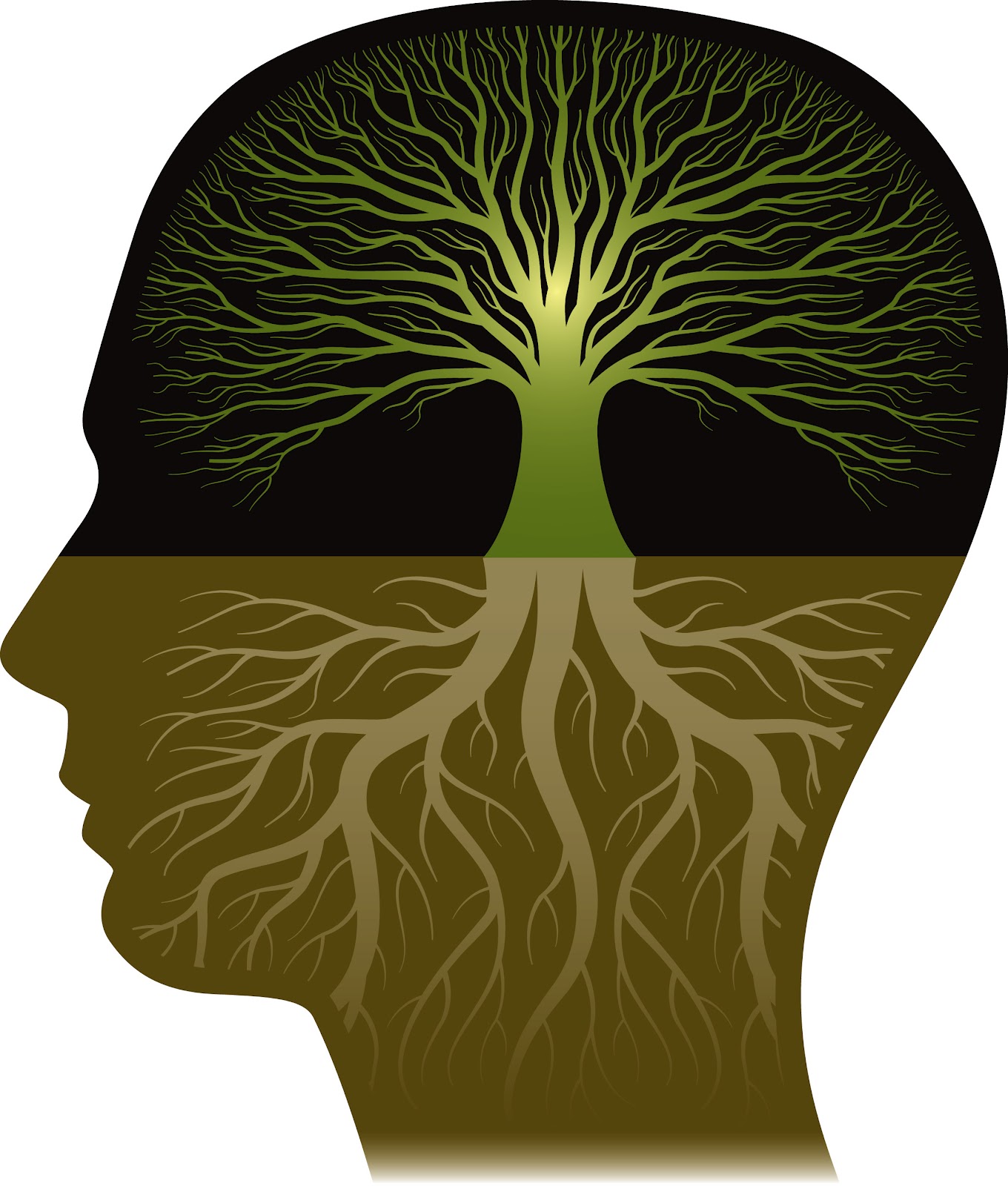
Apparently, after some speaking gig, Rob got talking to a neurologist about Rob Bell type things and the neurologist said that our brains are just so much more complex and capable than we could ever imagine. He told Rob not to set an alarm, but to just go to bed each night thinking about the time he wants to wake up - consciously tell yourself when to wake up - and the brain will take care of it. Rob ended the story with a classic, "I haven't used an alarm in 18 months."
This seemed fantastic to me in every possible definition of the word. I was skeptical and intrigued. So sure enough, I tried it. I haven't used an alarm clock in almost two years. That's not true, I do still have not one, but two emergency alarms set so my daughter isn't late for school, but the only times they've been necessary are the nights when I forget to tell myself when to wake up. It's uncanny. Every time it's been within three minutes of the clock (and really, why would I believe the time on the clock over my own super awesome brain anyway?)!
Last night I even tested it, telling myself "wake up when the wife gets out of the shower," sure enough, the water turned off about 30 seconds after I woke up. It does really seem to be a conscious thing, though. If I just think of a time in passing at bedtime, it doesn't seem to work, but if I even tell myself once "wake up at _______," so long as I don't go into deep contemplation about something else before sleep, it's been fail safe.
I even sleep better and more deeply when I do it. I always wake up refreshed. Even if I go to bed at 1:30am and get up at 5:45, I'm tired at 10, sure, but I'm wide awake at 6.
This is a cool trick, and it makes for a great story, but it's also just nice to know there are things about our bodies (and thus, hopefully, our universe) than can still dazzle and amaze. I like living in a great big world - I also like that my body is keeping an eye on things, even when I'm asleep.
But mostly it's just awesome.
A year or so ago I listened to a podcast with Rob (it was probably this Pete Holmes podcast, which is awesome, but also like a billion hours long so I didn't confirm). Anyway, the subject of alarm clocks came up. Rob said he hadn't used one in over a year, Pete took that as subtle bragging about how carefree Rob's bestselling-author, Southern California life is, then Rob corrected him with this crazy story.
Apparently, after some speaking gig, Rob got talking to a neurologist about Rob Bell type things and the neurologist said that our brains are just so much more complex and capable than we could ever imagine. He told Rob not to set an alarm, but to just go to bed each night thinking about the time he wants to wake up - consciously tell yourself when to wake up - and the brain will take care of it. Rob ended the story with a classic, "I haven't used an alarm in 18 months."
This seemed fantastic to me in every possible definition of the word. I was skeptical and intrigued. So sure enough, I tried it. I haven't used an alarm clock in almost two years. That's not true, I do still have not one, but two emergency alarms set so my daughter isn't late for school, but the only times they've been necessary are the nights when I forget to tell myself when to wake up. It's uncanny. Every time it's been within three minutes of the clock (and really, why would I believe the time on the clock over my own super awesome brain anyway?)!
Last night I even tested it, telling myself "wake up when the wife gets out of the shower," sure enough, the water turned off about 30 seconds after I woke up. It does really seem to be a conscious thing, though. If I just think of a time in passing at bedtime, it doesn't seem to work, but if I even tell myself once "wake up at _______," so long as I don't go into deep contemplation about something else before sleep, it's been fail safe.
I even sleep better and more deeply when I do it. I always wake up refreshed. Even if I go to bed at 1:30am and get up at 5:45, I'm tired at 10, sure, but I'm wide awake at 6.
This is a cool trick, and it makes for a great story, but it's also just nice to know there are things about our bodies (and thus, hopefully, our universe) than can still dazzle and amaze. I like living in a great big world - I also like that my body is keeping an eye on things, even when I'm asleep.
But mostly it's just awesome.
Labels:
alarm clock,
brain,
mystery,
neuroscience,
pete holmes,
rob bell,
sleep,
wonder
Thursday, October 15, 2015
Confident and Mysterious
I'm taking this online course from Peter Rollins in a few weeks (it's a pretty cool deal). So, I'm re-reading his five major books in the five weeks leading up to the class. I finished How (not) to Speak of God yesterday. It was a pretty seminal book for me when it came out. It was 2006, I was still pretty early on in my seminary time and it was just mind-blowing. Looking back on it now, the Peter Rollins who did (and continues to) seem so avant garde and out there and boundary-pushing, in this book now seems pretty squarely inside the typically Christian box. Certainly his ideas were boundary-pushing, but they were pretty limited boundaries to begin with. That's completely beside the point here, but I thought it was cool to see how someone who's been instrumental in my thinking has also changed and grown over the past decade.
But anyway, I was reading this book (which I find stronger and more accessible now) and there's some really great stuff there. I shared a quote on Facebook yesterday - there will probably be at least one more blog post from that re-reading. He hits on this idea that what we consider dichotomies don't necessarily have to be. I don't know if it was one thing in particular (if it was, that location or quote is lost to me already), but I had this realization about myself and my evolution of thought and belief and faith over time.
Growing up, I felt like the big questions of faith were real mysteries - why are we here, how did God make this world, what do heaven and hell look like, how is the world going to end - typical big question stuff was just beyond me. I mean, I knew the "right" answers to those things, but my understanding of them was far from concrete. At the same time, though, I was pretty darn certain about what the right thing to do was in any given moment. I had this ethical framework that, even if I didn't always live up to it, was very black and white.
It was a sort of marriage of mystery and certainty and really left me empty and unsatisfied.
The real realization, though, that I had whilst reading yesterday, was that I still have a great marriage of mystery and (fairly) certain-ty, but it's the complete opposite of what that looked like as a child (and probably up until about the period where I first read this book). I generally feel like I've got the big questions figured out. I could explain to you how I view the formation, purpose, and future of existence, given the realities of science and scripture and human nature and discovery. Those views might be nuanced a bit over time, but I'm pretty confident I've got a good framework from which to build.
But the mystery these days is about the details, the day to day stuff, choices and relationship and interactions with the world. I'm essentially asking - "So I live in X world, what does that mean for my schedule today?" The answer to that question is really the one that drives my imagination and discussion and passion these days. Now obviously those discussions move backward to the assumptions I've made at the beginning and I'm always looking for good critiques and challenges to those assumptions, but the real meat of the faith mystery is how to live in each moment.
I find this marriage between confidence and uncertainty to be beautiful and life-giving and brilliant. Maybe because a willingness to hold things lightly is sort of built in to that overall structure of understanding, it's just less stressful, I don't know, but it was very interesting to immediately sort of see in my own life how things have been sort of paradoxically melded together in my own journey of belief moving forward.
Perhaps one of the things I like about Rollins is that he's constantly focused on the day-to-day. That first book especially emphasized the importance of relationship and reality to our doing of theology and belief - challenging us to embrace the bias inherent in each of us and use it for the purpose of strengthening our position in the world.
To put it simply - God loves the world; God's love is transforming the world; Love will win - so what?
It's mighty beautiful to say, "I've got it all figured out," and "I have nothing at all figured out." To make it fancy, you might say, I've discovered my epistemological framework to be both radically known and radically mysterious at the same time. THAT is simply beautiful and invigorating and it's what drives me to continue living and exploring such intelligible and inscrutable faith.
Thursday, July 02, 2015
Theological Fundamentalism
One of the foundational understandings of biblical fundamentalism is that "if anything in the Bible is untrue, it's all untrue." This needs some unpacking (mostly because "true" has a relative definition depending on context), but ultimately it's set the Bible up like a tower - if any brick in the tower gets pulled out, the whole thing will fall down.
What I've been wondering lately is if there is a theological fundamentalism at play in the world as well. I wonder this because it seems to me there are people taking a hard line on some theological issues who don't necessarily have a traditional fundamentalist view of scripture. It certainly isn't fair to lump everyone into one box, especially if that box is so ill-fitting for many.
One would not need to be a biblical fundamentalist to be a theological fundamentalist, but there is a similar "tower" concept, one not dependent on a "literal" reading of scripture, but one based on a traditional systematic theology. Through the years of modernity (and even long before), Christian thinkers sought to organize our understanding of God into specific doctrines that fit together to form a cohesive whole (hence the descriptor 'systematic').
As we've reached a more post-modern way of looking at the world, some Christians are much more comfortable with a theology that doesn't fit together quite so well. There may have been some doctrinal manipulation to fit everything we know about God and the world into neat little bricks for tower building. As people are more comfortable with unknowing and mystery, some have seen fit to reshape some doctrines, to explain them in different ways that don't make for easy building blocks, some have been made more general and less concrete.
I don't believe this changes the general shape or core of Christian theology, but it's much less systematic. It doesn't arrive at a complete explanation of understanding. Theology is no longer a closed system for many people.
I suspect this is really disturbing to people who are very comfortable with systematic theological structures, especially those who operate under a modern perspective and find themselves alien in the world of post-modernity. This leads to real battles, hard lines drawn, and vociferous objections to many ways of speaking about theology (and the practical implications of such).
I might categorize the two approaches as 1) I need to know as much about God as possible to follow God well, or 2) I need to constantly ask new questions, challenge old conclusions, and embrace unknowing to follow God well.
I don't know that these approaches are necessarily incompatible, but it's certainly easy to see where conflict could arise. The problem comes because neither is really right or wrong. They're different - with different strengths and weaknesses.
Lately, we've seen some real knock-down, drag-out fights regarding how people understand God, interpret scripture, and make decisions for life in the world. It's been painful and divisive for the Church.
I'm not particularly sure what a solution might be. It's difficult for a fundamentalist (of any kind) to gracefully allow disagreement. Allowing known disagreement in others necessarily invites doubt or disagreement into one's own sphere of belief and I have great sympathy for the problems that might cause. I don't know if I can properly speak to this, since I personally consider doubt and disagreement as important parts of theological and personal faith development.
I do know, though, we need to work better of differentiating between how someone views scripture and how they view theology. We're not treating everyone with respect in the way we derisively marginalize them into boxes they find offensive. Understanding where people are and from whence they come and how their beliefs are structured should help us love one another or, at the very least, be more charitable in our discourse.
Labels:
agreement,
church,
disagreement,
doubt,
fundamentalism,
mystery,
questions,
theology
Thursday, April 09, 2015
Mystery and Love
I was listening to Brian Zahnd's Easter sermon yesterday and he used an awesome quote from Hans Urs Von Balthasar,
I went back to write some of it down so I could google it, turns out BZ also used it in his book, "Beauty Will Save the World," (page 162, I think). I have no idea the context for Von Balthasar's original writing, but I know Zahnd uses it in the context of our love for God, to emphasize the importance of relationship and mystery to the Christian life.
In light of all that's been happening in Nazarene-world this week, it sure struck me as particularly beautiful in the reverse - as a means of explaining God's love for us, for all creation.
So often we think of God as this unmoved mover, to use the old philosophical phrase - God knows all, sees all, does all, with a sort of dispassionate fervor. We are prone to ascribe such a thorough immutability to God, God becomes almost impersonal.
We can go on and on about not putting God through the analytical lens of human self-understanding - which is a good critique and all - but it doesn't really ring true for me. If God knows us without mystery, there is no love. Love requires connection and not just superficial connections, not just good will or cursory relationship. Love requires a necessary attachment, a placing of one's own future in the hands of another - maybe not completely, but in some irrevocable manner. Love has to do this.
I believe God gives choice, that God has no choice but to give choice, real choice, not some fake, "I know what you're going to do before you do it," theological circus act. Love requires that sort of respect. Now I'm not saying we can control God, but we can affect God. We have to. Or God isn't really love and thus not really God.
I don't want to implicate Brian Zahnd in all this. I don't know how he'd respond to this notion - certainly with an open mind, but perhaps not an agreeable one.
At the same time, this quote, which he seems to like a lot, leads in precisely this direction. God knows human beings as well and as intimately as divinely possible - at the same time, we retain mystery. I believe that. I think I have to. If not, we're mere pawns in a cosmic manipulation; as Woody tells Buzz, "[We're] a child's play thing!"
The philosophers of old would tell us God is that than which nothing greater can be conceived. I can't think of a greater thing than God loving us enough to let us be free, loving us enough to spend an eternity loving us, if that what it takes for us to understand such love. And I do think it requires mystery.
I fret and complain and metaphorically pull out my hair over my complete inability to understand my wife (she does all that and more concerning me, as well). Just when you think you know a person... That's mystery. That's love. If we knew even the best person completely, fully, thoroughly, without mystery, they would become nothing more than an avenue for selfish indulgence - a play thing.
And if that's our lot - God all the more.
No. Love is something different. It has to be - and not just for us lowly humans, for all who are or express love.
God is love because while I believe absolutely that God holds the future, I don't believe God knows exactly how it will play out. That is profound, and beautiful, and lovely. And, to me at least, it just makes sense.
Tom Oord didn't teach me this (although I have to give him full credit for the traditional philosophical arguments utilized above). He didn't introduce it to me. He didn't tell me it was a good idea. I came upon this notion, in part, on my own. Other writers helped flesh the notion out a bit - great thanks to Greg Boyd there. I wrestled with it for a while and, at some point, became aware Tom Oord thought things like this weren't entirely crazy ideas. It helped alleviate some fear that I was going off the deep end or maybe moving away from the Nazarene foundation I so love.
It's certainly given new life and fresh excitement to the mystery of God and my passion for following Jesus Christ. Looking at things, even big, important things, from a different perspective does wonders for expelling fear and expanding horizons. I don't have much room or reason to doubt God anymore. I may doubt my perception of God, but that just adds to the mystery. Unboxing a once tame God is a good thing, even if it makes life and theology a bit messy. It's freeing, even if it's also daunting. It's not scary, though, despite it's mystery, because God, and this world God created, is just full of love.
In the end, only something endowed with mystery is worthy of love. It is impossible to love something stripped of mystery; at best it would be a thing one uses as one sees fit.
I went back to write some of it down so I could google it, turns out BZ also used it in his book, "Beauty Will Save the World," (page 162, I think). I have no idea the context for Von Balthasar's original writing, but I know Zahnd uses it in the context of our love for God, to emphasize the importance of relationship and mystery to the Christian life.
In light of all that's been happening in Nazarene-world this week, it sure struck me as particularly beautiful in the reverse - as a means of explaining God's love for us, for all creation.
So often we think of God as this unmoved mover, to use the old philosophical phrase - God knows all, sees all, does all, with a sort of dispassionate fervor. We are prone to ascribe such a thorough immutability to God, God becomes almost impersonal.
We can go on and on about not putting God through the analytical lens of human self-understanding - which is a good critique and all - but it doesn't really ring true for me. If God knows us without mystery, there is no love. Love requires connection and not just superficial connections, not just good will or cursory relationship. Love requires a necessary attachment, a placing of one's own future in the hands of another - maybe not completely, but in some irrevocable manner. Love has to do this.
I believe God gives choice, that God has no choice but to give choice, real choice, not some fake, "I know what you're going to do before you do it," theological circus act. Love requires that sort of respect. Now I'm not saying we can control God, but we can affect God. We have to. Or God isn't really love and thus not really God.
I don't want to implicate Brian Zahnd in all this. I don't know how he'd respond to this notion - certainly with an open mind, but perhaps not an agreeable one.
At the same time, this quote, which he seems to like a lot, leads in precisely this direction. God knows human beings as well and as intimately as divinely possible - at the same time, we retain mystery. I believe that. I think I have to. If not, we're mere pawns in a cosmic manipulation; as Woody tells Buzz, "[We're] a child's play thing!"
The philosophers of old would tell us God is that than which nothing greater can be conceived. I can't think of a greater thing than God loving us enough to let us be free, loving us enough to spend an eternity loving us, if that what it takes for us to understand such love. And I do think it requires mystery.
I fret and complain and metaphorically pull out my hair over my complete inability to understand my wife (she does all that and more concerning me, as well). Just when you think you know a person... That's mystery. That's love. If we knew even the best person completely, fully, thoroughly, without mystery, they would become nothing more than an avenue for selfish indulgence - a play thing.
And if that's our lot - God all the more.
No. Love is something different. It has to be - and not just for us lowly humans, for all who are or express love.
God is love because while I believe absolutely that God holds the future, I don't believe God knows exactly how it will play out. That is profound, and beautiful, and lovely. And, to me at least, it just makes sense.
Tom Oord didn't teach me this (although I have to give him full credit for the traditional philosophical arguments utilized above). He didn't introduce it to me. He didn't tell me it was a good idea. I came upon this notion, in part, on my own. Other writers helped flesh the notion out a bit - great thanks to Greg Boyd there. I wrestled with it for a while and, at some point, became aware Tom Oord thought things like this weren't entirely crazy ideas. It helped alleviate some fear that I was going off the deep end or maybe moving away from the Nazarene foundation I so love.
It's certainly given new life and fresh excitement to the mystery of God and my passion for following Jesus Christ. Looking at things, even big, important things, from a different perspective does wonders for expelling fear and expanding horizons. I don't have much room or reason to doubt God anymore. I may doubt my perception of God, but that just adds to the mystery. Unboxing a once tame God is a good thing, even if it makes life and theology a bit messy. It's freeing, even if it's also daunting. It's not scary, though, despite it's mystery, because God, and this world God created, is just full of love.
Labels:
beauty,
brian zahnd,
foreknowledge,
greg boyd,
Love,
mystery,
open theism,
philosophy,
theology,
tom oord
Subscribe to:
Posts (Atom)


