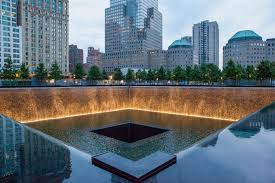
9/11 is only going to become more important as the distance from it to the present increases. The kids I see in schools everyday weren't even alive when it happened and so many young people have no living memory. As much as telling our stories can feel old, at times, it's important to help our collective memory.
The world is different now than it was, which is always true, but rarely do we have such definitive, recognizable transition moments as 9/11. The militant nationalism so prevalent in our society can be traced to that day and the ones following. Our obsession with safety and security are collective travails that extend from the emotional trauma of watching a nation that had never previously been attacked succumb to the kind of violence that's commonplace in so many countries around the world.
It's a real thing and we must, absolutely, with all our might, prevent it from becoming legend.
Legends lack complexity and context. When we were in Hawaii a few years back, we got to tour the Pearl Harbor memorial. What struck me most about the museum was the dearth of historical context. The US was competing with Japan for influence and control in the Pacific, and part of that meant limiting Japan's supply of oil. War was inevitable, because that particular US policy was an existential threat to their country. We can talk about tragedy - a surprise attack that cost a lot of lives - without negating the issues surrounding it's place in history. We don't tend to do that, though, we paint ourselves the innocent victims and the "other guy" as the bloodthirsty evil.
The speed with which we did that in 2001 is why 9/11 has much a troubled connection in my mind. We set out for revenge real quick. It didn't even seem to matter who was on the other end of our national fist. It got us into a lot of trouble and it shaped our society in really negative ways (beyond the governmental and economic consequences, which were nothing to sneeze at).
9/11 was a violent attack; all violence should be denounced. I don't like the distinction between civilian and military targets, because, as I said, all violence should be denounced - but 9/11 was certainly beyond even the commonly accepted rules of war: terror at it's very definition. The purpose of terror, of course, is to create a fear that grows, panic and overreaction that feeds itself in a cycle of expansion that ultimately gnaws at the roots of a society.
In that sense, the terrorists won.
That's why context is so important. We need to tell the stories of our experiences and emotions on that day. We need to communicate just how traumatic it was for people entirely disconnected from the lives lost, because violence has real consequences - when we do it and when we're the victims of it. We need to tell the stories to learn the lessons of how to respond to terror, how to control our very real and right fear and not allow it to eat us up and dictate our actions.
We need to keep 9/11 within the larger narrative of international politics, recognizing the out-sized influence the US has played in middle eastern politics and how quickly a religious narrative can be used to manipulate people and power. We need to keep perspective on the "good vs evil" dynamics and tell the story of 9/11 honestly - not filtered through the lenses we'd like it to fit.
Things have been sanitized that don't deserve cleaning. The impact of the clean-up on the fire and police officers, the rescue workers, both paid and volunteer - they're lionized in the stories we tell as they lie forgotten, suffering and dying as a result of their work. Hundreds of thousands of ordinary people in Iraq and Afghanistan died because of decisions our government made. Casualties of war are not just numbers on a page or phrases in a history book; they're real people - and there's many more of "them" who died than there ever were of "us." Such small numbers of "us" were ever asked to serve or sacrifice and we continually cut corners and pinch pennies to care for the hearts and heads of people who gave life and limb and family to fight angry, vengeful wars. We can't even be bothered to sacrifice the next marginally better drone or fighter jet to provide the medical care veterans across the country need.
Yes, I'm opposed to war and violence, precisely because they dehumanize and devalue life. It's all the more reason to support and care for those who've been victims of such war (and there are always many victims on every side of a fight).
I feel very different about 9/11 today than I did seventeen years ago, but that should also be part of the story. Reliving the vivid memories and emotional legacy of the moment as well as the changes it's wrought in us since that day, both individually and collectively. We need to recognize that while this is a singularly remarkable event, it is but one of many singularly remarkable events in our history and each come from somewhere and lead to somewhere. They fit in a larger narrative with both causes and consequences. While we may not be able to internalize all the complexities of experiencing such an event, we can understand why it happens and how we need to respond.
We can only do that, though, if we're honest - not just about the story we want to tell, but about the story that must be told. The worst possible way to memorialize 9/11 is to make it legend. The best thing to do is to keep it real.
May we all keep it real. On this day and on every one to come.

I mean, we have the ability, but not in one word - not anymore. Perhaps Trump had trouble calling terrorism terrorism because he understood the humanity of the people behind the heinous acts. Well, not Trump, but perhaps a normal person, one capable of empathy and emotion, could understand the humanity and balk at labeling them terrorists.
We should be at a "people-first" place of description these days anyway, right? We should be beyond defining someone by their actions - a person who commits terrorism separates the action from the individual, at least a little bit. It helps us to value humans as humans before we judge their actions.
No doubt those blokes in Charlottesville were doing terrorism. Driving a car into a crowd is almost terrorism cliche these days. It's evil and intended to instill fear the same way a car bomb or a plane hijacking or a random shooting is. It shouldn't matter if it's Virginia or Paris or Baghdad or Manila.
Then I started thinking about the various people who resort of terrorism, be they white supremacists in the US or Muslim fundamentalists in the middle east. Generally these are desperate people, folks who feel left out. They lack options, often economically. They lack opportunity for education, work, access, and exposure to the larger world. It creates a myopic world view that, When pressed against the wall or backed into a corner (especially when those feelings of fear and desperation are cultivated and exploited through media, religion, or tribal connection), violence is often a natural result.
People who are used to being powerless attempt to gain power by scaring those who seem to have more options. It's not hard to recruit people into these armies when you provide an outlet for anger and frustration. We can all find ourselves in situations we'd never choose if we give in to our emotions to thoroughly.
That word "terrorist" gives us emotional license to condemn not just ideas or actions, but the very people behind them - it encourages the kind of emotional commitment that produces people willing to commit terrorism in the first place. When we dehumanize others, we dehumanize ourselves. That is the way of the world.
I don't mean to condone or excuse violence and evil. It's inexcusable and awful and damnable and wrong. That doesn't mean, though, we have to call it unbelievable or indecipherable. We ask, after every terroristic tragedy, "how could anyone do this," but the truth is, we should be able to understand, even if we don't agree or approve. If we really can't imagine how or why people would resort to such violence, we're either far too sheltered or we're lying to ourselves.
This is the real problem. We're always quick to justify violence when its in defense of our priorities. Anger clouds things, to be sure. We do things in anger or fear that we might not otherwise do. That's always going to be the fly in the ointment, so to speak. But when we justify violence - any violence - we're giving someone else license to justify any violence.
We have "rules" for our violence as some balm for our conscience, but "rules" don't exist in war - ask any person who's been in one. Violence is not something we can handle in moderation. We, as a human society, are (sometimes) functional addicts of violence. We demonize the terrorists who take things "too far" so we can justify our relationship to violence. "I'm not like those folks."
Guess what? "Those folks" don't think they're like you (or me).
We can point out the differences between the world "they" want and the world we're trying to make, but they can do the same thing. I'm not saying those visions are necessarily equal or that one side isn't preferable to another - just that so long as we back up "our" notions of right and wrong with violence, we're never going to find what we're looking for (and neither are "they").
If you export or enforce your ideas with violence, your only idea is violence - at least it's the only idea anyone's going to hear.
I got to thinking what would happen if we provided education and meaningful work opportunities for the people who committed terrorism in Charlottesville. Set aside whether these guys were really oppressed or forgotten or even if they were really representative of the rural white-working class that's fueled our current political climate. Let's avoid that argument for a bit and just imagine we could provide free college or job training and a place to work for all the southern, western, rust belt, and appalachian folks who got Trump elected.
There would still be angry, entitled, and racist folks out there, for sure. You'll never get rid of them. You'll probably have less, though.
The one (probably unintended) consequence of fixing this one societal issue that we don't think too much about is that you'll have real trouble recruiting soldiers for the military. The biggest draw for young men to sign up and fight is a lack of options. Military service provides the very things a stereotypical US terrorist lacks. We can have all the moral arguments we want about "us" and "them," "good" guys and bad, but at the end of the day we recruit the same group of people (poor, uneducated young men with a lack of options), in the same way (appeals to religious or patriotic duty, economic opportunity, or plain fear), for the same thing (a violent imposition of general societal norms).
It makes even me uncomfortable saying it, but I also can't get around it.
Do we really have "better" morals or more humane rules? We denounce torture and violence against civilians, but our track record on those things isn't the greatest. We fear nuclear war, but we're the only country who's ever used a nuclear weapon on anyone.
I'm not saying the US is the same as terrorists, not at all. I'm against war, but I'd rather live in the US than under Nazi Germany or ISIS Syria. It's not so much the moral arguments than the ways in which we're prepared to make them. I'm just not sure where we got the idea that if we believe strongly enough in an idea we should be willing to kill for it.
It seems to me if we believe strong enough in something, killing should be the last thing we need to do to defend it. Dying, maybe, but not killing. If our beliefs are really true, they will win out. If truth can be killed off or destroyed or defeated, perhaps this isn't a world worth living in to begin with, no?
In the end, I guess, it comes back to human nature. We try to demonize the practitioners of the most extreme actions because we want to pretend that we're not capable of doing what they do, when we are. We're all capable of tremendous acts of evil, given the right circumstances. It's part of being human.
As much as we want to say we're all one big happy family, there will continue to be disagreements, maybe even big enough that we can't live together - we just have to avoid getting to a place where we believe those horribly, dangerously wrong people over there, don't deserve to live at all.
That's when we're really in trouble. That's when we become terrorists.

Palm Sunday presents the challenge to the powers of the world - a law of peace and love and suffering over a law of power and might. It's easy for us to constrain it in the ghetto of idealism and ignore it as we tackle the real world. Jesus says love overcomes hate and peace, violence, suffering over power and control. We're down with that until it's too difficult, then we make justifications.
It's called conditional approval - we can do bad things in certain situations because it's for the greater good. We can nuke Japan, but North Korea can't. We can blow up buildings all over Iraq and Syria, but Saddam Hussein and ISIS can't. A police officer or, perhaps, a local vigilante who feels threatened, can shoot unarmed teenagers, but they can't shoot back.
They're cut and dry situations because conditional approval always goes to the powerful over the less so. Why? Because the powerful make the laws. They get to decide. (I guess I should fairly say "we" here, since I benefit from conditional approval far more often than I suffer from it.) We like to say it's just democracy or fairness or good vs evil, but that's really not true. We skew the rules to benefit us. When we do it, it's good; when other people do it, it's wrong.
This is precisely why the radical gospel of Jesus Christ is so dangerous: there's no conditional approval. Killing is wrong, no matter what your justification. Abuse, oppression, selfishness, violence, power - they're all out, regardless of context. What's wrong is wrong, no matter who does it. Without an "us" and "them" the powers that be have no means of coercion or co-option.
The gospel is good news for the poor because the message is literally, "we have nothing to lose." The Empire took over Christianity when it gave the Church something to lose, something worth protecting, something requiring conditional approval. God is an easy excuse to give ourselves cover. "I'm just doing it for your own good," or "I don't make the rules, God decides what's right and wrong."
The problem with conditional approval, though, is when we find ourselves on the other side. We're down with killing our enemies until we become the enemies of a more powerful force.
Jesus marched into Jerusalem on the back of a donkey, accompanied by losers, and proclaiming peace to people who'd always been under the heel of conditional approval. Pilate marched into Jerusalem on the very same day, astride a white war horse, accompanied by legions of soldiers proclaiming peace to anyone who fell in line and followed the rules of conditional approval.
Many through the years have been tempted by the power of power. When you've been on the wrong end of justification, it's quite easy to use the same rationale to overthrow the oppressors. Forgiveness doesn't jibe very well with justice. Yes, we can argue that our conditional approval is necessary - that's how it works - those rules don't just protect us, but the people we love, innocents, children. It's not about war, but about self-defense. Surely staying alive is the most important thing?
Jesus didn't think so.
The call of the Christian is the call to Christlikeness. It's not the call to use the weapons of the world for some purportedly righteous end; there's nothing of God in that. The very notion of friends and enemies, good guys and bad, is directly contrary to the gospel of love and grace.
I ran across a quote this week that perfectly sums up the problem of the spirit of empire, of power - the ideas that seem to run the world:
"We are advocates of the abolition of war, we do not want war; but war can only be abolished through war, and in order to get rid of the gun it is necessary to take up the gun."
You may say that's foolish, but it under-girds just about every dealing with power that exists in every society. Those who fight for righteousness do it to destroy evil. We never both to wonder if perhaps we're just as evil as the ones we try to kill or if they're as good as we think we might be. We really don't stop to wonder if perhaps power just simply can't overpower itself. Maybe violence can't stop violence and war can't end war. We know that deep down, but we keep giving conditional approval, because we don't really believe there's another way.
It's not just about intellectual assent, it's about putting our lives where our minds are and living differently in the world. Do we do it perfectly? By no means; in fact we're downright failures, but I'd rather be failing in the right direction that succeeding on the highway to hell.
...by the way, that quote? It's from Mao Zedong, former Chairman of the Chinese Communist Party and one hell of a success.

I tell people my position on life is simple: it's precious; we should protect it. Don't kill. Don't do things that might endanger the lives of people. Be willing to give up your own life rather than take the life on another. The what ifs and the maybes are simply unlikely to matter in my life or yours. Thought experiments are far less important than real people - even enemies and those whose actions might make it harder to love and protect their lives.
Our typical answer to the problem of violence and killing is to make more laws. I'm not opposed to laws, especially when your job is to make them. A Congress doesn't do any good if it sits on its hands. Maybe you're one of those who'd rather they do nothing - which is fine by me - but then let's disband the system rather than stacking it with gridlock.
I don't believe laws will solve anything, though. Forcing people to do something will only result in rebellion. Radical freedom is the way to go. Some call it anarchy - where a society rises and falls on the health and strength of relationships between people. That's a scary proposition, but it's what the gospel of Jesus Christ is all about (I wrote about this the other day). When it comes to guns and violence, you can't outlaw them with integrity - as I tweeted after the Las Vegas massacre, who would enforce a ban on guns?
We've got to get beyond the notion than power and control are the way to run the world. If you want to stop something from happening, you need to stop doing it and let your example be the evidence for others to see and follow. Jesus' solution to violence was to not be violent. His solution for the abuse of power was not to use it. His very words were to take that slap in the face and then turn your cheek for another. If it takes your death, my death, to condemn the violence of another - so be it. A violent response to violence justifies the violence.
My denomination, the Church of the Nazarene, was founded on some basic principles - one of them, strangely and tangentially enough, was the prohibition of alcohol. Many early Nazarenes worked among the poor - drunks and prostitutes, among others - and knew firsthand the dangerous of alcohol. Many of them were caught up in the prohibitionist movement - a movement so forceful and persuasive that 2/3rds of the US House and Senate (with vast majorities in both parties) along with the legislatures of 46 states approved an amendment to the Constitution to that effect.
It was ultimately a practical failure and later repealed with another, similarly overwhelming series of votes - but the root causes of alcohol prohibition remained dominant in the Church of the Nazarene. My forefathers and foremothers saw the perils of alcohol use - not for every individual, of course, but for society as a whole - and moved strongly and willingly to abstain in solidarity and out of love for those hurt by alcohol.
It's still an issue for our denomination. Personally, I would love for us to have maintained the historic position - that we're simply a people who choose not to drink out of love for others. Christians can certainly make different choices and be just as obedient and faithful as us, but the Church of the Nazarene is a place where we don't - not because it's against the rules, but because we've made a particular choice.
We'd be a lot smaller if that were the case. At some point along the way we decided being bigger was better and went a little "don't ask, don't tell" on the alcohol thing. So now, we've got a lot of faithful Christians who choose to love and serve God and neighbor while also drinking responsibly from time to time that call themselves Nazarenes. And we've welcomed them into membership and ordained them and I certainly wouldn't want us to get rid of them.
Personally, I'd love for us to be clear and united and small - but we're not - at least on this issue - so we move forward together and in faith. We maintain our position of abstinence, because that's who we are. I hope we can do it with grace and freedom - not making rules, but choosing to abstain out of love for our brothers and sisters. I even authored a change to our official statement to that effect last summer - it wasn't passed, but it wasn't killed either. I have hope.
The key, I think, is the emphasis on freedom and grace. Prohibition is a bad idea. It's why laws will only ever control "bad" behavior and never eradicate it. People bristle at being told what to do. The Church of the Nazarene calls its members to abstain from alcohol - with lots of good, sound, biblical and theological support and a grand historic narrative that stems from our profound belief in self-giving love.
We do the same thing in other areas as well. Gambling is a big one. Maybe one I can speak to better, because I enjoy it. I'm an ordained minister in the Church of the Nazarene, so, for integrity's sake, my gambling days were over a long time ago - and were never much to begin with, because I'm inherently risk-averse and incredibly cheap. Still, a good poker game is a lot of fun. We abstain - and I join in - not because there's something wrong with gambling in the abstract, but because there's no real way to disconnect my actions from the larger gambling environment that ruins families and destroys lives.
We might say "there's nothing wrong with alcohol or gambling; it's the addiction that'll ruin you," and that's a true statement, but there's no such thing as the abstract in the real world. The five bucks my friend wins off me might end up being lost to a lottery or a casino when he's having fun over the weekend - that money used to entice the gambling of someone else who can't afford it or can't stop. As much as we third or fourth or fifth generation Nazarenes like to talk about the over-eager prohibitions of our past (which included, officially, movies, dancing, mixed-bathing, and circuses - along with unofficial prohibitions on jewelry, playing cards, and, sometimes, wearing the color red, among others) - the logic and the theology are sound.
We're called to give up good things that might harm others. I've spent several weeks studying, teaching, and preaching from Romans 14, and I've yet to figure out exactly where the line is - how much should I be willing to sacrifice for the good of others? I don't know the limit of my sacrifice, but I know there was no limit to the sacrifice of Jesus Christ and I'm certainly not better than him.
All this to say - whatever the lawmakers decide about gun laws (or alcohol or gambling) is their business - but what I'd like to do is call my fellow Christians, and especially my fellow Nazarenes, to just give up the guns - not because of some rule against them or even because they're bad on their own, but simply because our society can't handle guns responsibly and we're connected to that, whether we like it or not.
I'm not going to make it a campaign or a crusade and I won't (or at least it's not my intention to) shame anyone. People who make a different choice than me should have the same grace we show to people who make different choices about gambling or alcohol or anything else we tend to avoid. I'm just saying, for me, and I hope for others, this is an issue that's taking on a different tone.
It's a bit tricky for me, since I've never been a gun guy and don't own any. I do think, though, that hunting for food is a near universal good - something we should have more of, not less. I believe deeply we'd all be better off getting our meat at the end of a gun than out of a slaughterhouse. As much as I'm not a gun guy, the loss of that positive indeed feels like a sacrifice. I don't think guns are bad - any more than I think alcohol is bad (or gambling or marijuana or movies or the NFL, for that matter).
We draw lines all the time about when to do things responsibly and with limits and when to avoid them altogether. We make choices about our health and habits. For Nazarenes, we've sworn off gambling and alcohol for a long time. I'd like to suggest we add guns to that list - not maniacally or forcefully or with shame, but of our own free will, out of love for our neighbor.
Laws can control behavior, but they cannot eradicate problems - only sacrificial love can do that. I'm not opposed to the former, but I'm deeply committed to the latter. In fact I think it may be the only truly gospel means of responding to the tragedy of gun violence in all its forms: senseless murder, police shootings, war and whatever else we do to each other.
It may be more than we "should" have to sacrifice, but the world certainly doesn't work the way it "should," and there are no limits to what we're called to sacrifice out of love for each other.
/cdn.vox-cdn.com/uploads/chorus_image/image/55946697/GettyImages-174508867.0.jpg)
Now, I don't think that's a wise solution for any number of reasons - the most being my general opposition to violence and war. However, I've been trouble by how easily I'm willing to let someone else do my dirty work in this instance. The number one critique of non-violence is that it's easy to do when someone else will do it - it's a typical retort from police officers or soldiers - and one I am generally challenged by. I work hard not to use that excuse, to be prepared to put my life in danger for peace, if need be, specifically because it's a valid critique. It's not really non-violence, if you're counting on the violence of someone else.
Yet I still find some measure of comfort if the notion that the US army could utterly reduce most of North Korea to rubble, if need be? It's a contradiction one doesn't have to ponder much when it's just a far-off possibility - however, as in recent weeks, when it looks like a more and more likely solution, it's an obstacle that must be faced.
I don't think it's likely that any world government will choose an alternative to violence, especially if other options have been tried extensively, so as much as I've been thinking and researching non-violent ways to potentially deal with the North Korean crisis, that's not really what this is all about.
How do I look at a situation in which people are almost guaranteed to die in large numbers with just about any outcome and not choose utility?
It's that means to an end thing, again - something I decry over and over again here - something I am absolutely opposed to on philosophical and theological grounds. The ends aren't ever ends. History is linked - stopping the madman today has influence on what happens tomorrow. Abandoning principles for a momentary victory might feel good to me and the people who are alive today (rather than dead) because of it, but is that reallt a better solution than choosing death now in the hope of a greater peace down the road?
I don't honestly know the answer to that question, because there's no evidence by which to make a decision. Violence has always been met with violence - at least on a national and international scale. The large-scale non-violence that characterized the Church in the first few centuries after Christ were not in the realm of global politics - it was not nation vs nation. The closest you might find is when Russia burned Moscow and withdrew from Napoleon's invasion, knowing he could never maintain supply lines through a harsh Russian winter - but that was really more tactical than noble; it was being willing to live with a problem, so long as the problem was far away.
Here, I think, it's important to point out the problems inherent with associating ourselves with a nation. The underlying Christian doctrine has always seen the people of God as an alternative nation, a separate construction, a different people. We get into trouble when we begin to associate ourselves with more than Christ. Being an American Christian (or a German Christian or a Korean Christian or a Christian from Lesotho, for that matter) is automatically a conflict. It might not always show up in our day to day lives, but we can't just let the passive be passive,
for passivity is a lie.
That's the real issue - we want to know how the US or China or Nigeria or Europe of whatever nation we associate ourselves with should address the problem in North Korea. For Christians, the prior issue is that we really shouldn't be associating ourselves with those nations in the first place. 1 Peter 2:9 call's Christians "a chosen people, a royal priesthood, a holy nation." We've too often taken that metaphorically, rather than quite literally, which is the alternative way of life proclaimed by Jesus and reinforced in the practice and teachings of Paul. It is not that we should become a nation to rival other nations,
but that we should avoid falling into the trap of nationalism.
The US may very well enter into war as a means of keeping North Korea from using nuclear weapons. Christians must mourn this - and any other violence - for war and violence are not part of the Kingdom of God. The very rational response from the US might be, "what else would you have me do?" Christians reply, "Love your enemy and pray for those who persecute you. If your enemy is thirsty, give them something to drink; if they are hungry, feed them."
I don't know if that's a rational or even feasible option, especially given the history between the US and North Korea, but it's the only answer I know how to give - and it's the national call of God's people.
I'm not sure what that means for my initial problem? Does it mean being willing to die rather than kill? Yeah. But it can't mean being willing for other people to die so I don't have to. On the other hand, I don't think, say, moving to the west coast so as to be more in the path of any rogue North Korean rocket really makes much sense either - it's not going to guarantee my sacrifice any more than staying here - no should looking to die really be the way to deal with such a situation.
In the end, I believe the answer is not looking to avoid suffering. That's really at the root of this reliance on someone else's violence to spare me my own. So what if millions of impoverished, suffering North Koreans suffer even more - I'll get to keep my way of life. That's the mindset we need to fight. The reality is, I am safer and better off than most people in North Korea could ever dream to be. Even living simply,
being sacrificially generous, and avoiding the trappings of the typical US way of life will not change the disparity between us and them.
Maybe my call is to go - sneak into North Korea and simply suffer with the suffering. It's a holy, noble, and worthy act, perfectly in line with scripture and the witness of the Church. I suspect the world would be better off if we were all able to do it. We're not. What we can do,
though, is live in peace - active peace - here and now. Love people. Give to those in need. Suffer with those who suffer in our backyards and around the block. Be the people God has called us to be with the sincere hope that this war will be the last one.
What we can't do is avoid the problem. We can't continue to live in our isolated peace and quiet, just expecting things to change on our own.
The comfort we have was not one by righteous means, no matter what the national myths around us say. Christians are called to live into a different story - it's one of love and grace and peace for sure, but one achieved through sacrifice and suffering. If we're not committed to those things, we can't really enjoy the benefits.

I got to thinking, though, that I seem to remember some small hubbub before Christmas, where a media outlet tried to embroil the Gaines' in controversy over their membership in a congregation where the pastor expressed very typical American Evangelical views on homosexuality. Maybe it was the timing - things getting lost in the holiday shuffle and people not wanting to be part of a witch hunt for Christmas - or maybe it was imply that people like them and their show so much, but it seemed to die off.
I went back to google to learn about what went down and found some interesting stuff. Chip and Joanna Gaines made a very specific effort NOT to make any statement about gay marriage or homosexuality. Yeah, maybe you can still infer that because they're part of a congregation with strong opinions that perhaps that's how they feel - BUT, they went out of their way not to say anything. The response was: "we love everyone," and "we'd rather be wrong than unloving." Those are great statements, as far as I'm concerned, especially given what was likely an uncomfortable and unwelcome situation with pretty big stakes for them financially.
However, I realized that this only became a story because of manufactured news. Yes, a story came out about their pastor in such a way the Gaines' were all but forced to say something. Outside of the Gaines' actual statement (to which almost no one linked), there was no coverage outside of spin. The larger public was really only aware of any of this because websites that are specifically in favor of one opinion used these statements to slyly move the conversation over to their "side."
Coverage from one "side" was typically something along the lines of "HGTV stars refuse to denounce hate-filled pastor," but the other "side," led with stuff like "HGTV Stars Show How to Stand Up For Marriage." This is the real problem. Everything is fodder for some culture war and nothing can be taken at face value. Christians are happy to cheer an honest and loving response, but, if their media is any measure, are completely unwilling to live it.
I'm reminded of Hacksaw Ridge, the Mel Gibson movie that was out recently. It's a powerful story about non-violence and one man's commitment to it in the midst of war. It's a tremendously inspiring story of lives saved in the midst of death and death-dealing, but it left me very conflicted. I'm just not sure how to reconcile a movie that celebrates violence and non-violence at the same time. It's almost as if our society says, "Non-violence is great, just don't ask me to do it." As a Christian - that feels as much like rejection as it does like acceptance.
TIME magazine just ran a cover story about how this next generation emerging doesn't understand gender as binary or even something worth using to distinguish between people. It talked about how both "traditional" and "LGBTQ" activists are thrown off by the notion that younger people don't want to be defined. The whole conversation around pinning down an identity seems foreign to the next generation. It's like looking at penicillin and trying to figure out how to weaponize it.
This is at the heart of every major societal argument we're currently having: the desire to control the narrative, to define "normal.
Don't criticize the President, respect the office. Be upset with the country, but don't protest the flag. Pick a bathroom and stick with it. Take a side. Stake a claim. Define yourself, then defend yourself. It just doesn't make sense. We've some how entered a war where the battlefield is our ability to define each other. I get that one of the core biological traits of humanity is our inherent desire to compare new things to things we've seen or experienced before - that's where notions of race and gender and definition come from - but we've risen about our base instincts in so many ways (or at least we aspire to do so), why can't we add one more?
I don't know Chip and Joanna Gaines - I like the TV show, when I've seen it - but taking what they said at face value, it seems like they're trying to say: "the normal is love." People seem to have a hard time with that, but I suspect that's pretty close to the gospel.
This isn't (or doesn't have to be; I don't know their intentions) a political strike in the midst of a battle. People seem to want to see someone play the rules of the game well, but what if they're just trying to change the rules or play a different game altogether?
I don't know where its visible or if anyone will see it, but I changed my gender on Facebook to "human" today. It's entirely inconsequential, I'm sure, but it feels good. People are people before (or in spite of) whatever else they might be. If we started there, it might save us a whole lot of anger, stress, and heartache down the line.
There is no "normal," and that is the New Normal.
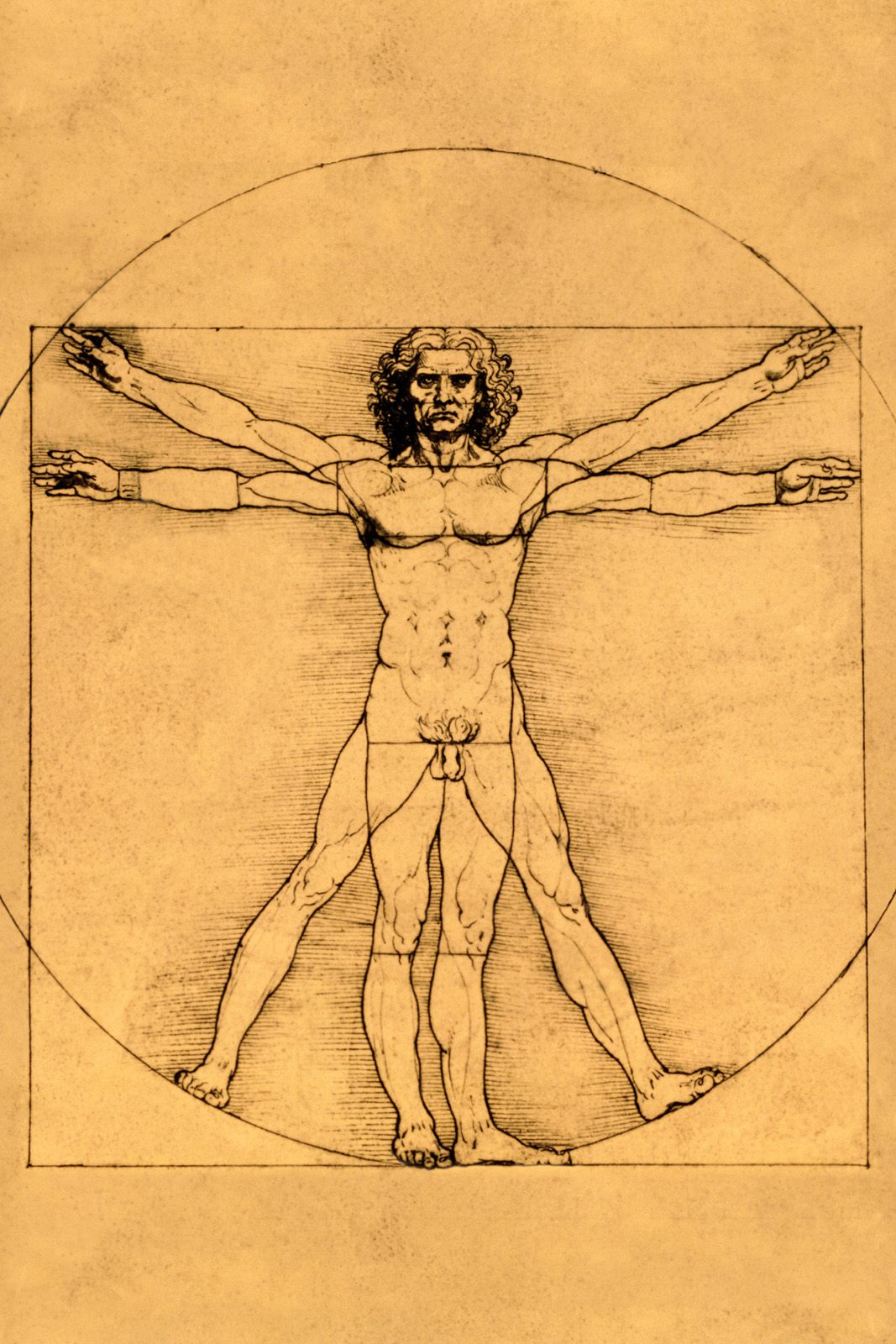
I experienced something I first mistook for guilt. It's easy to see how guilt at the relative ease of life in the West compared to rape and hunger and war and abandonment makes sense - but it really wasn't guilt. It was more a sadness - yes, sad for these people, but as I said the emotions didn't really get through - it was a sadness at the realization that my life will provide me with only the narrowest picture of the human experience. Even the most adventurous and well-traveled among us will barely scrape the surface of what it means to be human - for good and for ill.
It's not just the horror of child rape as a weapon of war, but the whole gamut of emotions and experiences that will just never be an option for me. I guess this is sort of like someone staring at the night sky, depressed about their own insignificance. We (or at least me) like to cling to the illusion that I'm a "normal" or "average" person - at the very least "representative." I want to believe that my life is, give or take a few particulars, just about like everyone else's life. That's simply not true.
I wonder if this is why individualism is so attractive, because it makes us completely representative, because there is nothing "real" outside ourselves. We can never be insignificant, unless we choose to be. We can never be below average or strange unless we choose to be. It's a far cry from understanding ourselves as but incomplete portions of the larger whole. As a human, I am barely discernible compared to the grand scheme. Theologically I might argue I'm completely complementary to the whole of creation - there is no such thing as an individual human any more than there is an individual cell. Yes, they can be delineated and even survive on their own, but that existence is nothing, really, compared the the beauty and complexity of the society in which they reside.
I still can't get my head around rape as a weapon of war and the dehumanizing that precedes it. This is one of those horrors that seems beyond comprehension, let along solution. We Christians like to put these most difficult ones on God - "you take care of that, because I just can't deal with it." As real as that inability to deal is, it's also a little cop out.
But the cop out has two sides. In one sense, it helps to preserve the illusion that we matter - again, I'm not saying that individuals don't matter; they do, but not in the way we like to pretend. It makes us think we can solve our own problems, that just maybe if we get some of the smaller ones figured out, we can work up to the real horrors.
On the other hand, it just lets us draw a comfortable line between the possible and the impossible. We can put that line wherever we choose and convince ourselves that there's nothing we can do about it - that the line exists outside ourselves.
I don't know what to do with this. There's no conclusion here. I've just been thinking about it a lot - and hopefully it will change the way I approach hope and the world itself. Ultimately, it help me internalize the notion that we're not in control - human selfishness and greed have set free the kind of pain and horror we cannot easily rewind. To think otherwise is really just fooling ourselves.

So much of our actions in this world (and by that I mean, human action) come from a place of deep fear. In the end, we're scared that someone will take what we have. Even if it's not something tangible, we live in this delicate balance where, in an instant, it could all be gone. Call it, "there, but by the grace of God, go I," syndrome.
And it's not as though that phrase isn't true. There really is nothing separating my relatively mild (or non-existent) suffering from those people and places where suffering seems unbearable - nothing except grace, or maybe just dumb luck. The problem is not that the phrase is untrue, but that we don't really mean it.
We more often mean, "there, but by the amount in my savings account, go I," or "there, but by the loaded gun under my pillow, go I," or "there, but by my obedience to God - or there, but by my cunning intellect - or there, but by my good job, go I." We talk a lot about blessing or grace, but we don't really mean it. Many of us overtly.
If we let these refugees in, they'll bomb our churches and take our jobs. Society doesn't have any right telling me what to do with my money or my guns. Sure, I could help that guy out, but what if he takes advantage of me - I might lose my home or my car.
So much of our fear is about control. We're afraid we won't have any. Without control, we can't protect those things we hold most dear. Rarely, rarely, rarely, is one of those things we're afraid of losing our faith. We're scared of losing comfort, security, possessions, money, family - and none of those are impossible scenarios. They're probably pretty natural fears. The difference, though, is how Christians face them. How do we deal with the thought of losing what we have, or, more fearfully, how we deal with having those things we love taken from us.
We buy into the myth of scarcity. That there isn't enough. "If we tried to give everyone what they need, we'll all be poor." "I have to look out for myself - or at least for the people I love."
Not only are these individual actions challenged by the words and life of Jesus and the historic tradition of the Church, but they betray a larger denial, the one I have trouble understanding sometimes. do we not believe in a God with the ends under control? I recognize that things might be a bit chaotic now, but do we really believe that love will win? That my suffering today is part of that victory, the very means by which it comes about, in imitation of Christ?
Maybe we really don't believe. That's my doubt.
That's my doubt when I see such hateful rhetoric addressed toward any group of people. We are not called to love some people more than others. I think the Luke passage says as much - everybody loves their friends and family; everybody loves those who are nice to them. Some people are even moved with compassion towards those who suffer. That's not really the challenge of Christianity, though.
I'm not saying we shouldn't be afraid (although God does say that a lot) - I'm saying we can't let that fear dictate what we say or how we act. I don't understand how people can claim the power of the cross and also advocate the power of the gun, or the army, or the law, or the power of some big-ol' freakin' wall.
And I don't mean to say we should just be able to believe unconstrained (I have a bank account and a mortgage and locks on my doors). I am saying we should be honest. We have to say either, "I'm scared of __________ and I'm reacting out of fear," or "I'm not convinced this will work in the short term, but ultimately it's the right thing to do." Faith and love and grace and peace will not save us from pain or suffering or heartbreak or death - in fact they'll likely invite more of each. But warmongering and mistrust and self-protection will never get us what we desire.
There's no such thing as a regrettable means towards a glorious end. That's a lie we tell ourselves when we're scared to justify doing what we know is wrong.
That's why my doubts are just doubts, not beliefs. I don't believe these people I see saying and doing things that make me sigh and shake my head are really without faith. They are merely human, doing what comes natural. If we were the kind of people who could act entirely on our beliefs, well, we wouldn't need each other, would we? We wouldn't need to meet each week and remind ourselves of who we are and what we're called to do. We just wouldn't need that bread and that cup, because we'd already be transformed.
Do we really believe?
Of course not. It's darn near impossible, but the very fact we still ask the question means there's hope somewhere. I think.
*Seriously. I didn't change a bit of it after the events of this week, just cleaned up the language some, made it a little more readable. It was all there.

ESPN Magazine does a fantastic job of laying out the conflicting nature of Borland's decision and life. He was all about football and he doesn't necessarily want to take that away from anyone - he won't tell you not to let your kid play - simply that his research and experience scared the heck out of him. At the same time, it also explores his difficult relationship to the game.
Borland is often asked to speak at symposiums about football safety. Mostly these conferences are designed to make the game safer for people. Borland, though, doesn't believe the game can be made safe - that people who think it can be freed from these long term serious medical problems, are just hurting people in the long run. After one rally in support of a paralyzed former player that felt more like a pep rally than anything else, Borland was scratching his head at the whole thing, "You don't have to promote the game to help people who've been hurt by it."
This really hit home for me in a different context.
I don't like war. I don't believe war ever accomplishes anything positive - what may seem good is always overwhelmed by the less visible bad. Fighting puts out society back a step, rather than moving us forward. I pray that all soldiers everywhere, no matter what side they fight for, would simply lay down their arms and refuse to fight. If that happened, there'd be no more war.
At the same time, there is a great need to care for those who've been affected by war. Those who suffer and, perhaps, those who don't realize they suffer. I want to be involved in taking care of veterans and their families - but that cause always seems draped in the flag, like its a patriotic effort in support of war. I know it is for a lot of people, but certainly it doesn't have to be that way.
As a Christian, I should worry more about caring for people than how people perceive my actions, but I do still worry. I'm not sure I can help that. Peace is something I take very seriously; it's at the core of my faith. I wouldn't want someone to get the wrong idea about what I support and condone, especially at a time when my tribe, evangelical Christians, seems so ready and willing to support blasphemous violence in the name of Christ.
At the same time, as much as I believe in peace, I believe it happens because of love. I believe that love shown to someone, even if the reasons are unclear or obscured, will have an effect on people, drawing them more into a life of love. I believe that supporting veterans unconditionally can and will lead people away from fighting simply by the example of love.
In the end, I resonate strongly with the conflicting position Borland finds himself in - both as a respecter of football and someone afraid of its effect on the world (and the individuals who play). He talks about it as dehumanizing, but doesn't want to violate those people who deeply love the game. He's trying to care for people while not caring for the thing they love.
I get it. I wish we had more space for this kind of tension in our society.

I don't know exactly what to say about American Sniper. It's a good film. There's a humanity involved, despite the horror and death, mental and physical trauma, there is a guy searching for meaning and ultimately finding it. We can debate all over whether he's looking or finding in the right places, but the story is honest and it rings true.
The story in the film, that is. The real story is, as always, much more complicated. Chris Kyle was unabashedly black and white, seeing the world only in terms of good and evil. Clint Eastwood, as blunt and unrelenting as he can often be, really captured the essence of Kyle without necessarily buying into Kyle's narrative. There is plenty of room in the movie to see and judge violence and war in many different ways. I think they did as good a job as they could with the movie while still doing justice to the man at the center of it.
I am not a fan of violence. So it would make sense to be drawn more to Selma, a story on the other end of violence. Black marchers, peacefully assembled, were beaten bloody and without mercy by local police and state troopers, while trying to march from Selma to Montgomery in pursuit of voting rights. I find it interesting to ponder how the Chris Kyle of 1965 would have defined good and evil in that scenario. But that is ultimately beside the point.
Upon first viewing of these films (about twelve hours apart from one another) it seemed easy to parallel the two themes. The war movie, in some sense, justifying (if not glorifying) the "honor" of war becomes a surprise smash hit, breaking all sorts of box office records, while the little, largely African-American production about protest and non-violence goes by largely ignored. It could be seen as a symbol of the way our culture views this issues - non-violence is just a tough sell.
I wanted to write that kind of post. In the end, though, I think these movies are far more similar than we give them credit for - and I'm not sure that's a good thing.
Both Selma and American Sniper put us in the mind of strong, heroic people, summoning great courage to face difficult, near-impossible situations. The stories are not about violence and non-violence, they're about inner strength. Each film is about doing what you think is right, even if it is unpopular and causes great suffering for you and your loved ones. The main drama in Kyle's story is the same as in Martin Luther King's - was the pain inflicted upon their families justified by their higher callings.
I suspect most American would say yes on both counts. King was doing things the right way - conflicts within a society must be handled peacefully; whereas international conflicts, like the one faced by Kyle, require a brute force. We've so often been taught how to recognize justifiable and unjustifiable violence, with just these scenarios as examples, it's easy to fall into line.
Neither movie really challenges the status quo. As a radically peace-loving Christian, I have a hard time glomming on to either film. I don't think war is ever the right answer. War has never, in the history of humanity, brought peace - yet we keep trying. At the same time, it's not exactly Chris Kyle's fault he's involved. Beyond the societal pressure to patriotism, only a heartless soul would expect soldiers to prioritize anything but survival in the midst of a war zone. I say that in reference to Kyle and to those he was sent there to kill.
At the same time, Selma's one extended explanation of non-violence was the opposite of a defense. The argument was, essentially, we're outgunned - fighting back will only make things worse for our people in the long run. The implication being that if there were a chance to succeed violently, then it might be worth it, but this particular battle is not going to be won that way.
In other words, if we're fighting an entrenched insurgency with the greatest military might in the history of the world, then of course we'd fight. Instead we're the rebels and we won't win that way. If you're Chris Kyle, fight; if you're Martin Luther King, you can only resist and pray.
We live in a society that believes this. It is truly the American way. It's not really our fault. Power and might is the way of empire. The man with the biggest gun makes the rules.
The power in Selma, comes from the eyes of the nation seeing innocent, peaceful marchers beaten for wanting to vote. Violence only holds sway so long as it can be justified to the masses. This is the purpose of American Sniper - at least in some measure. We're forced to ask the question: where is the line? How do we responsibly use violence, force, and might in the world. It's a difficult question. But it's easier to make peace with our answer (that war is a tragic necessity) when we have a movie like Selma to justify it. By recognizing the reality of an exception to the rule of violence, we're much more comfortable with the rule itself.
Justified violence is always a means to power. No one ever condones violence for violence' sake. We believe in violence only when it seems the best option to provide some perceived good. Freedom, security, control, peace-of-mind. It is easy, in the same way, to see non-violence as a means to power. Certainly the Civil Rights movement gained great freedom, security, control, and peace of mind without resorting to violence. Our temptation is to leave it there.
One of Dr. King's great legacies - something often lost in the historical priority of Civil Rights - was his absolutely insistence on non-violence as an end in itself. He vigorously opposed the Vietnam War, long before it became the popular sentiment. He did so because war causes suffering - for hero and villain alike (however we may paint them).
Our culture remains one obsessed with power - namely the power of self-determination. That is our idol and thus our culture's artistic expressions keep this front and center. Selma and American Sniper are good films. I liked both of them. I think they're well made and have important things to contribute to our collective conversation. They are, though, entirely within the realm of comfort for an American viewing audience. They're telling us things we want to hear, even if they do it in profound and difficult ways.
They are not different, though, only serving to support our underlying cultural structure. We must first understand the ends we pursue before we can really grapple with the means by which we arrive there. I'm not sure these films pull back the curtain far enough for us to find what we're truly looking for.
This short story by Mark Twain popped up in two books I read last week; both found it important enough to quote large sections of it verbatim. It is a timeless and difficult piece of writing. It seems fitting to share:
It was a time of great and exalting excitement. The country was up in arms, the war was on, in every breast burned the holy fire of patriotism; the drums were beating, the bands playing, the toy pistols popping, the bunched firecrackers hissing and spluttering; on every hand and far down the receding and fading spread of roofs and balconies a fulttering wilderness of flags flashed in the sun; daily the young volunteers marched down the wide avenue gay and fine in their new uniforms, the proud fathers and mothers and sisters and sweethearts cheering them with voices choked with happy emotion as they swung by; nightly the packed mass meetings listened, panting, to patriot oratory with stirred the deepest deeps of their hearts, and which they interrupted at briefest intervals with cyclones of applause, the tears running down their cheeks the while; in the churches the pastors preached devotion to flag and country, and invoked the God of Battles beseeching His aid in our good cause in outpourings of fervid eloquence which moved every listener.
It was indeed a glad and gracious time, and the half dozen rash spirits that ventured to disapprove of the war and cast a doubt upon its righteousness straightway got such a stern and angry warning that for their personal safety’s sake they quickly shrank out of sight and offended no more in that way.
Sunday morning came — next day the battalions would leave for the front; the church was filled; the volunteers were there, their young faces alight with martial dreams — visions of the stern advance, the gathering momentum, the rushing charge, the flashing sabers, the flight of the foe, the tumult, the enveloping smoke, the fierce pursuit, the surrender!
Then home from the war, bronzed heroes, welcomed, adored, submerged in golden seas of glory! With the volunteers sat their dear ones, proud, happy, and envied by the neighbors and friends who had no sons and brothers to send forth to the field of honor, there to win for the flag, or, failing, die the noblest of noble deaths. The service proceeded; a war chapter from the Old Testament was read; the first prayer was said; it was followed by an organ burst that shook the building, and with one impulse the house rose, with glowing eyes and beating hearts, and poured out that tremendous invocation:
God the all-terrible! Thou who ordainest,
Thunder thy clarion and lightning thy sword!
Then came the “long” prayer. None could remember the like of it for passionate pleading and moving and beautiful language. The burden of its supplication was, that an ever-merciful and benignant Father of us all would watch over our noble young soldiers, and aid, comfort, and encourage them in their patriotic work; bless them, shield them in the day of battle and the hour of peril, bear them in His mighty hand, make them strong and confident, invincible in the bloody onset; help them crush the foe, grant to them and to their flag and country imperishable honor and glory —
An aged stranger entered and moved with slow and noiseless step up the main aisle, his eyes fixed upon the minister, his long body clothed in a robe that reached to his feet, his head bare, his white hair descending in a frothy cataract to his shoulders, his seamy face unnaturally pale, pale even to ghastliness. With all eyes following him and wondering, he made his silent way; without pausing, he ascended to the preacher’s side and stood there waiting. With shut lids the preacher, unconscious of his presence, continued his moving prayer, and at last finished it with the words, uttered in fervent appeal, “Bless our arms, grant us the victory, O Lord and God, Father and Protector of our land and flag!”
The stranger touched his arm, motioned him to step aside — which the startled minister did — and took his place. During some moments he surveyed the spellbound audience with solemn eyes, in which burned an uncanny light; then in a deep voice he said:
“I come from the Throne — bearing a message from Almighty God!” The words smote the house with a shock; if the stranger perceived it he gave no attention. “He has heard the prayer of His servant your shepherd, and will grant it if such be your desire after I, His messenger, shall have explained to you its import — that is to say, its full import. For it is like unto many of the prayers of men, in that it asks for more than he who utters it is aware of — except he pause and think. “God’s servant and yours has prayed his prayer. Has he paused and taken thought? Is it one prayer? No, it is two — one uttered, and the other not. Both have reached the ear of Him who heareth all supplications, the spoken and the unspoken. Ponder this — keep it in mind. If you would beseech a blessing upon yourself, beware! lest without intent you invoke a curse upon your neighbor at the same time. If you pray for the blessing of rain on your crop which needs it, by that act you are possibly praying for a curse on some neighbor’s crop which may not need rain and can be injured by it.
“You have heard your servant’s prayer — the uttered part of it. I am commissioned by God to put into words the other part of it — that part which the pastor — and also you in your hearts — fervently prayed silently. And ignorantly and unthinkingly? God grant that it was so! You heard the words ‘Grant us the victory, O Lord our God!’ That is sufficient. The whole of the uttered prayer is compact into those pregnant words. Elaborations were not necessary. When you have prayed for victory you have prayed for many unmentioned results which follow victory — must follow it, cannot help but follow it. Upon the listening spirit of God fell also the unspoken part of the prayer. He commandeth me to put it into words. Listen!
“Lord our Father, our young patriots, idols of our hearts, go forth into battle — be Thou near them! With them — in spirit — we also go forth from the sweet peace of our beloved firesides to smite the foe. O Lord our God, help us tear their soldiers to bloody shreds with our shells; help us to cover their smiling fields with the pale forms of their patriot dead; help us to drown the thunder of the guns with the shrieks of their wounded, writhing in pain; help us to lay waste their humble homes with a hurricane of fire; help us to wring the hearts of their unoffending widows with unavailing grief; help us to turn them out roofless with their little children to wander unfriended in the wastes of their desolated land in rags and hunger and thirst, sports of the sun flames in summer and the icy winds of winter, broken in spirit, worn with travail, imploring thee for the refuge of the grave and denied it —
For our sakes who adore Thee, Lord, blast their hopes, blight their lives, protract their bitter pilgrimmage, make heavy their steps, water their way with their tears, stain the white snow with the blood of their wounded feet!
We ask it, in the spirit of love, of Him Who is the Source of Love, and Who is the ever-faithful refuge and friend of all that are sore beset and seek His aid with humble and contrite hearts. Amen.
(After a pause.) “Ye have prayed it; if ye still desire it, speak! The messenger of the Most High waits.”
…
It was believed afterward that the man was a lunatic, because there was no sense in what he said.
The entirety of the piece can be found on its own, dedicated website.

This book tells the story of an evangelical pastor's discovery of a Christian prophetic imagination and his conversion to a deeper, more-profound gospel that takes seriously the teachings in the Sermon on the Mount and recognizes the cross as more than just securing heaven for the faithful.
It became every more clear, today, as I opened the newspaper, how much this alternative narrative is needed in our world today. Below is the letter I sent. I was limited to 200 words. I'd love to have said more, but I figured evangelism probably isn't going to help its chances of publication.
To Whom it May Concern:
I have become quite accustomed to the political cartoons you print each day, despite their lack of depth, satire, or wit, and penchant for taking easy shots at low hanging fruit. The cartoon from June 6th, however, is easily the most careless example to date.
Yes, we all admire the tremendous personal sacrifice and bravery it took to storm the Normandy beaches, knowing full well the odds of failure. And I would not want to detract from the grief and loss of families whose soldier did not return. However, using a quote from Gandhi, about Jesus Christ is entirely irresponsible.
These two figures form the ancient and modern paradigms of non-violent resistance - the quote used is part of Gandhi's explanation of his non-violent position - to use them in a cartoon glorifying war, no matter how emotional or noble the intentions, is completely inappropriate.
I hope your editors will use more wisdom and discernment in the future.
Ryan Scott
I believe the cross of Christ forever changed the world. Victory and freedom do not come at the end of a fight, but in the life-giving rejection of violence and embrace of love so deep we'd rather die than kill. This is the gospel of Jesus Christ.
We may find it difficult to work out perfectly that ideal in our own lives - and we all make less than ideal choices - but we must never forget the truth and reality of this underlying truth. Even when we fall short of Christ's example, the example remains.

As we finish what is another difficult holiday to navigate I've been asking myself why it's so different? If I've worked through a dealt with issues of war and violence, why is the last Monday in May so much different than November 11th?
The answer should probably have been obvious, but, like a lot of things, I was slow to catch on. The difference is death.
Veterans Day often includes ceremonies at cemeteries and stories of long-ago wars, but it's really a day about people who've fought - many of whom are still alive (and too often forgotten). I hope I can separate the value and needs of people with my objection to war.
But death is different.
Memorial Day is about those who've fought and died - not just those soldiers who have died, but those who died in war. I don't like war - and it's not just the typical hatred of something inevitable; I don't believe its inevitable or necessary. I hope the post above and Brian Zahnd's great piece this week explain some of the theological underpinnings of that.
But what I'm realizing more and more, when it comes to Memorial Day, that doesn't really matter. People are dead and they are not coming back (at least not until the resurrection on the last day). With the possible exception of pain-ridden, terminal situation, where the suffering is too much to bear, all death is tragic, all death in painful.
When it comes to losing the people we care about, the why or the how aren't really important. We talk like they are sometimes - we like to think a heroic death (like one in battle) is better than a drug overdose or a car accident - but in the end, a mother or a brother or a daughter have lost someone irreplaceable and it is the loss we feel.
Ironically, this year, I saw many comments from people emphasizing that Memorial Day is not about military service in particular, but about remembering those who died in war - there was a general sense of emphasis on remembering, on loss.
I know it's attached to military service precisely because the cultural assumption is that these are noble deaths - deaths that earned us something: freedom, peace, security, etc - but the more I see comments from soldiers and family, the more it becomes apparent that this is simply a day of mourning.
All death is tragic. Death is an enemy. Death is a terrible thing. I know it's a part of life; I know it's inevitable, but it's not good. There is no such thing as an honorable or dishonorable death. Death sucks. It is universally bad.
I struggle, I do, with the patriotism and the celebration of war that so often goes with Memorial Day. At times it almost feels like we're celebrating certain deaths because of the bravery and sacrifice inherent in them.
Memorial Day is certainly not a day of celebration and I'm not even sure it's a day of remembrance. It's a day of mourning - of recognizing a loss, of naming and standing up to the gaping hole in our lives that death creates, and, by doing so, removing its power.
I have a different perspective on war than many. I have a different perspective on life and death and the future because of my belief in resurrection. I have real difficulty holding up soldiers as examples since I don't believe war is beneficial for anyone. But I do understand loss.
On this day, when a specific group of people are mourned, I mourn. I don't have a close connection to anyone who's died in war; I think I've only ever met one person. I can't claim this day as my own in any particular way. But I do hate death. I hate the memory of losing loved ones; I hate the thought of losing any more. I hate seeing other people experience the sorrow of death - no matter the reason.
On Memorial Day, let's mourn with those who mourn, and let that be enough.

As with any loss of life or bad news we hear, the first and most appropriate response is simply to participate in the hurt and affirm the pain of suffering. A bunch of people were killed yesterday and that sucks.
When things like this happen, I get angry. Not really at anyone in particular, but at everyone in general. It's a simple response that's fraught with complications:
STOP KILLING PEOPLE!
If everyone stopped killing people, no one would be killed. Hard to argue with that logic. Of course it's not likely everyone will stop killing people and if the good guys stop killing the bad guys the bad guys are going to kill more people than they otherwise would. So we all keep killing as if it is a sane act simply because it can be justified through some logical stream of consciousness.
The main problem I see is that people aren't numbers. We forget that sometimes. We forget that in medicine and in war and in elections and in church. People are people. They are individuals and we are all interconnected in one giant mass called "people." (Theologically we should probably include all of creation in that giant mass, but that could be a bridge too far for today.) It's not so simple as "killing one person today, saves fifteen tomorrow." Beyond the fact that people aren't numbers, it's awfully difficult to predict the future and it's just plain asinine to think that killing someone, with or without good intentions, affects only that person.
The great Brian Zahnd speculated on mass killings as an idea a bit. It's an interesting read.
What we do has an effect on the world around us. The things we see today and results, partly, of things done previously. I'll say again, people are not numbers and we're not isolated individuals - we are individuals in community whether we like it or not. Things effect us.
(A brief side note, I finished Malcolm Gladwell's Outliers recently - I know, I'm close to a decade behind - but the research he highlighted on the cultural foundations of our inborn reactions, even generations removed from their principal causes is both outrageous and amazing. We are not and can not be isolated!)
My thoughts on this are obviously rooted in Jesus Christ, who chose death over killing and in doing so rendered death impotent of real power (despite all appearances to the contrary, both from Christians and otherwise). The ethical implications of which are exemplified in the earliest Christians and explored for modern readers in the theology of the Anabaptist tradition and laid out by bad-ass prophets like Stanley Hauerwas, among others.
Yes, the degree to which, and situations where, killing might be acceptable for Christians is a difficult conversation. In the end, the Christian response is simply to call each other and the world to less violence. Hence:
STOP KILLING, PEOPLE!
I first started thinking about this on a large scale when considering Israel and Palestine. They shoot rockets at each other and blow up buildings and arrest people over a legitimate, complicated, historically-rooted dispute that will likely never be settled. Just on a practical level, if they're ever going to move past violence, one side is going to have to denounce violence preemptively - instead of the current posture of "no, you do it first."
Whatever side of that, or any particular tense situation you may consider sane, logically, it is the sane person who should expected to act rationally. Of course, one can't trust the insane to act sanely - but neither is the insane guaranteed to act insanely simply because of their lack of sanity.
What I'm saying is, take the chance. Yes, it's a chance which could cost your life or the lives of lots of other people, but it's better than banging your head against a wall for another 6,000 years. AND, guess what? You look a lot less threatening to the other guy if you stop actually threatening him. The same would likely be true if roles were reversed.
I use the sane/insane argument not because I believe those roles fit well in any conflict, but because those involved in the conflict believe them. If you're the sane one, do the sane thing.
STOP, KILLING PEOPLE!
Killing is contagious. The more advanced we get in our technology the further we come from actually physically understanding the reality of killing. When it was hand to hand combat and you had to grip the throat of an enemy and physically feel the remaining air in his lungs disappear - that's a difficult position. It was never taken lightly. When you can punch buttons on a keyboard and blow up an occupied house 15,000 miles away, then go home to dinner with your wife and kids - that's a lot of distance. The more killing we do, the easier it is to kill. That's not just for individuals, but for societies as a whole.
It trickles down. There's all this debate about why the US has so many gun deaths despite lower gun ownership rates than, say, Canada. There's a lot of factors going into it, a lot. One I never hear is that we live in the only developed country on Earth that still executes people. Could it be so simple as "my daddy does it, so it must be ok?"
It starts with society - and it trickles down to individuals. When we're part of a system that uses killing to impose an understanding of morality on the world, we should not be surprised to find individuals within that society who use the same logic - even if their morality is ridiculous and flat out wrong.
If you or I stop killing people, people will still get killed. I don't like what's going on in Syria anymore than anyone else (and I can't think of a single person on the planet, Asad included, who likes what's happening there). I have the same response for Syria that I do for the United States:
STOP KILLING PEOPLE!
I do not pray for quick resolution to war. I don't even pray for a cessation of fighting. I pray that every armed combatant everyone, on a battlefield or angry at home, will just lay down their weapons and renounce fighting altogether. I pray that words like war and peace will lose all meaning because people have refused to fight so long, they've forgotten what it means to kill.
Please, just stop killing people. It may not make a lot of sense in the short term; the math might not add up well (it probably won't). But in the end, the simple statement remains true: if everyone stopped killing, no one would be killed.

The Feast Day of St. Martin of Tours is also November 11th and I picked up on the profound statement the juxtaposition of these holidays makes from reading Shane Claiborne. St. Martin was a soldier in the Roman Army and descended from a long line of soldiers. He had a crisis experience early in his Christian journey that led him to risk his life to quit fighting. He volunteered to stand unarmed between two warring armies to prove both his bravery and his commitment to Christ.
One of the things I believe most strongly about Christian life is the call to make a unique statement, to engage in actions, a lifestyle that does not mark one out as simply "a good person," but one that marks one out as a follower of Christ. We must remember that there is a difference between what common morality demands and what faith in Christ requires of us.
I appreciate the statement of a Christian holiday commemorating one who was brave enough to die for peace set alongside the civic holiday commemorating many who have been brave enough to die in war.
I have nothing against soldiers - I've never met one who fit the movie stereotype of the bloodthirsty goon. I'm sure they exist in some small number, but every soldier I have ever met committed to a military life with careful consideration and generally selfless motives.
The desire to protect innocent people and the desire to stand up for what one believes to be noble and good causes are commendable. Most combat veterans exhibit the kind of bravery I doubt I could ever muster. For this they have my humble respect.
However, as a Christian, I feel fighting in a war relies too heavily on human means to achieve these positive ends - in the same way politicians rely too heavily on human means to bring justice and security - in the same way we rely too heavily on our paychecks and the sweat of our brows to feed and clothe our families.
The message of the gospel is one of alternative choices. Choices that make little sense in the rational extrapolation of our common wisdom, but choices that I must believe will ultimately prove victorious.
There is no way to completely rationalize one's outlook on life - at some point we must have faith in something, whether in human ability or scientific discovery or in God. The one thing I have to believe is that the humiliating execution of one man 2000 years ago changed the way the world works for all time.
I don't want to argue about pacifism here. That is not the subject of this post. While my ideals would lead me to take a stand elsewhere, I cannot claim, given the intense situations which have been faced by so many people before me, I would choose any different. This should not be an issue of idealism versus reality. It is an issue of how the Church responds to the reality of war.
I don't begrudge Christians who join the military. There are veterans in my family and among some of my closest friends. I understand the choice they've made and the faith they continue to possess. When people are away I pray for their safety and for God's presence with them and with the families they leave behind. I think we should all do what we can (and in my case, much more than I do) to support those families torn apart by war in this way.
At the same time, we must stand for peace. We must pray for an end to all war and not through one side defeating another, but for both sides to recognize the sovereignty of God and turn their tanks into tractors (to paraphrase the prophet).
So I suppose my opposition is not in recognizing veterans (as I've said, there is so much to admire in their lives and characters) as it is to what seems like the glorification of war. Freedom and security are not won through battles or revolutions or elections. They are gifts from God; and gifts that we're not promised to always enjoy. In fact, the promise we receive is hardship and persecution - this is the cost of a gospel that makes no good sense to those who stand on the outside - but one that is the very definition of life and death.


