Showing posts with label society. Show all posts

Tuesday, November 09, 2021

Are We Too Dependent on Miracles?


This is a sermon I prepared for our weekly Refresh worship time this past week.  I felt very convicted by it and thought it could use a share. 


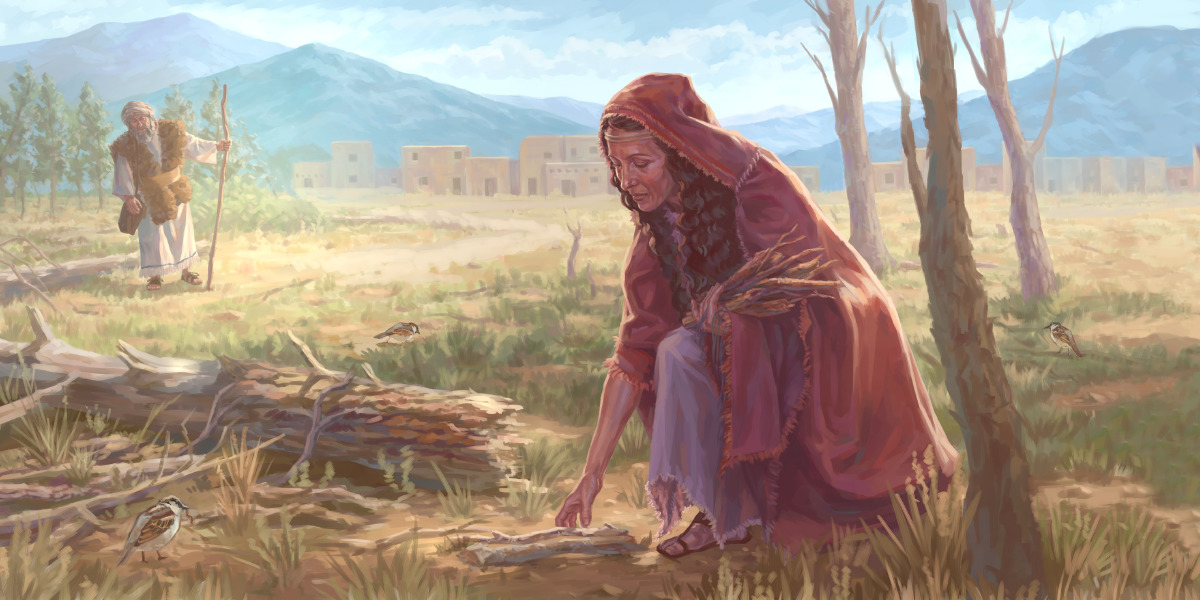
On the surface of it, this seems like a pretty straightforward miracle story – a reward for belief.  The prophet said the flour and oil would last and the widow trusted they would and they did.  But, as you hear it, is there anything that doesn’t sit well with you?  Any questions or problems that come up?

Maybe its just the time we live in, but I’m bothered by the power dynamics here.  Widows and children are the most vulnerable people in society.  This woman is ready to watch her son starve to death – she’s that desperate – and yet this random prophet shows up and asks her to bring him water, and she just does it.  The servant class is so baked into her, she’s ready to obey whatever this guy asks.

I have to ask myself, who is this guy to impose this upon her?  Yes, I get that God has orchestrated this whole thing, and he trusts that God will work it out, but it’s awfully mean, isn’t it?  I mean, I get the story and why it’s there, but I also wonder if we haven’t heard too many of these miracle stories.  I wonder if we haven’t become too dependent on the idea of miracles.

Think about it.  We use all the fossil fuels and minerals on our planet under the assumption that, by the time they run out, technology will have figured out a way to do what we need without them.  This is why climate change has lingered for so long – it wasn’t that people didn’t believe in it, but that they believed in a miracle more – that science would figure a way out of it that didn’t require sacrifice.

Our economy is built on debt – we encourage people to borrow.  These billionaires out there, they don’t have any actual cash – they just borrow against the value of their stocks, with the assumption that value always goes up, that there’s always more money out there.  It’s miracle thinking.

I was reading a lot, earlier this year, on Amazon’s hiring practices, because I guy I went to high school with ended up being a sort of whistle blower from the Amazon HR department.  They realized that people’s productivity goes down after a few years at a menial job, like stacking shelves or packing boxes, so they’ve set up their system to be really attractive at the beginning, but pretty terrible after three years.  They’ve designed their system to run through employees quickly and now they’ve run out of people.  They’ve burned out to many low wage workers, no one will do the job anymore.

Elijah didn’t worry about food, because God always provided for him – but that kind of put him in a position to impose on this poor widow, whose whole life has been nothing but suffering and imposition.  When we have this miracle mindset, it’s the people at the bottom of the pile who suffer – and in our society, we’re seeing some of this come home to roost.  We’ve got a lot of upheaval, because there are a lot of people who don’t see miracles.  They’re stuck with nothing and, like the widow, expect nothing.

When I worked at an urban youth center in Kansas City, during seminary, we’d always have volunteers (usually white, middle class, suburban) who’d wonder why these kids always had expensive sneakers and satellite TV, but they rarely had enough to eat.  There were complaints about their priorities.

I had to learn myself, and then teach them, that those priorities only make sense, when you plan to have a long term future.  If money or a job or a place to live could be gone tomorrow, you’re not thinking long term – you’re going to do what you can for yourself right now.  This is a different kind of miracle thinking – only a miracle will make this situation right, so I’m going to do what I can when I can.

Whether its a polluter tossing more coal into the furnace or an impoverished kid in line to buy Jordans, they’re both just banking on a miracle down the line.  For the rich, though, its an assumption “things will all work out;” while, for the poor, it’s a pipe dream, “we’ll gather a few sticks, make one last meal, and die.”  One assumes there will always be enough and the other is assuming there will never be enough.  Two sides of the same problem.

The gospel lesson here – where the Kingdom of God breaks in to the story – is that there is already enough.  It’s not about expecting the best or the worst of the future; it’s about believing that everything you need is already here.

Sometimes these biblical miracle stories make it seem like God is creating the problem God later intends to solve, right?  He asks Abraham to sacrifice his son, then provides a ram from the bushes.  He asks Elijah to take this woman’s last meal, only to give her more.  But that’s not what’s happening.  God is taking a common scenario from the world in which these people live, and changing the narrative.  Everybody in Abraham’s day sacrificed their firstborn to the gods; that was common practice.  God didn’t set up the scenario only to save the day; God radically changed the story.

Here it’s the same thing.  The prophet was a revered figure, someone with power.  It only made sense for him to take from those who couldn’t defend themselves.  That’s how society worked.  People who had things deserved them and people who didn’t have things didn’t deserve them.  The poor were just unworthy people.  Bad things only happened to bad people.  That was how society operated.

Here, God is changing the narrative.  Rich and poor.  Powerful and helpless.  Both are being served and fed and saved.  Both get the same meager meal of flour and oil, but both get to live.  It’s not about the miracle.  It’s not about God coming through in ways we couldn’t predict, it’s about God re-framing how we look at the world: there is already enough.  The flour will last, if we are responsible in its use!

We have to approach our world with this concept in mind.  It’s not about the future.  God has provided; we just have to be willing to share.  We have to be willing to be vulnerable, to make sacrifices.

Our society tells us there’s not enough.  That’s why we’re encouraged to consume.  Buy this TV now.  Limited time offer.  This deal won’t last forever.  You’re going to miss out!  How many people have more money than they’ll ever need saved up?  We feel like nobody, but the reality is very different.

Everybody thinks they’re middle class, because we’ve created this notion of scarcity.  We won’t raise taxes on people making under $250,000, because that’s “middle class,” but even $200,000 a year puts you in the top 10% of households in this country.  $10,000 a year is average for the whole world.

We have to figure out what it means to create a system, a society, where we can all live sustainably here and now.  For us, the rich – and everyone in this room is massively wealthy when measured on a global scale – it means being willing to sacrifice, do with less, and absolutely change our mindset.

Typically, those of us in power want gradual change.  We tell people who’ve been left out or oppressed, “wait your turn, go slow, we’ll get there eventually, let’s not shake things up too much” but that’s just more of the same miracle mindset.  Something in the future will change the situation so everyone can be equal with no one having to give up anything.  That’s not reality, though – that’s miracle thinking.

The poor in our society, the oppressed minorities, they live in a world where there’s no expectation things will get better or change in any meaningful way.  We have to be able to see the world with those eyes as easily as we can see with our privileged “it’ll all work out” eyes.  We shouldn’t need to depend on miracles for everyone to survive.                           

So, then, how do our lives need to change?

Tuesday, October 16, 2018

Trump, Yellowstone, and Fear

I really enjoyed the new Kevin Costner show, Yellowstone, this summer. Perhaps it's because we spent some time in Yellowstone and the scenery in the show is absolutely stunning, but I really think it's because these sorts of relationship dramas have become compelling. Succession was a big critical hit this summer - telling, essentially, a fictionalized Murdoch family drama about an aging media billionaire and his children fighting to inherit his company.

They're both pulpy, for sure. Succession probably has a more complete cast, but Yellowstone, for me, was just as good - with the visuals making it more fun to watch. Both are soap operas, but with the freedom of modern television, they can really raise the stakes. Instead of alien babies and endless kidnappings, you've got corporate espionage and actual murder.

Yellowstone certainly starts off dialed to eleven and stays there throughout. Costner plays a rich rancher who basically runs Montana and battles with everyone - from developers to politicians to local native tribes to his own children - to maintain and expand the empire his family has built over 132 years. There's a real tradition vs progress vibe that does a good job of not sinking wholesale into us vs them, but recognizes the tension of changing times.

I'm certainly giving it too much credit at this point, but it was created by Taylor Sheridan, who wrote Sicario and Hell or High Water and wrote and directed Wind River (my favorite movie of 2017). His fingerprints are all over Yellowstone and you should check it out.

What intrigued me about the whole thing (having binged about ten hours of tv in two days), is how allegorical it is for the Trump perspective on the world. I find it interesting that so many people try to read Trump critiques into Succession, which aren't really there, but miss the Trump show on TV because it's dressed up in cowboy hats and lost in the woods of Montana.

The first real example is the "branded men," criminals that Costner's character hires, essentially as indentured servants, to work his ranch. They're a separate crew from the regular ranch hands and they each take the cattle brand of the ranch on their chests. This is reminiscent of an ancient Hebrew practice, detailed in the Bible, where servants who had earned or been given freedom could pierce their ear as a sign of commitment to their masters, essentially committing themselves to service beyond what is owed.

One of the branded men on the show, newly out of prison, begins to understand how the ranch operates on it's own terms and tells the foreman he won't break the law. The foreman replies that the brand signifies trust, specifically, "That we trust you to do what we tell you." The man replies, "That's not what that word means."

I couldn't help but think of Jim Comey's memoir and his awkward retelling of the dinner he had with Trump in which the President asked for his loyalty. Comey replied that he'd be loyal to the country and it wasn't quite what Trump was looking for. Loyalty has been a big thing for DT throughout his life and campaign. We've come to see that loyalty and trust mean something different to him than they do to most people.

In another episode, Costner is trying to convince his daughter in law to give up her job teaching on a local native reservation to take a more lucrative position that would help secure her family's future. He says, "To consider other families before my own is to fail them as a father." This is another pretty clear allusion to how Trump operates. Regardless of how the Presidency turns out, his family will be much better off because of it.

I can't believe these exchanges are accidental on the show. They really put into focus the self preservation and single-minded, survive at all costs mentality Costner's character brings to life. He's willing to use politics, fear, intimidation, and violence to further the empire he's found himself responsible for. In some ways, it humanizes a Trump who's so easily vilified, but it also lends credence to the pioneer mentality that's so prevalent in the West.

This isn't a take down, but a study - and it's about more than just Trump. On a larger scale, it's a human reality. We survived as a species only because of our selfishness. Babies live because they're demanding and self-serving. Humans beat out other competing species because of how well we adapted to tribal life - not only seeing our group as an extension of ourselves, but recognizing the threats that other groups pose to us and our safety.

We just watched the documentary Jane, about Jane Goodall's early work with Chimpanzees in the Gombe. Years after her research facility had been established, the tribe of chimps she was studying split into two groups, essentially sharing the range they'd occupied together. This triggered an all out war, in which one faction literally attacked and eradicated the other. Even though there was plenty of space for both to exist, the disloyalty created a threat that had to be dealt with.

There's something primal in us that recognizes the self and the tribe as essential to life. We are not chimps, but those overt, primitive actions reflect on the some of the things we humans do to each other and the way we view our relationships. Pressure tends to push us towards our baser instincts - those parts of us buried the deepest tend to come out in times of stress. A lot of "successful" people use pressure - both real and manufactured - to create the kind of pressure necessary for them to act in ways that further their aims.

I think of the coverage of Luis Suarez, the top soccer player known mostly for biting opponents on multiple occasions. He talks openly about growing up in poverty and the things he had to do to survive. Even though he's now rich and in no real danger of anything anymore, he convinces himself that the guy across the pitch is literally trying to take food from his children's mouths, which enables him to summon the passion needed to excel at a high level.

Obviously, there are issues with this kind of approach, but it's certainly present in the world and it's probably far more present in our own lives than we'd like to admit. It's easy to see the success of Suarez and Trump (or Costner in the show), and think "isn't there a limit? Don't you have enough?" Some chalk it up to greed, but I tend to think it's fear. We're afraid of want or suffering. We're all just one bad break away from poverty. That might be less true for some than others, but it is a reality of the world in which we live.

Psychologists have done a number on people like Trump - saying he's striving to fill the void a lack of love left in his life, or that Suarez is simply not over the trauma of his childhood - and there are plenty of valid explorations there. I think more, though, this conversation is important for what it says about all of us. Fear is the dominant narrative of modern times, especially in the US.

Despite being relatively comfortable, we're constantly afraid, because we're constantly asking each other "what if? what if? what if?" We dwell on all the possible threats to the point where we can see nothing else. Yes, it might be elevated in someone like Trump, but the guy wouldn't be popular if that narrative didn't strike home for so many.

Guess what? The genius (to me) of Yellowstone and the Trump allegory it portrays, is that it also exposes the fear inherent in the opposition. Trump resistance uses fear as motivation in the same way. Yes, I get that the actual things - actions, policies, laws, etc - being proposed by each side have real and important differences, but the atmosphere and means by which those things are sought is the same. It's always about someone else taking something you deserve.

When it comes to Yellowstone, and to Trump, I think there's plenty to critique, but there's also a lot to consider.

How does fear impact our lives? How often do we respond, act, speak, or live in reaction to fear, as opposed to some positive force, like love, rationality, or logic? It's easy to critique those more extreme than us, but those extreme reactions begin somewhere - and that somewhere is typically the kind of decision we make everyday. Our fears are not unfounded - we live in a world where bad things happen - but they're almost always out of proportion, which means they occupy a larger place in society than they deserve.

Fear breeds fear. Things escalate. The cycle not only continues, but builds and grows. This is the lesson of Yellowstone; it's also the lesson of the Trump era. By all means, stick up for what you believe, but don't do it in ways that feed the fear. Fear is the real monster; what you're afraid of a mere symptom.

Tuesday, September 18, 2018

Legends and Legacies

Last Tuesday was 9/11, so I decided to save this one a week.

9/11 is only going to become more important as the distance from it to the present increases. The kids I see in schools everyday weren't even alive when it happened and so many young people have no living memory. As much as telling our stories can feel old, at times, it's important to help our collective memory.

The world is different now than it was, which is always true, but rarely do we have such definitive, recognizable transition moments as 9/11. The militant nationalism so prevalent in our society can be traced to that day and the ones following. Our obsession with safety and security are collective travails that extend from the emotional trauma of watching a nation that had never previously been attacked succumb to the kind of violence that's commonplace in so many countries around the world.

It's a real thing and we must, absolutely, with all our might, prevent it from becoming legend.

Legends lack complexity and context. When we were in Hawaii a few years back, we got to tour the Pearl Harbor memorial. What struck me most about the museum was the dearth of historical context. The US was competing with Japan for influence and control in the Pacific, and part of that meant limiting Japan's supply of oil. War was inevitable, because that particular US policy was an existential threat to their country. We can talk about tragedy - a surprise attack that cost a lot of lives - without negating the issues surrounding it's place in history. We don't tend to do that, though, we paint ourselves the innocent victims and the "other guy" as the bloodthirsty evil.

The speed with which we did that in 2001 is why 9/11 has much a troubled connection in my mind. We set out for revenge real quick. It didn't even seem to matter who was on the other end of our national fist. It got us into a lot of trouble and it shaped our society in really negative ways (beyond the governmental and economic consequences, which were nothing to sneeze at).

9/11 was a violent attack; all violence should be denounced. I don't like the distinction between civilian and military targets, because, as I said, all violence should be denounced - but 9/11 was certainly beyond even the commonly accepted rules of war: terror at it's very definition. The purpose of terror, of course, is to create a fear that grows, panic and overreaction that feeds itself in a cycle of expansion that ultimately gnaws at the roots of a society.

In that sense, the terrorists won.

That's why context is so important. We need to tell the stories of our experiences and emotions on that day. We need to communicate just how traumatic it was for people entirely disconnected from the lives lost, because violence has real consequences - when we do it and when we're the victims of it. We need to tell the stories to learn the lessons of how to respond to terror, how to control our very real and right fear and not allow it to eat us up and dictate our actions.

We need to keep 9/11 within the larger narrative of international politics, recognizing the out-sized influence the US has played in middle eastern politics and how quickly a religious narrative can be used to manipulate people and power. We need to keep perspective on the "good vs evil" dynamics and tell the story of 9/11 honestly - not filtered through the lenses we'd like it to fit.

Things have been sanitized that don't deserve cleaning. The impact of the clean-up on the fire and police officers, the rescue workers, both paid and volunteer - they're lionized in the stories we tell as they lie forgotten, suffering and dying as a result of their work. Hundreds of thousands of ordinary people in Iraq and Afghanistan died because of decisions our government made. Casualties of war are not just numbers on a page or phrases in a history book; they're real people - and there's many more of "them" who died than there ever were of "us." Such small numbers of "us" were ever asked to serve or sacrifice and we continually cut corners and pinch pennies to care for the hearts and heads of people who gave life and limb and family to fight angry, vengeful wars. We can't even be bothered to sacrifice the next marginally better drone or fighter jet to provide the medical care veterans across the country need.

Yes, I'm opposed to war and violence, precisely because they dehumanize and devalue life. It's all the more reason to support and care for those who've been victims of such war (and there are always many victims on every side of a fight).

I feel very different about 9/11 today than I did seventeen years ago, but that should also be part of the story. Reliving the vivid memories and emotional legacy of the moment as well as the changes it's wrought in us since that day, both individually and collectively. We need to recognize that while this is a singularly remarkable event, it is but one of many singularly remarkable events in our history and each come from somewhere and lead to somewhere. They fit in a larger narrative with both causes and consequences. While we may not be able to internalize all the complexities of experiencing such an event, we can understand why it happens and how we need to respond.

We can only do that, though, if we're honest - not just about the story we want to tell, but about the story that must be told. The worst possible way to memorialize 9/11 is to make it legend. The best thing to do is to keep it real.

May we all keep it real. On this day and on every one to come.

Tuesday, July 31, 2018

The Soul of a Terrorist

I was reading TIME magazine yesterday and one of the columns referenced Trump refusing to call the Charlotteville terrorists terrorists. The complaint was that he instead humanized them and gave them souls. My first reaction was, "well, they are humans and they do have worth and value because they're humans." Then it dawned on me: we really don't have a societal way of explaining people who are so desperate they act out in violent ways. We've made "terrorists" into maliciously evil bogeymen, who are more comic book villain than human being. We simply lack an ability to denounce someone's actions without dehumanizing them.

I mean, we have the ability, but not in one word - not anymore. Perhaps Trump had trouble calling terrorism terrorism because he understood the humanity of the people behind the heinous acts. Well, not Trump, but perhaps a normal person, one capable of empathy and emotion, could understand the humanity and balk at labeling them terrorists.

We should be at a "people-first" place of description these days anyway, right? We should be beyond defining someone by their actions - a person who commits terrorism separates the action from the individual, at least a little bit. It helps us to value humans as humans before we judge their actions.

No doubt those blokes in Charlottesville were doing terrorism. Driving a car into a crowd is almost terrorism cliche these days. It's evil and intended to instill fear the same way a car bomb or a plane hijacking or a random shooting is. It shouldn't matter if it's Virginia or Paris or Baghdad or Manila.

Then I started thinking about the various people who resort of terrorism, be they white supremacists in the US or Muslim fundamentalists in the middle east. Generally these are desperate people, folks who feel left out. They lack options, often economically. They lack opportunity for education, work, access, and exposure to the larger world. It creates a myopic world view that, When pressed against the wall or backed into a corner (especially when those feelings of fear and desperation are cultivated and exploited through media, religion, or tribal connection), violence is often a natural result.

People who are used to being powerless attempt to gain power by scaring those who seem to have more options. It's not hard to recruit people into these armies when you provide an outlet for anger and frustration. We can all find ourselves in situations we'd never choose if we give in to our emotions to thoroughly.

That word "terrorist" gives us emotional license to condemn not just ideas or actions, but the very people behind them - it encourages the kind of emotional commitment that produces people willing to commit terrorism in the first place. When we dehumanize others, we dehumanize ourselves. That is the way of the world.

I don't mean to condone or excuse violence and evil. It's inexcusable and awful and damnable and wrong. That doesn't mean, though, we have to call it unbelievable or indecipherable. We ask, after every terroristic tragedy, "how could anyone do this," but the truth is, we should be able to understand, even if we don't agree or approve. If we really can't imagine how or why people would resort to such violence, we're either far too sheltered or we're lying to ourselves.

This is the real problem. We're always quick to justify violence when its in defense of our priorities. Anger clouds things, to be sure. We do things in anger or fear that we might not otherwise do. That's always going to be the fly in the ointment, so to speak. But when we justify violence - any violence - we're giving someone else license to justify any violence.

We have "rules" for our violence as some balm for our conscience, but "rules" don't exist in war - ask any person who's been in one. Violence is not something we can handle in moderation. We, as a human society, are (sometimes) functional addicts of violence. We demonize the terrorists who take things "too far" so we can justify our relationship to violence. "I'm not like those folks."

Guess what? "Those folks" don't think they're like you (or me).

We can point out the differences between the world "they" want and the world we're trying to make, but they can do the same thing. I'm not saying those visions are necessarily equal or that one side isn't preferable to another - just that so long as we back up "our" notions of right and wrong with violence, we're never going to find what we're looking for (and neither are "they").

If you export or enforce your ideas with violence, your only idea is violence - at least it's the only idea anyone's going to hear.

I got to thinking what would happen if we provided education and meaningful work opportunities for the people who committed terrorism in Charlottesville. Set aside whether these guys were really oppressed or forgotten or even if they were really representative of the rural white-working class that's fueled our current political climate. Let's avoid that argument for a bit and just imagine we could provide free college or job training and a place to work for all the southern, western, rust belt, and appalachian folks who got Trump elected.

There would still be angry, entitled, and racist folks out there, for sure. You'll never get rid of them. You'll probably have less, though.

The one (probably unintended) consequence of fixing this one societal issue that we don't think too much about is that you'll have real trouble recruiting soldiers for the military. The biggest draw for young men to sign up and fight is a lack of options. Military service provides the very things a stereotypical US terrorist lacks. We can have all the moral arguments we want about "us" and "them," "good" guys and bad, but at the end of the day we recruit the same group of people (poor, uneducated young men with a lack of options), in the same way (appeals to religious or patriotic duty, economic opportunity, or plain fear), for the same thing (a violent imposition of general societal norms).

It makes even me uncomfortable saying it, but I also can't get around it.

Do we really have "better" morals or more humane rules? We denounce torture and violence against civilians, but our track record on those things isn't the greatest. We fear nuclear war, but we're the only country who's ever used a nuclear weapon on anyone.

I'm not saying the US is the same as terrorists, not at all. I'm against war, but I'd rather live in the US than under Nazi Germany or ISIS Syria. It's not so much the moral arguments than the ways in which we're prepared to make them. I'm just not sure where we got the idea that if we believe strongly enough in an idea we should be willing to kill for it.

It seems to me if we believe strong enough in something, killing should be the last thing we need to do to defend it. Dying, maybe, but not killing. If our beliefs are really true, they will win out. If truth can be killed off or destroyed or defeated, perhaps this isn't a world worth living in to begin with, no?

In the end, I guess, it comes back to human nature. We try to demonize the practitioners of the most extreme actions because we want to pretend that we're not capable of doing what they do, when we are. We're all capable of tremendous acts of evil, given the right circumstances. It's part of being human.

As much as we want to say we're all one big happy family, there will continue to be disagreements, maybe even big enough that we can't live together - we just have to avoid getting to a place where we believe those horribly, dangerously wrong people over there, don't deserve to live at all.

That's when we're really in trouble. That's when we become terrorists.

Tuesday, March 20, 2018

Empire and Establishment

Hopefully this will be the start of me back on a normal, twice weekly posting schedule. I never really should've taken the time off. Granted, dropping down to once a week during basketball, when I'm already posting a 1500-2000 word piece each week would make sense, but getting out of the habit of writing on the blog is bad form on my part. Mea culpa.

So, in this first post back (outside of the random Black Panther and Black Power piece I managed to throw together last month), I'll transition a little bit from basketball back to ponderous, intellectual life reflections. During the last month, I attended a whole heap of NCAA tournament games - nine to be exact - and there's a standard set of announcements that come with each. While they are hosting games mostly on college campuses, they try to keep the experience as uniform as possible to maintain some level of neutrality for the players.

At the start of each day of competition there's a national anthem (as one would expect, I guess) - I've written quite a bit here (even before it was a national storyline) about how I generally handle that piece of nationalistic liturgy for myself. I ran into a bit of a philosophical quandary during this year's tournament, though, because the wording of the announcement was unique (or at least it was the first time I noticed it).

The NCAA pre-game script included this invitation: "Please rise to honor America and all those who support our freedom at home and abroad." Obviously there's usually something about "honoring America" and I typically stand with my head bowed so as not to disrespect those who are worshiping, but the "support our freedom stuff" made me think.

One the surface, it's pretty benign. Freedom, even without a solid definition is pretty universally praised. We like freedom and people who support freedom are certainly worth honoring, I suppose - but there's also the implication that typically the phrasing used here denotes military or law enforcement - it's a celebration of power, at best, violence, at worst.

I've written pretty extensively as well about how I view the military (in short: for the most part well-intentioned, honorable people willing to sacrifice for something they believe in, just not by a means I can agree with). I believe all people deserve celebration in whatever ways they serve others, but to make a mass celebration of power and violence (even under the socially accepted guise of "good guys with guns" is deeply problematic for me). You add to the situation that I'm serving as media, representing a pretty well-known (at least in this context) outlet and sitting courtside, in full view of the crowd, there's a dynamic of whether I'm free to speak for myself or not.

I generally fall into the camp of, even if you're going to protest something, doing it in the midst of a ritual meant to celebrate that things isn't entirely loving. It seems almost disrespectful (which is why I usually stand with my head bowed - as did many players on many of the teams I watched - no visible kneeling though, at least in my memory).

At the same time, it's deeply troubling that we continue to creep ever closer to associating the military with the nation, the same way a demagogue tries to make the government or their own person synonymous with the country. It provides protection and horns in on the cult of national pride that exists pretty much everywhere.

One of the ironies of all this is that it comes amidst a renewed push for gun control in the US. One of the most pernicious problems in the US gun debate is the colonial notion of revolt against tyranny. There is an argument I'd like us to collectively discredit, which says that citizens should not only have the right, but have the obligation to arm themselves in case there's ever a need to overthrow a corrupt government. It's logically and practically problematic in the contemporary age for any number of reasons I might outline elsewhere later, but the underlying principle for this argument is that the State is not the nation; there is a difference between the people and the government.

That gets all blurred to death in an effective democracy (which we at least had in our memories and ideals, if not in reality), but it's both untrue and not entirely untrue. In the same way the government and the military are related and inexplicably intertwined with the nation, so are they not entirely synonymous with it.

Schools teach their students to say the Pledge of Allegiance in part to make them good and loyal citizens - it's an indoctrination of sorts; it's precisely what feels like is happening as we more and more connect the military to our understanding of nation. We're making war and violence inviolable. There's a long history (everywhere, but specifically in the US) of debate between militaristic and peacemaking forces, even within our elected governmental system, a history that's largely going away. We've become comfortable with the power our military might ensures for us to the point where using it to do our bidding is simply assumed by both political parties. The only arguments are when and where.

There are problems enough with nationalism, although they're to be expected in any nation. It gets deeper and stickier when we bring military might, power, and violence into the mix - in fact it's one of the signs of the end stages of Empire. Empires fall once the military becomes more than an ancillary tool.

In the end, though, it's all about power. The more ingrained something is in our everyday lives, the more important it appears to us. People may not spend much time on Facebook anymore, but if it went away tomorrow, we'd be upset - not because it's really important, but because it's become familiar.

I tend to be a person who likes doing everything with intention. I want to have a reason for everything or to find the best/most efficient/most defensible way of doing just about everything - from loading the dishwasher to how I spend money. The message implied in our actions is at least as, if not more important than, the actions themselves.

I know the NCAA was probably just trying to capitalize on a trend that gets them additional good will (Lord knows they need it) and not really thinking about the implications of what those words mean or who might be left out, confused, or troubled by them (if they even care, which I doubt), but they are important, nonetheless. Words mean something and they're worth thinking about.

Tuesday, January 09, 2018

Childhood

My daughter has a school event in a couple weeks. It's called the Winter Ball, it's basically a Daddy-Daughter dance, but really is dressed up like Kindergarten prom. They did one for sons and mothers a few months back. You get dressed up,
have a dinner, I guess there's music. It's a big deal and it's become the largest ball of stress in my life the last few weeks.

My daughter hasn't mentioned it yet, but they're planning to promote it heavily in school, so it's coming. She also loves dressing up and dancing (she's a regular hit at all the middle school dances she gets to attend). I've got a lot of problems with this thing. One, it's from 6-8 on a school night, first of all. Our daughter pretty much needs to be in bed by 7:20 or she's an absolute terror the next day. I mean, it's her teacher who will have to deal with her (after we battle to get her dressed and out of the house), so in some sense, I can pass the buck on good parenting there. I've also got a meeting that night, which I could miss, but would keep me from doing as good a job as a member of this committee I've given quite a bit of time to over the past couple years.

Those are sort of neither here nor there issues - they'd happen with any events at the same time, regardless of content - I just wanted to vent about the added stress they cause. The real issue is what this whole thing says in the first place.

I get a Kindergarten dance. I'm not typically a proponent of school dances, but "dating" isn't really a thing anymore and they've become something other than the pressure to couple up that was more prevalent in the past. It's a chance for kids to blow off steam and have fun. I'm all for that. My daughter loves to dance - the whole thing seems great. Why are we making it into a gender specific, fancy event? It really feels like Kindergarten prom and that just seems like a terrible idea.

It's cute. Don't get me wrong. I understand the appeal. Little people all dressed up, taking pictures with their parents. The image and experience of little kids dressed up like adults is heartwarming and fun. I remember that series of black and white photos that circulated some years back of the little boy and girl dressed up in formal wear. It's the whole reason BabyGAP was ever a thing. Little people looking like big people is super cute.

Is that really good for our kids, though?

Society really seems to want our kids to grow up fast. I know the media trend is to point out how much slower kids are becoming independent now than in previous generations, but we're also realizing that "adulthood" doesn't biologically start until at least 25. Still, we've set up a culture in which kids are supposed to look and act and engage in things that just aren't for kids. It's a mixed bag, because we seem to be giving kids the time they need to become independent adults, but we're spending this whole extended childhood dressing them up like adults (both in the fashion sense and the societal treatment).

I'm not advocating for a sheltered experience. Not at all. I think we do far too much to "protect" our kids from things they should dealing with from an early age. We haven't hidden the notions of death or sex from our daughter. There's not much she can understand about either at five years old, but we're certainly not keeping her in the dark. What bothers me is what appears to be a total loss of any understanding of childhood, that kids are developing and learning and growing. They're not just little adults.

I'm sure my wife would laugh that I'm even writing about this, because the thing I'm most guilty for in parenting is not understanding my daughter's developmental level and expecting her to be more mature than she really is. I'm not saying I'm an innocent here - I guess I'm trying to implicate myself in our collective cultural failing.

It's hard enough to be a kid in our society, a real kid, with all of the pressures and exposure that happens by pure accident - or at least unintentionally - do we really need intentional, specific measures by which we're treating our kids like mini-adults?

I know there are some voices out there who advocate moms and dads taking daughters and sons out for practice "dates" to help them understand how they should be treated and how to treat others. I'm not sure that's a bad idea, really, but is it appropriate for 8 year olds, simply because our culture has already taught them by then what dating is and told them they should be looking to partner up with someone?

It just feels like we're rushing things. Yes, I'm as upset as everyone else with the lack of responsibility this generation of young people expresses (which is probably a frustration every single generation for all of time has always felt, we should remember), but I wonder if some of this "extended adolescence" might not just be kids realizing that they never had the childhood they deserved, because they grew up in a society that wanted them to be cute little adults from the very beginning?

I don't know if any of this makes sense or if it's just Ryan caring too much again, but something about this event feels off and I'm trying to make sense of it. I really, truly don't know what to do. It's not going to be something we can avoid and, as I said, the only uncomfortable messages my daughter will get are implied and not overt.* She's not going to know anything's out of the ordinary here and I guess that's the real problem.


*I guess outside the ridiculous sexism of splitting this into daddy/daughter and mother/son. Seriously, if you need to do a boys night and girls night, that's fine, but why stipulate the gender of the person who accompanies them? I mean, my wife would be happy and unconflicted taking my daughter to this thing - and I wouldn't have to feel guilty about missing a meeting, problem solved. This is as much for the parents as it is for the kids, so why not let ALL the parents participate. Gosh. I should write a letter - that will promptly be ignored, because I'm a crazy nut and my daughter will be in a different school next year.

Tuesday, December 05, 2017

Language and Privilege

I'm sure this happens more than I realize (I'm a well-educated, American, straight, white male after all), but two instances of racially charged language have cropped up in recent months that's gotten me thinking about how privilege applies to language.

The first was the leaked quote from Houston Texans owner, Bob McNair, during the NFL protest conversations. McNair said he didn't want "the inmates running the prison." Now, he says he was referring to the NFL office employees dictating policy and procedure to the owners - and, in light of all the detailed reporting by ESPN and others on those meetings, this was a huge bone of contention for the owners and I rightly believe him - however, in a room full of concerned black men, specifically protesting unfair treatment of the black community by police, the phrase itself carried incredible consequence.

The reality of the situation is that African-Americans, and black males in particular, are more likely to get arrested and convicted for actions than white people who do the same things. The sentences are longer and they're less likely to get parole. Skewed numbers exist for interactions with police as well. We've seen scientific proof that there's a cultural and societal bias against dark skin - even by those with dark skin. It's a race problem, but it's beyond even the differences between different groups of people. It's an all of us issue (and one that I've written about here as best I can).

For today, though, the point is that words matter. I can understand what McNair is trying to communicate. I've used that phrase a time or two as a synonym for getting the cart before the horse - to indicate that motivation and control are coming from the wrong places. I tend to say inmates running the asylum, but, honestly, that's just as insensitive. The reason, though, why I or Bob McNair or any other privileged white guy can see that phrase as innocuous is because it's not real for us. I know very few people who've been to prison and the possibility that I, myself, might end up on the wrong side of the law is just so incredibly improbable that it doesn't feel real.

That's just not true, for even the most well-bahved, law abiding man of color in the US. The numbers vary from 1 in 3 to 1 in 5, for the most part, but the odds of a black man in the US spending time in jail is astronomically high - and the stories of unfair or incorrect imprisonment are too common to be taken lightly.

My privilege allows me to use words as analogy that have real meaning to others who don't enjoy my privilege.

I was hoping McNair would use his incident to make a similar statement. Privilege is one of the most difficult concepts to talk about for those of us who have it. It's the most difficult thing to get across to people; it's at the root of the argument around the notion of "all lives matter." Honestly, the conversation around privilege is probably the one our nation needs before we can ever get to a place where real discussion of race can happen.

It bleeds over into the words we use. For people at the top of the social heap, words are just words. They have meaning, but usually just in a representative way. I can say inmates and prison without ever really putting a face, experience, or reality to those ideas. That's just not true for everyone and we've got an obligation to be aware and sensitive to those realities.

Bob McNair probably got a little bit too raked over the coals in learning this lesson, but I do hope he's genuinely learned one and understands his players better than he did before.

The other incident, though, is one that didn't get the same kind of press. A few weeks ago, the University of Tennessee was looking to hire a football coach - Greg Schiano was floated as a possibility (in fact, basically as the choice) - he ended up not getting the job because a lot of alums and fans protested his involvement with Penn State and the terrible child abuse and inaction (if not coverup) that happened there over a period of years.

We can argue about Schiano's real involvement in the process, but it came up in a deposition that a coach had heard from another coach that Schiano had reported child rape during his tenure on the football coaching staff at Penn State and did nothing when nothing was done. He's denied those allegations and there's an argument to be made about the real power a person in his position would've had to change anything - and also an argument to be made about whether that should matter in an instance where a child was being abused.

That's a conversation for another day. My concern was the repeated use of a phrase, "lynch mob," to describe the Tennessee fans who most vociferously opposed Schiano's hire. There were some words of caution, but largely those words went unnoticed.

I get it, from one perspective, if the testimony is true, the guy did barely anything when he knew a child was being harmed, but there's a long way from third-hand allegations to proof or even criminal action. People have the right to make whatever judgments they want, but this one was quick and without a lot of support. That's where the lynch mob analogy makes historical sense - lynch mobs killed black people, without trial, often for very petty reasons or none at all.

Again, though, only white people can use a phrase like that without context. Privilege allows us to say criticism of Schiano looks like the lawless murder of black men. Of course it's not meant literally, but aren't the differences between the two enough to avoid that phrase? For most of my life, I probably would've said (as many have), "Get over it, you're being too sensitive." It's a position privilege allows us to take.

When language is disconnected from our real experience, we fail to recognize it's power. It's not just a racial thing - how often does the word "rape" get used to describe destruction? We might save the word "holocaust" for something truly awful, but is it really as awful, appropriately awful for what we're describing?

I was substitute teaching in an 8th grade class the other day. In an overheard conversation where one African-American kid was talking to the student sitting next to him. He said, "Sometimes, when I get angry, I feel it deep down, like I'm all white inside." Maybe I'm giving him too much credit, but if it bothers you that white is associated with hatred or darkness, perhaps ask yourself why you're only thinking about it now.

(The answer is privilege.)

Words matter - and some words matter more to some people. It might not seem fair, but it's real. It's the price of privilege and it's not much of a price to pay.

Thursday, April 06, 2017

The Danger of Safety

I had opportunity, this weekend, to think once again about why the societal celebration of police sometimes unsettles me. It's not the celebration, I realized, but the way in which we couch those things. I listened to a pastor talk about a first responders Sunday they did - honoring local fire, police, EMS, etc. I was excited about that - no conflict at all. People who serve others so selflessly and importantly deserve as much recognition as we can give.

It was the next sentence that struck me difficult. He said, "We prayed a shield of protection around the people who shield and protect us." In that moment, the light went on. I got it. My conflict is not with the honor and respect, but with this narrative we've concocted whereby people who serve as police or soldiers or the like are keeping us safe. It creates an "us vs them" dichotomy that I find practically and theologically troubling.

I don't believe in "them." I can't. People are people - as is the theme of most recent posts here, because I've been dwelling a lot on our allegiances and divisions and how we overcome them - we are not separate. There exists only "us." Yes, maybe "us" with some differences, but that describes every human being on the planet - we're all alike, except in ways we're not. Picking and choosing which differences to accentuate and which to ignore don't make a lot of sense. We should recognizing and responding to all the various uniqueness present in everyone around us.

It's a soft play on fear to say a certain group is charging with protecting "us" or "our way of life" or "our freedom." This implies an enemy and it implies weakness; only this other person, other force, has the power to keep me safe. We'll skip the notion of whether safety is something even worth worrying about for today, but it's this way of speaking and, ultimately, thinking and training, that causes so many of our problems today.

What if the primary purpose of a police force was to protect everyone - seeing every human being as equally valuable and important, regardless of their current actions? Would there big as quick a rush to pull the trigger without a "good guys vs bad guys" mentality? That's not to condone behavior or ignore real dangers in the world. I'm not trying to be naive or dismissive, but the notion of "there are bad guys out there who need stopping," is not the only way to look at society and those who fail or refuse to participate in our shared way of life.

Ultimately, that's what an "enemy" is, right? It's a person who has taken a look at the dominant, agreed-upon way of life, and decided to act counter to it. If this counter-action becomes uncomfortable or violent or scary enough, we send in the authorities and remove them. I don't think this process is wrong or flawed or even that it can really be any different, short the parousia or specific divine intervention. I do think, however, that the way in which this process is carried out can be understood and practiced in vastly different ways.

I suspect, most of the time, when someone is arrested, it's for their own good. It's a physical restraint that keeps them from doing even further damage to themselves or others. I wonder, though, if that mindset is less common know than it used to be. The first prisons were literally monasteries. We have the word cell, because that's what you call a room where a monk lives. When someone was being anti-social,
they were sentenced to some time in a cell. They spent time in the regimented life of a cloister, having their needs met in a safe, welcoming,
grace-filled environment, where they could put their head on straight and have time to reflect.

I don't want to get into all the specifics of police of prison reform - there are volumes and volumes of material on these topics and its much too complex to parse in a short space - but I do think there are some simple perceptions we can work on changing to begin a process of Christ-like response to society and those who act outside its bounds.

We must refrain from pronouncing innocence and guilt - I'd say all the time, but especially outside the judicial system - we are all innocent and all guilty, all worthy of reprimand, punishment, and consequences, but also all worthy of grace, love, and human value. We have to start there.
We've also got to boycott the dichotomies - not just us vs them, but good vs evil, and strong vs weak - we've got to fight against the false associations of grace and frailty, love and powerlessness.

If the Kingdom of God is going to have any real impact in our lives, it must penetrate to every aspect of our world and our interactions with it.
Our words matter, our thoughts matter, our perspectives matter. Things are so very rarely black and white, we might as well be prepared for the gray at all times. Life is messy, but love conquers all - we just have to be ready to see the right perspective.

Tuesday, January 24, 2017

Rights and Freedom

So there are some basic human rights - things I believe philosophically and theologically and existentially are owed to every human being by virtue of being alive. I've stated them here before, but simply, people deserve: nutritious food, a safe place to lay their head, education, basic health care, a meaningful day's work, and a loving community.

I believe a society (however one defines such a thing) is obligated to provide these things to everyone within the society or sacrifice mightily in the effort. That doesn't necessarily mean a government is obligated to provide such rights, especially if society has other means of doing so. However, governments, in a modern sense, are all-encompassing; they claim sovereignty over borders and all (human or otherwise) that lies within. To me, and I understand where some might disagree, this obligates them to be rights-provider of last resort.

Hear me: I don't think a government has to be all-encompassing. In fact, on the political spectrum, I'm much closer to a true anarchist than anything else. However, where a government makes such a claim without any major resistance (such as in the US), certain responsibilities come with such claims.

That's sort of the round about way to get to where I'm trying to go today - how I've come to, shorthand, claim that people living within the US deserve certain things - not because citizenship or residency automatically earns such things, but because their humanity demands them and their government, in a roundabout way, inherits the responsibility for ensuring they're provided.

I'd be all for society structuring itself in ways that provide for basic human rights without the need for heavy-handed top-down intervention. But until we have those systems working consistently and near-universally, responsibility remains. If you want the power, it comes with (Spiderman-like) responsibility.

Problems come when we focus our society around freedom. Yes, we like the wind-in-our-hair vitality of choosing our own destiny; and we love to have that coupled with the security of a nanny state. Make all your free-spirited decisions and trust that the social safety net will be there to catch you. It's the glory of celebrated self-sufficiency. Freedom is only real if we're capable of being self-sustaining individuals of true independence. I'm just not sure how anyone can believe that's the real state of humanity. It's wonderful wishful thinking and it might make for top-notch idealism, but a great ideal is not something you can eat for dinner.

I like the classic philosophical argument for the existence of God that says God is that of which nothing greater can be conceived. It's beautiful in its simplicity - the point being that while we can imagine the most gracious, benevolent, loving cosmic being, a real one is infinitely greater than the one in our head. That assumes, of course, limitless possibilities. It fails to take into account the very real world in which we live.

I have always considered myself an idealist. Those who (appropriately) nicknamed me Debbie Downer might disagree. However, I like to say I work my idealism within the parameters of reality. I believe the world contains greater things, profounder possibilities, and more infinite beauty than our senses can currently conceive - but that doesn't make the world completely open, because it still contains us and all our feeble human frailties.

We have and need rights precisely because we cannot achieve our aims, wants, and desires by ourselves. Self determination most certainly exists, but freedom does not. Our self-determination always comes with a cost and is contingent on our willingness to pay. That's precisely why we must secure, confirm, and provide these basic human rights to one another: because we can't supply them for ourselves.

We want to conflate rights and freedom, but really they're at the opposite end of the same spectrum. One is all about individualism, while the other is communal. As much as it would be nice (speaking as an introvert) to be able to wall ourselves off and survive, reality is as reality does, which means we're stuck with each other - for better or worse.

I choose better.

Tuesday, October 25, 2016

Assertive Privilege

I think we've all had moments where we desired for recognition. I want the teacher to put my art work on the wall. I want to be on that committee. I want to be considered for that award. Obviously we shouldn't understand our worth based on external recognition, but at times its helpful to place ourselves in the social hierarchy, to not get too big a head (or to further inflate the one we've already got).

I think we're more aware these days of privilege - the notion that straight, white men are more likely to end up getting chosen or recognized or empowered when these choices are made. It's part of the reason why CEO's and politicians and Nobel Prize winners are primarily part of these groups. This kind of self-reflection is often part of the equation when we engage in such decisions - do I belong on this panel? Do I really deserve this recognition? Is there some voice or perspective we're going to miss if I serve here?

It's wonderful progress, even if it is hard, sometimes, to answer those questions in the right way. We do still, generally, want recognition. Sometimes we even deserve it. But the question of who's most deserving or the "right" choice is real difficult to parse. You've got two parties responsible for parsing things out - are the people in charge considering the effects of privilege in the same way I am?

What often trips me up, though, is the second, more often hidden layer of privilege. It's not just that being a straight, white male gives me a leg up; culture and society also teach me to ask without guilt when I think I deserve recognition. If I've gone through all the appropriate mental gymnastics and conclude this is something I should and want to do, I'm far more prone to ask or volunteer than someone who doesn't enjoy my privilege.

I wonder how often we miss out on great contributions because there's a societal expectation for certain people to pursue opportunities and others to be invited. Now this is a little easier for me, since I tend to have a pretty low evaluation of myself and avoid putting myself out there to avoid rejection, but even if I believe that I am the best person for a position - after considering those in marginalized, hidden, or overlooked groups - it's become a discipline (one I don't think I exercise very well) to sit back and, if its going to happen, let opportunities come to me.

Men, particularly educated, white men, are taught to sell themselves. I'm not sure that's a natural inclination, at least not for me. If it's an evolutionary, survival-of-the-fittest quality, I might be in trouble. I think it's far more likely assertiveness is learned, or at the very least, cultivated sporadically. Those with the most privilege are also those who've most been taught to sell themselves. The people who could most benefit from assertiveness are those who are more likely to have it trained or punished or intimidated out of them over time.

I'm not really sure what the point of this post is, other than to highlight something I've been particular noticing recently. For those of us used to this system, it feels so natural it's often hard to notice. It would be very good if we did, though. We need to recognize the ways in which our mores and patterns have been created the benefit some more than others. It behooves us to actively change the way things work rather than expect people primed for an underprivileged place in the system to adapt.

Just because things are the way they are, doesn't mean they always have to be.

Thursday, September 22, 2016

My Police Story

I'm really broken up about this seemingly impossible situation we've got brewing. There's no controversy over the problem - statistic bear out that black people in the US, especially black males, are far more likely to be shot by police, arrested, and convicted of crimes than white fellow citizens. There is a numerical discrimination. That is indisputable.

Of course, there is dispute about how intentional this might be and, sadly, even whether or not things need to change. I find myself uncomfortably on the outside of that conversation. I want to be involved, but I am not black and I am not, in any real way, connected to police officers. In fact, I believe strongly there's no justification for shooting anyone ever - even for cops and soldiers. As much as I'm willing to talk about that view and why I hold it, I don't feel like I really have any place in the discussion of people who's actual lives are on the line and are attempting to delve the murky depths of violence's grey areas.

At the same time, I am a citizen of the United States. I live and love my community - which is no more immune from these problems than any other. I believe each of us needs to be a part of the dialogue, moving forward with grace and trust for one another as week seek to make changes that will matter. I talked about my specific position on this issue in a number of previous posts, including this one - if you want more depth there.

At this point, I feel like maybe it's just important for everyone to hear where everyone else is coming from. So I'm going to take this space to share a few life moments that shaped my understanding of this situation. I am not making any claims or arguments based on these experiences, but telling them as stories. I'm not looking to have some "expert" debunk them for me or invalidate them as real or meaningful. I would be open to questions and dialogue about your experiences and why you see things differently - that's a productive conversation that can help get us closer to where we need to be.


There are three major interactions with police in my life that resonate as formative. In elementary or middle school, we had a police officer come address the class about his job. (This wasn't the DARE program, although I did participate in that as well.) I know he talked a lot about the great variety of things he does, but what stands out is how he took special care to speak to us about his gun - specifically he gave what seems like a lot of detail about how he uses it and ways we can stay safe around police officers. The man outlined the requirements he has to fulfill in order to shoot someone.

Let me set a little background - this is rural Vermont, and it's 25 years ago. The Vermont of my childhood was a largely responsible gun culture - almost everyone had guns and there was no real talk of fear or self-protection that comes along with the gun culture I'm exposed to now. It really was a different time - I'd say "for better or worse," but it was definitely better, at least in that aspect.

He talked specifically about means, motive, and opportunity - I don't think he used those words, but that's what he was explaining. Someone had to have a gun - I remember him specifically saying it couldn't be a knife (unless he was close enough to throw it) - there had to be a weapon with a reasonable chance of harming the officer. There also had to be some reason the officer might suspect the guy would try to harm someone. Then he said something that seemed shocking (and still does), but this is my most clear memory of the event. The office said, "Even if the guy has a gun and wants to shoot me, I can't shoot him unless he points the gun at me."

Now, I'm sure he was trying to simplify the rules of engagement for kids. I'm sure there are more complexities that weren't discussed. It's also very apparent to me now how easy it would be for a lone office to testify to those things with not witnesses; we're much more ready to hear and believe "he had a weapon; I was in danger" especially from an officer. I recognize it's not simple - but that guy believed it. I think that's what stuck with me and allowed me to have such respect for the police for much of my life - the one officer I had close contact with really seemed to believe that these rules were important and was willing to put his own safety, maybe even life, on the line to follow them.

Maybe this guy was wrong. Maybe this isn't true everywhere. Maybe this guy is abnormally committed to the job, to virtue. Regardless, this experience has shaped how I see shootings and police action now. It feels like the cops involved are far less concerned with the life of another than with their own - that cuts against the image of the police I was given at an early age.


The other difficulty comes from the other two formative experiences. I've shared both on the blog at some points, so I'll try to be brief. They're similar. The first happened in Indianapolis during the Church of the Nazarene's 2005 General Assembly - it's a meeting of Nazarenes from around the world that happens every four years. I was working for the denomination's headquarters at the time and thus the event. I was pulling like 18 hour days in the convention center and organizing various events, etc.

After midnight one evening I was tired and hungry and not willing to wait for the line at Steak and Shake, basically the only place in downtown Indy to eat that late. I walked a mile or so towards, let's say a "less touristy" part of town, to White Castle, where I got some food to go. It was late, so I got way more food than I needed, because that's what 24 year-olds do after midnight. On the way back to the hotel, what I presume to be a homeless man fell into step with me. We had a conversation about the convention, my life, his life. At no point did he ever once ask me for something - it felt implied, but only because of the situation, not because of anything he said. It was a genuinely enjoyable conversation, during which we shared some food (I offered).

When we arrived at the hotel parking lot, we were saying goodbye when a police car came flying up, screeching to a halt half in the road and half in the parking lot. The lights were flashing and an officer jumped out, screaming at the man.* He was telling him not to panhandle and screaming about him staying away from the hotels. Real screaming - top of your lungs, profanity-laced rage. The guy was angry.

Because I'm a white male, with the (lack of) experience with police I had, I stepped in between the man and the officer and explained - I know I had to eventually yell, so the cop would calm down and listen - that this man and I had been talking for a while, he wasn't bothering me and had done nothing wrong. Then the police officer began screaming at me, "How can you give these guys money - they're just going to waste it," "this just encourages them," etc. I hadn't actually given the guy anything, but a slider or two at this point, but because of that exchange, I pulled a ten dollar bill from my wallet and exaggeratedly handed it to the homeless man, telling him to get some food at the Steak and Shake, staring at the police officer the whole time.

Eventually the party broke up and I waited on the sidewalk to make sure the cop left and the guy got into the restaurant two blocks down. I know I wouldn't take the same tact anymore, but I was 24, with a lot of righteous indignation, and, surprisingly, defending the defenseless seemed to come pretty natural to me. I don't remember thinking through any of those actions, but I sure thought a lot about them afterwards. That encounter definitively shaped how I see police officers.


As did my third story. About five years later, in Kansas City. I was volunteering every day at the Kansas City Urban Youth Center, working with kids in their after school program. We had a little building we used - next to it was a small side street, followed by an empty lot, and then an old church, which we also sometimes used. One afternoon - like 3:00 or 3:30, in broad daylight - I was walking with a group of guys, maybe 5 or 6 of them, middle schoolers - 5th through 8th grade. We were walking the 200 yards from the center to the church. We'd made it to the side street. Literally twenty feet from the building, when a police car pulled over on the side of the road.

I don't know if the office didn't see me or didn't care, but he saw five or six black teenagers walking together and he got out. The kids were immediately apprehensive, looking around, nervous. I was still pretty oblivious, you know, since we were an after school program, helping these kids get an education, learn life skills, be productive members of society - all that jazz - plus we were walking, in broad daylight, 200 yards down a sidewalk.

My Indy experience kicked in, though, pretty quick, so only a few words came out of the officer's mouth before I stepped up and into the middle. They were suspicious, disrespectful words, demeaning to these kids that I loved and cared about - exemplifying the very types of things we were hoping to convince them weren't actually the way most of the world worked. We moved away shortly after this incident, so I don't know exactly the lasting effects of that encounter on those boys, but I know one negative interaction like that can undo a whole host of positive ones.


This is just my life. These are experiences I lived. They shaped me. This is why I tend to hold police officers to a high standard and also why I don't ever expect them to meet that standard. Every cop who's ever pulled me over has been nice and polite; I've been the same to them. Every cop I know in personal life and interact with off the job is generally kind and considerate. Some of them have been quite jaded by the work they do and could probably use more support, but none of them are bad people.

At the same time, I'm nervous whenever I see a police officer; it puts me on edge. I think largely because, in our culture, police can often do just about anything that want and we're hesitant to hold them accountable. Of course, I also know they're asked to do a near impossible job with limited resources and without the kind of support necessary to remain healthy in the midst of it.

I don't know exactly what to do about it, but I do think sitting down and hearing one another's stories is vitally important. Again, not questioning them or disputing them or making excuses (either for cops or the people they interact with), but just listening and seeking to understand the mind, life, and experience of another person - and taking action where we can.

That's how we get through this. I don't think there's any other way.


*I later found out that earlier in the day, the Indy police had pulled up a paddy-wagon outside the convention center, rounded up the homeless from the city center and dumped them several miles out of town so us convention goers wouldn't see them - I guess this cop was made this guy had wandered back or missed the sweep. There's a whole lot wrong with that scenario, on many levels, but regardless, it doesn't excuse the policeman's behavior.

Tuesday, August 02, 2016

An Ideological Comparison

I've sat around the last few weeks (in those rare moments I get to sit these days) and really struggled with the tension inherent in my nation's problems. As much as our media has perfected sound-byte wars and click bait headlines and the commodification of "news," complexity persists. There's nothing so simple as it seems.

I've struggled with how to express strong, uncomfortable truths in ways that maintain the dignity of those who are being critiqued. It's a difficult path to tread these days and quite possibly beyond my abilities. I've noticed an interesting parallel, though, that perhaps might give us pause to think about such complexities.

I've not polled anyone; this is purely anecdotal. If you don't have the tendencies I'm referencing here, this post probably isn't for you, feel free to stop reading. But I've noticed that people on the right tend to support police uncritically, while lodging serious complaints against teachers unions as a major issue in education. Similarly, those on the left tend to support teachers uncritically, while lodging serious complaints against the fraternality of police officers as a major impediment to racial and violence issues in society.

The parallels are interesting. These are two professions where the familial ties of union still ring strong across the country. There's a sense of duty and loyalty to those who serve together in the trenches that tends to bring with it a level of grace and forgiveness that's beyond what the general public might bestow.

As a pastor, my ears prick up at the all too common rationalization, "But I'm a good person, so I can let ________________ slide; nobody's perfect." We understand the difficulties we face in life and, rightfully, are gracious with ourselves. When we can so easily put ourselves in someone else's shoes, it's easy for us to give them the same measure of understanding - at least as much as we'd want.

I recognize that police and teachers aren't exactly on the same level; a bad teacher will almost never cost a student their life. At the same time, we put a lot of pressure on them to plug the straining dykes of societal backwash. We sort of expect the police and teachers to solve poverty without many of the resources that are absolutely essential to the job. The best police officer on earth will not prevent crimes or lower the number of criminals - threat of punishment is rarely, if ever, a deterrent (at least on a macro level). The best teacher on earth will not prevent students from missing educational opportunities. There are great stories or police and teachers affecting the lives of individuals in profound ways - and good teachers/police certainly can do so more often than bad ones - but thinking that these professions, even at their best, can tackle the problems society expects them to solve is sort of like asking someone to keep the ground dry in a rainstorm. The very fact that people keep trying is a real testament to the optimism of the human spirit.

Now I could outline a lot of things the police do that really works against their goals, as impossible as they may seem. The same could be said for teachers (as a group, remember, when we personalize these things, make them about that officer I know, that teacher who lives under the same roof, the whole conversation gets pulled out of context). It doesn't take a genius to see that things can and should be done differently. That's what people criticize. We've got neighborhoods out there where kids are more likely to end up in prison than college - that shouldn't necessarily demean that police and teachers who work hard to change the situation, but it's also a pretty strong condemnation of both systems in which they work.


I guess my point is that it's the same story. One gets used as a liberal crusade and the other to bolster conservative ranks. There are lots of kids convinced the cops are out to get them; a lot feel the same way about teachers. On the whole, that notion is silly and paranoid, but not all of those kids are wrong. There's the rub.

When things are broken, it's easier to blame someone else than roll up one's own sleeves. We can conveniently point to the people specifically charged with handling that "problem," and replace them if they fail too badly. But the responsibility we put on people, like police or teachers, is not their responsibility, it's our collective responsibility. There's a lot of good, sincere people attempting to do both of these jobs - just because some of them could be better, the drive and effort shouldn't be demeaned. The tight-knit unions that protect police and teachers don't do a lot to help society at large be sympathetic to the issues they face, but that shouldn't demean sincerity and commitment either.

The reality is that no hero's perfect, but also that no hero should ever be scared of admitting the truth of that statement. It's our responsibility to create the environment where that can happen. I suggest we do a better job of it before we go after "the other guy" or defend our own.

Tuesday, July 12, 2016

Law and Order

I was away this weekend at some meetings. On Sunday I was checking through Facebook and saw my daughter tagged in some pictures from church. Apparently, after the service, some people went next door, to the police station, and chalked messages on the sidewalk and parking lot. If I'm being honest, I had real mixed feelings about my daughter being part of this. It's not that I don't appreciate the role of police in society and I certainly don't think they deserve the assaults and murders that have been rained upon them over the last ten days or so. At the same time, I do think the position of police in our society - the role they've assumed and the role we give to them - needs some rethinking.

I was proud to see a picture of my daughter smiling next to a message that said, "You are loved;" there's never a time or place when that message isn't important and appropriate. I feel less excited about the message that says, "Hero Parking" in the lot. There are certainly heroic police officers, but there are also heroic teachers, parents, doctors, and janitors. A hero, at least in my understanding of the term, is anyone who puts another before themselves. Maybe it's a low bar, but, I suspect, it's the only bar you need.

At the same time, I don't want to teach my daughter that anyone's profession or education automatically defines them as a hero (or a villain). I want her to know she should treat everyone with equal respect, even if they don't deserve it. There aren't people worth more than anyone else. We shouldn't have people in our society who hold higher positions of respect or honor. While I'm certainly all for celebrating heroes, I just don't believe putting on a uniform automatically makes you one.

That leads me, of course, to the really difficult situation we've been dealing with this week in the US. I know my emotions were a bit fried even before watching the fourth season of Orange is the New Black this week, the main storyline of which involved the increasingly inhumane treatment the inmates suffered at their hands of their guards and society's tacit approval of such. You can call it heavy-handed for sure, but there was a lot of separation - "us" and "them" -ing - using someone's status or behavior to justify your own behavior.

It's the larger problem in our society. We like to label "good" and "bad." I struggled with my daughter playing on the sidewalk with the neighborhood kids tonight because they were dividing up into "good guys" and "bad guys." I don't want her to play like that. I know it's very common. Certainly I did the same thing as a child. Most people call it harmless. I think there's more to it. There are no "good guys" and "bad guys." There are just "guys." We're all human beings, equal. Human beings can do good things and we can do bad things, but those actions don't make a person good or bad.

It's an important distinction because of the effects down the line. When you have bad guys the solution to that "problem" is getting rid of the guys. We throw out bad things, after all. But if they're just regular people doing bad things, the solution is to change the action - these are people who can be redeemed.

This is the way I want my daughter looking at the world.

A world that is, right now, more divided than ever - with people picking "sides" in some perceived war between black people and the police. This only serves to reinforce the root causes of tragic killings and perpetuate more of the same, often in the name of justice. Nothing just ends in death. That's just not how it works. As I've written before, sometimes killing is the best of many bad options - but it is never just.

Violence is not the answer. Neither is fear. I heard an interesting interview with the former Chief of Police in Seattle about his new book, purporting to have good advice for "fixing the police." He talks about how power and fear dictate many of the actions leading to these awful headline shootings. He chalks much of it up to police training and culture - both things that need to change.

Listen, we've got a police system that is unequivocally biased against African-Americans. There's no way to argue with the numbers. Now, having a racist system doesn't mean every police officer is a racist - it doesn't mean any of them are (although, just by sheer demographics, some police offers will be racist). What it means is that we have a system of policing that produces results that work out worse the darker your skin gets. You can look at history - many of our laws were created for racial control. You can look at demographics - crime tends to be easier to spot in poor communities, which also tend to be disproportionately black, but you can also show, through time, how these statistics are perpetuated by the way laws are enforced and these neighborhoods are policed.

Police are supposed to serve and protect, and the police officers I know personally are committed to doing just that. At the same time, my interactions with police on the job have mostly been the opposite. I can attest to the ways in which serve and protect becomes harass and hinder. This is the story many people, especially people of color, tell. My only conclusions is simply that the ways in which police are trained to serve and protect keeps them from doing the things they want and are committed to doing.

The Seattle Police Chief talked about how often police are trained to control every interaction from beginning to end, which leads to abuse of power. It leads to seeing the people they're supposed to protect as "other." The "us" and "them" becomes the police and the community. This is certainly no one's intention (or the intention of very few), but the numbers and the stories and the deaths prove that reality is different.

I keep going back to "hero parking." I would love for that to be a true label for every police officer. Maybe that is indeed the solution - training our police to put others before themselves, even those who don't deserve it. It's not just training that would benefit police, but every person in every situation. If a police office who's concerned for their own safety encounters a person similarly concerned, we end with two people who suspect the other of ill intention and it's a recipe for disaster.

In the end, the struggle between #blacklivesmatter and #alllivesmatter is a microcosm of the larger, actual, human interaction. No one who says #blacklivesmatter disagrees with the notion that All Lives Matter, what they're trying to communicate is that while all lives are supposed to matter, black lives, by the numbers, matter less to our society. That needs to change. What we have, then, is a clash of the ideal and the real. #alllivesmatter is an ideal we'd like to uphold - maybe an ideal some people have convinced themselves is reality; #blacklivesmatter is a recognition of the reality of inequality that must be rectified.

Ideally, a police office would treat everyone with respect, be willing to show grace and mercy in the face of difficulty, and be free to do their work with the support of the people they're charged with protecting. This is the story we want - and maybe the story some people have convinced themselves is real. What we're seeing now is a recognition of the reality that things just don't work out this way.

We need change. Change in the way we train our police officers, but also a change in the way we interact with each other as people. We need to be heroic to each other; and we need to hold each other to the same standard.

I've been encouraged by those police officers who've finally begun to break ranks and condemn inappropriate conduct from their peers. This is a step towards improving the standards of law and order in society. We must be careful, though, not to fall into the trap of demonization - in which we make those police officers who've failed to live up to the obligations of their office something other than equal victims of an unjust system. If that happens, we've gotten nowhere, but just turned the tables.

Things need to change. Lots of things need to change, but let's work together to change them with the kind of respect and dignity both police and the people they interact with so often feel deprived of.

Tuesday, July 05, 2016

Perspective

Following the Brexit vote last week, there's been a lot of media coverage. All of the stories have included a line somewhere along the lines of, "most educated Britons voted remain," or "Cameron, like other upper-class Brits, campaigned to stay." There's a real implication - even to me as a well-educated pseudo-intellectual - of some derision towards the working class or less educated among the electorate.

Now, there's been a lot of regret expressed by just such people who believe they were, in fact, ill-informed and not entirely thinking things through. That being said, it's still an interesting through experiment, a la the chicken and the egg, to ask exactly how society arrives at such a predicament.

On the one hand you could say the well-educated elites are in control of the system because they best understand how the world works and have mastered governance. On the other hand you might say that the system is the system precisely because of who's in charge; those things we take for granted as "common sense" might be quite different if, say, less-educated, working-class folks had crafted it in the first place. I've just always found it fascinating what things we consider inevitable and for what reasons.

In the case of Brexit, the people who make money and depend on strong economics clearly had incentive to stay in the EU - but that system these elites work so hard to build and maintain isn't exactly working for most of those 17 million people who voted to leave. One might argue those people bear much of the blame for being left out, but that again assumes the system we've got is the best, if not the only, way to organize things.

It's a similar phenomenon in the US. I've written about before how we conceptualize punctuality. It's just something you do. I was taught to be on time - and had that lesson reinforced through repeated embarrassment being the some of a man who was (and remains) perpetually late (I have literally no memories of homeroom junior year; my Dad left a standing note in the school office - "Whenever Ryan is late, it's my fault"). Poor people tend to be less punctual - some might call that a stereotype but my experience has been its more of a cultural particularity; time is just less important than relationships. For people who don't have or make much money, time just doesn't cost as much as it does for the "respectable" up-and-comers.

I'm just always curious how we get the systems we have and it makes me wonder about what other values I might have that seem concrete, but merely reflect my privileged position in society.