Showing posts with label perspective. Show all posts

Sunday, June 20, 2021

Fraudulent Giants


This is a sermon I preached June 20, 2021 on the David and Goliath story.  I don't typically share sermons here, but I think this one came together particularly well and I've already heard positive comments about how it's helped some people with a new perspective - so here it is:

 The Israelites and the Philistines are in a stalemate. They’ve lined up on opposite ridges with a valley in between. Neither side can attack, because they’d be giving up the high ground – you just can’t win and uphill battle. They’ve been staring at each other for months – neither side can see a solution.

Goliath comes out and challenges any Israelite to single combat. Remember, he’s almost seven feet tall, which is more intimidating when you know the average height for a man of this time is just over five feet. In today’s equivalent, Goliath at over eight feet. And David is not an average man – he’s still a boy. Someone a head shorter than me up against a veteran Navy Seal who’s eight feet tall. Macaulay Culkin from Home Alone vs Andre the Giant – this is what we’re looking at here.

Goliath is a battle-hardened, proven fighter – wearing armor, the very best defensive technology – lightweight kevlar, head to toe. He’s also got a traditional sword, like you imagine from the movies – the blade might be five feet long, a spear with a razor sharp tip, the size of a softball – and a sharpened iron javelin, something he can throw a long distance – strapped to his back.

What Israel sees is almost no way out. It would take a miracle to beat this giant.

That’s what we face, sometimes. There are giants in our lives – cancer, unemployment, racism, loneliness, addiction – whatever it is, we see in front of us an insurmountable giant that can only be defeated by an act of God. It’s a problem too big and too tough for us to face on our own.

Although, maybe – just maybe – the problem is not the giant in front of us, but the way we see it.

Did you know we see things upside down? Our eyes invert what we see – when that data reaches your brain, it’s upside down. So why don’t we see everything upside down? Somehow, our brains have learned that we see upside down and they adjust for us. Our brains – and we don’t know how they do this – turn those images back over, right side up, so we can go about our days and live in our world.

Imagine how hard it would be for me to preach if the podium in front of me were actually right in front of me, but I saw it hanging from the ceiling. We don’t actually have to imagine. Some scientists made it happen in the 1920s. In what’s called the Innsbruck Goggle Experiment, a guy named Theodor Erismann had his research assistant, Ivo Kohler, wear glasses with special lenses that inverted everything we saw – his eyes saw what the brain sees: everything upside down.

At first, Ivo couldn’t do anything. He could function pretty normally if he closed his eyes, but with them open, that first day, he couldn’t feed himself, walk across the room or even sit down. Even if you can feel the chair, if it doesn’t look like its there, its pretty tough to sit down.

While we might take it for granted, how we see is far, far more important than what we see. This, I think, is the real lesson of David and Goliath. The writer Malcolm Gladwell wrote a book a few years ago – called David and Goliath – where he outlines some of the details we may miss in the story. I don’t have time to go into all the details, but there’s a 15 minute youtube video you can find about it.

Anyway, for a human to be so extraordinarily large, Goliath would almost certainly have to have something called Acromeglia – its a pituitary disorder that essentially makes you keep growing forever – or at least until you get too big for your body to support. When I used Andre the Giant before, that’s not too far off – this is the same disorder he had, which lead to his great size. One of the realities of acromeglia is that in your teens and early 20s, you’re bigger and stronger than everyone, but you age quickly. Your joints break down and your back gives out – Andre the Giant could barely move at 30.

You see where I’m going with this? Goliath had been the mightiest of warriors, but it was likely, by this point, that he could barely move, that his vision was nearly gone, that his strength was failing him. The spear and the sword and the armor were probably doing him more harm than good at this point. Yeah, if David got within five feet of the guy, it probably would’ve been curtains for him, but as we know, David never intended to get close to Goliath at all.

Yes, a young Goliath could have picked up his shield and fended off the rocks coming from David’s sling, getting closer and closer, until his sword or his spear or his javelin or his bare hands would’ve been enough. This is what Saul was thinking, when he tried to make David wear the armor – give the kid a fighting chance – but Saul is not seeing the right way.

But nobody saw what was right in front of their faces: the giants in our lives are not always what they seem. Don’t get me wrong. I’m not trying to say God can’t do miracles or that God doesn’t do miracles – I’m just trying to say that miracles are miracles because they’re rare. They don’t happen very often. More often than not, if we’re going to tackle the giants in our lives, it’s not because God takes care of them for us, it’s because God gives us eyes to see them differently – to see them properly.

Let’s go back to Ivo Kohler, wearing the inversion goggles. He can’t do anything for himself. He’s got to be fed and led around by the hand everywhere he goes. He experiences some pretty severe psychological trauma right off the bat – but he’s committed to the experiment and he continues. Within three days, he says he’s starting to see things right side up – not that he’s getting familiar with his surroundings or learning to deal with mixed up vision, but that his vision is actually changing.

You see, it takes only a short time, a few days, for the brain to recognize this change in vision and catch up to what our eyes are seeing. By the 10th day of the experiment, Kohler can tell no difference – he rides a motorcycle through the crowded streets of Innsbruck all on his own. His vision had completely changed. And when he finally took the glasses off, it was only another three days until he was back to normal. The human brain is one amazing thing. It can be wildly adaptable, but its also easily fooled.

The world we see around us is not as it seems. That’s the message of God’s Good News. Where we see might giants – eight foot tall, Kevlar-covered Navy Seals – God’s Spirit reveals half blind old man ready to fall over at the slightest push. Where we see brooding, dangerous strangers around every corner, the God’s Spirit reveals beloved children of God who only need one conversation to become a friend. Where we see need and poverty and desperation, the God reveals an abundance of resources if we’ll just trust each other and work together.

God is not calling us to sit back and let God handle the giants, God is calling us to step out on faith and see differently, to put on the inversion goggles of God’s Good News and look at the world upside down. Yes, its scary, and it can really mess us up for a while, but if we’re faithful to keep on it, despite bumping into furniture and spilling our dinner down our shirts, eventually we’ll learn to see this new way, God’s way, and those giants won’t seem so tough anymore.

The Good News of God is not the solution to all your problems. It’s not the path to an easy life or the answer to every question – but it is the path to engage the world in an open and life-giving way, to be human as we were created to be human, to tackle our challenges and setbacks by moving forward rather than cowering in the dark. So many of us spend our lives in a stalemate, staring across the valley at a giant we think is unbeatable, when God calls us to see differently, to live differently – and those giants may not always be what they seem.


Tuesday, February 19, 2019

Have We Given Up on Change

I was born and raised in a Christian environment, specifically a Wesleyan, evangelical environment. One thing for sure about us, we're all about change. Conversion and transformation is at the core of Wesleyan theology and evangelical faith practice. The idea that people can become fundamentally different than they were before is an assumed and accepted foundation of my life. This is the Saul/Paul story in the Bible - super hardcore Jewish purist, killing Christians one moment and becoming the leading voice of the movement the next (well, it took a couple decades, but it feels very immediate in scripture).

I had a realization, today, though, that this foundation is far from universal. I wonder if our society at large has given up on the notion of change. When I say that, I mean real change - from being one thing to being another. We're big on change in the sense that some facade we put up can come down to reveal our true selves on the inside. This is both the beauty and the tragedy of the movie Green Book. You've got an overtly racist guy who's really got a heart of gold underneath and this friendship, portrayed in the movie brings it out of him. He didn't change, he just got more comfortable with who he is.* We love those stories, I think, in part, because we don't actually believe in change. We believe people are who they are and that they're basically good. The only change is not substantive, but perspectival.

I got thinking about this because a guy at the gym today had a shirt on that said, "If you don't respect this flag I'll help you pack." I spent the rest of my hour on the elliptical playing out the conversation we'd have if we were able to unemotionally talk through that line of thought - if I went up to him and said, "Where am I supposed to go?" He might ask what country I'd rather live in and I'd reply that there isn't necessarily another one, I'd just like this country to be better.

At the core of this notion - like it or leave it - is the idea that change isn't possible. Reform might be possible - we can get slightly better or slightly worse based on hard work and circumstances, but deep down it is what it is.

We take this same approach to relationships, a lot of the time. This situation isn't working for me anymore, so I'm out. We don't expect another person to change, because we wouldn't accept them expecting us to change. What's more, we don't think change is possible - either for ourselves or someone else. We might have hope that our true selves can come out more clearly, but we may also be delusional about what our "true self" actually is.

In my marriage, some of the most difficult, important, and ultimately positive periods have been those where either myself or my wife says to the other, "this situation is untenable going forward; something has to change." Those are difficult conversations, because we're imperfect and self-conscious. We get defensive and we argue and feelings are felt and stepped on, but we come out the other side and we change. We had a brief argument yesterday where my wife reacted in a way that would've been appropriate ten years ago. She expected something out of me that would've been dead on in 2007 or 2009. My reply to her was, "Don't act like I haven't changed."

It didn't seem like much in the moment, but in retrospect, today, it was important. Both because I think she understood and accepted that response, but also because it's true. We're such different people than we were - not just because we've been married almost fifteen years, but because we've both changed (I'd say, demonstrably, in both cases, for the very much better). Yes, we're both more our true selves than we were before - which hopefully happens in any long-term relationship, but also because we've fundamentally changed.

I think a large part of that is the environment in which we were raised, where true transformation was not only possible, but expected. It sure creates a high bar in our minds for each other, but it also allows us to reach those expectations (once in a while). I'm not saying other people can't have these experiences, but I don't see a society that really believes in genuine change.

I see it in my daughter all the time. Part of it is because she's six - there's a lot of permanence built into her world view and a lot of black and white thinking. Somebody does something mean; they are always mean. I'm sure it's a failing on our part that we haven't done better to create that environment of change in her life, but it just seems like the messages she receives - not curricularly from school, but socially and relationally - is that the only real change is conformity: we act as we're expected to act, because that's how society works.

One of the hallmarks, they say, of millenials, is constant change. New job, new relationship, new city, new ideas, whatever. Young people are more comfortable outside routine. That's true in a lot of ways, but I also wonder if it's not a reality because they've been conditioned not to expect change. If things aren't going well here, they never will; let me find something else.

There's a sense of optimism there - that something better exists elsewhere - that isn't really present in older generations (I'm going to stick with this job/relationship/situation because nothing else is better), but I'm guessing both outlooks are ultimately joyless and fruitless without a real belief in change.

Can we say we'll invest in something because we believe it's possible to be different - like radically and substantially other than what it was before? I don't know that society has the tools to do that anymore and it's something I think the Church could offer, but if so, we've got to rid ourselves of our own Christian version of the same thing.

It's easy for us to fall into behavior modification as a default position. We don't expect people who come to Jesus to change substantially, we expect them to change behavior. It's our worst failing, for sure. We, as the Church, have largely give up on the idea of transformation and settled for a specific, comfortable sub-culture that's not fundamentally different than the rest of the world (just labeled with a cross).

It's not really an us vs them thing - at least from a Christian's perspective - it cuts across the kinds of dividing lines we like to put up. You can experience and believe in transformation regardless of your faith background, for sure, but I do think it's something that's fundamentally at the core of Christianity. Although I'm wondering if even the Church is losing that battle.

Like many other core elements of Christianity, people are picking up these ideas and championing them outside the traditional forms and labels of "the Church." That's where my real passion and interest lies - I want to be someone who champions what I'd call Jesus-values anywhere they exist, regardless of how we label them (and maybe without a real need to label at all).

So in the end, this isn't a celebration of Christian and denunciation of the world, but a reminder and advocacy of a firm belief in transformation wherever it manifests itself. This kind of hope is vital for any real meaning in life and any sense of a fulfilling future.


*It's a tragedy, because the other character is an African-American guy who seems to have everything altogether and it's revealed over time that he's just a lonely, broken individual deep down - which is fine, since we're all lonely and broken a lot of the time, but the racial component of the white guy being good at heart and the black guy being flawed is all sorts of problematic - especially since the movie was written by the white guy's son with no input from the black guy's family.

Tuesday, June 05, 2018

Power, Privilege, and the Impossibility of Reverse Racism

I am a huge fan of Planet of the Apes. Not just a latecomer with the most recent re-vamped trilogy (which are very well done, by the way), but the kind who discovered the originals from the late 60s and early 70s as a teenager in the 90s and looked forward to the annual SciFi channel marathon every year. I've got all five films on DVD - I bought the box set. In terms of film-making, the first one is the only marginally-defensible film and the second one is downright terrible - beyond awful - but despite the artistic issues and obvious social commentary, they're an engaging world in which to live and they speak with a voice that is generally marginalized about real, ongoing, global and societal issues.

This is not a post to discuss the cultural brilliance of Planet of the Apes, but I wanted to set the stage with my bonifides, because my reaction to the recent Roseanne dust-up is unusual for specifically this reason. I will not, in any way, defend Roseanne - she's had a long history of racist and hate-filled comments that betray a point of view. This can't get passed off as mere accident or happenstance no matter how one wants to spin it.

At the same time, I want to be honest about what happened and how what happened guided my train of thought, so:

I saw the headline breaking that Roseanne had been cancelled due to racist tweets. I had no details, so I went to google to get some and be informed, like a responsible human being. Google puts the first couple image search results at the top of the page, especially when you search for a name, like I did for Valerie Jarrett. One of them stuck out to me - because of the hair style she had and the strange angle of the photograph, my mind said, "Wow, she looks a lot like the Kim Hunter character from the original 1968 version of Planet of Apes in that one." Only that photo, mind you. I went back, after actually reading the tweet, and looked at literally hundreds of Valerie Jarrett photos and none of them seemed close. Just the one, with that particular angle.

Again, I'm not here to defend Roseanne or make excuses. You can't see her history and also give the benefit of the doubt that she just happened to be a Planet of the Apes fan and also just happened to see the one photo I found with that specific angle (a photo I'm not ever going to link to for all the reasons I'm speaking about below). She's made her bed, at this point.

The "coincidence" argument, though, intrigued me a bit, mostly because I understand how virulently and fundamentally white people are afraid of being racist or being perceived as racist or having someone notice how racist we really are. People make jokes about white fear of racism, but it's not really a joke. This is why we're so quick to tell you about that one black friend we have (who's probably just humoring us - at least most of the time).

I got to thinking about some other hypothetical person - me for example - who innocently made some comment about a specific African-American person looking like another specific person, who happened to be professionally made up as an ape. How would that be received? Then I realized, of course I'd never actually say something like that, even if the comparison occurred to me, because I understand the long history of racism and how persistently, even today, the comparison between black people and monkeys (or apes) is used to demean and dehumanize a people who've suffered such travesties for way, way too long. In other words, a human adult (especially in the US) with basic social awareness, should know full well the offensive, racist associations such a comparison would invite, regardless of intention.

I briefly thought that was a little bit unfair, until I reminded myself that it is literally the definition of injustice: things in the world that shouldn't be, but are. Not only that, but it's a pretty sorry, blatant example of white privilege. White people, like me, have the distinct privilege of being the only people on Earth who don't have to constantly be thinking about skin color. Talk about injustice! The color of white people's skin never matters, at least in a negative way - whatever minuscule negative example you can come up with is totally and entirely dwarfed by the vast positive benefits of racism we've enjoyed down through the years - which gives us the tremendous luxury of not always having to think about race. Obviously, it's a luxury that everyone SHOULD have, but, of course, they don't, which makes it an injustice.

It also brought to mind a really terrific essay I read a week or so ago. It was written more than a year ago by Sebastian Whitaker and it's simply titled "Dear White People: Your Dictionary Definition of Racism is Wrong." What he brings to the conversation is the notion that racism is not, in itself, an action or attitude, but a world-view that says some people are inherently better than others because of their skin color; racism is the embodiment of white supremacy.

Prejudice is our attitude towards people different from ourselves, where we generalize people for any number of reasons and make judgments about them because of those differences. Discrimination is when we act on those prejudices to somehow hamper or hinder those folks. In this sense, anyone can be prejudiced or discriminatory against any group - white, black, gay, straight, southern, German, ginger, overweight, nerdy, whatever. Those things are about attitudes and actions of individuals regardless of context.

Racism, though, is specifically about a particular world view that's been in existence for a very long time and continues to under-gird the society in which we live - even for those of us who wish it didn't exist. People of all skin colors have been shown to have unconscious biases in favor of white people and against those of darker skin. You can be prejudiced or discriminatory against white people, if you've got the inclination or power to do so, but you can't be racist against white people, because there's no system of non-white supremacy embedded in Earth's cultural history.

(Shoot, part of the purpose of that original Planet of the Apes movie was to specifically create a scenario where the humans were the oppressed species as a statement about racism in the world, with the hope that white people seeing white people as an oppressed minority might wake them up to the challenges of race in America. Whether that was wise or effective is certainly debateable, but they at least were aware enough, even in 1968, not to have any of the apes played by actual black people to avoid the overtly racist connotations that might invite.*)

There is some natural inclination towards prejudice that must be overcome in human evolution, but there was also an actual system of value ranking, based on skin color, that existed overtly for centuries. The 19th and 20th century debunked pseudoscience of phrenology was an attempt to judge the quality and character of a person based on the shape and density of their skull. It was entirely based in race and there are charts you can find where people did "research" to rank dozens of distinct "races" around the world on a hierarchy chart that always, always, always had white people at the top.

Whitaker's essay resonates with me, because it parallels the field in which I'm actually trained: Christian theology. For many Christians, the notion of faith is contained in intellectual assent - a particular passage from the Book of Romans is interpreted to mean all we need to do is believe the correct ideas genuinely and truly and we're "Christians." This is so terribly lacking in context, it will be impossible to explain without making an incredibly long post even more painfully obtuse. Suffice it to say, Christian belief is entirely about action - do the words you say and the actions you take contribute to the world as God intends it to be or not? You can intellectually assent to all the "proper" Christian ideals, but if you're a jerk to the people around you, you're an agent of death.

If you take Whitaker's (absolutely correct) understanding of racism, you can make a parallel claim: it doesn't matter so much how often you profess to believe everyone is equal and the way black people are treated in the world is terrible, if you say or do things (even without mal-intent) that perpetuate the notion that some skin colors are better than others, you're participating in racism.

So while white people like to parse all the intricacies of when and how one might be legitimately called a racist, it's very much an action-based system. What Roseanne said was racist - with or without her track record and reputation. If I were to express the same comparison, regardless of my intentions, it would be equally racist. Does that make me a racist? Well, in that moment, it certainly does - maybe not even though any fault of my own, but because an injustice exists in the world and through my action (even a potentially innocent one), I've perpetuated and participated in that injustice.

White people are obsessed with not being a racist; we tend to care a lot less about actions or systems in which we participate that perpetuate racism. Well, we do care, but only in that we're afraid those actions will define us as racist. Non-white folks tend to be a lot more concerned about calling out the words, actions, and systems of racism precisely because those are the things which actively dehumanize and disadvantage non-white folk. It would probably help if white people stopped being so worried about being called racist and spent more time thinking deeply about our own words and actions, about the systems in which we participate and how they affect the world around us. Yeah, there may one day come a time when everyone equally has the privilege to ignore race, but that day is not today and thus maybe not the most relevant conversation topic.

The other, small part of this that probably should be said, is for non-white folks to recognize how easy it is for white people not to think about race. It may seem impossible that a white person could make a statement like Roseanne's with no racist intent, but it really is (again, it's hard for me to believe Roseanne herself is in this camp, but it's certainly not outside the realm of possibility someone else might be). We do it all the time. White people say stupid racist shit without ever have bad intentions because we have this incredible, unfair privilege. It is still racist and it's wrong and it deserves to be called out. Regardless of intention, it's still abhorrent.

As a society, we're generally pretty terrible at communicating the message that just because you did an abhorrent, offensive thing, you yourself are not a worthless individual that others find impossible to love. We tend to conflate those things together and it's a real detriment to genuine conversation and growth. Healing divides are not possible with demonization, which means we have to bend over backward to be nice to people we don't like and who stay stupid things. (I am still a Christian after all - and the loving your enemies thing is pretty core to that belief system, or at least it should be.) We live in an inherently racist world - and try as we might to change that or rise above it, we're still going to say some terrible, racist things from time to time - we have to be better at recognizing, repairing, and growing, rather than shaming, condemning, and isolating.

White people need to be more aware of the world in which they live and how it continues to be shaped and formed on a foundation of blatant racism that creeps into our thoughts, words, and actions regardless of our intent or espoused beliefs. That's unfair, sure, but it's also reality. Having a conversation without a racial component is an unjust privilege we can't continue to take advantage of if we really want to see some reconciliation in the world. Guess what, it's also not the only privilege we'll have to give up if we genuinely want to see change.

White people, whether we're willing to admit it or not (and I'm just as guilty as the next white guy), generally want to solve the world's problems by making everyone "like us," but normalizing our own position and perspective in the world is, in fact, part of the very racist problem we're intended to solve. You can't have a world where everyone is on top - the very notion plays into a destructive, racist, divisive world view that needs to die. I have great faith that it's possible to overcome, but it does not come without a cost and it does not come without intention.


*One could argue that no black people got those jobs because Hollywood was a pretty white place and black people didn't hardly get any decent jobs, especially in 1968, but they did specifically include a black astronaut as some sign they were aware of the racial elements at play.
Yes, perhaps Charlton Heston should've switched parts with Jeff Burton if they really wanted to make a statement, but they needed to get the movie funded and Hollywood, along with the rest of society, then and now, is racist, and no one would fund this crazy sci-fi experiment if a black guy was in the lead role. MORE INJUSTICE!!

Tuesday, November 07, 2017

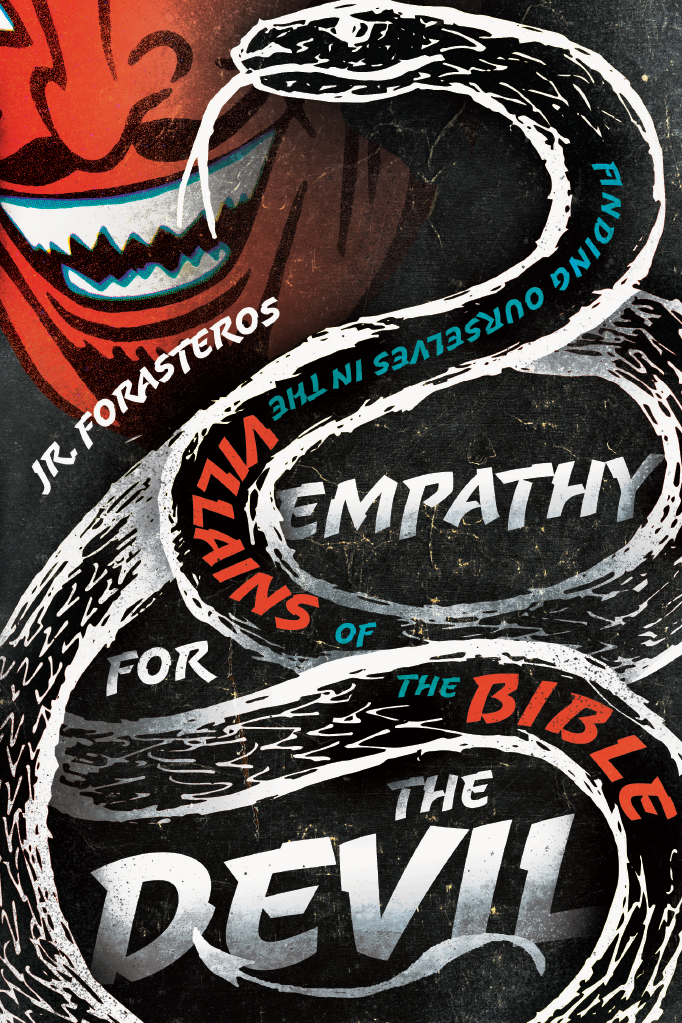
Empathy for the Devil

In the first ten minutes of reading Empathy for the Devil, I found myself in the midst of a real therapeutic breakthrough. JR Forasteros's take on the biblical Cain provides a great perspective on anger and the place it holds in our lives. This is just one of the seven biblical villains Forasteros examines - each with a narrative account and a chapter of practical contextualization - concluding with the devil himself. Each section brings to bear the realities of a gray world on characters we almost always view in black and white. By helping us to inhabit the lives and minds of these "others," we see ourselves in them and increase our empathy.

Each chapter contains really deft biblical analysis and the best of professional exegetical understanding, but also viscerally connects the reader to the people and places of the Bible. As a jaded seminary graduate, I'm well accustomed to reading books of this nature - putting a unique twist on an old story - with a bit of skepticism. They're often academically weak or oversimplified; Empathy for the Devil is neither. It's rigorous and challenging, while also providing space for the reader to ruminate and draw her own conclusions.

In full disclosure, I did receive a free advance copy of this book with a real implication (but not an actual request) that I review it. JR Forasteros is someone I know a little bit and like quite a lot - so, as much as I'd like to claim total neutrality, you'll have to take all of this with a grain of salt. I will say that our interactions have been largely online, along with one 90 minute conversation over coffee in the lobby of the Horizon League headquarters in Indianapolis.

That being said, this book provides the kind of practical invitation to conversation that could work well in any setting where people are comfortable enough to be honest and ask tough questions. From Intervarsity Press, it's likely to be marketed to a religious audience, but the cultural traction so many of these characters have even outside Christian faith should make it at least accessible to anyone interested in a hopeful, but sadly atypical perspective.

The final chapter, on Satan, is undoubtedly the best - which is saying something, since I was told as much about halfway through the book and was so enjoying myself I refused to believe it. Forasteros presents a difficult, tension-fraught subject with a calm and rational - even generous -
approach. It is indeed hard to empathize with the devil and not something any of us particularly wants to do. Yet Forasteros earns the benefit of the doubt with the preceding six chapters and narratively weaves a beautiful expression of grace and love into the midst of great tragedy in a way that both informs and engages.

I don't like to do these reviews without some critique, but there's not much really to pick at in Empathy for the Devil. If anything, though, this is the kind of book that requires a certain kind of audience. You could use it in a congregation, but you'd need an exceptionally open-minded, secure group of people to embrace it well. You could also bring it to book club, but it might dredge up some difficult subject matter if people don't know each other well enough (although, appropriately, one of the chapters talks about the different levels of interpersonal intimacy and how to navigate the awkward growth of community) - at the same time, it's just too rich and pertinent to ignore.

One of the most insidious problems in our world is the tendency we have to create "us" vs "them" dichotomies; Empathy for the Devil works against that it the most honest and grace-filled ways. I don't think there's any higher praise I could give it.

Thursday, October 12, 2017

Navel Gazing

My denomination, the Church of the Nazarene, has a PR wing, for lack of a better term. It's called NCN News and generally they put out some really good stuff. The people there work hard and I appreciate their effort.

Way back in the dark ages, when I was in seminary, I worked for Nazarene Compassionate Ministries, another arm of the denomination that coordinates all kinds of community ministry around the world. It's also the entity that helps directly in times of disaster (and we've had a lot of disasters lately, so if you still have more to give - www.ncm.org - is a great place to do it). Anyway, I found myself in a position to exorcise a pet peeve of mine.

When NCN News covered a disaster event, the accompanying story usually just described the Nazarenes and Nazarene congregations affected by the disaster. This makes sense on one level, since its news specifically for Nazarenes about Nazarenes - however, in the burgeoning internet age, Nazarenes were certainly not the only audience. It struck me as a bit short sighted to not include the total number of displaced, dead, or injured people along with our Nazarene numbers. Others agreed. It was a quick fix and I think it helps us keep focus on the larger picture of need and response in a disaster (after all, most of the people NCM helps aren't Nazarene anyway).

In a related case, over the past few years there's been no small amount of controversy over a directive from the President regarding salaried employees and working-hour requirements. I don't want to bog us down in detail, but the basic gist is that some companies were giving people titles and putting them on salary in order to work them more hours with no real responsibility that might traditionally accompany a salaried position - think assistant manager at [insert fast food chain here] working 80 hours a week for $30,000 a year (which is about $7.50 an hour).

The new rule raised the minimum salary for exempt employees (workers not eligible for overtime) to somewhere around $48,000 a year - meaning people making under that amount, even if they are salaried, are still owed overtime pay. Now pastors are always overworked and underpaid, but the federal government has always assumed those ridiculous working conditions come with the job (since it is a divine calling and all) - so clergy haven't been included in any of these rules.

A court recently knocked down the raise in minimum salary and the battle will undoubtedly continue.

My beef was with how the Church of the Nazarene talked about this rule and it's journey through the legal system. It's obviously of import, since congregations are typically cash strapped and do often rely on salaried employees, even beyond clergy. I'm not entirely sure if this was something NCN News covered themselves or relied on the pensions or finance departments to keep tabs on - regardless, whenever the subject came up, it was always as bad news. The raise in minimums will hurt churches! Look out for this new rule! It may not have been so overt, but the negative coverage was always right there under the surface.

When the rule was halted by the courts, we got this piece: http://www.nazarene.org/article/overtime-rule-could-have-affected-us-churches-struck-down - a reflection of relief, if nothing else. It just struck me as a little self-interested, especially for a denomination built upon work with and among the poor, that the end of a rule that would bring much needed financial help to hard-working, but low income people would be met with relief.

As I said, this wouldn't really apply to clergy, so those affected would be office staff or custodians, perhaps daycare staff (I'm not entirely up on the specifics). I can't imagine the population of people who are both salaried employees AND regularly putting in more than 40 hours a week as non-clergy in the employ of a Nazarene congregation is all that big. It's certainly dwarfed by the many people this rule was designed to help. (And it avoids entirely the question of why congregations would be upset paying low-income employees for overtime they earned anyway!)

I feel a little bad using this as an example, but I do think it's a good one. One of the great problems for Christians is just how insulated we tend to be. We get so caught up in the programs and inner-workings of our congregations and our denominations that we're not engaged (or not as engaged as we should be) with the world around us. I know employees of a denominational headquarters are far more involved with the inner workings by necessity, but there's also a responsibility for leadership, for pointing us out of our bubble and towards the needs of the world.

We get too caught up navel-gazing and we miss the world we're called to be deeply invested in. We spend our time trying to be different, but we end up just being separate. We can do better - all of us - and I hope we will.

Thursday, August 17, 2017

Hate, Conscience, History, and Ugly Truth

I'm floored by how effective these racist displays of violence and hate seem to be at accomplishing the exact opposite of their intentions. Granted, lots of hate-filled racists are being emboldened by these moves and the words of the President, but it's also become an impetus for the removal of statues all over the South, in the same way the Charleston shootings precipitated the removal of the confederate flag from the South Carolina statehouse. While the Republican Party does still have a troubling racist element in its ranks, for the first time in my memory it's leaders are largely stepping up to the plate to denounce hatred, bigotry, and violence.

This all has to be said in the context of exasperation that we're in 2017 and this is what we're happy about. It shouldn't take 150 years to get to this point, but we are where we are. The words that people like Lindsay Graham, who's accent sounds like a caricature ripped from Django Unchained, use to condemn the President of the United States from his own party are pretty amazing. The critique that these words mean less than the votes these GOP leaders tend to cast in the opposite direction is entirely true, but the words aren't meaningless; it's progress, albeit small.

We like to think that the world which changes so quickly in some areas, should easily be transformed by truth and justice. It should. It really should, but it isn't. Love is patience; it takes time - painful, frustrating, unjust time. And despite the ease with which we see war and violence and hatred and racism rear its head around the world, there are plenty of signs that love does change people. It's not much, but it's something. Even if this show of conscience is, in its skeptical extreme, entirely politically motivated, the very fact that politics is playing in this direction is, sadly, progress for the United States.

For many white people, it seems like things are getting worse, but the reality is we've just largely isolated ourselves from the national racial tension, ignored it, and avoided the discussion that is now being thrust before us. The reality is, most of us haven't faced up to the prejudice that lives inside each of us because we just haven't had to do it.

That prejudice is real. The implicit bias test, conducted by Harvard researchers, shows that just about every person - black and white - has at least a subconscious bias against dark skin. We react differently to black people than to white people. The cliche shortening of breath, clutching of purse, walking to the other side of the road is not perception, but reality. Regardless of how we act, think, or speak, we should be able to say, "Sometimes, my first reaction is not one I'm proud of."

The difference between that - between you and me - and those lunatics rioting in Charlottesville is that they lean into it, they embrace it.
While I do believe the world is changing - and for the better - there is a reality with which we must deal before we can move on. There will always be prejudice; there will always be outsiders and "other," at least for the forseeable future - but the battle of prejudice doesn't have to be about race. That can change, but it's got to be dealt with.

Rarely, if ever, in the history of civilization, did the losing side get to keep its culture and identity relatively unchecked. There have been thousands of volumes written that analyze the aftermath of the Civil War, but the truth is, enforcing a culture change, resultant from war,
would've been a more difficult task than a still fledgling nation was willing to bear. The South got left with a don't ask/don't tell racial policy for generations as the can was kicked down the road.

Southern culture has made 150 years of gradual improvement - much as was expected (and hoped) when the nation left it to its own devices - but that underlying culture of racial superiority still exists in some measure and it's not just going to walk out the door on its own. I'm a student of history (literally - I've got a degree to prove it), more than anything I rue our current inability to understand historical context.
Well, I guess I thought I rued that more than anything - now it appears, even worse is the understanding of historical context poorly.


There might - and I say 'might' with the generosity possible understanding that this is merely hypothetical and not at all reflective of reality - be some case for statues or monuments erected in the 1860's, commemorating fallen loved ones with historically and culturally appropriate descriptors. That's an at least defensible use of historical context. When it comes to statues and memorials erected during the most intense periods of racial strife, celebrating "heroes" with incendiary and inaccurate descriptors, it's hard to make any sort of respectable defense. Real historical context, at least in the case of the vast majority of southern monuments, includes a lot of facts that don't appear on the plaques. That's reality, too.

Robert E Lee may have been a paragon of manners and civilized society, acting in accordance with a disciplined code of perceived honor, especially in contrast to many of the other less educated, less refined personalities we associate with the confederacy. That doesn't make him a saint. Maybe Lee really did fight for the South entirely because of his belief in States' Rights, and his association with those virulent racists was simply because of a common foe - that's best case scenario, right? Still, he didn't free his slaves to prove his position - and there's certainly evidence to the counter the long-held perception of the man that's worth looking at.

In the end, though, even Lee felt holding on to the culture and memory of the Confederacy was detrimental to the healing of a nation. He specifically spoke out against the kind of monuments so many towns would one day dedicate to and of him. The families of these "heroes" don't want the statues to remain, neither do the majority of the populations in most of the municipalities where they reside.

Some cities have changed the plaques to better represent the reality of the Civil War; sometimes they've added statues of civil rights heroes alongside to tell a more fleshed out story of our nation's history. There are ways to do this that really do keep history front and center, but which also avoid the whitewashing (now there's a word that's right on the nose, am I right?) or avoidance of the realities of race in the US.

I can't finish this overlong post, though, without at least mentioning the difficulties these kinds of considerations create for our future. People have gotten mad at Trump for asking if George Washington is next. I'm not sure why - it's a fair question. The man had no more forward-thinking or enlightened opinions about slavery than General Lee - he was a generally selfish and belligerent guy who was unfairly lionized due to some accidents of timing and his refusal to become king.

That doesn't make George Washington a "bad" guy - although I wouldn't want him as a role model to my kids. He's like just about everyone else in history: unfailingly human. We've got few true saints out there - and they'll be the first to argue there's none. We've got no real saints when it comes to people of power and influence - those things just don't go hand in hand.

I'll admit its difficult. Princeton has been dealing with the legacy of Woodrow Wilson for years now. The guy was smart - PhD, Ivy League President, Governor, President - he served through WWI and is generally listed among the 5 or 10 best Presidents we've ever had. He was also pretty darn racist, in overt and activist ways - an above-average racist at a time when average (or even below average) was still pretty darn racist. How do we deal with people who aren't just imperfect, but seriously flawed?

I suspect old George Washington gets a pass because we all agree on the value of the country he helped to found, we've all bought into the mythos well enough to leave things be. Would the mythos around Washington or Jefferson (or, God-forbid, Andrew Jackson) be any different than that surrounding Lee if Native Americans had survived in the same numbers and with the same voice as African Americans? Or if they'd simply lived a hundred years later?

I'm in total support of our difficult embrace of the racial problems in this country. Let's take down the statues and take a second look at the history books and the mythology and the stories we take for granted about who we are. We just can't stop when our liberal comfort is comfort is challenged or our white guilt starts to fade.

The world is a mess. Life is a mess. We are a mess. The solutions will not be easy or pretty or fun. We're gonna have to be okay with that and we're going to have to sacrifice as much, if not more, than what we're asking "those others" to sacrifice right now.

Tuesday, April 25, 2017

Preach, Pray, or Die

At the close of business for our most recent District Assembly (the annual meeting of our local group of congregations in the Church of the Nazarene) our District Superintendent invited, seemingly unprompted, his father to close the gathering with prayer. His father made the comment that when he joined the Church of the Nazarene someone told him Nazarenes need always be prepared "to pray, preach, or die." It drew great laughs, which proved even more amusing as the scheduled preacher for the service that evening lost his voice and our DS had to fill in on very short notice.

I appreciated the statement, though, because it speaks to an urgency that, to me, is the only hallmark of the evangelical movement. I know much has been made of the cultural, political, even theological benchmarks for such a title, but if we stay true to the word itself - which literally means "the bearing of good news." Granted, even the dictionary adds some rather partisan and particular details to the definition of the word, but I'm still willing to claim history on my side.

It's that urgency - not that the world is coming to an end and we need to covert as many as possible, but that this gospel, this good news, is important and there's an urgency to take it seriously in our decisions and lives - that appeals to me so greatly. I'm not sure there are any "official" evangelical groups who'd want me as a member after theological review, but I'll claim that affinity as long as I live (I hope) strictly for that reason: I seek to bear the Good News with not just my words, but with my actions, commitments, and decisions, with great seriousness.

I believe one of the hallmarks of that seriousness is the willingness to sacrifice, something perhaps many cultural evangelicals (and certainly the movement at large) has forgotten - with the general response to outrage being a demanding of rights rather than a surrender of comfort. I don't hear anyone deny that a life in imitation of Christ demands sacrifice, but see very few actively seeking ways to do so.

Granted, it might just be perspective. I can recount many intentional sacrifices me and my family have made in honest pursuit of embodying the gospel, but I could see strong critiques coming my way about the privilege and comfort with which we live. I don't mean my criticism of evangelicalism to be from a position of judgement, but I do spy a lack of intention. We, as a people (American evangelicals, for sure, but probable Western Christianity at large), are afraid to suffer for our beliefs. We might be prepared to preach or pray (although that could be less and less true as time goes on, probably no coincidence), but we are very reticent to die (even metaphorically).

I've been giving conservatives a bit of a hard time thus far, so it's time to turn the tables a bit. I was thinking of this statement a lot during our District Assembly, while also hearing many reports from the Young Clergy Conference that had taken place the week before. Over 100 Nazarene clergy under the age of forty had gathered in Oklahoma City to listen, learn, and dialogue in support of each other. It seems like a super cool event, one I am very sorry to have missed and hope to attend next year (also one I am very supportive of, please don't get me wrong). It's also a group, as is true of just about any "young" contingent from anywhere, tends to be more progressive (in the true sense of 'moving forward' and not the modern sense of 'a weasel word to replace liberal').

The most common description I heard of the conference was that it was a safe space for young clergy to discuss issues that might be problematic elsewhere. I agree and affirm that this is important - and, having been young once, understand the very real ramifications of such difficult talk on someone early in their career and with a tenuous grip on finances. The wrong reputation, earned or otherwise, can basically end a clergy career, at least in the Church of the Nazarene; it's career path without much of a safety net.

The second most common thing I heard from the event was the importance of a message from Jon Middendorf (the host pastor and someone who used to be the face of Nazarene young clergy, you know, when he was young). It was relayed to me that he challenged these young people not to leave the denomination when things got difficult, but to "stay and fight," but not with ways and means the world might associate with fighting, but fighting in imitation of Christ, with love and sacrifice.

It's a powerful message, but as I heard it and the rest of the event recounted, it struck me that many were not really making the connection between "fighting" and sacrifice. Issues discussed at that conference and the perspective of the younger generation in the Church of the Nazarene are vitally important, although perhaps uncomfortable for the denomination at large, often, despite rhetoric to the contrary, downright unwelcome. Making an evangelical stand might just cost us - maybe more than we're prepared or feel safe sacrificing.

This young generation (which, in this context is still the millenials, although the real "young" generation is probably already the one after that*) has grown up in a very security-conscious environment. It's second nature to triple check our protective measures before venturing any risk at all. This is great for surviving to adulthood without debilitating injury or unsightly scarring, but it makes sacrifice difficult. A generation told the world was their oyster only to grow up and become the first generation in US history to not have things better than their parents is difficult - even moreso when they were raised on safety.

What I'm saying is it's easy to retreat, to only risk and sacrifice manageable chunks of our lives (and this certainly applies to me, too). Today's future leaders need to hear that voice from today's former leaders that says "Always be prepared to pray, preach, or die," and we need to pay extra close attention to that last part and all of its implications for the world in which we live. Die might not mean martyrdom of our physical bodies, but it might just mean martyrdom of the life to which we've become accustomed.


*I should also say, in full disclosure, that I am NOT among this group. Most dating of millenials starts with January of 1982, which I missed by a month, but more importantly, I just don't fit any of the typical definitions culturally or in terms of mindset. I am part of what I tend to dub "the lost generation," a real brief transition time in between cultural groups, where we feel as unlike Generation X as we do millenials -
perhaps the best hallmark of which is the internet. We were fully formed adults before the internet really became a regular part of our lives,
but it happened early enough that we're generally native to the technology - although never in ways that millenials or the following generation tends to be. All that to say - I'm speaking critically of a group of which I, myself, am not a part, so please take what I have to say with appropriate levels of salt.

Tuesday, January 31, 2017

Not Everything is Partisan

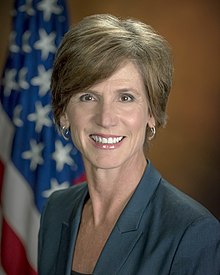
I am not saying the acting Attorney General, Sally Yates, refused to defend the Immigration Ban strictly for reasons of legality; what I am saying is that there is no reason on God's green Earth to assume she did. There is no reason for the media and those opposed to Trump to hold her up as some martyr for the cause and turn the issue partisan.

It seems pretty clear from her statement that Yates was personally opposed to the ban, but so is the vast majority of American - even a large part of Trump's constituency. The Executive Order was so broad and poorly defined that all sorts of legal residents are caught up in the web - if you need a source for that, check out the statements of pretty much every Senator, Governor, and sane person in the country. There's probably a solid legal precedent to do what Trump was trying to do; he just didn't do it well.

The job of an Attorney General or any District Attorney or State's Attorney, is to determine where to place the scare and valuable resources of their office. They decide which cases are worth fighting and which ones aren't. That's their job. Yes, you can say Yates was an Obama appointee, but that was after a career of non-partisan service in the Justice Department for a variety of Presidents. At some point, in gov't positions, you can't get promoted farther without a Presidential appointment.

She made a determination about the legality of the ban based on her expertise in making such decisions - decisions not unlike many Republican members of Congress made for themselves. It's not some protest against Trump; it's called doing her job. Does it align with her personal beliefs? Maybe; we don't know. Odds are that it does, but there's no reason, here, to make it into a partisan fight - that just plays into the hands of people you're trying to thwart.

I've come to believe that no one with power in Washington actually wants to change anything. They don't want peace. Rancor and division is what keeps them employed, on the news, and in business. They're (and this includes activists, media, and whoever else has their life and livelihood wrapped up in political games) just trying to score points for their side to better obtain or secure power.

Should Trump have fired her? That's complicated only because of the Department where she works. Any other Executive employee, I'd say, "Yes," absolutely. They all work to help Trump do his job, so he should be able to replace them at any time. The Department of Justice is a little different in that it's sole purpose is to make legal decisions about how to spend resources in the service of "justice." Presidents appoint people they know and trust presumably because they are in greater alignment on those issues, but it's also a dangerous place to meddle, because it's very easy for a President to, or to appear to, be tipping the scales with alternative motivations.

One of the biggest criticisms of the Eric Holder Justice Department, especially early on in the Obama Administration, was how political his decisions seemed to be. That's always something to avoid. Of course a President wants their Executive Orders, laws, pronouncements, and decisions defended as fervently as possible, but, at some point, they do have to let the department do its job.

Even so, I wouldn't say Trump's move was partisan so much, either, as personal. It's been proven, in the last few days, that the GOP is not entirely on board with this move; it's not an issue that divides along party lines. Jumping to conclusions about back and forth as if one side is the enemy doesn't help anything actually get accomplished. We need to take issues on their own merits to hold down the rancor and heal divisions.

Opposing Trump just because he's a perceived enemy is paying back precisely what the GOP did to Obama for most of his time in office. It's fighting a person, rather than dealing with issues. I think this ban is silly and stupid. I think the Executive Order imposing the ban was overly broad for its stated purpose, poorly conceived, and a waste of time, but I don't see it as an avenue for fighting a left-right war. When we treat it that way, we've done ourselves, and the country, a grave disservice.

Tuesday, December 06, 2016

I Love Fake News

Maybe this has cycled out of the public consciousness in the weeks since the election, but I saw another story about it today, so why not wade in, right? I like fake news. I don't think it's a problem for anyone, except maybe actual journalists and their employers. The problem is us. People read "news" looking to have their own ideas reinforced and bolstered, seeking support for their "team" in this political game we call life. No one bother to double check a source or do their own research - we just decide if something makes sense and go with it.

If you really look at this "fake news" stuff, yeah there's some talk that it's being secretly funded by foreign governments to mess with US elections, but for the most part, it's a product of economic disparity in a globalized world. Most of this stuff comes from shops set up in rural Macedonia, where low-level gangsters pay school children to write (or even just copy and paste) stories about the US elections in their off hours. With the advent of online advertising, you don't need any actual substance, just a headline click-baity enough to draw interest. People get paid for the eyeballs on the ads - that's all that matters. Fake news is no different than kitten videos or clever memes - it's just content meant to make someone money.

It might be poor satire, but it's certainly inventive - well, some of it - the best fake news is genuinely creative and clever, people make up stories that other people want to read. We live in a world where almost everyone universally doubts the bias of the press, even historic, well-established journalistic brands - even if a fake news site bills itself as real news, people are conditioned not to trust media. Heck, even fake news sites like the Onion that are overtly up-front about the fakeness of their news still end up getting retweeted by actual elected officials.

The problem is not some masquerading pseudo-journalist who's really a fourth grader in Gostivar (look it up); the problem is us. The great Western Individualism that we've come to know and love (and claim is the reason much of those who hate us hate us) has led us to be self-absorbed egotists, assuming that our common sense is the closet approximation to truth. We're also lazy. It doesn't take much in this internet age to research a story and then utilize that profound common sense with, you know, a basic level of information. It's the same internet these fake news sites mine to figure out what stories we might click on and then provide them to us.

If you listen to any of the numerous reporting pieces on fake news, you can hear interviews with these kids and their bosses. They're not interested in shaping US policy (although they take pride in the fact that they are), they just want to make money. If people click on Trump stories, they'll write Trump stories. It's industrious and inventive and intelligent - all things you need to be to avoid falling for this kind of news.

I hear all this hand-wringing from people lamenting the place fake news held in the recent election and I've heard nothing about the responsibility of a society to educate its people and motivate them to perform basic functions. It's not like you have to drive down to some college library to look up economic charts from the past five years - you type a couple words into google and you click on a few "about us" tabs and then you click on google a few more times to verify the information you're finding.

Yeah, it's not perfect, but the more information one has the better capable we are of making real, informed choices. Not doing the work to be informed is our fault, not someone else's.

I love fake news. If I'd had time and a little more internet marketing savvy, it sounds like a fun way to make some money. I like writing. I'm pretty creative. I'm pretty knowledgeable about the political landscape. I bet I'd be really good at it. About ten years ago, when I had a break from grad school, I'd go onto Yahoo Answers and write long, details answers to questions that were entirely false. For example, one girl was trying to get help with her homework on Romeo and Juliet and I described in 1500 words, the plot of A Streetcar Named Desire (I just used the names Romeo and Juliet instead of Stanley and Stella).

There's really no excuse for believing something just because it sounds good. I imagine it has to do with our aversion to suffering - we only work as much as we have to work, and we try to avoid it as much as possible. Talk to a middle school teacher sometime - one of the most difficult things to teach is research - good research - it's too easy to get into a mindset of "it says this somewhere" and "their opinions is as valid as anyone else's." I don't disagree with the opinion part, but there's a certain level of knowledge that's assumed. Opinions are equally valid when they come from the same level of knowledge. My opinions on the origin of black holes is not nearly as valid as that of Neil DeGrasse Tyson. If I were ever going to disagree with him, I'd have to do a lot of actual work to gain the kind of knowledge I'd need to do so.

That or I could just tweet some fake news at him.

Sadly, in the court of public opinion, that would probably be enough to win the argument. But that's not my fault; it's the fault of all those people who believe me. Don't penalize creative people exercising their gifts for a better economic future. Let's pull the plank out of our own eye before we go after the speck in someone else's. I feel like that's good advice I heard somewhere once.

Tuesday, October 25, 2016

Assertive Privilege

I think we've all had moments where we desired for recognition. I want the teacher to put my art work on the wall. I want to be on that committee. I want to be considered for that award. Obviously we shouldn't understand our worth based on external recognition, but at times its helpful to place ourselves in the social hierarchy, to not get too big a head (or to further inflate the one we've already got).

I think we're more aware these days of privilege - the notion that straight, white men are more likely to end up getting chosen or recognized or empowered when these choices are made. It's part of the reason why CEO's and politicians and Nobel Prize winners are primarily part of these groups. This kind of self-reflection is often part of the equation when we engage in such decisions - do I belong on this panel? Do I really deserve this recognition? Is there some voice or perspective we're going to miss if I serve here?

It's wonderful progress, even if it is hard, sometimes, to answer those questions in the right way. We do still, generally, want recognition. Sometimes we even deserve it. But the question of who's most deserving or the "right" choice is real difficult to parse. You've got two parties responsible for parsing things out - are the people in charge considering the effects of privilege in the same way I am?

What often trips me up, though, is the second, more often hidden layer of privilege. It's not just that being a straight, white male gives me a leg up; culture and society also teach me to ask without guilt when I think I deserve recognition. If I've gone through all the appropriate mental gymnastics and conclude this is something I should and want to do, I'm far more prone to ask or volunteer than someone who doesn't enjoy my privilege.

I wonder how often we miss out on great contributions because there's a societal expectation for certain people to pursue opportunities and others to be invited. Now this is a little easier for me, since I tend to have a pretty low evaluation of myself and avoid putting myself out there to avoid rejection, but even if I believe that I am the best person for a position - after considering those in marginalized, hidden, or overlooked groups - it's become a discipline (one I don't think I exercise very well) to sit back and, if its going to happen, let opportunities come to me.

Men, particularly educated, white men, are taught to sell themselves. I'm not sure that's a natural inclination, at least not for me. If it's an evolutionary, survival-of-the-fittest quality, I might be in trouble. I think it's far more likely assertiveness is learned, or at the very least, cultivated sporadically. Those with the most privilege are also those who've most been taught to sell themselves. The people who could most benefit from assertiveness are those who are more likely to have it trained or punished or intimidated out of them over time.

I'm not really sure what the point of this post is, other than to highlight something I've been particular noticing recently. For those of us used to this system, it feels so natural it's often hard to notice. It would be very good if we did, though. We need to recognize the ways in which our mores and patterns have been created the benefit some more than others. It behooves us to actively change the way things work rather than expect people primed for an underprivileged place in the system to adapt.

Just because things are the way they are, doesn't mean they always have to be.

Thursday, September 08, 2016

Tortorella and the Ownership of Truth

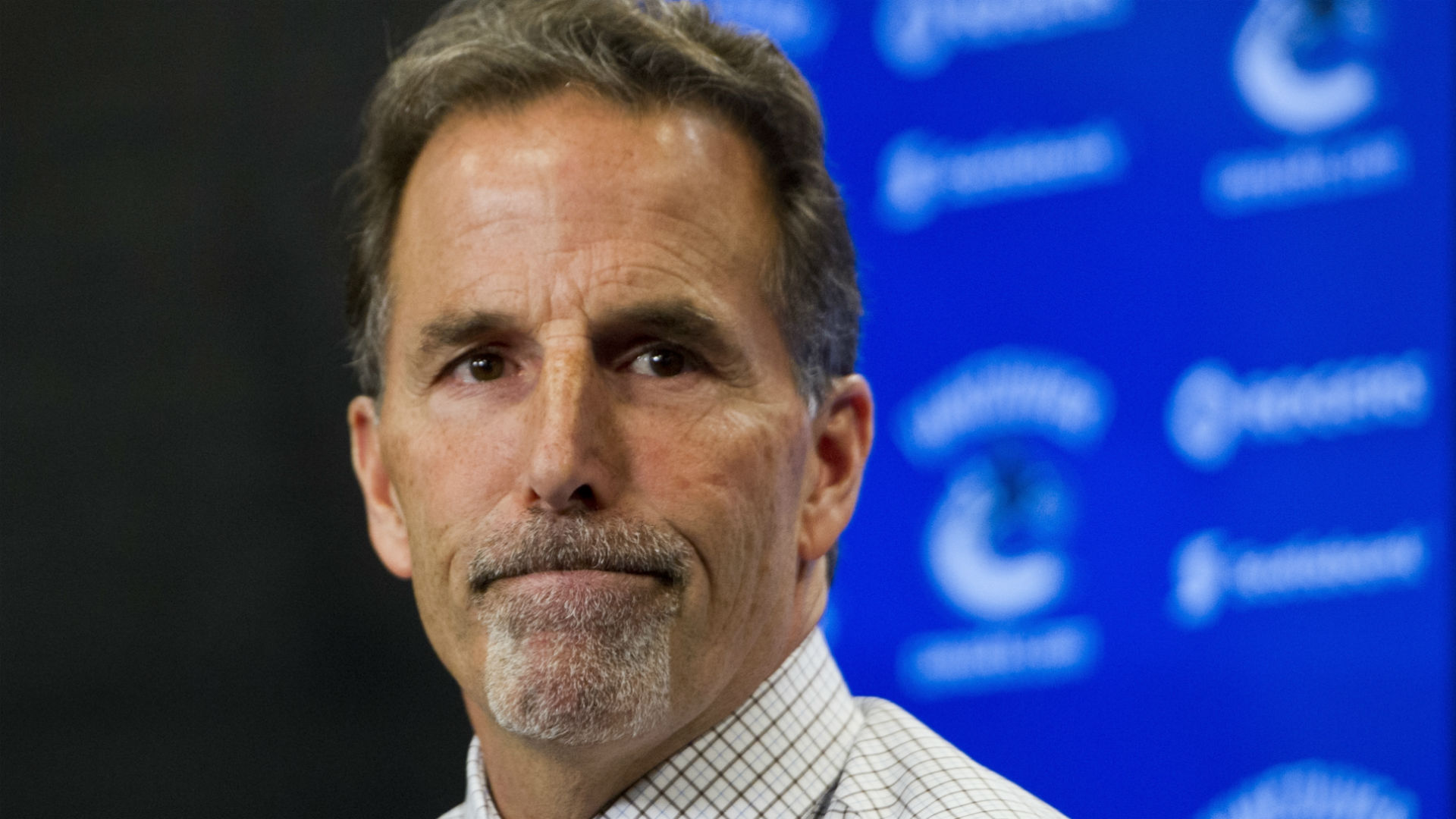
When I wrote about Colin Kaepernick last week, I did not expect to see the living embodiment of the difficulty I explained in full media view just a few days later. But low and behold, let me present US National Hockey Team Head Coach, John Tortorella. When asked, as any US coach of anything has been the last few weeks, about how he'd handle players not standing for the national anthem, he responded, "If any of my players sit on the bench for the national anthem, they will sit there the rest of the game."

I'm not opposed to the expression of one's views - just last night the Washington Spirit of the pro women's soccer league changed their pregame time schedule to play the anthem before visiting player, Megan Rapinoe, who has knelt in solidarity and protest at past matches, would be on the field. That move makes me uncomfortable, for many of the reasons I'll explain below, but it's certainly within their rights. Tortorella, though, doubled down on his comments the next day with a longer explanation that serves to illustrate the real problem behind this issue.


"I'll tell you right now. Try to understand me. I'm not criticizing anybody for stepping up and putting their thoughts out there about things. I'm the furthest thing away from being anything political. No chance I'm involved in that stuff."

So, here he's saying that his opposition to and potential punishment of a political protest is not, in any way, political. The logic's a bit troubling, but let's say hockey has not always been associated with master logicians. Tortorella went on to explain this further:

"Listen, we're in a great country because we can express ourselves. And I am not against expressing yourselves. That's what's great about our country. We can do that. But when there are men and women that give their lives for their flag, for their anthem, have given their lives, continue to put themselves on the line with our services for our flag, for our anthem, families that have been disrupted, traumatic physical injuries, traumatic mental injuries for these people that give us the opportunity to do the things we want to do, there's no chance an anthem and a flag should come into any type of situation where you're trying to make a point. It is probably the most disrespectful thing you can do as a U.S. citizen is to bring that in. Because that's our symbol. All for [expressing] yourself. That's what's so great. Everybody does. But no chance when it comes to the flag and the anthem. No chance."

Tortorella's son is on his third overseas deployment as an Army Ranger. The coach speaks from and for a certain culture, prominent in the US, and I have no problem with the expression of his opinion. I do have some issue with how he's attempting to stand outside the conflict with this view. He's said he's not being political because the flag stands for something and should be above protest and political statement.

In essence, Tortorella is trying to control the truth.

In the other post (which I suggest you read before digging into this one), I talked about how perspective and our ability to understand the limitations of our perspective, are essential, not only to understanding Colin Kaepernick and Black Lives Matter, but also just for interaction in a diverse world, regardless of topic. In the end, it's all about who controls the truth.

Tortorella wants to put the flag and the anthem outside the bounds of protest, but that denudes the concept of protest itself. As much as I hate to give him credit for something, Stephen A Smith made a good comment on the radio the other day - protest is something that forces you to take sides. It presents an issue. He compared Kaepernick's protest to the opening of 2016 ESPYs, where basketball stars called for a pretty generic end to violence - one that most people would be hard-pressed to disagree with.

But there's real danger in determining where protest can happen and how. This is what I mean by controlling the truth. Tortorella would have us believe that there is just one definition or understanding of the flag and the national anthem, by implication he's saying there is only one understanding, one way to view the US military. He's connecting these things to a specific view of nationalism that separates the nation from its constituent parts and sets it aside as beyond criticism.

Let me put it differently, with a silly, impossible example. If Congress unanimously passed a bill stating all red-heads should be tortured to death in the public square, the President signed the bill into law, and the Supreme Court unanimously ruled it Constitutional, it would still be widely criticized. I suspect, even in a situation like the impossible one above, though, there would still be a sizable percentage of the US population that would argue, "there's nothing wrong with America, just the people running it."

This is nationalism. It's the holding up of the nation as an ideal. Nebulous categories like freedom or equality get embodied within the nation, thus making criticism of, in this case, the United States, tantamount to criticism of those beloved ideals.

Now, there's nothing wrong with loving one's country, or even associating it with certain ideals - the problem lies in then assuming, believing, and acting as if this perspective is, in fact, universal. This is what Tortorella is doing, saying you can't protest because the very foundation of this protest is untrue.

Kaepernick, Rapinoe, and others wouldn't argue about the higher ideals the US is supposed to represent, just that the nation has failed to live up to those ideals. They're questioning the appropriateness of nationalism in the face of a flawed nation. That is certainly a subject worthy of debate. There are lots of valid points on both sides. While I'm certainly in agreement with Kaepernick and others that systems of accountability in the US are broken, especially when it comes to issues of race, I'm not entirely comfortable with the way this protest is being executed or framed. I don't think I have a "side," necessarily - and I feel a whole lot of people are in the same boat.*

At the same time, I'm very uncomfortable with these kinds of words coming from the coach of Team USA - not because I necessarily disagree with his opinion, but because he's essentially invalidating and insulting the actual and real perspective of fellow US citizens. I'd be far less conflicted if he were just referring to the Columbus Blue Jackets, the pro team he also coaches. Like the Washington Spirit, that's a private organization that can decide for itself how to form and express opinions. This team is representing the whole country, but the coach fails to recognize how to respectfully disagree.

I don't think Tortorella is doing any of this on purpose. He's expressing his opinion and trying to represent himself as best he can. I'd say it's more an issue of self-awareness, of not having the distance to understand the larger picture into which he's been (likely unwillingly) thrust. I don't want to demean or villainize him with anything I've said (or will say); I'm hoping to just use his words as example.

This kind of talk is on the road to fascism. Now, like any good continuum, everything we say is "on the road" to fascism and certain parts of that road are completely safe, so it's really figuring out where we're comfortable standing that's important. Fascism is, essentially, the extension of nationalism to a person. Kim Jon Un might give lip service to communism, but he's really running a Fascist state - that's why his father and grandfather have been deified and why his picture hangs everywhere. He's trying to make himself synonymous with the nation, the same way nationalism makes freedom or equality or the sacrifice of soldiers synonymous with the nation - it makes him far more immune to criticism.

It becomes, "If you oppose me, you oppose the nation," or "If you oppose me, you are not patriotic." It's basically shifting the argument in your favor; if a demagogue is good enough at it, you end up with a Hitler or a Mussolini, who can turn a people's fear of being unpatriotic into complicity in some of the most horrible atrocities of all time.

Now, I say the "road to" fascism because no one is going to be Hitler. Even if Donald Trump (who has no qualms with his place on the road to fascism) were to become President, there's no conceivable scenario where he'd be able to convince a sizeable percentage of the population that he's equivalent to the nation, let along to freedom or equality. He's a minor demagogue on the stage of history, but this campaign is an example of how people might be convinced to support things they'd otherwise oppose when the rhetoric of security or patriotism is invoked.

Protesting during the national anthem is to Trump what Trump is to Hitler. It's small potatoes. I'm not trying to gin up hysteria or anything, just hoping to make us all think a little bit. Controlling the means of protest is a power move. In this case, it comes from lack of perspective; I don't think its malicious or intentional. But the fact that this sort of nationalistic response is so natural and unintentional for so many is worth considering.

In fascism the state can do no wrong, specifically the head of state. We're in no danger of that here - most people hate the head of state, no matter who it is, and the mechanism of government are even worse. I do wonder, though, if we're close to making "the military," or more specifically "the troops," into a type of demagogue. Sometimes it feels that "support the troops" is so ubiquitous, like saying "how's it going" when you pass someone, that no one ever stops to think what it means.

This is how Tortorella defended his position, right? It's what many of these nationalistic debates boil down to: you need to respect (this country, my position, the flag, the anthem, etc) because people fought and died for it. When people we know and love are far away and potentially in danger, we want to justify that unqualified sacrifice as strongly as possible. Everything we're doing has to be good or right or important because people are killing and dying for it.

The reality, though, is that the complexity of war, politics, and international relations means that the issues surrounding soldiers, freedom, and equality just aren't as simple as that narrative that comforts those enduring such sacrifice. You rarely see actual soldiers spouting off these opinions - in fact many have come to Kaepernick's defense, even as they disagree with his opinion - they intensely understand the complexity of what they do. It's usually those people without such experience who try to make things simple, either/or, black and white.

This is where ownership of the truth is so important. And while I used the example of soldiers and families - the same danger is just as present with activists for racial justice. It's just as possible to simplify the racial disparities of police violence to "they're shooting black people for sport," or "race war." Things are just more complicated than we can handle when people we know and love are involved.

We have to be careful to recognize we don't own the truth. Tortorella shouldn't have to be quiet, no matter how offended you are by his words. I do think we have to be aware of how we act upon those convictions. It's a real difficult issue to parse in this specific context, because while the two "sides" are saying very different things, they're both operating from nationalism.

Kaepernick is saying because he believes that the United States stands for justice, freedom, and equality, he's protesting how different the reality is from that ideal. Tortorella is saying that because the United States stands for justice, freedom, and equality, the celebration of those ideals is the wrong place to point out how much or how often the nation diverges from them.

But, as much as it seems like a small thing, there really is a big, important difference between saying, "this is the wrong time/place/way to protest," and saying, "you can't protest in this time/place/way." That comes down to ownership of truth - and truth belongs to no individual or side. As much as don't like how messy it makes things, truth is really something we can only figure out together. We own it collectively or we don't own it at all.


*This also makes for a really awkward decision on the part of other athletes. Perhaps they want to express a similar protest in a different way. They're now choosing between what looks like ignoring the issue or dishonoring the country. It's a no-win for everybody else. That doesn't come from any decision any individual made, but by the way we polarize every issue. This is largely what I was saying in the first post on Kaepernick. We have to do better than right/wrong, black/white stuff. The world is more complex than that and important issue are worth more than the marginalization that comes with it.

Tuesday, August 30, 2016

Anthems and Antagonism

I write quite a bit about being a Christian in the midst of American patriotism and the effects of various identities and allegiances on life and faith. I'm not sure I need to go into that much here today - if you want you can read a relatively recent post that touches on the subject.

I do want to offer some personal reflections on the topic of the national anthem as its been in the news a bit this week. San Francisco 49ers quarterback, Colin Kaepernick was photographed sitting down for the national anthem at a recent preseason game. When asked, he said he was doing so as a protest to racial inequalities that exist in the US, specifically to highlight accountability that's not taking place.


Here's a pretty basic summary
.

There have been heaps of comments from people all over the political and cultural map making comments about what Kaepernick should do - some very supportive, some in opposition - still others who seem to just enjoy hearing themselves speak. For me, I think those who comment on the situation as a whole and not on one person or one action have the most reasoned and agreeable positions. Here are two I resonate with: Kareem Abdul-Jabbar and Jim Wright, a retired member of the US Navy. Both men eschew comment on Kaepernick or his protest and instead focus on the broader subject of protest and patriotism in the US. This seems much more healthy.

As someone who does not feel comfortable pledging allegiance to a nation for a host of (oft discussed) religious reasons, what struck me from this episode was how often people wanted to give Kaepernick advice on decorum. Probably more often than not in those opinion pieces, the author ends up saying, "I can respect his anger and his desire to protest, but this isn't the way to do it; he should still honor the flag."

It's odd that these statements both me, because it's essentially what I've decided to do. When I'm at an occasion where the pledge of allegiance is recited or the national anthem played, I generally stand, with my hands behind my back and my head bowed. I don't feel comfortable participating in such displays of nationalism, but I understand the moment is important for those around me, even if I wish it were less so. I don't want to be a distraction or detraction from what is an important ritual for others.

I guess that's the part that makes me leery of this "advice" Kaepernick is getting. It's essentially sympathetic people expressing their desire not to make waves during patriotic events. I get the sentiment and they're certainly entitled to an opinion, but isn't that the point of protest? To make a scene, to unnerve people you feel to be too comfortable? A protest is, by definition, a disruption.

As far as protests go, this was a pretty quiet one. Kaepernick isn't a starting QB. He's no longer the star of the team. What's more he never sought out a platform to make a public statement. He's embraced the opportunity, sure, but only because he was asked. Tommie Smith and John Carlos, the sprinters of the famous black glove protest at the 1968 Olympics are, now, generally lauded as heroes (even if they were kicked out of the Olympics at the time) for a much more obvious and disruptive protest. I can't imagine it's Kaepernick's failure to stand up that's really a problem for most people.

Symbols are tricky. The flag and the anthem and so many other "patriotic" things mean something to people - they represent something more than themselves (which is the definition of symbol). When things mean a lot to us, it's real difficult for us to imagine they mean something else to someone else - or worse: nothing at all.

This is why I try so hard to safeguard my identity. It's easy for us to get our own selves, our own sense of worth and rightness tied up in the symbols we value. If we see ourselves as people of sacrifice and loyalty and hard work, it's easy for us to attach those things (and thus ourselves) to a flag or a nation or a cause or religion.

It also works the other way. I try hard not to let my image of someone else get too caught up in identities. Whether it's Kaepernick and his difficulties with the US and its symbols - or those people who speak most harshly against him while wrapped in the (sometimes proverbial) flag. Patriotism and Protest are both symbols people cling to; they are as much identities and symbols as those things they set up in opposition to themselves. I think it's good practice not to buy into that mode of thinking, but to see and treat people as unique individuals, separate from any group or notion they may associate with.

That leaves Colin Kaepernick as a still relatively young guy who's struggling with some difficult issues. He's a biracial man, raised by adoptive white parents seeking to be a leader in a culture and world that (largely) sees him as a man of color. He's attempting to stand for and demand justice in the best way he knows how - with some varying degree of success and failure.

Let's all try to hold the reins a bit, here; avoid putting him into some group or category it's easy for us to reject or support; and have some real conversations about the problems that exist in our country and the vastly different ways people seek to right them. I feel like that provides respect for everyone and a real, hopeful path forward.