
I've never been drawn to the violence of sport. I don't watch football for the hits; in fact, I never watched football until I started playing fantasy football and, if I were to stop playing fantasy football, I'd watch the NFL an awful lot less. Like most teenage boys, I had a brief flirtation with professional wrestling, but even then I knew it wasn't real; I was more intrigued by the physical punishment those guys take purely for dramatics. I'm similarly curious about boxing and MMA, so I watch occasionally, but not for the violence.
This is probably most indicative of how I watch sports: for the individual perseverance. I enjoy most the testing of one person against the limits of their ability. One of my favorite events to watch is something they rarely televise anymore: adventure racing.* These are multi-day team races where four people have to orienteer through rugged environment using rock climbing, biking, kayaks, and any number of other modes of transportation to complete courses often hundreds of miles long.
I like cycling, skiing, and track quite a bit. Yes, these are competitive sports where people try to beat each other at almost a base level of competition, but the real drama is individual, it's competing against one's self, the record books, and the limits of human possibility. I suppose there's some connection between this and my commitment to non-violence - a belief that victory doesn't have to come at the expense of another - but at this point, I think it would be disingenuous to claim a correlation. I might just be naturally predisposed to both non-violence and individual competition.
The nationalism bit is a little more overt. In the US, football, our #1 sport, has committed so deeply to wrapping itself in the flag. Sporting events, but especially big football games, like the Superbowl, have taken on a national identity, whirling our love of national superiority, consumerism, and celebrity culture into a frenzy of consumption. There is no more common venue for the liturgy of nationalism than a football game. It is a core part of our civic religion and it does create some separation with regards to how involved I feel comfortable being.
I used to be more conflicted about the violence inherent in the game itself, but there really does seem to be a cultural shift towards safety. I don't believe someone's choice to make a living in a dangerous way entirely absolves societal responsibility, but I don't think it's automatically a societal condemnation either. That's an unsettled issue at present, but I know I get less an impression of Romans watching gladiators kill themselves for sport than I used to, which, hopefully is a step in the right direction (although, I acknowledge it could be exactly the opposite).
I do think the nationalism thing becomes an issue only when its connected to the cultural or political zeitgeist. The team I follow most closely is the US Men's National Soccer Team (USMNT) - but soccer has never embodied the US cultural ideal the way football does. Despite being our most popular youth sport, people still make fun of the ties, the small stature of many players, and the tendency to be knocked down rather than fight to remain on one's feet. As soccer permeates the US, I'm not sure it will ever feel like a "national" sport.
When I say I'm opposed to borders, it doesn't mean we have to get rid of countries - nations often help preserve and uphold cultural and historic traditions that define a particular people from a particular place - I just mean that no one should be treated any differently because of where they reside. My rejection of nationalism is a rejection of power games and competition, not cultural identity. You don't have to be better than someone else to be proud of your own history and traditions.
As I said, this does align pretty closely with the way I watch sports. My greatest memories are of individual achievements. I cried when Tiger Woods won the Masters, again when Tony Hawk first landed the 900; one of my enduring memories is watching a young Simon Ammann announce his presence to the world with a double gold in ski jumping at the 2002 Olympics in Salt Lake City (still one of the least likely Olympic accomplishments in history). Hard working individuals accomplishing things beyond their perceived ability is why I love sport - it's why I choose to follow NCAA Division III basketball over its more prominent bretheren and why I can hardly stand to watch regular season contests in the NBA, NHL, or MLB - those pros just rarely go all out unless absolutely everything is on the line.
Even those few moments of communal euphoria I've experienced in relationship to sport have been more about experiencing something unique than about defeating an opponent. I recall waking up in Boston on days when Pedro Martinez was pitching for the Red Sox. The air was different; there was a palpable, joyful tension permeating existence. He won a lot, but I don't remember wins, I remember the feeling. The same one driving back to Boston late on a snowy night after the Patriots won their first Superbowl. I'm not a Boston sports fan - those aren't my teams - but the enjoyment of accomplishing what was thought impossible was beautiful. I remember watching Vince Carter hit his first career game-winning shot to beat the Celtics in Boston. People were still euphoric, having seen what everyone thought at the time to be the birth of a new superstar.
If anything, my enjoyment of sports has been influenced by my theology because of my strong belief that everything we do, from the mundane to the exceptional, points to a greater truth. We all long to live in those moments. Some take them from defeating an enemy or flouting their superiority; I tend to find them in someone being as completely human as their capable of being.
*Crazy enough, I was at the barber a couple months ago, and met a retired ESPN cameraman who had covered the first X Games Adventure Race, which I remember watching. He said the cost to cover those things is astronomically high and no where near cost effective for the few people who will tune in - which explains why you can't see coverage of them on TV anymore.

I think we latch onto these stories in pop culture as a way of encouraging one another. We hold up heroes and explore them as people to remind each other that we're all capable of great things. I'm not sure that practice is doing us any good - in fact, it might be doing us harm.
Oh, I think it's wonderful to explore and highlight the humanity of our heroes, but it shouldn't be to challenge us to greatness, it should be to challenge us to ordinariness. People who set out for greatness rarely achieve it, but those content to humbly focus on the life in front of them with full hearts often find themselves in the midst of great things.
Now, of course, talent will rise to the top - talented people, coupled with determination, emerge as people who get recognized, but it doesn't make them less human. They aren't superheros.
Perhaps there is a part of us that latches on to such people (or fictionalized superheroes) because we recognize a lack in us - talent, drive, determination that will likely keep us from being "top in our field." If so, then heroes become nothing but an escape, further removing us from the lives we actually lead.
I think there is some underlying drive in each of us to be superheros - we want to be separated from the rest and bathed in applause. Who wouldn't? It gets compounded by millenia of societal reinforcement, celebrating the best and brightest, smartest and strongest - we've come to just accept that some people, fitting particular categories, are just better than everyone else. They're heroes and we should aspire to be them or something like them. In reality, though, this only reinforces the position of power those labeled the heroes enjoy.
I'm not saying, "don't do great things," what I am questioning is how we define greatness. We tend to use exceptional categories, highlighting people who look least like everyone else. There is some merit there, I suppose, but it's easy to fall into the superhero trap working that way. I wonder if perhaps, as we measure greatness, the greatest thing we can do is to simply be present in your own life - and the greatness of this can only really be measured by the people around you (and can't be compared with much of anything).
Using this measure, it's easy to be exceptional, but very difficult to actually be excepted - to be singled out for larger fame. After all, they sell "World's Greatest Dad" mugs at every souvenir stand.*
How many lives get derailed by trying to be "something" - the best lawyer, the best athlete, the smartest guy in the room? When we make those things the focus of our lives, we miss out on our lives. This notion that fulfillment and satisfaction exist somewhere out there rather than right where you are is the key to doom. Peter Rollins often says, "I hope you achieve your dreams... so you can recognize they're not the answer to your problems."
This is seen no more truthfully than in the superhero myth - the notion that some people can do more and be more. It's the justification for a comparison society.* And while it seems like this only works out for those people who fare well in the comparison, we have to recognize it doesn't work so well for them either. We exalt people we admire to superhero status and in the process dehumanize them. They're no different than our super-villains - isn't that the point of these new Batman movies? No one wants to be the Joker, but we don't really want to be Batman either.
The solution is not to ignore great things; we need to see examples of real love, sacrifice, and commitment in our world. The solution is to celebrate greatness for its mundanity. Mother Theresa is all set to be St. Theresa of Calcutta here in a few months. She is a hero of mine. Her life accomplishments seem super-human, in all honesty - but if we look at her that way, we miss out on the real testimony she provides - "not great things, but small things with great love." You can be as successful in life as Mother Theresa and never get one column inch of press - you may not even be fully recognized by the members of your own family.
That's the rub, really. There are no superheroes. There are only humans. We should work to be good ones.
*There's a whole separate conversation here about comparison and how that works - clearly some people are better father's than others, but we really get into trouble when we try to rank everyone. Yes, it's easy to pick out the drunk who skips Christmas to gamble, but it's more difficult to parse rankings of greatness absent these obvious flaws. It's better to judge individuals by the needs of the relationship their in, rather than in comparison to others. Even if he's the only Dad on the planet, a drunk gambler is not going to do well on a performance review.
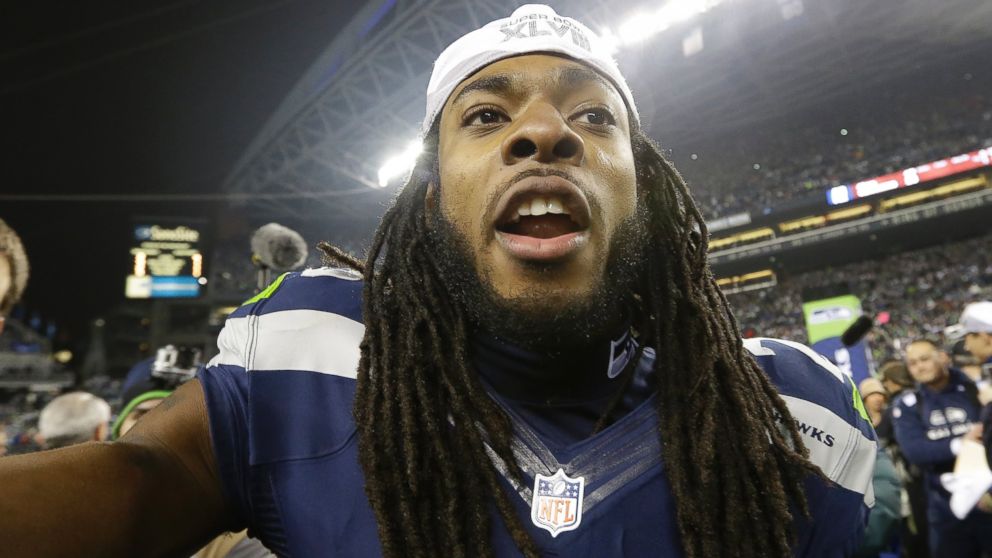
We've been through all sorts of medical controversy withe football and it's only going to get worse. The level of mental and physical toll these guys put themselves through for our entertainment is downright irresponsible. We can go back and forth about whether something should be done to stop or limit this damage or if the money and the knowledge of consequences are enough to allow grown men to make such a dangerous choice. There's a lot of merit on both sides and it's an important ongoing conversation.
At the same time, there's another conversation to be had - an individual conversation within each of us - do we continue to support such a venture. Can we justify standing by and watching, enjoying, cheering the mutilation and degradation of our fellow human beings? Is the barbarism of the act itself unweighted by the knowing and willing participation of it's players?
This is more than just a question of steroids and concussions. There is a mental aspect to such violence, analogous, albeit on a lesser plane, to that of soldiers in battle (something else we don't often like to talk about in stark reality). People are not made, designed, evolved, to willfully give and receive the kind of physical punishment doled out on an NFL field. Everything about us is geared towards self-preservation. It takes real feats of training, condition, and often tricks, to make our minds and bodies do such things they were never meant to do.
This was on evidence in stark display after the NFC Championship Game in Seattle Sunday. Seahawks Cornerback Richard Sherman blew up social media and sports talk radio with his honest comments about San Francisco 49ers receiver Michael Crabtree:
The guy's not an idiot. Arrogant? Sure. Intense? Definitely. But he's got a Stanford degree (and was salutatorian of his High School class) and he writes a weekly column for Peter King's website. In fact, he had time to go home after the game and write his regular column explaining his perspective on what happened.
I wouldn't want to react the way he did. I wouldn't want to defend it. I agree with those people who say this incident, take on its own, is bad sportsmanship, is less than ideal. The problem is, it can't be taken on its own. This is a professional football player (and one apparently guarding a receiver he's already had personal, off-field beefs anyway) at the end of an emotional, high-stakes game.
These guys have to become superhuman on the field and it often requires them to be subhuman in other ways.
Peyton Manning and Tom Brady can get away with being friends and being "professional." Their job is mostly cerebral and they're never on the field opposing one another. Defensive linemen and offensive linemen; linebackers and running backs; cornerbacks and receivers have to, if not literally do battle, at least adopt the battlefield mindset to do the jobs we pay them to do.
We can point to the mass of players who say the right thing after the game, talk about the thrill of playing high quality competition, the respect they have for each other, and whatever else makes us happy. But that's not what they're saying to each other for sixty minutes on the field during the game. That's not how they speak to each other in the locker room. It's for our benefit, partly so we can avoid the disconcerting nature of the mental transformation necessary to play professional football.
Richard Sherman embraces the reality of what he's doing. He doesn't try to mask the difference between acting properly in polite society and doing what he has to do to perform on the field. It's an anomaly, but it's also a reality.
The fact that Crabtree and various media types are responding to him as if football should be just another part of normal life feeds the mirage. It plays up the storyline of good, clean fun that the league has been peddling forever.
Competition and physical dominance are not pretty. The things an athlete has to do to bring out the absolute best in their own performance isn't pretty. It's not political correct and it's not sanitary. It's not just football, either. Larry Bird spent his whole career spouting devastating, alarming levels of really mean trash at whoever stood in his way (and often at teammates in practice). Michael Jordan was the same way. The physically violent nature of football just ups the stakes.
It's fine for us to say, "I wish Richard Sherman would act like everyone else." It's much nicer to be coddled and allow the difficult realities of what's happening in front of us fade to the back of our minds. I just think we have to recognize our own complicity and our own hypocrisy in the midst of it all.
I continue to watch. Every year I'm troubled by the brain injuries and the 50 year old men who can no longer walk with joints so messed up there's no reason to even bother with replacements. The violence and damage inflicted on the field in troubling. I almost gave up a few years back, but like many I was lured into a false sense of righteousness by the league's efforts to make the game safer. I'm not so sure the real difficult elements can ever be removed. What's more, I don't think the public wants it that way. We like our gladiators - our heroes - giving their own bodies for our entertainment.
I'm not trying to take a "holier than thou" tact here, I'd just like to counter the notion that Sherman is the outlier rather than the reality. I just don't believe that's true. Not every player hypes himself up by yapping, but enough do - and they all have to talk themselves into the kind of unrealistic focus necessary to play the game. The end result is the same, even if we don't always see it.
It's the same kind of theatre you see in pro wrestling - just the inverse. Big, hulking guys who talk crap to each other in public, but are good friends in private. The NFL does it the opposite way - these guys make nice for the cameras and kill each other on the field. They may manage normal relationships off the field (although Sherman and Crabtree prove this isn't always the case), but the actual spectacle itself is a different kind of world.
In the end, we want to think the NFL is a bunch of guys like us who just happen to be gifted with immense physical gifts. It's more than that and we need to give credit where credit is due. These guys kill themselves for our entertainment. They may not get it right all the time (and lots of time they don't), I'm just not sure any of us has any standing to criticize. We don't exactly occupy the moral high ground ourselves.

I was immediately disgusted, not because I have any particular love for the President, but that people revel in simplicity and straw men and generalizations as a means of understanding and debating serious issues. I realized, this wasn't so much disgust at the cartoon or its position, but at our political and cultural laziness.
Then I paused to ask why specifically I was upset with that particular cartoon.
I realized that if I were to argue with the author I would begin by explaining that it's a poor analogy because the olympics are an athletic competition and life is much different. Then it dawned on me:
A lot of people view life as a competition - thus making it no different than the Olympics. Viewed in those terms, giving somebody something they didn't earn is an absolute affront. Like giving a gold medal to someone in the stands (or giving every kid a trophy). If life is a competition - and one with plenty of unpredictable variables - what we have is vitally important. We have to be constantly striving to get more, earn more, be more - because if we don't, someone else will and we'll fall behind.
What if life isn't a competition? I know, to this point, competition has been the formative element in the development of life on earth - and I suspect that competition will continue to play a key role. But competition is really only important to human beings if continued existence is the goal. Evolutionarily, we compete to maximize our offspring and keep our DNA alive for as long as possible. I hope there's not too much argument that this isn't exactly a fulfilling goal in life.
I've often said, and I very much believe, that whatever the goal, wherever we're going in this life, wherever it is, we get there together or we don't get there at all.
That sentiment seems silly in our competitive, individualistic world. It might be nice to help other people when I've got something to spare or because it makes me feel good - but in the end, when push comes to shove, everyone is on their own, right?
Is that right?
I'm not sure we can answer that question outside our own experience. I'm certain there's plenty of people out there who were in tough spots and needed someone, yet no relief presented itself. Most of us in the West, are raised with this mindset.
The longer I live and the more I experience, the more I've come to believe that we do really need each other - that we're responsible both to and for each other - that we have to get there together to get there at all. If you arrive alone, you didn't get there - wherever "there" happens to be.
I've come to this through faith in Christ. Jesus spoke often of serving the poor, forsaking ourselves, giving freely, and relying on God for the future. The introduction of the Lord's Supper (communion, Eucharist) initiated a communal rite. When Christians gather together to share the bread and cup we are acting out God's plan for God's people: to be one. That's why the Church is called the "Body of Christ;" it is many becoming one.
This isn't purely a Christian concept, though. I believe it is from God, something inherent in humanity. Many peoples and cultures around the world, from many different traditions embrace this concept - that the group is primary and that society works best when individuals willingly submit themselves.
We fight this in the West because we like our freedom and our independence. We should be proud of our individualism. We just haven't seemed to figure out that self-determination is not the ultimate ideal, but a means to an end. Society (the Church, the nation, the family, humanity itself) should be forming individuals who come to recognize the value of sacrificing individualism for the best interests of the group.
This gets us into trouble when we narrow our focus (my country is better than your country; our family is the best; my faith is superior to yours). We need to begin to get our heads around this idea that we're all in life together. Not even just every human being, but the whole of creation. Our momentary victories mean very little if they harm or hinder others.
Life is not a competition. There's nothing wrong with celebrating individual achievement - after all, we are individuals, with the absolute choice to participate in society or to leave it alone - but we have to make sure that achievement doesn't come at a cost to the rest of us.
Olympic athletes dedicate a lot of time and energy to excel at their sports - probably more than a healthy amount. The benefits of doing this for a time are myriad. It helps people learn discipline and determination and gives unique insight into our abilities as a species. At the same time, we have to help our athletes understand the limits of these benefits. Four years or ten years or twenty might be an acceptable amount of time to focus so intensely on one aspect of life - but not a life does it make.
High level athletes struggle to adjust when their athletic participation decreases and the rest of life rushes in. Their equilibrium is thrown off. If they emerge from the competition of sports into a life where competition is the norm, they'll constantly search for new things to dominate and never find a true balance.
The same goes for any of life's pursuits. Individuals are reigned-in, in many different ways - as a means of reminding them that their success, their pursuit, their life, is not the most important thing. Bankers, lawyers, doctors, preachers, business owners, students, janitors, mechanics, and rodeo cowboys all have limits placed upon them for a greater good.
There are those who will argue that these limits are the problem. If all limitation were removed every individual would be free to succeed on their own. My faith and my experience tell me differently. But even if it were true, even if every person on earth won the competition of life, I'm still not sure we've be winners.
There's just something utterly intangible about working together, about caring for others and allowing them to care for you. Life is not a competition; it's all about cooperation.

Regardless, I am ready to detail the long process that has led me up to election day, just a mere thirty-six hours away. For those of you who know me well this will come as no surprise, but I'm a bit of a political junkie. This is one of the more serious veins of an obsession with competition. My father has been laughing about it since I was pretty young. If there is a way for someone to win something, I will be interested - dog shows, beauty pagents, jai alai - whatever it is, I'll not only watch, but research and keep track of numbers. We used to have one of these plastic marble trough sets. You could construct these elaborate obstacle courses for marbles to run through; I remember spending hours with this thing and a stop watch, timing marbles, running little marble tournament races, and constatly re-constructing the thing to produce the fastest possible times.
Political races have about as much numerical data and opportunities for prediction than just about anything in the world. They also give ample opportunity for spirited debate. (Those close to me will also know that I rarely hide from a good-natured argument, even if I actually agree with the other person involved.) The US Presidential race is like heroine for me. The analogy even holds up beyond face value as I still complain that debates, primaries, and polls come too infrequently. I know, I'm a hopeless case.
This particular Presidential contest has been quite unique for me. You see I've been old enough to vote in US elections since 2000. I've twice written in Senator John McCain for the highest elected office in the land. I appreciated his bi-partisan, rebellious politics in 2000 and did not yet understand the political machines that colluded to his demise. By 2004 I had yet to find another figure I thought could handle the job and wrote McCain in again, almost by default. In neither election did I have much concern for who actually won; it seems we've had a string of losers nominated from both major parties for a while now.
Coincidently, in 2004 I, like a lot of human beings, were introduced to Barack Obama via his major speech at the Democratic National Convention. I had heard his name previously, mostly because of the press surrounding three opponents of his for the US Senate from Illinois dropping out of the race for bizarre reasons. I followed up with Obama, purchasing his first book, Dreams from My Father, which was written long before he had any political aspirations and was, therefore, the closest to the truth we were ever going to get out of him.
I was impressed, not only with his speaking and writing abilities, but with his attempt to frame politics with a new vocabulary. Here was the emergence, on a national stage, of a substantative politician from a new generation. It was quite intriguing - even more so when I viewed his speech from the Call to Renewal Conference, sponsored by Sojourners in 2006. This man is clearly a follower of Christ and open to speaking with religious language often ignored or feared by politicians.
Once it became clear that these two men would be vying for the Presidency, I was more than excited to see how things would progress. To my dismay, neither candidate kept to the high-brow and polite campaign they promised; McCain's personal and character attacks on Obama made me regret the previous votes I had cast for him. As I began to understand the issues and each candidate's perspective on them, I realized that I, in good conscience, could not vote for either man.
Now, to set the record straight, I am supportive of Obama. The US election system realistically gives the nation a choice between two people. Given that choice, I would much rather have a President Obama than a President McCain. However, our electoral system does not limit us to the two "big nominees." Every natural born, non-felon, US citizen over the age of thirty-five is elligible to be President of the United States.
Not too long ago, I decided I would write-in Representative Dennis Kucinich (D-OH) for President. I found myself resonating with Kucinich in the Democratic Presidential debates of 2004. I took several of those online candidate surveys to match my views with a Presidential candidate. Both in 2004 and in 2008 my results would invariably point to Kucinich. I will not make a long apology for the man, but regardless, I think his political philosophy is among the best of any person currently serving elective office anywhere.
However, over the course of this long campaign, I have come to admire the calm and comfortable attitude of Senator Obama. He has handled a tumultuous two year span with many crises and problems and yet barely registered any reaction. His plans have remained stable from the beginning and his faith in those plans undeterred. He certainly has a more desireable demeanor than Kucinich and I could just no longer convince myself that Kucinich was the "best" person for the job.
In the past few days, I have spent a good deal of time searching and thinking about how I will cast my vote on Tuesday. I've consulted books and mentors; I've thought and prayed. I have tried to allign my beliefs with voting practice and mostly came up short. As of yesterday afternoon, I was resigned to a write-in ticket including the names of two pastor friends of mine. Both are smart and honorable people whom I would trust with the grave decisions of governance (even if I would not wish the situation upon any person).
However, also yesterday, I was informed that Kansas, much like many states, moves all ballots including write-in votes to the category of "provisional," which drastically reduces the chances of said ballot ever being counted. While I have little desire to vote for the President of the United States, I do want my votes for other contests on the ballot to have some effect.
Early this morning I read the final pages of Jesus for President, a book about the Christian life in relation to the systems of the world around us. It is a fantastic book for anyone who wrestles with the call of God and the demands of life; I highly recommend it. I was impressed that this book avoided any mention of elections until the final few pages and spent perhaps four or five on the topic at all. One of the stories the authors recounted was of a group of US Christians who could no longer reconcile their beliefs against voting with the billions of people who lacked opportunity to vote and the thousands who have given their lives specifically in the struggle to win voting rights. Their solution was to seek out those without a voice and vote in their stead.
Tomorrow morning I will make an off duty visit to the dry cleaners I work with for my job. Their employees are mostly resident aliens from across Latin America. These women live in the US (some have been here for quite some time) and they work incredibly hard to support themselves and their families. They are among the bottom rungs of US society, socially, economically, and practically. They have no voice in matters that affect them, perhaps more than even these matters affect us. I am going to ask which candidate they would like to vote for and I will use my rights as a citizen of the United States to cast a vote for these voiceless friends.

