So, someone asked me for a comment on a particular post from a blog. It's a blog that often upsets me (although, in fairness, I did share one post last week that I thought was helpful) from a person I believe to be inconsiderate, illogical, and generally ill-informed - particularly so in this instance. As part of my response, I used the word "ass" to describe this writer.*
I spent a good deal of time reflecting on the use of that word in that context. I was raised in a pretty conservative home and that was certainly among the words we did not say. In fact, it was not even among the words we might say if we were trying to walk the line with our parents (those would be more like 'sucks' or 'crap,' you know, words Bart Simpson taught me). I don't like offending people and I recognize that this particular word is offensive to many (perhaps a large portion of my acquaintances that for most other people). I don't generally use what are traditionally considered profanities or crude language, but this somehow felt like a rare, appropriate use. I think I still believe that.
I don't like the contradiction that this decision embroils within me. It didn't make things any easier when my Dad called today, I think, primarily, to mention that maybe I shouldn't be using that word on the internet. It's a valid point. Perhaps I shouldn't.
I wasn't very old when I realized the incongruity of using the biblical mandate to "not take the Lord's name in vain" to cover a whole list of vulgar and offensive words that have nothing to do with God (not to mention the flip side of the coin - saying hurricanes are God's judgment of sinful cities, for example - which is likely more what the Ten Commandments had in mind there). Some words are just harsh, abrasive and offensive - they'd likely be offensive whether or not we were culturally conditioned to recoil from them.
In the end, though, it comes down to this concept of profanity - what exactly is the profane. In strictest context, it is misusing holy things for common purpose. I imagine there is a long, interesting argument about language as a "holy thing," that I'm just not going to get into here.
I do think, though, that this concept, taken more generally, can be real helpful dealing with these "strong" words that are oh so controversial (at least in my life).
Strong words are strong for a reason; they communicate extremes - pain, anger, sorrow, depression, frustration, etc - in ways more deeply felt than those words (and yet somehow less deeply felt than guttural screams). They're supposed to be rare and shocking - its the whole point.
I recoil or roll my eyes or bemoan human existence when I see just how many people are littering their everyday speech with words set aside for a purpose. It's jarring, grating, and downright offensive (on multiple levels) - but ultimately it removes all power from the words themselves.
I suspect - I don't know this of course and I'm not qualified to do the research - but I imagine you might see more violence among persons who use profanities the way stereotypical SoCal girls use "like." I imagine this because we need something to express our deepest frustrations - and if the words meant to provide that rare, emotional outlet no longer mean what you need them to mean, physical reaction may be the only other recourse.
I do think language is precise. It communicates something very specific (which is both the problem and the answer). Calling someone a jerk is slightly different than calling them an ass. Synonyms are words than mean similar things, not identical things.
This may be splitting hairs for most people - and in general I agree. Why use an offensive word when a less offensive one does 98% of the job without ruffling feathers. That makes sense to me. It really does.
Sometimes, though, you need that extra 2% - you just do.
It's wise to take into account the audience. This is where my dad is likely correct. The internet is a pretty big audience. It hurts me to potentially offend the people who might read that word and be offended. Certainly the subject of the comment is not worth offending people over, but I think - in spite of it all, I still think - the expression of that sentiment at that moment in that context might be worth the potential offense. That notion is still lingering, and if it's still there after 48 hours of internal second-guessing, then there might be something to it.
We're all likely going to have a different measure of profanity - when certain words are used in ways they shouldn't be. For many, especially those who shared my upbringing, the appropriate ways are none. For me, there is still clearly a line - a pretty strict one, I think, which will seem harsh and puritanical to a lot of people. I imagine, like Potter Stewart and obscenity, when it comes to profanity, we know it when we see it - which isn't quite an exact science.
*I was and do intend that description to speak only for the persona that comes through his writing and not the actual person himself (a person I don't know and have never met), but I realize that intention was not entirely clear and for that I am sorry.
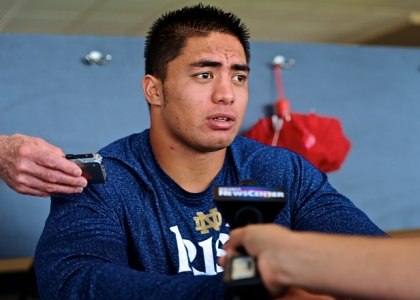
Any death is tragic, especially a suicide. It speaks of unfathomable hurt and loss. In this case, it was possibly a result of public embarrassment, which itself was the result of a joke gone wrong. Our immediate reaction is to cast blame. We have to find someone responsible.
I'd like to argue that there's no one to blame - this is the result of a society we created, one with priorities way out of whack in a number of ways.
Privacy is not really of utmost importance. I laugh at CEOs who have bodyguards, mostly to make themselves look important, and at celebrities who bemoan the paparazzi for following them everywhere, despite the examples of many big-name stars who are never seen. Not that anyone should be able to get your medical records without your permission, but it shouldn't be such a big deal if it happens.
I think this obsession with privacy comes from our societal push towards self-control and competition. We want others to know as little about us because it might reveal weakness. Or, perhaps we want to keep things hidden to project a certain image to the rest of the world - how accurately are you represented by your carefully crafted Facebook persona?
Somehow we think if we can control how people see us, we can actually be different. We reject our failures and weaknesses as somehow other than who we are when our sins are almost always worse in our own minds - at least to the people who love us.
It's those other people - those strangers, enemies or frenemies?, I guess. Those people who will leap on our "private" matters to put us down, gain an edge, or try to change how we're viewed (by ourselves and others). Sometimes just the knowledge that I'm self-conscious about something will make it an object of ridicule, even if objectively there's no reason for it to be.
There's a fine line between laughing at some guy who falls down the stairs and dehumanizing him. If you have to say, "I'm not laughing at you, I'm laughing with you," you're not, and they know it.
All of this leads us to a place of absolute guarded-ness. We think that everything needs to be secret - the results of my blood test, my salary, how much I paid for that purse, the fights I have with my spouse, etc.
I think perhaps we're better off not worrying so much about privacy as propriety. Obviously, I'm not going to put all the things about my wife that bug me in a newspaper column, or tell random strangers how much cash is in my wallet, but there are certainly times for discussing everything.
I've often said that Christians don't have the luxury of privacy - and I believe it strongly. We are accountable to each other for the way we participate in this shared life in Christ. We're responsible to others for our actions - talk about a counter-cultural idea. We have the right to ask each other just about anything.
Of course this - and every other path to escape the tyranny of privacy - requires relationship. We have to have people we trust not to abuse us, and people who will be similarly vulnerable to us. That's how we begin to find a way out, to actually become the kinds of people we'd like to think we are.
I made a vow to myself when I joined Facebook that I wouldn't censor myself - I wouldn't present a picture of myself that was any different than the me my friends and family know. I think they'd all say I've stuck to it (to my wife's chagrin, at times). But part of that was learning what things I should be saying or thinking at all. Knowing others might see it or be offended by it gave me pause to think.
Some would call that censorship, but I call it growth. I've found that the discipline of refusing privacy in that way has help shape me into the kind of person who considers others all the time. My thinking and speaking have changed. Perhaps not always in socially acceptable ways, but ways I can live with, ways I can defend, for the most part.
I do believe my life's an open book. I think there's an appropriate place to share anything - but the key is not content, but situation. Propriety.
There are still things in my life that embarrass me. There are times where I've been blind and foolish. I'd rather not everyone know about them, but I won't be upset if you ask or if they come out (at least I'll try really hard not to be with varying success), because, like it or not, they're me. I hope they aren't always me, but for now, they are who I am. They're not worth losing sleep over, let alone someone's life.
I don't think this is license to just go rousing into everyone's business and exposing the deep, dark secrets of the world. But we do live in a world where such secrets are exposed and their exposition is a favorite hobby for many. On top of watching our lives and working to become people whose secrets are less deep and less dark, we might also think about surrounding ourselves with people who won't be surprised by our secrets and won't love us any less if they are.
