I found this piece because of a comment on my blog post about never having been born.
I appreciate the valid critique this post gives to a certain theistic perspective on evil, although I do tend to see some flaws in the analogy. First, the bag of money - the notion that there is an end or reward, while very common in religious circles, isn't something I'd associate with the teachings of Jesus (my only real frame of reference, religiously speaking). At the very least, I'd argue he says the means are the end - whatever "reward" or "goal" is in the process, not the conclusion. Therefore the gifting of a bag on money, in this sense, doesn't really represent my understanding of how the world works. I do grant that it's a very common religious (and especially Christian) perspective - but I have just as many problems with it, as someone trying to take Jesus and the Bible seriously, as you do as an atheist. This is the kind of critique of which we need more.
I'd also point you toward theist philosopher Thomas Jay Oord, who's recently been writing a lot about the problem of evil, especially as it comes to determinism. He works with principles of Open and Process Theology to challenge the notion of God's omnibenevolence. I can't say I'm totally on board with the direction of his work, but I do agree with him (and you, apparently) that those "omni" claims are more problematic for Christianity and theism than most people want to admit.
My personal views are that we're too quick to individualize everything in the modern western world. While I do recognize the place, worth, and value of individuals, I tend to see existence itself as more of a coherent whole and advocate the necessity of evaluating individual participation in the whole through that context.
I don't find as much need for addressing the problem of evil as many others - it just doesn't keep me up at night in the same way - I tend to see evil as a reality in the world and I just don't have much impetus to ask why. I do tend to ask "what should I/we do about it," and my answer is generally "love."
I don't think it's a complete answer, but I do find a certain beauty in redemption (the reconciliation of warring or aggrieved parties) that simple isn't possible without pain. I know there's a sometimes-distinction made between pain and evil (cheating on your wife vs genocide, for example), but I'm less inclined to believe in it. I feel like a poor philosopher saying it so simply, but I find great peace in the notion that pain breeds pain and love breeds love. I have great hope that the latter can eventually defeat the former - or that, if I'm wrong, a life lived with that expectation is worthwhile even if it's ultimately futile.
Showing posts with label pain. Show all posts
Thursday, October 26, 2017
God, Evil, and Excuses
I received an actual stranger comment on one of my old posts - and one that's not trying to sell me counterfeit pharmaceuticals or infect my computer with a virus. It references a post on "Atheism and the City" addressing the failure of traditional theism to properly address the problem of evil. I wrote a response to that post that I thought might be good to share.
Labels:
atheism,
comment,
evil,
humanity,
Love,
pain,
philosophy,
problem of evil,
purpose,
redemption,
suffering,
theism
Tuesday, August 09, 2016
Joy vs Pleasure
So, the dictionary definition of joy is literally pleasure, and vice versa. Websters considers them interchangeable. So maybe I need to do some other clarification when I attempt to differentiate between the two. In actuality, though, it's the perfect example of what I'm trying to say: in our modern world, we really have no difference between joy and pleasure.
It might be better termed Deep Satisfaction vs Deep Happiness. I think there is a difference. Pleasure is fleeting; it's focused on feelings and emotion, while joy is something deeper; it's more about a state of being. Pleasure is something you feel; joy is something you embody.
Again, the dictionary likely disagrees - then this just becomes a big game of semantics - but lets see through the technicalities to the core concept of these differences. Joy and pleasure are both unique and deeply personal. When it comes to pleasure, we don't call them fetishes for nothing, right?
When I think of joy, the first memory that comes to mind is sitting in our rental Kia at Whitney Portal at 3 in the afternoon. A friend and I had just spent the previous 14 hours hiking to the top of Mt. Whitney and back down - about 21 miles in total. I'd just taken my boots off. My feet were literally throbbing with a dull, consistent pain; every one of my leg muscles was aching. There was nothing pleasurable about that moment, but I can't recall a deeper experience of pure joy in my entire life.
Now sometimes these two things are quite connected. I'm not sure I can fully comprehend even now the experience of holding my newborn daughter in my arms in her first moments of life, but I'm almost positive both pleasure and joy were mixed up in it. But what I've been thinking about a bit lately is how much we've (society in general? westerners? whoever) come to expect joy and pleasure to be one and the same. We expect all of our best moments to be happy moments. We're constantly seeking pleasure when what we really long for is a deep, abiding joy.
Joy isn't always pleasure - and we've completely forgotten about that.
Joy, I believe, comes with a discovery, even just a glimpse, of what it means to discover real purpose. Human beings were certainly made to be happy, but human beings were certainly not made just to be happy. I'd argue our purpose is to suffer together - if we're talking about the dictionary: we're made for compassion. Passion comes from the latin for struggle - we are made to be co-strugglers. I believe we experience joy when we experience the realities of life (both pleasurable and otherwise); and I think we experience this joy most deeply when we do so in connection to someone else - even if that other is creation itself.
For me, it's a hike through the woods or the indescribably joyful feeling of insignificance I experience looking out over an expansive mountain range. For me, this is a broad brush of humanity barreling down at me from great distance. It helps me appreciate the struggle.
We find no pleasure in a loved one who suffers tragedy, but we do experience joy in walking through such tragedy with them. The struggles of life are not things we wish on anyone, but we also consider life (and its necessary struggles) an almost priceless, beautiful gift. Why? I think the answer is joy.
We're part of a world that speaks only to pleasure - finding happiness is the solution to all your problems and the fulfillment of your purpose. We seek blindly after pleasure and when we find it empty, we assume we've not yet found the right pleasure and we move on. It's an addiction to happiness and an aversion to pain. I don't think either of these characterize life.
As a Christian, there's common belief in an eternity with no sorrow or pain - but those are so often used as synonymns, the same way joy and pleasure so often are. Just like joy and pleasure are really two different concepts, so too are sorrow and pain. Sorrow is the opposite of joy - a lack of purpose, self-worth, dignity, meaning; I fully believe these things can and will be eradicated by love. That's the hope I profess. I'm less confident, though, that pain is fleeting or ultimately doomed.
There is just as much chance for joy in pain as there is in pleasure - at least my experiences tell me that's true - in the same way as there's just as much room for sorrow in pleasure as there is in pain. These things are not necessarily linked. Think about it - a relationship without misunderstanding or miscommunication is no relationship at all. The very value of any relationship is the unpredictability, the otherness of the other. If we always said the right thing, we'd quickly grow tired of each other. Our ability to surprise, even after ten, twenty, fifty, a hundred years together is what provides the great joy that comes from relationships. If the cost of this unpredictable joy is occasional pain, I think it's worth every penny.
Again, this pain is not confused with sorrow, specifically the sorrow that comes from intentional harm, hurt, and insult. Relationships have that, too - at least for the time being. Pain comes from the same joyful unpredictability; sorrow comes from selfishness.
In the end, it may be just that simple. We can experience joy when we're living purely for the benefit of others - whether it's enjoying a brisk evening walk among the trees or sitting by the bedside of a cancer-ridden spouse, joy can persist in the midst of both pleasure and pain. Pleasure is certainly not a bad thing, but pursuit of our own pleasure as an end in itself will bring nothing but sorrow. Pursuit of pleasure for another might bring happiness for ourselves too, but much more than that, it will bring a deep and abiding joy that reveals all the best of what life has to offer and the very purpose for our existence.
Let's not let the dictionary have the final word here.

It might be better termed Deep Satisfaction vs Deep Happiness. I think there is a difference. Pleasure is fleeting; it's focused on feelings and emotion, while joy is something deeper; it's more about a state of being. Pleasure is something you feel; joy is something you embody.
Again, the dictionary likely disagrees - then this just becomes a big game of semantics - but lets see through the technicalities to the core concept of these differences. Joy and pleasure are both unique and deeply personal. When it comes to pleasure, we don't call them fetishes for nothing, right?
When I think of joy, the first memory that comes to mind is sitting in our rental Kia at Whitney Portal at 3 in the afternoon. A friend and I had just spent the previous 14 hours hiking to the top of Mt. Whitney and back down - about 21 miles in total. I'd just taken my boots off. My feet were literally throbbing with a dull, consistent pain; every one of my leg muscles was aching. There was nothing pleasurable about that moment, but I can't recall a deeper experience of pure joy in my entire life.
Now sometimes these two things are quite connected. I'm not sure I can fully comprehend even now the experience of holding my newborn daughter in my arms in her first moments of life, but I'm almost positive both pleasure and joy were mixed up in it. But what I've been thinking about a bit lately is how much we've (society in general? westerners? whoever) come to expect joy and pleasure to be one and the same. We expect all of our best moments to be happy moments. We're constantly seeking pleasure when what we really long for is a deep, abiding joy.
Joy isn't always pleasure - and we've completely forgotten about that.
Joy, I believe, comes with a discovery, even just a glimpse, of what it means to discover real purpose. Human beings were certainly made to be happy, but human beings were certainly not made just to be happy. I'd argue our purpose is to suffer together - if we're talking about the dictionary: we're made for compassion. Passion comes from the latin for struggle - we are made to be co-strugglers. I believe we experience joy when we experience the realities of life (both pleasurable and otherwise); and I think we experience this joy most deeply when we do so in connection to someone else - even if that other is creation itself.
For me, it's a hike through the woods or the indescribably joyful feeling of insignificance I experience looking out over an expansive mountain range. For me, this is a broad brush of humanity barreling down at me from great distance. It helps me appreciate the struggle.
We find no pleasure in a loved one who suffers tragedy, but we do experience joy in walking through such tragedy with them. The struggles of life are not things we wish on anyone, but we also consider life (and its necessary struggles) an almost priceless, beautiful gift. Why? I think the answer is joy.
We're part of a world that speaks only to pleasure - finding happiness is the solution to all your problems and the fulfillment of your purpose. We seek blindly after pleasure and when we find it empty, we assume we've not yet found the right pleasure and we move on. It's an addiction to happiness and an aversion to pain. I don't think either of these characterize life.
As a Christian, there's common belief in an eternity with no sorrow or pain - but those are so often used as synonymns, the same way joy and pleasure so often are. Just like joy and pleasure are really two different concepts, so too are sorrow and pain. Sorrow is the opposite of joy - a lack of purpose, self-worth, dignity, meaning; I fully believe these things can and will be eradicated by love. That's the hope I profess. I'm less confident, though, that pain is fleeting or ultimately doomed.
There is just as much chance for joy in pain as there is in pleasure - at least my experiences tell me that's true - in the same way as there's just as much room for sorrow in pleasure as there is in pain. These things are not necessarily linked. Think about it - a relationship without misunderstanding or miscommunication is no relationship at all. The very value of any relationship is the unpredictability, the otherness of the other. If we always said the right thing, we'd quickly grow tired of each other. Our ability to surprise, even after ten, twenty, fifty, a hundred years together is what provides the great joy that comes from relationships. If the cost of this unpredictable joy is occasional pain, I think it's worth every penny.
Again, this pain is not confused with sorrow, specifically the sorrow that comes from intentional harm, hurt, and insult. Relationships have that, too - at least for the time being. Pain comes from the same joyful unpredictability; sorrow comes from selfishness.
In the end, it may be just that simple. We can experience joy when we're living purely for the benefit of others - whether it's enjoying a brisk evening walk among the trees or sitting by the bedside of a cancer-ridden spouse, joy can persist in the midst of both pleasure and pain. Pleasure is certainly not a bad thing, but pursuit of our own pleasure as an end in itself will bring nothing but sorrow. Pursuit of pleasure for another might bring happiness for ourselves too, but much more than that, it will bring a deep and abiding joy that reveals all the best of what life has to offer and the very purpose for our existence.
Let's not let the dictionary have the final word here.
Tuesday, March 31, 2015
Better Us than Them
I was thinking today about politics. I know I've gone over this before. Politics is not the same as government or elections. Politics is the way we interact with the people around us - sometimes we do that through voting and government programs. Sometimes its appropriate to do things that way. More often than not, though, our politics should be more focused on our way of life, the way we treat the people with whom we interact on a day to day basis. It seems far too many people have allowed our electoral process to rob them of real politics.
You hear it all the time, "Obama is really screwing with ___________," or "The GOP Congress can't get ___________ right." Both of those statements very well may be true (or completely ridiculous, you know), but what really sort of breaks my heart is how people let those kinds of perspectives shape their outlook on life. They're soul crushing perspectives, sometimes, and as much as we want to blame evil entity x or y, it's a self-inflicted soul crushing.
An elected leader can make your life easier or more difficult. That's it. I mean, I suppose in an extreme sense they could kill you, but that's a pretty slim minority of my typical readers. The only thing a politicians can do to you or for you is make like a little easier or a little more difficult. And even that ability is dwarfed by the same ability possessed by those around you - family, neighbors, friends, coworkers, fellow commuters. No politicians can touch the ability those people have to make our lives a little tougher or a little easier.
Anything they might do to us beyond that, well, it's something we let them do.
We control how we're going to face the day, the attitude we'll have towards people and the actions we take. Yes, some people and situations are more trying than others and we're all going to fall short of our own expectations of ourselves from time to time, but in the end, our lives are our own and we don't have to give others (especially virtual strangers elected to positions far, far away) any say over those lives. No law tells us what we can or cannot do - they simply tell us the possible consequences of doing those things. It's up to us to decide whether the action is still worth doing.
I'll admit, I get entitled. I fell important and deserving of specific treatment. That's when this sort of self-inflicted harm happens easiest. We feel we have a right to something and someone else is taking that away. I'm not always good at dealing with those situations, but I'm trying and I hope I'm getting better.
For me, the bottom line is suffering. I don't like it. I'd love for the world to work in such a way that my life is as easy as it could possibly be. Of course I also sort of know that such a world would not be good for me. It would not make me into the kind of person I was created to be. Suffering sucks, but it's also really important.
Now no one should be forced to suffer, that's for sure (I think they call that torture or something), although it certainly happens everyday. At the same time, for people who attempt to follow in the way of Christ, suffering is part of the gig. Suffering comes with the territory. In fact, sometimes we're called to suffer even when we don't have to, specifically because "better us than them." I know lots of people say that the other way - better them than us - but Christian are a mixed up lot. We do things different.
If the only reason you're upset is because your life is inconvenienced - well, it's alright be upset, it really is - but we also need to work hard so that upset-ness isn't what influences our actions.
Yes, people can make our lives difficult, but our response to that matters. For followers of Christ, when faced with the choice between fighting and suffering, we chose, at least for ourselves, suffering. It's what we do.
It's not always fun, but, you know, embracing that reality actually helps you feel a little more in-control of your life, which is never a bad thing.
PS - I don't really know what that picture is, but it's kinda cool.
You hear it all the time, "Obama is really screwing with ___________," or "The GOP Congress can't get ___________ right." Both of those statements very well may be true (or completely ridiculous, you know), but what really sort of breaks my heart is how people let those kinds of perspectives shape their outlook on life. They're soul crushing perspectives, sometimes, and as much as we want to blame evil entity x or y, it's a self-inflicted soul crushing.
An elected leader can make your life easier or more difficult. That's it. I mean, I suppose in an extreme sense they could kill you, but that's a pretty slim minority of my typical readers. The only thing a politicians can do to you or for you is make like a little easier or a little more difficult. And even that ability is dwarfed by the same ability possessed by those around you - family, neighbors, friends, coworkers, fellow commuters. No politicians can touch the ability those people have to make our lives a little tougher or a little easier.
Anything they might do to us beyond that, well, it's something we let them do.
We control how we're going to face the day, the attitude we'll have towards people and the actions we take. Yes, some people and situations are more trying than others and we're all going to fall short of our own expectations of ourselves from time to time, but in the end, our lives are our own and we don't have to give others (especially virtual strangers elected to positions far, far away) any say over those lives. No law tells us what we can or cannot do - they simply tell us the possible consequences of doing those things. It's up to us to decide whether the action is still worth doing.
I'll admit, I get entitled. I fell important and deserving of specific treatment. That's when this sort of self-inflicted harm happens easiest. We feel we have a right to something and someone else is taking that away. I'm not always good at dealing with those situations, but I'm trying and I hope I'm getting better.
For me, the bottom line is suffering. I don't like it. I'd love for the world to work in such a way that my life is as easy as it could possibly be. Of course I also sort of know that such a world would not be good for me. It would not make me into the kind of person I was created to be. Suffering sucks, but it's also really important.
Now no one should be forced to suffer, that's for sure (I think they call that torture or something), although it certainly happens everyday. At the same time, for people who attempt to follow in the way of Christ, suffering is part of the gig. Suffering comes with the territory. In fact, sometimes we're called to suffer even when we don't have to, specifically because "better us than them." I know lots of people say that the other way - better them than us - but Christian are a mixed up lot. We do things different.
If the only reason you're upset is because your life is inconvenienced - well, it's alright be upset, it really is - but we also need to work hard so that upset-ness isn't what influences our actions.
Yes, people can make our lives difficult, but our response to that matters. For followers of Christ, when faced with the choice between fighting and suffering, we chose, at least for ourselves, suffering. It's what we do.
It's not always fun, but, you know, embracing that reality actually helps you feel a little more in-control of your life, which is never a bad thing.
PS - I don't really know what that picture is, but it's kinda cool.
Labels:
choice,
christianity,
fighting,
life,
pain,
persecution,
politics,
suffering
Thursday, March 19, 2015
The Prophetic Voice of Evangelical America
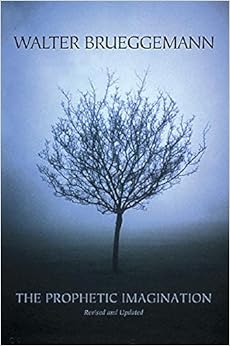
In the preface to his revised edition of The Prophetic Imagination (circa 2000), Walter Brueggemann sets out four prerequisites for a prophetic community. These are the elements he believes necessary for a community to produce a prophet or a prophetic voice: a long memory that is available and accessible to the community, a sense of real communal pain, an active practice of hope, and an effective mode of discourse. As I was reading, I couldn't help but realize our present Evangelical America, at least in the form we allow to speak for us, lacks all of these.
We tend to have a short memory. Our traditions stretch back 100 years, if we're lucky - less than 5% of Christian history. We've all-consumingly bought in to the immediacy of the consumer culture in which we're enmeshed. This shows up in our consumer and entrepreneurial approaches to corporate worship and purpose. We want to be the biggest, flashiest, most impressive thing; we want to be new. We have no memory and, even if we did, no means by which to access it. Conservative may be fine for us, traditional, even (in our own strange definition of traditional), but they must be packaged as new or next. We recycle fads and remain oblivious to context because we have to memory and no way to relive or interpret those memories which might be accessible.
Evangelical America is so thoroughly embedded in the dominant culture there is no possibility of pain. We are largely affluent and white. We are used to controlling the levers of power, be they political or economic. The fact that this may no longer be as true as it once way brings on a sense of false pain. This is not the kind of pain Brueggemann speaks about, a dehumanizing sort of identity loss that can speak for itself to all humanity. This contrived pain, in the form of "religious persecution," is manipulative and self-justifying, an obvious smoke-screen to the outside world. We have no pain, save that to our ego.
We have words of hope (heaven, escape), but those translate into a practice of fear and mourning. This hatred of the world is utterly hopeless. We cannot simply say, "things are bad, but one day we'll escape." This is not prophetic, it's a socially-accepted version of the doomsday cult. We cannot isolate ourselves from the world in expectation of an imminent cosmic evacuation. We see the world around us through a divisive lens, in which we're locked in a battle with "them" for control of our souls. There is no hope here. Even if we claim confidence in a bright future someday, it manifests itself in fear and uncertainty this day.
The way we speak leaves no room for error. The world is entirely black and white, right and wrong, with no room for overlap, no consideration of bias. Our communication is irrelational and depersonalizing, labeling challengers as enemies, worthy of nothing more than vitriol and marginalization. For us, the end justifies the means.
Evangelical America doesn't call the world to an alternative reality, quite the contrary, Evangelical America wants to eliminate the possibility of alternative reality. In this, you can replace "Evangelical America" with "totalitarian power," "unfettered capitalism," "socialism" or "militant Islam." The role of power, whatever kind of power (and saying these forces are after the same thing does not make them equal in value, simply in purpose), is to maintain power. A prophetic voice, a voice of true alternative, cannot speak from a position of power. It can't arise from power or be nurtured through power. It's simply not possible.
Evangelical America, along with the other examples - and many more, represent attempt to control the dominant narrative, not attempts to write a new one. They are not challenges to power, but attempts to co-opt power with a specific set of underlying morals. This will not produce real change, only superficial. The underlying problems remain; the dominant narrative continues.
Brueggemann's contention, then, is that until God's people (or any people) see the world and live in the world in fundamentally different ways it is not possible to live differently or speak prophetically.
If Evangelical America is to ever have a truly prophetic voice (and I'm still a believer that it can), we must build a community capable of nurturing a prophetic voice.
We have to reclaim our memory, both the good and the bad, and not just cling to a convenient narrative we've created to simplify our lives and allow us to fit in. We have to act in hope, re-membering with our lives and actions that all people are God's people, that there is no "us and them," that God loves this world and calls it good, that redemption is our future, not escape. Thus we must also speak redemptively, as if we really believe we're all in this together and peaceful coexistence is possible. We must seek to understand, listen, and love.
We must also embrace pain. I'm a relatively affluent white male. I'm not going to encounter real pain, even if I am entirely committed to living alternatively in the midst of the world (and I'm clearly not always committed). It's essential Evangelical America to stand with those who suffer pain. Even if it challenges our moral perspective, our comfort level, or our "common sense." We have to suffer with those who suffer, those who are left out of the system we've tried to hard to control. This means more than starting charities and volunteering with organizations (although that's a start). Our community must embrace what it means to suffer, we must move into the neighborhood, make ourselves dependent on those who suffer so it becomes our suffering.
Too often we take only those risks we can unwind. I am more than guilty of this. For us to truly have a prophetic voice, pain is essential. It is from pain that hope and a better vision for the future arises. Prisoners, addicts, women, racial minorities, the LGBT community - those who encounter difficulty and marginalization. Those stories must be our stories. That pain must be ours - again, not as tourists, but as people.
The world around us is comprised of people - all good, all broken - engaged in a variety of activities, helpful and hurtful, unifying and isolating, honoring and embarrassing, loving and neglectful. These people are no different than us. But until that sentiment is more than words, until it is backed up with a concrete reality, there will be no prophetic voice for Evangelical America.
We tend to have a short memory. Our traditions stretch back 100 years, if we're lucky - less than 5% of Christian history. We've all-consumingly bought in to the immediacy of the consumer culture in which we're enmeshed. This shows up in our consumer and entrepreneurial approaches to corporate worship and purpose. We want to be the biggest, flashiest, most impressive thing; we want to be new. We have no memory and, even if we did, no means by which to access it. Conservative may be fine for us, traditional, even (in our own strange definition of traditional), but they must be packaged as new or next. We recycle fads and remain oblivious to context because we have to memory and no way to relive or interpret those memories which might be accessible.
Evangelical America is so thoroughly embedded in the dominant culture there is no possibility of pain. We are largely affluent and white. We are used to controlling the levers of power, be they political or economic. The fact that this may no longer be as true as it once way brings on a sense of false pain. This is not the kind of pain Brueggemann speaks about, a dehumanizing sort of identity loss that can speak for itself to all humanity. This contrived pain, in the form of "religious persecution," is manipulative and self-justifying, an obvious smoke-screen to the outside world. We have no pain, save that to our ego.
We have words of hope (heaven, escape), but those translate into a practice of fear and mourning. This hatred of the world is utterly hopeless. We cannot simply say, "things are bad, but one day we'll escape." This is not prophetic, it's a socially-accepted version of the doomsday cult. We cannot isolate ourselves from the world in expectation of an imminent cosmic evacuation. We see the world around us through a divisive lens, in which we're locked in a battle with "them" for control of our souls. There is no hope here. Even if we claim confidence in a bright future someday, it manifests itself in fear and uncertainty this day.
The way we speak leaves no room for error. The world is entirely black and white, right and wrong, with no room for overlap, no consideration of bias. Our communication is irrelational and depersonalizing, labeling challengers as enemies, worthy of nothing more than vitriol and marginalization. For us, the end justifies the means.
Evangelical America doesn't call the world to an alternative reality, quite the contrary, Evangelical America wants to eliminate the possibility of alternative reality. In this, you can replace "Evangelical America" with "totalitarian power," "unfettered capitalism," "socialism" or "militant Islam." The role of power, whatever kind of power (and saying these forces are after the same thing does not make them equal in value, simply in purpose), is to maintain power. A prophetic voice, a voice of true alternative, cannot speak from a position of power. It can't arise from power or be nurtured through power. It's simply not possible.
Evangelical America, along with the other examples - and many more, represent attempt to control the dominant narrative, not attempts to write a new one. They are not challenges to power, but attempts to co-opt power with a specific set of underlying morals. This will not produce real change, only superficial. The underlying problems remain; the dominant narrative continues.
Brueggemann's contention, then, is that until God's people (or any people) see the world and live in the world in fundamentally different ways it is not possible to live differently or speak prophetically.
If Evangelical America is to ever have a truly prophetic voice (and I'm still a believer that it can), we must build a community capable of nurturing a prophetic voice.
We have to reclaim our memory, both the good and the bad, and not just cling to a convenient narrative we've created to simplify our lives and allow us to fit in. We have to act in hope, re-membering with our lives and actions that all people are God's people, that there is no "us and them," that God loves this world and calls it good, that redemption is our future, not escape. Thus we must also speak redemptively, as if we really believe we're all in this together and peaceful coexistence is possible. We must seek to understand, listen, and love.
We must also embrace pain. I'm a relatively affluent white male. I'm not going to encounter real pain, even if I am entirely committed to living alternatively in the midst of the world (and I'm clearly not always committed). It's essential Evangelical America to stand with those who suffer pain. Even if it challenges our moral perspective, our comfort level, or our "common sense." We have to suffer with those who suffer, those who are left out of the system we've tried to hard to control. This means more than starting charities and volunteering with organizations (although that's a start). Our community must embrace what it means to suffer, we must move into the neighborhood, make ourselves dependent on those who suffer so it becomes our suffering.
Too often we take only those risks we can unwind. I am more than guilty of this. For us to truly have a prophetic voice, pain is essential. It is from pain that hope and a better vision for the future arises. Prisoners, addicts, women, racial minorities, the LGBT community - those who encounter difficulty and marginalization. Those stories must be our stories. That pain must be ours - again, not as tourists, but as people.
The world around us is comprised of people - all good, all broken - engaged in a variety of activities, helpful and hurtful, unifying and isolating, honoring and embarrassing, loving and neglectful. These people are no different than us. But until that sentiment is more than words, until it is backed up with a concrete reality, there will be no prophetic voice for Evangelical America.
Tuesday, May 27, 2014
Mourning and Memorial Day
A number of years ago now, I posted about November 11th and elucidated some of my struggles over how to deal with war and people who go to war. I've re-posted it a couple of times, but I've mainly let it stand for itself. As I re-read it (which I do often), I don't know if there's anything else to add, so I don't.
As we finish what is another difficult holiday to navigate I've been asking myself why it's so different? If I've worked through a dealt with issues of war and violence, why is the last Monday in May so much different than November 11th?
The answer should probably have been obvious, but, like a lot of things, I was slow to catch on. The difference is death.
Veterans Day often includes ceremonies at cemeteries and stories of long-ago wars, but it's really a day about people who've fought - many of whom are still alive (and too often forgotten). I hope I can separate the value and needs of people with my objection to war.
But death is different.
Memorial Day is about those who've fought and died - not just those soldiers who have died, but those who died in war. I don't like war - and it's not just the typical hatred of something inevitable; I don't believe its inevitable or necessary. I hope the post above and Brian Zahnd's great piece this week explain some of the theological underpinnings of that.
But what I'm realizing more and more, when it comes to Memorial Day, that doesn't really matter. People are dead and they are not coming back (at least not until the resurrection on the last day). With the possible exception of pain-ridden, terminal situation, where the suffering is too much to bear, all death is tragic, all death in painful.
When it comes to losing the people we care about, the why or the how aren't really important. We talk like they are sometimes - we like to think a heroic death (like one in battle) is better than a drug overdose or a car accident - but in the end, a mother or a brother or a daughter have lost someone irreplaceable and it is the loss we feel.
Ironically, this year, I saw many comments from people emphasizing that Memorial Day is not about military service in particular, but about remembering those who died in war - there was a general sense of emphasis on remembering, on loss.
I know it's attached to military service precisely because the cultural assumption is that these are noble deaths - deaths that earned us something: freedom, peace, security, etc - but the more I see comments from soldiers and family, the more it becomes apparent that this is simply a day of mourning.
All death is tragic. Death is an enemy. Death is a terrible thing. I know it's a part of life; I know it's inevitable, but it's not good. There is no such thing as an honorable or dishonorable death. Death sucks. It is universally bad.
I struggle, I do, with the patriotism and the celebration of war that so often goes with Memorial Day. At times it almost feels like we're celebrating certain deaths because of the bravery and sacrifice inherent in them.
Memorial Day is certainly not a day of celebration and I'm not even sure it's a day of remembrance. It's a day of mourning - of recognizing a loss, of naming and standing up to the gaping hole in our lives that death creates, and, by doing so, removing its power.
I have a different perspective on war than many. I have a different perspective on life and death and the future because of my belief in resurrection. I have real difficulty holding up soldiers as examples since I don't believe war is beneficial for anyone. But I do understand loss.
On this day, when a specific group of people are mourned, I mourn. I don't have a close connection to anyone who's died in war; I think I've only ever met one person. I can't claim this day as my own in any particular way. But I do hate death. I hate the memory of losing loved ones; I hate the thought of losing any more. I hate seeing other people experience the sorrow of death - no matter the reason.
On Memorial Day, let's mourn with those who mourn, and let that be enough.
As we finish what is another difficult holiday to navigate I've been asking myself why it's so different? If I've worked through a dealt with issues of war and violence, why is the last Monday in May so much different than November 11th?
The answer should probably have been obvious, but, like a lot of things, I was slow to catch on. The difference is death.
Veterans Day often includes ceremonies at cemeteries and stories of long-ago wars, but it's really a day about people who've fought - many of whom are still alive (and too often forgotten). I hope I can separate the value and needs of people with my objection to war.
But death is different.
Memorial Day is about those who've fought and died - not just those soldiers who have died, but those who died in war. I don't like war - and it's not just the typical hatred of something inevitable; I don't believe its inevitable or necessary. I hope the post above and Brian Zahnd's great piece this week explain some of the theological underpinnings of that.
But what I'm realizing more and more, when it comes to Memorial Day, that doesn't really matter. People are dead and they are not coming back (at least not until the resurrection on the last day). With the possible exception of pain-ridden, terminal situation, where the suffering is too much to bear, all death is tragic, all death in painful.
When it comes to losing the people we care about, the why or the how aren't really important. We talk like they are sometimes - we like to think a heroic death (like one in battle) is better than a drug overdose or a car accident - but in the end, a mother or a brother or a daughter have lost someone irreplaceable and it is the loss we feel.
Ironically, this year, I saw many comments from people emphasizing that Memorial Day is not about military service in particular, but about remembering those who died in war - there was a general sense of emphasis on remembering, on loss.
I know it's attached to military service precisely because the cultural assumption is that these are noble deaths - deaths that earned us something: freedom, peace, security, etc - but the more I see comments from soldiers and family, the more it becomes apparent that this is simply a day of mourning.
All death is tragic. Death is an enemy. Death is a terrible thing. I know it's a part of life; I know it's inevitable, but it's not good. There is no such thing as an honorable or dishonorable death. Death sucks. It is universally bad.
I struggle, I do, with the patriotism and the celebration of war that so often goes with Memorial Day. At times it almost feels like we're celebrating certain deaths because of the bravery and sacrifice inherent in them.
Memorial Day is certainly not a day of celebration and I'm not even sure it's a day of remembrance. It's a day of mourning - of recognizing a loss, of naming and standing up to the gaping hole in our lives that death creates, and, by doing so, removing its power.
I have a different perspective on war than many. I have a different perspective on life and death and the future because of my belief in resurrection. I have real difficulty holding up soldiers as examples since I don't believe war is beneficial for anyone. But I do understand loss.
On this day, when a specific group of people are mourned, I mourn. I don't have a close connection to anyone who's died in war; I think I've only ever met one person. I can't claim this day as my own in any particular way. But I do hate death. I hate the memory of losing loved ones; I hate the thought of losing any more. I hate seeing other people experience the sorrow of death - no matter the reason.
On Memorial Day, let's mourn with those who mourn, and let that be enough.
Monday, December 17, 2012
On the Death of Children
Before I begin, I just want to disclaim a bit. I'm struggling to process and understand my own personal reaction to the Connecticut tragedy and the responses to it - I very well might express opinions or thoughts contrary to your own responses and feelings on the matter. I don't intend to condemn or condone any reaction, my own included - simply to process how I've reacted.
That being said, I find it more than bit troubling how the world so easily claims this tragedy as it's own. Of course every death is a tragedy and the death of children even moreso because we recognize the loss of what could be. I don't have any problem expressing remorse and voicing the reality of the injustice and evil of an act like the killing of kindergarten students in Connecticut this week. I don't think we should ignore it.
I do think we should have firm and sensible boundaries. A Facebook meme with a lengthy quote attributed to the actor, Morgan Freeman, made the rounds in the wake of the tragedy - it expressed a desire for us to stop focusing so much on these mass killings - making the perpetrators defacto celebrities and perhaps incidently inciting more. I'm not just talking about the media - after all journalism, as tasteless and exhausting as it can be sometimes, is an important service. I don't think we need 24 hour coverage. I don't think we need interviews with little children who just escaped such a terror or a high school classmate of the shooter. They do it for ratings and because we have this inherent desire to know.
I'm not sure it's good for us to have that need satisfied.
I'll just say I don't understand how so many people find a tragedy like this makes them think more about their own children. I saw all the Facebook posts of people hugging their children. I've tried to figure out what mindset brings people to those posts - my only answers are unkind and likely untrue; I won't share them here. I do have a child now, one I love quite a bit - but I don't find myself more in love, more sentimental or more anything in the wake of this tragedy. One thing I do resonate with - I can't even imagine losing her.
I think that's what bothers me most. Those who haven't lost children really can't identify - we'd like to think we can, we'd like to think we have something to offer besides prayers and condolences. We don't. We're helpless and we're disconnected and we don't like it.
I think it's entirely appropriate for the President to stand up and acknowledge the tragedy and loss - to pledge the nation's support. I don't think it's appropriate for him to show up. It's not a national tragedy. It's a very localized tragedy in a small Connecticut town, specifically for 27 families and those who are a part of their lives. It is certainly evidence of a troubling national epidemic, but it shouldn't be treated as part of a larger problem. That's a disservice to those in mourning.
Certainly there are things we can do to help - but its a general help, not a specific one. There's absolutely nothing we can do for these families but allow them time and space to mourn. We can have those discussions of gun safety and the mental health process - we can work to shape our society into one where things like this occur less.
I also think we can leave the grieving to grieve. I am not saying we abandon the families of the dead - not at all. But we can't mourn with those who mourn when we have no connection to them. Ninety-nine percent of us don't have any connection to these deaths - allow those who do to represent us in comfort.
We want to express outrage - to feel like we have some power over the evil in our world. These are good honest responses, but sometimes focusing on a problem from which we're disconnected keeps us from addressing similar problems in our own communities. In 2011, more than 14 children were killed by guns every day of the year, just in the US. The number rises precipitously when the age goes to 18. 40,000 children die of starvation in the world every year. Nearly a dozen kids are killed by their own parents every day as a result of abuse or neglect.
I suspect, more than better gun laws or improved mental health services, we're most likely to prevent things like this from happening by being present and available to suffering in our own neighborhoods and communities.
If you need to hug your children extra, please do so. If you need conversation in your workplace or congregation or around the dinner table to help deal with the trauma, by all means have it. I am not trying to diminish your response or the tragedy that has happened, I just hope to remember, for myself if no one else, that pain and tragedy exist all around us. Our society has gotten pretty good at hiding it, which is why these times it smashes out into the open trouble us so deeply.
I'm not upset, necessarily, with what's being done. The desire and urge to help those far away from us is righteous and positive. At the same time, it's difficult to stomach in a culture where everyone and everything seems kept at arms length.
We have grandiose ambitions and we live in a super-sized world. We want massive solutions to massive problems - when likely the most effective course of action is, once again, to love your neighbor.
That's when things get messy. That's exactly what the people of Newtown, Connecticut are discovering in the wake of this terrible event. For me, at least, it seems disrespectful to assume I can have some part in that from far away. As much as I desire to comfort and solve. I just can't - not as a stranger hundred of miles away.
I'd like to hope (I am an optimist beneath all these contrarian ideas) that the legacy of this disaster could be a renewed sense of community around the country and perhaps the world. That we could find, on the other side of this loss, pain, and confusion, a sense of community and connection - some small piece of the relational world in which God created us to live.
I have to embrace my place, my town, my people - to own my pain and the pain around me. This just doesn't work from a distance.
That being said, I find it more than bit troubling how the world so easily claims this tragedy as it's own. Of course every death is a tragedy and the death of children even moreso because we recognize the loss of what could be. I don't have any problem expressing remorse and voicing the reality of the injustice and evil of an act like the killing of kindergarten students in Connecticut this week. I don't think we should ignore it.
I do think we should have firm and sensible boundaries. A Facebook meme with a lengthy quote attributed to the actor, Morgan Freeman, made the rounds in the wake of the tragedy - it expressed a desire for us to stop focusing so much on these mass killings - making the perpetrators defacto celebrities and perhaps incidently inciting more. I'm not just talking about the media - after all journalism, as tasteless and exhausting as it can be sometimes, is an important service. I don't think we need 24 hour coverage. I don't think we need interviews with little children who just escaped such a terror or a high school classmate of the shooter. They do it for ratings and because we have this inherent desire to know.
I'm not sure it's good for us to have that need satisfied.
I'll just say I don't understand how so many people find a tragedy like this makes them think more about their own children. I saw all the Facebook posts of people hugging their children. I've tried to figure out what mindset brings people to those posts - my only answers are unkind and likely untrue; I won't share them here. I do have a child now, one I love quite a bit - but I don't find myself more in love, more sentimental or more anything in the wake of this tragedy. One thing I do resonate with - I can't even imagine losing her.
I think that's what bothers me most. Those who haven't lost children really can't identify - we'd like to think we can, we'd like to think we have something to offer besides prayers and condolences. We don't. We're helpless and we're disconnected and we don't like it.
I think it's entirely appropriate for the President to stand up and acknowledge the tragedy and loss - to pledge the nation's support. I don't think it's appropriate for him to show up. It's not a national tragedy. It's a very localized tragedy in a small Connecticut town, specifically for 27 families and those who are a part of their lives. It is certainly evidence of a troubling national epidemic, but it shouldn't be treated as part of a larger problem. That's a disservice to those in mourning.
Certainly there are things we can do to help - but its a general help, not a specific one. There's absolutely nothing we can do for these families but allow them time and space to mourn. We can have those discussions of gun safety and the mental health process - we can work to shape our society into one where things like this occur less.
I also think we can leave the grieving to grieve. I am not saying we abandon the families of the dead - not at all. But we can't mourn with those who mourn when we have no connection to them. Ninety-nine percent of us don't have any connection to these deaths - allow those who do to represent us in comfort.
We want to express outrage - to feel like we have some power over the evil in our world. These are good honest responses, but sometimes focusing on a problem from which we're disconnected keeps us from addressing similar problems in our own communities. In 2011, more than 14 children were killed by guns every day of the year, just in the US. The number rises precipitously when the age goes to 18. 40,000 children die of starvation in the world every year. Nearly a dozen kids are killed by their own parents every day as a result of abuse or neglect.
I suspect, more than better gun laws or improved mental health services, we're most likely to prevent things like this from happening by being present and available to suffering in our own neighborhoods and communities.
If you need to hug your children extra, please do so. If you need conversation in your workplace or congregation or around the dinner table to help deal with the trauma, by all means have it. I am not trying to diminish your response or the tragedy that has happened, I just hope to remember, for myself if no one else, that pain and tragedy exist all around us. Our society has gotten pretty good at hiding it, which is why these times it smashes out into the open trouble us so deeply.
I'm not upset, necessarily, with what's being done. The desire and urge to help those far away from us is righteous and positive. At the same time, it's difficult to stomach in a culture where everyone and everything seems kept at arms length.
We have grandiose ambitions and we live in a super-sized world. We want massive solutions to massive problems - when likely the most effective course of action is, once again, to love your neighbor.
That's when things get messy. That's exactly what the people of Newtown, Connecticut are discovering in the wake of this terrible event. For me, at least, it seems disrespectful to assume I can have some part in that from far away. As much as I desire to comfort and solve. I just can't - not as a stranger hundred of miles away.
I'd like to hope (I am an optimist beneath all these contrarian ideas) that the legacy of this disaster could be a renewed sense of community around the country and perhaps the world. That we could find, on the other side of this loss, pain, and confusion, a sense of community and connection - some small piece of the relational world in which God created us to live.
I have to embrace my place, my town, my people - to own my pain and the pain around me. This just doesn't work from a distance.
Wednesday, May 16, 2012
Cutsie Christianity
I was walking down the hall of our preschool the other day and noticed all the posters with cute baby animals covered in religious catchphrases and bible verses. I've never really liked those things, but I usually chalked it up to my general contrariness. This time, though, I began to think about why people like these kinds of posters.
It dawned on me - people like them because they're harmless and frivolous and people would rather have a non-threatening faith. I suppose the same could be said for Thomas Kincade paintings or Precious Moments figurines. The larger evangelical culture seems to have overly domesticated Christianity.
Think about it. This is a faith that began with the worship of an executed prisoner, one that took the brutal instrument of capital punishment and spread it all over their homes and lives. They called people to martydom without violence, to give up their bodies and lives for a different way of life. For the first several hundred years of Christianity, the most revered saints were those who half-starved themselves in the desert or those who knelt calmly and prayed in the arena whilst being torn apart by lions.
Christianity is a far cry from cartoons and baby animals. I recognize that those images and ideas may not be appropriate for children, or even understood. Still, it seems like we could do better in forming our children around the idea of Christian life as something different. The way of Christ is not cuddly and docile.
Perhaps our society (Christians included) doesn't quite take God seriously because the Church has done a lot to make God something less than serious. It's become almost cliche these days, but CS Lewis image of God as the lion, Aslan says a lot more about our lost conception of God. Aslan, a huge ferocious, loving Lion scared the children, the main characters in the Chronicles of Narnia series. Lucy, the youngest, asked, "is he a tame lion?" and the response came - "He's not tame, but he is good."
We seem to be taming God for the next generation - and perhaps for ourselves. We prefer a God and a faith that doesn't require much of us - that doesn't call us to sacrifice and disrupt our lives. We'd prefer a tame God who will let us go about our business and be mostly just like everyone else.
I continue to behaunted motivated by the words of Scott Daniels in a sermon - "Our kids are desperately seeking something worth dying for and we refuse to give it to them."
Our faith is an adventure, a challenge, a journey. It is the consummation of our created purpose. The gospel is good news that the relatively mundane, sedate purpose our world attempts to sell us is just not the real thing. There's excitement and fulfillment - and a little bit of danger out there.
Our kids deserve to see it.
It dawned on me - people like them because they're harmless and frivolous and people would rather have a non-threatening faith. I suppose the same could be said for Thomas Kincade paintings or Precious Moments figurines. The larger evangelical culture seems to have overly domesticated Christianity.
Think about it. This is a faith that began with the worship of an executed prisoner, one that took the brutal instrument of capital punishment and spread it all over their homes and lives. They called people to martydom without violence, to give up their bodies and lives for a different way of life. For the first several hundred years of Christianity, the most revered saints were those who half-starved themselves in the desert or those who knelt calmly and prayed in the arena whilst being torn apart by lions.
Christianity is a far cry from cartoons and baby animals. I recognize that those images and ideas may not be appropriate for children, or even understood. Still, it seems like we could do better in forming our children around the idea of Christian life as something different. The way of Christ is not cuddly and docile.
Perhaps our society (Christians included) doesn't quite take God seriously because the Church has done a lot to make God something less than serious. It's become almost cliche these days, but CS Lewis image of God as the lion, Aslan says a lot more about our lost conception of God. Aslan, a huge ferocious, loving Lion scared the children, the main characters in the Chronicles of Narnia series. Lucy, the youngest, asked, "is he a tame lion?" and the response came - "He's not tame, but he is good."
We seem to be taming God for the next generation - and perhaps for ourselves. We prefer a God and a faith that doesn't require much of us - that doesn't call us to sacrifice and disrupt our lives. We'd prefer a tame God who will let us go about our business and be mostly just like everyone else.
I continue to be
Our faith is an adventure, a challenge, a journey. It is the consummation of our created purpose. The gospel is good news that the relatively mundane, sedate purpose our world attempts to sell us is just not the real thing. There's excitement and fulfillment - and a little bit of danger out there.
Our kids deserve to see it.
Labels:
asceticism,
christianity,
dangerous,
difficulty,
faith,
kingdom,
mission,
pain,
purpose
Saturday, April 07, 2012
Saturday Living
Strange as it may sound (or as normal as it may sound for those who know me), Holy Saturday is my favorite part of Holy Week. It's the forgotten day, the one between the sorrow of Good Friday and the celebration of Resurrection Sunday. Traditionally, not much has happened on Holy Saturday. Some places hold a vigil in the evening, but that's really just a countdown to Sunday.
A few years back I was helping to lead a weekly Saturday service at Victory Hills Church of the Nazarene in Kansas City. Obviously, with a Saturday service, we had a service scheduled for Holy Saturday. Since all of the other Holy Week traditions were also in place, I had to some up with something different for a sermon. That's when I had the chance to delve into Holy Saturday.
I called it "The Time Between the Times." You see, while Holy Week is a re-enactment of the past, a remembering of Jesus' death and resurrection, it is also representative of the future. We look forward (in the directional sense, not necessarily the emotional one) to our own death and mortality - and ultimately the bodily resurrection of all people.
Holy Saturday reminds us that we live in a limbo, of sorts. We remember Christ, who inaugurated the Reign of God that will last for eternity, but hasn't returned to finish the job just yet. So we live in the midst of a world that is dying and also in the midst of a world that is coming alive. There's a lot of tension there.
Tension between a world of universal love and acceptance and a world that routinely leaves people out and unloved. A world in which all life in precious and a world in which we justify killing in so many ways. A world with more than enough food to go around and a world in which hundreds of thousands starve every day. A world in which the Body of Christ provides an example of how God intended us to live together and a world in which the Body of Christ presents itself hateful, abusive, ignorant and selfish far too often.
On Holy Saturday we remember the disciples, lost and scattered. They never quite understood what Jesus was trying to teach them and now he was dead, like so many Messiahs who came before. Sure, he was different in speech and habit, but little good that did him on the cross.
The fear and terror of the upper room, as they wandered back from wherever it was they were cowering, is reminiscent of our own - a fear we try to ignore, defeat, and oppress most of the year. Holy Saturday is the day to let it out, to relax and stop repressing. It is a day to admit we're not good enough, we're not who we claim to be, we're weak and feeble and entirely incapable of being anything else. It's a day to be comfortable with the idea that all hope is lost.
In the back of our minds we know Sunday is coming, that resurrection has happened and our hope is in the resurrection to come. But there's nothing wrong with a day to linger in the time between the times, to recount the hope we had in Christ when he was preaching and healing and bringing good news, to recount the pain and fear and doubt that creeps in when we look at the challenges and failings of the world around us.
I am relieved to read Peter's words towards the end of John chapter 6. Jesus has some difficult teachings and many of his hangers-on have walked away. He turns to the Apostles and asks if they, too, want to leave. Peter replies, "Where else can we go You have the words of eternal life." I just love that Peter essentially says, "Yes, we'd like to go - we just haven't found a place better than here."
The question we face every day is, "Is our God really big enough?"
Today, of all days, we can and should be comfortable saying, "I don't know."
A few years back I was helping to lead a weekly Saturday service at Victory Hills Church of the Nazarene in Kansas City. Obviously, with a Saturday service, we had a service scheduled for Holy Saturday. Since all of the other Holy Week traditions were also in place, I had to some up with something different for a sermon. That's when I had the chance to delve into Holy Saturday.
I called it "The Time Between the Times." You see, while Holy Week is a re-enactment of the past, a remembering of Jesus' death and resurrection, it is also representative of the future. We look forward (in the directional sense, not necessarily the emotional one) to our own death and mortality - and ultimately the bodily resurrection of all people.
Holy Saturday reminds us that we live in a limbo, of sorts. We remember Christ, who inaugurated the Reign of God that will last for eternity, but hasn't returned to finish the job just yet. So we live in the midst of a world that is dying and also in the midst of a world that is coming alive. There's a lot of tension there.
Tension between a world of universal love and acceptance and a world that routinely leaves people out and unloved. A world in which all life in precious and a world in which we justify killing in so many ways. A world with more than enough food to go around and a world in which hundreds of thousands starve every day. A world in which the Body of Christ provides an example of how God intended us to live together and a world in which the Body of Christ presents itself hateful, abusive, ignorant and selfish far too often.
On Holy Saturday we remember the disciples, lost and scattered. They never quite understood what Jesus was trying to teach them and now he was dead, like so many Messiahs who came before. Sure, he was different in speech and habit, but little good that did him on the cross.
The fear and terror of the upper room, as they wandered back from wherever it was they were cowering, is reminiscent of our own - a fear we try to ignore, defeat, and oppress most of the year. Holy Saturday is the day to let it out, to relax and stop repressing. It is a day to admit we're not good enough, we're not who we claim to be, we're weak and feeble and entirely incapable of being anything else. It's a day to be comfortable with the idea that all hope is lost.
In the back of our minds we know Sunday is coming, that resurrection has happened and our hope is in the resurrection to come. But there's nothing wrong with a day to linger in the time between the times, to recount the hope we had in Christ when he was preaching and healing and bringing good news, to recount the pain and fear and doubt that creeps in when we look at the challenges and failings of the world around us.
I am relieved to read Peter's words towards the end of John chapter 6. Jesus has some difficult teachings and many of his hangers-on have walked away. He turns to the Apostles and asks if they, too, want to leave. Peter replies, "Where else can we go You have the words of eternal life." I just love that Peter essentially says, "Yes, we'd like to go - we just haven't found a place better than here."
The question we face every day is, "Is our God really big enough?"
Today, of all days, we can and should be comfortable saying, "I don't know."
Monday, May 02, 2011
Coersion
I am a terrorist.
Fear is the most efficient motivator known to man. We like fear, love it, in fact - except of course when we're the ones afraid. Once we begin down the pathway of fear it's exponentially more difficult to stop, let alone change course.
This isn't strictly about violence, although it seems we're most afraid of pain, and threats of pain work out most efficiently. I say pain and not death because I don't actually think too many people are afraid of death, so long as it comes quickly and quietly. Death used to be humanity's ultimate fear.
Death was top dog because life was full of pain. Today we've mostly insulated ourselves from pain - by outsourcing our manual labor, by surrounding ourselves with mindless entertainment, by feasting on painkillers. We've created a world where the end of life has very little difference from the living of it.
Nuclear war is only terrifying for the people who live outside the blast zone, those who might have to suffer through the terror of cancer, deformities, and disease. Economic collapse means, for most of us, nothing but a lower standard of living - in other words, a more painful life.
I am a terrorist because I fear pain and I am willing to inflict it on others to avoid it in my own life. I keep a reserve account in a bank vault "in case" something inconvenient happens in my life, instead of giving that money to people who already suffer. I buy the cheapest products to maximize the amount I can spend on luxuries or minimize the amount I have to work - regardless of the suffering of those who make the products.
I am a terrorist, but I have outsourced my terror to strangers in far away places. If there's a murder on my street, its a breakdown of order; two is an epidemic. If there's ten murders downtown, I just stay in the suburbs. I pay my government to train one group of people to think they're super-human, so they can fly around the world and do brave things that insulate me from pain - at the same time I pay them to train another group of people to think they're sub-human, so they can be locked up and forgotten without any mark on my conscience.
I readily support the battle between "us" and "them," so long as I'm "us." When I become "them," the war is immoral.
Too often I participate in a story where the hero is Power and the villain is voiceless - which means the hero always wins. Too often I embrace the suicide of individualism for the promise of immediate gratification. I live in a world where pleasure comes only with the absence of pain. It works well for those who survive, but it seems like there should be some other way.
I am a terrorist.
What do I deserve?
Fear is the most efficient motivator known to man. We like fear, love it, in fact - except of course when we're the ones afraid. Once we begin down the pathway of fear it's exponentially more difficult to stop, let alone change course.
This isn't strictly about violence, although it seems we're most afraid of pain, and threats of pain work out most efficiently. I say pain and not death because I don't actually think too many people are afraid of death, so long as it comes quickly and quietly. Death used to be humanity's ultimate fear.
Death was top dog because life was full of pain. Today we've mostly insulated ourselves from pain - by outsourcing our manual labor, by surrounding ourselves with mindless entertainment, by feasting on painkillers. We've created a world where the end of life has very little difference from the living of it.
Nuclear war is only terrifying for the people who live outside the blast zone, those who might have to suffer through the terror of cancer, deformities, and disease. Economic collapse means, for most of us, nothing but a lower standard of living - in other words, a more painful life.
I am a terrorist because I fear pain and I am willing to inflict it on others to avoid it in my own life. I keep a reserve account in a bank vault "in case" something inconvenient happens in my life, instead of giving that money to people who already suffer. I buy the cheapest products to maximize the amount I can spend on luxuries or minimize the amount I have to work - regardless of the suffering of those who make the products.
I am a terrorist, but I have outsourced my terror to strangers in far away places. If there's a murder on my street, its a breakdown of order; two is an epidemic. If there's ten murders downtown, I just stay in the suburbs. I pay my government to train one group of people to think they're super-human, so they can fly around the world and do brave things that insulate me from pain - at the same time I pay them to train another group of people to think they're sub-human, so they can be locked up and forgotten without any mark on my conscience.
I readily support the battle between "us" and "them," so long as I'm "us." When I become "them," the war is immoral.
Too often I participate in a story where the hero is Power and the villain is voiceless - which means the hero always wins. Too often I embrace the suicide of individualism for the promise of immediate gratification. I live in a world where pleasure comes only with the absence of pain. It works well for those who survive, but it seems like there should be some other way.
I am a terrorist.
What do I deserve?
Subscribe to:
Posts (Atom)


