
A transcript of the exchange can be viewed on any number of sites I'd rather not link to, but here's one anyway, since you need context.
The crux of the matter is Vought's comment, in support of his alma mater, Wheaton College, that people of non-Christian faiths (specifically Muslims in this particular case, but it's expanded to all) "do not know God" and "stand condemned." Sanders uses this statement as a means of rejecting (or voting for the rejection) of Vought in a government position because this view might be offensive or fear-inducing in people whom he's referenced.
In my view, both of these guys made real fools of themselves.
Sanders is easy - he falsely equated personal opinion with action. You need to show actual discrimination to justify denying someone a position of power, at least in the US government. Vought's belief that some people are condemned is just a belief, unless there's proof he acted on it. Shoot, this is a position in the Office of Management and Budget, for crying out loud, are there even religious issues that this guy would have power to rule on in the first place? Even if Sanders thought he might act prejudicially, he would be hard-pressed to come up with a scenario where such prejudice could even be possible.
People have rightly pointed out that this is, essentially, making a religious test for office - something the constitution forbids. Of course, what we conveniently never talk about in those scenarios are the ways in which our laws already impinge on the freedom of religion for things like child brides or abusive corporal punishment, to name a few. It's not outside the realm of possibility that "condemnation" on the basis of religion, might be one step on that same train Sanders would like us to pursue.
All of those are interesting, but what I didn't hear too much of is criticism for this notion of condemnation coming from Vought. It's terrible theology, to begin with, and just over-archingly anti-Christian to make such a statement. I could see justification, perhaps, for the condemnation of specific actions, but to condemn not just individuals, but whole groups of people, simply for a theological difference, feels like precisely the kind of thing Jesus denounced the Pharisees and religious leaders of his day for doing all the time.
In fact, I feel like Jesus said, at one point, "God did not send his son to condemn the world, but to save the world through him." Time and again Jesus failed to condemn anyone, except those claiming religious authority. We miss that boat a lot, as Christians, and maybe it takes a wildly over-zealous, secular Jew to get someone to notice.
I don't think Sanders was remotely right - at least constitutionally - in his statements and his badgering. In fact, it sounded an awful lot like condemnation in its own right. At the same time, Vought shouldn't be defending those words; he should be profusely apologizing for them.
To use the name of Jesus, the Church - his followers - as the means for doing it just makes me sad. The people most committed to the name of Jesus Christ don't appear to know Jesus at all. Rather they've bought into a dogmatic theology that serves its own internal logic more than the God it purports to represent.
It's intellectual assent taken to its logical conclusion - a person's acceptance or rejection of the idea of Jesus overrules individual action.
No one is saved or condemned based on their religious affiliation - we're saved or condemned by our commitment to love and selfless service -
you know, living in the way of Jesus Christ, whether you're in a position to admit that's what you're doing or not.
Neither of these guys did much to advance their cause in this matter. Neither one showed any real understanding of honor or respect. I'd say those actions - the words and actions of both men - are embarrassingly counter to the message of Jesus. Fortunately, that doesn't devalue them or their identities in any way. There's still plenty of love and hope and grace to go around.
At our very best, we're still more prone to condemnation than grace. I'd say the best we can hope for is to recognize it in ourselves, admit our failings, and work to be different moving forward. The intractable positions we see here are far more alike than they are different and we deserve better than either one from people we've placed in positions of power.

It said, essentially (and you'll find stories about it all over the internet) that 26 of the Democrats involved are also gun owners. That's it. Almost no other context. I think the implication is that this is hypocritical position. I think. It's still not clear to me. Although, I suppose, it's very clear to the people who are the real recipients of the message.
A lot of people in the US believe "gun control" means "taking my guns away," despite the incredible irrationality of the message. It's not that these people are themselves irrational or stupid - often quite the opposite - it's just that our fear-based political system encourages this kind of black/white thinking devoid of rationality.
Again, I don't want to delve into guns specifically, but to illustrate the logical point. The US Supreme Court has pretty much upheld two basic constitutional facts about guns, 1) people have a right to own guns for self-defense, and 2) the government has the right to regulate and control the use and possession of guns. The entirety of rational gun conversation (what little there is) falls in between these two poles. However, the vast majority of actual gun conversations in the US are people who think either option 1 or option 2 are invalid - that the Court got them wrong.**
This is why the notion of gun owners also supporting gun control seems hypocritical to those on both extremes - gun control advocates should not own guns and gun owners should not advocate for gun control. These are both legally, logically, and constitutionally irrational statements, but they're certainly real.
We can have the same fun with abortion if we want to: cut and paste the following on Facebook and see what happens "I believe abortion is killing and I believe women should have the right to do it." This is a real position that a lot of people hold,^ but you'll absolutely confound extreme activists with it - in fact, you may do the impossible and bring them together in their mutual hatred of you.
David Brooks wrote a piece a week or so ago that talks a little bit about this. I'm not sure it's super well-written, but the idea is phenomenal (and he borrowed it from Richard Rohr, so you know it's got to be pretty great). He talks about those people who are inside specific groups, but not so far inside as to be subsumed by group identity (and thus group think). These are people who have opinions, but deal with some measure of distance from those ideas - another term might be "principled pragmatism" or maybe just plain "rational."
It's not something we have much of in our current public discourse. Maybe not in our private discourse either. I remember last month, as the United Methodists were trying to figure out how to talk about homosexuality and the Church, someone came up with the idea of having small groups share opinions to make sure it wasn't just the loudest, most passionate people (on both sides) who were heard. There was a lot of talk about the "silent middle," and perhaps some good reason to believe they really do exist.
I hesitate to appropriate "silent majority" in any event these days, because I'm no longer certain the middle is the majority. We're just so shaped and formed by this kind of all-or-nothing, burn the ships behind us, siege mentality for everything social, political, or electoral that we've almost forgotten just how important it is to live together.
In the end, this is one of the core reasons I'm doing the work to get on the Presidential ballot in Colorado (which should almost be official by now). Yes, it's fun and funny and strange - and precisely the kind of thing I like to do just to say I did it. But there's also something more. A few people have made comments about how it seems to be mocking the electoral process or demeaning the importance of our governmental system - and they're right. I'm happy to demean the importance of our system, because most people put far, far, far, far, far, far, far too much importance on this system - as if their entire existence depends on our government (and all its citizens) agreeing that they're right about everything. It's just not that important - I'm not sure anything is that important.
But we've been told its so vitally important for so long, we believe it. When we believe these things have existential import for our very survival, it's really easy to be influenced by fear - which is 100% entirely irrational. Well, fear itself is a very rational response to certain stimuli, but what we do with fear is downright nuts - I think I'd rather be trapped in a small room with a deranged meth-head than someone who's scared for their life. Fear don't mess around.
You know how to combat fear? Knowledge. Specifically knowledge about that which you fear. When that which we fear is our neighbor who thinks differently from us, it's not that difficult to walk next door and have a conversation.
Although maybe you should call first... in case they've got a gun.
*But seriously, folks, one of the votes these Dems wanted was a repeal of the federal ban on funding gun violence RESEARCH! If we aren't allowed to even find out about gun violence, there's no way anyone will come up with a legitimate plan to address it.
I, personally, do not believe in self defense (although I wouldn't want my view legislated, necessarily) - but if we're talking constitutionality, I'm fine with both positions. I do, however, think you can't honestly call yourself a "strict constructionalist" and also think option 1 is constitutional - there's some logical confusion there; however, I suspect the answer is really for people to stop calling themselves "strict constructionalists," and not to change the rulings.
^Me included.
^^And, no, I have no idea what potatoes have to do with anything, but that picture came up on a google image search for "rationality and fear," and I thought it was funny.
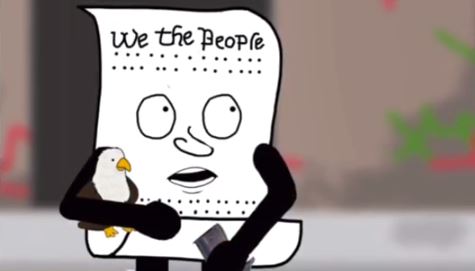
Traditionalists will tell you this is why ultimate power is left in the hands of the people - but those same people will generally tell you the Constitution is fine, if people will just follow it. Those aren't necessarily contradictory opinions, but it sure seems that way. The solution, right, is some kind of new constitution, that can be negotiated and agreed upon - but we know, given the polarization of our country, that this is just an impossible task. It could never be done. And even if it could, we'd just need to do it again later (right France?).
We're stuck playing games in a flawed system we know is dysfunctional, but unable to really admit it to ourselves. This is the naked king continuing to parade down main street and ordering the wise young man who claims he's naked into prison.
Ultimately, we're people, which means we're generally poor at managing ourselves, let alone others. Throw in power and fear to the mix and it's amazing we lasted this long before royally messing everything up. Somehow we managed to keep FDR from doubling the size of the Court to get his ideas passed and perhaps Kansas can keep religious oligarch, Sam Brownback, from naming his own court in the same way. There is some hope that this crisis will not be the one that brings the whole edifice crumbling to the ground (I don't typically go in for Chicken Little scenarios), but if it's not this, it'll be something else, right. I mean we have to, hopefully, maybe, finally admit that our Constitution really isn't some all-encompassing, world saving gift to humanity, right? It's a piece of paper that took a lot of smart people a long time to figure out (on the second try, mind you) that work pretty well for the most part - but it isn't, nor could it ever hope to be, perfect.
This is why the Christian response is, as it always should be, an alternative example. We really shouldn't be worried about trying to make the system work, because "the system" doesn't work. We should be living out the alternative politic handed down by Jesus Christ. A friend of mine recently asked the rhetorical question - What if Jesus is enthroned now and this is the way he governs the world?
I don't think that's wrong. Christ has come. Christ reigns. The Kingdom is here now, but it's one built not on power and might, but on self-giving love, the kind Christ commissioned the Church to carry out in life and practice. This is precisely why I believe no nation can be a Christian nation, because you just can't be both.
It is times like this when it becomes apparent just how little faith we put in our gospel. We're so entirely invested in the systems of the world that we can't rightly believe in Christ's kingdom enough to live in it. I'm not saying we need to withdraw from the political process- not at all - we just need to take it less seriously. An election, even the regular governing of the country, is not the end of the world; it's not a lynchpin of history or even a referendum on the future. Those make great debate quotes, but they contribute to this overwhelming faith placed in flawed institutions.
It's important, sure, but it's not as important as we make it.
It's not unlike your typical homeowner's associate writ large, right? Yes, there are far too many rules, and much of its construction and function make no rational sense, but in the end, you win some and you lose some and you live your life. It might mean you have to cut the grass in a northeasternly diagonal instead of to the south-southeast, and you may have to give in and let Gladys put up that ghastly inflatable snowman, because its in her back yard. It's a nuisance, yes, but the only time it becomes unbearable is when someone takes it too seriously and makes everyone's lives miserable.
The easiest thing to do would just be to let the President pick a nominee and if they're competent to do the job, confirm them, regardless of their interpretive philosophy. That worked for the first 200 years of our country and it would put an end to all this mess. I know the Democrats made a stink when Alito came through, but they did let him through. It was wrong to make a stink then and it's wrong now. It's petty and it's childish and we need to get over it.
I know everyone caught up in our electoral and governance system thinks they're doing really good in the world (or trying to) - I'm willing to grant that kind of gullible optimism - but in reality, life is so much more important. I know I wrote hear a few months ago that as much power as the President has, he could do far more good for the world as an actual community organizer. I really believe that; I think it's true of every politician. Again, I'm not saying we should get rid of them, but we should get over them.
I think this is a good attitude for anyone, but I think it's especially important for Christians. What we say or affirm or swear to has little to do with what we really believe. Our actions bear out our real commitments and it's about time we take seriously the claim that, just maybe, the way of Christ is actually the hope of the world?
I doubt it would end electoral contentiousness, but it would certainly de-escalate the situation if we just all took a step back, a deep breath, and a moment to re-orient ourselves to reality. An election year may be a bad time to suggest such a thing, but it's certainly the time we need it most.
Good day.
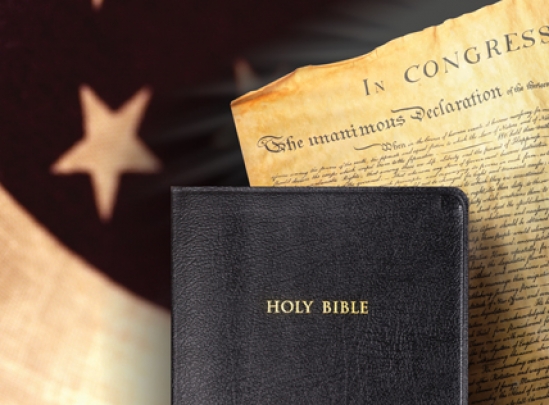
I find it curious that the debates over interpretation look virtually identical whether one is speaking of the Christian scriptures or the US Constitution. I hope it gives everyone who works with both some pause to consider their assumptions. We can make some distinctions, of course - a conservative faith statement regarding scripture is that it contains "all things necessary to our salvation." That happens to be the statement made by my particular denomination - it affirms that scripture is complete and foundational, but it leaves some wiggle room for wrestling with interpretation.
Personally, I have some issue providing even that much credence to the US Constitution. Constitutions, in general, are fallible, incomplete documents. Just because ours has lasted longer than most others, doesn't, to me, prove it's got some inherent worthy beyond the paper its printed on. I struggle to say "it contains all things necessary to our continued governance," with the same meaning I might talk about scripture. I can't/won't assume it's going to have all the answers, if we just look hard enough.
For me, that would put it on an equal footing with the bible. I'm not real comfortable with that.
At the same time, this debate also helps me to critically question even that assumption of scripture. If documents, divinely inspired as they may be, contain the words and interpretation of people - can they really be relied upon to provide a complete foundation? There are certainly some who look to scripture as 98% reliable - as the best foundation human beings could possibly have for living, but perhaps not as perfect as some would like to believe.
Others, of course, see both the Christian scriptures and the US Constitution as good, historical writing, with more than some important for our lives today. They can be taken seriously without being taken too seriously.
There's at least five streams of interpretation here. There's a dictation theory - that the words, scriptural or constitutional are set in stone and must be taken at face value. There's a strict constructionalist - who wants to understand the original intent of the authors, to get behind the words and make sure the meaning has not been warped or misconstrued by the passage of time. There's also the pragmatist - who looks at these documents as guides, but guides to be weighed and critiqued based on the realities of the world in which they function; there's also the reverentialist, who gives such documents great credit and stature, but will ultimately deviate on some matters, reluctantly and with great turmoil.*
This seems to be the battle between conservative and liberal. Of course, the stricter one's interpretation the farther to left or right one draws a line. Those who believe the Bible was dictated by God couldn't hold even the most conservative interpretation valid if it deviated from their own position. "All things necessary to salvation" is the conservative position of my own denomination - The Church of the Nazarene - but we're often challenged as raging liberals, just as anyone who believes some part of the constitution might evolve over time is lambasted as liberal, no matter how they approach legal interpretation.
I say all this, obviously, because the US is in a big, ugly mess right now. In the midst of a tense election year we've got a Supreme Court vacancy, where one of the most conservative justices in history must be replaced. There are legitimate debates to have over whether eleven months is enough time to make selecting a replacement prudent (although I think the majority of those debates are fueled more by partisan loyalties than any logical pragmatism). At the same time, I want to caution especially Christians, but certainly anyone who takes this seriously to think about the rhetoric we use when engaging in these debates and those to follow about what kind of justice should be selected.
One does not have to hold the same understanding of constitutional interpretation as they do for scripture. I am certainly more conservative in my understanding of the bible than I am in my treatment of the constitution. Regardless of where you stand on what - these are not the same thing. As I said, treating (even subconsciously) the constitution as a sacred document is a surefire path to civil religion; it's a dangerous position for Christians to find themselves in - not a necessarily disastrous spot, but certainly a high-wire act of self-awareness.
We have to be mindful of the way in which we treat the constitution and our comfort in elevating it the level of scripture. That's important.
Secondly, we've also got to be mindful of the way we use terms like conservative and liberal. We can't define those terms based on our own perception of reality. It's perfectly acceptable to say "Bernie Sanders is more conservative than me," or "Ted Cruz is more liberal than me," but to label them conservative and liberal, respectively, is confusing the conversation.
We do the same thing when talking about our justices. Antonin Scalia was very conservative; although he didn't hold to the most conservative possible position on constitutional interpretation, he was about as far right as one can feasibly be and still function in the legal community. At the same time, he can't be the measure of "true conservatism," that's language to avoid. It's perfectly fine to draw the line of personal acceptability at Scalia, but to say this line also defines conservatism will only make dialog more difficult.
This is the same problem we have when some say, "believing in a seven day creation is the only truly conservative position" on biblical interpretation. The debate them becomes about the definition of conservatism (and thus gets personal, especially for self-styled conservatives who don't meet your standard) rather than the substances of actual positions.
I'm being long-winded as usual, but the real message here is to be careful how we talk to one other. Be careful not to draw lines of comfort around terms we want to keep for ourselves. This kind of tribalism may help us feel secure, but it's a recipe for strife and disaster. It leads us to places of generalization and demonization. Even the most conservative person cannot allow themselves to get to a place where they'll rail against a judicial nominee simply because of the President who makes the nomination. This is the real tragedy. If everything conservative is bad and everything liberal is good, then nothing matters but our own opinion and nobody can survive that fight.
The bible and the constitution aren't the same thing. It's ok to understand and interpret them the same way (I think that's a mistake, but you're certainly entitled to make it), but we can't combine the two. That spells disaster. We also can't define reality by own our understanding. We are necessarily communal people. We have to have relationships or we become something less than human. Having a relationship means giving permission for someone else to think differently - and that means giving up control of how we define people.
Let's let everyone speak for themselves, about actual opinions and beliefs without lumping them, or ourselves, into pre-formed categories whose worth we've already determined. I'm not sure either scripture or the constitution would look fondly on that, no matter how you interpret them.
*There's also another school of interpretation that essentially says these documents point to some larger truth and our interpretation of them is only an attempt to reach that higher plane of mystical understanding - whether it be defined as "Jesus," "God," "freedom," "natural law," "human dignity," "democracy" or anything else. Some might call this a middle position, but it's really off the spectrum and, while interesting, not quite relevant to my point in this, already overlong, piece.

Despite its complexity, a complexity that requires years of study to begin to understand, a complexity that has inspired months and weeks of intense debate, the US Constitution has some very simple functions. I have great respect for it in that way. Government, a complex institution, is boiled down some bare principles. The best is that it set itself up in such a way that the answer to any complex Constitutional question is simply the opinion of the majority of the Justices of the Supreme Court.
They rule; it stands. The same people so vindicated by Citizens United last year are up in arms over the recent ruling on the Affordable Care Act. Sometimes you hate the decision and sometimes you love it, but there's no recourse of disagreeing; the decision becomes definitive. I love that kind of forethought.
The other simple solution I love about the US Constitution is its basis on principle. Written and framed by a bunch of wealthy landowners, the principles of hard work, self-reliance, and individual liberty are squarely ingrained therein. These were guys who could take care of themselves and didn't want anybody telling them what to do. That's why they excluded most US residents from the voting process and completely distrusted the common man. We're a Republic, not a Democracy because the US Constitution was designed to benefit capable people over the less capable.
That's music to the ears of some today, who maintain such a legacy and insist the Constitution should continue to work under those principles. For others, it sounds terse and unfeeling, almost tyrannical in it's ironic attempt to escape tyranny. Here again, there is much room for debate, but the genius of the US Constitution is that the intent or principles of the founders don't matter to the function of government. They created a system whereby the government reflects the desires and convictions of the people. If those convictions become something other than the ones under which the Constitution was formed, it will cease to work as well. In other words: we get what we deserve as a people.
When society decried the greed, cowardice, irresponsibility, and downright contemptuous nature of our government, we are really heaping coals on ourselves. The people we elect reflect who we are and what we value. It's the way the system was set up. Again, I can't explain how genius this is. Truly a representative form of government.
Most of the political battles these days boil down to ideology. One side wanting to return to the ideals of founders and the other seeking to move forward towards progress and a new vision. Frankly, these are both far too grandiose of notions to ever be realistic.
The gradual progress of civilizations has improved some things for some people - that's true. The upward trend in history really just increase the distance between benefit and devastation. There is just as much sorrow as ever; we're just better at telling the story. In the same way, the founders of the US Constitution aren't all that enviable. Selfish, rabble-rousers mostly - certainly with a flair for the idealistic and an uncanny ability to motivate. History's demi-gods have always been that way.
What makes the most sense to me, in light of our genius Constitution, is a focus on the principles that actually work to produce a decent society. In this sense, neither side of the ideological divide is bereft of contributions. There is something to be said for responsibility and hard work, of course; there is also something to be said for compassion, empathy, and community.
I have no doubt that everyone engaged in US politics wants nothing more than to shape society towards a better set of values (in the hopes that those values would, in turn, shape a better government). The problem is that most people seem to think that values are instilled through education, logic, guilt, or force - that people adopt a new perspective because of something that clicks inside their head.
I just don't believe that. I believe people are transformed by experience. People are shaped to be responsible by being valued for who they are. I believe people begin to care about others when they've discovered human dignity in themselves. Despite our best efforts to instill our ideological convictions within us, I don't believe the path between our heads and our hearts is all that easy to navigate.
I don't spend a lot of time worrying about government or the future of our country. If they ask my opinion about something, I'm happy to give it - but ultimately what they do matters little to life, certainly less than our media and power obsessed culture wants us to believe. The government we have and the society in which we live is entirely shaped by the people of which they are comprised.
I know it's a novel concept and likely a fools errand, but my politics involves a real attempt to love, honor, and respect the people around me, even at the cost of my own comfort. I believe it is the only hope for a world worth living in.

