
My friend, Ric, a former seminary classmate, posted a piece on his blog this week that went Nazarene viral. He got something like 30,000 hits the first day (100 times more than his normal total). Ric's a pastor in the United Methodist Church, but his training was in the educational system of the Church of the Nazarene (my denomination). He talked about some of the struggles he had and his decision to move from one denomination to another.
It brought up one of our most difficult, unhealed divisions - namely our perspective on education. Likely as long as there have been institutions of higher education in the Church of the Nazarene, people have been skeptical of them. Professors are on constant alert for charges of heresy or the dreaded "liberalism." You can read the whole post for more detail (and likely lots of comments and explanation), but ultimately, he got an offer to work at a UMC congregation, tried to keep his credentials with the Church of the Nazarene and, when that proved near-impossible, simply moved from one denomination to another.
What fascinated me about the whole thing (and the fact that its a "thing" is exactly that Catch-22 of which I spoke) is how defensive some people have become. Ric was pretty overt in stating this was simply his experience, with no claims to larger trends or narratives. The problem is, his experience mirrors the experience of a lot of young Nazarene ministers. Whether he wants it to be normative or not, to many, it is.
From here, the responses become not responses to Ric, but to the many others in a similar situation. One comment I saw said something to the effect of "you either run from the problem or stay to help fix it." This is certainly a truism - but only if there's enough impetus to care about fixing it in the first place. Ric proclaims, right off the bat, his main reason for leaving as a lack of roots. There just wasn't enough connection to the denomination to make any sort of struggle against adversity worth the time, pain, and effort.
That makes sense. Not so much to me, but in a general sense.
I get it. I, on the other hand, have deep, deep roots. My father is a Nazarene pastor. His father was a Nazarene pastor. As best as we can figure, my daughter is likely a sixth generation Nazarene. Both of my wife's parents are Nazarene pastors and her mom was raised in the Church of the Nazarene from birth. My Dad and his three brothers all went to Nazarene schools and picked up wives along the way (with their own set of Nazarene roots), a tradition that carried on for most of my generation as well.
I can't imagine myself not connected to the Church of the Nazarene. The only way I'd leave is if they physically bar me from the building.
The problem is, what it means for me to be a Nazarene is certainly different than what it meant for my dad or my grandfather or his parents. It used to be a pretty tight-knit community where not only were people united in the basic holiness message, but lifestyle, worship, and the larger spectrum of theology was relatively uniform all the way around.
I don't think Ric is crazy. In fact, his experience resonated as much with me as anybody else. I left my ordination interview more upset than excited - which is probably not the ideal scenario. I've witnessed the backlash against professors at Nazarene institutions and I've experienced our deep-seated anti-intellectualism on more than a few occasions.
There is some lingering notion that somehow education harms faith - the more you study the less you believe. I can certainly attest that my education has led to me to believe a number of thing quite differently than I believed before, but I'm also quite certain without this education I would no longer believe at all. My educational experience showed me there's more than enough space for my questions within the larger context of the Nazarene Church.
In my case, although my education sometimes makes me feel marginalized or unwanted, it served to connect my understanding to my roots. I was able to recognize what made the Church of the Nazarene so special to those in my family who've loved it - but also discover a way to engage that rooted joy from my own perspective and context.
For Ric, it seems (and forgive me for being one of "those" people reading into things you've written), his roots were more anchored in his educational experience. When push came to shove, the people to whom he felt rooted were being marginalized and challenged by the Church of the Nazarene. If you find out your roots aren't really that connected to the larger plant at all, what do you do? It makes perfect sense to me.
My roots are in a different place, but don't think I haven't thought about the distinct possibility they won't always feel that way. If you're driving down the road and see a friend with a flat tire, you're likely to stop and help. If they begin to blame you for their having a flat tire in the first place, you might put up with it for a while. If it continues, you're going to evaluate just how good of friends you really are and whether sticking this ordeal out is entirely worth the hassle.
It's been said, and I have no idea if this is true or apocryphal, that Randy Maddox's comment when asked why he chose the UMC over his Nazarene roots, was that he'd rather defend his head than his heart. That's the sad choice a lot of young Nazarenes feel they have to make. They'd rather be seen as a sincere believers with the occasional odd idea than learned people who may or may not be a real Christians.
I've come to define holiness (the only real reason the Church of the Nazarene still exists) as an ingrained commitment to God - sincerity and passion towards living a life in imitation of Jesus Christ. Too often that doesn't seem enough for many people. I don't want this to sound like a death knell for our denomination - there are certainly plenty of supportive, welcoming Nazarenes out there, likely a majority (although who really knows?) - at the same time the issue is pervasive and real. It's a part of our past and a part of our present. It may still be a big part of our future. I don't know. I hope not.
I do know there are a lot of young people leaving because they don't feel trusted, the feel the subject of fear rather than hope. Fear will wither roots faster than anything. It is trust that will make them grow. And, if perhaps you find it difficult to trust someone so seemingly different from you - a skeptical elder or a radical youth - could it be time simply to not trust them and instead trust the God so visible in their lives?
That's how we grow roots and it's how we stick together.

This self-titled album is certainly an attempt at more substance. She's not going the full Bob Dylan, likely because she recognizes her need for songwriting help (and there's a lot of credits on this record) - still the production has a serious tone, a noticeable attempt to do something more profound from the very beginning. Beyonce is one of the biggest stars in the world, which already makes an attempt at concept album so much more difficult - perhaps the best thing I could say is that Beyonce is better than I would have expected a Beyonce concept album would be.
My problem comes primarily in the lyrical content. They're good songs, well written, with interesting instrumental tracks and creative production decisions. At the same time, the lyrics are probably more indicative of Beyonce as a person when we only really know Beyonce as a persona. The opening track, "Pretty Hurts" talks about the perils of our beauty-obsessed culture, but they feel incredibly odd coming from one of the most beautiful women in the world. Maybe Beyonce is saying she's not really one of the most beautiful women in the world, that it's all an act - but it's still what we know about her, because it's the image she's (or her management and PR staff) worked fifteen years to instill in us.
This theme recurs throughout the album and I'm more than willing to give Beyonce space to express herself more personally - ironically, her persona has certainly left that option open to herself. We've seen her becoming a more well-rounded, responsible global citizen over time. She speaks out. She treats herself and people around her with respect. We've seen her, as classily as possible, become a mother, a wife, an adult. At the same time, she still has to provide her audience with something familiar (I'm sort of intrigued about the next album - I think Beyonce can go just about anywhere from here).
A good metaphor for this is the hit single, "Drunk in Love," I read someone say (probably Rembert Browne from Grantland) that "Crazy in Love" was Beyonce singing about how great it was she got to have sex with Jay-Z, while "Drunk in Love" in an example of how her star has eclipsed his and she's now singing about how great it is for Jay-Z to be with her. She's able to both assert herself as a person and also subvert the stereotype of the hip-hop girlfriend (which she's already done, in some sense, by becoming THE hip-hop wife).
I haven't really had much experience with Beyonce beyond the songs that get released as singles, so it's more a surprise just how sexualized and stereo-typically R&B a lot of the lyrics on the album are. A song like "Blow" is exactly what you expect it to be - but even here there is a good measure of feminist commentary on the sexualization of urban music culture. (It also makes me wonder why Pharrell's contributions are always on tracks with such overt sexuality - such a departure from the persona he presents in public. Strange.) A song like "Partition," though, is just a tad uncomfortable - it might potentially be a commentary on celebrity and expectations, but I am so absolutely out of my depth there to make any judgements.
I really like the track, "No Angel," very creative choices in a lot of areas. It typifies, I think, what's best about this album: it's so much more about what the songs say about the world outside the song than the song itself (even though the songs themselves are pretty good). We get this picture that Beyonce has tamed the beast, so to speak, bringing Jay-Z into a more refined adult life. Of course, the the infamous elevator video of last year, we know there's a little more drama in the family than they've wanted to let on. To me this seems one way for Beyonce to let the world know they are just a normal couple, despite the very extraordinary circumstances they find themselves in.
The second half of the album has a little more reminder of just how talented Beyonce is as a vocalist. The absence of real singing on the first few tracks, while interesting, feels like withholding in some sense. Maybe that's part of the message, but a song like "Rocket*" really allows her to exercise the pipes. "Mine" feels more like a Drake tune than one featuring Drake, but the hook is pretty darn catchy. "Blue" and "Superpower" and great, and "Heaven" just haunts you. It's a spare, simple track encapsulating all of the best parts of the album. It's tough to pick a favorite song, but this one definitely sticks with you - and could likely be another single if she wants to release it.
?Obviously "XO" is the song everyone knows, for good reason. The production isn't up to the same level as the rest of the album, but the writing is top-notch. Still, it's indicative of this overall impression that Beyonce's not really putting everything she has into the album (although, by the end of the six minute "Rocket" you almost forget about this). As much as Beyonce reveals more about her than we've seen before, there's still some small measure of orchestrated messaging here. It's like 10% ingenuous - not enough to identify easily, but enough to feel. There's just not permission (at least for me) to really let go and believe in the authenticity.
In the end, though, the album is just a bit too repetitive. So many of the tracks are similar - covering similar topics, themes, production choices. It's a well done album, but it seems more a pivot, allowing Beyonce to do something different (and, frankly, whatever the heck she wants) in the future. There's a much better chance her next album wins the Grammy. I don't think this one has much chance outside a sort of career achievement recognition, which Beyonce still seems too young and vibrant to get quite yet.
Still, it is a real album. It's very good. It's inventive and distinct. You can't pick out any one track that's obviously better or designed to be a single. This is definitely Beyonce exploring her independence and personality in ways she's never really done before. She incorporates her history (lots of clips from her younger performing days) along with a real push to give women a voice in hip-hop they've not had before. A win here would be well deserved, but this whole album points to something better down the road.
*Miguel co-wrote the song and you can really feel his influence throughout. I'd love to see them do an album together - he seems to know exactly how to write for her, plus it would give him space to sing as well. Ironically, the next best track on Beyonce is "Superpower," with Frank Ocean. Frank got all the press for his debut a few years back, when really Miguel put out the best R&B album of the year. More shades of that competition here.

I don't know exactly what to say about American Sniper. It's a good film. There's a humanity involved, despite the horror and death, mental and physical trauma, there is a guy searching for meaning and ultimately finding it. We can debate all over whether he's looking or finding in the right places, but the story is honest and it rings true.
The story in the film, that is. The real story is, as always, much more complicated. Chris Kyle was unabashedly black and white, seeing the world only in terms of good and evil. Clint Eastwood, as blunt and unrelenting as he can often be, really captured the essence of Kyle without necessarily buying into Kyle's narrative. There is plenty of room in the movie to see and judge violence and war in many different ways. I think they did as good a job as they could with the movie while still doing justice to the man at the center of it.
I am not a fan of violence. So it would make sense to be drawn more to Selma, a story on the other end of violence. Black marchers, peacefully assembled, were beaten bloody and without mercy by local police and state troopers, while trying to march from Selma to Montgomery in pursuit of voting rights. I find it interesting to ponder how the Chris Kyle of 1965 would have defined good and evil in that scenario. But that is ultimately beside the point.
Upon first viewing of these films (about twelve hours apart from one another) it seemed easy to parallel the two themes. The war movie, in some sense, justifying (if not glorifying) the "honor" of war becomes a surprise smash hit, breaking all sorts of box office records, while the little, largely African-American production about protest and non-violence goes by largely ignored. It could be seen as a symbol of the way our culture views this issues - non-violence is just a tough sell.
I wanted to write that kind of post. In the end, though, I think these movies are far more similar than we give them credit for - and I'm not sure that's a good thing.
Both Selma and American Sniper put us in the mind of strong, heroic people, summoning great courage to face difficult, near-impossible situations. The stories are not about violence and non-violence, they're about inner strength. Each film is about doing what you think is right, even if it is unpopular and causes great suffering for you and your loved ones. The main drama in Kyle's story is the same as in Martin Luther King's - was the pain inflicted upon their families justified by their higher callings.
I suspect most American would say yes on both counts. King was doing things the right way - conflicts within a society must be handled peacefully; whereas international conflicts, like the one faced by Kyle, require a brute force. We've so often been taught how to recognize justifiable and unjustifiable violence, with just these scenarios as examples, it's easy to fall into line.
Neither movie really challenges the status quo. As a radically peace-loving Christian, I have a hard time glomming on to either film. I don't think war is ever the right answer. War has never, in the history of humanity, brought peace - yet we keep trying. At the same time, it's not exactly Chris Kyle's fault he's involved. Beyond the societal pressure to patriotism, only a heartless soul would expect soldiers to prioritize anything but survival in the midst of a war zone. I say that in reference to Kyle and to those he was sent there to kill.
At the same time, Selma's one extended explanation of non-violence was the opposite of a defense. The argument was, essentially, we're outgunned - fighting back will only make things worse for our people in the long run. The implication being that if there were a chance to succeed violently, then it might be worth it, but this particular battle is not going to be won that way.
In other words, if we're fighting an entrenched insurgency with the greatest military might in the history of the world, then of course we'd fight. Instead we're the rebels and we won't win that way. If you're Chris Kyle, fight; if you're Martin Luther King, you can only resist and pray.
We live in a society that believes this. It is truly the American way. It's not really our fault. Power and might is the way of empire. The man with the biggest gun makes the rules.
The power in Selma, comes from the eyes of the nation seeing innocent, peaceful marchers beaten for wanting to vote. Violence only holds sway so long as it can be justified to the masses. This is the purpose of American Sniper - at least in some measure. We're forced to ask the question: where is the line? How do we responsibly use violence, force, and might in the world. It's a difficult question. But it's easier to make peace with our answer (that war is a tragic necessity) when we have a movie like Selma to justify it. By recognizing the reality of an exception to the rule of violence, we're much more comfortable with the rule itself.
Justified violence is always a means to power. No one ever condones violence for violence' sake. We believe in violence only when it seems the best option to provide some perceived good. Freedom, security, control, peace-of-mind. It is easy, in the same way, to see non-violence as a means to power. Certainly the Civil Rights movement gained great freedom, security, control, and peace of mind without resorting to violence. Our temptation is to leave it there.
One of Dr. King's great legacies - something often lost in the historical priority of Civil Rights - was his absolutely insistence on non-violence as an end in itself. He vigorously opposed the Vietnam War, long before it became the popular sentiment. He did so because war causes suffering - for hero and villain alike (however we may paint them).
Our culture remains one obsessed with power - namely the power of self-determination. That is our idol and thus our culture's artistic expressions keep this front and center. Selma and American Sniper are good films. I liked both of them. I think they're well made and have important things to contribute to our collective conversation. They are, though, entirely within the realm of comfort for an American viewing audience. They're telling us things we want to hear, even if they do it in profound and difficult ways.
They are not different, though, only serving to support our underlying cultural structure. We must first understand the ends we pursue before we can really grapple with the means by which we arrive there. I'm not sure these films pull back the curtain far enough for us to find what we're truly looking for.
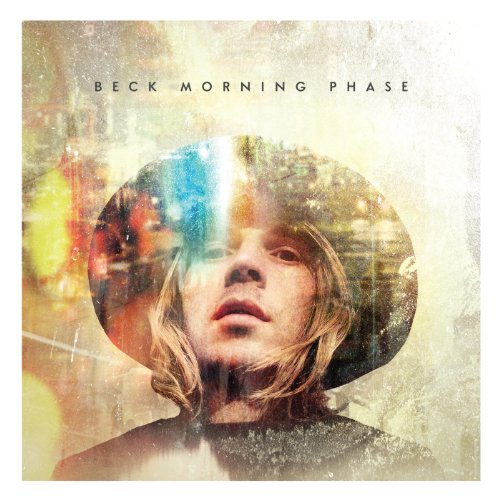
Morning Phase opens with a slow, smooth, really well produced, guitar-driven "Morning." I've been listing to a lot of pop music lately (I have a two year old), so it may take me a few tracks to get into the spirit of something a little deeper and less straightforward. There's a real melancholy to the song, but a sort of hopeful melancholy. It's comforting in the middle of winter, like the world isn't always the way we want, but it might soon be, and even our present state isn't as bad as we might expect.
There's some indication this album began a decade ago, shortly after Beck's spinal injury. There's a real sense of, not boredom, but perhaps an unwilling patience - the necessity of stillness recovering from such an event. It seems to have given Beck a lot of time to think about the realities of life, but I'm not sure he's come to any real conclusions. "Heart is a Drum" and "Blue Moon" also fit into this category. "Unforgiven" is a haunting track, working the opposite end of the spectrum, using the lyrics to convey hope while implanting them within a slow, knowing instrumental track.
Parts of the album have a real 70's singer-songwriter feel to it (you could totally imagine Jim Croce singing songs like "Say Goodbye", even if you can't imagine him writing them). Beck adds a series of orchestral arrangements in the background to give the whole album a very ethereal feel - perhaps the Morning Phase he's going for.
Beck produced the album himself - it is entirely his labor of love. We wouldn't really expect anything else from a guy so particular about how he expresses himself and how he's (mis)understood by the general public. On a sort of cursory listen, Morning Phase doesn't sound all that different from any number of very good albums produced this year - and I imagine any of them could have filled this "artsy" slot that's seemed to arise at the Grammys lately - but Beck does earn the distinction through intricate production and deftly layered instrumental arrangements, which convey a real sense of depth, but also don't feel overburdened. I wonder if there's just a recognition of the time and effort he's put into the project, the same way Boyhood is being recognized by the Oscars.
"Wave" is an almost entirely orchestral track. Beck adds vocals to it, a haunting, sparse lyric, just eight lines and some repeated words that seem to be riding the strings up and down (which makes the track title quite apt). Beck worked with David Campbell on the orchestral arrangements and they really pay off, giving a unique quality to the album and creating a real sense of mood, evoking similar emotions to the lyrics in alternative, complementary ways.
A number of songs ("Don't Let it Go," "Blue Moon," and "Country Down") have lyrics speaking of return, loss, and longing for reunion. They sound like break-up songs. I don't know a ton about Beck's personal life, but I was under the impression he had a pretty strong relationship to his wife, Marissa Ribisi (twin sister of actor, Giovanni and fellow second generation Scientologist). The lyrics almost make one wonder if he's been missing something else in his life - perhaps a sense of self lost in his injury of just, perhaps, some of the joy of youth.
I think the best track might just be "Blackbird Chain." It's not the most fun to listen to - at least not the most pleasing to my ear - but it features interesting lyrics with a real panache, along with unique and unusual instrumental choices. It captures some of the melancholy on the album, but also infuses the traditional 70's vibe, bringing together all the elements on the album into one place. It's not my favorite track, for sure, but if you're only going to listen to one, pick "Blackbird Chain," knowing some of the other songs you'll like better, others you'll like worse, but they'll all contain elements of this one track within them.
It's hard to chose a favorite - so many of the songs have elements of joy and attraction, but I was particularly drawn to "Turn Away." It uses a harmonized vocal arrangement reminiscent of CSN&Y or Simon and Garfunkle, with a very simple acoustic guitar beat underneath, driving the song along. There's something deeper here, very personal, but also quite accessible. It's not as thought "Turn Away" is so much better than other tracks, but you feel like you have to choose something. I like this one.
Or maybe it's "Country Down," the track immediately following. Beck brings out a distinctly southern rock ballad vibe, using the instrumentation to emphasize the lyrical theme of traveling, escaping, wandering - yet it's also simple enough that the title exactly explains the song. (Ok, I really like "Don't Let it Go" as well. There's a lot of good songs on this album.
Morning Phase is that kind of album - maybe similar to Jack White's from last year, a well-respected music veteran and innovator, making a noticeably good album with nothing that particular stands out above the rest. "Country Down" is probably the only track that could get radio play, although with the homogenization of commercial radio, it'd be increasingly tough to know where you'd be able to hear it.
Morning Phase features two short, instrumental interludes, one at the beginning and one about two thirds of the way through the album. They seem to be precursors to the final track - "Waking Light" - a full song with lyrics that feels like the finale of a sunrise. If Beck's attempting to capture the feeling of morning, this is the sun finally escaping the horizon. There's a positivity throughout the music, with hopeful lyrics, almost an escape from the purgatory of roiling emotions exhibited throughout the album. If this is indeed his process of recovering from a major injury, this is the moment when he's able to get back to music, finish his album and move on. It'll be interesting to see what he chooses to perform at the Grammys, but I imagine it'll be a very stark departure from the rest of the show.

I know I've written here before about my journeys with prayer. I'm not the kind of guy who can sit still and (mentally or physically) say words as if there were a conversation happening. It's easy enough in a corporate setting, where we're composing a prayer from a group of people, we're expressing our collective thoughts and desires. It makes much more sense there. In a personal vein, though, it's always seemed strange to me.
There's the childhood question, "If God knows what we're thinking, why do we have to say it or even direct it intentionally towards God?" I'm not sure how some strong Calvinist would answer that question, but having grown up in a free-will tradition I was always told that our requests can influence God's actions. It was also sort of a warning not to ask for the wrong things since God might choose to give them to you.
I don't know if there's time or if my brain has enough capacity to properly discuss the theological problems with that particular exchange, but I'm finding myself more and more in agreement with my childhood self.
As I said, I've never been that kind of pray-er. Perhaps if I find myself in a particular difficult mental or emotional spot, that kind of prayer can be cathartic or provide enough rest and/or perspective to stabilize a person for functional life tasks. But that is ultimately was Rollins was getting at, right? He was saying people pray because they can't entirely believe God knows everything and acts lovingly all the time.
It should be said he's not at all critical of this - and neither am I. Doubt is an important part of faith and the ability to express our doubts in prayer can be vital for us. It's reaching out a hand during a scary movie, just some gesture to remind ourselves there's someone else out there. We're not in this alone.
I've been mulling, though, if some of my personal peculiarities make belief an easier challenge than it is for other people. I really don't feel the need to pray - at least in the way Rollins refers to it here. I commune with God. I spend time in silence or contemplation and, from time to time, I'd eve claim God has spoken to me. I find moments of great spiritual connection that seem entirely in line with the broader view of prayer we find in scripture and Christian tradition.
I don't do a lot of praying, though, in the typical sense. I wonder if that's because I really don't have a bit of atheism in me. There's lots of things I question, things I hold at an intellectual arms length for whatever reason, but I don't doubt God.
I'm not saying this to prove some superiority. On the contrary, I'm saying this to sort of confess some of my failings.
Apparently, the typical person is very in touch with their own feelings, but struggles to translate those feelings into deep belief. This is generally the purpose of counseling or psychotherapy, to sort through the feelings and figure out what's true. Recently I've discovered I may be the (surprise, surprise) opposite, functioning on some odd plane where I reason out core beliefs, determining what's truth without feeling anything at all.
People who know me well have often joked I have Asperger's or some unspecified developmental disorder because of my intense inability to understand how other people think (and often how to relate with them). I've never been officially diagnosed or anything, but it certainly wouldn't surprise me. I do have what seems to be an uncanny ability to act based on beliefs I've worked out nowhere else besides my own head.
I believe all people are good and valuable, that everyone deserves the same treatment without priority or other attachment. It's not difficult for me to treat my family the same way I try to treat everyone or vice versa. (Now there is some difference in terms of responsibility - I have to be a parent and feed and clothe my child, I made promises to my wife - those are different than simply treating people a certain way.) Let's say my brother had some disease that would likely lead to a kidney transplant down the road, but some stranger needed one immediately; I'm pretty sure my only internal conflict would be over the social convention of prioritizing family, not the actual core rightness of the decision.
I'm not saying I can operate completely devoid of emotion, but I certainly seem a lot better at it than most people. This, of course, often makes things difficult. I make choices that seem logical and right to me, which seem to annoy or offend and definitely puzzle those around me. I've sort of gotten used to it by now. As much as it makes some things difficult, it certainly makes others much easier.
I believe God exists. I believe God is at work to bring about the redemption and fulfillment of all that exists and that God will act in perfect love to accomplish this inevitability. Even if this doesn't seem like what's happening in the world around us, I believe it indeed is happening.
Because of that, it doesn't make a lot of sense to ask God for anything. God certainly knows what bothers me. I can express frustration for injustice and impatience in seeing it rectified; I often do. Ultimately, those things will not help change much, since God is doing as much as God can or will do at all times.
I certainly believe God can, does, and will change, based on circumstances and the choices of we humans with whom God interacts. I'm not at all saying things are necessarily determined (shoot, I don't even believe the specifics of the future are knowable, by God or anyone else), I just recognize that God knows and understands the intricacies of my mind and actions regardless of whether I communicate them or not. Whatever God will take into account from me, is happening, whether I say it or not.
Ultimately, what I'm saying is what I think Peter Rollins was getting at - we pray for ourselves. I pause to pray before meals and have taught my daughter to do the same, not because God needs this, but because that pause helps us reflect on where this food comes from and all the way's we're provided for outside our own capacity to survive.
It's not that those words need to be said or that if I don't say them - or even think them - God will some how act differently towards me. I don't believe that at all. I do believe that perhaps I'll act differently towards the world, I may stop believing those things, if I don't pray. Intellectually, practically, those prayers are entirely for me.
This is why there was some joy in hearing Rollins talk this way about prayer being for atheists. It does come at the moment of our weakness, specifically for our personal formation. Prayer can change things - it changes us, based on how we do it and what we believe. If you're never thinking about a larger reality and the way you're supposed to act in the world (and how your beliefs influence those actions), then, yes, you may have a problem. Prayer might be a good thing for you. But if you are taking that time to implement practices of evaluation and formation, working to live rightly in the world, you probably shouldn't feel guilty about your lack of prayer - you may, in fact, really be praying far more than you ever suspect.
*As I was looking for the right image to put with the post above, I discovered this interesting one:
This is what I mean when I tell some of my atheist friends they might be Christian and not know it. I've got no problem with this at all - you could replace the word "Atheist" with "Christian" and be just as accurate. Life is all about what we believe to be the best way to act in the world and why.

