
In a way, I like it. The fact that government officials weren't using secure email at the same time Justin Beiber was cute-famous and not yet creepy famous just goes to show us all that things aren't as perfect as we imagine. Our government isn't any more high tech or on the ball than the place you work. We're all just people - even those people who pretend to be the most important people in the world.
Speaking of them. Lindsey Graham comes out commenting on this whole thing by admitting he's never sent an email!! He also said he doesn't have an email address. I'm pretty sure that's a lie - he might not know what it is or who answers it, but he's got one - unless of course the government's IT department is woefully behind the times... oh, right... Hillary Clinton was sending top secret emails through a server in the basement of her Westchester home. Awesome. Maybe Lindsey really doesn't have an email address.
Still, bragging about it doesn't seem to be any better. With email, even a strange, unsecure, private email, there's a record of conversations. Lindsey might have some sort of paper trail, but likely everything he's doing is out loud and in person, what kind of historical record is that? Also, this guy is one of the more powerful Senators in the US. Shouldn't his job require some measure of access to that's become a life necessity even for the Bushmen of the Kalahari? Maybe?
The odd think-tanker and occasional sports commentator Gregg Easterbrook used to go on and on about CEOs and minor political officials traveling with huge security details to make themselves look and feel important. Perhaps we've got the same thing going on in Congress? "No, I don't need to use email, I have ipads and things I keep track of stuff on and people I tell to do things for me." They don't write (or read) their own bills, they don't have to actual fillibuster anything anymore (just tell someone they're thinking about it and the wheels of the greatest representative democracy in the history of the earth come to a screeching halt), they don't even have to walk on the street like normal people (looking at you, private underground congressional monorail). Perhaps this is a sign of being just a little bit out of touch?
People get into politics to reinforce their sense of self-importance, I get that, at the same time, you'd think they might be a little better at hiding that ego from the general public? Then again, maybe the machines of money, gerrymandering, and ad-men really have made elections obsolete and Lindsey is laughing his way to the bank (because he still has to go to the bank, you know, since he doesn't do email).
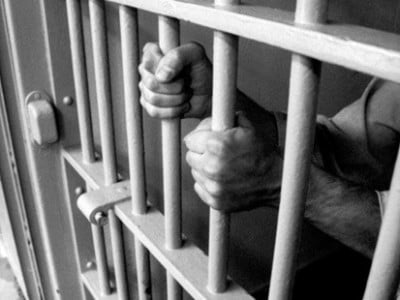
That's pretty sad.
It's sad, but it's sadly reflective of the way our society views prisoners. Honestly, it's pretty reflective of the way many prisons function. Society looks at prison as the place to put bad people. We want those who can't get along away from everyone else. It just naturally leads us to assume prisoners are bad people. We characterize them as "bad" and thus any behavior that looks remotely human is surprising.
Our prison system tends to set things up as "us vs them." Of course that's not true everywhere - not by a long shot. Many correctional facilities work against this model, but for many, prison is a place to dehumanize people. We send the bad people off to be treated like animals and then expect them miraculously to act human again when they get out.
If you read through the story you notice this incident was never going to be reported at all. Officers had to organize a makeshift strike, refusing to work until superiors named it a sexual assault, complaining that too many assaults by prisoners get covered up in the process.
The dichotomy is striking.
I'm not saying prisons are useless. We live in an involuntary society - no matter how much help, grace, assistance, and education we offer people, they may still choose not to participate in society fairly. Prison is sort of a necessary evil. But does it have to be so evil? We send tons of people to prison because its simply easier than dealing with them - or bringing to light the root causes of many of these crimes. It's a complex issue, with lots of unfair parts. Prison is used for people who aren't really a danger to anyone - it's just easier to lump people in together.
But people are people. It's good of these inmates to remind us of that. People are also different. Different problems require different solutions, yet we continue to operate under a "one size fits all" banner. It's not even a good one. We spend tens of thousands of dollars to keep people locked up, most of whom are worse off when they return to ordinary life. We're generally ok with it because these inmates generally come from small pockets of communities and don't affect the lives of most people.
One of John Wesley's early commitments (Wesley was an anglican priest in the 1700's, who founded Methodism and gave rise to the particular stream of theology from which I come) was to visit prisoners. It was on the "to do" list for all of his followers, along with giving to the poor and caring for the sick.
Our society makes it very difficult to even visit people - just part of the systemic means of dehumanization that occurs. I don't know what to do about it, really. Even as a minister, when its easier to gain access to prisons, it's pretty difficult to meet people you don't know ahead of time. The very people who most need connection to people outside the prison bubble.
This is sort of a failed blog post, since I have no neat conclusion. I'm happy some people have recognized prisoners as people. I wish we'd do it more often. Prison reform will likely not happen, since it effects the lives of so few voters and a few people make a whole lot of money keeping other people locked up.
It's not fair. It really sucks. We should be able to do better.

I tend to avoid these things in specifics (other than signing petitions and such) because I am conflicted by the way we handle stories like this one. By we, I mean the larger Christian subculture. This woman's story is resonating beyond the typical religious radical or mainstream death penalty opponent for a number of reasons - it's a woman and a mother and we don't typically kill those kinds of people, even in this often bloodthirsty country. Her case also highlights some of the problems in our justice system - one more focused on numbers than actual justice of any kind - Kelly Gissendaner is on death row for hiring someone to kill her husband - the guy who actually did it will be up for parole in eight years, a gift for testifying against her.
I'm not an advocate for letting people off the hook. I believe we all need to face the consequences of our actions. I don't believe, though, that we are the sum total of our actions. Even if they're very, very bad, we're still human and human life is precious.
I don't think anyone should be killed and I don't think anyone should kill. I may make some personal, practical exceptions to that in real life, but I won't defend those exceptions as right or good. Killing is wrong. I don't believe we stop killing by killing killers. I just don't. Even the most despicable acts imaginable are not worthy of death. That's an insult to humanity in general, even as much as it might feel good in the moment.
That's what troubles me so much. Christians seem to have jumped into the narrative of the general culture on this one. We say she's a reformed person. God has changed her life. Hallelujah and Praise the Lord. I agree. This is wonderful. But that great transformation is no particularly Christian reason to stop an execution. In fact, as Christians, we're called to love those people who hate us and do us harm. We're called to love and care for those who do wicked awful things.
I want this execution cancelled permanently. I'm glad lots of other people want it, too. I don't want to make the case that it should be cancelled because Kelly Gissendaner is a good person. I want to make the case that it should be cancelled because she's a human being and because killing people, no matter how we justify it, is bad for us, them, and the world at large.
I have trouble joining the throngs because their message is just part of the truth. Good people surely don't deserve to die, but neither do bad people. We, the people of this country and all people on Earth, deserve better than this. It might cost us something. It might take sacrifice, but we can do better. Let us not continue to add to the death toll.
There's no such thing as a good execution, so we should stop arguing this is a bad one. They're all bad.
That's all I have to say this morning.

If I think about a decision (and, boy do I think - it's taken me 18 months to replace a pair of shoes, and that is not at all an exaggeration), really mull it over and choose what I think it best, then I'm ok with failure. I might replay it over and over for a while to try and learn from the mistake for the future, but I'm generally ok. If I make the wrong choice without having spent time considering it, I will dwell on it for days - even something very simple.
There's a lot of guilt in my life. Mentally, intellectually, I completely understand it's unearned. I recognize people make mistakes and no one's perfect, and all that stuff. It just doesn't feel that way in the moment. I tend to respond with self-loathing or abject rage, at the very least a strong sense of embarrassment.
I've been seeing a counselor lately, to try and weed through these various threads connecting my past and my actions and my thoughts and emotions. It's been helpful. Of course this process also brings with it a fair bit of introspection. I've always spent a lot of time thinking about why I do things. Now I spend even more.
This week I've been thinking about the tension that exists growing up in the Church of the Nazarene and our particular ways of speaking about holiness. (For those who don't know, holiness is, pretty much, the reason our denomination exists.) My upbringing was pretty typical of an evangelical holiness tradition. We were taught people should be saved, basically intellectual assent to the idea of Jesus as God and savior of the world. Beyond that, though, there's also this thing called sanctification, a miracle working of God's Holy Spirit that cleanses one of a propensity to sin - not that you become perfect, but given a choice, you're capable of choosing good. This new life is called holiness.
There are a lot of intricacies that go into the explanation of this process for our tribe - something I have no desire or time to go into here - but this was the basic outline of my understanding of life and faith. This sanctification part was always kind of mysterious to me. I got that it didn't make you sinless or perfect, but that there was some real change wrought supernaturally in a person. Something noticeable and real.
I'm not sure I ever really bought into that kind of thing until it happened to me. Shortly after college I was pretty directionless. I'd never planned for my life after college and I felt pretty purposeless. I was listening to a band rehearsing some worship music and was simply struck by a feeling of hopelessness - an emotional/spiritual rock-bottom, as if my attempt to run my own life had finally and completely run its course. I spent close to an hour just weeping and admitting to myself and God that I could not do life on my own. I needed someone else to make the decisions. When the night was over, I felt different. I was changed. A lot of things changed. Parts of my personality were forever altered. I was different. I believe that.
But it wasn't the kind of different I expected from my upbringing. It was a different different.
Part of that experience, or shortly thereafter, was a calling to preach. Within 18 months, I'd gotten married and we'd moved to Kansas City where I was attending seminary. This was a great experience and a real chance to explore exactly what all of this meant. I got to reading scripture more closely. I got to read John Wesley (the guy from whom all of this particular take on holiness descends). I made a lot of discoveries.
Most importantly, I saw how John Wesley described "entire sanctification." It wasn't all that different from how I'd been taught. I found, however, that Wesley never claimed sanctification for himself; beyond that he guessed perhaps no more than a handful of people in all of England (where he lived) had ever been entirely sanctified, and, if so, they only maintained it for a few weeks. This was quite different from what I'd been taught. In fact, the Manual of the Church of the Nazarene, to this day, requires a testimony of entire sanctification even for service on a local congregational governing board.
Throughout the process of my schooling and training I underwent annual interviews for a minister's license and, ultimately, for ordination. I think there were eight interviews total. Holiness came up in a lot of them. I don't think I ever claimed to be sanctified (although early on I may have checked the box out of habit). I relayed pretty much everything I've included here and those boards were satisfied I met the requirement.
The more I look at it though, the more it seems my experience lines up much more with what Wesley called salvation. He was a long-time priest before he had what he called a salvation experience. Intellectual assent was not enough for him. This moment of transformation, when your heart and will are turned away from self-interest and towards God, Wesley called that becoming a Christian. That's pretty similar to the way it was described in my seminary theology classes, too. Dr. Tom Noble, one of the greatest and smartest men I've ever known, told us that if one's will is not aligned with God's, then you're probably not yet saved.
Dr. Nobel is also the only person I've met who was actually able to describe what a second work, beyond that salvation experience might look like. He knows what he believes about sanctification and how it differs from salvation. I'll be honest, I believe he knows what he's talking about, but I was never able to understand it - and I've spent a lot of time trying.
I've had that experience I was always taught I needed, but it certainly didn't feel like what they said. Oh, sure, there have been times, sometimes quite extended periods, where I've felt like I was supposed to - like I could make the right decision, even if it was difficult and succeed at doing it over and over again. But that hasn't been my experience at all times.
I'll admit it. Sometimes I know the good I ought to do and I don't do it. That's sin (almost word for word from the Bible).
While I'm fairly certain a few people can exist on that plane of holiness, the way I was taught, I'm fairly confident that most of the people in our denomination required to testify to that experience probably aren't - at least not all the time.
Don't get me wrong. I believe in holiness. I believe God can and does change us, as we allow, over time into people more like Christ, people who think less about themselves and more towards the needs of others, people who love unconditionally and are willing to suffer with those who suffer. It's part of this crisis/process debate we Nazarenes have been having for some time. It's not difficult to see the process and it's not difficult to see the crisis, but it's awfully difficult to see how this works out practically.
This standard of holiness is sort of used and not used when it's convenient. As adults we sort of understand the practical nature of grace and responsibility. Life is messy and things aren't always cut and dry. It makes sense rationally. But that rational part of my brain is having a hard time dealing with the part of my brain raised with the notion of perfection as the goal. We Nazarenes do a good job of clarifying our terminology - sin doesn't quite mean what most people take it to mean, and neither does perfection. I get that, too. But I didn't always get it. Those early lessons are hard to overcome.
Now I'm not blaming my psychological issues solely on theology - there is a lot of other personal stuff that goes along with it - at the same time, it sure doesn't help. If a person believes perfection is the expectation, then they are never good enough and always a failure. It seems as though people feel that way enough on their own, without (even unintentional) religious practice reinforcing it. The gospel really tells people the opposite: we are all good enough; we are all loved and valuable and important; even if we fail and fall short we are still loved.
That doesn't absolve us of responsibility or exempt us from facing the consequences of our actions, but it does speak to our fundamental value as people.
I'm not sure my tribe has done a very good job of forming ourselves around that idea. The very holiness we talk about so much is really only possible once we get over the notion that we can get it all right. We've always been very good about making that clear for people... until they're sanctified, then there's an expectation that those days are over. Like I said, it may very well work that way for some people - it hasn't for me, and I'm guessing I'm not alone.
It's strange that I've felt nervous writing this whole time. It's not a big deal to admit I'm not perfect, or at least it shouldn't be - but, as an ordained elder in the Church of the Nazarene, it sort of feels like it is. Even by that definition which exempts unintentional mistakes from perfection, I'm still not perfect. I choose selfishly all the time, to the detriment of my family and friends. I do so willingly, sometimes even knowing it's wrong when I do it.
I recognize how that fits theologically and I can put it within the framework outlines above. I know how it works within notions of holiness - I am definitely more Christ-like now than I was last week or last year, let alone a decade ago. I'm just not as good as I always believed I should be. I don't think I'm as good as the Manual of my denomination expects me to be.
I know we're often a gracious people. I've experienced it time and again. We're certainly better at dealing with people honestly than we've been in the past. But what we say, in writing, and what we do, in practice, don't really line up that well with each other. It's harmed me in the past. I know it's harmed others. I suspect this implied expectation of perfection has been behind a lot of trouble our denomination has had in recent years. We're just not able to cut each other slack because we've always held this notion of perfection up as right to rule - the most holy people are the ones in charge, so the ones in charge must, at least, appear holier than everyone else.
I know that's not who we are at our core, but it's sure who we appear to be.
I'm not sure if or how long it might take to get over these mental blocks in my head constantly telling me I need to be perfect, that preventable mistakes are wrong and make me less valuable. I doubt I'm alone in battling these lies. But perhaps it's time to just admit we're human.
When I tell people what exactly we mean by holiness, I often say we believe that we can live the kind of life God intends for us to live right here and right now - we don't have to wait for heaven. I believe that. I'm just less and less convinced that life looks like one without error. I suspect it's more likely a life in which love and grace can be expected at all times.
I know we don't live in a world where that's true, but perhaps we should be able to be part of a Church where it is.

Swiper is, as you might have guessed, a fox. He generally shows up to swipe things. He takes stuff and hides it nearby, thus requiring Dora (with help from kids watching at home) to find it. Sometimes Swiper is slow and Dora's mild rebuke, "Swiper, no swiping" helps him come to his senses and give up his klepto-quest.
Ostensibly, Swiper is a villain. But there are no villains on Dora. They're very good about separating people from what they do. Dora and her crew readily admit swiping is wrong, they continually reject Swiper's actions, but they never seem to reject him. He gets invited to parties, he gets cards like other people. When there are special cookies for everyone, Swiper's right on the list. There are no "good guys" and "bad guys" in Dora's world.
It would be easy for us to laugh and say, "what a wonderful childhood fantasy." I could even see some people upset we're not preparing these kids for the real world (as if this is the job of cartoon monkeys, et al). I find the opposite true. It's a beautiful depiction of the world as it is. Our society tends to send the message of "good guys" and "bad guys," because it serves the interests of power, but, in reality, we're all people. As much as we don't want to admit it, that makes us all essentially the same. The very best of our actions are possible from any of us; so are the very worst.
There are no bad people, just people doing bad things. Yes, our actions shape us and change us, but they only do so in how we respond to things. They change our actions and our inclinations. They don't change us. Deep down, we're still the same people, even if our humanity is lost beneath the effects of a lifetime of evil.
Obviously, Dora's world is far more simplistic than the real world. She doesn't face the sort of existential challenges that exist in ours, but her world does offer some picture of what the world could be. I say that with gospel hope. My faith tells me the future is a world in which we're all loved and valued as the humans we are. At some point, we may reach a world where bad actions are removed, but until then, we're still called to treat people like people.
Swiper gets to participate in the world of Dora, despite his propensity to swipe. He takes and hides and is cruel for no real reason, yet he's treated as one with a specific place in the system. That is not to say we need evil to emphasize good, but simply that all are welcome, all are included, all are loved. Exclusion comes from our own choice; it's not forced on us - at least in the world as it should be.
Dora might be seen as foolish. She continues to treat Swiper well, even as his presence tends to be bad news. She approaches him as if the past is no indication of the future (the story is a bit different when he approaches her, but then again, the challenge is only to his actions, not Swiper himself). I admire the lesson Dora is teaching my daughter. If we really believe that love will win, that love can change the world, it's something worth being foolish for. Dora gets that. I hope my daughter will, too.
