
Scot McKnight is a pretty popular author, although I've not read any of his other books. I've read blog posts and articles from time to time and I respect his suggestions greatly when it comes to biblical commentaries. He's a top-notch scholar and I was excited to read his new book, A Fellowship of Differents, a challenging look at how God calls Christians to live and worship together.
The book follows largely the life and teachings of Paul in an attempt to re-orient the often confused nature and construction of modern congregations. At the same time, McKnight is gracious and uplifting in addressing these congregations and the value of a local worshiping body in the formation and continuation of the Christian faith.
The book is difficult in places, a real challenge to what we've come to see as normal comfort in the American Church. In other places it reinfuses a love of those people who nurtured us in faith, even if we may now differ in perspective quite greatly. But overall, McKnight addresses the positive, essential attributes of what it means to live together in Christ. Chief among those is diversity, not just racially or culturally, but also theologically and politically and in every way imaginable. For him (and for Paul), the core of the gospel is making room for all people to live together in love.
It's a loft goal and as the book is fleshed out, the many ways in which that can be difficult are addressed. In the Afterward, McKnight mentions the book was once much longer than its current 250 or so pages. That becomes pretty clear as he seems to be writing the bare minimum of his thoughts in some sections. He is careful to step forward and address some topics in detail. He addresses the unique issues of homosexuality in the modern Church with grace and calm. His treatment of scripture is both responsible and full of integrity. He addresses without antagonism, those areas where he disagrees with others on interpretation and meaning, but one of my great regrets in reading the book is that he chooses not to engage those Christians who agree with him on scripture, but disagree on the ultimate course of gay Christians (marriage or celibacy).
Ultimately, though, this is one small chapter in a much larger work, which deftly maneuvers over many difficult and rocky topics without sounding judgmental or pushy. This is largely because he maintains the focus on unity, love, and mutual submission that was so important to Paul and so essential for faithful Christ-like living. This is not a book about hot topics or religious controversies, although a number of them are mentioned; it is a book about how the Church can remain unified and healthy in the midst of a world with disagreements and difficulties. For that, it is an important read.
Maybe I read it too fast - I suspect A Fellowship of Differents is best digested a chapter at a time - but there were obviously some places that meant less to me than others. It wasn't a book where I was dying to get to the next page. I thought the first half was better than the second, but largely, I think, because the first half was more general and the second more specific (as is necessary for the form it takes). Overall, it is an interesting perspective and a unique way of presenting some deep intricacies of Pauline theology in ways that are entirely accessible to the average Christian.
Disclosure of Material Connection: I received this book free from the publisher through the BookSneeze.com® book review bloggers program. I was not required to write a positive review. The opinions I have expressed are my own. I am disclosing this in accordance with the Federal Trade Commission’s 16 CFR, Part 255: “Guides Concerning the Use of Endorsements and Testimonials in Advertising.”
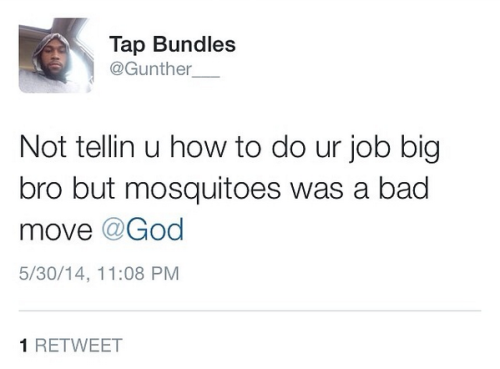
What troubles me most, though, from those conservative reactions, is the line that keeps cropping up, "God doesn't make mistakes." It bugs me not because I disagree with it. I don't. I agree wholeheartedly. What bothers me is that this phrase seems to indicate the user knows how to define someone else's mistakes.
If my wife asked me to move the clothes from the washer to the dryer and I didn't do it, there are three basic explanations - throwing out some unforeseen occurrence physically preventing me from doing it, we're left with 1) I remembered, but was too mean or lazy to do it; or 2) I forgot. Only the latter is a mistake, but from my wife's perspective, there's very little way to truly know if it was option 1 or option 2. She may be able to guess given my past performance at such tasks and what she knows of me as a person, but she can't really know.
I say all that to say, whether God makes mistakes or not, we don't know that Olympic hero Bruce Jenner believing from the time he was very young that he should have been born a woman is, in fact, a mistake. Even if we go so far as to say such transgender persons (along with anyone else whose biology and inclinations don't line up with religious or cultural norms) are sort of evolutionary byproducts (this sounds really harsh, but hopefully I explained it a little better and in more depth elsewhere), there's no indication that anyone turned out differently than God intended them to be.
No, there's no more reason that what I've just said is "right" when describing God's intentions than those who believe Jenner suffers from a comic mistake - and that's precisely the point. Invoking that notion in this context, as if there's some absolute understanding of God's intentions is trite and irresponsible. I get that some people believe there are very specific gender and sex roles - it's a valid opinion because people hold it - at the same time it seems proper to at least allow for a difference of opinion when it comes to judging the intentions of almighty God.
I tend to see a lot more of God's purposes in a world where people are different from each other. In fact, it seems one of the big contributions of Christianity to the world is the notion that radically different people could possibly live and worship and love each other without ever becoming like each other. I don't happen to believe the kind of uniformity hinted at in this particular use of "God doesn't make mistakes," really represents a Christian understanding of God at all. You are, of course, free to disagree.
What it seems to do is downplay the notion of identity and our responsibility to act. I know they got in trouble showing this in our local high school this year (and perhaps, in context, with good reason), but Hank Green really breaks down some of these identity pieces quickly and simply in this video. If you watch it, you'll see a visual aid used with two people - one representing identity and the other representing action.
It seems to me the heart of any conversation between people who care for each other should involve some real discussion of how we act and why we do what we do. If we love people, we want the best for them. Having a person to think through our actions with and providing that same sounding board for another is really key to living life well. For Christians, this is sort of the ideal goal for relationships - something mutually beneficial and beyond the superficial. But, of course, this is only possible if we accept the person for who they are. We can't be going around harping on that left hand person if we expect to have any influence on the right hand person - we can't be skeptical of who people are, if we want to have enough respect to be invited to speak on how people act.
Yes, I get that there are some legitimately dangerous identities out there - various body dysmorphic issues that will kill people if not addressed. (I also get that some people believe a homosexual or transgender identity falls into the same category of dangerous.) But even if you disagree with how someone identifies (and there are certainly good reasons to do so), making this known or a priority in the relationship is foolish, because, well, if you do that, there is no relationship. You can't help someone with anorexia by telling them they look great. If it were just as simple as changing how one feels or identifies, they'd've done it already.
The notion that someone must fit into a box I've created is pretty ludicrous. The retort may be, "I didn't create the box, God did," but of course, that's up for debate (and you better bring something better than, "see... the bible says it" to that fight if you don't want to get laughed out of the ring.
I imagine, a God who is so powerful as to make no mistakes is also powerful enough to let people know when they're outside the box. People may need nudging now and then to listen to that voice, but it's a nudging they ask for once they know someone loves and accepts them completely.
Call me crazy, but it seems like the kind of peace and calm people like Caitlyn Jenner experience when they're finally true to themselves to friends and family (and maybe the world) is pretty close to the kind of peace God intends for all of God's beloved creations. Yes, as a pastor, as a Christian, I've got a lot of opinions about how people should act - what things might be wise or unwise, helpful or harmful, having positive or negative effect on the world. I love sitting down and walking through future possibilities both in my own life and in the lives of others - it's part of why I feel called to be a minister. How do we act? How do we live rightly in the world? Those are important questions. I'd love to talk to you (or anyone) about them. I think it's the most important conversation in the world. I have opinions about how we should act in the world.
I don't have opinions about who we are. I can't. I know God doesn't. All people are perfectly loved and infinitely accepted just as they are in the eyes of God. I'll shout that one from the rooftops and defend it to the death. We are who we are. That doesn't mean there aren't parts of ourselves we have to work around, compensate for, or learn to discipline - nobody's perfect. But those are actions. They are the way we respond to who we are. The faults and failures that comprise our identities are no less mistakes than the blessings and successes that make us who we are. We may make mistakes (a lot of them), but no one and no part of anyone is a mistake.
As for Christians, we're never going to have a place in the world, never going to be able to influence people or support people or help people, unless we learn the difference between identity and action. Choose your words carefully. Don't back down from what you believe... even if it's different than what I believe, but, please, choose your words carefully.

There’s a lot of well-earned skepticism when it comes to the Bible. Between historical analysis challenging some long held assumptions and the relegation of scripture to a weapon in the culture wars, it seems pretty easy for just about anyone to say just about anything using the Bible for support.
I think the real question people ask when they ponder the Bible’s credibility is really how credible are those who interpret it. How do I know that Preacher X is getting things right, especially when Preacher Z says something different?
I’m not sure you really can know.
The world these days is pretty comfortable with uncertainty, but when it comes to matters of faith, we’d all really like to find some. A sense of certainty has sort of become the Holy Grail in this post-modern world of skepticism and doubt.
But we only find certainty when we choose to believe. That’s faith. I won’t say we should believe blindly, but at some point we must choose to know what we can’t really know. We can doubt everything, but in the end that leaves us with nothing.
So perhaps the question isn’t whether the Bible is credible, but rather “How do I find anything credible in the Bible?” That’s a far more interesting question, because it has a real answer.
The first step is understanding what the Bible is as opposed to what we’d like it to be. Things would be simple if scripture were simply a direct communication from God: do this; don’t do that. There are lots of dos and don’ts, of course, but they’re filtered through human writers, across cultures, and buried in deep layers of history and context.
The Bible is a testimony of God’s interaction with God’s people over a huge span of time. It represents the best attempt by a ragtag people to collect, compile, and care for a unique understanding of the world, its creator, and how to best live.
If we expect it to speak authoritatively on science or history or psychology, we’re going to get burned. If we expect it to possess encyclopedic clarity or even a unified vision, we’re going to be deeply disappointed. If we expect the Bible to be a self-contained oracle of wisdom, we’re likewise going to come up short. It is these endeavors that have harmed the Bible’s credibility.
The Bible doesn’t purport or pretend to be anything but those words God’s people found helpful in understanding our place in the world. For me, it’s credible because of that tradition, not in spite of it. Yes, there were things left out and things included for all manner of strange and biased reasons, but that is precisely the point. It’s not a compendium. It’s not a history. It’s the Bible. It’s a carefully crafted message, but one with minority reports, contradictions, and competing voices. It’s not self-evident and its meaning, despite what some may tell you, is anything but plain sense.
Scripture is credible for what it is.
The Bible has a history. It was authored by real people and passed down – first as oral tradition, then written. It was compiled by editors, enlarged, enhanced, and expanded. Eventually some people chose which books would become the Bible and which would remain merely good.
The Bible has a history, which means it can be explored. We can search the realms of science – psychology, anthropology, sociology, biology, economics, physics, linguistics – to give us insight into what exactly these writers, editors, and compilers might have meant for us to know. We delve into diverse and divergent contexts, cultures, and conditions to give ourselves fresh eyes and new perspectives.
To find something credible in the Bible we ask questions and we do our best to answer them, using all the resources at our disposal. There is a long tradition of faithful people – the very community who preserved and passed on this Bible – still active and alive today in all its wildness and activity. The world in which we live is a testament to the God from whose being it sprang. Our own experiences are paramount in helping our mind approach credible conclusions, asking ourselves not necessarily, “can I prove it,” but at least, “does it make sense to me?”
In a world where we challenge everything and we’re not sure there is such a thing as truth, it’s the best we can do. There is certainly some measure of faith involved. We must believe there is a God out there to find. If so, we must believe also that this God gave us some way to access the divine. We must have faith humanity is important enough to stumble upon some measure of truth, if only dimly and clumsily.
In the end I do believe these things. I do so because, as improbable as it seems, with all my explorations, through every question and test, through as much research as my little brain can manage, the Bible always seems to stand up.
I believe the Bible is credible because it points to Jesus Christ and I have chosen to have faith in Jesus Christ. Not the words about Christ or the religion founded in his name, but Christ himself. I believe the life, death, and resurrection of Jesus Christ is important, because the message of radical, sacrificial love, extending even to our enemies, is unique.
I might be wrong about Jesus and the Bible, but for me, the notion that love really does win – over power and violence and hatred and selfishness – that if we give love enough time (an eternity, maybe) it can make not just us, but all of existence into what it’s supposed to be, this notion just somehow seems worth living (and dying) for regardless of its ultimate credibility.
I have faith that God is love and that Jesus accurately represents God to the world. I interpret the Bible in light of these beliefs and I think it’s allowed me to find credibility there.
So, we're a game playing household here. We've probably got upwards of 50 games on shelves and in drawers all over the place. As Eva has grown up, we've wanted to keep challenging her with new things. Once she learned to count a bit and tell the difference between colors, I figured Candyland would be a great way to start her on games - super simple and also fun (at least in my very old memories).
I grew up playing Candyland. A lot. I have two younger brothers, so even when I got old enough to realize it's a game with absolutely no choices, totally determined by the cards, I continued to play it because they liked it. Despite what had to have been a lot of boring afternoons, I have nothing but great memories of the game. I realize now that there have been several iterations of Candyland through the years; the one I remember looked like this:
At some point, they added characters, which is vaguely remember, so perhaps friends had this version:

I went to the store to purchase Candyland for my daughter. I figured it would be pretty much the same thing I remembered. After all, if you're selling a super simple board game for four dollars, why shake things up much? I got the box home and opened it up to find this:

I was pretty speechless. The first thing I noticed was how busy the board is - colors and pictures and patterns all over the place. I wasn't confident my child could even figure out where the path was she was supposed to follow with her little pieces. Then I looked at the characters. Instead of little cartoonish creatures (since, you know, they're supposed to be made out of candy I never really expected them to look like people), they had essentially stylized adults.
It's tough enough to keep my daughter away from the societal pressures towards body image and forcing children to grow up before they actually grow up, it was really just devastating to see Candyland piling on. I mean "sad." I chose that word intentionally. This is typically the kind of thing that would really make me mad. I'd be spouting off to everyone and calling the company and all that. As it is, it's been like eight months and I'm just now getting around to writing about it.
I took the game back to Walmart to return it. I told the customer service lady why. She said, "I know. We get these back all the time." That's sad. It's all sad. It just makes me sad for the whole world.
I guess flashy and sexy is what sells, even if it's just a toy for toddlers, but it's still really sad. Thankfully our neighbors had a Dora version of Candyland with Dora characters (which Eva loves), so we've been able to play it (and we play it a lot).
I know those outside pressures for societal conformity are inevitable. She's headed to preschool in the fall, and I know there's going to be a lot of messages to process. That's a part of life - whether it's sad or not - at the same time, this isn't a solo concern for me. You can google candyland and find a dozen blog posts similar to this one with the same complaints. At some point we have to questions whether these things are selling because people like the images and messages or just because there aren't other options, because we're desensitized to it all.
A couple years back we got turned on to some people trying to do it differently (hint hint - she just had a birthday, but Christmas isn't too far away - hint hint). I'm not sure why there aren't more people speaking up for some sense of balance and responsibility from the people who, like it or not, are forming the next generation. I could definitely go on about this for weeks, so I'll stop there, but it felt like this was something that I needed to get off my chest.

Why is death such a big deal? I tend to think it's because of evolution. The way life seems to have come about in this world is through a long process of reproduction. It really seems a strain of self-survival has been laid within all of life to the very smallest, simplest organisms. Something inside us wants to live on. At the base, natural level we want to reproduce, as much as possible, giving "us" the best chance of surviving to the next generation.
I know there's this traditional Christian belief that death only existed after humans sinned. But that's not even really in scripture. It's not an issue of literal or non-literal reading. It's just not there. That belief emerged through interpretation, to answer some questions that arose around the text. There's some question about whether death was inevitable for Adam and Eve, say, but no real question about the reality of death for everyone else (with a couple key exceptions that are relatively irrelevant to this post).
I've written elsewhere, something that will be part of a larger post (or series of posts) about evolution and theology that is in the works, that it really seems there is a force of selfishness at work in the world - this is the evolutionary drive to survive and reproduce. Selfishness doesn't necessarily means bad, after all, a selfish baby is one that survives, because it makes enough noise to be properly fed and cared for.
If we look at death in its strictest element, without all of the emotional attachments we've laid on it - say from the perspective of a rabbit or a skunk - there isn't necessarily a reason to fear it. You may desire to avoid it the way you'd also avoid falling in a cold lake, but the fear we attach has nothing to do with death itself, only with what death represents. We'd miss out on more chances to reproduce; it would cut into our inborn ability to be selfish or self-sustaining. We're programmed to live as long as we can - which is why death becomes real scary.
Now there is room for altruism, of course. Human beings have evolved to such a point where our brains can step outside themselves, so to speak. We can analyze the natural inclinations we possess and choose to work against them. We can recognize this inborn desire for survival and put it aside, sacrificing ourselves say, for simple pleasures, or in place of one we love. Even so, death is still feared. I suppose we may find a sense of calm in the notion that we've chosen death as opposed to it sneaking up on us from behind, but it's still scary. Even if we push beyond that inclination to survive, we still possess it. It still makes an impact on us.
In the Christian faith there is a belief in resurrection. This notion is simply that death is not final. We die and then later we come back to life. Christians believe in an eternity, where, at some point, everyone will live in perfect harmony with God, each other, and the world around us. It might take a literal eternity to get there, but it is in the future.
If that's true, then death becomes relative benign. We might be afraid of that which accompanies death - emotional and physical pain, loss, etc - but death itself is not to be feared. Death is not the finality of us - perhaps, in fact, we have no finality at all.
I like the notion (and I'd love some input if there are those of you who know others who've posited this notion - I'm starting to wonder if I'm not the first one) that God represents a force opposed to that of selfishness - we can call it love (because that sounds great), but it's really just a selflessness. As the evolutionary process that brought us about came through a move towards selflessness, so the counterbalance that will lead us into eternity comes from a force of selfless love at work in the world. I guess my idea is that both forces have always and will always be at work, but the person of Christ represents the tipping point at which time that selfless love takes the upper hand from selfishness.
I say all this just to say - perhaps our fear of death is really just a lie. Yes, those things which accompany death are scary - we don't like pain, pain works against the notion of selfishness that lives in all of us - but death itself is a fear reaction to potentially losing the future. If there is no way to lose the future - no end to who we are - then death is just not scary.
I pay special attention to the parts of scripture that talk about fear. As near as I can tell, fear and love are completely incompatible. A perfect love drives out all fear (I think a pretty wise dude once said something like that). If we really do have these forces working within us - a selfish drive towards survival and a loving force pushing us to seek the good of others before our own, at some point they come into conflict (probably at a lot of points) and we have to choose between them. If death is on the horizon, it makes some logical sense to choose fear, but I guess what I'm wondering (recognizing that my faith in the future does not equal knowledge of the future) maybe that choice is the wrong one.
I could go on and on (I'd like to at some point), and it some ways this could be viewed as me saying life isn't precious or valuable. On the contrary - this is where that drive towards selfishness comes in handy (I told you it's not necessarily bad) - those things which accompany death make us treat it with utmost care and respect. The very notion we might lose our life leads us to value it. At the same time, perhaps these serious accompaniments have been given too much power. They must be taken seriously, yes - but perhaps not given control in our lives and decisions.
Ultimately, I suppose, we fear death because we recognize that we've not given to this life or gotten from it all we'd like to. I think that fits within this notion of self-preservation very well. We fear death because we doubt what's on the other side. Maybe it's that notion of feat that needs to change. There is a big difference between taking something seriously and being afraid of it. If you encounter a bear in the woods, both the one who ignores it and the one who responds in fear will likely find themselves with less than desirable outcomes. The best chance of survival is putting away the fear and taking the reality of the bear seriously.
There is no flippant response to death, but, just maybe, there also shouldn't rightly be fear either.


