I've had a lot of good conversations over the weekend around Memorial Day. I've written about the struggle between opposing war and supporting people here and here. What I've been thinking about this weekend is slightly different, though.
Setting aside nationalism, which I originally thought was central to my unease, I've come to realize, through healthy conversation and a lot of pondering, that it really stems from how positive and joyful these celebrations tend to be. There's almost no recognition of the horror of death, of loss or pain - the day, at least from my perspective, tends to be one of joyful celebration. We trot out the tropes and patriotic one liners that certainly feel more at home on July 4th - really, it's like we end up with another Independence Day and that's what's a bit unsettling.
Memorial Day is a uniquely US occasion. Yes, most countries have a Remembrance Day of some kind, but it's more associate with our Veterans Day (celebrated on November 11th, the end of WWI). We wound up with two holidays - one commemorating war dead and another celebrating ALL veterans, living or dead - by accident, really. Memorial Day, formerly Decoration Day, was a long-standing tradition in both the North and South, marking the graves of Civil War soldiers. In fact, Union and Confederate competing celebrations (and dates) lasted until the early 1967 (and a few persist today).
It would really make sense to celebrate everything together on November 11th, with the rest of the world, but, probably rightly, Congress didn't want to eliminate long-held traditions. It does create a bit of a dichotomy, though, with a specific holiday to honor the dead - and there are numerous websites dedicated to making sure people understand the difference. This certainly adds to the confusion about how we celebrate Memorial Day.
It's further complicated because Memorial Day has become the de facto start of summer - people want to be outside enjoying the warm weather. This is also compounded because we went a whole generation without war dead - from Vietnam to just after 9/11 (the first gulf war had just 148 US casualties), taking away some of the personal connection to tragedy that might otherwise go along with the day.
That really gets closer to my point, here. Our holidays of remembrance don't look like those in England or Holland or France, I think, partly because the real cost of war is simply unknown to most of us. Even with the recent wars and all the pain, trauma, and loss suffered, less than 1% of the US population has been deployed - obviously a far smaller percentage has died. There are just very few people with real personal connections to the people remembered on Memorial Day.
Unlike those countries mentioned above, we've also not seen tragedy or the destruction of war on our soil since 1865. Hawaii was not even a State when Pearl Harbor happened and it's distance has always been a hindrance to the nation fully accepting it as something other than a vacation destination. We haven't seen bombed out building next door or sent children to the country for their own safety. We've never been occupied. And although most of the people who remember those things in Europe are aged or dead, those memories remain real and vivid - something we've long forgotten.
I suppose all of this might serve to reinforce the more celebratory tone most often taken on Memorial Day - and I'm willing to accept that conclusion as valid. We might also point to the natural human desire to avoid grief. It's just natural to make something sad into something happy. At the same time, whether it matters to you or not, it was important for me to understand why the day and the celebration seem so at odds - and I think this is it.
What struck me was the way I see the few people I know who lost loved ones recently do Memorial Day. There were a few choice pictures of a flag-marked gravestone, but mostly remembrances of a son and brother as a little boy. The celebration of Memorial Day for those folks was no different than any other family's anniversary of tragedy - they just have two days a year to do it, instead of just one. In substance, there is no real difference from the remembrance of any lost loved one.
You and I might disagree to the extent we can or should make our national holidays about broader themes (freedom, democracy, patriotism, etc), but no matter how you side on something like that, this day really should be about families mourning loss.
Yes, we're quick to justify those losses with statements about what they died for, but some families who lost loved ones don't feel they died for "good reasons." You know what, I don't think anyone ever feels like a parent or child or sibling dies for a "good reason." We can say they lived a long life or served faithfully a higher calling, but that doesn't actually change our grief. I don't think I'd mourn my wife's death any less if she died saving a child from a burning building than I would if she were in a car accident.
Loss is loss and despite our natural inclination to avoid pain and grief, they're good for us. They're healthy. They're not good or healthy places to spend our lives, but a couple days a year of mourning can be really beneficial.
In the end I think I react negatively to this celebration of America - "Woo Hoo, we're the best, let's set off fireworks and throw a party," for the same reason I react negatively to people who don't cry at a funeral. I get having a picnic and inviting the neighbors as a way to enjoy the lifestyle provided by the sacrifice of soldiers, and I'm all for having a good time in that effort, it just feels like we too easily gloss over the real horrors of war and the real tragedy of death.
It is an honorable thing to be willing to die for something you believe in. It's a dedication worth honoring even if I don't always share a commitment to the same things. Of course my perspective of nations and war colors my perceptions of any holiday that deals with them, but this is also true if you hold a position on the other side of the spectrum from me. I think it's important for all of us to see beyond those discussions - at least on Memorial Day - and let it be a time of sober celebration.
People have lost mothers, fathers, sisters, brothers, children, and friends to war - those people were loved and of immeasurable value. We may not have known any of them or be attached in any way to this grief - so at the very least, let's make it a celebration of the people we still have with us and remember that for so many people closest to war and it's effects, this day is about loss, grief, and suffering. By all means, celebrate the memory of people no longer with us, but let's do it with a health measure of understanding for the tragedy involved.
Hozier's song, "Take Me to Church," analogizes sex and worship. It can come off a bit uncomfortable for people of faith, although the honesty of the lyrics and his performance is tough to over come. I'm not sure whether this was his intent in writing, but, being an Irish singer, it's not difficult to see the complicated relationship between the Irish people and the Catholic Church coming through here.
Seen with that perspective, the song becomes even more powerful. Hozier talks about giving his partner the knife with which to cut him, but also being dependent on her for whatever satisfaction he finds in life. Relationships are like this in a lot of ways - the trust we put in another person is certainly a double-edged sword, but it also speaks to what's traditionally been the relationship between the people at the Church, especially Roman Catholicism.
There is so much emphasis on the Church itself as the means of salvation - and while I certainly agree with that in principle, it often becomes an unhealthy obsession with a human institution. The Irish Catholic Church, as has been revealed over the last few decades, really took the trust of the Irish people and trampled it for a long time. The very deep and devout faith of the people was used as a knife to cut them deeply - yet, because of generations of church teaching, there was literally nowhere else to turn. It's not hard to see how it can feel like a prison.
The Irish Catholic Church largely failed to properly mediate the gospel for the people in its care. The result is a whole generation of Irish kids, shaped and formed by an extremely religious culture, running from faith altogether - at least the sort of organized, formal faith that so marks their land.
In the song, Hozier doesn't depict an equal relationship. He's not approaching his love from the same footing she approaches him; the power dynamic is off. It's not as though he can be blamed for the position he's found himself in. It's far from ideal and certainly different decisions could have been made to prevent it, but, like the Irish relationship to the Church, what we really have here is abuse and manipulation that feels like a inescapable trap.*
For me, it speaks to how we understand our personal faith. Even that term itself can be tricky. So often you hear people talk about personal faith. I have a hesitancy to use the term, mostly because it sounds so individualistic. Personal faith means, I decide. I become the arbiter of value and truth. In some sense, we do all have to be that - we live in a world with free will. We get to make decisions; there is some measure of autonomy, even if we're ultimately connected to each other. At the same time, we really move onto shaky ground when we become the arbiter of anything - that could be illustrated no better than the recent failures of the Irish Catholic Church.
Perhaps the better way to speak about things is taking personal responsibility for faith. Traditionally, the Church served as the mediator of faith - this is how traditions with a strong lay/clergy split still function. The priest/pastor represents God to you. As a pastor, this is a pretty scary, solemn responsibility. It's almost too much.** No person, no institution, really, can be the proper mediator. Trouble really arises when those failures compound.
This is outsourcing our faith. That's a problem in the Catholic Church, sure, but also in a low of evangelical protestant churches as well. It's not an issue of theology or practice - it's an issue of humanity and religion. People go to church, essentially, so its someone else's problem. We don't have to ask and answer the questions if there's a pastor/priest there to do it for us. We'll just show up now and then, listen and be good.
This was never a good idea, but it worked so long as the mediator was trustworthy. Now that we've reached this age where pretty much no one fully trusts religious institutions, things are all coming apart.
People tend to respond to a failure of mediation by assuming a personal faith - in essence they become their own mediator. They might still show up in church from time to time, but now, instead of following blindly, they'll just take what they like and leave what they don't. This is a very pragmatic faith, but it's not helpful in any way. This kind of individualism is dangerous for all the reasons outlined above. It's the source, I think, of all the "spiritual, but not religious" talk happening with younger generations today. That's the next step: saying, "why do I even show up at all? I'm capable of figuring this out. There's an understanding of something outside ourselves, but we have no means of faithfully reaching it, because the mediators we've been given have failed us or have proven untrustworthy. So we become the mediator.
I think there's another way to respond to this cold shower of realization. Instead of simply taking the faith we've outsourced and making it a personal faith, what if we just, I don't know, took responsibility for the faith we've ignored? There's still an element of individualism here - I'm not sure how we get around that when we are, in some measure, individual people. But we're just as flawed a mediator as that church or priest we rejected; it would be silly and downright arrogant to think otherwise.
There is a real value to having other people, especially a people with a history and a tradition, speaking into our lives, providing guidance and wisdom and influence. The idea of Church is not a bad one - in fact it's really, really good. The problem is blind acceptance. We need to enter the mediating relationship with our eyes open, recognizing that we're all just people - the whole thing is people. Yes, there is, if you believe in God, some force working through it all, but we can't just take the conduit for granted.
We can and should ask questions. We can and should do our own leg work, investigate what's being told to us - not out of suspicion, but out of care and concern for our own spiritual (and physical) well being. Faith is, of course, meant to be personal, but it's not meant to be all personal. We're naturally connected to each other - now and in the past. History is important, as is tradition - so long as we're not outsourcing our faith to them irresponsibly.
I think that's why the Hozier song is so powerful. Sex ends up being a perfect analogy. We recognize in (both spiritual and physical) ecstasy some real larger truth that's at once within us and completely outside ourselves. But that ecstasy is a moment within a larger life - and realities of that life outside those moments is so much bigger and more complex and less, well, ecstatic. We can't simply chase the moments; we have to figure out how to incorporate them into the whole of our lives in healthy ways.
*The official video for the song is even more complex and emotionally disturbing on a number of levels - it explores this notion more deeply and troublingly that certainly I was expecting.
... and I guess it still is. Ever the curious mind, when all this talk of an independent Presidential candidate took off with Trump assuming the mantle of presumed GOP nominee, I got curious what it would actually take to make a real run. Just to get on the ballot in most states is incredibly laborious. You need tens, sometimes over 100,000 signatures from registered voters in each state to make the ballot. The Texas deadline has already passed. No candidate getting in now could even win.
But in the course of informing myself on the process, I noticed a little comment at the bottom of the chart,
Two states (Colorado and Louisiana) allow independent candidates to pay filing fees in lieu of submitting petitions.
Louisiana still has a lot of hoops to jump through with their filing requirements, even if signatures aren't among them, but Colorado, ever the rebellious, libertarian state, has just a fee. For a scant 1,000 (nonrefundable - they make this very clear) dollars, any eligible candidate (35 years old, natural born citizen, and 14+ year resident) can have their name added to the ballot. There's a couple other hoops to jump through (see below), but all very doable.
I thought, "wouldn't it be funny to get my name on the Colorado Presidential ballot?" I mean, most of my family lives there. It would be cool for any parent to check the box next to their child's name when voting for PRESIDENT OF THE UNITED STATES! I wouldn't win, obviously, but I don't think I'd want to anyway. Besides, I'm a little scared my Dad might vote for Trump if I don't present a palatable alternative.
That's a real issue, though - not so much Trump (although Trump is an issue), but there are tons of people out there who don't like either major party candidate, but still feel a real, deep compulsion to vote. Getting my name on the ballot gives people an alternative - and one that can maybe make them smile a little in the ballot box rather than groan.
The biggest problem, though: I don't have a thousand dollars - and if you think my wife is going to sign off on spending even $10 on this silly campaign, you don't know my wife. The solution: crowd-funding. I needed to set up a gofundme campaign, or something of the like to make it work. But I didn't think people would give $10 if they thought I was just going to pocket the money - so I had to find a site that allows you to set an all or nothing campaign. Indiegogo came out on top - this way, I either get to the full $1,000 or none of the donors pays a dime.
But before I could go about setting up the campaign, there was one little thing to take care of. Colorado's first step to filing is to declare yourself a candidate - and the Federal Election Commission has a long and lengthy, very technical, legally intimidating process for doing such. You have to register a campaign committee with names and social security numbers, etc - you have to have a Treasurer and file quarterly reports of receipts and expenses - not to mention all the laws a candidate for President has to follow. It's tough.
Then I noticed another little caveat at the bottom of a page - it said, unless you raise or spend $5,000, none of these requirements applies to you. I even sent an email to the FEC to confirm that if I only spent, say, $1,000 or so, I'd be free to get on the ballot without federal filing requirements. I received an email reply from one Mr. Christopher Berg, Public Affairs Specialist with the FEC confirming that my campaign could proceed.
The campaign was pretty easy to set up. I filmed a short video to introduce myself and the project (it sounds a little artsy because I tried Kickstarter first and got rejected... for not being artsy enough) and I shred the link a couple dozen times.
Within a few minutes, I had my first donation - from my Dad - what a vote of confidence.* I never expected to get donations over $10 - that seemed like the right amount for a project of this nature - and although 100 of those seemed difficult, I gave myself two months to pull it off (still giving me a week or so to get all the forms submitted for the filing deadline in Colorado). To my surprise, the next donation was $20, from a college friend I probably have not kept it good enough contact with over the years. Pretty cool. Then another friend gave $100 and I started to think this might really have a chance. Still 87 donations away from the goal, but it had only been two hours!
We left the next day for my sister-in-law's graduation and I try not to spend too much time on the internet during family gatherings, so when I awoke that Saturday morning to a text from my brother, I was till groggy and didn't quite understand what he said, "Jeremy gave you the $1,000."
After a few beats of confusion, I scrambled for my laptop only to find, indeed, my whole project was now completely funded - in just a few days.
You see, I have this cousin (well, I have a lot of cousins, but this one in particular), Jeremy, I've jokingly called the "black sheep" of the family - not because he's bad at all, really (he's not), but because he's so relatively normal - he just never seemed to fit in well with the rest of us odd, strange, people. His family lived farther away, we saw them less often - he's really the cousin I know least well.
Anyway, he's also the most famous person I know personally. Jeremy is the voice and co-writer of cinemasins. You and several million other people may subscribe to their youtube channel - you've probably seen one of the videos, at least. Apparently, this youtube thing is a going venture and he's got $1,000 laying around to fund a crazy joke (I think also his recognition of the humor in this whole attempted campaign betrays that perhaps the outsider aura he's gave off to my childhood self was a front, or perhaps a serious misinterpretation by me).
Anyway, the money is there - and I'm very grateful.
I let the $100 donor, Bruce Barnard, be my Vice President (Jeremy politely declined) and my brother Jordan is collecting the signatures of nine registered Colorado voters who would serve in the Electoral College, should I win the state. The only remaining hurdle is filling out the brief paperwork and getting it notarized.
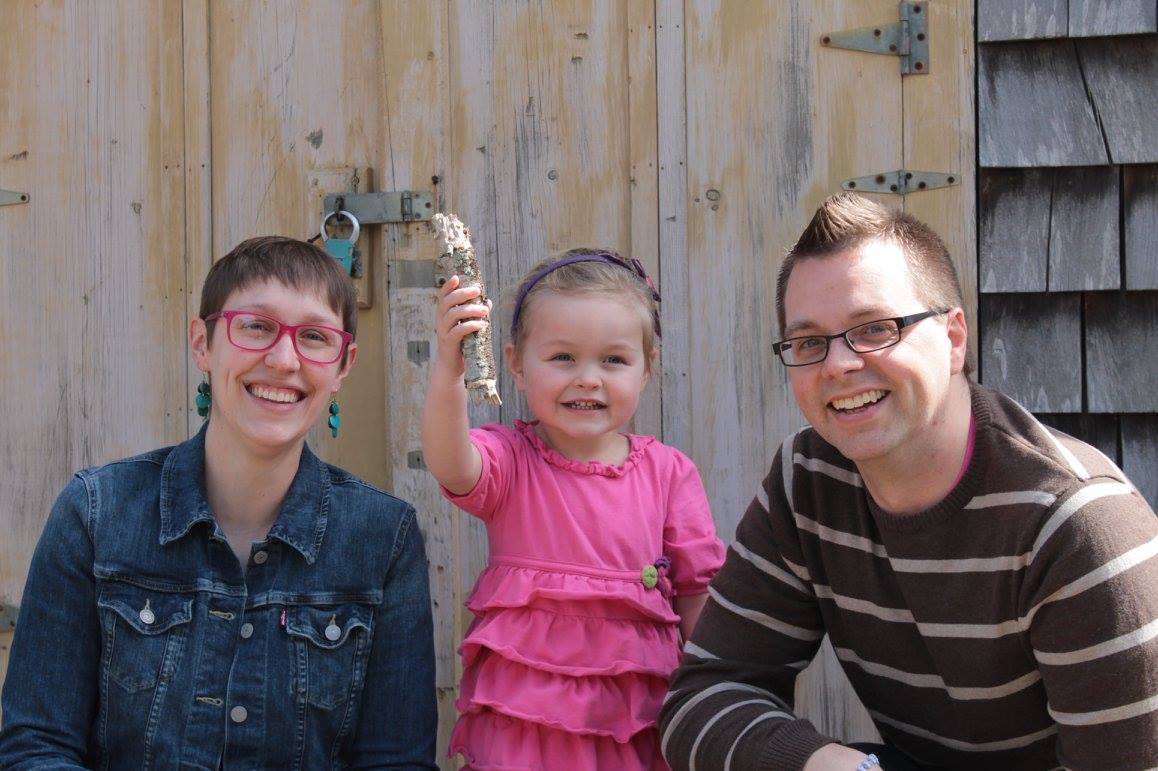
Now, I have to say, this is sometimes a bit embarrassing - like yesterday, when they called a nice woman at my local bank back early from lunch to notarize my form - having to explain the whole story in brief and apologize for interrupting her lunch was awkward. The tension was broken, however, by my four year old daughter yelling, in the bank, near the top of her lungs, "No, don't do it, daddy, don't run for President!"
But run, I will. I'm too far in to back out now.
Over the course of the next six months or so, I'll put together a few videos or something to try and make people laugh and, who knows, maybe catch some viral mania. I'm not trying to win and I don't expect to. I just wanted a funny story to tell for the rest of my life, but, to be honest, it would be kinda awesome if a bunch of strangers actually found out about this whole thing and got my votes to double digits.
So if you have friends or relatives in Colorado. Encourage them to vote. Help me get to 7th place in the Colorado election for President. I feel like 7th would be a real achievement.
Disclaimer: I was given a free copy of this book for the purpose of review. My integrity is not for sale. Those who know me well are aware a free book isn't enough to assuage my cutting honesty. If I've failed to write a bad review, it has nothing to do with the source of the material and only with the material itself.
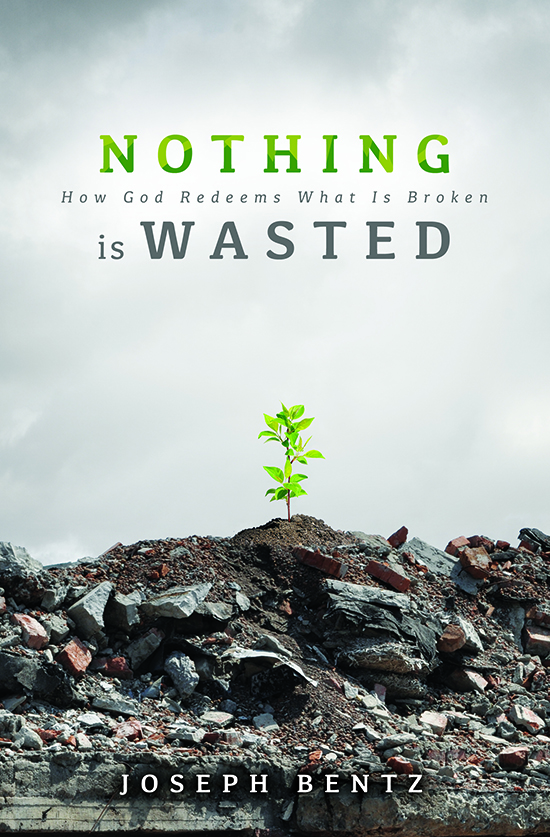
Nothing is Wasted by Joseph Bentz opens with seven chapters about redemption. This is the stated point of the book - to encourage people that tragedy is not the end of the story, that the narrative of the world is one of redemption, that God brings beauty from even the ugliest of things. In these chapters, he uses stories, both modern and ancient to illustrate both the tragedy of the world in which we live and the beauty of redemption. Bentz, a literature professor at Azusa Pacific, is a talented writer. His prose is warm and inviting; he paints a great picture.
It's also a vital topic. I believe redemption to be the highest form of love, the purpose for existence itself, and the highest of beauty. THe first half of Bentz's book provides a powerful and forceful picture of the importance of redemption. He talks about how God is always at work making good out of bad. When I picture the beauty of redemption, I most often picture undeserved redemption - when goodness and mercy flow to me even after I've created my own tragedy. Bentz focuses more on undeserved tragedy and the universal human deserving of redemption. This is probably more interesting for the reader.
People question why bad things happen to good people; it might be the defining question of faith and human existence. Bentz tries admirably (and wisely) to stay out of that debate, focusing more on the redemption which God can bring from tragedy, but it's an impossible task. Those early chapters fall short in not addressing the underlying unspoken "why?" Bentz puts the notion that God does not cause tragedy in the mouth of one of his story subjects, but also gives indication that God uses tragedy for a purpose in the explanation of others. There is some talk of free will, but also determinism and it's pretty unclear how exactly Bentz wants us to view God role in tragedy.
I get why an author (and publisher) would seek to avoid what can be a controversial topic - it might slice up the readership for the book and detract from the univerally acknowledged reality of redemption. Still its hard to manage one without the other and that's a real problem in Nothing is Wasted.
The other issue is the second half of the book. A book that begins with sprawling, contagious narratives of hope and redemption ends up in a very narrow, conventional folk theology about Christian life and afterlife that really puts a damper on the wonder and beauty of the opening chapters.
There are several chapters that speak to the notion God might use tragedy to wrench us out of an unhealthy existence, but there's no real care to parse the difference between God using tragedy for this purpose and God planning tragedy for this purpose. At times, these chapters come off as laying guilt on people for not accepting the adventurous challenge of a Spirit-filled life with the gusto they probably should. It seems a far cry from the good news of redemption in the midst of pain and struggle - almost as if he's trying to cram too many objectives into one text.
One of the most joyous results of redemption is the peace and beauty it can provide for people in this life, yet the final chapter of the book talks about how this life is relatively unimportant in light of eternity. This seems to be the opposite of Christian teaching, in which the eternal life of Christ can begin here and now. On page 172 he writes, "Eternity is the fulfillment of the good things our earthly life promises but never quite delivers. It is not simply more of what we have now; it is a life of an entirely different character." I'm not sure I could disagree more; in fact I said pretty much the opposite in a Sunday School class I taught just two weeks ago.
I believe scripture teaches eternity will look very much like the life we live now - yes, there are some redemptive differences we don't fully understand, but we understand that the love, redemption, grace, and peace of eternity is possible here and now. This is the very heart of what makes the Church of the Nazarene distinctive. I'm unsure if Bentz is a Nazarene (although he did go to Olivet Nazarene University for undergrad), but certainly the publishing company is and it seems silly to miss the opportunity to reinforce this point in print.
Finally, the last chapter further talks about how our lives here and now are a constant struggle to find fulfillment. Bentz paints heaven as the thing which will fulfill that desire - even using the extended analogy of medically procured long life to illustrate the failures of the life we're living in comparison to eternity. This is a dangerous notion, in my view. I agree that we're constantly looking for fulfillment, but I think the solution in this life is the same as the solution for eternity: it is recognizing that this desire is a false desire. Self-fulfillment is a dangerous myth. We find our purpose, peace, and place, both in this life and the next, through selfless care and love for others.
The redemption painted in the first half of Nothing is Wasted is really powerful and good. It's a beautiful picture of eternity accessible now through the love and grace of Jesus Christ. One of the benefits of having a talented, professional writer do this book is that these narratives are incredibly well constructed and thoroughly enjoyable. The downside is that the theology is weak and sporadic and muddles the message. If it were just these first few chapters, I'd recommend the book for anyone, especially those struggling with depression or dealing with loss - Nothing is Wasted can be a real source of comfort - but with the second half of the book tacked on, there really isn't enough positive here for me to recommend it overall.
I've been thinking about relationships a bit. How do we choose the people we love and why? There are obvious connections, like parents with children; there are not always perfect or always loving, but for the most part, they are. Spouses choose to love each other - a lot of the time, anyway. Being completely crass, though, we tend to love the people who can benefit us in some way. It's a sort of automatic co-dependency. We care about people who make our lives better in some way.
Yes, those people we love most often exasperate us and frustrate us and sometimes it seems like the investment in the relationship just isn't worth it - but at the end of the day, those relationships are usually important to us because we use them to help define us. It's still a reflection of us. A parent might be a bad parent, but the part of them that defines themselves as a parent is really strong. That's why its a serious thing to take someone's children from them and why it's the single most amazing thing for a parent to give their child up for adoption.
Co-dependency can become a real problem. We can so define ourselves by our relationships that we never find out who we are - then every relationship has disproportionate value and we can't afford to lose even one of them, even though we lack the ability to maintain any of them. That's real trouble. But we do have to define ourselves somewhat through our relationships. We're relational beings. A parent, a spouse, a child, a teacher, a doctor, a cashier - you can't really be any of those things without other people.*
I don't think any of this is wrong (unless, obviously, it becomes unhealthy) - I'm not sure we can transcend those natural inclinations and we certainly can't be detached, unconnected individuals and still be fully human. I do think, though, it's incomplete.
As I've been thinking about relationships, I've been especially pondering how some people can be so loving and selfless and compassionate towards some people and completely the opposite towards others. Those in a specific circle (let's say the circle of co-dependency, but in the nicest, most respectful way) are protected and served vehemently, while strangers or casual acquaintances are demeaned, devalued, or ignored (if not actively hated).
Because I'm a pastor, the first thing that came to mind was that this is the difference between love and Christian love. I probably should say "Christ-like" love, because Christian is a hairy word in this instance; Christians often love in very un-Christ-like ways, with some of the most restrictive circles imaginable. Some people love only those they know well and whose presence they value (usually for at least partly, and understandably, selfish reasons). Others have trained themselves to love unconditionally (or at least as close as we can get with our biology) - seeing the homeless man on the street with as much compassion as their own child.
Now we certainly don't always act the same towards these two groups - I imagine this comes partly from social conditioning and partly because relationships do matter and no matter how much love we may have for a person, we can only act within the context of the relationship we have - but there is clearly some division between those who seem to love regardless of context and those who have circled the wagons, so to speak, around a particular group.
Now I could be philosophical and say, those wise people with an unlimited love range have understood that everyone is part of our immediate circle - that the well being and health of every person directly affects me - and thus have just come to an enlightened understanding of co-dependency. I think there's some truth there, for sure, but it doesn't seem realistic. We might get to a place where we know that intellectually, but I don't think it can really penetrate our hearts enough to create emotional responses.
I think it's more likely in the compassion neighborhood. We can get to a place where we recognize the inherent value and dignity of every person and thus are able to love them the way we love our close friends and family. We see them as people - whether it's the guy at work who eats at his desk and never talks to anyone or the driver of a car stuck on the side of the road with a flat tire or maybe that neighbor lady who's only ever yelling at people.
Again, we act towards people based on the relationship we have with them (and this is smart), so there's only so much we can do in each scenario, but for me it's a good entry point for a discussion about what it means to be Christian. To paraphrase Jesus in the Sermon on the Mount: "Do you only love those who love you? Even the worst people in the world can do that. Are you proud of yourselves? There's more to love than that."
Maybe that is the call of Christianty (or should be). Do you want to love more and love better? Come and see.
I hope it's this journey towards loving more and loving better than I am dedicating my life to pursuing. I hope it's this journey to love more and love better that people see in me. I hope there are people out there longing to love more and love better that are willing to try and fail (and maybe succeed) along with me. I'm not sure there's anything more to life or faith than just that:
Love more, love better.
*Not that any of the people who are parents or children or doctors or cashiers necessarily define themselves that way, but some certainly do.